

P0333 on 2012-2017 Subaru Outback: Knock Sensor 2 Circuit High Causes and Fixes
On a 2012-2017 Subaru Outback, P0333 is almost always caused by a failed Bank 2 (driver's side) knock sensor. Subaru issued a TSB (07-133-18R) acknowledging the original sensor was prone to cracking and failure, recommending an updated, more durable part. The fix is to replace the sensor, which costs about $45-$90 for the OEM part. Rodent damage to the wiring is the second most common cause.
- P0333 on a 2012-2017 Outback is a very common code that almost always points to a failed knock sensor on the driver's side (Bank 2).
- This is a known issue, and Subaru has an official updated part (#22060AA180 or #22060AA18A) that should be used for the repair.
- Before replacing the sensor, do a quick but thorough visual check of the wiring harness for any signs of rodent damage, which is another very common cause.
- When replacing, it is critical to torque the new sensor to 17.7 ft-lbs and not use anti-seize compound to ensure it functions correctly.
- The repair is straightforward for a DIYer on the 2.5L engine, though access is tight. On the 3.6L, it is significantly more difficult but possible to do without removing the intake manifold.
What's Unique About the 2012-2017 Subaru OUTBACK
Subaru acknowledged a durability issue with the original knock sensors on these naturally aspirated (NA) engines. Per Technical Service Bulletin (TSB) #07-133-18R, the original sensors were prone to failure from heat and vibration, often leading to cracks in the housing. The official fix involves replacing the original sensor (part #22060AA160) with a more durable, heat-resistant version originally developed for their Direct Injection Turbo (DIT) engines. The updated part number is 22060AA180 for Japan-built vehicles or 22060AA18A for US-built (SIA) vehicles. This makes the failed sensor the most common cause for this code on this specific vehicle range.
Diagnostic Flowchart
Tap your situation to follow the diagnostic path that matches what you're seeing on this vehicle.
Generation note: This range covers the end of the fourth generation (2012-2014) and the start of the fifth generation (2015-2017) Outback. Both generations use the 2.5L FB25 and 3.6L EZ36 engines and are affected by the same knock sensor issue described in TSB 07-133-18R. The replacement procedure for the 2.5L engine is slightly different between generations due to engine bay layout, but the part and principle are the same. On the 3.6L, some owners and mechanics have successfully replaced the sensors without removing the intake manifold, though it is a very tight space.
🎬 See how to replace 3.6L sensors without removing the manifold.Symptoms You May Notice
- Check Engine Light illuminated
- Reduced engine power and sluggish acceleration
- Poor fuel economy
- Audible engine pinging or knocking (in rare cases, as the code itself is an electrical fault)
- Hesitation during acceleration
- Rough or uneven idle
- Replacing spark plugs or ignition coils. While these can cause performance issues, they will not directly cause a P0333 'Circuit High' code, which points specifically to an electrical fault in the sensor's circuit.
- Assuming an internal engine problem. A P0333 code indicates an electrical fault with the sensor or its circuit, not that the sensor is detecting an actual mechanical engine knock.
Most Likely Causes
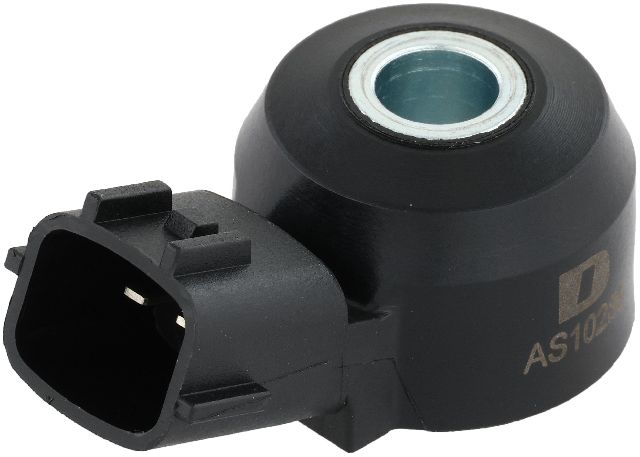
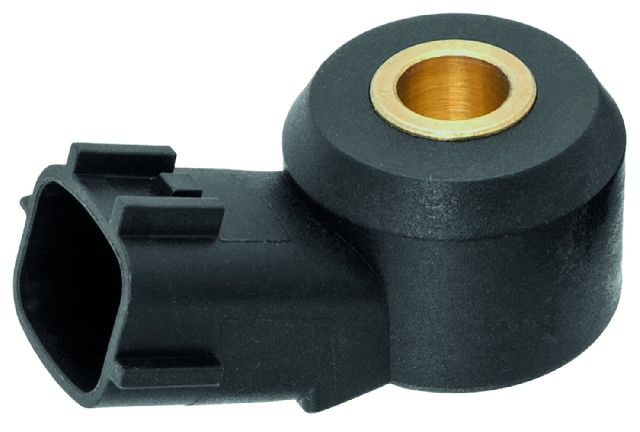
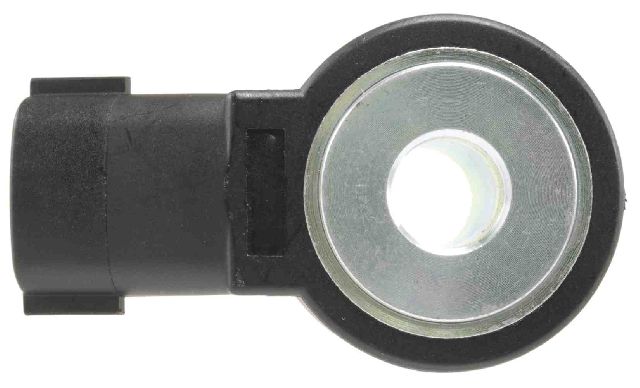
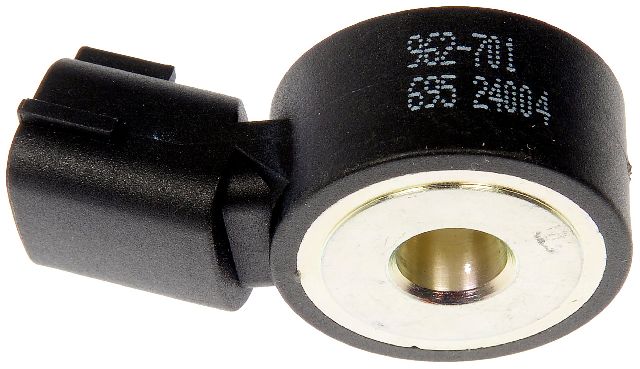
- Failed Knock Sensor 🔴 High Probability → Shop Ignition Knock (Detonation) Sensor Subaru issued TSB #07-133-18R confirming the original knock sensor (part #22060AA160) lacked durability and was prone to cracking from heat and vibration, leading to internal failure from moisture intrusion. The plastic housing can become brittle and split.
How to confirm: After ruling out wiring issues, the most practical test is replacement with the updated part. The old sensor may have visible cracks in its plastic housing or corrosion on its base. A multimeter can be used to test resistance across the sensor's pins; for an EZ30 sensor (similar to EZ36), the spec is 530-580 kOhms, a failed sensor will read outside this range.
Typical fix: Replace the Bank 2 (driver's side) knock sensor with the updated OEM part (22060AA180 or 22060AA18A). It is critical to torque the new sensor's 12mm bolt to 17.7 ft-lbs (24 Nm) without using any anti-seize compound. The mounting surface on the block must be clean.
Est. part cost: $45-$90 - Damaged Wiring or Connector 🟡 Medium Probability The wiring harness is located on top of the engine, making it a prime target for rodents looking for a warm place to nest. Chewed wires are a very common cause of this code, sometimes more so than sensor failure.
How to confirm: Visually inspect the wiring harness leading to the knock sensor for any signs of chewing, chafing, melting, or breaks. Check the connector for corrosion, moisture, or loose pins. The damage is often right behind the connector itself.
Typical fix: Repair the damaged section of wire by soldering in a new piece of the same gauge wire and protecting it with heat-shrink tubing. In cases of rodent damage, applying rodent-repellent tape (e.g., Honda's capsaicin tape) to the new harness can help prevent future issues. 🎬 Watch: Real-world repair of extensive rodent damage on an Outback. If damage is extensive, the engine harness (e.g., part #24020AF830 for a 2017 3.6R) may need replacement.
Est. part cost: $5-$20 for wire repair, $200+ for harness replacement - Loose Knock Sensor ⚪ Low Probability → Shop Ignition Knock (Detonation) Sensor
How to confirm: Check if the knock sensor mounting bolt is tight. The sensor must be torqued correctly to function, as it relies on precise contact with the engine block to detect vibrations.
Typical fix: Torque the knock sensor bolt to the correct specification, which is 17.7 ft-lbs (24 Nm).
Est. part cost: $0
Rare But Worth Checking
- Faulty Engine Control Module (ECM): → Shop Engine Control Module (ECM) This is extremely rare. The ECM should only be considered as a cause after all other possibilities, including the sensor and its entire circuit, have been exhaustively checked and ruled out.
Diagnosis Steps
- Read the code from the ECM using an OBD-II scanner.
- Visually inspect the Bank 2 (driver's side) knock sensor and its wiring harness. Look for any signs of damage, such as cracks in the sensor housing, corrosion in the connector, or chewed/frayed wires. This is a critical first step.
- If wiring looks damaged, repair it first, clear the code, and see if it returns.
- If the wiring appears intact, the most likely cause is a failed sensor, as documented in the TSB.
- For the 2.5L engine, the sensor is located on the top rear of the engine block, behind the AC compressor. Access is tight but manageable. 🎬 Watch: Step-by-step knock sensor replacement on the 2.5L engine.
- For the 3.6L engine, the sensor is on the top of the block under the intake manifold. While the service manual calls for intake removal, some have accessed it from the back with long extensions and swivels.
- Replace the knock sensor with the updated part number specified by Subaru (22060AA180 or 22060AA18A).
- Ensure the mounting surface on the engine block is clean.
- Install the new sensor and torque the mounting bolt to exactly 17.7 ft-lbs (24 Nm). Do not use anti-seize compound.
- Reconnect the electrical connector and battery.
- Clear the DTC with the scanner and perform a test drive to ensure the code does not return. Note that some permanent codes may require several drive cycles for the ECU to self-clear.
Parts You'll Likely Need
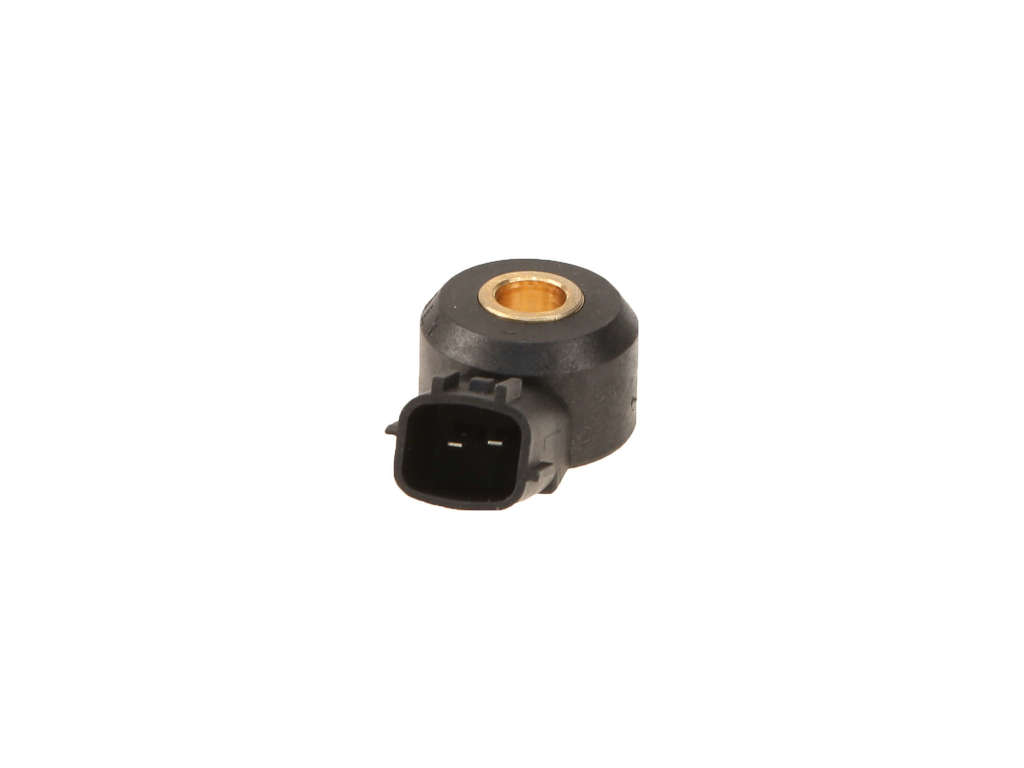
- Knock Sensor
(OEM #22060AA180 or 22060AA18A)— This is the updated, more durable part recommended by Subaru TSB 07-133-18R to fix the common failure of the original sensor (P/N 22060AA160).
Trusted brands: Subaru (Genuine), Denso (OEM manufacturer), Hitachi
OEM price range: $45-$90
Aftermarket price range: $30-$60 - Engine Wiring Harness
(OEM #24020AF830 (example for 2017 3.6R))— Needed only if rodent damage to the harness is extensive and cannot be easily repaired by splicing wires.
Trusted brands: Subaru (Genuine)
OEM price range: $200-$400
Aftermarket price range: N/A
Related Codes That Often Appear With This One
- P0328 — This is the equivalent code for Bank 1 (Knock Sensor 1 Circuit High). If both sensors were damaged by the same event (e.g., a rodent) or are failing due to age, you might see both codes. On 3.6L engines, it's common to replace both sensors at the same time due to access difficulty.
- P0332 — This is the 'Circuit Low' version of the Bank 2 code. Seeing both P0332 and P0333 could point to intermittent wiring issues or a failing sensor that is fluctuating between open and shorted states.
Technical Service Bulletins (TSBs) & Recalls
- 07-133-18R: Announces a design change for the knock sensor to improve durability and provides the updated part number (22060AA180 for Japan-built, 22060AA18A for US-built) to use as a replacement for DTCs P0327, P0328, P0332, and P0333.
Platform-Specific Known Issues
- TSB 07-133-18R: Subaru identified that the original knock sensors on these naturally aspirated engines were not sufficiently durable. They recommend replacing them with a more heat-resistant part originally designed for turbo engines if any knock sensor codes (including P0333) appear.
- Rodent Damage: The soy-based wiring insulation used in many modern cars, combined with the warm, sheltered location of the knock sensor harness on top of the engine, makes it a very common target for rodents. Many owner reports of P0333 are ultimately traced to chewed wires.
- 3.6L Engine Access: On the EZ36 engine, the knock sensors are located under the intake manifold. While the official procedure requires removing the manifold (a 3-5 hour job), many DIYers have successfully replaced them from the back of the engine bay using a combination of long extensions, swivel sockets, and patience. This turns a major repair into a more manageable, an albeit tight, one-hour job.
Mechanic-Grade Diagnostic Values
- Knock Sensor Internal Resistance — expected: 400 kΩ to 700 kΩ between the sensor's terminal and its metal housing/ground.. Failure: A reading of 0 Ω (shorted), infinite/OL (open), or significantly outside the expected range indicates a faulty sensor.
- Harness Voltage (Key On, Engine Off) — expected: ~5 Volts DC at the harness connector (sensor side unplugged), measured between the signal wire pin and a known good ground.. Failure: A reading of 0V points to an open wire or an ECM fault. A reading significantly above 5V could indicate a short to power.
- Sensor AC Voltage Output (Dynamic Test) — expected: A fluctuating AC voltage reading, typically >1V AC, when tapping the engine block near the sensor with a wrench or prybar (engine running).. Failure: No AC voltage or a very low millivolt reading while tapping indicates the sensor's piezoelectric element has failed.
Hidden / Shadow Codes Worth Checking
- Dynamic Advance Multiplier (DAM): This is not a code, but a critical live data parameter. It represents a global ignition timing adjustment learned by the ECU. A value of 1.0 (on 2.5L) or 16 (on older 2.0L) is ideal. If the DAM drops, it indicates the ECU has detected significant or consistent knock events and has globally retarded timing to protect the engine. (see via Subaru Select Monitor (SSM) or advanced OBD-II scanners/software like COBB Accessport.)
- Feedback Knock Correction / Fine Knock Learning: These live data parameters show real-time and learned ignition timing reductions. 'Feedback Knock' is an immediate, temporary timing pull in response to a perceived knock event. 'Fine Knock Learning' is a longer-term learned correction. Consistently high negative values (e.g., -2.8 or worse) can indicate a persistent issue. (see via Subaru Select Monitor (SSM) or advanced OBD-II scanners/software.)
Scan Tool Commands That Help
- Subaru Select Monitor (SSM) or equivalent: Current Data Display & Save — Used to monitor live data parameters like DAM, Feedback Knock Correction, and Fine Knock Learning. Observing these values during a test drive is the professional method for diagnosing how the ECU is reacting to the knock sensor input, beyond just the presence of the P0333 code.
Wiring & Ground Locations
- ECU Grounds — On top of the intake manifold. These are critical as the Subaru ECU receives its primary ground reference from this point.. A poor ground at the intake manifold can cause floating ground issues and erratic sensor readings, potentially leading to a 'Circuit High' code. This is a crucial check if the sensor and wiring test good.
- Main Engine Ground — Typically a ground strap connecting the engine block to the chassis, often located near the starter or on the passenger side near the firewall (sometimes called a 'dog bone' strap).. Ensures the entire engine block has a solid ground reference to the chassis and battery negative. A corroded or loose main ground can cause a variety of electrical faults.
- E14 — This is the wiring diagram identifier for the knock sensor connector itself.. Useful when referencing factory wiring diagrams to trace the circuit back to the ECM.
Real Owner Repair Stories
- Reddit user 'SeaDull1651' in r/1stGenTundras (applies to general P0333 diagnosis) (Toyota Tundra (General P0333 principles)) — Intermittent P0333 code, noticeable power loss when CEL is on.
❌ Tried (didn't work) The owner planned to replace ignition coils and had already replaced spark plugs, assuming a combustion issue.
✅ What actually fixed it The expert user advised that P0333 is a circuit fault, not an actual knock indicator. Given the intermittent nature, especially after hitting a bump, the cause was identified as a likely break in the wiring harness making intermittent contact or shorting out. The recommended fix was to inspect and likely replace the knock sensor sub-harness, which is a common failure point due to heat and vibration.
OEM Part Supersession History
22060AA160→22060AA180 (For Japan-built vehicles) or 22060AA18A (For US-built SIA vehicles)— The original sensor was prone to cracking and failure from heat and vibration. The new part, originally for DIT engines, offers improved durability and heat resistance.
Model Year Variations Within This Range
- 2012-2017: The primary variation is not by year, but by the vehicle's assembly plant. Japan-built Subarus use the updated knock sensor part number 22060AA180, while US-built (SIA) Subarus use 22060AA18A, as specified in TSB 07-133-18R.
Helpful Videos
We Have This Part in Stock


The information in this article is provided for general reference and educational purposes only. Vehicle specifications, procedures, and part compatibility can vary by production date, trim level, and region. Always consult your vehicle's factory service manual and verify part numbers before purchasing or performing repairs. Safety-critical components such as airbags, seat belts, and braking systems should be installed by a qualified professional.
- Subaru OUTBACK:
- 🧭 Diagnostic Flowchart
- 🎬 Helpful Videos
- 🛍️ Shop This Part
- What's Unique About the 2012-2017 Subaru OUTBACK
- Symptoms You May Notice
- Most Likely Causes
- Rare But Worth Checking
- Diagnosis Steps
- Parts You'll Likely Need
- Related Codes That Often Appear With This One
- Technical Service Bulletins (TSBs) & Recalls
- Platform-Specific Known Issues
- Mechanic-Grade Diagnostic Values
- Hidden / Shadow Codes Worth Checking
- Scan Tool Commands That Help
- Wiring & Ground Locations
- Real Owner Repair Stories
- OEM Part Supersession History
- Model Year Variations Within This Range
- 🎟️ Get 5% Off