

P0333 on 2013-2017 Subaru Outback 2.5L: Knock Sensor 2 Circuit High Causes and Fixes
On a 2013-2017 Subaru Outback, code P0333 almost always means the driver's side (Bank 2) knock sensor has failed. This is a known issue with a Subaru Technical Service Bulletin (TSB 07-133-18R). The fix is to replace it with an updated OEM part (22060AA180 or 22060AA18A), which costs around $45-$90.
- P0333 on a 2013-2017 Outback is almost always a failed driver's side knock sensor.
- This is a known issue covered by Subaru TSB 07-133-18R.
- The correct fix is to replace the sensor with the updated OEM part number 22060AA180 (Japan-built) or 22060AA18A (US-built).
- The code indicates an electrical fault, not a mechanical engine problem.
- The vehicle is safe to drive in the short term, but performance and fuel economy will be reduced.
What's Unique About the 2013-2017 Subaru Outback
This code is extremely common on Subaru models from this era using the FB25 engine, including the Outback, Forester, and Legacy. The original knock sensor (part #22060AA160) was prone to developing internal cracks from heat and vibration, prompting Subaru to issue a revised Technical Service Bulletin (TSB 07-133-18R). The TSB advises replacing the faulty sensor with a more durable, heat-resistant part originally designed for turbo models. The problem is so widespread that for a P0333 code on this vehicle, the cause is almost certainly the sensor itself rather than a more complex wiring or engine issue.
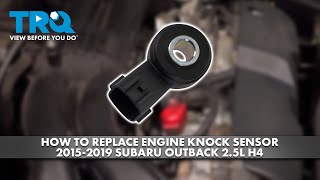
Generation note: The 2013-2017 range covers the fourth generation (2013-2014) 🎬 Watch: Step-by-step knock sensor replacement for 2010-2014 models. and fifth generation (2015-2017) 🎬 See this walkthrough for replacing the sensor on 2015-2019 Outbacks. Outback. Both generations use the 2.5L FB25 engine and are affected by the same knock sensor issue described in TSB 07-133-18R. The replacement procedure is fundamentally the same, involving a 12mm bolt located on the driver's side of the engine block.
Symptoms You May Notice
- Check Engine Light is on
- Reduced engine power and sluggish acceleration
- Decreased fuel economy
- Hesitation during acceleration
- Pinging noises from the engine (in some cases)
- Replacing spark plugs or ignition coils. A P0333 is an electrical circuit code, not a misfire or combustion quality code.
- Assuming there is a mechanical engine problem causing knock. This code specifically points to a fault in the sensor's electrical circuit, not the detection of actual engine knock.
- Replacing the wrong knock sensor. Bank 2 is on the driver's side in a Subaru boxer engine.
Most Likely Causes
- Failed Bank 2 Knock Sensor 🔴 High Probability → Shop Ignition Knock (Detonation) Sensor The original factory sensor (part #22060AA160) is known to be defective and prone to internal cracking from heat and vibration, as acknowledged by Subaru in TSB 07-133-18R. Manufacturer TSB Bulletin #07-133-18 notes that the knock sensor for DIT (Direct Injection Turbo) engines is now utilized for NA (Naturally Aspirated) engines to improve durability and resistance to heat.
How to confirm: The sensor is located on the driver's side of the engine block, behind the A/C compressor. Visually inspect it for cracks. If no visible damage, the most practical diagnostic step, given the high failure rate and low part cost, is replacement. A multimeter can also be used to test resistance; a good sensor should read between 500 and 620 kΩ. A reading of OL (open) or 0 (short) indicates failure.
Typical fix: Replace the Bank 2 (driver's side) knock sensor with the updated OEM part. Ensure the mounting surface is clean and the bolt is torqued correctly.
Est. part cost: $45-$90 - Damaged Wiring or Connector ⚪ Low Probability The wiring harness is in an area susceptible to heat and vibration. More specifically, the soy-based wiring insulation used in this era is known to attract rodents, which chew the wires causing a short or open circuit. This is a very common secondary cause if the sensor itself is not the issue.
How to confirm: Visually inspect the wiring harness and connector pigtail leading to the knock sensor for any signs of chewing, fraying, melting, or corrosion at the connector pins. The harness is located on top of the engine block.
Typical fix: Repair the damaged section of the wiring harness or replace the connector pigtail.
Est. part cost: $15-$40
Rare But Worth Checking
- Rodent Damage to Harness: This is a specific and frequently-cited reason for wiring damage on Subarus of this era. The soy-based wire coating is attractive to mice and other rodents, and the knock sensor harness's location on top of the engine provides a warm shelter. Always check for signs of nesting material or chewed wires in this area.
- Poor Electrical Ground: A poor ground connection for the ECU, often at the intake manifold, can cause a variety of incorrect sensor readings, including a P0333. This is unlikely but worth checking if a new sensor doesn't fix the code.
- Faulty Engine Control Module (ECM): → Shop Engine Control Module (ECM) An internal fault in the ECM is extremely rare but can cause this code. This should only be considered after all other possibilities, including wiring and grounds, have been exhausted.
Diagnosis Steps
- Read the code with an OBD-II scanner to confirm P0333 is present.
- Visually inspect the wiring harness and connector for the Bank 2 (driver's side) knock sensor. Look for any signs of damage, such as chewed wires from rodents, melting, or corrosion.
- If wiring appears intact, the most probable cause is a failed sensor. Given the known issue and TSB, replacing the sensor is the most common and effective next step.
- Replace the Bank 2 knock sensor. It is located on the driver's side of the engine block, often requiring a 12mm swivel socket for access behind the A/C compressor. Ensure the mounting surface on the block is clean.
- Install the new sensor and torque the mounting bolt to exactly 17.7 ft-lbs (24 Nm). Do not use anti-seize compound on the bolt or sensor surface, as it can interfere with the sensor's reading by altering the torque value and grounding.
- Reconnect the electrical connector, ensuring it clicks into place. Reconnect the negative battery terminal.
- Clear the trouble code with the scanner and perform a test drive to see if the code returns.
- If the code persists after replacing the sensor, perform a more in-depth electrical diagnosis: check for a short to voltage in the signal wire and verify the ECM ground at the intake manifold is clean and secure.
Parts You'll Likely Need
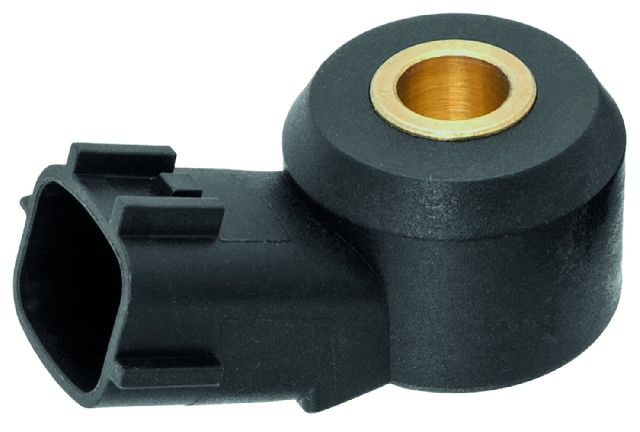
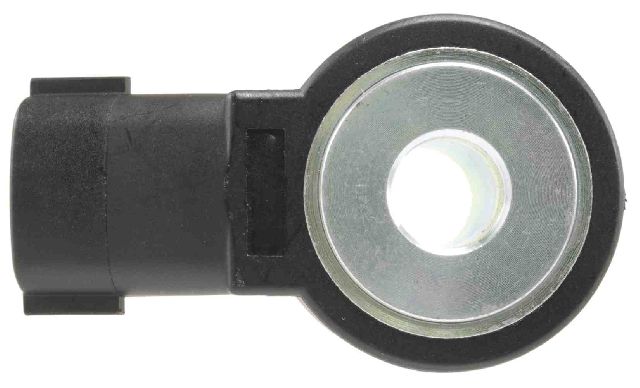
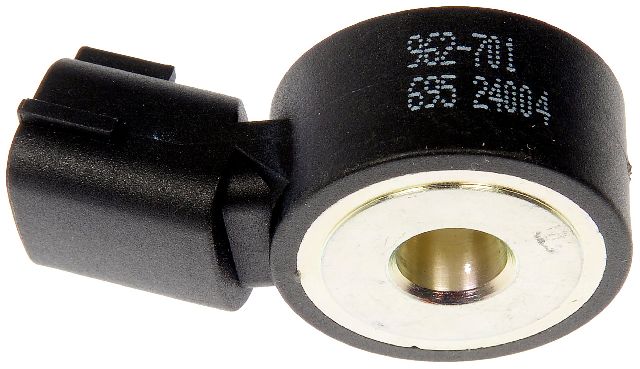
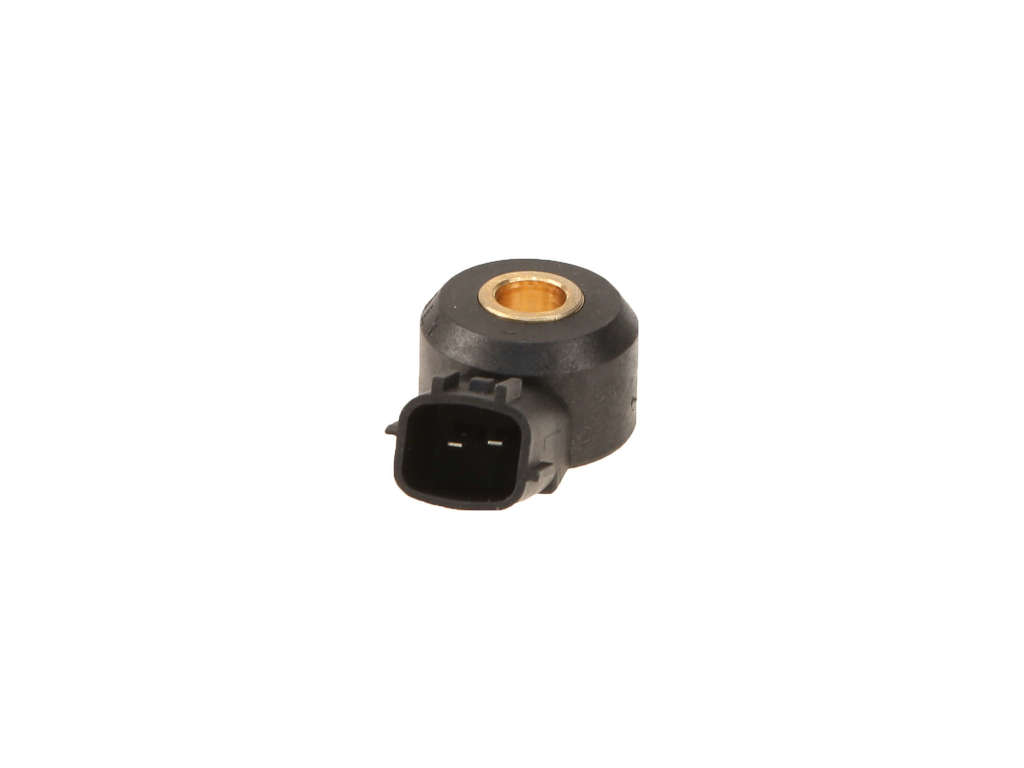
- Knock Sensor (Bank 2)
(OEM #22060AA180 or 22060AA18A)— This is the updated, more durable OEM part recommended by Subaru's TSB 07-133-18R to fix the high failure rate of the original sensor (22060AA160). 22060AA180 is for Japan-built vehicles and 22060AA18A is for US-built vehicles.
Trusted brands: Subaru (Genuine), Denso, NTK
OEM price range: $45-$90
Aftermarket price range: $30-$60
Related Codes That Often Appear With This One
- P0332 — This is the 'Circuit Low' code for the same sensor. If the sensor is failing intermittently, it can cause the signal to fluctuate between being too high and too low, triggering both codes.
- P0327 / P0328 — These are the 'Circuit Low' and 'Circuit High' codes for the Bank 1 (passenger side) knock sensor. The TSB for the faulty sensors covers all four codes, as both sensors are prone to the same failure.
Technical Service Bulletins (TSBs) & Recalls
- 07-133-18R: Acknowledges the original knock sensor was prone to cracking and failure, recommending replacement with an updated part (22060AA180 or 22060AA18A). It covers codes P0327, P0328, P0332, and P0333.
- TSB Bulletin #07-133-18: Notes that in some cases, the Check Engine light may illuminate and a knock sensor-related DTC (P0327, P0328, P0332, or P0333) may be set in the ECM memory. The bulletin specifies that the knock sensor for DIT engines is now utilized for NA engines to increase durability.
Platform-Specific Known Issues
- Subaru Technical Service Bulletin TSB 07-133-18R was released to address the high rate of failure for knock sensors on this and other models, causing codes P0327, P0328, P0332, and P0333. The bulletin recommends replacing the original part with an updated, more durable sensor.
- The location of the sensor and the use of soy-based wiring insulation make the harness a common target for rodent damage, which can mimic sensor failure and cause a P0333 code.
Mechanic-Grade Diagnostic Values
- Knock Sensor Internal Resistance — expected: 500 kΩ to 620 kΩ. Failure: A reading of OL (infinity/open circuit), near 0 Ω (short circuit), or significantly outside the expected range indicates a failed sensor. 🎬 Watch: How to diagnose and test Subaru knock sensor resistance.
- Harness Voltage (at sensor connector, Key On, Engine Off) — expected: ~5 Volts DC reference from ECM. Failure: A reading near 0V suggests an open wire or an ECM fault. A P0333 'Circuit High' code can be caused by this wire being shorted to a power source.
- Bias Voltage (sensor connected, Key On, Engine Off) — expected: ~2.5 Volts DC. Failure: If the voltage remains at 5V, the sensor is internally open. If it reads 0V, the sensor or wiring is shorted to ground. A P0333 'Circuit High' fault is specifically indicated when the voltage is stuck high.
- Mounting Bolt Torque — expected: 17.7 ft-lbs (24 Nm). Failure: Over-tightening can damage the sensor's internal piezoelectric crystal, while under-tightening can prevent it from properly detecting engine vibrations. Both can lead to incorrect readings.
Wiring & Ground Locations
- Bank 2 Knock Sensor Connector — On the driver's side of the engine, located deep behind the A/C compressor and below the intake manifold.. This is the primary connection point to test. Corrosion or damage here can directly cause P0333. The connector has tabs on both sides that need to be pinched to release.
- Knock Sensor Ground Path — The sensor grounds through its metal body to the engine block itself. The mounting bolt provides the clamping force for this ground connection.. A dirty or corroded mounting surface on the engine block can create a poor ground, leading to erratic or high voltage readings. It is critical to clean this surface before installing a new sensor.
OEM Part Supersession History
22060AA160→22060AA180 (for Japan-built vehicles) or 22060AA18A (for US-built vehicles)— The original sensor was prone to cracking from heat and vibration. The new part, originally for turbo models, offers improved durability and heat resistance.
Heads up: The original part 22060AA160 is out of production and should not be used. Always use the updated part number for replacement.
Model Year Variations Within This Range
- 2013-2014 vs 2015-2017: While both 4th Gen (13-14) and 5th Gen (15-17) Outbacks with the FB25 engine are affected by the faulty knock sensor, the physical access can vary slightly. On the 2015-2017 models, the sensor is located directly behind the A/C compressor. On the earlier 2010-2014 models, it is generally described as being under the intake manifold near the throttle body. However, the part number and fundamental cause remain the same across the entire 2013-2017 range.
Diagnostic Flowchart
Other Known Issues on This Vehicle
Issues unrelated to this code that are worth knowing about as an owner of this generation:
- Excessive Oil Consumption 🔴 High — Most prevalent in 2013 models. Caused by defective piston rings, leading to a class-action lawsuit (Yaeger v. Subaru). Onset can be as early as 45,000 miles. (Ref: Subaru settled the lawsuit by extending the powertrain warranty to 8 years/100,000 miles and reimbursing owners for past repairs and oil purchases.)
- CVT Transmission Shudder/Failure 🔴 High — Commonly reported in 2010-2017 models, causing shuddering or vibration during acceleration. Can lead to complete transmission failure requiring replacement costing thousands of dollars. (Ref: Subaru extended the CVT warranty to 10 years/100,000 miles for many affected vehicles due to widespread complaints.)
- Spontaneously Cracking Windshields 🟠 Medium — Affects 2015-2016 models in this range. A defect related to the windshield de-icer element makes the glass prone to cracking without impact. This also led to a class-action lawsuit. (Ref: Subaru settled the lawsuit by extending the windshield warranty to 8 years and offering reimbursements for prior replacements.)
- Parasitic Battery Drain 🟠 Medium — Some owners experience batteries dying repeatedly after the car sits for a few days. This is often traced to the Data Communication Module (DCM) for the Starlink system failing to enter sleep mode. (Ref: Subaru has issued software updates (e.g., Service Program WRD-24 for later models) to fix the DCM logic flaw. In some cases, the DCM fuse is pulled by owners as a workaround.)
Used vs. New Parts: Buying Guide for This Vehicle
When a used part is the smart pick: Never. Given the extremely high failure rate of the original part (22060AA160) and the low cost of a new, updated OEM sensor, buying a used knock sensor is a poor decision. A used part is likely to be the original faulty design and may have already failed or have very little life left.
What to inspect on the donor part:
- Not applicable. Do not purchase this part used.
OEM-only on this vehicle (don't cheap out):
- Knock Sensor
Aftermarket brands forum-validated for this vehicle:
- Denso
- NTK
Brands owners have reported issues with on this vehicle:
- Unbranded, low-cost sensors from online marketplaces are not recommended as they may not be calibrated correctly for the FB25 engine's specific knock frequencies, leading to persistent codes or poor performance.
Real Owner Stories
Aggregated from forums and TSBs cited above. Mileages and costs reflect what owners reported in those sources.
early/mid 2010s Subaru Outback 2.5L H4
Symptoms: An intermittent P0333 fault code was found during a vehicle inspection.
What fixed it: The issue was not resolved, but the mechanic suspected an intermittent short circuit within the knock sensor itself.
Source hint: r/subaruoutback
2011 Subaru Outback 3.6r
Symptoms: A P0333 code appeared after experiencing vibration while braking.
What fixed it: The owner was asking for advice on whether the vibration could have triggered the fault; a specific fix was not described in the source.
Source hint: Reddit r/AskAMechanic - Code P0333 - Subaru Outback 2011 3.6r
Related OBD-II Codes
Frequently Asked Questions
My 2015 Outback has a P0333 code. Does the Subaru TSB 07-133-18R apply to my car?
Where is the Bank 2 knock sensor located on my 2.5L Outback?
I'm replacing the knock sensor myself. What is the correct torque spec and should I use anti-seize?
The knock sensor itself looks fine. Could something else cause the P0333 code?
What is the updated part number for the knock sensor on my 2013-2017 Outback?
How can I test the old knock sensor to confirm it has failed?
Helpful Videos
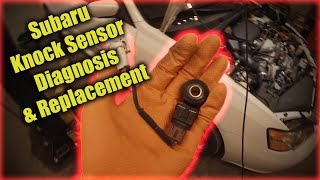
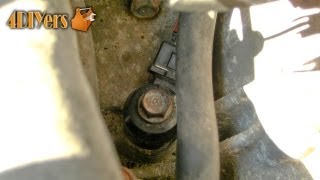
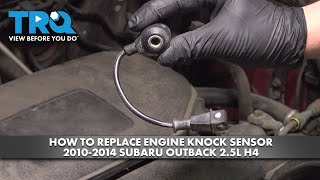
We Have This Part in Stock

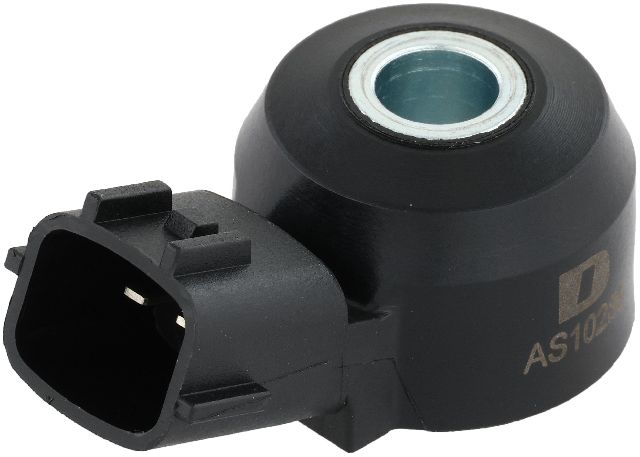

The information in this article is provided for general reference and educational purposes only. Vehicle specifications, procedures, and part compatibility can vary by production date, trim level, and region. Always consult your vehicle's factory service manual and verify part numbers before purchasing or performing repairs. Safety-critical components such as airbags, seat belts, and braking systems should be installed by a qualified professional.
- Subaru Outback:
- 🧭 Diagnostic Flowchart
- 🎬 Helpful Videos
- 🛍️ Shop This Part
- What's Unique About the 2013-2017 Subaru Outback
- Symptoms You May Notice
- Most Likely Causes
- Rare But Worth Checking
- Diagnosis Steps
- Parts You'll Likely Need
- Related Codes That Often Appear With This One
- Technical Service Bulletins (TSBs) & Recalls
- Platform-Specific Known Issues
- Mechanic-Grade Diagnostic Values
- Wiring & Ground Locations
- OEM Part Supersession History
- Model Year Variations Within This Range
- Other Known Issues on This Vehicle
- Used vs. New Parts: Buying Guide for This Vehicle
- Real Owner Stories
- early/mid 2010s Subaru Outback 2.5L H4
- 2011 Subaru Outback 3.6r
- Related OBD-II Codes
- Frequently Asked Questions
- 🎟️ Get 5% Off