

P0333 on 2007-2017 Toyota Camry 3.5L V6: Knock Sensor Circuit High Input Causes and Fixes
This code means the knock sensor on Bank 2 (the firewall side) has a circuit problem, most often a failed sensor. The repair is labor-intensive, requiring intake manifold removal. Expect a shop to charge $500-$800+ for the job. It is highly recommended to replace both sensors and the harness at the same time to prevent a repeat failure.
- P0333 on a 2007-2017 Camry V6 points to an electrical fault in the Bank 2 (rear) knock sensor circuit.
- The most likely cause is a failed sensor or its wiring harness, both located under the intake manifold.
- This is not a simple DIY job for beginners; it requires several hours of labor to access the parts. Professional service is recommended.
- To avoid having to do the labor-intensive job twice, always replace both knock sensors and the connecting wire harness at the same time.
- Always use new intake manifold gaskets during reassembly to prevent vacuum leaks.
What's Unique About the 2007-2017 Toyota Camry
On the Toyota 2GR-FE V6 engine, the two knock sensors are located deep in the engine valley, underneath the entire intake manifold assembly. This location makes them very difficult to access, turning a relatively inexpensive part replacement into a significant labor-intensive job. Due to the high heat in this area and the difficulty of the repair, it is standard practice and highly recommended by technicians to replace both knock sensors and the short wiring harness that connects them at the same time, even if only one is throwing a code. Rodent damage to the wiring harness in the engine valley is also a known issue that can cause this code, as the location provides shelter for pests and Toyota's soy-based wire insulation can be attractive to them.
Generation note: This guide covers the Toyota Camry XV40 (2007-2011) and XV50 (2012-2017) generations, both of which used the 2GR-FE 3.5L V6 engine. The location of the knock sensors and the repair procedure are identical for both generations and also apply to a wide range of other Toyota and Lexus models with this engine.
Symptoms You May Notice
- Check Engine Light is on
- Reduced engine power and sluggish acceleration (fail-safe mode)
- Decreased fuel economy
- Audible engine pinging or knocking, especially under load (though less common as the code often indicates a circuit fault)
- Inability to use cruise control or shift into overdrive in some cases
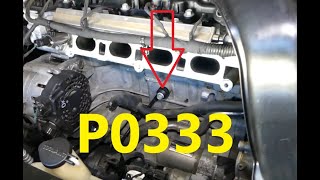
- Vehicle may go into 'limp mode', preventing shifts into higher gears 🎬 See this video on P0333 causes and fixes
- Replacing only the Bank 2 knock sensor. While this might fix the code temporarily, the high labor cost makes it a poor value. The Bank 1 sensor and harness are subjected to the same conditions and may fail soon after, requiring the entire job to be done again.
- Assuming the engine has a mechanical knock. The P0333 code specifically points to a circuit problem (high voltage), not necessarily an active engine knock. The ECM is reporting a fault with the sensor's electrical circuit itself.
- Using cheap, non-OEM sensors. Owners on forums report that cheap aftermarket sensors can fail quickly or be out of specification from the start, causing the code to return. Using OEM (Toyota) or reputable OE-supplier (Denso, NTK) parts is highly recommended.
Most Likely Causes
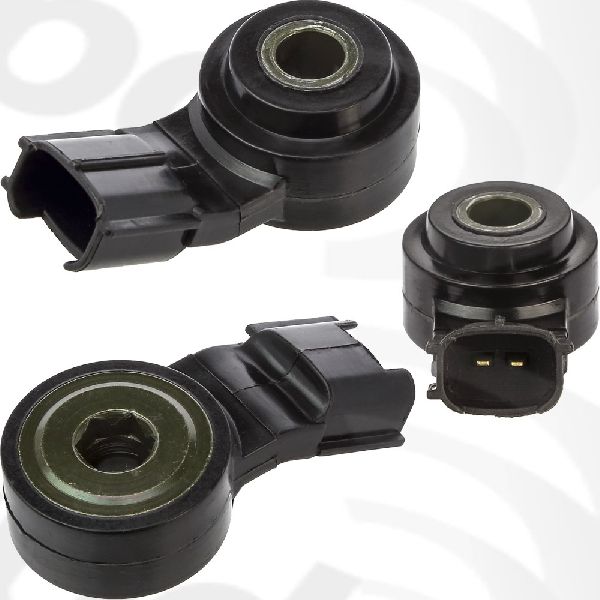
- Failed Knock Sensor (Bank 2) 🔴 High Probability → Shop Ignition Knock (Detonation) Sensor The sensors are located in a high-heat area in the engine valley, which can lead to premature failure of the internal piezoelectric element. Corrosion can also build up on the sensor body and connector, causing internal resistance to spike.
How to confirm: Confirmation requires accessing the sensor and testing its resistance with a multimeter. A healthy sensor should have a resistance between 120-280 kΩ at room temperature. A reading of several MΩ (mega-ohms) or an open circuit indicates a failed sensor. However, due to the extreme labor required to access it, it's often diagnosed by exclusion and replaced based on the high probability of failure.
Typical fix: Replace the Bank 2 knock sensor. It is strongly recommended to replace the Bank 1 sensor and the sub-harness at the same time.
Est. part cost: $40-$150 per sensor - Damaged Knock Sensor Wiring Harness 🟡 Medium Probability → Shop Engine Wiring Harness The wiring harness is located in the same high-heat engine valley. It can become brittle and crack over time. It is also a common target for rodents seeking shelter, who may chew the soy-based insulation on the wires, causing a short or open circuit.
How to confirm: A visual inspection of the harness after removing the intake manifold is the only way to confirm. Look for chew marks, melted insulation, or brittle/cracked wires. A short-to-power in the wiring can cause the 'High Input' code.
Typical fix: Replace the knock sensor wiring sub-harness. This is almost always done in conjunction 🎬 Watch how to fix a P0333 knock sensor code with sensor replacement.
Est. part cost: $40-$75
Rare But Worth Checking
- Faulty Engine Control Module (ECM): → Shop Engine Control Module (ECM) This is very rare. Before suspecting the ECM, all other possibilities, especially the sensor and wiring, must be exhaustively checked. An ECM fault would typically be the last resort in diagnosis.
- Loose Knock Sensor: → Shop Ignition Knock (Detonation) Sensor If the sensor is not torqued correctly (typically 15 ft-lbs) to the engine block, it cannot detect vibrations properly. This is unlikely unless recent work has been performed in that area.
- Poor Connection at ECM: Corrosion or a loose pin at the main ECM connector for the knock sensor circuit could cause a high input reading, but this is extremely uncommon.
Diagnosis Steps
- Verify the code with an OBD-II scanner. Note any other codes present and review freeze frame data to understand conditions when the code was set.
- Identify Bank 2. On the transverse-mounted 2GR-FE, Bank 2 is the cylinder bank closer to the firewall. Bank 1 is closer to the radiator.
- Due to the sensor's location, external wiring checks are limited. You can inspect the main engine harness where it connects to the knock sensor sub-harness, but the sensors themselves are inaccessible without major disassembly.
- The most practical diagnostic step, given the high failure rate and location, is to proceed with the removal of the intake manifold.
- Once the intake manifold is removed, perform a thorough visual inspection of the knock sensors and the wiring harness for signs of damage, such as cracks, melting, or rodent chew marks.
- If damage is found on the harness, it must be replaced.
- Test the old sensor's resistance with a multimeter. A correct reading should be between 120-280 kΩ. Readings in the MΩ range or an open circuit confirm a bad sensor.
- Even if only one sensor tests bad or no visible damage is found, it is highly recommended to replace both knock sensors and the sub-harness due to the labor involved in accessing them.
- Install the new sensors, ensuring they are torqued to the manufacturer's specification of 15 ft-lbs (20 N*m). Do not over-tighten.
- Reassemble the intake manifold using new gaskets for the upper plenum and lower manifold.
- Clear the DTCs with the scanner and perform a test drive to ensure the code does not return.
Parts You'll Likely Need
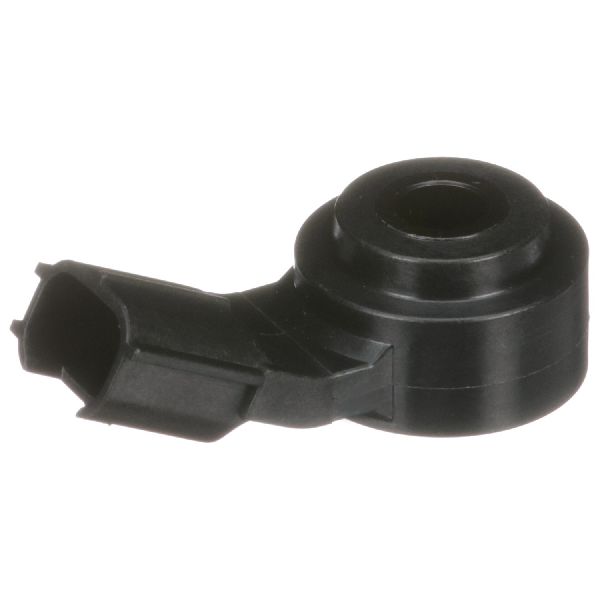
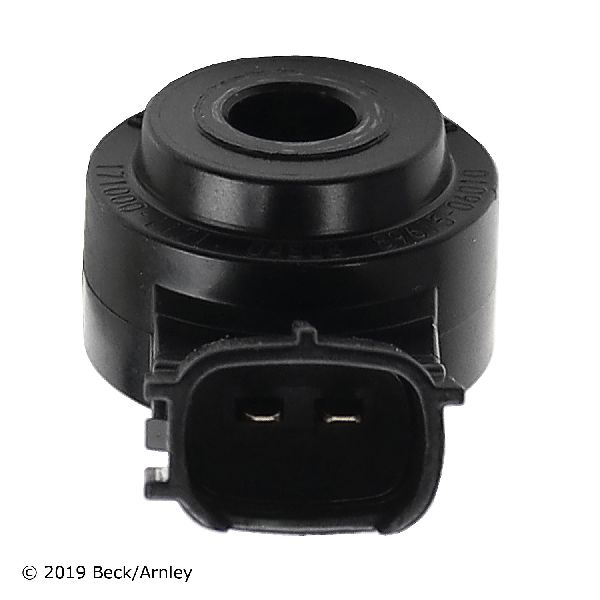
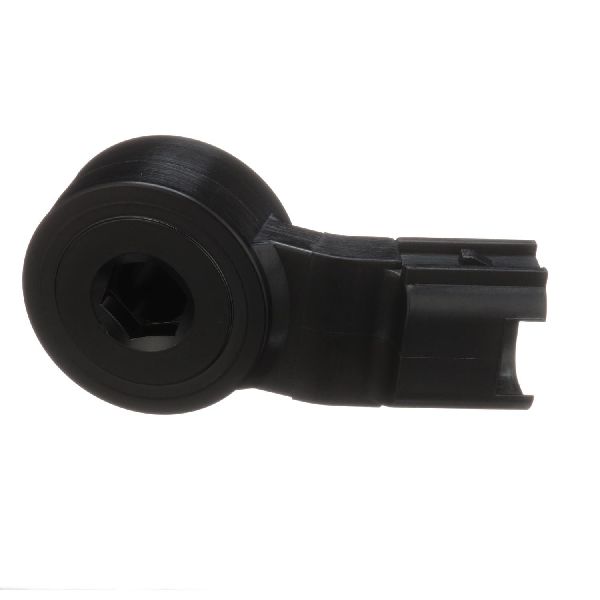
- Knock Sensor
(OEM #89615-06030 (Verify by VIN, may supersede to 89615-20090))— This is the most common point of failure for the P0333 code. It is recommended to replace both sensors (Bank 1 and Bank 2).
Trusted brands: Toyota (OEM), Denso, NTK
OEM price range: $120-$180
Aftermarket price range: $40-$90 - Knock Sensor Wire Harness
(OEM #82219-08010)— This harness connects both sensors to the main engine harness. It lives in a high-heat environment and is prone to degradation and rodent damage. It should always be replaced with the sensors.
Trusted brands: Toyota (OEM)
OEM price range: $40-$75
Aftermarket price range: $20-$40 - Intake Manifold Gasket (Lower)
(OEM #17177-AD010 (Quantity: 2))— These are single-use gaskets that seal the lower intake manifold to the cylinder heads. They must be replaced.
Trusted brands: Toyota (OEM), Fel-Pro, Mahle
OEM price range: $15-$25 each
Aftermarket price range: $5-$15 each - Air Surge Tank to Intake Manifold Gasket (Plenum Gasket)
(OEM #17176-0P030 (or 17176-0P031))— This single-use gasket seals the upper intake plenum to the lower intake manifold and must be replaced during reassembly.
Trusted brands: Toyota (OEM), Fel-Pro
OEM price range: $20-$35
Aftermarket price range: $10-$20
Related Codes That Often Appear With This One
- P0328 — P0328 is the 'Knock Sensor 1 Circuit High Input (Bank 1)' code. It's common to see both codes if the shared wiring harness is damaged by rodents or if both sensors fail around the same time due to age and heat exposure.
- P0332 — P0332 is 'Knock Sensor 2 Circuit Low Input'. While P0333 is for high input, seeing either code points to a problem with the Bank 2 sensor or its circuit. A damaged wire could potentially cause either a high (short to power) or low (open circuit) input reading depending on how it fails.
Technical Service Bulletins (TSBs) & Recalls
- T-SB-0312-17: This TSB addresses a torque converter shudder on 2012-2014 Camrys, an issue unrelated to P0333 but a very common problem for the platform.
Platform-Specific Known Issues
- Owner Experience with Intermittent Code: A Reddit user with a 1GR-FE (a similar V6) documented their P0333 repair. The code was intermittent and seemed related to fuel octane. Upon disassembly, no rodent damage was found. Testing the Bank 2 sensor revealed its resistance was fluctuating wildly between 2 MΩ and 11 MΩ, far above the 280 kΩ upper limit, confirming an internal failure. The new NTK sensor read a healthy 200 kΩ.
Mechanic-Grade Diagnostic Values
- Knock Sensor Resistance — expected: 120 to 280 kΩ at 68°F (20°C). Failure: A reading in the mega-ohm (MΩ) range, or an open/infinite resistance reading, indicates a failed sensor.
- Knock Sensor Torque Specification — expected: 15 ft-lbs (20 N*m). Failure: Incorrect torque can lead to improper vibration detection. Over-tightening can damage the sensor.
- ECM Power Source Voltage (+B, +B2 to E1) — expected: 9 to 14 V with ignition switch ON. Failure: Voltage outside this range indicates a power supply issue to the ECM, which could affect all sensor readings.
- Techstream Live Data - Knock Feedback Value — expected: Value should be stable near the learned baseline (e.g., -3 to -3.6) under normal operation.. Failure: A value that is erratic, stuck high, or shows large deviations without corresponding engine load can indicate a sensor or circuit fault.
Scan Tool Commands That Help
- Toyota Techstream: All Readiness Check — After a repair, use this utility and input DTC P0333 to check the DTC judgment result without extensive driving. If the result is 'INCOMPLETE', idling the engine for 5 minutes can help confirm the fix.
- Toyota Techstream: Data List — Monitor the 'Knock Feedback Value' and 'Knock Correct Learn Value' to observe how the ECM is interpreting knock signals in real-time. This can help differentiate between a true knock and a sensor circuit fault.
Wiring & Ground Locations
- ECM Connector C55 (Bank 2) — The main engine computer (ECM) is located on the firewall behind the engine in the Camry. Connector C55 is one of the large multi-pin connectors.. The signal from the Bank 2 knock sensor (KNE2) and its ground (EKN2) terminate at this connector. Probing these pins can test the entire circuit from the ECM to the sensor sub-harness connector.
- Engine Harness Ground Points — The 2GR-FE has critical harness grounds on the valve covers that attach to a bracket on top of the strut tower. There is also a sensor ground bundle that attaches to the front valve cover.. A poor ground connection can introduce noise or a voltage offset into the knock sensor circuit, potentially causing a 'High Input' code even with a good sensor and wiring.
Real Owner Repair Stories
- Reddit user on r/4thGen4Runner (2004 Toyota 4Runner V6 (1GR-FE, similar architecture to 2GR-FE)) — Intermittent P0333 code that appeared more frequently with lower octane (85) fuel and less with higher octane (91).
❌ Tried (didn't work) Initially just monitoring the code, as it was intermittent.
✅ What actually fixed it Replaced both knock sensors and the wiring harness. The old Bank 2 sensor's resistance was measured and found to be fluctuating wildly between 2 MΩ and 11 MΩ, far outside the specified 120-280 kΩ range, confirming an internal failure. The new sensor tested at a healthy 199.9 kΩ. No rodent damage was found; the failure was attributed to corrosion and heat. - NHTSA ODI #10821880 (Toyota Tacoma) — An owner reported that while driving in the city, the TRAC and Check Engine light came on. A code reader retrieved P0333, and the dealership confirmed that rodents had chewed the wiring.
- NHTSA ODI #10626222 (Toyota Truck) — A vehicle was taken to a dealer for a P0333 code where technicians identified a cable that required replacement due to rodent damage.
- NHTSA ODI #11624192 (Toyota Tacoma) — An owner noted that a loose gas cap threw a P0333 code for knock sensor bank 1 or 2, and expressed concern regarding the labor-intensive nature of the repair under the manifold.
OEM Part Supersession History
89615-20090→89615-06010, 89615-BZ030, 89615-BZ040— Part consolidation and potential minor revisions over a long production run across many models.
Heads up: While these parts are listed as replacements, it is always critical to verify the exact part number with a Toyota dealer using the vehicle's VIN to ensure compatibility.82219-48010→82219-08010— Part number update for the knock sensor sub-harness.
Heads up: The harness 82219-08010 is specified for the 2GR-FE and similar V6 engines and should be used for this repair.
Diagnostic Flowchart
Other Known Issues on This Vehicle
Issues unrelated to this code that are worth knowing about as an owner of this generation:
- VVT-i Oil Line Failure (Rubber to All-Metal) 🔴 High — Common on early 2GR-FE engines (approx. 2007-2010). The rubber section of the Bank 1 VVT-i oil line can rupture, causing rapid and catastrophic oil loss. (Ref: TSB-0094-11 (supersedes TSB-0112-10))
- Torque Converter Shudder 🟠 Medium — Affects 2012-2014 models with the U760E 6-speed transmission, typically between 30-50 mph under light load. Feels like driving over rumble strips. (Ref: T-SB-0312-17 (supersedes T-SB-0034-14) and Warranty Enhancement CSP ZE5.)
- Timing Cover Oil Leak 🟠 Medium — A slow oil leak can develop from the timing chain cover sealant over time, typically after 100,000 miles. It is a very labor-intensive repair requiring engine removal or significant disassembly.
- Water Pump Failure 🟠 Medium — The water pump may start to weep or fail, often between 80,000 and 120,000 miles. Signs include a slow coolant leak (pink crust) on the passenger side of the engine.
- No. 2 Idler Pulley Squeak 🟡 Low — An annoying squeaking sound at idle can be caused by a worn No. 2 idler pulley. Toyota released an updated part to resolve the noise. (Ref: Internal service documents reference updated parts 16604-0P011 and 16649-31020.)
Used vs. New Parts: Buying Guide for This Vehicle
When a used part is the smart pick: For this specific repair, using a used part is strongly discouraged. The labor to access the knock sensors is extensive and costly. A used sensor or harness carries a significant risk of premature failure due to age and heat exposure, which would require repeating the entire expensive repair.
What to inspect on the donor part:
- Not applicable as used parts are not recommended.
OEM-only on this vehicle (don't cheap out):
- Knock Sensor
- Knock Sensor Wire Harness
Aftermarket brands forum-validated for this vehicle:
- Denso (often the OEM supplier)
- NTK
Brands owners have reported issues with on this vehicle:
- Unknown or unbranded 'white box' parts from online marketplaces. Forum users consistently report premature failures and out-of-spec performance from these cheaper alternatives, leading to the code returning shortly after the repair.
Real Owner Stories
Aggregated from forums and TSBs cited above. Mileages and costs reflect what owners reported in those sources.
Toyota 4Runner 1GR-FE V6
Symptoms: The code was intermittent and seemed related to fuel octane. No rodent damage was found upon inspection.
What fixed it: Replacement of the Bank 2 sensor. Testing showed resistance fluctuating wildly between 2 MΩ and 11 MΩ, well above the 280 kΩ limit. A new NTK sensor resolved the issue.
Source hint: Reddit r/4thGen4Runner - 'P0333 Knock Sensor Code Fixed V6 (1GR-FE)'
Toyota Tacoma V6
Symptoms: P0333 code triggered; dealer claimed the repair required head removal and quoted a very high price.
What fixed it: Repair of the wiring harness which had been damaged by rodents.
Cost: $2700-$2700
Source hint: Tacoma World - 'Head need to come off for knock sensor P0333?'
Toyota Tacoma (NHTSA ODI #10821880)
Symptoms: While driving in the city, the TRAC and Check Engine light came on. An OBD-II reader retrieved code P0333.
What fixed it: The dealership confirmed the code and found that rodents had chewed the wiring harness.
Toyota Truck (NHTSA ODI #10626222)
Symptoms: Check engine light P0333.
What fixed it: Technicians identified a cable that had been damaged by rodents and required replacement.
Related OBD-II Codes
Frequently Asked Questions
Does T-SB-0312-17 regarding torque converter shudder apply to my P0333 code on my 2012 Camry?
Where is the Bank 2 knock sensor located on my 2GR-FE 3.5L V6 engine?
Can I just replace the Bank 2 sensor to save money on labor?
What brand of knock sensor should I use for my Toyota Camry?
Why did my Camry go into 'limp mode' with the P0333 code?
Is there a specific torque spec for the new knock sensors on the 2GR-FE?
Helpful Videos

Used OEM Parts in Stock
New Aftermarket Parts Available


The information in this article is provided for general reference and educational purposes only. Vehicle specifications, procedures, and part compatibility can vary by production date, trim level, and region. Always consult your vehicle's factory service manual and verify part numbers before purchasing or performing repairs. Safety-critical components such as airbags, seat belts, and braking systems should be installed by a qualified professional.
- Toyota Camry:
- 🧭 Diagnostic Flowchart
- 🎬 Helpful Videos
- 🛍️ Shop This Part
- What's Unique About the 2007-2017 Toyota Camry
- Symptoms You May Notice
- Most Likely Causes
- Rare But Worth Checking
- Diagnosis Steps
- Parts You'll Likely Need
- Related Codes That Often Appear With This One
- Technical Service Bulletins (TSBs) & Recalls
- Platform-Specific Known Issues
- Mechanic-Grade Diagnostic Values
- Scan Tool Commands That Help
- Wiring & Ground Locations
- Real Owner Repair Stories
- OEM Part Supersession History
- Other Known Issues on This Vehicle
- Used vs. New Parts: Buying Guide for This Vehicle
- Real Owner Stories
- Toyota 4Runner 1GR-FE V6
- Toyota Tacoma V6
- Toyota Tacoma (NHTSA ODI #10821880)
- Toyota Truck (NHTSA ODI #10626222)
- Related OBD-II Codes
- Frequently Asked Questions
- 🎟️ Get 5% Off