

P0335 on 2005-2008 Audi A4 3.2L V6: Crankshaft Position Sensor Guide
P0335 on a B7 Audi A4 3.2L FSI indicates a problem with the Crankshaft Position Sensor (CKP) circuit. The most common fix is replacing the sensor itself, which is a relatively inexpensive part but can be tricky to access. Expect to pay between $40 for an aftermarket part and $100 for an OEM sensor. Driving is not recommended as the engine can stall at any time.
- P0335 on your A4 3.2L means there's a problem with the crankshaft position sensor circuit, which is critical for engine operation.
- The most likely cause is a failed sensor itself, followed by wiring issues. You can test the sensor for a resistance between 450-1000 Ohms.
- Do not drive the vehicle, as it can stall without warning, creating a dangerous situation.
- The sensor (G28) is located on the driver's side of the transmission bell housing, and you'll need to move the coolant tank to access it.
- This is a DIY-friendly repair for those comfortable working in a tight space, requiring basic tools like a T30 Torx bit (preferably magnetic).
What's Unique About the 2005-2008 Audi A4
On the Audi A4 B7 platform with the 3.2L V6 FSI engine (engine code BKH), the P0335 code is a straightforward issue almost always pointing to the sensor or its wiring. Unlike some vehicles where this code can be triggered by complex timing or PCM issues, on this specific Audi, the diagnosis is typically direct. The sensor is located on the driver's side of the transmission bell housing, which makes access a bit tight, requiring the removal of the coolant expansion tank to reach it. This location is consistent across platform mates like the A6 with the same engine.
Symptoms You May Notice
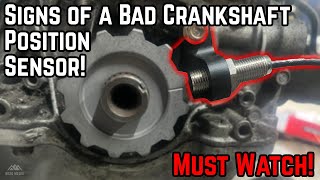
🎬 Watch: Common signs and symptoms of a bad crankshaft sensor.- Engine cranks but will not start
- Engine stalls, especially when warm, and may not restart until it cools down.
- Hard starting (prolonged cranking)
- Rough idling and engine misfires.
- Hesitation, stumbling, or poor acceleration.
- Check Engine Light is illuminated.
- Erratic or dead tachometer (in some vehicles, though less common on this platform).
- Reduced fuel economy due to inefficient engine timing.
- Replacing camshaft position sensors. While cam and crank sensors work together, P0335 specifically points to the crankshaft sensor circuit. Other codes like P0341 or P0346 would indicate camshaft sensor issues.
- Replacing the fuel pump. A no-start condition can be mistaken for a fuel delivery problem, but the ECM will not command the fuel pump or injectors to fire without a valid crankshaft signal.
Most Likely Causes
- Failed Crankshaft Position Sensor (G28) 🔴 High Probability → Shop Engine Crankshaft Position Sensor The sensor is exposed to significant heat and vibration at its location on the lower part of the engine, leading to eventual failure of its internal electronics over time. Heat can cause internal short-circuiting, a common failure mode for these sensors.
How to confirm: Use a multimeter to check the resistance between terminals 1 and 2 of the sensor. The specified value should be between 450 and 1000 Ohms. If the resistance is out of spec, the sensor is bad. An oscilloscope can also be used to check for a proper square wave signal while cranking the engine. However, given the high failure rate and relatively low cost, replacement is often the most practical diagnostic step if the wiring appears intact.
Typical fix: Replace the crankshaft position sensor.
Est. part cost: $40-$110 - Wiring or Connector Issue 🟡 Medium Probability The wiring harness runs in a hot engine bay, making it susceptible to heat damage, brittleness, and corrosion over time. Oil leaks from nearby components can also contaminate the connector, leading to poor contact.
How to confirm: Visually inspect the wiring harness leading to the sensor for any signs of melting, chafing, or breaks. Check the connector for corrosion, moisture, backed-out pins, or oil saturation. Perform a continuity test from the sensor connector to the ECM connector (T60). The wire resistance should not exceed 1.5 Ohms. Audi service manuals note that only gold-plated terminals should be used for repairs on this circuit.
Typical fix: Repair the damaged section of wiring or replace the connector pigtail. Ensure the connector is clean and free of oil.
Est. part cost: $15-$50
Rare But Worth Checking
- Damaged Reluctor Ring: The reluctor ring (or tone wheel) on the crankshaft has teeth that the sensor reads. If this ring is damaged, has broken teeth, or is misaligned, it can cause a P0335 code. This is very rare and typically would only occur after major engine work or a catastrophic failure.
- Failed Engine Control Module (ECM): → Shop Engine Control Module (ECM) This is extremely rare. The ECM should only be considered after all other possibilities, including the sensor, wiring, and reluctor ring, have been thoroughly ruled out.
Diagnosis Steps
- Verify the presence of code P0335 with an OBD-II scanner. Check for any other codes, like P0016.
- Check live data on the scanner for an engine RPM signal while cranking. If it reads 0 or is erratic, the G28 sensor circuit is the likely culprit.
- Remove the engine cover and locate the coolant expansion tank.
- Unscrew the single Torx screw (often a T25) holding the coolant tank and move it aside to gain access to the sensor area below. You may not need to disconnect the hoses, but be careful not to strain them.
- Locate the crankshaft position sensor (G28) on the driver's side of the transmission bell housing. It is held in by a single T30 Torx bolt.
- Inspect the sensor's connector and wiring for any visible damage, melting, oil contamination, or corrosion. Ensure the connector is securely latched.
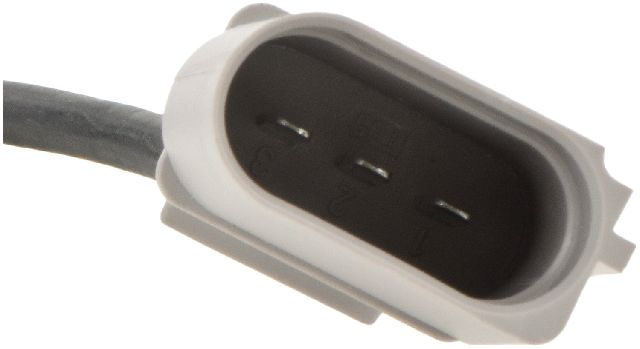
- If wiring appears okay, disconnect the sensor and test its internal resistance. Using a multimeter, check between pins 1 and 2. A reading between 450-1000 Ω is expected. If it's an open circuit or far outside this range, the sensor has failed.
- If the sensor tests good, check the wiring harness for continuity between the sensor connector and the ECM.
- If the sensor is suspect, proceed with replacement. Unplug the connector, remove the T30 bolt (a magnetic bit is highly recommended 🎬 Watch this step-by-step replacement walkthrough for the A4 and A6. to avoid dropping it), and pull the old sensor out. It may be sealed with an O-ring and require a slight twist and pull to remove.
- Install the new sensor, ensuring it is fully seated. Reinstall the T30 bolt.
- Reconnect the wiring harness, ensuring it clicks into place. Re-secure the coolant tank and its level sensor plug on the bottom.
- Clear the trouble code with the scanner and start the vehicle to confirm the fix. 🎬 See how to diagnose and fix the P0335 error code. Some vehicles may require a crankshaft position sensor relearn procedure, but this is not commonly reported as necessary for a simple sensor swap on this platform.
Parts You'll Likely Need
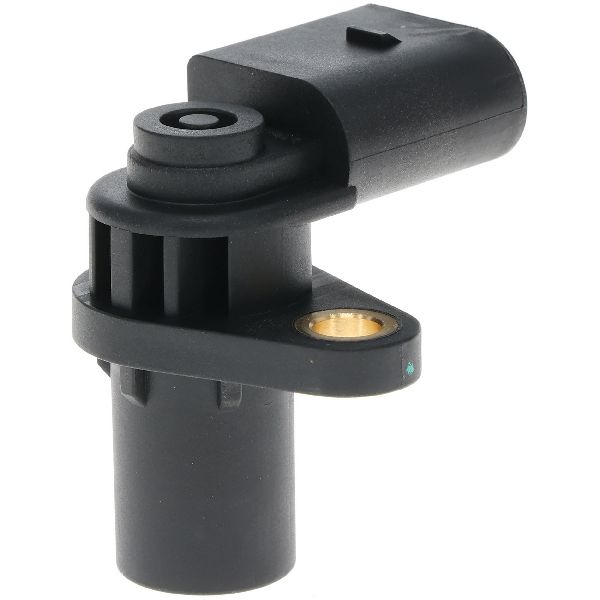
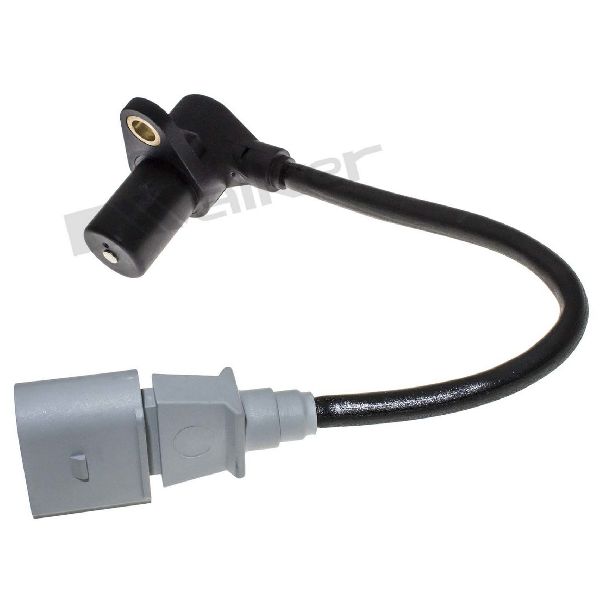
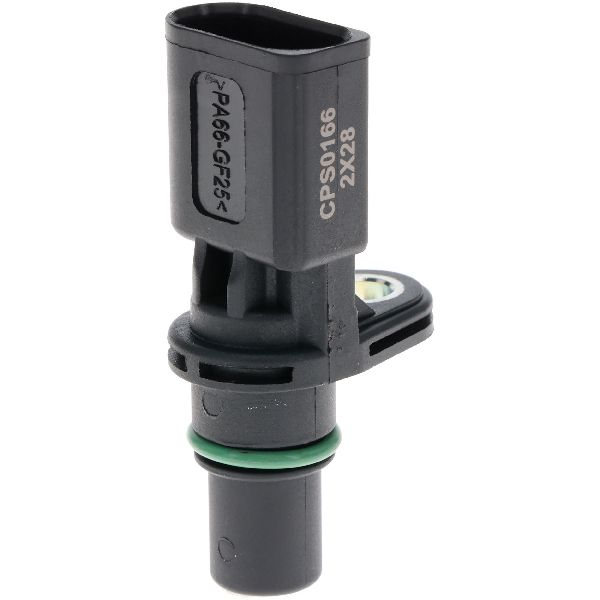
- Crankshaft Position Sensor (G28)
(OEM #06E906433)— This sensor is the primary component in the circuit and is the most common failure point for code P0335 due to heat and age.
Trusted brands: Bosch (Often the OEM supplier), Hella, VNE, Continental
OEM price range: $80-$110
Aftermarket price range: $40-$70
Related Codes That Often Appear With This One
- P0016 (Crankshaft/Camshaft Position Correlation): If the crank signal is erratic but not completely gone, the ECM may detect a mismatch between the crank and cam sensors, triggering P0016 alongside P0335.
Platform-Specific Known Issues
- Difficulty Accessing T30 Bolt: Owners report that while the sensor is visible after moving the coolant tank, the T30 bolt can be difficult to access without the right combination of extensions and a universal joint or a flexible driver. A magnetic T30 bit is strongly recommended to prevent dropping the bolt into the engine bay.
- Sensor Seized in Block: Due to heat cycles, the plastic body of the sensor can become brittle and the O-ring can cause it to get stuck in the engine block. Gentle twisting with pliers is often required to break it free. In a forum post on Audizine, a user described having to carefully pry and twist the sensor for several minutes before it would come out.
Mechanic-Grade Diagnostic Values
- G28 Sensor Signal Voltage (Hall Effect Sensor) — expected: A 5V square wave signal when cranking. Using a multimeter, this will appear as a fluctuating voltage between 2.0V and 3.0V.. Failure: A steady 0V or 5V, or a voltage that does not fluctuate during cranking, indicates a failed sensor or wiring issue.
- G28 Sensor Resistance (Inductive Sensor Type) — expected: 480-1000 Ω between terminals 2 and 3 of the sensor connector.. Failure: A reading of infinity (open circuit) or significantly outside the specified range indicates a failed sensor.
- Voltage at G28 Sensor Wires (to ECM) — expected: Live testing on a functional 2006 A6 3.2L BKH showed approximately 2.5V on each signal wire.. Failure: The factory repair manual may incorrectly state to look for 12V. A lack of 12V does not indicate a faulty module on this specific engine.
Wiring & Ground Locations
- 220 - Earth connection (sender earth) — Located in the main engine wiring harness.. This is the specific ground connection for multiple engine sensors, including the G28 Crankshaft Position Sensor. A fault with this ground point inside the harness could cause P0335 and other sensor codes simultaneously.
- G28 Sensor to ECM Pins — The G28 sensor wires connect to pins on the main engine control module (J220 Motronic). For a similar vintage Audi engine, pins T55/48 and T55/49 were identified for the G28 sensor.. For a definitive wiring test, checking for continuity and shorts must be done from the sensor connector all the way to the correct pins on the ECM. Knowing these pin locations is essential for that test.
Real Owner Repair Stories
- YouTube user LuxxStylez (2007 Audi A4 3.2L FSI Quattro) — Crank no-start condition, P0335 error code present.
✅ What actually fixed it The problem was resolved by replacing the crankshaft position sensor (G28). The video documents the entire replacement process, confirming it as the direct fix for the P0335 code and no-start symptom. - YouTube user OBDELEVEN (Audi A4 B7 (engine not specified but context implies FSI)) — Crank no-start condition.
❌ Tried (didn't work) Checking for intake leaks after a recent major job.
✅ What actually fixed it Scanning with OBDEleven pointed to the crank sensor. The user explains that if the sensor is dead, it generates no power, and the ECM prevents the car from starting. Replacing the sensor solved the crank-no-start issue.
Diagnostic Flowchart
Real Owner Stories
Aggregated from forums and TSBs cited above. Mileages and costs reflect what owners reported in those sources.
2007 Audi A4 3.2L FSI Quattro
Symptoms: Check Engine Light was on with error code P0335.
What fixed it: Replaced the crankshaft position sensor using a Phillips head screwdriver and a magnetic screwdriver with a T30 star bit.
Source hint: YouTube comment by LuxxStylez on 'How to (FIX) Error Code P0335 on your Audi'
Audi B7 A4 3.2L
Symptoms: Experienced a crank-no-start condition.
What fixed it: Confirmed the fix was replacing the G28 crankshaft position sensor, noting the difficulty of accessing the bolt during replacement.
Source hint: Audizine.com - B7 A4 3.2 - P0335 Crankshaft Position Sensor
Audi 3.2L FSI
Symptoms: Encountered a P0335 code during a major engine swap, even though the replacement engine was known to be good.
What fixed it: Addressed the sensor/wiring connection that was disturbed during the engine swap.
Source hint: quattroworld.com Forums - Advice on my 3.2L FSI - Crank position
Audi A4 3.2L FSI
Symptoms: The sensor was completely seized in the engine block due to a brittle plastic body and stuck O-ring from heat cycles.
What fixed it: Carefully pried and twisted the sensor with pliers for several minutes before it finally broke free and could be replaced.
Source hint: Audizine forum post cited in 'Sensor Seized in Block'
Related OBD-II Codes
Frequently Asked Questions
Where is the crankshaft position sensor (G28) located on my 2005-2008 Audi A4 3.2L V6?
What tools do I need to replace the G28 sensor on this specific engine?
My 3.2L A4 stalls when the engine gets warm and won't restart until it cools down. Is this related to P0335?
How can I test the crankshaft position sensor before buying a replacement?
I need to repair the wiring harness for the crank sensor. Are there any special requirements?
The old crankshaft position sensor is stuck in the engine block and won't pull out. What should I do?
Helpful Videos


We Have This Part in Stock

The information in this article is provided for general reference and educational purposes only. Vehicle specifications, procedures, and part compatibility can vary by production date, trim level, and region. Always consult your vehicle's factory service manual and verify part numbers before purchasing or performing repairs. Safety-critical components such as airbags, seat belts, and braking systems should be installed by a qualified professional.
- Audi A4:
- 🧭 Diagnostic Flowchart
- 🎬 Helpful Videos
- 🛍️ Shop This Part
- What's Unique About the 2005-2008 Audi A4
- Symptoms You May Notice
- Most Likely Causes
- Rare But Worth Checking
- Diagnosis Steps
- Parts You'll Likely Need
- Related Codes That Often Appear With This One
- Platform-Specific Known Issues
- Mechanic-Grade Diagnostic Values
- Wiring & Ground Locations
- Real Owner Repair Stories
- Real Owner Stories
- 2007 Audi A4 3.2L FSI Quattro
- Audi B7 A4 3.2L
- Audi 3.2L FSI
- Audi A4 3.2L FSI
- Related OBD-II Codes
- Frequently Asked Questions
- 🎟️ Get 5% Off