

P0335 on 2007-2015 Audi Q7 4.2L V8: Crankshaft Sensor Circuit Malfunction Causes and Fixes
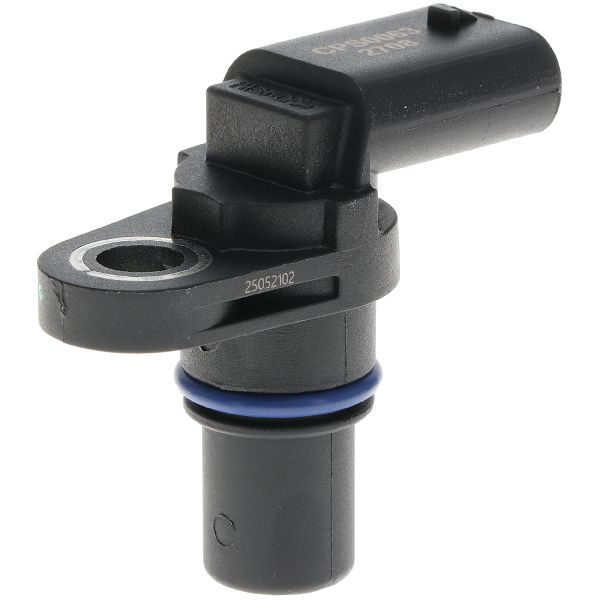
This code almost always indicates a failed crankshaft position sensor or its wiring. On the Audi Q7 4.2L V8 (engine code BAR), the most common fix is replacing the sensor itself. The sensor is located on the driver's side of the transmission bell housing, and access is tight. Expect to pay between $40-$90 for an aftermarket part or $100-$150 for a genuine Bosch OEM sensor.
- P0335 on a 2007-2010 Audi Q7 4.2L V8 means there's a problem with the crankshaft position sensor circuit, which will likely prevent the engine from starting or cause it to stall, especially when hot.
- The most probable cause is a failed crankshaft position sensor. The second most likely cause is damaged wiring leading to the sensor.
- The correct engine for this guide is the 4.2L V8 (BAR engine code), not a 4.5L V8 which was not offered in the Q7.
- Do not drive the vehicle. A sudden stall could be dangerous, and a no-start condition could leave you stranded.
- The OEM part number for the sensor is 077905381N, with Bosch (0261210298) being the original manufacturer.
- The repair is made difficult by the location of the electrical connector, which is tucked high up behind the engine and hard to reach.
What's Unique About the 2007-2015 Audi Q7
First, it's important to note that while the request specified a 4.5L V8, Audi did not offer this engine in the 2007-2015 Q7. The V8 option for this generation was a 4.2L FSI engine (engine code: BAR), which this guide covers. The P0335 code is a known issue on the PL71 platform shared by the Audi Q7, Volkswagen Touareg, and Porsche Cayenne. The crankshaft position sensor on the 4.2L V8 is located on the lower driver's side of the transmission bell housing. Its placement makes access difficult; while the sensor itself is easy to unbolt, the wiring connector is tucked high up, often requiring access from the passenger side wheel well or by removing other components to reach.
Symptoms You May Notice
- Engine cranks but will not start.
- Engine stalls unexpectedly, often after warming up and then fails to restart until it cools down.
- Check Engine Light is illuminated.
- Rough idle and engine vibrations.
- Engine misfires, sometimes across all cylinders (may trigger P0300).
- Hesitation or sluggish acceleration.
- Noticeable decrease in fuel economy.
- Tachometer behaves erratically or shows 0 RPM during cranking.
- Replacing camshaft position sensors. While related to timing, cam sensors have their own specific codes (like P0340-P0349) and are not the cause of P0335.
- Replacing spark plugs or ignition coils. While P0335 can cause misfires, the root cause is the lack of a crank signal, not the ignition components themselves.
- Replacing the fuel pump. A no-start condition can be mistaken for a fuel delivery issue, but the ECM will typically not activate the fuel pump or injectors without a valid crank signal.
Most Likely Causes
- Failed Crankshaft Position Sensor 🔴 High Probability → Shop Engine Crankshaft Position Sensor The sensor is exposed to high heat from the engine and transmission, as well as constant vibration, leading to internal failure of its electronics over time. This is a very common failure point on many VAG vehicles, including this platform.
How to confirm: After checking the wiring, test the sensor's output with a multimeter or oscilloscope while cranking the engine. A lack of signal (no AC voltage fluctuation) points to a failed sensor. A common failure mode is for the sensor to work when cold but fail when hot.
Typical fix: Replace the crankshaft position sensor. It is held in by a single T30 Torx bolt on some similar Audi engines, though the Q7 may use a 5mm Allen bolt.
Est. part cost: $40-$150 - Damaged Wiring or Connector 🟡 Medium Probability The sensor's wiring harness runs up the back of the engine where it is susceptible to heat, causing wires to become brittle, melt, or break. The connector itself is in a difficult-to-reach location behind an air pump, and its plastic can become brittle. Corrosion in the connector can also disrupt the signal.
How to confirm: Visually inspect the entire length of the sensor's wiring harness for any signs of melting, chafing, or broken wires. Check the connector for corrosion, backed-out pins, or a loose fit. A voltage drop test can confirm high resistance in the circuit.
Typical fix: Repair the damaged section of the wiring harness or replace the connector pigtail. Secure the new wiring away from heat sources.
Est. part cost: $15-$50
Rare But Worth Checking
- Damaged Reluctor Ring: The reluctor ring (or tone wheel) on the crankshaft has teeth that the sensor reads. While very rare, if this wheel is damaged, has broken/missing teeth, or is excessively dirty with metallic debris, it can cause a P0335 code. This is typically a much more involved repair, often requiring transmission removal.
- Faulty Engine Control Module (ECM): → Shop Engine Control Module (ECM) In very rare cases, the ECM itself may be unable to process the signal from a perfectly good sensor. This should only be considered after all other possibilities, including wiring and the sensor itself, have been exhaustively ruled out. This can sometimes be caused by low system voltage from a weak battery or failing alternator.
Diagnosis Steps
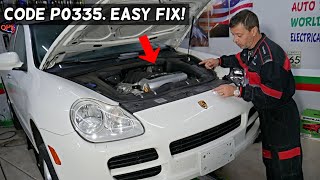
- Scan for Codes: Use an OBD-II scanner to confirm P0335 is present and check for any other related codes 🎬 Watch: Diagnosing P0335 on the Audi Q7 and Touareg platform, like misfire or reference voltage faults.
- Live Data Analysis: While cranking the engine, monitor the Engine RPM parameter on your scan tool. If it reads 0 or is erratic, it strongly points to a problem in the crank sensor circuit.
- Visual Inspection: Carefully inspect the crankshaft position sensor's wiring harness and connector. The sensor is on the lower driver's side of the bellhousing. Look for any signs of heat damage, melting, chafing, or corrosion.
- Check the Connector: Disconnect the sensor and ensure the connector pins are clean, tight, and free of moisture or oil. The connector is located higher up and is difficult to access.
- Test the Sensor Signal: Using a multimeter set to AC voltage or an oscilloscope, probe the sensor's signal wire. Crank the engine and look for a fluctuating voltage signal. No signal strongly suggests a bad sensor. A common failure is heat-related, so the test may pass when the engine is cold but fail when hot.
- Check for Power and Ground (if applicable): This sensor is a 3-wire Hall-effect type that has power, ground, and signal wires. Verify the sensor is receiving the correct reference voltage (typically 5V) and has a good ground connection at the connector.
- Inspect the Reluctor Ring: If possible, visually inspect the reluctor ring for damage or debris. This may require removing the sensor to look into the mounting hole.
- Replace the Sensor: If the wiring is intact and receiving correct voltages, but the sensor produces no signal (especially when hot), it has most likely failed and should be replaced.
Parts You'll Likely Need
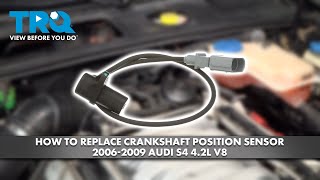
- Crankshaft Position Sensor
(OEM #077905381N)— This sensor is the most frequent point of failure for the P0335 code due to its operating environment and electronic nature. A previous revision of this part was 077905381G.
Trusted brands: Bosch (OEM), VNE, Febi Bilstein, Genuine VW/Audi
OEM price range: $100-$150
Aftermarket price range: $40-$90
Related Codes That Often Appear With This One
- P0300, P0301-P0308 — These are random or specific cylinder misfire codes. They can be triggered because the ECM cannot time the ignition spark and fuel injection correctly without a valid signal from the crankshaft sensor.
- P0642 — This code indicates a low voltage condition on a sensor reference circuit. In some cases, a shorted crankshaft position sensor can pull down the 5V reference voltage supplied by the ECM, causing this code to appear alongside P0335.
Platform-Specific Known Issues
- Difficult Connector Access: Multiple owner accounts confirm the primary difficulty of this repair is not the sensor itself, but accessing its electrical connector. One owner on AudiWorld forums noted the sensor is easy to remove from below, but the connector is in a place you can't reach from the bottom. They found a path by going through the passenger side wheel housing to get their hands on it.
- Heat-Soak Failure: A very common failure pattern for this sensor is stalling only after the engine is fully warmed up. The car may run fine when cold, but after driving and then stopping (e.g., at a store), the engine bay temperature rises, causing the sensor to go open-circuit. The car will then crank but not start until it has cooled down for 20-60 minutes.
Mechanic-Grade Diagnostic Values
- Crankshaft Position Sensor (G28) Internal Resistance — expected: 0.7 to 1.0 kΩ (700 to 1000 Ohms) between terminals 2 and 3.. Failure: A reading outside this range, or any continuity between terminals 1-2 or 1-3, indicates a faulty sensor.
- Wiring Harness Continuity (Sensor to ECM) — expected: Less than 1.5 Ω.. Failure: Resistance higher than 1.5 Ω indicates a problem in the wiring harness, such as a break or corrosion.
Hidden / Shadow Codes Worth Checking
- 16706 / P0322: This VAG-specific code for "Engine Speed Sensor (G28): No Signal" is often logged alongside the generic P0335. It explicitly points to a complete loss of signal, strengthening the diagnosis of a failed sensor or a complete wiring break. (see via VCDS (VAG-COM) or other OEM-level diagnostic tools.)
- 16705 / P0321: This VAG-specific code for "Engine Speed Sensor (G28): Implausible Signal" indicates that a signal is present but is erratic, intermittent, or doesn't match the signal from the camshaft position sensor. This can point to a failing sensor, wiring issues, or a damaged reluctor ring. (see via VCDS (VAG-COM) or other OEM-level diagnostic tools.)
Scan Tool Commands That Help
- VCDS (VAG-COM) or similar: Engine RPM live data block — This is the primary diagnostic step. While cranking the engine, the RPM value should jump to 200-300 RPM. If it stays at 0 or is erratic, it confirms a fault in the G28 sensor circuit. A false positive code can be set if codes are checked with the engine off, as there is no RPM signal to read.
- N/A: Crankshaft Sensor Re-learn/Adaptation — Unlike many other manufacturers, Audi/VW vehicles of this era typically do not require a specific scan tool relearn procedure after replacing the crankshaft position sensor. The ECM will adapt to the new sensor automatically after a drive cycle.
Wiring & Ground Locations
- G28 Sensor Connector (T3d) — The 3-pin connector is located on a bracket high on the back of the engine, often most accessible from the driver's or passenger's side wheel well, not from below.. This connector is a common failure point due to heat and vibration causing brittle plastic and poor connections. Its difficult location often leads to misdiagnosis.
- ECM Connector (T94) — The main Engine Control Module (ECM) is located in the plenum chamber (e-box) at the rear of the engine compartment.. The G28 sensor wires run to this large 94-pin connector. Testing for continuity between the sensor connector and these pins can definitively rule out wiring issues. For some related engines, the G28 signal wires are on pins 82 (signal) and others, but pinouts can vary.
- Ground Point 640 — Located in the engine compartment on the left side longitudinal member.. This is a primary engine ground connection. A loose or corroded ground here can cause a host of electrical issues, including erratic sensor readings and faults like P0335.
Real Owner Repair Stories
- AudiWorld Forums user 'tozoM8' (1998 Audi A8 4.2L V8 (ABZ engine, similar architecture)) — Car turns over with ease but will not start. VAG-COM code 16706 - Engine Speed Sensor (G28): No Signal.
❌ Tried (didn't work) Initial diagnosis pointed to a bad sensor.
✅ What actually fixed it The sensor's wiring harness had melted due to proximity to the exhaust manifold. The user pulled the melted wires apart, cleaned them, and the car started working again. This highlights the importance of inspecting the full length of the harness for heat damage. - AudiWorld Forums user 'pwdrskr' (2000 Audi A8) — Crank no-start condition, sounded fuel starved. Code for engine speed sensor.
❌ Tried (didn't work) Initially suspected fuel pump or spark plugs.
✅ What actually fixed it The user removed the G28 sensor and found its magnetic tip was covered in metallic debris. After cleaning the sensor tip with MAF cleaner and a shop towel and reinstalling it, the car started immediately and the code was resolved.
OEM Part Supersession History
077905381G→077905381N— Standard part revision for improved reliability or manufacturing process change.
Heads up: The parts are interchangeable. The Bosch OEM equivalent part number is 0261210298.
Model Year Variations Within This Range
- 2007-2010: The 4.2L V8 (BAR) engine was only offered in the Q7 from 2007 to 2010. Models from 2011-2015 used different engines (3.0T V6 or 3.0L TDI) which would have different part numbers and sensor locations for this fault.
Diagnostic Flowchart
Real Owner Stories
Aggregated from forums and TSBs cited above. Mileages and costs reflect what owners reported in those sources.
4.2L Audi Q7
Symptoms: Needed to locate and replace the crankshaft position sensor, but found the electrical connector was impossible to access from the bottom of the motor.
What fixed it: Removed the sensor from below, but routed hands through the passenger wheel well to successfully access and disconnect the electrical connector.
Source hint: AudiWorld Forums thread titled 'Crankshaft Position Sensor Location'
2010 Audi Q7
Symptoms: Experienced confusion over the correct replacement part design, as some aftermarket listings showed a sensor with a socket on the body.
What fixed it: Identified and installed the correct sensor, which features an integrated pigtail and connector rather than a socket on the sensor body itself.
Source hint: Audi Owners Club (UK) thread titled 'Audi q7 2010 crankshaft sensor'
Audi Q7 V8
Symptoms: Car ran fine when cold, but after driving and stopping at a store, the engine bay temperature rose and the car stalled. The engine would crank but not start until it cooled down for 20-60 minutes.
What fixed it: Replaced the heat-soaked crankshaft position sensor.
Source hint: Article Context - Vehicle Specific Issues (Heat-Soak Failure)
Related OBD-II Codes
Frequently Asked Questions
Where is the crankshaft position sensor located on my Audi Q7 V8?
Why does my Q7 stall when it gets hot and refuse to start until it cools down?
How do I access the electrical connector for the crank sensor if I can't reach it from the bottom?
What part number do I need for the replacement crankshaft position sensor?
What tools do I need to remove the sensor from the bellhousing?
Can I test the sensor before replacing it?
Helpful Videos
We Have This Part in Stock


The information in this article is provided for general reference and educational purposes only. Vehicle specifications, procedures, and part compatibility can vary by production date, trim level, and region. Always consult your vehicle's factory service manual and verify part numbers before purchasing or performing repairs. Safety-critical components such as airbags, seat belts, and braking systems should be installed by a qualified professional.
- Audi Q7:
- 🧭 Diagnostic Flowchart
- 🎬 Helpful Videos
- 🛍️ Shop This Part
- What's Unique About the 2007-2015 Audi Q7
- Symptoms You May Notice
- Most Likely Causes
- Rare But Worth Checking
- Diagnosis Steps
- Parts You'll Likely Need
- Related Codes That Often Appear With This One
- Platform-Specific Known Issues
- Mechanic-Grade Diagnostic Values
- Hidden / Shadow Codes Worth Checking
- Scan Tool Commands That Help
- Wiring & Ground Locations
- Real Owner Repair Stories
- OEM Part Supersession History
- Model Year Variations Within This Range
- Real Owner Stories
- 4.2L Audi Q7
- 2010 Audi Q7
- Audi Q7 V8
- Related OBD-II Codes
- Frequently Asked Questions
- 🎟️ Get 5% Off