

P0335 on 2012-2020 Chevrolet Sonic 1.4L Turbo: Crank Sensor Causes and Fixes
On a 2012-2020 Sonic 1.4L Turbo, code P0335 is almost always a failed crankshaft position sensor, causing the engine to stall or not start. The sensor itself is inexpensive, but its location behind the starter motor makes replacement labor-intensive. Before replacing the sensor, test the battery, especially if codes P0340/P0365 are also present. Expect to pay $200-$400 for a shop repair.
- P0335 on a 1.4L Sonic means the engine is not getting a signal from the crankshaft sensor, which will cause stalling or a no-start condition.
- If you also have codes P0340 and P0365, the most likely cause is a weak battery, not three failed sensors. Test the battery first.
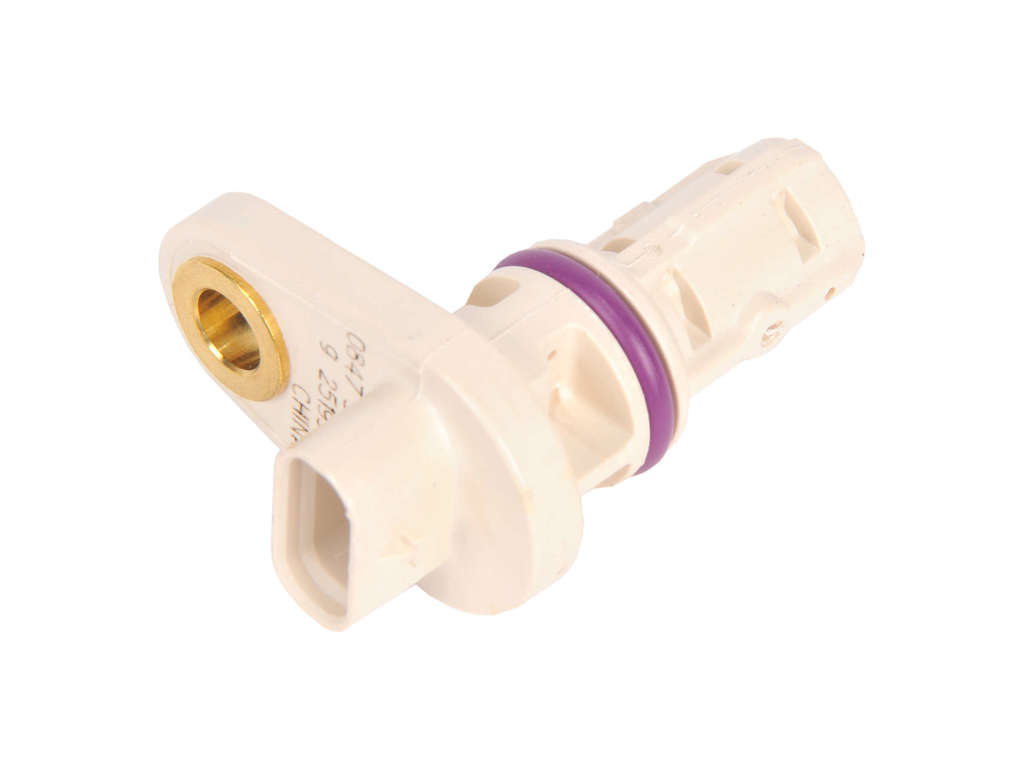
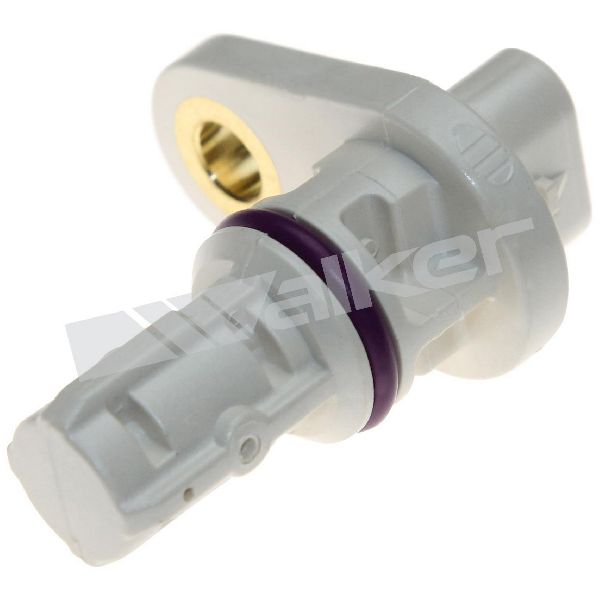
- The most common fix is replacing the crankshaft position sensor (OEM part #25195551).
- The sensor is located behind the starter motor, making the repair labor-intensive for a DIYer (Difficulty 4/5).
- After replacement, a Crankshaft Variation Relearn procedure with a capable scan tool is recommended to ensure smooth engine operation.
What's Unique About the 2012-2020 Chevrolet Sonic
The 1.4L Turbo engine in the Sonic, also used in the Cruze, Trax, and Encore, is well-known for this issue. While the sensor failing is the most common problem, a unique quirk of this platform is documented in GM Technical Service Bulletin (TSB) #PIP5482B. A weak battery can cause the P0335 code to appear along with camshaft sensor codes (P0340, P0365), tricking owners into replacing sensors that are perfectly fine. The TSB states this may happen after just two consecutive engine starts with low voltage. The sensor's location behind the starter motor also makes the repair more difficult than on many other vehicles.
Symptoms You May Notice
- Engine cranks but will not start, or has a very long crank time.
- Engine stalls unexpectedly, either while driving or at idle.
- Rough or uneven idle.
- Tachometer needle drops to zero while the engine is still attempting to run.
- Check Engine Light is on.
- Reduced engine power and sluggish acceleration.
- Service StabiliTrak warning light may illuminate.
- Cruise control may be inoperative.
- Replacing the camshaft position sensors when P0340 and P0365 are also present. TSB #PIP5482B strongly suggests a weak battery is the actual cause in this scenario.
Most Likely Causes
- Failed Crankshaft Position Sensor 🔴 High Probability → Shop Engine Crankshaft Position Sensor This is a common failure item on the 1.4L LUV engine family due to heat cycles and age. Its location behind the starter subjects it to significant heat.
How to confirm: With a scan tool, check for an RPM signal while cranking the engine. If the RPM reads '0' while the engine is turning over, the sensor or its circuit is faulty. Given the high failure rate of the sensor itself, it is the most likely component to have failed.
Typical fix: Replace the crankshaft position sensor. This requires removing the starter motor to gain access. One owner on sonictalk.com described the job as a 'nightmare' specifically due to the difficulty in reaching the top starter bolt without multiple extensions and a swivel socket.
Est. part cost: $25-$75 - Weak or Failing Battery 🟡 Medium Probability → Shop Vehicle Battery GM TSB #PIP5482B specifically calls out that a low battery state of charge can cause P0335, P0340, and P0365 to set together on this engine family. The bulletin notes this is common on vehicles that sit for extended periods or have low mileage.
How to confirm: This is the most likely cause if codes P0340 and P0365 are also present. Have the battery professionally tested with a load tester (like a GR8 tester), even if it seems to crank the engine. A simple voltage check is not sufficient. A user on cruzetalk.com confirmed that after getting all three codes and being advised to replace sensors, a new battery resolved the issue completely.
Typical fix: Charge or replace the vehicle's 12V battery.
Est. part cost: $150-$250 - Damaged Wiring or Connector ⚪ Low Probability GM TSB #16-NA-118 notes that the engine harness can chafe against the ECM mounting bracket stud, causing shorts that can lead to a no-start and various codes. The sensor's wiring is also exposed to heat and potential oil leaks.
How to confirm: Visually inspect the wiring harness leading to the crankshaft position sensor for any signs of melting, chafing, or corrosion at the connector. Also inspect the harness near the ECM bracket as described in the TSB. This inspection should be done thoroughly before condemning the sensor or ECM.
Typical fix: Repair the damaged section of the wiring harness or replace the connector pigtail. Secure the harness away from the bracket with a zip tie to prevent recurrence.
Est. part cost: $15-$50
Rare But Worth Checking
- Faulty Engine Control Module (ECM): → Shop Engine Control Module (ECM) This is rare and should only be considered after all other possibilities (sensor, wiring, battery) have been definitively ruled out.
- Damaged Crankshaft Reluctor Ring: → Shop Engine Crankshaft The reluctor ring (a toothed wheel on the crankshaft that the sensor reads) can be damaged, but this is very uncommon unless major engine work has been performed recently or there is excessive crankshaft end play.
Diagnosis Steps
- Connect an OBD-II scanner and check for any other codes. If P0340 and P0365 are present with P0335, proceed directly to step 2.
- Perform a professional battery test using a load tester (like a GR8 / EL-50313-20 tester). A weak battery is a known cause for these codes appearing together. Replace the battery if it fails the test.
- If the battery is good, use the live data function on your scan tool to monitor Crankshaft RPM while cranking the engine. If the RPM reading is zero, it confirms a fault in the sensor or its circuit.
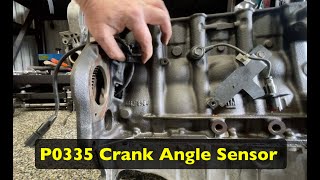
- Raise and safely support the vehicle. Visually inspect the crankshaft position sensor connector and wiring harness. It is located on the back of the engine block, above the starter motor. Look for any signs of damage, melting from the exhaust, or oil contamination.
- If the wiring appears intact, the crankshaft position sensor itself has most likely failed. The next step is replacement.
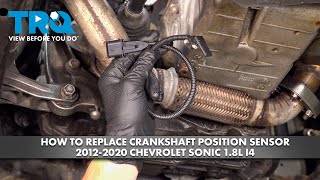
- To replace the sensor, disconnect the battery. Remove the starter motor to gain access. This typically involves two 15mm or 13mm bolts, the top of which is notoriously difficult to access. A long extension with a swivel socket is often required. Once the starter is out, the sensor is held by a single E10 external Torx bolt. Torque the new sensor bolt to 8 Nm (71 lb-in).
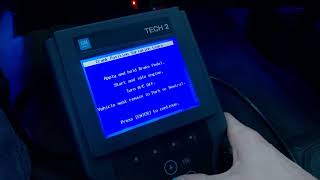
- After replacing the sensor, clear the codes. It is highly recommended to perform a 'Crankshaft Variation Relearn' (CASE Relearn) procedure using a bidirectional scan tool. Failure to do so can result in an illuminated check engine light with misfire codes (P0300) or a crank correlation code (P0315), even if the engine runs fine. TSB PIP5185 also discusses the importance of this procedure.
Parts You'll Likely Need
- Crankshaft Position Sensor
(OEM #25195551 (Superseded by 55588378, then 12713233))— This is the most common component to fail, causing the P0335 code. Using an OEM part is recommended for reliability.
Trusted brands: ACDelco (GM OE), GM Genuine, Delphi, NTK
OEM price range: $50-$80
Aftermarket price range: $25-$50
Related Codes That Often Appear With This One
- P0340 — Intake Camshaft Position Sensor Circuit Malfunction. If seen with P0335 and P0365, the root cause is very likely a weak battery per GM TSB #PIP5482B.
- P0365 — Exhaust Camshaft Position Sensor Circuit Malfunction. If seen with P0335 and P0340, the root cause is very likely a weak battery per GM TSB #PIP5482B.
Technical Service Bulletins (TSBs) & Recalls
- PIP5482B: Diagnostic Aid For Vehicles With Check Engine Light On With DTCs P0335, P0340, P0365.
- 16-NA-118: Engine Harness May Chafe on ECM Bracket.
- PIP5185: Crankshaft Position (CKP) Variation Learn Procedure Not Completing Or Setting P0315 After A Repair.
- Bulletin #PIP5724: Notes that a pinched wiring jumper harness can cause P0335 along with P0300 and P0340, potentially leading to a stall or crank-no-start condition.
- Bulletin #PIP5553A: Indicates that a wiring jumper harness chafed at a bolt can trigger P0335 and multiple other codes including P06DA and P0641.
- Bulletin #PIE0416A: A diagnostic bulletin regarding vehicles with the Malfunction Indicator Lamp illuminated and DTCs P0335, P0340, or P0365 set.
- Bulletin #PIP4880F: Provides diagnostic steps for P0335 and P0336, noting these codes may be stored in both the Engine Control Module and the Power Inverter Module.
Platform-Specific Known Issues
- TSB #PIP5482B: A low battery can trigger P0335, P0340, and P0365 simultaneously. Always test the battery first if all three codes are present.
- TSB #16-NA-118: The engine wiring harness may chafe on the ECM mounting bracket, leading to various electrical issues, including a no-start condition that could be related to a P0335 circuit fault.
Mechanic-Grade Diagnostic Values
- CKP Sensor Connector Voltages (Key On, Engine Off) — expected: Pin 1: 5V Reference, Pin 2: Ground, Pin 3: 5V Signal (this will be pulled to ground as the engine cranks).. Failure: Missing 5V reference, or ground resistance greater than 0.5 ohms, points to a wiring or ECM issue, not a bad sensor.
- Scan Tool RPM Data (while cranking) — expected: 100 - 500 RPM.. Failure: A consistent reading of 0 RPM while the engine is physically turning over is a definitive sign of a failed CKP sensor or a complete circuit failure.
- CKP Sensor Resistance (if testing an inductive-type sensor) — expected: Typically 500-1,200 Ohms, but must be compared to manufacturer spec for the exact part. The Hall-effect sensor used in the Sonic is better tested with voltage checks.. Failure: A reading far outside the specified range, or an open/short circuit.
Scan Tool Commands That Help
- GDS2 (GM Global Diagnostic System 2): Crankshaft Position Variation Learn (also known as CASE Relearn) — This is a mandatory procedure after replacing the crankshaft position sensor, ECM, or performing major engine work. It synchronizes the ECM to the minor physical variations of the reluctor wheel. Failure to perform this can set a P0315 or P0300 code even if the P0335 is resolved.
Wiring & Ground Locations
- G103 / G104 — Engine bay grounds, typically located on the cowl/firewall or near the strut tower. G104 is often found on the left side of the passenger compartment.. The ECM and its sensors rely on clean ground connections. A corroded or loose G103 or G104 ground can cause erratic sensor behavior and phantom codes, including P0335.
- K20 Engine Control Module (ECM) Connector X1 — In the engine bay, typically near the battery or firewall.. This is the main connector where the CKP sensor harness terminates. Probing for voltage and continuity at these pins is the final step to confirm if a fault is in the wiring or the ECM itself. For a 2016 Sonic, pin 20 is Battery Positive Voltage and pin 18 is Accessory Wakeup Serial Data, indicating key power feeds to check.
Real Owner Repair Stories
- DF Kit Car Forum user (vehicle with GM 1.4L engine) (Vehicle with GM 1.4L engine (same family as Volt/Sonic)) — Persistent P0335 code, likely a crank-no-start or stalling condition.
❌ Tried (didn't work) Replacing the crankshaft position sensor, Checking the wiring between the sensor and the ECM
✅ What actually fixed it The final resolution was replacing the Engine Control Module (ECM/PCM). This is a last-resort fix after all other diagnostics have been exhausted. - NHTSA ODI #11510305 — An owner reported the vehicle started running rough with codes P0335, P0016, and P0017. Despite replacing the crankshaft and camshaft sensors along with VVT solenoids, the issue persisted.
OEM Part Supersession History
55571994→25195551— Standard part revision and improvement by the manufacturer.
Heads up: The newer part number (25195551) is the correct replacement for the original. No known incompatibilities when using the superseded part.
Model Year Variations Within This Range
- 2012-2020: The 1.4L engine came in two main variants, LUJ and LUV. While largely similar, there were internal and software differences over the years. However, for the P0335 fault, the crankshaft position sensor, its location, and the diagnostic procedure are effectively identical for both engine codes within the Sonic platform.
Diagnostic Flowchart
Other Known Issues on This Vehicle
Issues unrelated to this code that are worth knowing about as an owner of this generation:
- PCV System Failure (Valve Cover & Intake Manifold) 🔴 High — Very common, often occurs between 60,000-120,000 miles. A missing check valve in the intake manifold pressurizes the crankcase, rupturing the diaphragm in the valve cover. (Ref: PIP5197, Special Coverage N192206210)
- Cracked Plastic Water Outlet / Thermostat Housing 🔴 High — Extremely common failure. The OEM plastic housing becomes brittle and cracks, causing major coolant leaks. Often happens after 50,000 miles.
- Leaking Water Pump 🟠 Medium — Common, especially on earlier 2012-2014 models. Leaks develop from the pump seal or weep hole, causing slow coolant loss. (Ref: Special Coverage Adjustment 14371A/14371B (10 years/150,000 miles))
- Turbocharger Coolant Line Leaks 🟠 Medium — The rubber hoses and their connections to the turbo can degrade, causing coolant leaks onto the exhaust components.
- Turbocharger Failure (often linked to PCV) 🔴 High — Can occur from 60,000-100,000 miles. Often a secondary failure caused by the PCV issue blowing out the turbo's oil seals. Results in P0299 (Underboost) code. (Ref: Special Coverage N232395330 (for some 2017-18 models))
Used vs. New Parts: Buying Guide for This Vehicle
When a used part is the smart pick: For a P0335 repair, using a used part is almost never recommended. The only exception might be sourcing a used ECM from a reputable seller if the original is confirmed faulty, as a new one can be very expensive. However, it will require professional programming to the vehicle's VIN.
Donor-vehicle mileage cap: roughly under 50000 miles for the part to have meaningful remaining life.
What to inspect on the donor part:
- For an ECM: Ensure the donor vehicle was not in a flood or fire. Check for any signs of corrosion on the pins or damage to the case.
- For a sensor: Avoid. The part is inexpensive new and is a common failure item. A used sensor has unknown remaining life and is not worth the labor to install it.
OEM-only on this vehicle (don't cheap out):
- Crankshaft Position Sensor: While high-quality aftermarket brands like Delphi or NTK are acceptable, cheap, unbranded sensors have a high failure rate and should be avoided. Given the labor-intensive replacement, using a GM Genuine or ACDelco OEM part is the safest choice.
Aftermarket brands forum-validated for this vehicle:
- ACDelco
- Delphi
- NTK
Brands owners have reported issues with on this vehicle:
- Unbranded, 'white-box' parts from online marketplaces. The savings are not worth the risk of premature failure and repeating the difficult repair.
Real Owner Stories
Aggregated from forums and TSBs cited above. Mileages and costs reflect what owners reported in those sources.
2013 Chevrolet Cruze 1.4L Turbo
Symptoms: The car threw codes P0335, P0340, and P0365 simultaneously. The owner was advised to replace multiple sensors.
What fixed it: A new 12V battery resolved the issue completely without replacing any sensors.
Source hint: cruzetalk.com: Real-world confirmation of weak battery causing P0335/P0340/P0365
2012-2020 Chevrolet Sonic 1.4L Turbo
Symptoms: Described the sensor replacement as a 'nightmare' due to the difficulty of the reach.
What fixed it: Replacement of the crankshaft position sensor, which required removing the starter motor using multiple extensions and a swivel socket for the top bolt.
Source hint: sonictalk.com: Owner Experience Replacing Crank Sensor
2013 Chevrolet Cruze 1.4L Turbo
Symptoms: After replacing the crankshaft sensor, the owner questioned if a CASE relearn was necessary to prevent further issues.
What fixed it: Performing a CASE relearn procedure to avoid misfire codes.
Source hint: cruzetalk.com: Discussion on P0335 and CASE Relearn Necessity
Related OBD-II Codes
Frequently Asked Questions
My 1.4L Sonic has codes P0335, P0340, and P0365 all at once. Does TSB #PIP5482B apply to me?
I replaced my crankshaft sensor but now I have a P0300 misfire code. Did I get a bad part?
Is it true I have to remove the starter to fix a P0335 on my Chevrolet Sonic?
Can a wiring issue cause a P0335 no-start on the Sonic?
Why did my tachometer drop to zero while I was still cranking the engine?
What is the torque specification for the new sensor bolt?
Helpful Videos
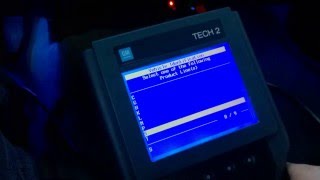
We Have This Part in Stock

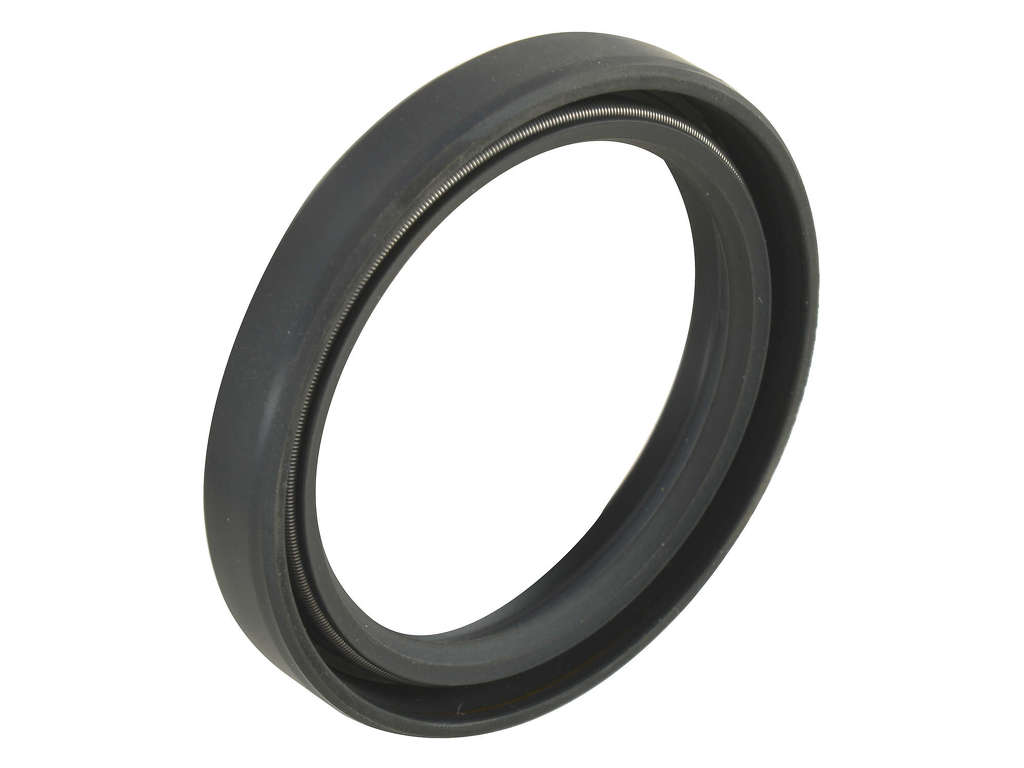
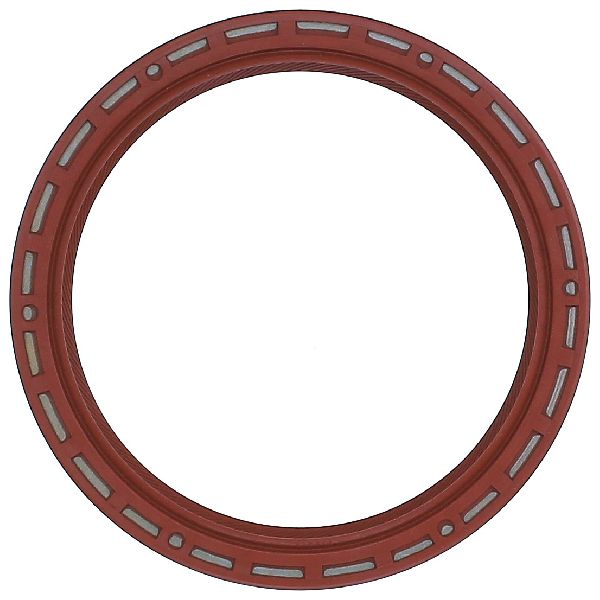

The information in this article is provided for general reference and educational purposes only. Vehicle specifications, procedures, and part compatibility can vary by production date, trim level, and region. Always consult your vehicle's factory service manual and verify part numbers before purchasing or performing repairs. Safety-critical components such as airbags, seat belts, and braking systems should be installed by a qualified professional.
- Chevrolet Sonic:
- 🧭 Diagnostic Flowchart
- 🎬 Helpful Videos
- 🛍️ Shop This Part
- What's Unique About the 2012-2020 Chevrolet Sonic
- Symptoms You May Notice
- Most Likely Causes
- Rare But Worth Checking
- Diagnosis Steps
- Parts You'll Likely Need
- Related Codes That Often Appear With This One
- Technical Service Bulletins (TSBs) & Recalls
- Platform-Specific Known Issues
- Mechanic-Grade Diagnostic Values
- Scan Tool Commands That Help
- Wiring & Ground Locations
- Real Owner Repair Stories
- OEM Part Supersession History
- Model Year Variations Within This Range
- Other Known Issues on This Vehicle
- Used vs. New Parts: Buying Guide for This Vehicle
- Real Owner Stories
- 2013 Chevrolet Cruze 1.4L Turbo
- 2012-2020 Chevrolet Sonic 1.4L Turbo
- 2013 Chevrolet Cruze 1.4L Turbo
- Related OBD-II Codes
- Frequently Asked Questions
- 🎟️ Get 5% Off