

P0335 on 2001-2007 Ford Escape 3.0L V6: Crank Sensor Causes and Fixes
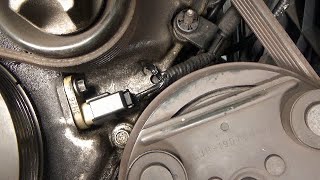
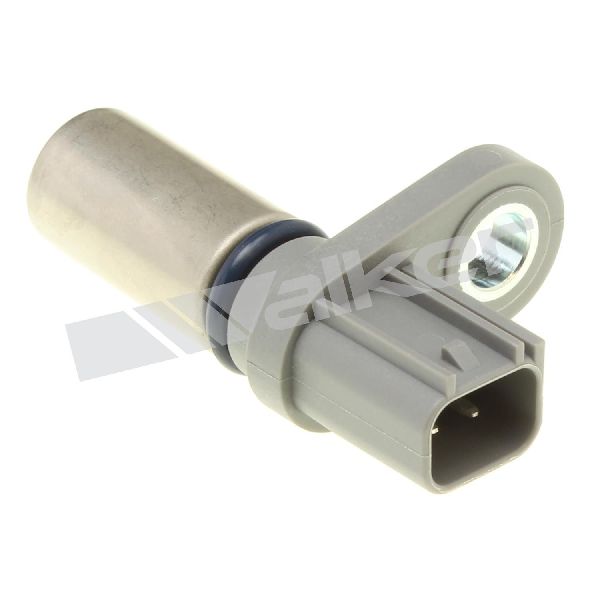
This code almost always points to a failed crankshaft position sensor (CKP) or its wiring. On the 3.0L Escape, this sensor is a common failure point that can cause stalling or a no-start condition. Replacement is a common DIY fix, costing around $25-$60 for the part. The sensor is located on the front of the engine near the main crankshaft pulley.
- P0335 on a 2001-2007 Escape 3.0L is a serious code that can leave you stranded due to stalling or a no-start condition.
- The most likely culprit is a failed crankshaft position sensor, which is a common and relatively inexpensive part to replace.
- Before replacing the sensor, always inspect its wiring and connector for damage, as this is another frequent cause.
- The sensor is located on the lower passenger side of the engine and can be accessed by removing the front wheel and splash guard.
- This repair is considered DIY-friendly for those with basic tools and can save a significant amount on labor costs.
What's Unique About the 2001-2007 Ford Escape
For the first-generation Ford Escape with the 3.0L Duratec V6, the P0335 code is a well-documented and frequent issue. The crankshaft position sensor's location on the lower passenger side of the engine makes it susceptible to heat, oil, and road debris over time, leading to failure. While the issue is common, the good news is that the sensor is relatively accessible and inexpensive to replace compared to many other vehicles where it can be buried deep within the engine or behind the transmission. This issue is also common on its platform mates, the Mazda Tribute and Mercury Mariner, which share the same engine and sensor design.
Symptoms You May Notice
- Engine will not start
- Engine stalls, especially after warming up
- Hard starting (prolonged cranking time)
- Check Engine Light is on
- Rough idle or engine vibrations
- Hesitation or stumbling during acceleration
- Loss of engine power
- Tachometer needle drops to zero intermittently while driving
- Replacing the camshaft position sensor instead of the crankshaft sensor.
- Replacing the ignition coils or spark plugs, assuming the rough running or no-start is a tune-up issue.
- Replacing the fuel pump without verifying the loss of spark due to the missing CKP signal.
Most Likely Causes
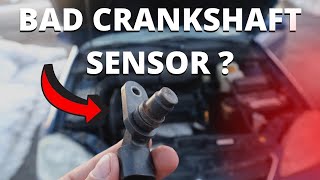
- Failed Crankshaft Position Sensor (CKP) 🔴 High Probability → Shop Engine Crankshaft Position Sensor The sensor is located in a high-heat area on the lower engine block, and years of heat cycles can cause the internal electronics to fail. Oil leaks from valve covers or the front main seal can also contaminate the sensor and its connector, accelerating failure.
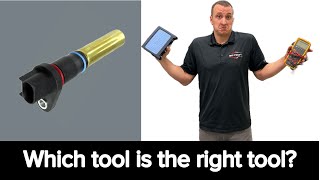
How to confirm: Test the sensor's resistance with a multimeter (compare to factory specs) or, more definitively, check for a proper AC voltage signal with an 🎬 See this guide on testing crankshaft sensors the right way oscilloscope while cranking the engine. The sensor on this vehicle is a two-wire Variable Reluctance (VR) type, which generates its own AC voltage. Given the low cost of the part and high probability of failure, replacement is the most practical diagnostic step. Failures are often heat-related, causing stalling only when the engine is warm.
Typical fix: Replace the crankshaft position sensor.
Est. part cost: $25-$60 - Damaged Wiring or Connector 🟡 Medium Probability The wiring harness leading to the sensor is close to the hot engine block and exhaust components. It can become brittle, melt, or chafe over time, causing an open or short circuit. Oil contamination can also degrade the wire insulation.
How to confirm: Visually inspect the wiring harness from the sensor back as far as possible for any signs of melting, chafing, or broken wires. Check the connector for corrosion, moisture, or loose pins. Wiggle the harness while the engine is idling (if it runs) to see if it causes a stall. Use a multimeter to check for continuity and for shorts to ground on each wire between the sensor connector and the PCM.
Typical fix: Repair the damaged section of wiring or replace the connector pigtail.
Est. part cost: $10-$30
Rare But Worth Checking
- Damaged Reluctor Ring: The CKP sensor reads teeth on a reluctor ring (or tone wheel) mounted on the crankshaft. While rare, it's possible for this ring to get damaged, for teeth to break off, or for it to become heavily corroded, which would cause a P0335. This is usually the result of other major engine work or a catastrophic event. On this specific engine, the reluctor wheel can be installed backward, which will cause timing issues and may trigger a P0335.
- Failed Powertrain Control Module (PCM): → Shop Engine Control Module (ECM) It is very rare for the PCM itself to be the cause. Before condemning the PCM, all other possibilities (sensor, wiring, grounds) must be exhaustively ruled out. Some Ford platforms have seen PCM issues caused by water intrusion or internal circuit board failure. On some Fords, a leaking coolant sensor can wick fluid through the harness to the ECU, causing damage.
Diagnosis Steps
- Verify the code with an OBD-II scanner. Note any other codes present.
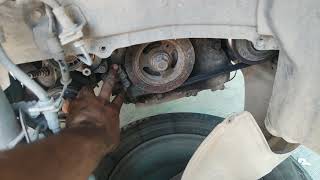
- Turn the vehicle off. To access the sensor, you will likely need to raise the front of the vehicle, remove the passenger-side front wheel, and remove the plastic splash shield from the wheel well.
- Locate the crankshaft position sensor on the lower, front, passenger side of the engine block, near the main crankshaft pulley/harmonic balancer.
- Carefully inspect the sensor's electrical connector and wiring harness. Look for any signs of melting, corrosion, oil contamination, or physical damage. Ensure the connector is seated firmly.
- If wiring looks good, test the sensor and circuit. The CKP on the 3.0L Duratec is a two-wire Variable Reluctance (VR) sensor. Disconnect it and check the resistance between the two pins on the sensor; it should be between 200 and 1000 ohms. A reading of zero indicates a short, and an infinite reading indicates an open circuit.
- To test the signal, set a multimeter to AC Volts. Reconnect the sensor, back-probe the two wires at the connector, and have an assistant crank the engine. You should see a fluctuating AC voltage reading. A more advanced diagnosis with an oscilloscope should show a clean AC sine wave that increases in frequency and amplitude as the engine cranks.
- If the sensor tests good but there is no signal at the PCM, check for continuity on both wires between the sensor connector and the PCM connector. Check for shorts to power or ground.
- After replacing the sensor, clear the codes with the scanner. 🎬 Watch: Step-by-step crankshaft sensor replacement for the 3.0L Escape Some Ford vehicles may require a 'Misfire Monitor Neutral Profile Correction' (crankshaft position variation relearn procedure), though it is often not necessary for a simple sensor swap on this model. Start the vehicle and perform a test drive to confirm the fix.
Parts You'll Likely Need
- Crankshaft Position Sensor
(OEM #5L8Z-6C315-AA)— This is the primary component that fails, causing the P0335 code on this vehicle.
Trusted brands: Motorcraft (OEM), Delphi, NGK/NTK, Hitachi
OEM price range: $45-$70
Aftermarket price range: $25-$50
Related Codes That Often Appear With This One
- P0336 — This code indicates a 'Crankshaft Position Sensor 'A' Circuit Range/Performance' problem. It can appear alongside P0335 if the signal is erratic or intermittent rather than completely lost.
- P0340 — This is a code for the Camshaft Position Sensor. The PCM uses both crank and cam signals to time the engine. A fault in one can sometimes cause confusion or trigger a fault in the other, especially if there is a shared wiring or power issue.
- P0300-P0306 — Misfire codes are common companions to a failing CKP sensor, as the loss of signal disrupts ignition timing and can lead to random or cylinder-specific misfires.
Platform-Specific Known Issues
- Heat Soak Failure: Many owners report that the P0335 code and stalling symptoms only appear after the engine has warmed up completely. The vehicle may start and run fine when cold, but will stall and refuse to restart until it has cooled down. This is a classic symptom of an electronic component, like the CKP sensor, failing due to heat.
- Oil Contamination: Leaks from the front valve cover gasket or front crankshaft seal are common on the 3.0L Duratec. This leaking oil can saturate the CKP sensor and its wiring connector, causing the plastic and insulation to degrade over time and leading to a short or poor connection.
Mechanic-Grade Diagnostic Values
- Crankshaft Position Sensor (CKP) Internal Resistance — expected: 200 - 1000 Ohms. Failure: A reading of 0 Ohms indicates a shorted sensor. A reading of infinite resistance (OL) indicates an open circuit inside the sensor.
- Crankshaft Position Sensor (CKP) AC Voltage Output — expected: Fluctuating AC voltage signal present while cranking the engine.. Failure: No AC voltage produced while cranking indicates a failed sensor or an open circuit in the wiring.
Scan Tool Commands That Help
- Ford IDS, FORScan, or equivalent professional scan tool: Misfire Monitor Neutral Profile Correction — This procedure may be required after replacing the crankshaft position sensor, PCM, or performing major engine work. It allows the PCM to relearn the precise profile of the crankshaft reluctor wheel to accurately detect misfires. While not always mandatory for a simple sensor swap on this model, it can resolve issues if the engine runs poorly or sets a P0315 code after the repair.
Wiring & Ground Locations
- G101 — On the 3.0L engine, located near the battery, providing a key ground path for the engine and its modules.. A poor connection at this primary engine ground can interrupt power or create a floating ground for the PCM, causing various sensor codes, including P0335.
- G107 — On the front of the engine for the 3.0L V6.. This ground is directly on the engine block and serves various components. Corrosion or a loose connection here can cause erratic sensor readings.
- G108 — At the rear of the engine for the 3.0L V6.. Serves as another critical engine-to-chassis ground point. A fault here can affect the PCM's ability to get clean signals from engine-mounted sensors like the CKP.
- PCM Connector — Located on the firewall in the engine compartment, passenger side.. The two wires from the CKP sensor run directly to this connector. Final circuit testing (continuity, shorts) must be performed at these pins to rule out a wiring issue between the sensor and the PCM.
Real Owner Repair Stories
- Ford Truck Enthusiasts Forum user 'kawasakiklx1' (2005 Ford Escape 3.0L V6) — Engine would crank but not start, no spark.
❌ Tried (didn't work) Replacing the crankshaft position sensor, Replacing the camshaft position sensor, Checking wiring and connectors
✅ What actually fixed it The user discovered the crankshaft reluctor ring (tone wheel) was installed backward during previous engine work. The wheel's notches are offset, and installing it flipped causes the timing to be incorrect, preventing the engine from starting. Flipping the reluctor ring to the correct orientation solved the problem.
Model Year Variations Within This Range
- 2001-2004 vs 2005-2007: The 2005 model year marked a mid-cycle refresh for the Escape, which included some engine and electronic updates. While the fundamental 3.0L Duratec architecture and the P0335 fault remained common, wiring harness routing and connector types may have minor differences. However, the CKP sensor part number (5L8Z-6C315-AA) and its function are consistent across the 2001-2007 range for the 3.0L V6.
Diagnostic Flowchart
Other Known Issues on This Vehicle
Issues unrelated to this code that are worth knowing about as an owner of this generation:
- CD4E Automatic Transmission Failure 🔴 High — Very common, especially on 2001-2004 models. Failures can occur at any mileage but are more frequent over 80,000 miles. Symptoms include harsh shifting, slipping, flashing O/D light, and eventual loss of gears. (Ref: Multiple TSBs exist for various symptoms, but no widespread recall for the core failure.)
- Rear Shock Tower Rust 🔴 High — Extremely common in regions that use road salt. The passenger side shock tower is particularly notorious for rusting through, allowing the top of the shock to detach and enter the cabin. (Ref: No recall, but the aftermarket has responded with weld-in and bolt-in repair panels (e.g., Dorman 924-358) due to the issue's prevalence.)
- Alternator Failure and Difficult Replacement 🟠 Medium — The alternator on the 3.0L V6 is prone to failure. Its location at the bottom rear of the engine makes replacement a labor-intensive job, often requiring removal of the passenger side CV axle.
- Worn Valve Cover Gaskets / Oil Leaks 🟠 Medium — Common at higher mileages (over 100k). The rear (firewall side) valve cover gasket is particularly difficult to replace. Leaks can drip onto the exhaust causing a burning smell, or onto other components like the alternator or CKP sensor.
- Failing DPFE Sensor (EGR System) 🟡 Low — A very common failure point causing EGR codes like P0401. The sensor measures EGR flow and often fails, leading to a Check Engine Light and failed emissions tests. (Ref: Ford issued TSB 04-1-7 regarding an updated DPFE sensor design.)
- Splitting/Cracked Brake Hoses 🔴 High — The original smooth-jacketed rubber brake hoses on early models are known to crack and split, leading to a sudden loss of brake fluid and pressure.
- PCV System Issues 🟡 Low — A clogged PCV valve or hose is common and can lead to increased oil consumption and blue smoke from the exhaust as crankcase pressure forces oil past seals.
Used vs. New Parts: Buying Guide for This Vehicle
When a used part is the smart pick: For this specific repair, buying a used crankshaft position sensor is NOT recommended. It is a low-cost, high-failure electronic part. The labor to install it outweighs the small savings, and a used sensor may have limited life remaining or could be faulty from the start.
What to inspect on the donor part:
- Not applicable for the sensor itself. If sourcing a related part like a wiring pigtail, inspect for brittle plastic, corrosion on pins, and any signs of melting or oil contamination.
OEM-only on this vehicle (don't cheap out):
- Crankshaft Position Sensor (CKP)
Aftermarket brands forum-validated for this vehicle:
- Motorcraft (OEM)
- NGK/NTK
- Delphi
- Bosch
Brands owners have reported issues with on this vehicle:
- Generic, unbranded 'white-box' parts from online marketplaces. For a critical sensor like the CKP, failure of a cheap part can leave you stranded, negating any initial savings.
Real Owner Stories
Aggregated from forums and TSBs cited above. Mileages and costs reflect what owners reported in those sources.
2001 Ford Escape 3.0L V6
Symptoms: The car experienced a no-start condition when hot. The owner initially suspected other issues but was advised to test the CKP sensor signal.
What fixed it: Replacing the crankshaft position sensor after confirming the failure through diagnostic testing.
Source hint: Ford-Trucks.com - "2001 Escape V6 - No Start - P0335"
2006 Ford Escape 3.0L V6
Symptoms: The vehicle experienced a crank-no-start situation.
What fixed it: Replacement of the CKP sensor.
Source hint: Reddit r/MechanicAdvice - "2006 Ford Escape 3.0L V6 P0335"
2001-2007 Ford Escape 3.0L V6
Symptoms: Classic no-start when hot symptom; the vehicle would stall and refuse to restart until it had cooled down.
What fixed it: Replacing the crankshaft position sensor.
Source hint: Escape City Forum - "Crank Sensor P0335"
Related OBD-II Codes
Frequently Asked Questions
Why does my 3.0L Escape only stall or throw the P0335 code after I've been driving for a while?
Can an oil leak cause the P0335 code on my Ford Escape?
Where is the crankshaft position sensor located on the 3.0L Duratec V6?
What should the resistance be for a healthy CKP sensor on this model?
Do I need to perform a 'relearn' procedure after replacing the sensor?
Is the P0335 issue common on the Mazda Tribute as well?
Helpful Videos
We Have This Part in Stock

The information in this article is provided for general reference and educational purposes only. Vehicle specifications, procedures, and part compatibility can vary by production date, trim level, and region. Always consult your vehicle's factory service manual and verify part numbers before purchasing or performing repairs. Safety-critical components such as airbags, seat belts, and braking systems should be installed by a qualified professional.
- Ford Escape:
- 🧭 Diagnostic Flowchart
- 🎬 Helpful Videos
- 🛍️ Shop This Part
- What's Unique About the 2001-2007 Ford Escape
- Symptoms You May Notice
- Most Likely Causes
- Rare But Worth Checking
- Diagnosis Steps
- Parts You'll Likely Need
- Related Codes That Often Appear With This One
- Platform-Specific Known Issues
- Mechanic-Grade Diagnostic Values
- Scan Tool Commands That Help
- Wiring & Ground Locations
- Real Owner Repair Stories
- Model Year Variations Within This Range
- Other Known Issues on This Vehicle
- Used vs. New Parts: Buying Guide for This Vehicle
- Real Owner Stories
- 2001 Ford Escape 3.0L V6
- 2006 Ford Escape 3.0L V6
- 2001-2007 Ford Escape 3.0L V6
- Related OBD-II Codes
- Frequently Asked Questions
- 🎟️ Get 5% Off