

P0335 on 2015-2017 Ford Expedition 3.5L EcoBoost: Crank Sensor Causes and Fixes
P0335 on a 2015-2017 Expedition almost always means the crankshaft position sensor has failed. This can cause a no-start or dangerous stalling. The sensor is difficult to access, located on the driver's side rear of the engine near the turbo. Expect a part cost of $45-$75 for an OEM sensor and a mandatory 'crank relearn' procedure after replacement.
- P0335 is a critical code that makes the vehicle unsafe to drive due to the high risk of stalling.
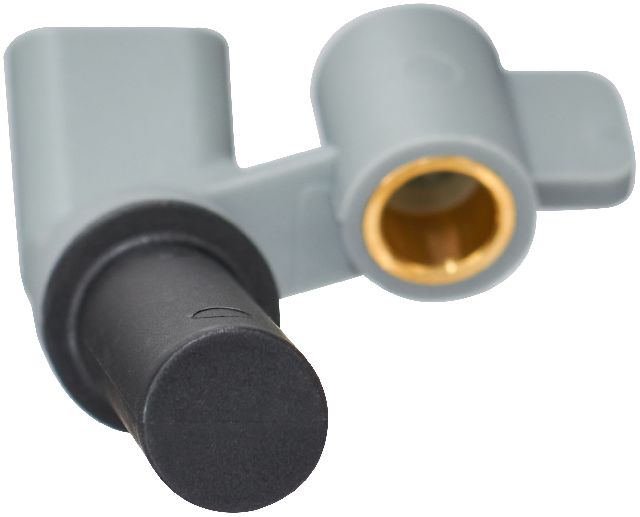
- The most likely cause is a failed crankshaft position sensor (Motorcraft part DY-1138).
- On the 3.5L EcoBoost, the sensor is very difficult to access, located on the driver's side rear of the engine.
- A 'crank relearn' procedure with a compatible scan tool is mandatory after replacing the sensor to avoid further issues like code P0315.
What's Unique About the 2015-2017 Ford Expedition
On the 3.5L EcoBoost engine in your Expedition, the crankshaft position sensor is notoriously difficult to access. Unlike older V8 models where it was on the front of the engine, Ford placed it on the rear driver's side, tucked behind the turbocharger and a heat shield. This location makes the wiring harness susceptible to heat damage from the turbo and exhaust, and makes replacement a much more labor-intensive job than on other engines. A mandatory 'Misfire Monitor Neutral Profile Correction' (crank relearn) procedure is also required with a proper scan tool, like FORScan, after replacement.
Symptoms You May Notice
- Engine cranks but will not start
- Tachometer shows 0 RPM during cranking
- Engine stalls unexpectedly while driving or at idle
- Rough or unstable idle
- Hesitation and poor acceleration
- Illuminated Check Engine Light
- Replacing the camshaft position sensors. The Expedition has four camshaft sensors, but P0335 specifically points to the single crankshaft sensor.
- Assuming it's a fuel pump issue. A crank-no-start symptom can mimic a bad fuel pump, but checking for an RPM signal on a scan tool during cranking can quickly differentiate the two.
Most Likely Causes
- Failed Crankshaft Position Sensor (CKP) 🔴 High Probability → Shop Engine Crankshaft Position Sensor The sensor is a common wear item that can fail from age and heat cycles. On the 3.5L EcoBoost, it's located in a high-heat area near the turbocharger, which can shorten its lifespan. The plastic can become brittle and break during removal.
How to confirm: Use a scan tool to monitor RPMs while cranking the engine. If the scan tool shows 0 RPM, the CKP sensor or its circuit is the most likely culprit. You can also test the sensor's resistance with a multimeter to see if it's within spec.
Typical fix: Replace the crankshaft position sensor and perform the 'Misfire Monitor Neutral Profile Correction' (crank relearn) procedure. Using the OEM Motorcraft part is highly recommended as aftermarket sensors have a higher failure rate.
Est. part cost: $45-$75 - Damaged Wiring or Connector 🟡 Medium Probability The wiring harness is routed near hot exhaust and turbocharger components, making it susceptible to melting, chafing, or becoming brittle. The connector itself can also corrode or fail from heat and vibration.
How to confirm: Visually inspect the wiring harness leading to the CKP sensor for any signs of melting, fraying, or breaks. Check the connector pins for corrosion or damage. Test for continuity, power (5V reference), and ground at the connector with a multimeter.
Typical fix: Repair the damaged section of the harness or replace the pigtail connector. The common pigtail is Motorcraft part WPT-986. Ensure the repaired harness is properly secured away from heat sources.
Est. part cost: $15-$40
Rare But Worth Checking
- Damaged Crankshaft Reluctor Ring: → Shop Engine Crankshaft The reluctor ring (or tone ring) is what the sensor reads. While durable, it can be damaged by a sudden physical jolt or during major engine/transmission work. A forum user reported this issue after hitting a bump in a field, which required transmission removal to fix. This is an expensive, labor-intensive repair.
- Failed Powertrain Control Module (PCM): → Shop Engine Control Module (ECM) This is extremely rare. The PCM should only be considered after all other possibilities, including the sensor, wiring, and reluctor ring, have been definitively ruled out by a professional.
Diagnosis Steps
- Connect an OBD-II scanner and confirm P0335 is present. Check for any other related codes like P0339 or P0315.
- Use the live data function on the scanner to monitor Engine RPM while cranking the engine. If it reads 0 RPM, the PCM is not receiving a signal from the CKP sensor circuit.
- Safely raise and support the vehicle. Locate the CKP sensor on the driver's side, where the engine meets the transmission, behind a heat shield and the turbocharger. Access is from underneath or through the driver's side wheel well.
- Visually inspect the sensor's wiring harness and connector for obvious signs of damage, such as melting from the nearby turbocharger, chafing, or loose connections.
- If the wiring appears intact, replace the crankshaft position sensor. This is the most common failure point. The retaining bolt is typically 7mm.
- After replacement, clear the codes and perform the mandatory 'Misfire Monitor Neutral Profile Correction' (crank relearn) procedure using a Ford-compatible scan tool (like FORScan). The engine must be at operating temperature for the procedure.
- If the problem persists after replacing the sensor, perform advanced electrical testing on the circuit. Check for 5V reference, ground, and signal integrity at the sensor connector using a multimeter and oscilloscope.
- If the circuit tests good, the issue may be mechanical (e.g., a damaged reluctor ring), which requires more intensive diagnostics, likely including transmission removal for inspection.
Parts You'll Likely Need
- Crankshaft Position Sensor
(OEM #DY-1138 (Motorcraft), cross-references to BL3Z-6C315-A)— This sensor is the most common cause of code P0335 due to failure from heat and age. OEM is strongly recommended.
Trusted brands: Motorcraft, Delphi, Hitachi, Standard Motor Products (SMP)
OEM price range: $45-$75
Aftermarket price range: $25-$60 - Crankshaft Position Sensor Connector Pigtail
(OEM #WPT-986 (Motorcraft))— Needed if the original connector or wiring is found to be melted, corroded, or damaged from heat.
Trusted brands: Motorcraft, Dorman
OEM price range: $20-$40
Aftermarket price range: $15-$30
Related Codes That Often Appear With This One
- P0339 — This code indicates an intermittent signal from the crankshaft sensor, while P0335 indicates a complete loss of signal. They share the same causes and often appear together.
- P0300-P0308 — Random or specific cylinder misfire codes can occur because without a proper crank signal, the PCM cannot time the ignition spark correctly, leading to misfires.
- P0016 — This code indicates a correlation issue between the crankshaft and a camshaft. While it can be caused by a stretched timing chain, a faulty crank sensor providing bad data can also trigger it.
- P0315 — This code for 'Crankshaft Position System Variation Not Learned' will often appear if the sensor is replaced but the mandatory 'Misfire Monitor Neutral Profile Correction' (crank relearn) procedure is not performed.
Technical Service Bulletins (TSBs) & Recalls
- TSB 21-2119: While not directly for P0335, this TSB addresses a ticking/rattle noise on cold start due to worn VCT units on 2018-2020 Expedition/Navigators (and 2017+ F-150s). This is a critical known issue for the engine family that can involve timing-related components.
Platform-Specific Known Issues
- A user on Reddit with a 2017 Expedition experienced sudden engine cutouts and stalling, which were ultimately traced back to a failing electronic throttle body, a common issue that can present with similar stalling symptoms to a P0335 code.
Mechanic-Grade Diagnostic Values
- CKP Sensor 3-Pin Connector Test (Key On, Engine Off) — expected: Pin 1 (Reference Voltage): ~5 Volts DC. Pin 2 (Ground): Continuity to chassis ground (near 0 ohms). Pin 3 (Signal): Should show a fluctuating voltage when the engine is cranked.. Failure: No 5V reference points to a PCM or wiring issue. No ground indicates a broken ground wire or bad ground point. A static or absent signal voltage during cranking indicates a failed sensor.
- CKP Sensor Resistance — expected: While Ford does not publish an official resistance spec for this Hall-effect sensor, a reading between 200 and 1000 ohms is a general indicator of a healthy sensor coil on similar components. A reading of zero or infinite ohms suggests a failed sensor.. Failure: A multimeter reading of 0 ohms (short circuit) or OL/infinite ohms (open circuit) across the sensor's pins (with the sensor disconnected).
- Oscilloscope Pattern — expected: A clean square wave pattern that increases in frequency as engine RPMs rise. The pattern should be consistent with no dropouts.. Failure: A missing, erratic, or distorted square wave pattern indicates a failing sensor, a damaged reluctor ring, or electrical interference.
Scan Tool Commands That Help
- Ford IDS, FORScan, or equivalent high-end scanner: Misfire Monitor Neutral Profile Correction — This procedure is mandatory after replacing the crankshaft position sensor, PCM, or performing major engine/transmission work. It relearns the crankshaft position sensor's profile to allow for accurate misfire detection. Failure to perform this will often result in a P0315 code and potential false misfire codes (P0300-P0308).
Wiring & Ground Locations
- CKP Sensor Connector — On the driver's side of the transmission bellhousing area, tucked behind the turbocharger and a heat shield.. This is the primary connection point for the sensor. It is highly susceptible to heat damage from the turbo, which can cause the connector plastic to become brittle and the wiring to melt, leading to a P0335.
- G105 (Ground) — A ground stud located on the engine block, often near the oil pan or starter motor area. A TSB for a related engine mentions securing the G105 ground stud bolt.. A poor engine block ground can cause erratic behavior or failure in various sensors, including the crankshaft position sensor, which relies on a solid ground reference to produce a clean signal.
- Engine Harness Chafe Points — General areas to inspect include where the harness routes near sharp edges of the frame, shock towers, or comes into contact with splash shields in the wheel wells.. While not one specific location, Ford truck forums frequently report issues with harnesses rubbing through their protective loom and shorting wires. A short in the CKP circuit can directly cause a P0335 code.
Real Owner Repair Stories
- f150forum.com user report (2012 F-150 3.5L EcoBoost (mechanically similar)) — Multiple codes including those related to sensor circuits.
❌ Tried (didn't work) Initial diagnosis was confusing due to multiple codes.
✅ What actually fixed it The root cause was a single wire in a harness that had rubbed through on a splash shield, causing a short. Repairing the wire and properly securing the harness resolved the issue.
OEM Part Supersession History
BL3Z-6C315-A→BL3Z-6C315-B— Likely an internal revision for improved durability or manufacturing consistency. Ford often supersedes parts without publicizing the specific reason.
Heads up: The parts are interchangeable. BL3Z-6C315-B is the correct replacement for the original 'A' version.
Diagnostic Flowchart
Other Known Issues on This Vehicle
Issues unrelated to this code that are worth knowing about as an owner of this generation:
- Timing Chain Stretch and VCT Phaser Rattle on Cold Start 🔴 High → Shop Engine Timing Chain — Common on first-generation 3.5L EcoBoost engines, typically appearing between 60,000 and 100,000 miles. The noise lasts for a few seconds after a cold start. (Ref: TSB 15-0131, TSB 21-2119.)
- Electronic Throttle Body Failure 🔴 High — Can occur intermittently, causing the vehicle to enter 'limp mode' with sudden loss of power, which is a significant safety hazard. Failures are reported at various mileages, sometimes as low as 50,000 miles. (Ref: TSB 16-0139 addresses this issue for multiple Ford vehicles with similar throttle bodies.)
- Leaking Turbocharger Coolant Lines/Fittings 🟠 Medium — The 'jiffy-tite' coolant line fittings on the turbos are known to degrade from heat, causing coolant leaks. This is a common issue on high-mileage vehicles.
- HVAC Blower Motor Failure / Fire Risk 🔴 High — A specific issue where the front blower motor can overheat, potentially causing a fire inside the cabin behind the glove box. (Ref: Recall 22S56.)
Used vs. New Parts: Buying Guide for This Vehicle
When a used part is the smart pick: A used part is generally NOT recommended for the crankshaft position sensor itself. The part is a low-cost wear item, and the labor to access it is significant. A used sensor carries a high risk of premature failure. A used wiring harness pigtail or a section of harness from a donor vehicle is a viable option if the original is damaged.
Donor-vehicle mileage cap: roughly under 80000 miles for the part to have meaningful remaining life.
What to inspect on the donor part:
- For a wiring pigtail, inspect for any signs of melting, brittleness, or corrosion on the connector pins.
- Ensure the locking tab on the connector is intact and functional.
- Check that the wires have not been previously repaired and are still flexible.
OEM-only on this vehicle (don't cheap out):
- Crankshaft Position Sensor
Aftermarket brands forum-validated for this vehicle:
- Motorcraft (OEM)
- Hitachi
- Delphi
Brands owners have reported issues with on this vehicle:
- Unnamed or 'white box' sensors from online marketplaces are frequently cited in forums as having high failure rates.
Real Owner Stories
Aggregated from forums and TSBs cited above. Mileages and costs reflect what owners reported in those sources.
2017 Ford Expedition 3.5L EcoBoost
Symptoms: Sudden engine cutouts and stalling while driving.
What fixed it: Replacement of the electronic throttle body (initially suspected to be a sensor issue).
Source hint: Reddit - r/fordexpedition thread titled '2017 expedition el limited engine cutout problem'
2011-2017 Ford F-150 3.5L EcoBoost
Symptoms: Crank-no-start condition immediately after hitting a bump.
What fixed it: Repair/replacement of a damaged crank sensor tone ring (reluctor ring).
Source hint: f150forum.com
Related OBD-II Codes
Frequently Asked Questions
Where is the crankshaft position sensor located on my 2015-2017 Expedition 3.5L EcoBoost?
Does TSB 21-2119 apply to my 2017 Expedition's P0335 code?
Is there a specific replacement part recommended for the CKP sensor?
Why did my engine stall suddenly without a 'crank-no-start' symptom?
Do I need to perform a special procedure after replacing the sensor?
Could my turbocharger be causing the P0335 wiring issues?
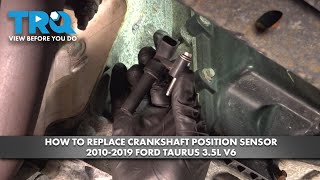
Helpful Videos
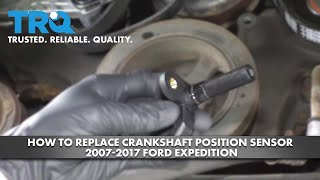
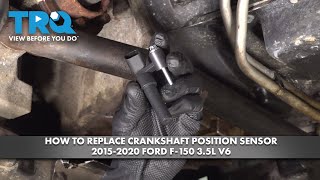
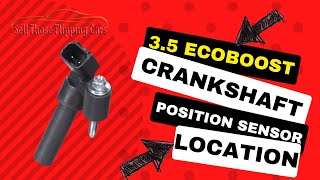
We Have This Part in Stock




The information in this article is provided for general reference and educational purposes only. Vehicle specifications, procedures, and part compatibility can vary by production date, trim level, and region. Always consult your vehicle's factory service manual and verify part numbers before purchasing or performing repairs. Safety-critical components such as airbags, seat belts, and braking systems should be installed by a qualified professional.
- Ford Expedition:
- 🧭 Diagnostic Flowchart
- 🎬 Helpful Videos
- 🛍️ Shop This Part
- What's Unique About the 2015-2017 Ford Expedition
- Symptoms You May Notice
- Most Likely Causes
- Rare But Worth Checking
- Diagnosis Steps
- Parts You'll Likely Need
- Related Codes That Often Appear With This One
- Technical Service Bulletins (TSBs) & Recalls
- Platform-Specific Known Issues
- Mechanic-Grade Diagnostic Values
- Scan Tool Commands That Help
- Wiring & Ground Locations
- Real Owner Repair Stories
- OEM Part Supersession History
- Other Known Issues on This Vehicle
- Used vs. New Parts: Buying Guide for This Vehicle
- Real Owner Stories
- 2017 Ford Expedition 3.5L EcoBoost
- 2011-2017 Ford F-150 3.5L EcoBoost
- Related OBD-II Codes
- Frequently Asked Questions
- 🎟️ Get 5% Off