

P0335 on 2010-2019 Ford Taurus: Crank Sensor Failure Causes and Fixes
This code almost always means the crankshaft position sensor has failed, causing a no-start or stalling condition. Expect to pay $20-$60 for a new sensor, and while it's a DIY-friendly job in theory, the sensor is in a very tight spot making access difficult.
- P0335 on a 2010-2019 Taurus indicates a problem with the crankshaft position sensor circuit, which is critical for engine operation.
- The most common symptoms are the engine stalling or cranking without starting.
- The cause is almost always a failed sensor itself, which is a relatively inexpensive part.
- The biggest challenge in fixing this code is the sensor's location, which is very difficult to access behind the passenger-side catalytic converter.
- Due to the risk of sudden stalling, the vehicle should not be driven until the issue is repaired.
What's Unique About the 2010-2019 Ford Taurus
For the sixth-generation Ford Taurus with either 3.5L V6 engine, the P0335 code is a straightforward issue, almost always pointing to the sensor itself. The main challenge isn't the diagnosis, but the physical replacement. The sensor is notoriously difficult to access, tucked behind the passenger-side catalytic converter on the transmission bell housing. This location makes a simple part swap a frustrating job for even experienced DIY mechanics. Some owners report success by removing the oil filter for slightly better access, but it remains a tight squeeze.
Symptoms You May Notice
- Engine cranks but will not start
- Engine stalls unexpectedly while driving, especially when coming to a stop
- Check Engine Light is on
- Rough idle or engine misfires
- Hard starting (takes longer than usual to start)
- Tachometer shows 0 RPM while cranking the engine
- Reduced engine power or hesitation
- Replacing the camshaft position sensors. While they are also critical for timing, P0335 specifically points to the crankshaft sensor circuit.
- Replacing the fuel pump. A no-start condition can be caused by a lack of fuel, but P0335 directly indicates a timing signal issue that must be addressed first.
Most Likely Causes
- Failed Crankshaft Position Sensor (CKP) 🔴 High Probability → Shop Engine Crankshaft Position Sensor The sensor is exposed to high heat cycles due to its proximity to the catalytic converter, which can lead to premature electronic failure. This is the most common cause by a wide margin.
How to confirm: Test the sensor's output with a multimeter set to AC voltage or by using an oscilloscope while cranking the engine. A lack of signal confirms a bad sensor. However, given the low part cost and difficult access, many owners and shops choose to replace it based on the code alone after checking the wiring.
Typical fix: Replace the crankshaft position sensor. The Motorcraft OEM part is recommended for reliability.
Est. part cost: $20-$60 - Damaged Wiring or Connector 🟡 Medium Probability The wiring harness is in a hot, tight area near the exhaust, making it susceptible to heat damage, melting, or physical abrasion over time. The connector itself can also become contaminated or corroded.
How to confirm: Visually inspect the wiring leading to the CKP sensor for any signs of melting, chafing, or corrosion at the connector. Perform a continuity test on the signal, power, and ground wires from the sensor connector back to the PCM.
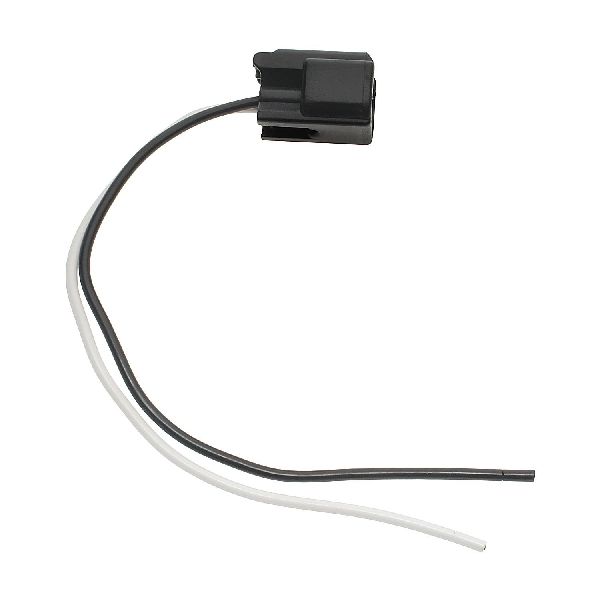
Typical fix: Repair the damaged section of wiring or replace the connector pigtail.
Est. part cost: $10-$30
Rare But Worth Checking
- Damaged Reluctor Ring: The reluctor ring (or tone wheel) is a toothed wheel on the crankshaft that the sensor reads. While durable, it can be damaged, get covered in debris, or break during major engine or transmission work. This is unlikely unless other major repairs were recently performed.
- Faulty Powertrain Control Module (PCM): → Shop Engine Control Module (ECM) This is the least likely cause. The PCM should only be considered after all other possibilities, including the sensor, wiring, and reluctor ring, have been thoroughly ruled out.
Diagnosis Steps
- Confirm the presence of code P0335 with an OBD-II scanner. Check for other codes like P0336.
- Use the scanner's live data function to monitor Engine RPM while cranking. A reading of 0 or an erratic signal strongly suggests a CKP circuit fault.
- Safely raise and support the vehicle to access the area behind the passenger-side front wheel.
- Locate the crankshaft position sensor. It is on the bell housing of the transmission, tucked behind the passenger-side catalytic converter. A heat shield may need to be removed (typically held by 10mm bolts).
- Carefully inspect the sensor's wiring harness and connector for any signs of heat damage, melting, corrosion, or loose pins. Wiggle the harness to see if the fault is intermittent.
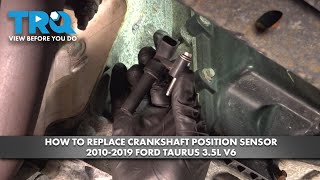
- If the wiring appears intact, the most practical next step is to replace the sensor. It is typically held in by a single 7mm or 8mm bolt. 🎬 See this step-by-step guide to replacing the sensor. Some owners have found it easier to access by first removing the engine oil filter.
- After replacement, clear the codes with the scanner. In some cases, a 'Misfire Monitor Neutral Profile Correction' (crank relearn) procedure may be required using a capable scan tool (like FORScan) for the engine to run smoothly and prevent code P0315 from setting. 🎬 Watch: How to perform the misfire monitor neutral profile correction.
- If the code returns, perform advanced diagnostics, such as testing the sensor circuit for the 5V reference voltage, ground, and signal continuity back to the PCM with a multimeter.
Parts You'll Likely Need
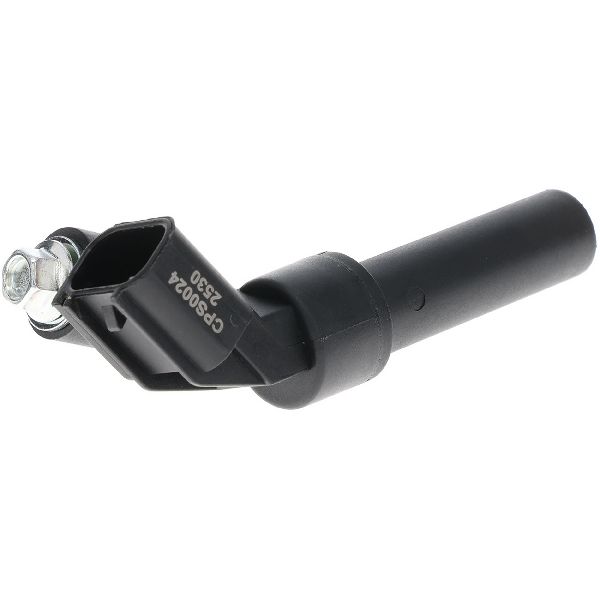
- Crankshaft Position Sensor
(OEM #AA5Z-6C315-A (Motorcraft))— This sensor is the most common failure point for the P0335 code due to its critical function and exposure to heat.
Trusted brands: Motorcraft, Delphi, NTK, Hitachi
OEM price range: $40-$70
Aftermarket price range: $20-$50
Related Codes That Often Appear With This One
- P0336 (Crankshaft Position Sensor 'A' Circuit Range/Performance): Often appears with P0335, indicating the signal is erratic rather than completely gone.
- P0315 (Crankshaft Position System Variation Not Learned): This code can appear after replacing the sensor if the required relearn procedure is not performed.
Platform-Specific Known Issues
- The primary vehicle-specific issue is the difficult location of the sensor, which significantly increases the labor time and difficulty of the repair compared to other vehicles where the sensor is more accessible.
- Owner forums are filled with comments about the frustration of this repair. One owner on a SHO Forum noted they were able to replace it by only removing the oil filter, avoiding the more complex process of removing turbo components on the SHO model. This highlights that while difficult, it is a manageable DIY job with patience.
Mechanic-Grade Diagnostic Values
- Crankshaft Position Sensor (CKP) Resistance — expected: 985 to 1,600 Ω when cold (14 to 122°F), or 1,265 to 1,890 Ω when hot (122 to 212°F).. Failure: A reading of open circuit (infinite resistance) or a value significantly outside the specified range indicates a failed sensor. Note that aftermarket sensors may have different specifications.
- CKP Sensor Circuit Reference Voltage — expected: Approximately 5 volts at the connector with the key on, engine off.. Failure: A reading of 0 volts indicates a problem with the wiring from the PCM or the PCM itself. If voltage changes while wiggling the harness, it points to an intermittent connection.
- Scan Tool Live Data - Engine RPM — expected: A stable, non-zero RPM reading while the engine is cranking.. Failure: A reading of 0 RPM while cranking is a definitive sign that the PCM is not receiving a signal from the CKP circuit.
Scan Tool Commands That Help
- FORScan, Ford IDS, or equivalent professional scan tool: Misfire Monitor Neutral Profile Correction — This procedure is mandatory after replacing the crankshaft position sensor, PCM, or performing major timing work. It allows the PCM to learn the unique profile of the reluctor wheel and the new sensor's signal to accurately detect misfires. Skipping this step will often set a P0315 code and can cause rough running conditions.
Wiring & Ground Locations
- C175E — This is one of the main connectors at the Powertrain Control Module (PCM), located in the engine bay.. The wires for the crankshaft position sensor (Signal, Signal Return/Ground, and sometimes a shield wire) terminate at this connector. When diagnosing a persistent P0335 after sensor replacement, technicians probe the specific pins at this connector to test for continuity, shorts, or opens in the harness back to the sensor.
- G100 / G101 / G102 — These are primary engine compartment grounds, typically located on the frame rails or inner fenders near the battery or front/rear of the engine compartment.. A poor engine ground connection can create a voltage potential difference between the sensor's ground reference and the PCM's ground. This 'noisy' ground can corrupt the CKP signal, leading to erratic readings or a complete loss of signal, triggering a P0335 code even with a good sensor and harness. Ensuring these grounds are clean and tight is a critical diagnostic step.
Real Owner Repair Stories
- SHO Forum user (2013 Ford Taurus SHO (3.5L EcoBoost)) — Engine would crank but not start, P0335 code present.
❌ Tried (didn't work) Initial replacement of the crankshaft position sensor did not immediately solve the no-start condition.
✅ What actually fixed it After replacing the sensor, the user had to perform a Keep Alive Memory (KAM) reset by disconnecting the battery. Following the reset, the car started. The user then performed the 'Misfire Monitor Neutral Profile Correction' procedure with FORScan software to prevent a P0315 code and ensure smooth operation. The final fix was the combination of the new sensor and the proper reset/relearn procedures.
OEM Part Supersession History
7T4Z-6C315-B, AT4Z-6C315-A→AA5Z-6C315-A— Standard part revision and consolidation by the manufacturer.
Model Year Variations Within This Range
- 2010-2012 vs 2013-2019: A component revision occurred around the 2013 model year for the 3.5L engine platform. While the short block is largely the same, components like the timing cover and crank sensor itself may differ between the early (2010-2012) and later (2013-2019) models. It is critical to verify the correct part number for your specific model year when ordering a replacement sensor.
Diagnostic Flowchart
Other Known Issues on This Vehicle
Issues unrelated to this code that are worth knowing about as an owner of this generation:
- Internal Water Pump Failure 🔴 High — A widely documented design flaw on transverse-mounted 3.5L/3.7L Cyclone engines. Failure can occur without warning, often between 80,000 and 150,000 miles. When the pump fails, it leaks coolant directly into the engine oil, leading to catastrophic engine damage if not caught immediately.
- Power Transfer Unit (PTU) Overheating/Failure (AWD Models) 🔴 High — The PTU is located near the hot exhaust, which cooks the gear oil over time. Ford designated the unit as 'lifetime fluid' with no drain plug, leading to frequent failures. Symptoms include a grinding/binding noise during turns, a burning gear oil/propane smell, and eventual loss of AWD.
- Electronic Throttle Body (ETB) Failure 🟠 Medium — Internal contamination can cause the throttle body to fail, forcing the vehicle into a 'limp home mode' with drastically reduced power. This was common enough that Ford initiated a Customer Satisfaction Program (13N03) to extend the warranty on this part. (Ref: Customer Satisfaction Program 13N03)
- Timing Chain Stretch (Primarily 3.5L EcoBoost) 🟠 Medium → Shop Engine Timing Chain — On EcoBoost engines, fuel soot can contaminate the oil and accelerate timing chain wear, leading to rattling noises on startup and codes like P0016. While less common on the naturally aspirated 3.5L, it's a known issue for the engine family. (Ref: TSB 14-0194 (related to EcoBoost))
Used vs. New Parts: Buying Guide for This Vehicle
When a used part is the smart pick: For this specific repair, using a used crankshaft position sensor is never a smart choice. The part is a low-cost electronic component that fails due to heat and age. The labor required to access the sensor is significant, so installing a used part with unknown remaining life carries a high risk of having to repeat the difficult job soon after.
What to inspect on the donor part:
- Not applicable, as a used sensor is not recommended.
OEM-only on this vehicle (don't cheap out):
- Crankshaft Position Sensor: While not strictly 'OEM-only', using the OEM Motorcraft sensor (AA5Z-6C315-A) is very strongly recommended by forum veterans and mechanics for this platform. Aftermarket sensors have a documented higher failure rate, and the difficult labor makes it worth the extra cost for the reliability of the OEM part.
Aftermarket brands forum-validated for this vehicle:
- Delphi
- NTK
- Hitachi
Brands owners have reported issues with on this vehicle:
- Generic, unbranded, or 'white-box' sensors sold on marketplace websites are frequently cited as failing quickly, sometimes immediately after installation.
Real Owner Stories
Aggregated from forums and TSBs cited above. Mileages and costs reflect what owners reported in those sources.
2016 Ford Taurus SHO
Symptoms: Crank no-start after sitting for a few weeks, P0335 code present.
What fixed it: Repairing 9-10 chewed wires at the PCM connector (located near the fresh air intake) that had been damaged by mice. The wires were spliced, soldered, and protected with heat-shrink tubing.
Source hint: SHO Forum user (2016 Ford Taurus SHO (shared PCM logic/wiring principles))
2010-2019 Ford Taurus 3.5L (General SHO Forum Account)
Symptoms: Crank no-start condition; user replaced the sensor but still experienced issues until performing specific software steps.
What fixed it: Replacing the crankshaft position sensor followed by a KAM reset and a 'Misfire Monitor Neutral Profile Correction' procedure.
Source hint: SHO Forum - "p0335 replaced crank position sensor same no start afterwards"
Related OBD-II Codes
Frequently Asked Questions
Where is the crankshaft position sensor located on the 3.5L Taurus, and is it easy to reach?
Why does the P0335 code happen so frequently on the Ford Taurus 3.5L engine?
Do I need to perform any special programming after replacing the CKP sensor on my Taurus?
My tachometer stays at 0 RPM while I'm trying to start my Taurus. Is this related to P0335?
Should I use an aftermarket sensor or the Motorcraft OEM part for this repair?
Can a bad water pump cause P0335 on this engine?
Helpful Videos

We Have This Part in Stock


The information in this article is provided for general reference and educational purposes only. Vehicle specifications, procedures, and part compatibility can vary by production date, trim level, and region. Always consult your vehicle's factory service manual and verify part numbers before purchasing or performing repairs. Safety-critical components such as airbags, seat belts, and braking systems should be installed by a qualified professional.
- Ford Taurus:
- 🧭 Diagnostic Flowchart
- 🎬 Helpful Videos
- 🛍️ Shop This Part
- What's Unique About the 2010-2019 Ford Taurus
- Symptoms You May Notice
- Most Likely Causes
- Rare But Worth Checking
- Diagnosis Steps
- Parts You'll Likely Need
- Related Codes That Often Appear With This One
- Platform-Specific Known Issues
- Mechanic-Grade Diagnostic Values
- Scan Tool Commands That Help
- Wiring & Ground Locations
- Real Owner Repair Stories
- OEM Part Supersession History
- Model Year Variations Within This Range
- Other Known Issues on This Vehicle
- Used vs. New Parts: Buying Guide for This Vehicle
- Real Owner Stories
- 2016 Ford Taurus SHO
- 2010-2019 Ford Taurus 3.5L (General SHO Forum Account)
- Related OBD-II Codes
- Frequently Asked Questions
- 🎟️ Get 5% Off