

P0335 on 2012-2017 Hyundai Azera 3.3L V6: Crankshaft Sensor Failure Causes and Fixes
On a 2012-2017 Hyundai Azera, code P0335 almost always means the crankshaft position sensor has failed. This is a very common issue causing engine stalling and no-start conditions. The failure is often intermittent and heat-related. Expect to pay around $85-$115 for an OEM sensor and $45-$60 for an aftermarket one, with a DIY difficulty of 2/5.
- P0335 on a 2012-2017 Azera is a strong indicator that the crankshaft position sensor is failing.
- Key symptoms are sudden engine stalling (especially when warm), difficulty starting, and a Check Engine Light.
- Do not continue to drive the vehicle, as the engine can shut off at any time, creating a serious safety risk.
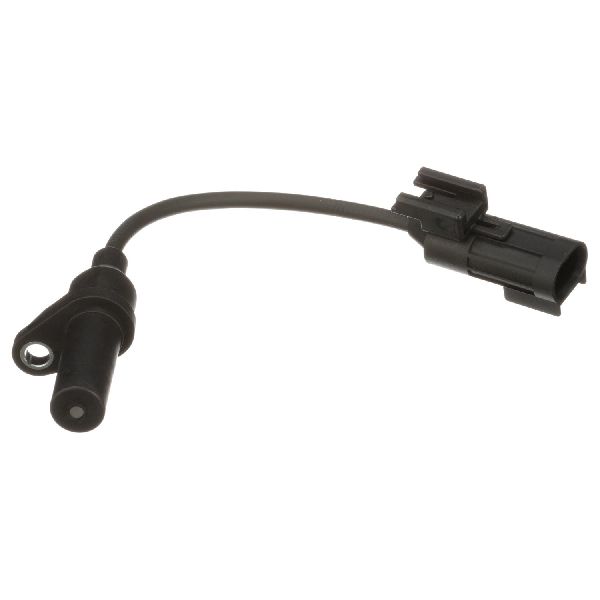
- The most likely fix is to replace the sensor (OEM Part #39310-3C600). This is a manageable DIY job for those with basic tools, with a difficulty of 2/5.
- Before replacing the sensor, always perform a quick visual inspection of the wiring and connector for any obvious damage.
What's Unique About the 2012-2017 Hyundai Azera
The 3.3L Lambda II V6 engine in the Azera is generally considered reliable, but like many Hyundai/Kia engines of this era, the crankshaft position sensor is a known high-failure component due to repeated exposure to engine heat and vibration. The failure is often intermittent at first, causing symptoms that appear when the engine is warm and disappear after it cools down, which can be confusing for owners. The sensor's location on the 3.3L V6 is on the top of the transmission bellhousing, accessible from the top of the engine bay after removing the air intake and sometimes the battery, making it a straightforward but slightly awkward DIY replacement.
Symptoms You May Notice
- Engine stalling, especially when coming to a stop or when the engine is warm.
- Engine cranks but will not start.
- Hard starting (takes longer than usual to start).
- Intermittent Check Engine Light that may turn on and off.
- Rough idle or engine vibration/misfires.
- Hesitation or stumbling during acceleration.
- Tachometer needle dropping to zero while driving.
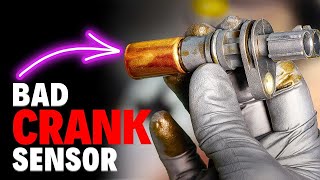
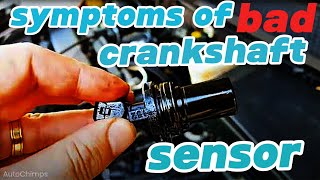
- Reduced fuel efficiency. 🎬 See a breakdown of common bad crankshaft sensor symptoms.
- Replacing the Camshaft Position Sensor: This is a different sensor that provides a related but distinct signal. A faulty camshaft sensor will typically set codes like P0340, not P0335.
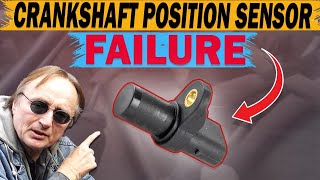
- Replacing the Fuel Pump: A no-start or stalling condition can mimic a fuel delivery problem, but P0335 points specifically to a fault 🎬 Watch this before you replace your crankshaft position sensor. in the crankshaft position sensor circuit.
Most Likely Causes
- Failed Crankshaft Position Sensor 🔴 High Probability → Shop Engine Crankshaft Position Sensor The sensor is a known high-failure part on many Hyundai models due to its location, where it is exposed to significant heat and vibration, causing the internal electronics and magnet to degrade over time. Failures are common after 100,000 miles.
How to confirm: Visually inspect the sensor for physical damage or corrosion. Test the sensor's resistance with a multimeter (a good sensor should be around 900 ohms, though this can vary). However, since failures are often intermittent and heat-related, the sensor may test good when cold. The most definitive test is using an oscilloscope to check the sensor's waveform for dropouts or an inconsistent pattern. Given the high failure rate and low part cost, replacement is often the most practical diagnostic step if the wiring is intact.
Typical fix: Replace the crankshaft position sensor. It is recommended to use an OEM or OEM-supplier part (e.g., Mando) for reliability.
Est. part cost: $45-$120 - Damaged Wiring or Connector 🟡 Medium Probability The sensor's wiring harness is located in a hot area of the engine bay and can be susceptible to heat damage from the exhaust, oil contamination, or physical damage from road debris. The plastic connector can also become brittle and break.
How to confirm: Visually inspect the entire length of the wiring harness from the sensor to the main engine harness. Check for melted insulation, brittle wires, or chafing. Unplug the connector and check for corrosion, bent pins, or a loose fit. Use a multimeter to check for continuity and for shorts to ground on each wire in the harness.
Typical fix: Repair the damaged section of wire or replace the connector pigtail.
Est. part cost: $10-$30
Rare But Worth Checking
- Damaged Reluctor Ring: The toothed wheel on the crankshaft that the sensor reads can become damaged, have broken teeth, or have foreign material lodged between it and the sensor. This is rare and typically only happens if there has been major internal engine work or a catastrophic failure. Metal flakes on the magnetic tip of the sensor can be an indicator of this.
- Faulty Powertrain Control Module (PCM): → Shop Engine Control Module (ECM) It is extremely rare for the PCM itself to fail, but it is a possibility. This should only be considered after all other potential causes, including the sensor and wiring, have been definitively ruled out by a professional. A P0605 code might accompany P0335 in this case.
- Weak Battery or Starting System Issue: → Shop Vehicle Battery In some cases, a very low battery voltage during cranking or a faulty starter motor can cause the crankshaft to rotate too slowly, which the PCM might misinterpret as a faulty sensor signal, triggering a P0335 code. A failing alternator can also cause voltage drops that lead to a false code.
Diagnosis Steps
- Scan the vehicle's computer with an OBD-II scanner to confirm P0335 is the primary code. Address other codes, such as those for the starting system or PCM, if present.
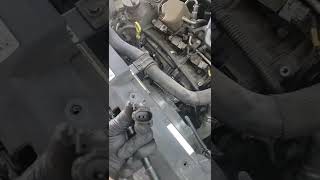
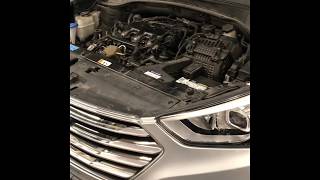
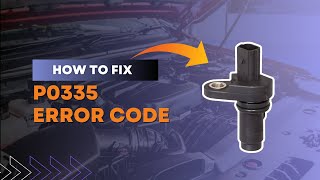
- With the engine off, locate the crankshaft position sensor. On the 3.3L V6, it is on the top of the transmission bell housing, near the engine block, underneath the air intake snorkel. 🎬 Watch: 2012 Azera crankshaft sensor location and replacement guide.
- To gain access, remove the engine cover and the air intake snorkel assembly (typically held by two 10mm bolts). For better access, it is often recommended to also remove the battery and battery tray.
- Carefully inspect the sensor's electrical connector for corrosion, damage, or loose pins. Ensure it is plugged in securely. Inspect the wiring harness for any signs of melting, chafing, or breaks.
- If the wiring appears to be in good condition, the crankshaft position sensor itself is the most likely culprit. Unbolt the single 10mm bolt holding the sensor in place.
- Remove the old sensor. It may require some gentle twisting and pulling. Ensure the old O-ring does not remain in the mounting hole.
- Lightly lubricate the O-ring on the new sensor with clean engine oil and install it, securing it with the 10mm bolt. Reconnect the electrical connector.
- Reinstall the battery, battery tray, and air intake assembly. Reconnect the negative battery terminal.
- Clear the trouble code with the OBD-II scanner and start the vehicle to confirm the fix. A crankshaft variation relearn procedure is generally not required for a simple sensor replacement on this vehicle, but some scan tools have a 'synchronization succeeded' PID that can be checked.
Parts You'll Likely Need
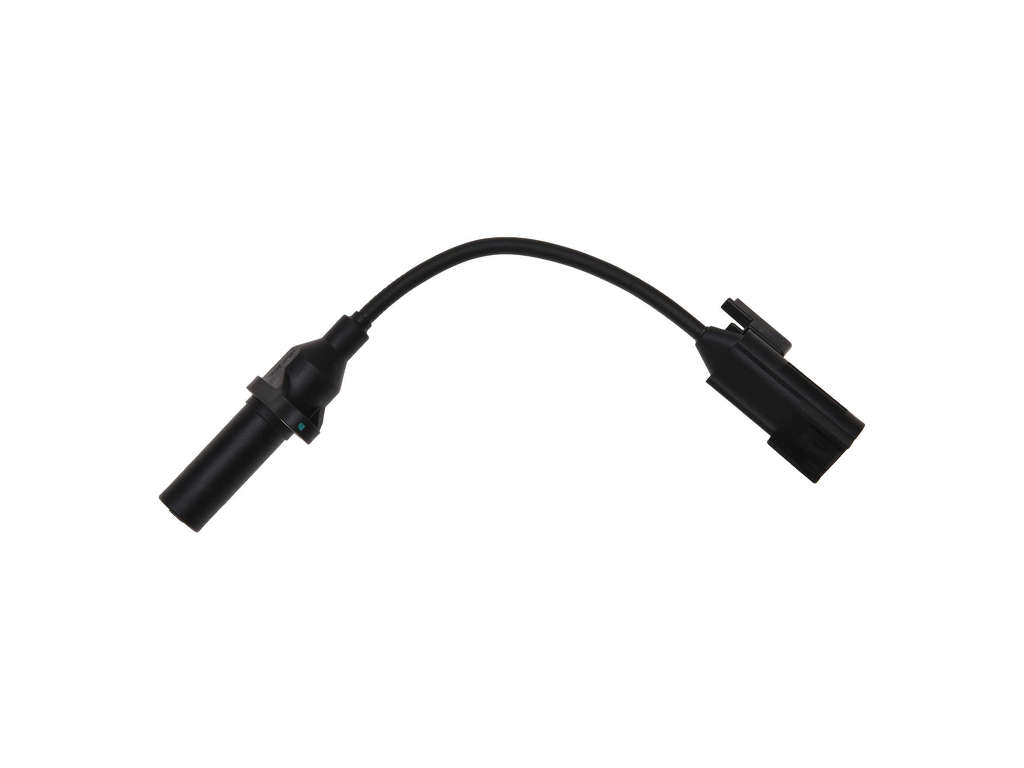
- Crankshaft Position Sensor
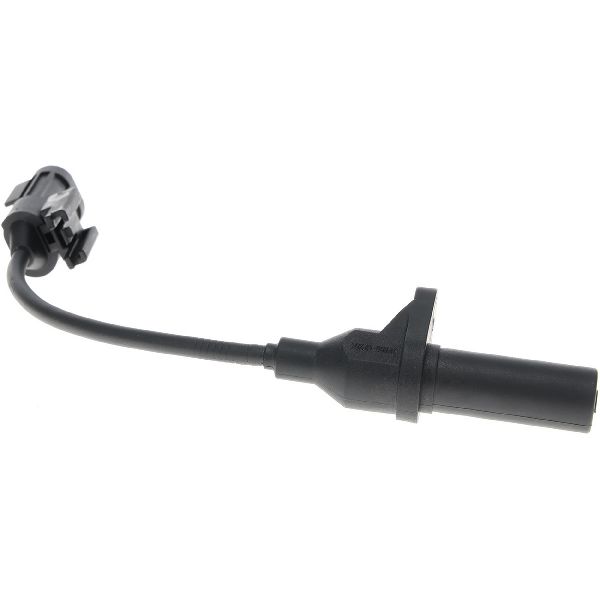
(OEM #39310-3C600)— This sensor is the most common failure point for code P0335 on this specific vehicle and engine. It is also referred to as a 'Sensor-Crankshaft Angle'.
Trusted brands: Hyundai (OEM), Mando (Often the OEM supplier), NTK, Delphi, Beck Arnley
OEM price range: $85-$120
Aftermarket price range: $45-$60
Related Codes That Often Appear With This One
- P0336 (Crankshaft Position Sensor 'A' Circuit Range/Performance)
- P0338 (Crankshaft Position Sensor 'A' Circuit High Input)
- P0339 (Crankshaft Position Sensor 'A' Circuit Intermittent)
Platform-Specific Known Issues
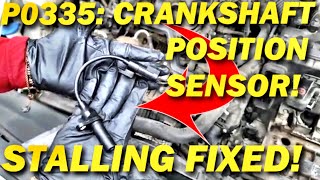
- Owner Experience: Intermittent Stalling Fixed: An owner of a 2016 Kia Cadenza with the same 3.3L V6 engine and P0335 code reported symptoms of the car dying when coming to a stop light and losing all power. Replacing the crankshaft position sensor resolved the issue completely. The repair video confirms the sensor location and replacement procedure is identical for the Azera.
Mechanic-Grade Diagnostic Values
- Crankshaft Position Sensor (CKPS) Resistance — expected: 630-770 Ohms for some Lambda 3.3L engines. Other sources cite a wider range of 200-900 Ohms. Note: Some documentation for other Hyundai engines shows a much higher resistance of 1.65 kΩ, so specs can vary significantly.. Failure: A reading of infinite resistance (open circuit) or zero resistance (short circuit) indicates a failed sensor. However, a sensor can test good when cold and still fail when hot.
- CKP Sensor Signal Waveform (using oscilloscope) — expected: A clean digital square wave signal that switches between high (approx. 5V) and low (approx. 0V). The pattern should show 58 regular pulses and one longer pulse (or a gap for two missing teeth) per crankshaft revolution.. Failure: An inconsistent, erratic, or missing waveform, or a waveform that does not pull down close to 0V, indicates a faulty sensor.
- CKP Sensor Connector Voltage (Key On, Engine Off) — expected: One pin should have a 5V reference voltage from the PCM, one should have a good ground (near 0V), and the third is the signal wire.. Failure: Absence of the 5V reference or a bad ground points to a wiring or PCM issue, not a sensor failure.
Scan Tool Commands That Help
- Hyundai GDS (Global Diagnostic System) or equivalent advanced scanner: Live Data - Crankshaft Position Sensor Parameter — To observe the CKP signal in real-time while the engine is running. An erratic or intermittently dropping signal confirms a problem in the circuit. This is a primary step before performing more invasive tests.
- Hyundai GDS (Global Diagnostic System) or equivalent advanced scanner: Live Data - Synchronization Succeeded PID — After replacing the sensor, this PID can be monitored to confirm that the new sensor's signal is being correctly read and synchronized by the ECM. It should show 'ON' or 'Yes'. This is a quick, non-invasive way to verify the repair is recognized by the computer.
Wiring & Ground Locations
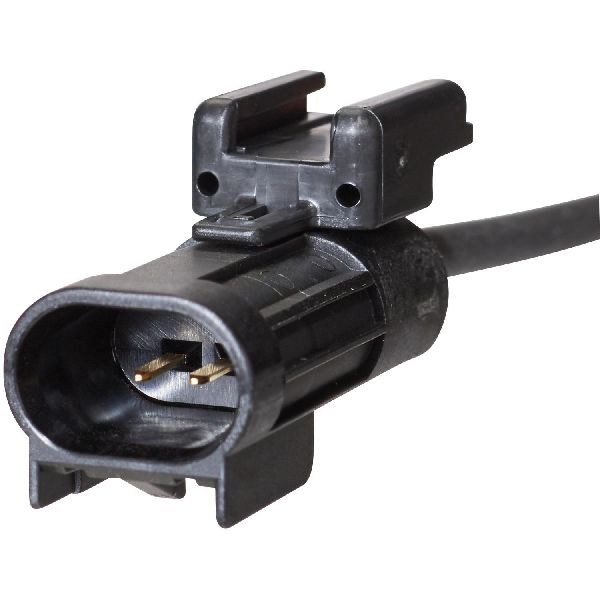
- CKP Sensor Connector — On the crankshaft position sensor itself, located on top of the transmission bellhousing under the air intake snorkel.. This 3-pin connector is a common point of failure due to heat and vibration. The pins are typically for 5V power, signal, and ground. Checking for voltage, ground, and signal at this connector is a key diagnostic step.
- Main Engine Ground (Example: G19, GM01) — A primary ground point is often located on the chassis frame near the battery tray. Wiring diagrams for the 2013 Azera show ground points like GM01 on the top left side of the dash and others on the fender aprons.. A poor or corroded main engine ground can introduce electrical noise into sensor circuits, causing the PCM to misinterpret the CKP signal and trigger a false P0335 code. Ensuring all engine and chassis grounds are clean and tight is a crucial step when diagnosing electrical faults.
Real Owner Repair Stories
- YouTube user 'zinsight' (2013 Hyundai Santa Fe 3.3L GDI with 108,000 miles (same engine family)) — Intermittent crank-no-start and occasional stalling when stopped. No trouble codes were initially present.
✅ What actually fixed it Replacing the crankshaft position sensor fixed the problem. The owner noted that upon removal, the old sensor's magnetic tip was covered in fine metal flakes from the flywheel, which may have contributed to the signal interference. - Reddit r/MechanicAdvice user (2013 Hyundai Elantra with 105,000 miles) — Initial crank-no-start with P0335. Later, the tachometer would jump to 0 on the freeway with power loss. After sensor replacement, the car would jerk violently and refuse to accelerate under hard acceleration.
❌ Tried (didn't work) Replacing the crankshaft position sensor with a new OEM part., Replacing spark plugs.
✅ What actually fixed it The user did not post a final resolution, but the symptoms after replacing the sensor (violent jerking, refusal to accelerate) strongly point to a persistent wiring issue, a problem with the reluctor ring, or an incorrect/faulty new sensor that was not fully seated, which are critical next diagnostic steps. - NHTSA ODI #11422487 — An owner reported that their vehicle ran but stalled intermittently due to a faulty crankshaft position sensor (P0335). After the sensor was replaced, the vehicle has been running fine.
- NHTSA ODI #11531649 — A driver experienced a recurring failure where an independent mechanic diagnosed DTC code P0335, requiring the crankshaft position sensor to be replaced.
- NHTSA ODI #10629611 — One owner reported that multiple dealerships could not find a fault, but using a personal OBDII scanner revealed P0335. The vehicle had almost stalled while trying to drive.
OEM Part Supersession History
39310-3C600→No official supersession found. 39310-3C600 remains the current specified part number for the 2012-2017 Azera.— N/A
Heads up: Ensure the purchased part is explicitly listed for the 3.3L V6, as other Hyundai engines use visually similar but electrically different sensors.
Model Year Variations Within This Range
- 2012-2017: The 3.3L Lambda II GDI (G6DH) engine was used consistently throughout the Azera's fifth generation (HG). No significant variations in the crankshaft position sensor, its location, or the diagnostic procedure for P0335 have been documented for this specific model range.
Diagnostic Flowchart
Other Known Issues on This Vehicle
Issues unrelated to this code that are worth knowing about as an owner of this generation:
- Flexible Steering Coupler Failure 🟠 Medium — Very common, typically appears after 60,000 miles. Causes a distinct clicking or clunking noise in the steering wheel when turning. (Ref: TSB 17-ST-001 acknowledges the issue, but no recall was issued for the Azera, unlike other Hyundai models with the same part.)
- Engine Oil Consumption 🟠 Medium — Some owners report increased oil consumption as the vehicle ages, a known concern for many GDI engines. Regular oil level checks are critical. (Ref: No specific recall, but related to broader Hyundai/Kia GDI engine issues. Warranty extensions for engine issues have been issued for other models with this engine family.)
- Leaking Valve Cover Gasket Causing Alternator Failure 🟡 Low — A known issue on the related 3.8L Lambda engine where oil leaks from the valve cover gasket directly onto the alternator, causing premature failure. Azera owners should be aware of this possibility. (Ref: A recall existed for the Hyundai Veracruz for this issue, but not the Azera.)
- Variable Intake System (VIS) Actuator/Manifold Failure 🟡 Low — The plastic intake manifold or its internal actuator can fail, causing a rattling noise, rough idle, and codes like P200A. Less common than other issues.
Used vs. New Parts: Buying Guide for This Vehicle
When a used part is the smart pick: For this specific repair, buying a used crankshaft position sensor is NOT recommended. The failure mode is age and heat-cycle related, meaning a used sensor from a junkyard has already been subjected to the same conditions that cause failure and has a very limited and unpredictable remaining lifespan.
What to inspect on the donor part:
- Not applicable as used parts are not recommended.
OEM-only on this vehicle (don't cheap out):
- While not strictly 'OEM-only', using an OEM (Hyundai) or a known OEM supplier (like Mando) for the crankshaft position sensor is very strongly recommended. Critical engine sensors are not a good place to save money with unproven brands, as a failure can leave you stranded.
Aftermarket brands forum-validated for this vehicle:
- Mando (often the original equipment manufacturer)
- NTK/NGK
- Delphi
Brands owners have reported issues with on this vehicle:
- Generic, unbranded, or 'white-box' sensors from online marketplaces should be avoided. While they may work initially, their reliability and longevity are highly questionable, and they can cause persistent, hard-to-diagnose issues.
Real Owner Stories
Aggregated from forums and TSBs cited above. Mileages and costs reflect what owners reported in those sources.
2012 Hyundai Azera 3.3L V6 — 102262 miles
Symptoms: P0335 indicates a 'Crankshaft Position Sensor A Circuit Malfunction.'
What fixed it: Crankshaft Position Sensor - Remove & Replace.
Source hint: JN Auto Service & Collision owner report
2016 Kia Cadenza 3.3L V6 — ~105000 miles
Symptoms: Car dying when coming to a stop light and losing all power.
What fixed it: Replacing the crankshaft position sensor.
Source hint: vehicle_specific_issues: Owner Experience: Intermittent Stalling Fixed
2013 Hyundai Elantra — ~110000 miles
Symptoms: Crank-no-start, followed by intermittent power loss and the tachometer jumping to zero while driving.
What fixed it: Replacing the sensor and ensuring it is fully seated and the wiring is intact.
Source hint: Reddit r/MechanicAdvice
Hyundai (Model Unspecified)
Symptoms: P0335 code present.
What fixed it: DIY replacement of the sensor in 15 minutes.
Cost: $25-$25
Source hint: Reddit r/MechanicAdvice
Hyundai Owner Report — NHTSA ODI #11461512
Symptoms: Engine Code P0335 Crankshaft Position Sensor 'A' Circuit Severe Issue, resulting in rough running and possible misfires.
Hyundai Owner Report — NHTSA ODI #10188447
Symptoms: Trouble getting the vehicle started, diagnosed as a P0335 Crankshaft Position Sensor A Circuit Malfunction.
Related OBD-II Codes
Frequently Asked Questions
Where is the crankshaft position sensor located on the 3.3L V6 Azera?
Is there a specific brand of sensor I should buy for my 2012-2017 Azera?
Does the 2012-2017 Azera have a recall for the leaking valve cover gasket that ruins the alternator?
Do I need to perform a 'relearn' procedure after replacing the sensor on my 3.3L Lambda II engine?
Why does my tachometer drop to zero while I'm still driving my Azera?
Is the clicking noise in my steering wheel related to the P0335 code?
Helpful Videos

We Have This Part in Stock

The information in this article is provided for general reference and educational purposes only. Vehicle specifications, procedures, and part compatibility can vary by production date, trim level, and region. Always consult your vehicle's factory service manual and verify part numbers before purchasing or performing repairs. Safety-critical components such as airbags, seat belts, and braking systems should be installed by a qualified professional.
- Hyundai Azera:
- 🧭 Diagnostic Flowchart
- 🎬 Helpful Videos
- 🛍️ Shop This Part
- What's Unique About the 2012-2017 Hyundai Azera
- Symptoms You May Notice
- Most Likely Causes
- Rare But Worth Checking
- Diagnosis Steps
- Parts You'll Likely Need
- Related Codes That Often Appear With This One
- Platform-Specific Known Issues
- Mechanic-Grade Diagnostic Values
- Scan Tool Commands That Help
- Wiring & Ground Locations
- Real Owner Repair Stories
- OEM Part Supersession History
- Model Year Variations Within This Range
- Other Known Issues on This Vehicle
- Used vs. New Parts: Buying Guide for This Vehicle
- Real Owner Stories
- 2012 Hyundai Azera 3.3L V6 — 102262 miles
- 2016 Kia Cadenza 3.3L V6 — ~105000 miles
- 2013 Hyundai Elantra — ~110000 miles
- Hyundai (Model Unspecified)
- Hyundai Owner Report — NHTSA ODI #11461512
- Hyundai Owner Report — NHTSA ODI #10188447
- Related OBD-II Codes
- Frequently Asked Questions
- 🎟️ Get 5% Off