

P0335 on 2014-2020 Kia Cadenza 3.3L V6: Crankshaft Sensor Causes and Fixes
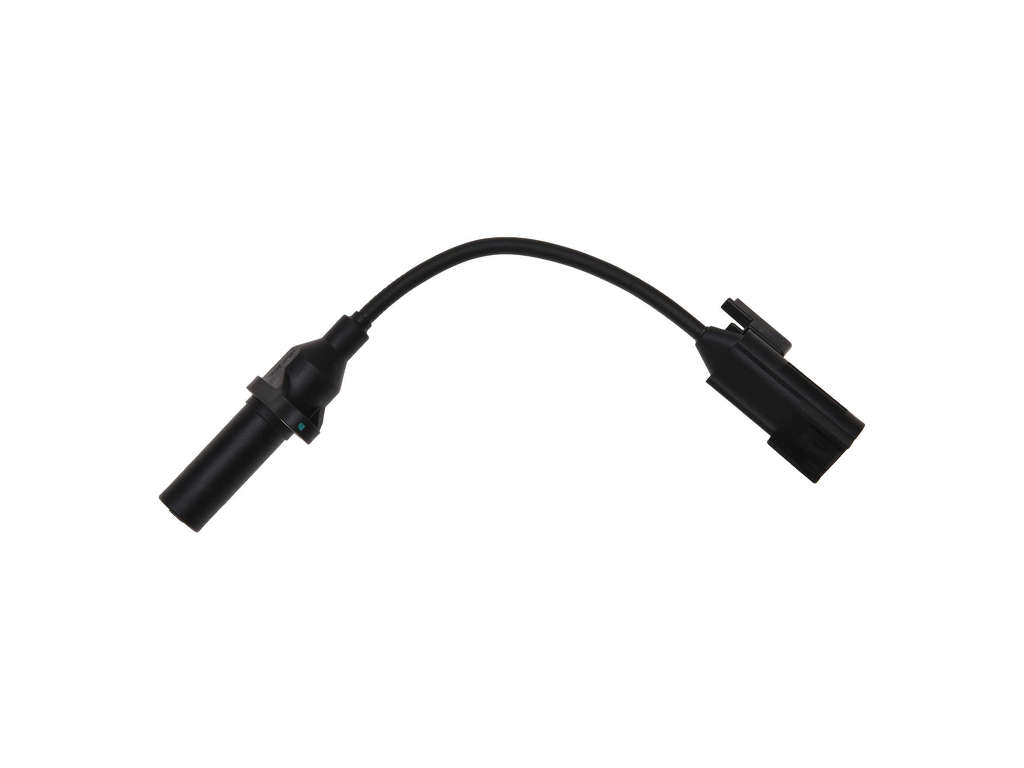
On a 2014-2020 Kia Cadenza, code P0335 is almost always caused by a failed crankshaft position sensor. This can cause sudden engine stalling, extended cranking, or a complete no-start condition. Replacing the sensor is the typical fix, with an OEM part costing around $85-$115 and aftermarket parts available for $25-$60. The repair is accessible to a DIYer and involves removing the airbox and battery for access.
- P0335 on the 3.3L Cadenza almost always means the crankshaft position sensor has failed.
- Key symptoms are engine stalling when stopping or a complete no-start condition.
- Do not drive the vehicle, as the engine can shut off unexpectedly, posing a serious safety risk.
- Before replacing the sensor, always inspect the wiring harness for heat damage or corrosion, as this is another common cause.
- The repair is DIY-friendly for those comfortable with removing the air intake and battery to access the sensor on the engine block.
What's Unique About the 2014-2020 Kia Cadenza
The 3.3L Lambda II V6 is a widely used engine across the Kia and Hyundai lineup, including in the Sorento, Santa Fe, and Azera. For this P0335 code, the experience is quite consistent across these models. The most common failure is simply the sensor itself wearing out over time due to heat cycles and vibration. While some Kia/Hyundai engines have been subject to recalls for major internal failures, P0335 appearing alone on the 3.3L V6 almost always points directly to the sensor or its wiring, not a deeper mechanical problem like a timing chain or bearing failure.
Generation note: The 2014-2020 range covers the end of the first generation (VG, 2014-2016) and the full second generation (YG, 2017-2020) Cadenza. Both generations use the 3.3L Lambda II GDI V6, and the causes and repair procedures for code P0335 are consistent across both. However, the OEM part number for the sensor may differ, with older models using 39310-3C100 and newer models potentially using an updated part like 39310-3L100.
Symptoms You May Notice
- Engine stalls, especially when coming to a stop, at idle, or while downshifting
- Engine cranks but fails to start
- Extended cranking time before the engine starts
- Check Engine Light is on
- Rough idle or engine misfires
- Hesitation and loss of power during acceleration
- Tachometer reads 0 RPM on the scanner during cranking
- Replacing the camshaft position sensors. These are different sensors located on top of the engine. While they can cause similar symptoms, they will trigger different codes (e.g., P0340-P0349).
- Replacing the starter motor without checking for a CKP signal first. A no-start condition can be caused by the PCM not seeing a crank signal and therefore not enabling spark or fuel.
Most Likely Causes
- Faulty Crankshaft Position Sensor 🔴 High Probability → Shop Engine Crankshaft Position Sensor The sensor is located on the lower front of the engine block, where it is subject to intense heat cycles and vibration. The internal magnet and electronics can fail over time, leading to a loss of signal.
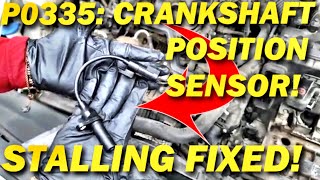
How to confirm: After verifying the wiring is intact, replacing the sensor is the most direct way to confirm. A technician with an oscilloscope can test the sensor's output signal directly. A simple check is to monitor RPM on a scan tool while cranking; a reading of 0 indicates a dead sensor circuit. 🎬 Watch: This quick video shows how to fix code P0335.
Typical fix: Replace the crankshaft position sensor. It is recommended to apply a small amount of fresh engine oil to the new sensor's O-ring before installation to ensure a proper seal.
Est. part cost: $25-$115 - Damaged Wiring or Connector 🟡 Medium Probability The sensor's wiring harness runs near hot engine and exhaust components. Over time, the protective loom can become brittle, leading to frayed, shorted, or melted wires. The connector itself can also become corroded, loose, or contaminated with oil from nearby leaks.
How to confirm: Visually inspect the entire length of the wiring from the sensor to its main connection point. Check for melted plastic, bare wires, or corrosion on the connector pins. Wiggle the connector while the engine is running (if possible); if the engine stumbles, the connection is poor.
Typical fix: Repair the damaged section of wiring or replace the connector pigtail.
Est. part cost: $10-$30 - Weak Battery or Starting System Fault ⚪ Low Probability → Shop Vehicle Battery Not specific to this vehicle, but on any car, low system voltage during cranking can sometimes cause erratic sensor readings and trigger false codes.
How to confirm: Test the battery's voltage and health. Ensure the battery terminals are clean and tight. Check that the starter is drawing the correct amperage.
Typical fix: Recharge or replace the weak battery.
Est. part cost: $150-$250
Rare But Worth Checking
- Stretched Timing Chain: → Shop Engine Timing Chain While uncommon to cause P0335 by itself, a significantly stretched timing chain can affect the crank/cam correlation. This would typically be accompanied by rattling noises on startup and other timing-related codes (like P0016, P0017, P0018, or P0019). A TSB (ENG 148) was issued for a timing chain tensioner rattle on 2014-2016 models.
- Damaged Reluctor Ring: The reluctor ring is a 58-tooth wheel on the crankshaft that the sensor reads. If it's damaged, cracked, or has broken teeth, the signal will be incorrect. This is very rare and usually only happens if the engine has suffered other major internal damage or if debris from a separate failure (like a failed bearing) strikes it.
- Faulty Powertrain Control Module (PCM): → Shop Engine Control Module (ECM) A PCM failure is extremely rare but possible. This should only be considered after all other possibilities (sensor, wiring, reluctor ring) have been definitively ruled out.
Diagnosis Steps
- Connect an OBD-II scanner and check for any other stored codes. Confirm P0335 is present.
- Use the scanner's live data function to monitor Engine RPM while cranking the engine. If the RPM reads 0, it strongly suggests a problem with the CKP sensor or its circuit.
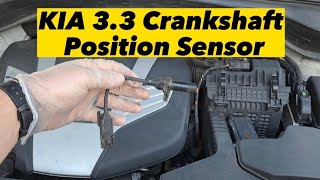
- Perform a visual inspection of the crankshaft position sensor and its wiring harness. The sensor is located on the front of the engine block, near the transmission bellhousing area, below the thermostat housing. 🎬 Watch: A mechanic shows the sensor location on the 3.3L engine. Look for any signs of melting, chafing, or corrosion on the connector pins.
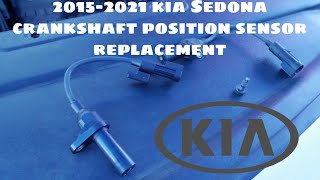
- For easier access, you will likely need to remove the engine cover, air intake snorkel, battery, and battery tray. This requires basic hand tools like 10mm and 13mm sockets. 🎬 See this step-by-step walkthrough for replacing the sensor.
- If the wiring looks good, the next step is to test the sensor itself. This can be done with a multimeter by checking for resistance and voltage, or more accurately with an oscilloscope to view the output signal waveform.
- If the sensor is suspected to be faulty, replacing it is the most common repair. It is held in by a single 10mm bolt.
- Before installing the new sensor, lubricate the O-ring with a small amount of clean engine oil. After installation, clear the codes with the scanner and start the vehicle to confirm the fix.
Parts You'll Likely Need
- Crankshaft Position Sensor (2014-2016)
(OEM #39310-3C100)— This is the most common failure point for code P0335. This part number is specified for the earlier Lambda engines and has been superseded by other numbers but is still widely referenced.
Trusted brands: Kia/Hyundai (Genuine), Mando (OEM supplier), Bosch, NGK/NTK, Delphi
OEM price range: $85-$100
Aftermarket price range: $25-$50 - Crankshaft Position Sensor (2017-2020)
(OEM #39310-3L100)— This is the most common failure point for code P0335. This part number fits the 3.3L Lambda II engine in other Kia models of the same era, like the Stinger and K900. Always verify the part number with your vehicle's VIN.
Trusted brands: Kia/Hyundai (Genuine), Mando (OEM supplier), Bosch, NGK/NTK
OEM price range: $90-$115
Aftermarket price range: $30-$60
Related Codes That Often Appear With This One
- P0336 — This code indicates a 'Crankshaft Position Sensor 'A' Circuit Range/Performance' issue. It often points to the same root causes as P0335, such as a failing sensor or wiring problem, but on a more intermittent basis.
- P0300-P0306 — These are random or specific cylinder misfire codes. Without a correct crankshaft signal, the PCM cannot time the ignition spark properly, leading to misfires.
- P0017 / P0019 — These are Crank/Cam correlation codes. If the CKP signal drops out intermittently, the PCM can lose track of the camshaft's position relative to the crankshaft, triggering these codes even if the timing chain is mechanically sound.
Technical Service Bulletins (TSBs) & Recalls
- ENG 148 (September 2015): Addresses a chattering or rattling noise from the engine on startup for 2014-2016 Cadenza models, related to the timing chain tensioner. While not a direct cause for P0335, it indicates potential timing system wear on high-mileage vehicles.
- TSB ENG254: A warranty extension for some 2014-17 Cadenza models for potential head gasket coolant leaks. While unrelated to P0335, it's a known issue for the platform.
Platform-Specific Known Issues
- Oil leaks from valve covers or other areas can drip onto the crankshaft position sensor wiring harness, degrading the insulation over time and potentially causing a short or open circuit that triggers P0335.
Mechanic-Grade Diagnostic Values
- Crankshaft Position Sensor (3-wire Hall effect type) Connector Voltage — expected: With the key on and sensor connected, back-probing the connector should show: one pin with ~5V (reference voltage from PCM), one pin with near 0V (ground), and one pin with a fluctuating voltage between 0V and 5V while cranking (signal).. Failure: Missing 5V reference, no solid ground, or a signal wire that is stuck high (5V) or low (0V) during cranking indicates a wiring or PCM issue. A weak or inconsistent signal waveform viewed on an oscilloscope confirms a failing sensor.
- Crankshaft Position Sensor Installation Bolt Torque — expected: 7.8 ~ 11.8 N.m (0.8 ~ 1.2 kgf.m, 5.8 ~ 8.7 lb-ft). Failure: Under-torquing may allow the sensor to vibrate loose, affecting the air gap and signal. Over-torquing can damage the sensor housing or bolt threads.
Scan Tool Commands That Help
- Advanced Scan Tool (GDS, Autel, Snap-on): CKP Variation Learn / Crankshaft Position Sensor Relearn — This function may be required after replacing the crankshaft position sensor, particularly if an aftermarket sensor is used and the code returns or the engine runs poorly. It calibrates the new sensor's signal to the PCM. While many Kias do not strictly require this and will self-learn, it is a known troubleshooting step if problems persist after replacement.
- No Tool (Manual Reset): ECU Reset via Battery Disconnect — After replacing the sensor, you can disconnect the negative battery cable for at least 15 minutes. This clears the PCM's memory and forces it to relearn sensor values upon restart. While clearing the code with a scanner is preferred, this is a common alternative.
Real Owner Repair Stories
- YouTube channel 'Hidalgo Motors Co TV' (2016 Kia Cadenza 3.3L V6) — Car was dying when pulling up to a light or when downshifting; it would lose all power and stall. Check engine light was on with code P0335.
❌ Tried (didn't work) The owner went straight to diagnosing the P0335 code, no other parts were mentioned as being replaced.
✅ What actually fixed it The crankshaft position sensor was replaced. The repair involved removing the engine cover, air intake, and battery/tray to access the sensor on the front of the engine block. The old sensor was unbolted with a 10mm socket, and a new sensor was installed. After clearing the codes, the stalling issue was resolved. - NHTSA ODI #11183623 — An owner of a similar Kia platform reported that the vehicle had trouble starting and the tachometer would fall to 0 as the engine stalled, with the OBD code reader showing P0335 for the Crankshaft Position Sensor A Circuit.
- NHTSA ODI #11459982 — In a cross-manufacturer instance involving a Kia Soul, an owner noted that even after replacing the crankshaft sensor for code P0335, the car continued to stall and struggle to start up, eventually pointing toward other exhaust-related issues.
When the Usual Fixes Don't Work
- While replacing the crankshaft position sensor is the fix for P0335 over 90% of the time, a small number of owners report that the fix does not work. In these cases, the root cause is almost always one of two things: 1) The replacement sensor was a cheap, low-quality aftermarket part that was either dead-on-arrival or incompatible with the PCM's expectations. 2) The underlying issue was actually in the wiring harness or connector (e.g., melted insulation near the exhaust or a corroded pin) which was overlooked during the initial diagnosis.
OEM Part Supersession History
39310-3C100→39310-3C200, then 39310-3C400— Standard part revisions for improved durability or manufacturing changes.
Heads up: These parts are generally interchangeable for the specified applications, but it is always best to use the latest revision available from the dealer.
Model Year Variations Within This Range
- 2014-2016 vs 2017-2020: The primary difference is the OEM part number for the crankshaft position sensor. Earlier models (Gen 1) typically use part number 39310-3C100 or its supersessions. Later models (Gen 2) are more likely to use part number 39310-3L100, which is also shared with other contemporary 3.3L engines like the Kia Stinger. Always verify with VIN.
Diagnostic Flowchart
Other Known Issues on This Vehicle
Issues unrelated to this code that are worth knowing about as an owner of this generation:
- Intake Valve Carbon Buildup 🟠 Medium — Common on GDI engines, becomes noticeable after 60,000-80,000 miles. Symptoms include rough idle, hesitation, and reduced power.
- Excessive Oil Consumption 🟠 Medium — Reported by some owners, potentially linked to piston ring issues or PCV system faults. Can become apparent at higher mileage (>100,000 miles).
- Timing Chain Tensioner Rattle 🟡 Low → Shop Engine Timing Chain — Primarily affects 2014-2016 models on cold startups. A chattering noise that typically lasts a few seconds. (Ref: TSB ENG 148)
- Stripped Head Bolt Threads 🔴 High — A rare but severe issue that can occur during major engine service like a head gasket replacement. The aluminum block threads can fail.
Used vs. New Parts: Buying Guide for This Vehicle
When a used part is the smart pick: For this specific repair, using a USED crankshaft position sensor from a junkyard is NOT recommended. It is a relatively low-cost electronic component that fails due to heat and age. A used sensor has unknown remaining life and carries a high risk of failing soon after installation, forcing you to do the labor all over again.
Donor-vehicle mileage cap: roughly under 10000 miles for the part to have meaningful remaining life.
What to inspect on the donor part:
- Not applicable as used sensors are not recommended.
OEM-only on this vehicle (don't cheap out):
- Crankshaft Position Sensor
Aftermarket brands forum-validated for this vehicle:
- Mando (often the Original Equipment supplier for Hyundai/Kia)
- NGK/NTK
- Bosch
- Delphi
Brands owners have reported issues with on this vehicle:
- Unbranded, 'white-box' parts from online marketplaces. Forum and technician consensus strongly warns against using the cheapest available sensors, as they are a frequent cause of repeat failures and misdiagnosis.
Real Owner Stories
Aggregated from forums and TSBs cited above. Mileages and costs reflect what owners reported in those sources.
2016 Kia Cadenza 3.3L V6
Symptoms: Check engine light on, car is dying when pulling up to a light or when downshifting, loses all power and dies.
What fixed it: Replacement of the crankshaft position sensor.
Source hint: YouTube - 'P0335 CRANKSHAFT POSITION SENSOR FIXED FAST & EASY KIA CADENZA...': Hidalgo Motors Co TV
2014-2016 Kia Cadenza 3.3L V6
Symptoms: Chattering or rattling noise from the engine specifically on startup.
What fixed it: Service related to the timing chain tensioner as per TSB ENG 148.
Source hint: TSB ENG 148 (September 2015)
2014 Kia Sorento 3.3L V6
Symptoms: Engine failed to run, requiring a crankshaft position sensor replacement to restore operation.
What fixed it: Crankshaft Position Sensor Replacement.
Source hint: YouTube - 'IT FINALLY RUNS!! - 2014-2020 KIA Crankshaft Position Sensor Replacement'
Kia Sorento (Platform Reference)
Symptoms: Vehicle has trouble starting and the tachometer falls to 0 as the engine stalls.
What fixed it: Diagnosis confirmed code P0335 for the Crankshaft Position Sensor A Circuit.
Source hint: NHTSA ODI #11183623
Related OBD-II Codes
Frequently Asked Questions
Does TSB ENG 148 regarding engine rattling apply to my 2015 Kia Cadenza?
I have a 2017 Cadenza; is there a known issue with head gaskets for my year?
Where is the crankshaft position sensor located on the 3.3L Lambda II GDI V6?
My 2016 Cadenza stalls when I'm slowing down for a red light. Could this be the CKP sensor?
Can oil leaks cause the P0335 code on my Kia Cadenza?
What tools are needed to access the sensor on a 2014-2020 Cadenza?
What does NHTSA ODI #11459982 say about P0335?
Helpful Videos
We Have This Part in Stock


The information in this article is provided for general reference and educational purposes only. Vehicle specifications, procedures, and part compatibility can vary by production date, trim level, and region. Always consult your vehicle's factory service manual and verify part numbers before purchasing or performing repairs. Safety-critical components such as airbags, seat belts, and braking systems should be installed by a qualified professional.
- Kia Cadenza:
- 🧭 Diagnostic Flowchart
- 🎬 Helpful Videos
- 🛍️ Shop This Part
- What's Unique About the 2014-2020 Kia Cadenza
- Symptoms You May Notice
- Most Likely Causes
- Rare But Worth Checking
- Diagnosis Steps
- Parts You'll Likely Need
- Related Codes That Often Appear With This One
- Technical Service Bulletins (TSBs) & Recalls
- Platform-Specific Known Issues
- Mechanic-Grade Diagnostic Values
- Scan Tool Commands That Help
- Real Owner Repair Stories
- When the Usual Fixes Don't Work
- OEM Part Supersession History
- Model Year Variations Within This Range
- Other Known Issues on This Vehicle
- Used vs. New Parts: Buying Guide for This Vehicle
- Real Owner Stories
- 2016 Kia Cadenza 3.3L V6
- 2014-2016 Kia Cadenza 3.3L V6
- 2014 Kia Sorento 3.3L V6
- Kia Sorento (Platform Reference)
- Related OBD-II Codes
- Frequently Asked Questions
- 🎟️ Get 5% Off