

P0335 on 2001-2011 Mazda Tribute 3.0L V6: Crank Sensor Causes and Fixes
This code almost always means the Crankshaft Position Sensor (CKP) has failed. It's a common issue that causes stalling or a no-start condition. Expect to pay around $25-$60 for a new sensor and either perform a moderately difficult DIY replacement or pay for 1-2 hours of shop labor. Using an OEM Motorcraft sensor is highly recommended over aftermarket alternatives.
- P0335 on your Mazda Tribute means the engine's computer has lost the signal from the crankshaft position sensor.
- The most common symptoms are the engine cranking but not starting, or stalling unexpectedly while driving.
- The overwhelming cause is a failed crankshaft position sensor. Replacing this sensor with an OEM Motorcraft part is the most likely fix.
- The Mazda Tribute shares its engine with the Ford Escape, so parts and repair guides for the Escape 3.0L V6 are also valid.
- Do not continue to drive the vehicle, as the engine can shut off at any time, posing a serious safety hazard.
What's Unique About the 2001-2011 Mazda Tribute
The Mazda Tribute is a rebadged Ford Escape, and they share the same 3.0L V6 Duratec engine (re-named the AJ V6 for Mazda). This is beneficial because parts and repair information for the much more common Ford Escape are directly applicable. The P0335 code is a very frequent failure point on this V6 engine across both platforms. The primary cause is almost always the sensor itself failing due to age and heat cycles, rather than complex wiring or PCM issues. Forum users and mechanics strongly advise using the OEM Motorcraft sensor, as aftermarket sensors have a reputation for premature failure.
Generation note: This guide covers the first generation (2001-2006) and second generation (2008-2011) Mazda Tribute. There was no 2007 model year. The 3.0L V6 engine and the common causes for P0335 are consistent across both generations, as they are both based on the Ford Escape platform with the same powertrain.
Symptoms You May Notice
- Engine will crank but not start
- Engine stalls unexpectedly, sometimes after warming up
- Hard starting (requires long cranking time)
- Rough idling or misfiring
- Reduced engine power and poor acceleration
- Check Engine Light is on
- Tachometer needle may drop to zero while the engine is still running
- Engine may stall when coming to a stop.
- Replacing the Camshaft Position Sensor (CMP). While related to timing, the CMP sensor has its own codes (e.g., P0340, P0345). While they can sometimes appear together, P0335 specifically points to the crankshaft sensor circuit.
Most Likely Causes
- Failed Crankshaft Position Sensor (CKP) 🔴 High Probability → Shop Engine Crankshaft Position Sensor The sensor is a common failure item on the Ford/Mazda 3.0L V6 due to its location, which exposes it to significant heat cycles over its service life. Many owner experiences across forums confirm this is the most frequent cause.
How to confirm: The most definitive test is to use an oscilloscope to check for a proper square wave signal from the sensor while cranking the engine. A simpler method is to check for an RPM signal on a scan tool during cranking; no RPM reading points to a bad sensor or circuit. Given the high failure rate and low cost, many owners opt to replace it as the first step. If a replacement sensor doesn't fix the issue, it points towards wiring or other rare causes.
Typical fix: Replace the crankshaft position sensor. It is strongly recommended to use an OEM Motorcraft sensor (part # 5L8Z6C315AA) as many users report aftermarket sensors failing quickly.
Est. part cost: $25-$60 - Damaged Wiring or Connector 🟡 Medium Probability The sensor's wiring harness is located near the front of the engine and can be susceptible to damage from road debris, oil leaks, or heat, leading to corrosion or breaks in the wire. A user on Mazdas247 found that fiddling with wires under the intake manifold allowed the engine to crank, indicating a loose or broken connection was the root cause of a P0335 no-start.
How to confirm: Visually inspect the wiring harness from the sensor to the main loom for any signs of cracking, melting, or corrosion. Check the connector pins for corrosion or a loose fit. Use a multimeter to check for continuity, ground, and the 5V reference voltage at the connector.
Typical fix: Repair the damaged section of wiring or replace the connector pigtail.
Est. part cost: $10-$30 - Failing Alternator ⚪ Low Probability A failing alternator can produce excessive AC ripple voltage, which can interfere with the signals from sensitive sensors like the crankshaft position sensor, potentially triggering a P0335 or P0340 code. Symptoms of a bad alternator include dimming/flickering lights, a battery warning light, and strange noises.
How to confirm: Test the alternator's output and check for AC ripple voltage using a multimeter with that function or an oscilloscope. An auto parts store can often perform a charging system test for free.
Typical fix: Replace the alternator.
Est. part cost: $150-$300
Rare But Worth Checking
- Damaged Reluctor Ring: The CKP sensor reads teeth on a reluctor ring (or tone ring) mounted on the crankshaft. While rare, damage to these teeth (from debris or previous engine work) can cause an erratic signal and trigger P0335. This is much harder to inspect and usually requires significant engine disassembly. An endoscope can sometimes be used to inspect the ring through the sensor hole.
- Failed Powertrain Control Module (PCM): → Shop Engine Control Module (ECM) It is extremely rare for the PCM to be the cause of this code. All other possibilities, especially the sensor and its wiring, should be exhaustively ruled out before considering PCM failure. A broken wire at the PCM connector has been noted as a fix for misfire issues on the platform, indicating the connector area is a potential point of failure.
Diagnosis Steps
- Verify the Check Engine Light is on and code P0335 is present using an OBD-II scanner.
- Using the live data function on the scanner, monitor the 'Engine RPM' PID while cranking the engine. If it reads '0' or is erratic, the PCM is not receiving a signal from the CKP sensor.
- Perform a visual inspection of the crankshaft position sensor and its wiring harness. The sensor is located on the front of the engine, on the passenger side, near the main crankshaft pulley/harmonic balancer. Look for any obvious damage, melting, or corrosion.
- Inspect the electrical connector for the sensor. Ensure it is securely plugged in and that the pins are clean and not corroded.
- If the wiring looks good, the next step is to test the sensor. The most common and effective fix for this vehicle is to replace the sensor itself, as it is a very high-failure part. Use a Motorcraft sensor for best results.
- If a new sensor does not resolve the issue, perform a continuity test on the wiring between the sensor connector and the PCM. Check for 5V reference voltage, ground, and the signal wire.
- As a final, definitive test, use an oscilloscope to check the sensor's output signal at the sensor connector and at the PCM connector. A good sensor will produce a clean square wave.
- If all else fails, inspect the reluctor ring for damage using an endoscope through the sensor mounting hole.
Parts You'll Likely Need
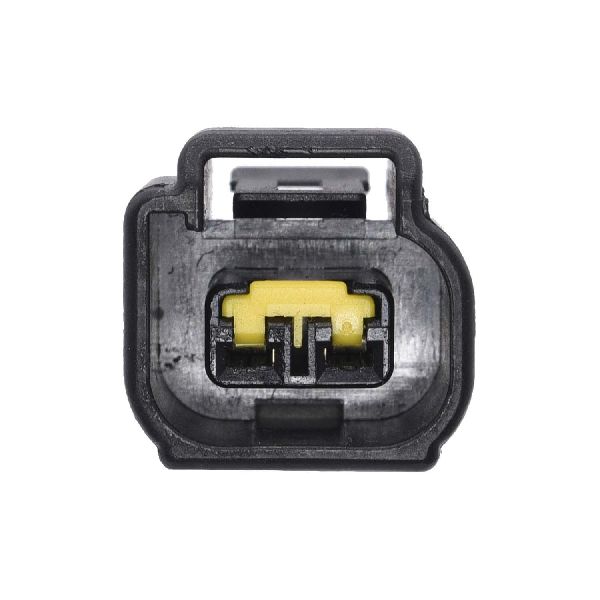
- Crankshaft Position Sensor
(OEM #5L8Z6C315AA)— This is the most common failure point for the P0335 code on this engine. The sensor fails electronically due to age and heat exposure. The OEM Motorcraft part is highly recommended for reliability.
Trusted brands: Motorcraft (OEM), Bosch, Delphi, Denso, NGK/NTK
OEM price range: $45-$70
Aftermarket price range: $25-$50
Related Codes That Often Appear With This One
- P0340 — Camshaft Position Sensor 'A' Circuit Malfunction. The PCM compares signals from both the crank and cam sensors. A loss of the crank signal can sometimes confuse the PCM, leading it to flag a cam sensor code as well. If both are present, suspect a major timing issue or a wiring problem common to both circuits.
Platform-Specific Known Issues
- Aftermarket Sensor Reliability: Multiple owner accounts suggest that aftermarket crankshaft position sensors for this platform have a high rate of being dead-on-arrival or failing shortly after installation. It is strongly recommended to use the OEM Ford/Motorcraft part (5L8Z6C315AA) to avoid repeat repairs.
- Real-World Repair Story: On the Mazdas247 forum, a user with a crank-no-start condition and code P0335 replaced the CKP sensor, but the issue persisted. The problem was ultimately traced back to a loose or damaged wire in the harness under the intake manifold, highlighting the importance of checking the full circuit.
Mechanic-Grade Diagnostic Values
- Crankshaft Position Sensor (CKP) Resistance — expected: 300 to 800 Ohms. Failure: A reading of 0 Ohms indicates a short, while an infinite (OL) reading indicates an open circuit. Any reading outside the specified range suggests a faulty sensor.
- Crankshaft Position Sensor (CKP) AC Voltage Output (while cranking) — expected: Fluctuating between 0.5V and 1.2V AC. Failure: A reading of 0V AC or a steady, non-fluctuating voltage while the engine is cranking indicates the sensor is not generating a signal.
- PCM Connector Pins for CKP Sensor Circuit — expected: Pins 21 (CKP+) and 22 (CKP-) on the 104-pin PCM connector.. Failure: Testing resistance across these pins should yield the same 300-800 Ohms as testing at the sensor. A different reading indicates a problem in the wiring between the sensor and the PCM.
- Check Engine Light behavior during crank (Ford-specific quick test) — expected: The Check Engine Light should turn OFF while cranking if the PCM is receiving a valid CKP signal.. Failure: If the Check Engine Light stays illuminated while the engine is cranking, it's a strong indicator that the PCM is not seeing an RPM signal.
Scan Tool Commands That Help
- Ford IDS / High-End Scan Tool: Crankshaft Position Sensor Relearn / Misfire Monitor Neutral Profile Correction — After replacing the crankshaft position sensor or timing components, a relearn procedure may be required. This resets the profile the PCM has stored for crankshaft rotational irregularities. While often not strictly necessary for the engine to start, performing it can prevent future misfire codes and ensure smooth operation. The procedure typically involves warming the engine and then performing several rapid decelerations in neutral.
Wiring & Ground Locations
- G105 / G110 — Located at the left front corner of the engine compartment, near the battery junction box.. These are primary engine compartment grounds. A corroded or loose connection at these points can cause a floating ground, introducing electrical noise and potentially disrupting the sensitive CKP sensor signal or affecting the PCM's reference ground.
- G108 — For the 3.0L V6, this ground is located at the front of the engine, near the transmission.. This is a key engine block ground. Since the CKP sensor circuit is referenced to the engine block, a poor connection here can cause erratic sensor readings and trigger a P0335.
- CKP Sensor Wires at PCM — Pin 21 (CKP+) and Pin 22 (CKP-) at the main PCM connector.. These are the specific terminals where the crankshaft signal arrives at the PCM. Testing for continuity, shorts to ground, or the AC signal directly at these pins can definitively isolate a problem to the sensor, the wiring, or the PCM itself.
Real Owner Repair Stories
- 2CarPros Forum User (2002 Mazda Tribute V6) — Engine stopped while in a drive-thru line. Would restart but immediately stall again within seconds.
❌ Tried (didn't work) Cleaned IAC (Idle Air Control) valve, Replaced fuel pump
✅ What actually fixed it The issue was diagnosed as a classic failed crankshaft position sensor. The user was provided with replacement instructions, which is the most common resolution for these exact symptoms. - YouTube - Simplified Mechanic (2009 Ford Escape 3.0L V6) — No crank, no start condition.
❌ Tried (didn't work) Initial diagnosis pointed towards a typical no-start cause.
✅ What actually fixed it The starter motor itself had failed. A wire on the starter had completely sheared off. This is a crucial counter-example: while P0335 is often associated with a crank-no-start, a complete no-crank condition points to the starting system (battery, starter, ignition switch) first. A failing starter can also cause electrical noise that could potentially trigger sensor codes.
When the Usual Fixes Don't Work
- While the crankshaft position sensor is the cause of P0335 in the vast majority of cases, it is critical to confirm the symptoms. A 'crank, no start' where the engine turns over but won't fire is the classic symptom. However, if the vehicle has a 'no crank, no start' where nothing happens when the key is turned, the problem is more likely in the starting system (battery, starter motor, ignition switch) and not the CKP sensor. A failing starter motor was found to be the root cause in one documented repair of a similar Ford Escape.
OEM Part Supersession History
F5RZ-6C315-B→1S7Z-6C315-AA, then 1S7Z-6C315-AB, finally to 5L8Z-6C315-AA— Standard part revisions and improvements by the manufacturer over the long production run of the Duratec engine family.
Heads up: All listed part numbers are considered interchangeable for this application. The latest part number, 5L8Z-6C315-AA, is the currently recommended OEM replacement.
Diagnostic Flowchart
Other Known Issues on This Vehicle
Issues unrelated to this code that are worth knowing about as an owner of this generation:
- Automatic Transmission Failure (CD4E) 🔴 High — Common at higher mileage (over 100k miles), especially in earlier models. Symptoms include harsh shifting, slipping, or complete loss of forward/reverse gears.
- Subframe and Shock Tower Rust 🔴 High — Very common in regions that use road salt ('Rust Belt'). The front subframe and rear shock towers can corrode to the point of structural failure, causing a loss of steering control or suspension collapse. (Ref: NHTSA Recall 14V174000 (front subframe on 2001-2004 models).)
- Alternator Failure 🟠 Medium — Common failure item. Symptoms include a battery light, dimming/flickering headlights, and stalling. A failing alternator can also cause electrical interference that triggers other sensor codes.
- Ignition Coil Failure 🟠 Medium — A very common cause for misfire codes (P0300-P0306). Often caused by age or oil leaking into the spark plug wells from a failed valve cover gasket.
- Stalling When Coming to a Stop 🟠 Medium — Often reported by owners, can be caused by a variety of issues including a faulty torque converter lockup clutch, a dirty throttle body, or a failing IAC valve. (Ref: NHTSA Recall 12V016000 (stuck throttle cable on 2001-2006, 2008 models).)
- Leaking Valve Cover Gaskets 🟡 Low — Extremely common. The gaskets become hard and brittle with age, allowing oil to leak onto the exhaust manifolds (causing a burning smell) and into the spark plug tubes (leading to ignition coil failure).
Used vs. New Parts: Buying Guide for This Vehicle
When a used part is the smart pick: For this specific repair, using a used part is NOT recommended. The crankshaft position sensor is a low-cost electronic component with a finite lifespan that degrades with heat cycles. The risk of getting a part that is already near the end of its life, or is dead on arrival, is very high.
What to inspect on the donor part:
- Not applicable. Do not purchase this part used.
OEM-only on this vehicle (don't cheap out):
- Crankshaft Position Sensor
Aftermarket brands forum-validated for this vehicle:
- Bosch
- Delphi
- NGK/NTK
- Denso
Brands owners have reported issues with on this vehicle:
- Unbranded or 'white box' sensors from online marketplaces. Forum consensus strongly indicates these have an extremely high failure rate, often immediately or within a few weeks of installation.
Real Owner Stories
Aggregated from forums and TSBs cited above. Mileages and costs reflect what owners reported in those sources.
2001-2011 Mazda Tribute 3.0L V6
Symptoms: The engine experienced a crank-no-start condition and the OBD-II scanner showed code P0335. Replacing the CKP sensor did not resolve the issue.
What fixed it: The problem was traced back to a loose or damaged wire in the harness under the intake manifold.
Source hint: Mazdas247 - 'crank, no start, giving P0335, what else should i do?'
Ford V6 (Platform Mate)
Symptoms: The vehicle would not start after replacing the crankshaft position sensor for a P0335 code.
What fixed it: Diagnostic steps included checking for an RPM signal on a scan tool and verifying the 3-wire sensor had 5V reference and ground; the reluctor wheel was also inspected with an endoscope.
Source hint: SHO Forum - 'p0335 replaced crank position sensor same no start afterwards'
Related OBD-II Codes
Frequently Asked Questions
Which specific crankshaft position sensor should I buy for my 3.0L V6 Mazda Tribute?
My Tribute is stalling when I come to a stop; could this be related to P0335?
Is there a recall for the structural issues mentioned in the known issues section?
Can a bad alternator cause a P0335 code on a Mazda Tribute?
Where is the crankshaft position sensor located on the 3.0L V6 engine?
I replaced the sensor but my Tribute still won't start. What should I check next?
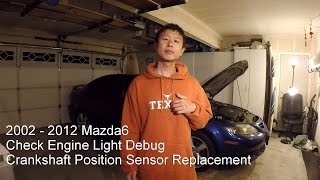
Helpful Videos

We Have This Part in Stock


The information in this article is provided for general reference and educational purposes only. Vehicle specifications, procedures, and part compatibility can vary by production date, trim level, and region. Always consult your vehicle's factory service manual and verify part numbers before purchasing or performing repairs. Safety-critical components such as airbags, seat belts, and braking systems should be installed by a qualified professional.
- Mazda Tribute:
- 🧭 Diagnostic Flowchart
- 🎬 Helpful Videos
- 🛍️ Shop This Part
- What's Unique About the 2001-2011 Mazda Tribute
- Symptoms You May Notice
- Most Likely Causes
- Rare But Worth Checking
- Diagnosis Steps
- Parts You'll Likely Need
- Related Codes That Often Appear With This One
- Platform-Specific Known Issues
- Mechanic-Grade Diagnostic Values
- Scan Tool Commands That Help
- Wiring & Ground Locations
- Real Owner Repair Stories
- When the Usual Fixes Don't Work
- OEM Part Supersession History
- Other Known Issues on This Vehicle
- Used vs. New Parts: Buying Guide for This Vehicle
- Real Owner Stories
- 2001-2011 Mazda Tribute 3.0L V6
- Ford V6 (Platform Mate)
- Related OBD-II Codes
- Frequently Asked Questions
- 🎟️ Get 5% Off