

P0335 on 2008-2011 Subaru Impreza 2.5L: Crank Sensor Causes and Fixes
P0335 on a 2008-2011 Impreza almost always means the crankshaft position sensor has failed. This can cause a no-start or sudden stalling. Before replacing the sensor, check if the starter motor is weak, as it can cause a false code. A new sensor costs about $35-$75 for aftermarket or $80-$120 for OEM.
- P0335 on this Impreza means the engine isn't getting a signal from the crankshaft sensor, which will cause a no-start or stalling.
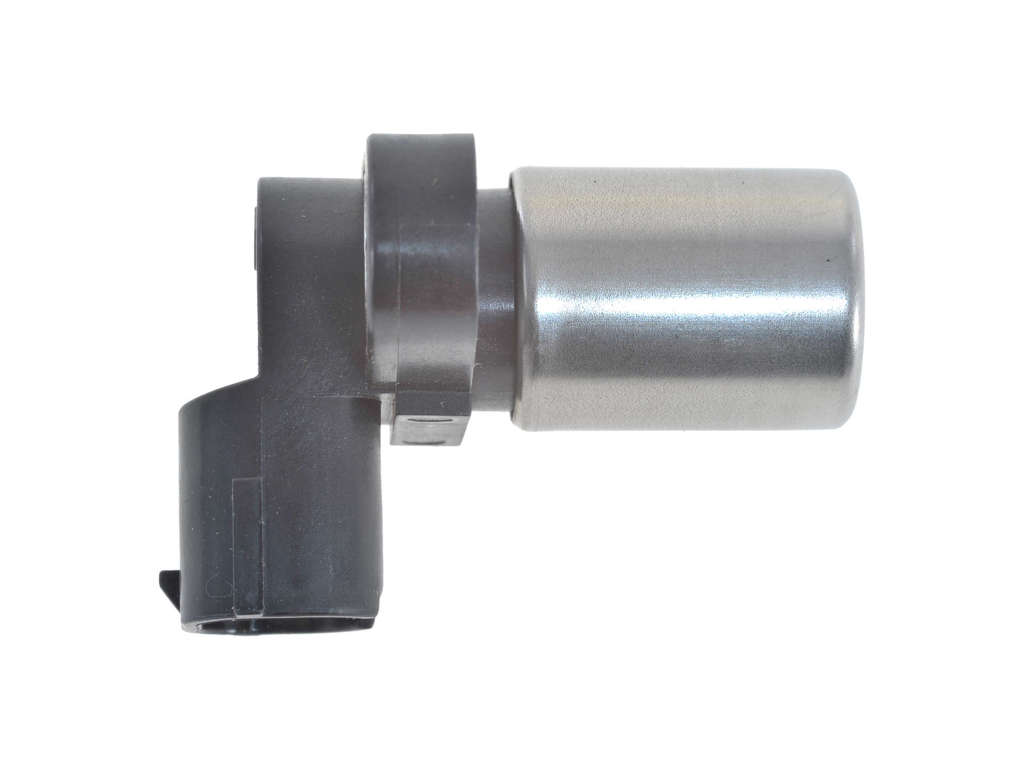
- The most likely fix is replacing the crankshaft position sensor (OEM part # 22053AA053).
- Before buying a new sensor, listen to your starter. If it cranks slowly or just clicks, it may be the real problem, causing a false P0335 code.
- You can test the sensor yourself with a multimeter; a good one will have a resistance of about 2,000 Ohms.
- Do not drive the vehicle, as it is unsafe due to the risk of sudden stalling.
What's Unique About the 2008-2011 Subaru Impreza
On this generation of Subaru with the EJ253 engine, the P0335 code is a very common and straightforward issue, typically pointing directly to the sensor itself. However, a notable quirk across many Subaru platforms is the possibility of a false P0335 code being triggered by a failing starter motor. The electrical noise (EMI) and voltage drop from a weak starter can interfere with the crank sensor's signal during startup, leading to a misdiagnosis. Owners often report intermittent starting problems that are eventually traced back to the starter, not the crank sensor. One Reddit user with an older Outback reported this exact scenario, where replacing a bad starter and cleaning the terminals resolved the false sensor codes.
Symptoms You May Notice
- Engine will not start at all (cranks but no fire)
- Engine cranks for a long time before starting.
- Sudden engine stalling while driving, sometimes after warming up.
- Rough or unstable idle.
- Engine misfires or hesitates during acceleration.
- Check Engine Light is on.
- Replacing the crankshaft position sensor when the starter motor is the actual fault. A weak or failing starter can create enough electromagnetic interference (EMI) to disrupt the crank sensor signal during cranking, setting a false P0335. If you have slow cranking or clicking sounds when trying to start, investigate the starter first. This is a well-documented quirk on many Subaru models.
Most Likely Causes
- Failed Crankshaft Position Sensor 🔴 High Probability → Shop Engine Crankshaft Position Sensor The sensor is located on the front of the engine block and is exposed to constant heat cycles, which can cause the internal electronics to fail over time. It's a very common failure item on EJ-series engines.
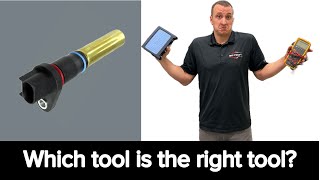
How to confirm: Disconnect the sensor and test the resistance between its two pins using a multimeter. 🎬 See how to test crankshaft sensors the right way. A good sensor should read approximately 1.9 to 2.1 kOhms (1900-2100 Ohms). If the reading is an open circuit (infinite resistance) or far outside this range, the sensor is bad. A user on a WRX forum noted their bad sensor read 2.5 kOhms, confirming that out-of-spec readings indicate failure.
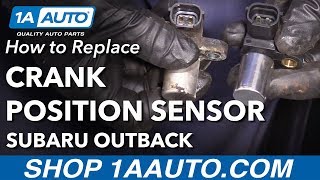
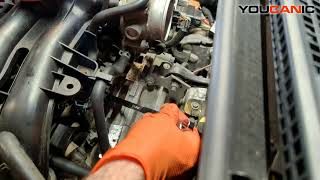
Typical fix: Replace the crankshaft position sensor. It is held by a single 10mm bolt on the front of the engine, below the alternator. 🎬 Watch: A quick guide to locating and replacing the sensor.
Est. part cost: $35-$120 - Damaged Wiring or Connector 🟡 Medium Probability The wiring harness leading to the sensor can become brittle from heat and vibration, leading to cracks or breaks. The connector itself can also become corroded or loose, as it sits in a location exposed to engine heat.
How to confirm: Visually inspect the wiring harness from the sensor back into the main loom for any signs of cracking, melting, or physical damage. Wiggle the connector and wiring while the engine is running (if possible) to see if it causes a stall. Check for continuity from the connector pins to the ECM.
Typical fix: Repair the damaged section of wire or replace the connector pigtail.
Est. part cost: $10-$30
Rare But Worth Checking
- Damaged Timing Belt Reluctor Wheel: → Shop Engine Timing Chain The crankshaft position sensor reads teeth off a wheel (reluctor) that is part of the crankshaft timing sprocket. If this wheel is damaged, has broken teeth, or was installed incorrectly during a timing belt service, it can cause a P0335 code. This is rare but should be considered if the sensor and wiring are confirmed to be good, especially if a timing belt service was recently performed. A forum user mentioned this as a possibility after an engine swap where the tone ring might not have been transferred correctly.
- Faulty Engine Control Module (ECM): → Shop Engine Control Module (ECM) This is extremely rare. The ECM's internal driver for the crank sensor circuit can fail. All other possibilities, including the sensor, wiring, and reluctor wheel, must be exhaustively ruled out before condemning the ECM. A Reddit user with a 2012 Impreza went as far as replacing the ECM, but it did not solve their persistent P0335 issue, highlighting the rarity of this being the root cause.
Diagnosis Steps
- Read the code with an OBD-II scanner to confirm P0335 and check for any other codes.
- Assess the starting symptoms. If the engine cranks slowly, clicks, or struggles to turn over, test the battery and starter motor before proceeding. A failing starter is a known cause of a false P0335 on Subarus.
- If the engine cranks normally but won't start, locate the crankshaft position sensor. It is on the front of the engine block, slightly to the passenger side, below the alternator, with a gray connector.
- Visually inspect the sensor's connector and wiring for any obvious damage, corrosion, or loose connections. The connector can get brittle from heat.
- Disconnect the sensor. Use a multimeter set to Ohms (Ω) to measure the resistance across the two pins on the sensor itself. The reading should be approximately 2.0 kOhms (2000 Ohms). If you get no reading (open circuit) or a reading significantly outside this range, the sensor has failed and must be replaced.
- If the sensor tests good, inspect the wiring harness for continuity between the sensor connector and the ECM. A wiring diagram is recommended for this step.
- If wiring is also good, the next step is to inspect the reluctor wheel on the crankshaft timing sprocket. This requires removing the timing belt cover. Check for any bent or broken teeth. This is especially important if a timing belt service was recently performed.
- The most definitive test, if available, is to use an oscilloscope to view the sensor's output signal while cranking the engine. A good sensor will produce a clean, consistent square wave pattern.
Parts You'll Likely Need
- Crankshaft Position Sensor
(OEM #22053AA053)— This is the most common failure point for code P0335 due to its location and the stress of constant heat cycles.
Trusted brands: Genuine Subaru, Denso, NGK/NTK, Hitachi
OEM price range: $80-$120
Aftermarket price range: $35-$75
Related Codes That Often Appear With This One
- P0340 — P0340 is for the Camshaft Position Sensor. Since the cam and crank sensors work together for engine timing, a fault in one can sometimes cause the ECM to flag a correlation issue or a fault in the other. In some cases, a failing starter can cause a cluster of codes including P0335 and P0340 simultaneously. 🎬 Watch this full tutorial on replacing both cam and crank sensors.
Mechanic-Grade Diagnostic Values
- Crankshaft Position Sensor Resistance — expected: 1.9 kOhms to 2.1 kOhms (1900-2100 Ohms) at room temperature.. Failure: An open circuit (infinite resistance) or a reading significantly outside the specified range indicates a failed sensor.
- Crankshaft Position Sensor AC Voltage Output (Dynamic Test) — expected: Greater than 0.5V AC, fluctuating while the engine is cranking.. Failure: No voltage or a signal significantly below 0.5V AC while cranking indicates a dead or weak sensor. This test requires back-probing the connector with a multimeter set to AC volts.
- Voltage at Harness Connector (Signal Wire to Ground, Sensor Disconnected) — expected: 0 Volts with Key On, Engine Off (KOEO).. Failure: The presence of any DC voltage (e.g., one user reported finding 1.33V) on the signal wire with the sensor disconnected points to a wiring short or an internal ECM fault, not a bad sensor. The sensor generates its own AC voltage and should not have any voltage supplied to it from the ECM.
- Sensor Air Gap — expected: Approximately 0.030 inches (0.76mm).. Failure: An incorrect air gap, either too large or too small, can cause a weak or non-existent signal. This is not typically adjustable but can be affected by debris, incorrect installation, or a damaged reluctor wheel.
Wiring & Ground Locations
- Crank Sensor ECM Pins — At the main Engine Control Module (ECM) connector.. For testing continuity. On some EJ253 harnesses, the crank sensor signal wire (White) goes to pin A13, and the ground wire (White with Red stripe) goes to pin A14. Verifying continuity from the sensor connector to these specific pins can rule out a wiring break.
- Main Engine Ground — Typically a strap from the engine block (often near the alternator or starter) to the chassis frame rail.. A poor engine ground can introduce electrical noise and voltage fluctuations that interfere with sensitive sensor signals like the crankshaft position sensor, potentially causing a false P0335 code. Ensuring this ground is clean and tight is a crucial step.
Real Owner Repair Stories
- CarKiller forum user 'yeungl' (2015 Subaru Forester (FB engine, but same principle applies)) — Random no-start with a 'click' sound, Check Engine Light on with a cluster of other warning lights.
❌ Tried (didn't work) Replacing the crankshaft position sensor (aftermarket), Replacing one camshaft position sensor (genuine), Cleaning the other camshaft position sensor, Replacing the battery
✅ What actually fixed it Replacing the starter motor. The failing starter was causing electrical interference that triggered false P0335, P0340, and P0345 codes simultaneously. - Reddit user 'Lower_Dig_2063' (2014 Subaru BRZ (different engine, but identical failure mode)) — Crank no-start immediately after a clutch and flywheel replacement, with a P0335 code.
❌ Tried (didn't work) Replacing the crankshaft position sensor.
✅ What actually fixed it The reluctor wheel/plate, which is located behind the flywheel, was installed backwards during the clutch job. This prevented the sensor from getting a signal. The fix required removing the transmission and flywheel again to orient the plate correctly.
When the Usual Fixes Don't Work
- In several documented cases, particularly when P0335 is accompanied by camshaft sensor codes (P0340/P0345) and a 'clicking' no-start symptom, the root cause was not the sensor itself but a failing starter motor. The electrical noise and voltage drop from the bad starter were sufficient to corrupt the signals from multiple position sensors simultaneously. Replacing the starter resolved all codes without needing to replace the sensors.
OEM Part Supersession History
22053AA040, 22053AA050, 22053AA051, 22053AA052→22053AA053— Standard part evolution and consolidation by Subaru.
Heads up: While all are technically for the same function, using the latest revision (22053AA053) is always recommended for reliability. Some aftermarket sensors sold as 'cam/crank' sensors may have slight physical differences (like a plastic sheath) that prevent proper fitment and should be avoided.
Diagnostic Flowchart
Other Known Issues on This Vehicle
Issues unrelated to this code that are worth knowing about as an owner of this generation:
- Head Gasket Failure 🔴 High — Very common, typically occurs between 80,000 and 150,000 miles. The EJ253 engine is notorious for external oil and/or coolant leaks from the head gaskets.
- Premature Wheel Bearing Failure 🟠 Medium — Common. Owners report humming or grinding noises from the wheel area. Failure can occur at relatively low mileage (under 100,000 miles) and can be a recurring issue.
- Catalytic Converter Efficiency (P0420) 🟠 Medium — Frequently reported. Often caused by underlying issues like excessive oil consumption or a rich running condition, which damages the converter over time. It's crucial to diagnose exhaust leaks or faulty O2 sensors before replacing the expensive converter. (Ref: Subaru has issued TSBs like 09-110-23R for other models, indicating a specific diagnostic procedure is required, which is relevant context for this issue.)
- Faulty Front Oxygen (A/F) Sensor 🟡 Low — Common failure item that can cause poor fuel economy, rough running, and contribute to P0420 codes. Some service programs (WXW-80) were initiated for this issue on certain model years. (Ref: Service Program WXW-80)
Used vs. New Parts: Buying Guide for This Vehicle
When a used part is the smart pick: For this specific P0335 repair, buying a used crankshaft position sensor is NOT recommended. It is a low-cost, high-failure electronic part where remaining life is unknown. A used starter motor from a low-mileage donor vehicle could be a cost-effective option if the starter is diagnosed as the root cause.
Donor-vehicle mileage cap: roughly under 80000 miles for the part to have meaningful remaining life.
What to inspect on the donor part:
- For a starter: Check for a clean, corrosion-free casing and terminals. Ensure the gear extends and retracts smoothly. Ask for the donor vehicle's mileage if possible.
OEM-only on this vehicle (don't cheap out):
- Crankshaft Position Sensor - Given its criticality for engine operation and the known issues with some aftermarket fitment, using a Genuine Subaru or OEM-supplier (Denso, NTK) part is strongly advised.
Aftermarket brands forum-validated for this vehicle:
- Denso
- NGK/NTK
- Hitachi
Brands owners have reported issues with on this vehicle:
- Unbranded, no-name parts from online marketplaces (e.g., 'ECCPP'). These often have poor quality control, may not fit correctly, and can fail prematurely.
Real Owner Stories
Aggregated from forums and TSBs cited above. Mileages and costs reflect what owners reported in those sources.
2008-2011 Subaru Impreza EJ253
Symptoms: The check engine light came on following difficulty starting. A couple times a month, the engine would crank but not fire. It would take 6-10 attempts, cranking for 2-6 seconds each time, before finally starting.
What fixed it: The OBD-2 tool confirmed code P0335, indicating a need to address the crankshaft position sensor circuit.
Source hint: owner_reports
Subaru Outback EJ25
Symptoms: False crank and cam sensor codes appearing alongside starting difficulties.
What fixed it: Replacing the starter motor and cleaning the battery terminals resolved the issue.
Source hint: Reddit r/subaru
2012 Subaru Impreza
Symptoms: Persistent P0335 after an engine rebuild; owner exhaustively checked the sensor, wiring, grounds, and ECM.
What fixed it: The diagnostic process pointed toward a damaged reluctor wheel as the final possibility.
Source hint: Reddit r/MechanicAdvice
2017 Subaru Impreza
Symptoms: Frustrating no-start condition and persistent P0335 despite repeatedly replacing the crank sensor, cam sensors, and battery.
What fixed it: The source highlights this as a 'parts cannon' approach, emphasizing that the root cause required more accurate diagnosis of the circuit or mechanical components.
Source hint: Reddit r/subaruimpreza
Related OBD-II Codes
Frequently Asked Questions
Where exactly is the crankshaft position sensor located on my EJ253 engine?
My Impreza is cranking slowly and throwing a P0335 code; should I replace the sensor immediately?
What is the correct resistance for a new crankshaft sensor on a 2008-2011 Impreza?
Can a recent timing belt service cause a P0335 code?
Is there a specific service program for sensors on this vehicle family?
Why does my Impreza stall only after the engine has warmed up?
Helpful Videos
We Have This Part in Stock


The information in this article is provided for general reference and educational purposes only. Vehicle specifications, procedures, and part compatibility can vary by production date, trim level, and region. Always consult your vehicle's factory service manual and verify part numbers before purchasing or performing repairs. Safety-critical components such as airbags, seat belts, and braking systems should be installed by a qualified professional.
- Subaru Impreza:
- 🧭 Diagnostic Flowchart
- 🎬 Helpful Videos
- 🛍️ Shop This Part
- What's Unique About the 2008-2011 Subaru Impreza
- Symptoms You May Notice
- Most Likely Causes
- Rare But Worth Checking
- Diagnosis Steps
- Parts You'll Likely Need
- Related Codes That Often Appear With This One
- Mechanic-Grade Diagnostic Values
- Wiring & Ground Locations
- Real Owner Repair Stories
- When the Usual Fixes Don't Work
- OEM Part Supersession History
- Other Known Issues on This Vehicle
- Used vs. New Parts: Buying Guide for This Vehicle
- Real Owner Stories
- 2008-2011 Subaru Impreza EJ253
- Subaru Outback EJ25
- 2012 Subaru Impreza
- 2017 Subaru Impreza
- Related OBD-II Codes
- Frequently Asked Questions
- 🎟️ Get 5% Off