

P0335 on 2010-2014 Subaru Legacy GT: Crank Sensor Causes and Fixes
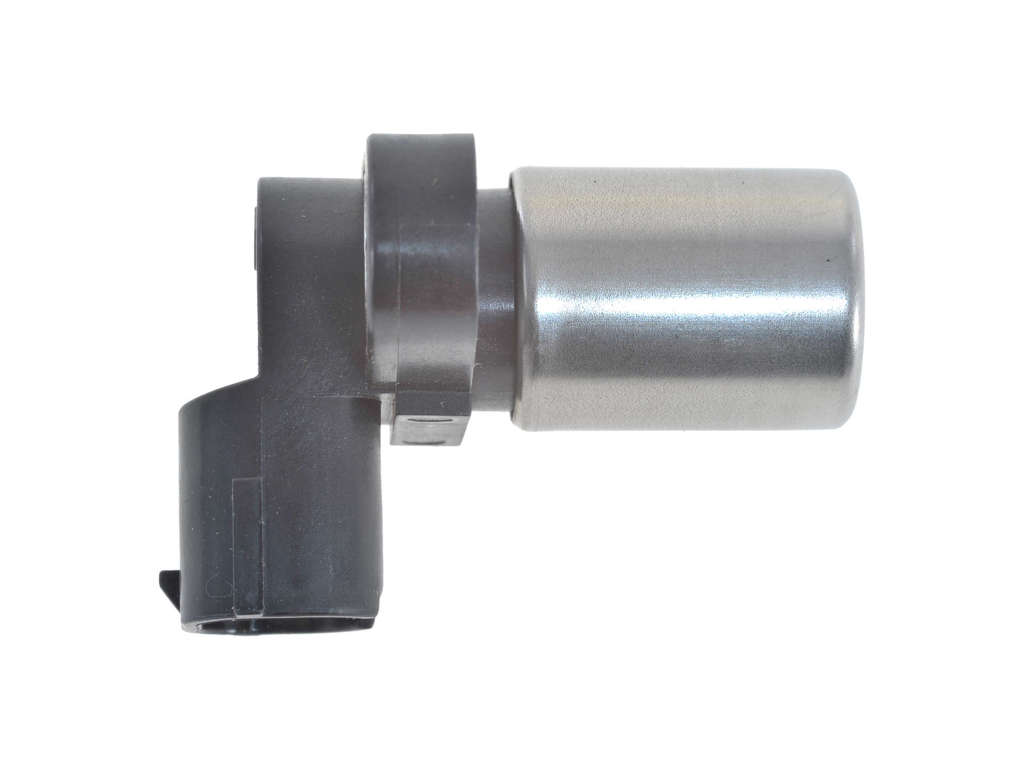
On a 2010-2014 Legacy GT, P0335 almost always points to a failed crankshaft position sensor. This is a critical failure that can cause a no-start or sudden stalling. An OEM sensor costs around $100-$140, and it's a DIY-friendly fix for many. Before replacing, check for a slow-cranking starter, as electrical noise from a failing starter is a known issue that can falsely trigger this code on Subarus.
- P0335 on your Legacy GT is a critical code that needs immediate attention to avoid stalling or being stranded.
- The most likely cause is a failed crankshaft position sensor, which is a relatively inexpensive part and can be replaced with basic tools.
- Before replacing the sensor, listen to your starter. If it cranks slowly, clicks, or struggles, it could be the real source of the problem, creating a 'ghost' code. This is a well-documented Subaru quirk.
- The correct OEM part number is 22053AA053, which supersedes several older numbers. Using a quality OEM or reputable aftermarket brand like Denso or Hitachi is recommended.
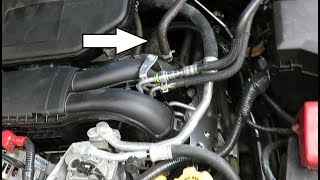
- The sensor is located on the front of the engine below the alternator, held by a single 10mm bolt.
What's Unique About the 2010-2014 Subaru Legacy
On the EJ255 engine in the Legacy GT, the crankshaft position sensor is a very common failure point due to its location on the front of the engine block where it's exposed to heat. While the sensor itself is the primary culprit, these Subaru models are also known for setting a 'ghost' P0335 code when a starter motor begins to fail, causing electrical interference during cranking. This can sometimes be accompanied by camshaft sensor codes P0340 and P0345, even if the cam sensors are fine. It's a good practice to check the starting system if symptoms include a slow crank or clicking sound.
Symptoms You May Notice
- Engine cranks but fails to start
- Sudden engine stalling, even while driving
- Intermittent starting issues, requiring multiple crank attempts
- Check Engine Light is on (with flashing cruise control light is common)
- Rough idling or engine stumbling
- Engine hesitation or misfiring during acceleration
- In some cases, the engine may not crank at all, just a click
- Replacing the camshaft position sensors when P0335 appears alone. While related to timing, the camshaft sensors have their own codes (P0340, P0345).
- Replacing the crank sensor repeatedly when the actual underlying issue is a failing starter motor creating electrical noise.
Most Likely Causes
- Failed Crankshaft Position Sensor 🔴 High Probability → Shop Engine Crankshaft Position Sensor The sensor is located on the front of the engine block, directly below the alternator, where it is subjected to significant heat cycles, leading to eventual electronic failure.
How to confirm: Test the sensor with a multimeter 🎬 See how to test and remove a stuck EJ255 sensor. set to ohms (Ω). A healthy sensor should have a resistance of approximately 1.9 to 2.1 k-ohms (1,900-2,100 ohms). If the reading is infinite (open circuit) or zero (short circuit), the sensor is bad.
Typical fix: Replace the crankshaft position sensor. It is held by a single 10mm bolt. 🎬 Watch: Step-by-step crankshaft sensor replacement on a 2010 Legacy GT.
Est. part cost: $100-$145 - Damaged Wiring or Connector 🟡 Medium Probability The wiring harness leading to the sensor is also in the hot engine bay and can become brittle, or the connector can be damaged during other maintenance. The connector clip is plastic and can become brittle with heat. Rodents are also known to build nests in this area and chew wires.
How to confirm: Visually inspect the wiring harness from the sensor to where it disappears into the main loom. Check for frayed wires, melting, or corrosion on the connector pins. Perform a continuity test on the wires if a visual fault isn't obvious.
Typical fix: Repair the damaged section of wire or replace the connector pigtail.
Est. part cost: $15-$50
Rare But Worth Checking
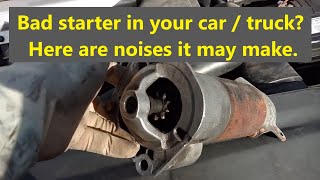
- Failing Starter Motor: A weak or failing starter can cause a significant voltage drop and electrical noise during cranking. The ECM can misinterpret this as a fault with the crank sensor circuit, triggering a P0335 code, often along with cam sensor codes P0340/P0345. This is a known quirk in some Subarus and is often accompanied by a slow crank or a clicking sound 🎬 Listen to the specific sounds a failing Subaru starter makes. with no crank. In some cases, the starter body itself can short to an engine ground, causing these exact symptoms.
- Damaged Reluctor Ring: The toothed wheel on the crankshaft that the sensor reads can be damaged, or the teeth can become clogged with debris, but this is very uncommon. This would typically require more significant engine work to inspect and is a last resort after ruling out the sensor and wiring.
- Faulty Engine Control Module (ECM): → Shop Engine Control Module (ECM) While extremely rare, the ECM itself can fail. One owner on Reddit reported ongoing issues after multiple sensor replacements, suspecting a junkyard-sourced ECU might be the problem. This should only be considered after all other possibilities have been exhaustively checked.
Diagnosis Steps
- Read the code with an OBD-II scanner. Confirm P0335 is present and note any other codes, especially P0340 or P0345.
- Observe symptoms. Does the engine crank slowly, or just click? If so, suspect the starter motor first. Have the battery and starting system tested.
- Visually inspect the crankshaft position sensor, its connector, and the nearby wiring. The sensor is on the front of the engine, below the alternator, held by a 10mm bolt. Look for obvious damage, melting, or corrosion.
- If the wiring looks good, test the sensor. Disconnect the sensor and measure the resistance between its two pins using a multimeter set to k-ohms. A reading around 2.0 kΩ is expected. An open circuit (OL) or a short (0 ohms) indicates a failed sensor.
- If the sensor tests good, check the wiring harness for continuity and shorts to ground between the sensor connector and the ECM. Check for voltage and ground at the connector with the key on.
- If the sensor and wiring are confirmed to be good, investigate less common causes like the starter motor's electrical draw or, rarely, the reluctor ring or ECM itself. A user on legacygt.com found a starter making contact with an engine ground was the root cause of their sensor codes.
Parts You'll Likely Need
- Crankshaft Position Sensor
(OEM #22053AA053)— This is the most frequent failure component for code P0335 due to heat degradation over time. Using a genuine OEM part is highly recommended to avoid compatibility issues that can persist with aftermarket sensors.
Trusted brands: Subaru (Genuine), Denso, Hitachi
OEM price range: $99-$145
Aftermarket price range: $40-$80
Related Codes That Often Appear With This One
- P0340 — Camshaft Position Sensor 'A' Circuit. Can be triggered along with P0335 by a failing starter motor causing a widespread voltage drop and electrical noise during cranking.
- P0345 — Camshaft Position Sensor 'B' Circuit. Can also be triggered along with P0335 and P0340 due to electrical noise from a failing starter.
Platform-Specific Known Issues
- Owner Experience: Intermittent No-Start Solved by Sensor: A user on legacygt.com with a 2005 LGT (same EJ engine family) experienced a sudden no-start condition after a short drive. The car would crank but not fire, and threw code P0335. After confirming the battery and starter were good, replacing the crankshaft position sensor resolved the issue.
- Owner Experience: Multiple Codes (P0335, P0340, P0345) Caused by Starter: A user on legacygt.com reported getting crank and both cam sensor codes simultaneously with a no-start condition. The issue was traced back to a faulty starter motor that was shorting to ground, creating electrical interference that confused the ECM. Replacing the starter resolved all codes.
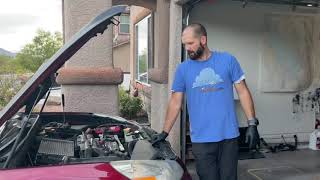
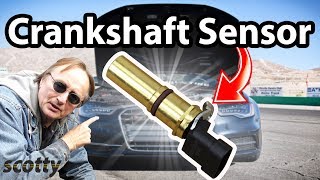
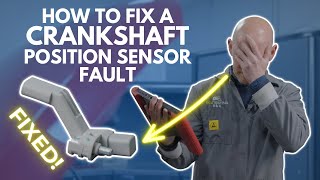
- DIY Video Walkthrough: A YouTube video by 'Carsntoys' on a 2010 Subaru shows the exact location of the sensor below the alternator, the 10mm bolt for removal, and the process for testing resistance with a multimeter, confirming a good sensor reads around 2.0 k-ohms. Another video by 'HowIFixedIt' confirms this location and easy access on 2010-2014 models.
Mechanic-Grade Diagnostic Values
- Crankshaft Position Sensor Internal Resistance — expected: 1.9 kΩ to 2.1 kΩ (1,900 to 2,100 Ohms) when measured across the two sensor pins.. Failure: A reading of infinity (OL - open circuit) or near zero (short circuit) indicates a failed sensor.
- Crankshaft Position Sensor AC Voltage Output — expected: A small, fluctuating AC voltage should be produced when a piece of metal (like a wrench) is passed quickly in front of the sensor's magnetic tip.. Failure: No AC voltage produced indicates a dead sensor.
- Live Data Scan Tool RPM Reading — expected: Should show a positive RPM reading (typically 150-300 RPM) while cranking the engine.. Failure: An RPM reading of 0 while the engine is physically cranking strongly suggests a problem in the crankshaft position sensor circuit (sensor, wiring, or ECM).
Scan Tool Commands That Help
- Generic OBD-II Scanner / Subaru Select Monitor (SSM): Crank Pattern Relearn / Clear — While some scan tools offer this function, it is generally not required for a simple crankshaft position sensor replacement on this vehicle. If the P0335 code persists after replacing the sensor with a quality part, the fault lies elsewhere in the wiring, starter circuit, or mechanical timing, not in a failure to 'relearn' the new sensor.
Wiring & Ground Locations
- Crankshaft Sensor Connector (at sensor) — On the front of the engine block, below the alternator.. This is the primary connection point to test the sensor's resistance and inspect for damage. The plastic connector and its locking tab can become brittle from heat.
- ECM Connector Pins (for CKP Sensor) — At the Engine Control Module (ECM). Pin A13 is the signal wire (White), Pin A14 is the ground wire (White with Red stripe), and Pin A24 is for the shielding.. These specific pins allow for a definitive continuity test of the wiring harness between the sensor and the ECM, completely ruling out a wiring issue if the test passes.
- Main Engine Ground Straps — Key locations include a strap from the battery negative terminal to the chassis, straps on the intake manifold, and often a strap on the passenger side strut tower. A critical, often overlooked ground is on the passenger side, low on the engine/frame.. Poor or corroded engine grounds can cause floating voltages and electrical noise, which can interfere with the low-voltage signal from the crankshaft sensor, triggering a false P0335 code.
Real Owner Repair Stories
- LegacyGT.com user 'Zummie' (2008 Subaru Legacy 3.0R (similar electrical architecture)) — Car would sometimes shut off and refuse to start for a period. CEL with codes P0335, P0340, and P0345.
❌ Tried (didn't work) Replacing camshaft and crankshaft sensors, Repairing chewed wires in the harness, Cleaning all engine ground cables and terminals
✅ What actually fixed it The starter motor was making physical contact with an engine ground, causing an electrical disturbance that interfered with the timing sensors. Repositioning the starter and ensuring no short to ground resolved all codes. - Reddit r/AskMechanics user (2014 Scion FRS (Subaru FA20 engine)) — Intermittent no-start, requiring multiple attempts. Would hear a 'click' but no crank. Eventually set codes P0335, P0340, and P0345.
❌ Tried (didn't work) Visual inspection of wiring, grounds, and sensors, which all appeared fine.
✅ What actually fixed it The starter solenoid was faulty. The starter was rebuilt with a new solenoid for $25, which resolved the no-start condition and all associated timing sensor codes. - Reddit r/subaru user 'bmheriot' (Subaru (model/year not specified)) — Vehicle cranking but not turning over, P0335 code present.
❌ Tried (didn't work) Replacing the crankshaft position sensor.
✅ What actually fixed it Found exposed (chewed) wires in the harness near the sensor location, likely from a rodent. Repairing the wires resolved the no-start condition.
"I Checked Everything" — The Actual Cause
- In the context of P0335, the equivalent of a 'smoke test clean' scenario is when the sensor tests good for resistance and the wiring shows perfect continuity to the ECM, yet the code persists. In these cases, the root cause is often transient electrical noise that only occurs during cranking. A prime example is a starter motor with a failing solenoid or an internal short that creates a massive electrical disturbance, which the ECM misinterprets as a crank sensor signal fault. This problem won't be found with static electrical tests (key-on, engine-off) and requires diagnosing the starting system under load.
OEM Part Supersession History
22053AA040, 22053AA050, 22053AA051, 22053AA052→22053AA053— Standard part revision and consolidation by the manufacturer.
Heads up: None. The latest part number, 22053AA053, is the correct and direct replacement for all prior versions for this application.
Model Year Variations Within This Range
- 2010-2012: The Subaru Legacy GT trim, which used the EJ255 turbo engine, was only available in North America from model year 2010 to 2012. From 2013 onwards, the GT trim was discontinued, and the standard Legacy used the non-turbo FB25 engine. Therefore, this guide is specifically for the 2010-2012 Legacy GT.
Diagnostic Flowchart
Other Known Issues on This Vehicle
Issues unrelated to this code that are worth knowing about as an owner of this generation:
- Piston Ringland Failure 🔴 High — A notorious weak point of the EJ255/EJ257 engines, especially when modified, but can occur on stock vehicles. Caused by detonation, which fractures the part of the piston supporting the rings.
- Turbocharger Failure due to Oil Starvation 🔴 High — The banjo bolt for the turbo oil feed line contains a small mesh filter that can clog with debris over time, starving the turbo of oil and leading to catastrophic failure. Many owners proactively remove this filter. (Ref: Subaru TSB 02-103-07 recommends cleaning the screen at each oil change.)
- Excessive Oil Consumption 🟠 Medium — While more prominent on the naturally aspirated FB25 engine, some EJ255 owners also report higher than average oil consumption, which can be a precursor to other issues like ringland failure.
- Premature Headlight Burnout 🟡 Low — A common and frustrating issue for the 2010-2011 models in particular, where headlight bulbs have a very short lifespan, sometimes lasting only a few months. This is suspected to be an electrical system issue.
- Brake Line Corrosion 🔴 High — A recall was issued for 2010-2014 models where road salt could cause excessive corrosion of the brake lines, potentially leading to a fluid leak and loss of braking power. (Ref: NHTSA Campaign Number: 14V311000)
Used vs. New Parts: Buying Guide for This Vehicle
When a used part is the smart pick: For this specific repair, a used crankshaft position sensor is NOT recommended due to its high failure rate and the low cost of a new part. However, if diagnosis points to the starter motor as the root cause, a used OEM starter from a reputable, low-mileage donor vehicle can be a smart, cost-effective alternative to a new unit.
Donor-vehicle mileage cap: roughly under 80000 miles for the part to have meaningful remaining life.
What to inspect on the donor part:
- For a used starter, inspect for minimal corrosion on the power terminal and solenoid connector.
- Ensure the gear teeth are not excessively worn or damaged.
- Ask the salvage yard if the donor vehicle's mileage is known and documented.
OEM-only on this vehicle (don't cheap out):
- Crankshaft Position Sensor
Aftermarket brands forum-validated for this vehicle:
- Denso (often the OEM supplier)
- Hitachi (often the OEM supplier)
Brands owners have reported issues with on this vehicle:
- Generic, unbranded 'white-box' sensors from online marketplaces are notorious for being dead-on-arrival or failing prematurely, causing the same P0335 code to return.
Real Owner Stories
Aggregated from forums and TSBs cited above. Mileages and costs reflect what owners reported in those sources.
2010 Subaru Legacy GT
Symptoms: Check engine light with code P0335.
What fixed it: Replaced the crankshaft position sensor with a new one from O'Reilly auto parts.
Source hint: YouTube comment from 'HowIFixedIt' on video '2010 - 2014 Subaru Crankshaft P'
2005 Subaru Legacy GT (EJ255)
Symptoms: Sudden no-start condition after a short drive; engine would crank but not fire and threw code P0335.
What fixed it: Replacing the crankshaft position sensor after confirming the battery and starter were good.
Source hint: legacygt.com forum experience cited in vehicle_specific_issues
2010-2014 Subaru Legacy (EJ255)
Symptoms: Crank and both cam sensor codes simultaneously with a no-start condition.
What fixed it: Replacing the starter motor which was shorting to ground and creating electrical interference.
Source hint: legacygt.com forum thread cited in vehicle_specific_issues
2010-2014 Subaru Legacy (EJ255)
Symptoms: P0335 code persisted even after replacing the crank sensor twice.
What fixed it: The owner highlighted the need to diagnose the wiring harness or the ECU itself when sensor replacement fails.
Source hint: reddit.com/r/subaru user experience
Related OBD-II Codes
Frequently Asked Questions
Where is the crankshaft position sensor located on the 2010-2014 Subaru Legacy 2.5L Turbo?
What is the correct resistance specification for a new EJ255 crankshaft sensor?
My 2010 Legacy has a P0335 code and the cruise control light is flashing. Is this normal?
Can a bad starter cause P0335, P0340, and P0345 codes simultaneously on my Legacy GT?
Is there a TSB for the turbo oil feed issues mentioned in the known issues section?
Are there any recalls for the 2010-2014 Legacy that I should be aware of while fixing this?
Helpful Videos
We Have This Part in Stock


The information in this article is provided for general reference and educational purposes only. Vehicle specifications, procedures, and part compatibility can vary by production date, trim level, and region. Always consult your vehicle's factory service manual and verify part numbers before purchasing or performing repairs. Safety-critical components such as airbags, seat belts, and braking systems should be installed by a qualified professional.
- Subaru Legacy:
- 🧭 Diagnostic Flowchart
- 🎬 Helpful Videos
- 🛍️ Shop This Part
- What's Unique About the 2010-2014 Subaru Legacy
- Symptoms You May Notice
- Most Likely Causes
- Rare But Worth Checking
- Diagnosis Steps
- Parts You'll Likely Need
- Related Codes That Often Appear With This One
- Platform-Specific Known Issues
- Mechanic-Grade Diagnostic Values
- Scan Tool Commands That Help
- Wiring & Ground Locations
- Real Owner Repair Stories
- "I Checked Everything" — The Actual Cause
- OEM Part Supersession History
- Model Year Variations Within This Range
- Other Known Issues on This Vehicle
- Used vs. New Parts: Buying Guide for This Vehicle
- Real Owner Stories
- 2010 Subaru Legacy GT
- 2005 Subaru Legacy GT (EJ255)
- 2010-2014 Subaru Legacy (EJ255)
- 2010-2014 Subaru Legacy (EJ255)
- Related OBD-II Codes
- Frequently Asked Questions
- 🎟️ Get 5% Off