

P0335 on 1997-2000 Toyota 4Runner: Crank Sensor Causes and Fixes
On a 1997-2000 4Runner, P0335 most often means the crankshaft position sensor has failed, causing a crank-no-start or stalling. Before replacing the sensor, always check the battery voltage first, as a weak battery is a known cause per a Toyota TSB. Also, inspect the wiring for oil damage from common valve cover leaks. For a reliable repair, use a Denso (OEM) sensor, which costs around $140-$200.
- P0335 is a critical code that will likely leave you stranded; do not drive the vehicle if it is stalling.
- The most likely cause is a failed crankshaft position sensor, but always check for simple fixes first: ensure your battery is fully charged and inspect the sensor wiring for oil damage.
- When replacing the sensor, spend the extra money on a Denso (OEM) part. Aftermarket sensors for this application are notoriously unreliable.
- If you have a P0335 code on your 3.4L V6, you almost certainly have a leaking valve cover gasket that needs to be addressed to prevent repeat failures.
- If you replace the connector pigtail, double-check that the wires align correctly with the sensor's function, don't just match colors.
What's Unique About the 1997-2000 Toyota 4RUNNER
The 3rd generation Toyota 4Runner, particularly with the legendary 3.4L 5VZ-FE engine, is known for its durability. However, P0335 is a common failure point as these vehicles age. What's unique is how often external factors cause this code. Oil leaks from the valve cover gaskets are notorious for dripping directly onto the sensor and its wiring, causing the wire insulation to degrade and fail. Additionally, a Toyota Technical Service Bulletin (TSB) confirms that simple low battery voltage during cranking can trigger this code due to inconsistent rotation speed, leading to a potential misdiagnosis.
Diagnostic Flowchart
Tap your situation to follow the diagnostic path that matches what you're seeing on this vehicle.
Symptoms You May Notice
- Engine cranks but will not start
- Engine stalls unexpectedly, especially when warm
- Hard starting or extended cranking time
- Rough idling or engine misfires
- Check Engine Light is on
- Tachometer reads zero while cranking the engine
- Replacing the crankshaft sensor multiple times with cheap aftermarket parts that are dead-on-arrival or fail quickly.
- Replacing the starter or fuel pump for a no-start condition without first checking for diagnostic codes.
- Replacing the camshaft position sensor (P0340) when the root cause is the crankshaft sensor.
- Assuming the sensor is bad when the actual fault is oil-saturated wiring or a weak battery.
Most Likely Causes
- Failed Crankshaft Position Sensor 🔴 High Probability → Shop Engine Crankshaft Position Sensor After decades of heat cycles and vibration, the sensor's internal magnetic coil windings can break down. It's a very common failure item on high-mileage 5VZ-FE and 3RZ-FE engines. Heat soak can cause intermittent failure where the engine stalls when hot but restarts after cooling down.
How to confirm: Test the sensor's resistance with a multimeter. Disconnect the sensor and measure between the two terminals. For the 5VZ-FE and 3RZ-FE engines, the resistance should be approximately 1630-2740 Ohms when cold and 2065-3225 Ohms when hot. A reading of infinity (open circuit) or near zero (short) indicates a faulty sensor.
Typical fix: Replace the crankshaft position sensor. It is highly recommended to use an OEM (Toyota Genuine) or Denso branded part to avoid immediate or premature failure, a common complaint with cheaper aftermarket sensors.
Est. part cost: $140-$200 - Damaged Wiring or Connector 🟡 Medium Probability The sensor is located low on the front of the engine. On the 5VZ-FE V6, the passenger-side valve cover gasket is a very common oil leak source, which drips directly onto the crank sensor connector below. This oil saturation degrades the wire insulation and makes the connector plastic brittle, leading to shorts or open circuits.
How to confirm: Visually inspect the wiring harness and connector from the sensor to the main loom. Look for brittle or cracked insulation, oil saturation, loose pins, or corrosion. Wiggle the harness with the engine running (if possible) to see if it causes a stall.
Typical fix: If the connector is damaged, it can be replaced with a new pigtail (e.g., Standard Motor Products S2326 or equivalent). Damaged sections of wire must be carefully repaired with solder and heat shrink tubing.
Est. part cost: $15-$40 - Low Battery Voltage ⚪ Low Probability → Shop Vehicle Battery As cited in Toyota TSB T-TT-0010-10 Rev, low system voltage (below 11V) during cranking can cause inconsistent rotational speed. The ECM may interpret this fluctuation as a crankshaft sensor fault and set P0335. There are many owner reports confirming a new battery resolved the code.
How to confirm: Test the battery voltage before starting the engine and while cranking. A healthy battery should be above 12.4V at rest and should not drop below 10V while cranking. Check the freeze frame data with a scan tool to see the system voltage when the DTC was set.
Typical fix: Charge or replace the weak battery. Diagnose the charging system (alternator) to ensure it is functioning correctly and providing 13.7-14.7 volts when the engine is running.
Est. part cost: $150-$250
Rare But Worth Checking
- Incorrectly Wired Pigtail Connector: A forum user on 4Runner.org reported that after replacing the connector pigtail, the P0335 code persisted with a no-start condition. The issue was that the wire colors on the new pigtail were reversed compared to the factory harness. Swapping the pins in the connector resolved the issue instantly.
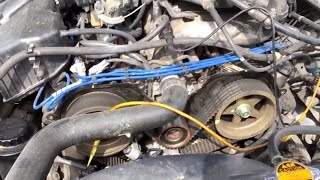
- Damaged Crankshaft Reluctor Ring: → Shop Engine Crankshaft The sensor reads teeth on a reluctor ring (or gear) on the crankshaft. If this ring is damaged, has broken teeth, or has been installed backward during a timing belt job, it will send an erratic or no signal. This typically only happens after major engine work or a catastrophic failure.
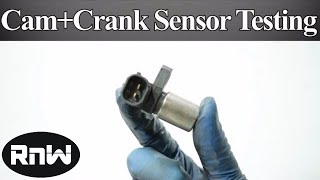
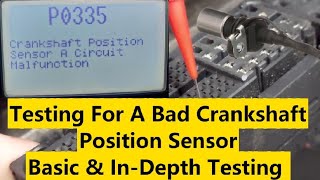
- Faulty Engine Control Module (ECM): → Shop Engine Control Module (ECM) This is extremely rare. Before condemning the ECM, all other possibilities (sensor, wiring, battery, mechanical) must be exhaustively ruled out with tools like an oscilloscope to verify the signal is good all the way to the ECM connector pins. 🎬 See this detailed guide for basic and in-depth sensor testing.
Diagnosis Steps
- Check Battery Health: Before any other step, verify the battery has a full charge (12.4V+) and test its health under load. A weak battery can trigger this code per TSB T-TT-0010-10 Rev. This is the most common misdiagnosis.
- Read the Code & Live Data: Use an OBD-II scanner to confirm P0335 is active. Watch the 'Engine RPM' live data pid while cranking. If it stays at 0, it confirms no signal is reaching the ECM.
- Inspect Wiring and Connector: Perform a thorough visual inspection of the crankshaft position sensor's wiring harness and connector. Look specifically for signs of oil saturation from a valve cover leak, cracked insulation, or physical damage. Ensure the connector is securely plugged in.
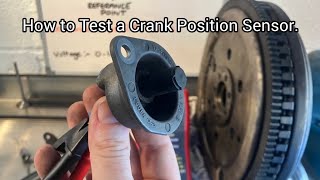
- Test the Sensor Resistance: Disconnect the sensor and measure the resistance between its two pins using a multimeter. Compare the reading to the specification: approximately 1630-2740 Ohms (cold) and 2065-3225 Ohms (hot). An out-of-spec reading confirms a bad sensor.
- Check for Signal (Advanced): Using an oscilloscope is the definitive way to check the sensor's output. Connect to the signal wire at the ECM and ground. You should see a consistent AC sine wave pattern that increases in frequency as the engine is cranked. Absence of this signal with good wiring points to a bad sensor.
- Inspect Reluctor Ring: If a new, known-good OEM sensor and verified wiring do not fix the issue (especially after a recent timing belt service), visually inspect the teeth on the crankshaft pulley/gear that the sensor reads. Ensure none are bent, broken, or covered in debris and that the ring is not installed backward.
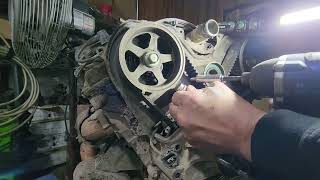
- Replace the Sensor: If the sensor is confirmed bad or highly suspected, replace it. Use a Denso or OEM part for reliability. The sensor is located on the front of the engine, near the crankshaft pulley, and is held by a single 10mm bolt. 🎬 Watch: How to remove and reinstall the 3.4L crankshaft sensor.
Parts You'll Likely Need
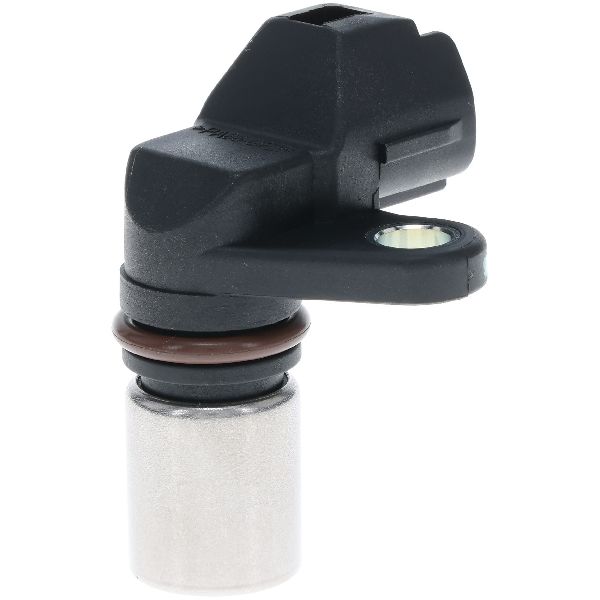
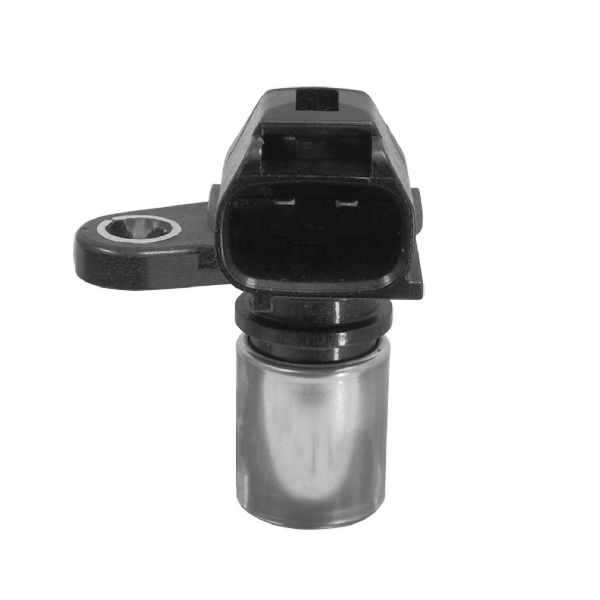
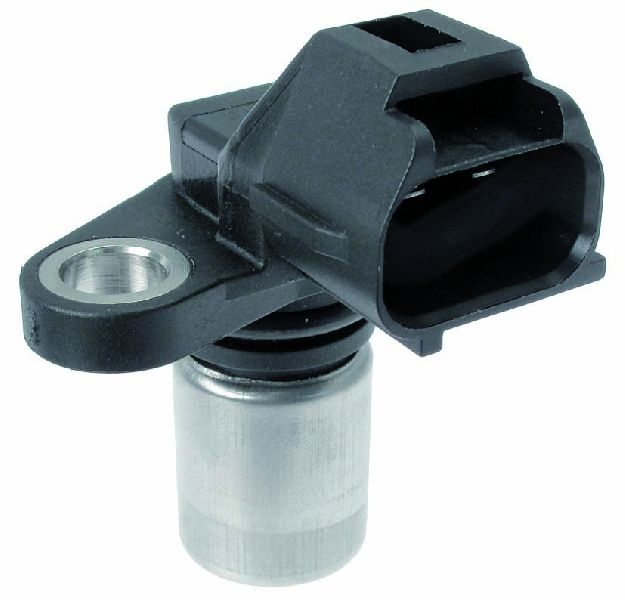
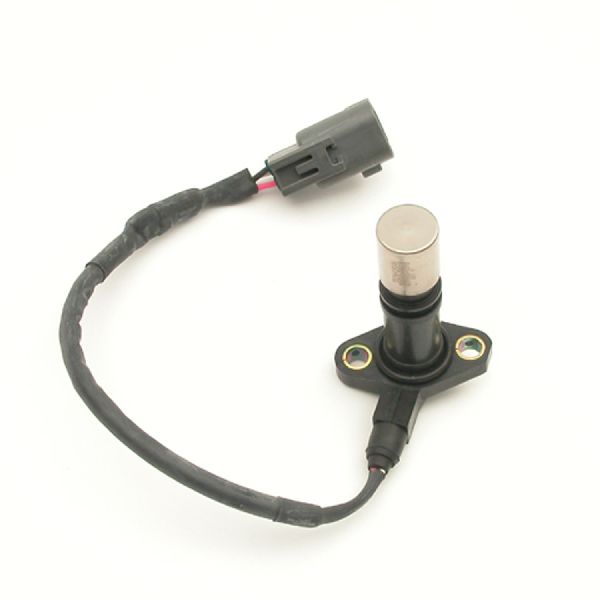
- Crankshaft Position Sensor (3.4L V6)
(OEM #90919-05020)— This is the most common part to fail, causing the P0335 code. Using the OEM supplier (Denso) is critical for reliability.
Trusted brands: Toyota Genuine Part (90919-05020), Denso (CKP2043)
OEM price range: $140-$200
Aftermarket price range: $25-$90 - Crankshaft Position Sensor (2.7L I4)
(OEM #90919-05016)— The sensor for the 4-cylinder engine is also a common failure point leading to P0335.
Trusted brands: Toyota Genuine Part (90919-05016), Denso (CKP2042)
OEM price range: $150-$250
Aftermarket price range: $30-$100 - Crankshaft Position Sensor Connector Pigtail
(OEM #S2326 (Standard Motor Products))— Often the connector itself breaks or becomes saturated with oil, requiring replacement of the pigtail. Be sure to verify wire orientation against the original harness.
Trusted brands: Standard Motor Products, Dorman, Pico
OEM price range: N/A
Aftermarket price range: $15-$40
Related Codes That Often Appear With This One
- P0340 — Stands for 'Camshaft Position Sensor Circuit Malfunction'. The ECM uses both crank and cam signals to determine engine timing. A fault in the primary crank signal can sometimes cause the ECM to flag the cam signal as well, especially during cranking. The TSB T-TT-0010-10 Rev also links both codes to low battery voltage.
Technical Service Bulletins (TSBs) & Recalls
- T-TT-0010-10 Rev: Low battery voltage can contribute to a MIL "ON" condition for P0335 (Crankshaft Position Sensor Circuit) and/or P0340 (Camshaft Position Sensor Circuit) due to inconsistent rotational speed of the engine's crankshaft.
Platform-Specific Known Issues
- TSB T-TT-0010-10 Rev: Toyota officially documented that low battery voltage can cause a P0335 code due to inconsistent cranking speed. This should always be the first check before buying parts.
- Valve Cover Oil Leaks: A very common issue on the 5VZ-FE engine is leaking valve cover gaskets. The passenger side gasket often leaks oil directly onto the crankshaft position sensor and its wiring harness, degrading the materials and causing a signal failure.
Mechanic-Grade Diagnostic Values
- Crankshaft Position Sensor (NE) Signal Waveform — expected: A clean, consistent AC sine wave that increases in frequency and amplitude with engine RPM. The sensor generates 34 pulses per revolution.. Failure: A flat line, erratic or noisy pattern, or a significantly lower amplitude than expected indicates a problem with the sensor, wiring, or reluctor ring.
- Oscilloscope Settings for NE Signal — expected: Set the oscilloscope to 5V/Division and 20 msec/Division when checking the waveform at idle.. Failure: Using these settings provides a clear baseline for identifying an abnormal waveform.
- Crankshaft Sensor Air Gap — expected: While no specific value is published by Toyota for the 5VZ-FE, the air gap between the sensor tip and the reluctor wheel teeth must be correct and free of debris.. Failure: An incorrect air gap, often caused by improper installation or a bent bracket, can lead to a weak or non-existent signal. Debris or rust on the sensor tip can also block the magnetic reading.
Scan Tool Commands That Help
- Toyota Techstream / Intelligent Tester: Data List -> Primary -> Engine SPD — This is the primary diagnostic function for P0335. While cranking the engine, if 'Engine SPD' (Engine Speed) reads 0 RPM, it confirms the ECM is not receiving a signal from the crankshaft sensor. A reading that is erratic or significantly lower than the actual cranking speed can indicate a weak signal.
Wiring & Ground Locations
- Engine Control Module (ECM) — Behind the right side of the dashboard, accessible by removing the passenger-side kick panel and/or glove box.. This is the destination for the crankshaft position sensor signal. Advanced diagnosis requires testing the signal at the ECM connector pins to rule out wiring issues.
- ECM Pins NE+ and NE- — These are the specific terminals on the ECM connectors where the crankshaft position sensor signals arrive.. Probing these specific pins with an oscilloscope is the definitive test to confirm if a good signal is reaching the ECM. The wiring diagrams for the 5VZ-FE show these as the primary inputs for engine speed.
- Ground Point G112 — Located on the left side of the engine.. Poor engine grounds can cause a host of electrical issues and noise, potentially interfering with sensitive sensor signals like the crankshaft position sensor.
- Sensor Shielded Wire Ground — The crankshaft sensor wiring includes a shield to protect it from electromagnetic interference. This shield must be properly grounded.. A grounding failure of the shielded wire can allow electrical noise from other components (like the ignition system) to corrupt the crank signal, leading to an erratic waveform and a P0335 code even with a good sensor.
Real Owner Repair Stories
- Tacoma World forum user 'Jussa_sas_tacoma' (Toyota with 5VZ-FE engine) — Crank no-start condition.
❌ Tried (didn't work) Jumping wires, Initial diagnostics did not point to the ECU.
✅ What actually fixed it The Engine Control Module (ECU) was faulty. The owner sent the ECU to a specialized repair service (G7 Computers) who confirmed an internal issue, repaired it, and returned it, which resolved the no-start problem. - General technician knowledge from multiple sources (1997-2000 Toyota 4Runner with 5VZ-FE) — P0335 code and crank-no-start immediately after a timing belt replacement.
❌ Tried (didn't work) Replacing the crankshaft position sensor., Checking the sensor wiring.
✅ What actually fixed it The timing belt had jumped a tooth during installation, causing a mismatch between the crankshaft and camshaft position signals that the ECM interpreted as a crankshaft signal fault. Re-timing the engine correctly resolved the code.
"I Checked Everything" — The Actual Cause
- In the context of P0335, the equivalent of a 'smoke test clean' scenario is when the crankshaft sensor and its wiring test perfectly fine with a multimeter. In these cases, the root cause is often mechanical rather than electrical. Technicians have found that a timing belt that has skipped one or more teeth can set a P0335 code because the signal, while present, is not what the ECM expects to see in relation to the camshaft sensor. Another rare cause is a damaged or bent tooth on the crankshaft reluctor ring itself, which can only be confirmed by visual inspection during a timing belt service.
OEM Part Supersession History
90919-05020→N/A— This part number has remained consistent for the 3.4L 5VZ-FE engine across its production run for this generation.
Heads up: No known supersession or incompatibility issues exist for this part within the 1997-2000 model year range. It is used broadly across many Toyota models with the 5VZ-FE engine.
Model Year Variations Within This Range
- 1997-2000: While the 3rd generation 4Runner received a notable interior and exterior refresh for the 1999 model year, the 3.4L 5VZ-FE engine, its control module, and the crankshaft position sensor circuit remained fundamentally unchanged. Diagnostic and repair procedures for a P0335 code are identical across the 1997-2000 model year range.
Helpful Videos
We Have This Part in Stock


The information in this article is provided for general reference and educational purposes only. Vehicle specifications, procedures, and part compatibility can vary by production date, trim level, and region. Always consult your vehicle's factory service manual and verify part numbers before purchasing or performing repairs. Safety-critical components such as airbags, seat belts, and braking systems should be installed by a qualified professional.
- Toyota 4RUNNER:
- 🧭 Diagnostic Flowchart
- 🎬 Helpful Videos
- 🛍️ Shop This Part
- What's Unique About the 1997-2000 Toyota 4RUNNER
- Symptoms You May Notice
- Most Likely Causes
- Rare But Worth Checking
- Diagnosis Steps
- Parts You'll Likely Need
- Related Codes That Often Appear With This One
- Technical Service Bulletins (TSBs) & Recalls
- Platform-Specific Known Issues
- Mechanic-Grade Diagnostic Values
- Scan Tool Commands That Help
- Wiring & Ground Locations
- Real Owner Repair Stories
- "I Checked Everything" — The Actual Cause
- OEM Part Supersession History
- Model Year Variations Within This Range
- 🎟️ Get 5% Off