

P0335 on 2008-2015 Toyota Avalon: Crank Sensor Causes and Fixes
P0335 on a Toyota Avalon most often means the crankshaft position sensor has failed or its wiring is damaged. Before replacing parts, check the battery, as low voltage is a known cause for this code on Toyotas. Expect a shop repair to cost $289-$450 due to difficult labor accessing the sensor.
- P0335 is a critical code on the Avalon that can cause a no-start or dangerous stalling condition.
- **Always check the battery first.** A weak battery is a known cause of this code, as documented in a Toyota TSB.
- Wiring issues at the sensor connector are a very common point of failure and should be inspected carefully before replacing the sensor.
- The sensor replacement is a labor-intensive job due to its location behind the A/C compressor, which drives up repair costs.
- This exact issue is shared across many Toyota and Lexus vehicles that use the 3.5L 2GR-FE V6 engine.
What's Unique About the 2008-2015 Toyota AVALON
For this generation of Avalon with the 2GR-FE V6 engine, the P0335 code has a specific quirk documented by Toyota. A low battery can cause inconsistent cranking speed, which the ECM can misinterpret as a faulty crankshaft sensor signal, triggering the code. This makes checking the battery and charging system an essential first step before assuming 🎬 Watch this before you spend money on a new sensor. the sensor itself has failed. The sensor's physical location, tucked behind the A/C compressor and alternator, also makes replacement more labor-intensive than on many other vehicles, often requiring their removal for access. Some owners on forums have also noted that a weak battery in the key fob could potentially trigger this code, though this is less common.
Diagnostic Flowchart
Tap your situation to follow the diagnostic path that matches what you're seeing on this vehicle.
Generation note: This range covers two Avalon generations: the third (2008-2012) and the fourth (2013-2015). Both use the 3.5L 2GR-FE V6 engine, and the causes, symptoms, and difficult location of the crankshaft position sensor are consistent across these model years and other Toyota/Lexus models with the same engine.
Symptoms You May Notice
- Engine cranks but will not start
- Engine stalls unexpectedly, sometimes while driving or turning
- Rough or uneven engine idle
- Engine misfires or hesitates during acceleration
- Check Engine Light is on
- Delayed or stuttering engine start
- Scan tool shows 0 RPM during cranking
- Replacing the camshaft position sensors. While related to engine timing, they will typically set their own distinct codes (e.g., P0340, P0345).
- Replacing the starter motor. While a bad starter can cause voltage issues that trigger P0335, the starter itself is not usually the root cause unless it's drawing excessive current.
Most Likely Causes
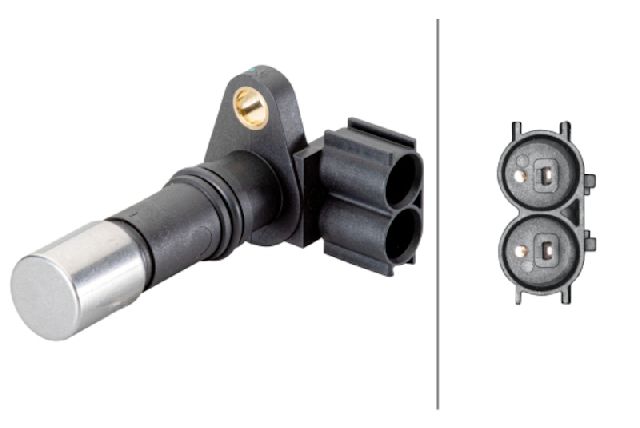
- Failed Crankshaft Position Sensor 🔴 High Probability → Shop Engine Crankshaft Position Sensor The sensor is exposed to high heat and vibration over its service life, leading to internal failure of the coil windings. Denso is the original equipment manufacturer (OEM).
How to confirm: Use a scan tool to check for an RPM signal while cranking. If it reads 0 RPM and wiring is confirmed good, the sensor is likely bad. You can also test the sensor's internal resistance with a multimeter; it should be between 985 – 1600 Ω when cold.
Typical fix: Replace the crankshaft position sensor.
Est. part cost: $70-$150 - Wiring Harness or Connector Damage 🟡 Medium Probability The wiring harness is located in a hot engine bay and can become brittle, cracked, or damaged from heat, vibration, or even rodents. Several owner accounts point to breaks or loose connections in the pigtail right at the sensor connector. 🎬 Watch: How to find and repair common wiring harness breaks.
How to confirm: Visually inspect the wiring harness leading to the sensor for any signs of melting, chafing, or breaks. Wiggle the connector while a helper cranks the engine to see if the RPM signal appears. Check that the connector is clean, secure, and free of corrosion.
Typical fix: Repair the damaged section of wiring or replace the connector pigtail.
Est. part cost: $15-$50 - Low Battery Voltage ⚪ Low Probability → Shop Vehicle Battery A Toyota Technical Service Bulletin (T-TT-0010-10 Rev) indicates that low battery voltage (below 11V) can cause inconsistent engine cranking speed, leading the ECM to incorrectly set a P0335 code.
How to confirm: Test the battery voltage with a multimeter. A healthy, fully charged battery should read approximately 12.6 volts. Check the freeze frame data on a scan tool to see what the battery voltage was when the code was set. Test the charging system to ensure the alternator is functioning correctly.
Typical fix: Charge or replace the battery.
Est. part cost: $150-$250
Rare But Worth Checking
- Damaged Reluctor Ring: The toothed ring that the sensor reads can get damaged, accumulate metallic debris, or have a sheared keyway, causing an erratic signal. This is uncommon but possible and requires significant disassembly to inspect.
- Faulty Engine Control Module (ECM): → Shop Engine Control Module (ECM) This is extremely rare. The ECM should only be considered after all other possibilities, including the sensor, wiring, and reluctor ring, have been thoroughly ruled out.
- Blown Fuse: If there is no voltage at the sensor's connector, a blown fuse could be the cause. These fuses are often in the engine bay fuse box and may be labeled 'EM2' or 'SNS'.
Diagnosis Steps
- Check for other Diagnostic Trouble Codes (DTCs) to see if other issues are present.
- Check Battery and Charging System: Per TSB T-TT-0010-10 Rev, the first step is to test the battery voltage. Ensure it is at least 12.6V. Use a scan tool to check the freeze frame data for the battery voltage at the time the code was set; if it was below 11V, the battery is the likely cause.
- Inspect Wiring and Connector: Visually inspect the entire wiring harness from the sensor to the ECM. Look for melted plastic, chafed wires, or rodent damage. Unplug the sensor and check for corrosion or bent pins in the connector. Many videos show the wiring failing right at the connector.
- Check for RPM Signal: Connect a scan tool that can display live data, such as Toyota Techstream. Monitor the 'Engine Speed' parameter while cranking. If the RPM reads a steady '0', it confirms the ECM is not seeing a signal from the crank sensor.
- Test the Sensor Circuit: If you have a multimeter, you can test for continuity between the sensor connector and the ECM. Check for less than 1 Ω between sensor pin 1 (NE+) and ECM pin B30-110, and between sensor pin 2 (NE-) and ECM pin B30-111. Also check for resistance to body ground, which should be 10 kΩ or higher.
- Test the Sensor: With the sensor unplugged, measure the resistance between the two pins. It should be within the range of 985 – 1600 Ohms when cold (approx. -10 to 50°C) or 1265 - 1890 Ohms when hot (approx. 50 to 100°C).
- Replace the Sensor: If the battery is good and the wiring appears intact, but there is no RPM signal and/or the sensor resistance is out of spec, the crankshaft position sensor is the most likely culprit and should be replaced.
- Inspect Reluctor Ring: If a new sensor does not fix the issue, the problem may be with the reluctor ring on the crankshaft. This is an advanced step that requires significant engine disassembly to inspect for damage or debris.
Parts You'll Likely Need
- Crankshaft Position Sensor
(OEM #90919-A5003)— This is the most common part to fail, triggering the P0335 code. Part number 90919-A5003 supersedes the older part number 90919-05057.
Trusted brands: Denso (OEM), NGK/NTK, Hitachi, Carquest Premium
OEM price range: $72-$102
Aftermarket price range: $40-$85
Related Codes That Often Appear With This One
- P0340 — This is the code for the Camshaft Position Sensor. If there's a widespread wiring problem or a low battery voltage issue, both codes can appear together as noted in TSB T-TT-0010-10 Rev.
- P0339 — This code indicates an intermittent signal from the crankshaft position sensor, which often precedes a complete failure that triggers P0335.
Technical Service Bulletins (TSBs) & Recalls
- T-TT-0010-10 Rev: Notes that low battery voltage (below 11V) can contribute to a MIL "ON" condition for P0335 due to inconsistent rotational speed of the engine's crankshaft. Advises checking freeze frame data for battery voltage when the DTC was set.
Platform-Specific Known Issues
- A Technical Service Bulletin (T-TT-0010-10 Rev) was issued by Toyota stating that low battery voltage can cause this code by creating inconsistent crankshaft rotational speed during startup.
- The sensor is notoriously difficult to access, located on the front of the engine block behind the A/C compressor and/or alternator, often requiring their removal.
- The 2GR-FE engine is known for a potential oil leak from the timing cover gasket. Leaking oil can contaminate and damage the crankshaft position sensor or its wiring harness over time.
Mechanic-Grade Diagnostic Values
- Crankshaft Position Sensor Resistance (Cold) — expected: 985 to 1,600 Ω. Failure: Resistance is outside the specified range.
- Crankshaft Position Sensor Resistance (Hot) — expected: 1,265 to 1,890 Ω. Failure: Resistance is outside the specified range.
- Harness Continuity (Sensor to ECM) — expected: Below 1 Ω. Failure: Resistance is 1 Ω or higher, indicating an open circuit.
- Harness Resistance to Ground — expected: 10 kΩ or higher. Failure: Resistance is below 10 kΩ, indicating a short to ground.
- Live Data 'Engine Speed' (during cranking) — expected: Should show a rising RPM value.. Failure: Value remains at 0 RPM, confirming no signal is reaching the ECM.
Scan Tool Commands That Help
- Toyota Techstream: Data List -> Powertrain / Engine and ECT / Engine Speed — This is the primary method to confirm if the ECM is receiving an RPM signal from the crankshaft sensor. A reading of '0' while cranking points directly to a fault in the sensor or its circuit.
- Toyota Techstream: Data List -> Freeze Frame Data — Crucial for checking the battery voltage at the exact moment the P0335 code was triggered. This helps diagnose the low-voltage issue described in TSB T-TT-0010-10 Rev.
Wiring & Ground Locations
- ECM Pins B30-110 (NE+) and B30-111 (NE-) — At the Engine Control Module (ECM) connector.. These are the specific pins where the crankshaft position sensor signal wires terminate. Testing for continuity between these pins and the sensor connector is essential for ruling out a wiring harness break.
- Engine Harness Ground (Rear Head) — On the side of the rear cylinder head, located under the throttle body.. A primary grounding point for the engine harness. A loose or corroded connection here can cause erratic sensor readings and spurious codes, including P0335.
- Engine Harness Ground (Front Head) — On a boss on the side of the front cylinder head.. Another key engine harness ground. Proper grounding is critical for a clean sensor signal, as a bad ground can introduce electrical noise that disrupts the crankshaft signal.
- EFI Ground Terminal — On the left front (LF) fender apron, located to the left of and below the main fuse box.. This ground point serves multiple EFI (Electronic Fuel Injection) system relays within the fuse box. A fault here could interrupt power or reference signals related to the engine management system, potentially contributing to a P0335 code.
Real Owner Repair Stories
- Reddit user /r/mechanic (2016 Lexus RX350 (with 2GR-FE engine)) — Engine running very poorly, misfiring, surging, and setting multiple random timing and oil switch codes, including P0335.
❌ Tried (didn't work) Initial diagnosis for 2 hours assuming a sensor or wiring fault.
✅ What actually fixed it The vehicle had just had its rear main seal replaced. The mechanic discovered the reluctor ring on the flywheel was installed 'ever so slightly cockeyed'. This misalignment caused an erratic signal from the crank sensor and also caused the starter to skip. Correcting the alignment of the reluctor ring resolved all issues.
When the Usual Fixes Don't Work
- In a documented case involving a similar Toyota 2GR-FE engine, a technician performed a rear main seal replacement and afterward the vehicle ran terribly and set a P0335 code. After hours of troubleshooting the sensor and wiring, the root cause was discovered to be a slightly misaligned reluctor ring on the flywheel from the reinstallation process. This highlights a scenario where replacing the 'common cause' parts (sensor, wiring) would not fix the issue, as the problem was mechanical and related to a recent major repair.
OEM Part Supersession History
90919-05057→90919-A5003— Standard part number update/revision by the manufacturer.
Helpful Videos

We Have This Part in Stock

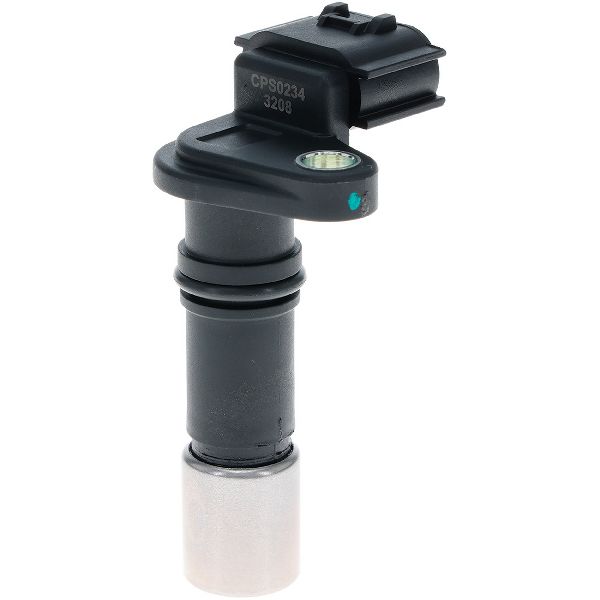

The information in this article is provided for general reference and educational purposes only. Vehicle specifications, procedures, and part compatibility can vary by production date, trim level, and region. Always consult your vehicle's factory service manual and verify part numbers before purchasing or performing repairs. Safety-critical components such as airbags, seat belts, and braking systems should be installed by a qualified professional.
- Toyota AVALON:
- 🧭 Diagnostic Flowchart
- 🎬 Helpful Videos
- 🛍️ Shop This Part
- What's Unique About the 2008-2015 Toyota AVALON
- Symptoms You May Notice
- Most Likely Causes
- Rare But Worth Checking
- Diagnosis Steps
- Parts You'll Likely Need
- Related Codes That Often Appear With This One
- Technical Service Bulletins (TSBs) & Recalls
- Platform-Specific Known Issues
- Mechanic-Grade Diagnostic Values
- Scan Tool Commands That Help
- Wiring & Ground Locations
- Real Owner Repair Stories
- When the Usual Fixes Don't Work
- OEM Part Supersession History
- 🎟️ Get 5% Off