

P0335 on 2000-2004 Toyota ECHO: Crank Sensor Fixes and Causes
On a 2000-2004 Toyota Echo, P0335 usually means the crankshaft position sensor has failed, causing stalling or a no-start condition. Before replacing the sensor, check for a weak battery, which is a known issue that can trigger this code. A new sensor costs about $30-$90 for an aftermarket part.
- Always check the battery first when you see a P0335 code on a Toyota Echo. A weak battery is a known cause and an easy fix.
- The most common symptoms are the engine cranking but not starting, or stalling unexpectedly while driving.
- If the battery is healthy, the crankshaft position sensor is the most likely culprit. Use a quality OEM (Denso) or equivalent brand for replacement.
- Replacing the sensor is a DIY-friendly job that can be done in about an hour with basic tools. The sensor is located on the front of the engine, near the main pulley, accessed by removing the passenger side wheel and splash shield.
What's Unique About the 2000-2004 Toyota ECHO
For the Toyota Echo and other Toyotas of this era, a unique and well-documented issue can trigger a P0335 code: low battery voltage. A Technical Service Bulletin (TSB) issued by Toyota confirms that a weak battery can cause inconsistent crankshaft speed readings during startup, leading the ECM to mistakenly flag the sensor circuit. Numerous owner forums corroborate this, with many users reporting that replacing a battery that tested 'good' ultimately solved the P0335 code and associated no-start or stalling issues. Therefore, checking the battery's health and terminal connections is a crucial first step before assuming the sensor itself has failed.
Diagnostic Flowchart
Tap your situation to follow the diagnostic path that matches what you're seeing on this vehicle.
Symptoms You May Notice
- Check Engine Light is on
- Engine cranks but will not start
- Intermittent stalling, which may worsen as the engine warms up
- Rough idle and engine misfires
- Poor acceleration and hesitation
- Tachometer may not work or reads 0 RPM while cranking
- Replacing the camshaft position sensor instead of the crankshaft position sensor.
- Replacing the crankshaft position sensor when the actual root cause is a weak battery or corroded battery terminals.
- Replacing the starter motor, as a no-crank or intermittent crank can sometimes be associated with the low voltage that also triggers P0335.
Most Likely Causes
- Faulty Crankshaft Position Sensor 🔴 High Probability → Shop Engine Crankshaft Position Sensor The sensor is a common failure item on the Echo due to age and exposure to engine heat cycles. Its location on the front of the engine, low down, also makes it susceptible to contamination from oil leaks, particularly from the timing cover gasket.
How to confirm: Use a scan tool to monitor engine RPM while cranking. If it reads 0 RPM, the sensor or its circuit is not sending a signal. Test the sensor's internal resistance with a multimeter. Disconnect the sensor and measure between the two terminals. The resistance should be between 1630-2740 ohms when cold (14 to 122°F), and 2065-3225 ohms when hot (122 to 212°F). Infinite resistance means an open circuit, and very low resistance indicates a short.
Typical fix: Replace the crankshaft position sensor. To access it, remove the front passenger-side wheel and the plastic engine splash shield. 🎬 See this walkthrough for removing and installing a new sensor. It is held in by a single 10mm bolt. 🎬 Watch: A step-by-step guide to replacing the Echo's sensor.
Est. part cost: $27-$112 - Weak or Failing Battery 🟡 Medium Probability → Shop Vehicle Battery A Toyota TSB (T-TT-0010-10 Rev) specifically notes that low battery voltage during cranking can trigger a P0335 code. The inconsistent cranking speed can be misinterpreted by the ECM as a sensor fault. Forum discussions are filled with owner experiences confirming this; a battery showing 5.1V was unable to be jump-started and caused the code, and another owner resolved a months-long intermittent no-start with P0335 by replacing batteries that had previously tested 'good'.
How to confirm: Test the battery voltage. A reading below 12 volts when the car is off is a sign of a weak battery. Check the freeze-frame data on a scan tool to see what the battery voltage was when the code was set. Even if the battery seems okay, clean the terminals and connections thoroughly.
Typical fix: Charge or replace the battery. Ensure terminals are clean and tight.
Est. part cost: $100-$250 - Damaged Wiring or Loose Connector ⚪ Low Probability The sensor is located on the lower front of the engine, making its wiring susceptible to damage from road debris, oil leaks, and heat. The wiring harness can become brittle and crack, or oil from a leaking timing cover can saturate the connector, causing a poor connection.
How to confirm: Visually inspect the wiring harness and connector leading to the crankshaft position sensor for any signs of fraying, melting, corrosion, or loose pins. Check for oil saturation. A user on YarisWorld forums traced a P0335 to a damaged connector after hitting a curb.
Typical fix: Repair the damaged wiring or clean/replace the connector.
Est. part cost: $10-$50
Rare But Worth Checking
- Damaged Reluctor Ring: The reluctor ring (a toothed wheel on the crankshaft) can get damaged, bent, or have debris on it, which the sensor reads. This can cause an erratic signal. This is less common but worth considering if a new sensor doesn't fix the issue. Inspection can sometimes be done through the sensor mounting hole.
- Faulty Engine Control Module (ECM): → Shop Engine Control Module (ECM) In very rare cases, the ECM itself can fail. This should only be considered after all other possibilities, including wiring and the sensor itself, have been thoroughly ruled out.
- Stretched Timing Chain: → Shop Engine Timing Chain While less common, a significantly stretched timing chain can cause the crankshaft and camshaft signals to go out of sync, potentially triggering a P0335 code, sometimes along with cam sensor codes. This is an advanced mechanical issue to diagnose after electrical causes are ruled out.
Diagnosis Steps
- Check the battery voltage and clean the terminals. Ensure it is above 12 volts. If it's low, charge or replace the battery, clear the codes, and see if the problem returns. This is the most common misdiagnosis. 🎬 Watch: A breakdown of common causes and fixes for P0335.
- Connect an OBD-II scanner and check for any other codes. Note the freeze-frame data, paying special attention to battery voltage when the code was set.
- Using the scanner's live data function, monitor the Engine Speed (RPM) while cranking the engine. If the RPM reading stays at 0, it strongly indicates a problem with the crankshaft sensor circuit.
- Visually inspect the crankshaft position sensor's connector and wiring for any damage, corrosion, or oil contamination. Ensure the connector is securely plugged in.
- If the wiring appears okay, test the sensor. Disconnect the sensor and use a multimeter to check its internal resistance. It should be 1630-2740 ohms when cold. If the reading is out of spec, the sensor is bad.
- If the sensor tests good, check for a signal at the ECM. This may require a wiring diagram and an oscilloscope to check for the proper waveform.
- If the sensor and wiring are good, inspect the reluctor ring for damage through the sensor hole, if possible.
- If all other components are verified to be good, the issue may be with the ECM, but this is extremely rare.
Parts You'll Likely Need
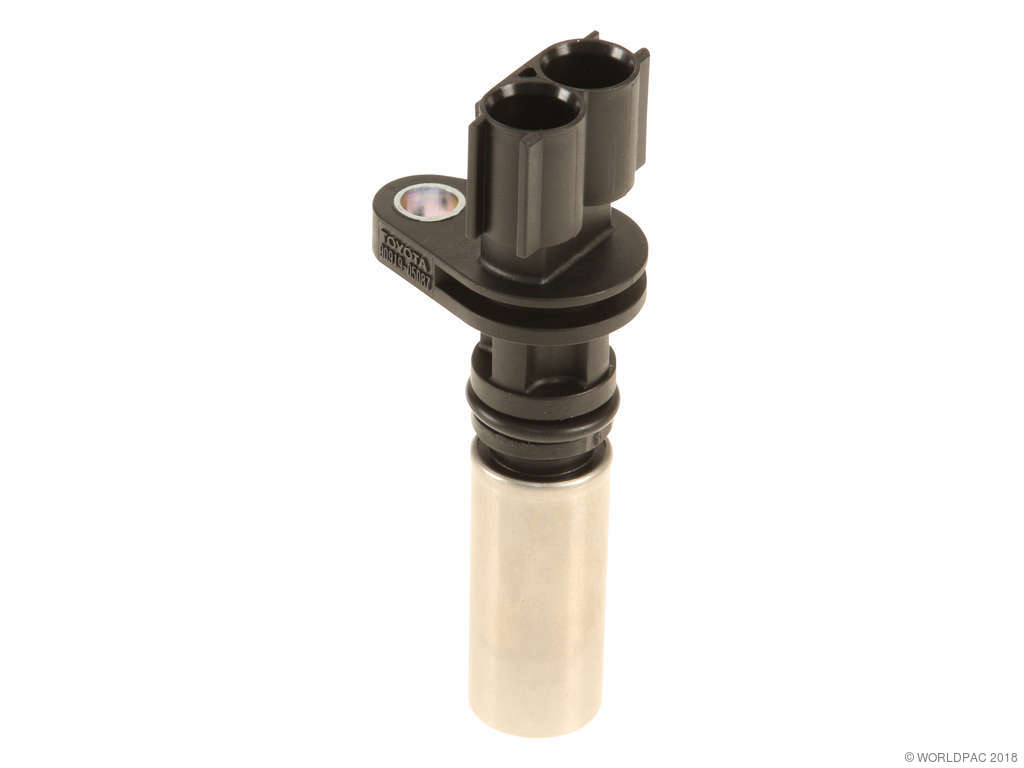
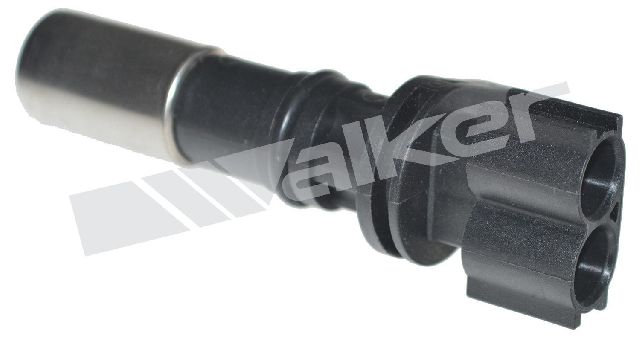
- Crankshaft Position Sensor
(OEM #90919-05087)— This sensor is the most common part to fail, directly causing the P0335 code and associated symptoms like no-start or stalling. The original part number 90919-05045 has been superseded by this one.
Trusted brands: Denso (OEM supplier), Hitachi, NGK/NTK, Delphi (SS10254)
OEM price range: $75-$135
Aftermarket price range: $27-$91
Related Codes That Often Appear With This One
- P0340 — This code is for the Camshaft Position Sensor. The TSB T-TT-0010-10 Rev mentions that low battery voltage can trigger both P0335 and P0340 simultaneously.
Technical Service Bulletins (TSBs) & Recalls
- T-TT-0010-10 Rev: States that low battery voltage can contribute to a MIL "ON" condition for P0335 due to inconsistent rotational speed of the engine's crankshaft.
Platform-Specific Known Issues
- A Technical Service Bulletin (TSB #T-TT-0010-10 Rev) highlights that low battery voltage can be a direct cause of code P0335, making a battery health check a critical first diagnostic step.
- The sensor's location near the bottom of the engine makes its wiring and connector prone to oil contamination from common 1NZ-FE engine oil leaks, such as the front timing cover seal.
Mechanic-Grade Diagnostic Values
- Crankshaft Position Sensor Resistance (Cold) — expected: 1630 - 2740 Ω. Failure: Reading is open (infinite) or shorted (near zero).
- Crankshaft Position Sensor Resistance (Hot) — expected: 2065 - 3225 Ω. Failure: Reading is outside the specified range when the sensor is at operating temperature.
- Crankshaft Position Sensor (NE+) Signal at ECM — expected: Pulsing signal (waveform) while engine is cranking/idling.. Failure: No signal or a flat line indicates a break in the circuit or a failed sensor.
- Live Data Engine Speed (RPM) via Scan Tool — expected: Shows cranking speed (e.g., >200 RPM) during startup and then idle speed.. Failure: Remains at 0 RPM while the engine is physically cranking.
Hidden / Shadow Codes Worth Checking
- INF Code (Detail Code): Toyota's Techstream software can often display a more specific INF (Information) code alongside the main DTC. For P0335, this could provide more context, such as distinguishing between a missing signal and an erratic one, though specific INF codes for this DTC are not publicly documented. (see via Toyota Techstream diagnostic software.)
Scan Tool Commands That Help
- Techstream: Data List > Primary > ENGINE SPD — This is the primary method to confirm if the ECM is receiving an RPM signal from the crankshaft sensor circuit. If it reads 0 while cranking, it confirms a fault in the sensor or circuit.
- Techstream: DTC INFO > Freeze Frame Data — Use this to review the engine conditions (coolant temp, RPM, battery voltage) at the exact moment the P0335 code was triggered. This is crucial for identifying if low battery voltage was a contributing factor, as noted in TSB T-TT-0010-10 Rev.
- Techstream: Utility > All Readiness — After a repair, this function can be used to monitor the status of the P0335 diagnostic monitor to confirm that the system has run its self-check and passed, verifying the fix.
Wiring & Ground Locations
- NE+ (Crankshaft Position Sensor Signal) — Pin E5-27 on the Engine Control Module (ECM). Wire color is typically Orange (O).. This is the primary signal wire from the sensor to the ECM. Testing for a proper waveform here can confirm if the sensor is working and the wire is intact.
- NE- (Crankshaft Position Sensor Ground/Return) — Pin E5-34 on the Engine Control Module (ECM). Wire color is typically White (W).. This is the return/ground reference for the sensor signal. A poor connection on this pin can cause a faulty signal.
- Engine Ground (Generic) — The main engine ground strap connects the engine block to the chassis, typically on the left side of the engine compartment.. A corroded or loose main engine ground can cause a variety of electrical issues, including erratic sensor readings and codes like P0335.
- ECM Connector E5 — One of the main connectors at the Engine Control Module, located behind the right side of the dashboard.. This connector houses the critical NE+ and NE- pins. Checking for corrosion or backed-out pins at this connector is a key diagnostic step.
OEM Part Supersession History
90919-05045→90919-05087— Standard part update/revision by Toyota.
Heads up: While other numbers like 90919-05081 are sometimes listed by aftermarket suppliers, 90919-05087 is the official supersession from Toyota for 90919-05045. Using a quality OEM (Denso) or reputable aftermarket brand is highly recommended, as some owners report issues with cheaper alternatives.
Helpful Videos

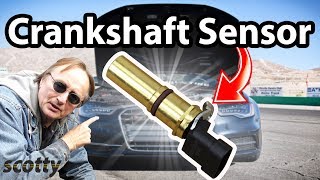
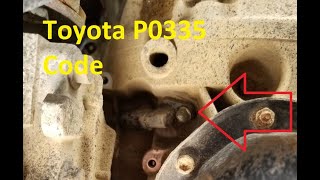
We Have This Part in Stock

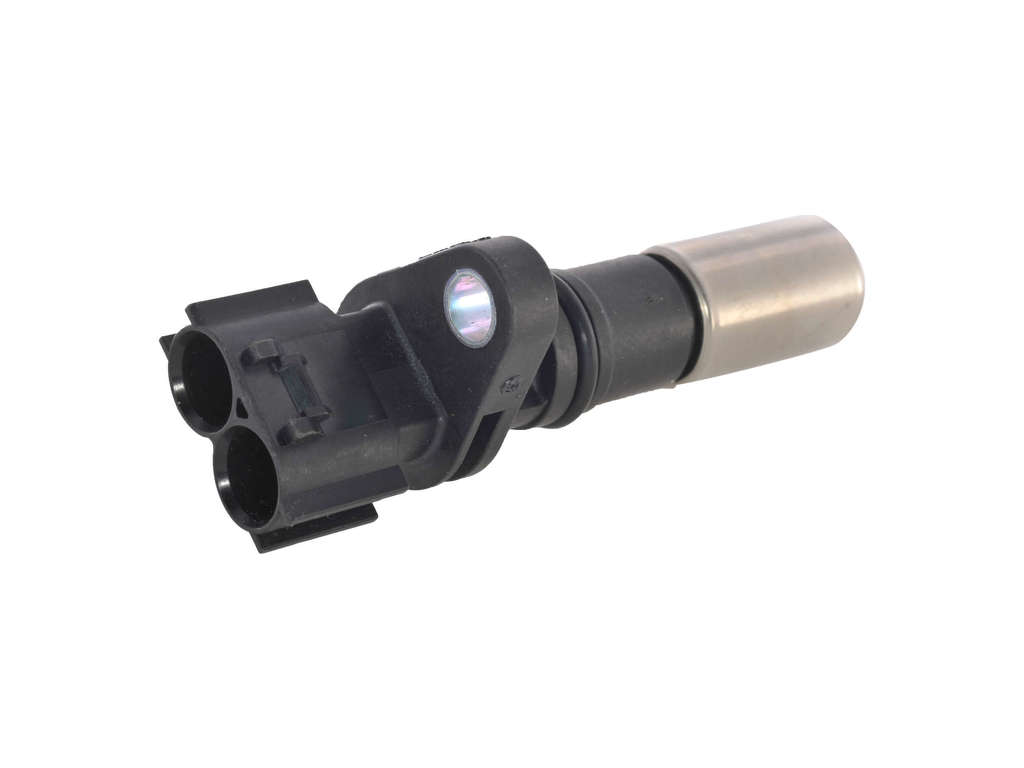
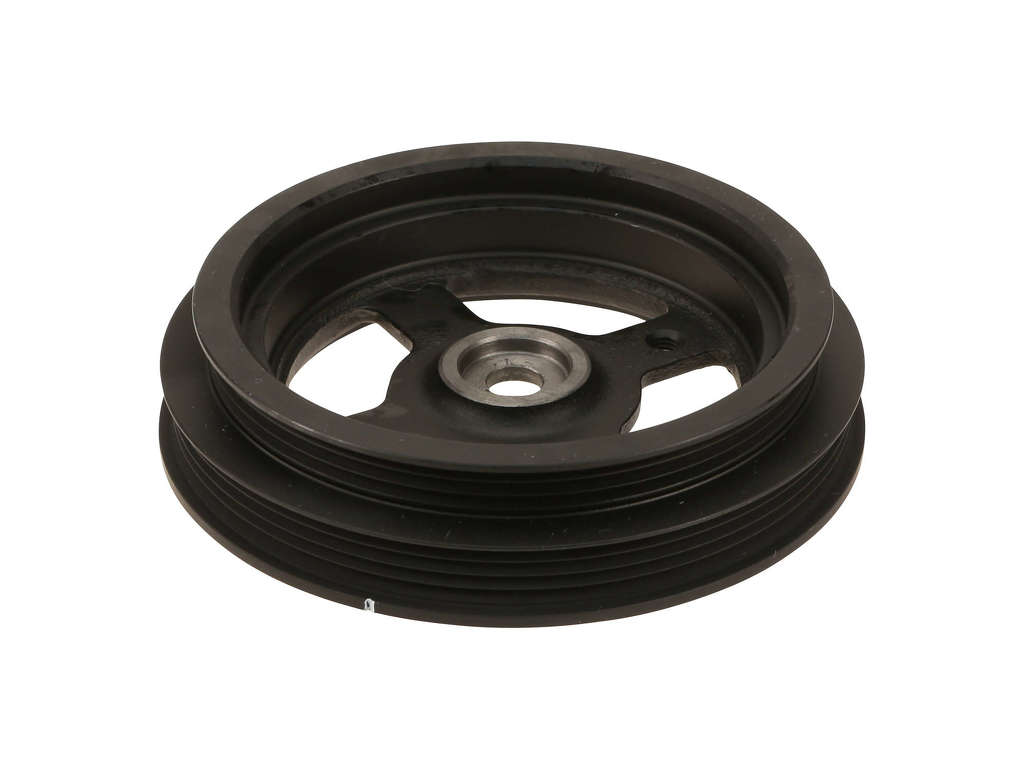

The information in this article is provided for general reference and educational purposes only. Vehicle specifications, procedures, and part compatibility can vary by production date, trim level, and region. Always consult your vehicle's factory service manual and verify part numbers before purchasing or performing repairs. Safety-critical components such as airbags, seat belts, and braking systems should be installed by a qualified professional.
- Toyota ECHO:
- 🧭 Diagnostic Flowchart
- 🎬 Helpful Videos
- 🛍️ Shop This Part
- What's Unique About the 2000-2004 Toyota ECHO
- Symptoms You May Notice
- Most Likely Causes
- Rare But Worth Checking
- Diagnosis Steps
- Parts You'll Likely Need
- Related Codes That Often Appear With This One
- Technical Service Bulletins (TSBs) & Recalls
- Platform-Specific Known Issues
- Mechanic-Grade Diagnostic Values
- Hidden / Shadow Codes Worth Checking
- Scan Tool Commands That Help
- Wiring & Ground Locations
- OEM Part Supersession History
- 🎟️ Get 5% Off