

P0335 on 2012-2015 Toyota Highlander: Causes and Fixes for Crank Sensor Faults
On a 2012-2015 Toyota Highlander, P0335 often points to a failed crankshaft position sensor, but a weak battery is also a known cause per a Toyota TSB. Always test the battery and check freeze frame data for low voltage first. If the sensor needs replacement, expect a difficult job on V6 models due to its location behind the A/C compressor, a repair that can take several hours.
- Do not drive the vehicle. The engine can stall at any time, creating a serious safety hazard.
- Your first diagnostic step must be to test the battery and charging system. A weak battery is a known cause for P0335 on this Highlander, per a Toyota TSB.
- If the battery is healthy, the crankshaft position sensor is the next most likely culprit.
- For 3.5L V6 models, be prepared for a difficult and costly repair if the sensor needs replacement due to its poor accessibility.
- Always use a high-quality replacement sensor from a reputable brand like Denso to ensure reliability.
What's Unique About the 2012-2015 Toyota HIGHLANDER
For this generation of Highlander, a key issue is documented in a Toyota Technical Service Bulletin (TSB). It states that low battery voltage (specifically below 11V during startup) can cause the engine's crankshaft to rotate inconsistently, triggering a P0335 code even if the sensor is perfectly fine. Additionally, on the popular 3.5L V6 (2GR-FE) engine, the crankshaft sensor is notoriously difficult to access. It is located behind the A/C compressor, which must be unbolted and moved to gain access, making replacement a much more labor-intensive job than on the 4-cylinder engine or other vehicles.
Diagnostic Flowchart
Tap your situation to follow the diagnostic path that matches what you're seeing on this vehicle.
Generation note: This range covers the end of the second generation (XU40, 2012-2013) and the beginning of the third generation (XU50, 2014-2015). The primary engines were the 2.7L 4-cylinder and 3.5L V6 (2GR-FE). The difficult sensor access is most noted on the V6 models across these years and shared with platform mates like the Lexus RX350.
Symptoms You May Notice
- Engine cranks but will not start
- Engine stalls unexpectedly while driving
- Extended cranking time before the engine starts
- Rough idling and engine misfires
- Hesitation or stumbling during acceleration
- Noticeable decrease in fuel economy
- Check Engine Light is on
- Replacing the crankshaft position sensor without first testing the battery and charging system. The TSB clearly indicates a weak battery can trigger this code.
- Confusing the Crankshaft Position Sensor with the Camshaft Position Sensor (P0340). While they can be set together by a low battery, they are different parts.
Most Likely Causes
- Low Battery Voltage or Failing Charging System 🔴 High Probability → Shop Vehicle Battery A specific Toyota TSB (#T-TT-0010-10 Rev) directly links low battery voltage to the P0335 code on these vehicles due to inconsistent cranking speed. One owner on the IH8MUD forums confirmed their intermittent P0335 was resolved only after replacing batteries that had previously 'tested fine'.
How to confirm: Test the battery with a multimeter or electronic battery tester. A healthy, fully charged battery should read approximately 12.6 volts. With the engine running, voltage should be around 13.7 to 14.7 volts. Crucially, use a scan tool to check the freeze frame data and see if the battery voltage was below 11 volts when the P0335 code was set.
Typical fix: Recharge or replace the battery. If the charging voltage is low, the alternator may need replacement.
Est. part cost: $100-$250 - Faulty Crankshaft Position Sensor 🔴 High Probability → Shop Engine Crankshaft Position Sensor This is the most common mechanical failure for this code once electrical issues are ruled out. The sensor's internal electronics can fail from age and heat cycles.
How to confirm: After confirming wiring is good, use an oscilloscope to check for a proper signal pattern from the sensor while cranking the engine. A simpler method is to check for resistance across the sensor's terminals. Per service manuals, resistance should be 1,630 - 2,740 ohms 'cold' and 2,065 - 3,225 ohms 'hot'. If resistance is out of spec, the sensor is bad.
Typical fix: Replace the crankshaft position sensor.
Est. part cost: $40-$150 - Wiring Harness or Connector Damage 🟡 Medium Probability The sensor's location near the front of the engine exposes its wiring to heat, oil, and potential road debris. Wires can become brittle and crack over time.
How to confirm: Visually inspect the wiring harness from the sensor to the ECM for any signs of cracking, melting, corrosion, or loose pins at the connector. Perform a continuity test on the wires if damage is suspected.
Typical fix: Repair the damaged section of wire or replace the connector pigtail.
Est. part cost: $15-$50
Rare But Worth Checking
- Damaged Crankshaft Reluctor Ring: → Shop Engine Crankshaft The reluctor ring (or signal plate) is a toothed wheel that the sensor reads. While durable, it can be damaged during other engine work. A technician on YouTube documented a 2015 Highlander with a persistent P0335 that was only resolved after an engine replacement, confirming the reluctor plate was the underlying fault after two new sensors failed to fix it.
- Faulty Engine Control Module (ECM): → Shop Engine Control Module (ECM) This is very rare. The ECM should only be considered after all other possibilities, including the sensor, wiring, and reluctor ring, have been definitively ruled out.
Diagnosis Steps
- Read Freeze Frame Data: Check the conditions under which the code was set. Pay close attention to the battery voltage parameter.
- Check Battery and Charging System: Use a multimeter to test the battery voltage (~12.6V off, ~14V running). Crucially, review the freeze frame data to see if battery voltage was below 11 volts when the code was set, as per TSB T-TT-0010-10 Rev. This is the most important first step for this vehicle.
- Inspect Wiring and Connector: Visually inspect the crankshaft position sensor's wiring harness for any obvious damage, melting, or corrosion. Ensure the connector is securely plugged in.
- Check for Signal with a Scan Tool: Monitor the 'Engine Speed' parameter on a live data scan tool while cranking the engine. If it stays at zero RPM, the ECM is not receiving a signal from the crank sensor circuit.
- Test the Sensor: If access permits, test the sensor's internal resistance with a multimeter. Compare the reading to factory specifications (approx. 1.6k-2.7k ohms cold). For a definitive test, use an oscilloscope to view the sensor's output signal waveform.
- Inspect the Reluctor Ring: If the sensor and wiring are good, a visual inspection of the reluctor ring (behind the crankshaft pulley) for damage or missing teeth is the next step. This is labor-intensive and usually done only when the sensor has been replaced without success.
- Suspect the ECM: If all other components test good, the ECM may be at fault, though this is highly unlikely.
Parts You'll Likely Need
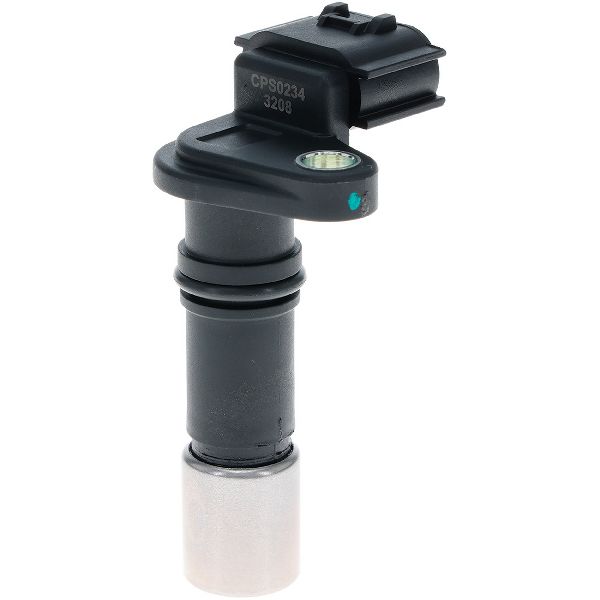
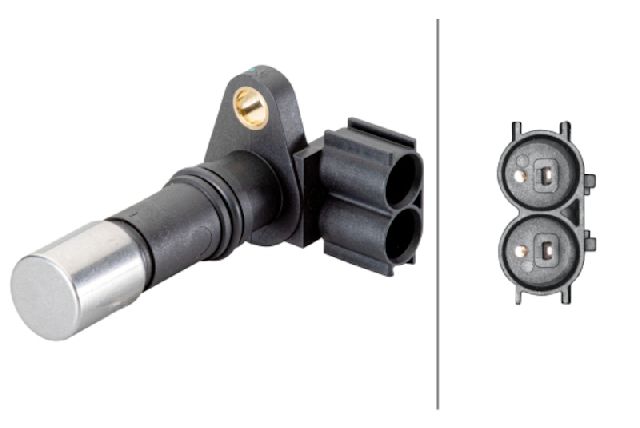
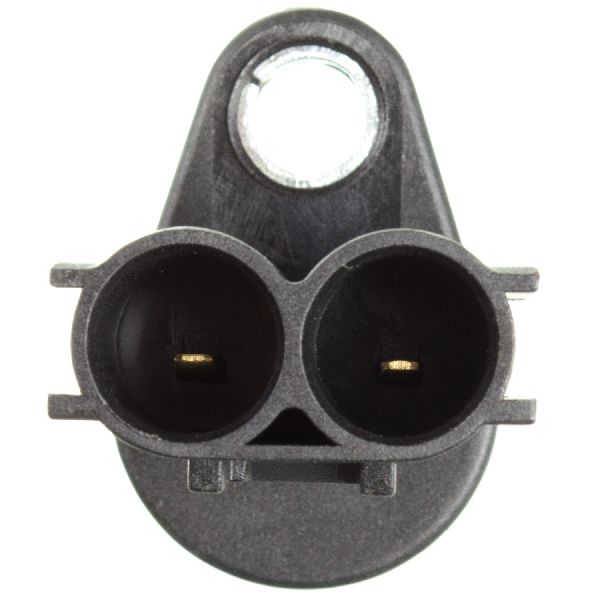
- Crankshaft Position Sensor
(OEM #90919-A5004)— This is the most common part to fail that causes P0335, after ruling out a weak battery. This part number supersedes the older 90919-05070.
Trusted brands: Denso (OEM Manufacturer), NTK, Hitachi
OEM price range: $90-$140
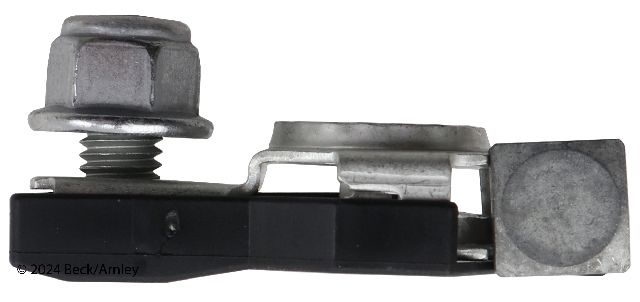
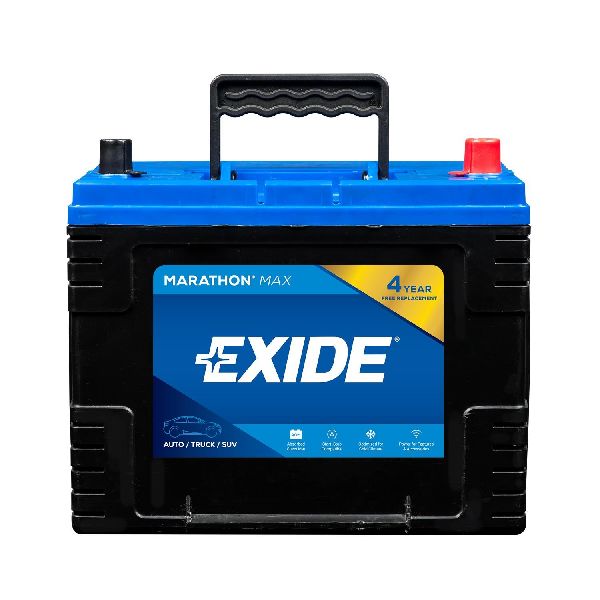
Aftermarket price range: $40-$80 - Battery — A weak or failing battery is a documented cause of P0335 on this vehicle according to a Toyota TSB. Owner forums confirm this is a common real-world fix.
Trusted brands: Toyota TrueStart, Interstate, DieHard
OEM price range: $150-$250
Aftermarket price range: $100-$200
Related Codes That Often Appear With This One
- P0340 — The TSB T-TT-0010-10 Rev explicitly states that low battery voltage can also cause P0340 (Camshaft Position Sensor Circuit), so it's common to see both codes appear together for the same root cause of low voltage during cranking.
Technical Service Bulletins (TSBs) & Recalls
- T-TT-0010-10 Rev: Notes that low battery voltage (below 11V on freeze frame data) can contribute to a MIL "ON" for P0335 and/or P0340 due to inconsistent engine rotational speed.
Platform-Specific Known Issues
- TSB Confirms Low Battery Voltage Fault: → Shop Vehicle Battery A Technical Service Bulletin (T-TT-0010-10 Rev) confirms that low battery voltage (below 11V) can cause inconsistent engine cranking speed, leading to a P0335 code. Always check freeze frame data first.
- Difficult Sensor Access on 3.5L V6: On models with the 3.5L V6 engine, the crankshaft position sensor is located in a very difficult-to-access position behind the A/C compressor, which must be unbolted to gain access. This significantly increases labor time for replacement.
Mechanic-Grade Diagnostic Values
- Crankshaft Sensor (CKP) to ECM Wire Harness Continuity — expected: Below 1 Ω. Failure: A resistance reading above 1 Ω indicates excessive resistance or an open circuit in the harness.
- Live Data 'Engine Speed' (RPM) during cranking — expected: Greater than 0 RPM (typically 150-300 RPM). Failure: A reading of 0 RPM while the engine is physically cranking indicates the ECM is receiving no signal from the CKP sensor circuit.
- Crankshaft Position Sensor Resistance (2-wire sensor) — expected: Cold: 1,630 - 2,740 Ω. Hot: 2,065 - 3,225 Ω.. Failure: Resistance outside of these ranges indicates a faulty sensor.
Hidden / Shadow Codes Worth Checking
- N/A (Uses Readiness Monitor): Toyota's system uses a readiness monitor rather than specific shadow codes for P0335. A technician can use the 'All Readiness' utility in Techstream to force a check and see if the system judgment is 'NORMAL', 'ABNORMAL', or 'INCOMPLETE'. (see via Toyota Techstream software under Powertrain / Engine and ECT / Utility / All Readiness.)
Scan Tool Commands That Help
- Toyota Techstream: Data List -> 'Engine Speed' — This is the primary check to confirm if the ECM is receiving any RPM signal from the CKP sensor circuit while the engine is cranking. A value of 0 RPM indicates a complete loss of signal.
- Toyota Techstream: Utility -> 'All Readiness' — After a repair or during diagnosis, a technician can use this function to check the status of the P0335 monitor without a full drive cycle. An 'ABNORMAL' result confirms a persistent fault.
- Generic OBD-II Scanner: Read Freeze Frame Data — This is a critical first step for this vehicle. Check the battery voltage recorded at the time the P0335 code was set. A value below 11V strongly points to the low-voltage issue described in TSB T-TT-0010-10 Rev.
Wiring & Ground Locations
- CKP Sensor Connector (V6) — On the front of the engine, near the crankshaft pulley, often behind the A/C compressor.. This is the starting point for testing the sensor and harness. It is identified as 'C5' on some earlier V6 models and 'B46' on 2GR-FE models. Verifying the correct connector is crucial before testing.
- ECM Connector (V6) — Typically located in the engine bay or behind the glove box.. This is where continuity tests of the CKP sensor wiring terminate. On earlier V6 models, the connector is 'E9' (Pins 24 and 25 for NE- and NE+). On 2GR-FE models, it is 'B30'. Knowing the correct pins is essential for accurate diagnosis.
- Engine Block Grounds — Various points on the engine block and cylinder heads, bolted to the chassis.. A poor engine ground can create electrical noise or a floating ground for the sensor circuit, potentially disrupting the weak signal from the CKP sensor and triggering a P0335 code.
Real Owner Repair Stories
- YouTube video from 'Precision Auto Service' (2015 Toyota Highlander 3.5L V6) — Check engine light with code P0335, intermittent stalling.
❌ Tried (didn't work) Replaced the crankshaft position sensor (twice), Checked wiring harness and connectors
✅ What actually fixed it The underlying cause was a damaged crankshaft reluctor plate (signal plate). The final repair was replacing the entire engine.
When the Usual Fixes Don't Work
- While a faulty sensor is a common cause, a persistent P0335 on a 2015 Highlander, even after two sensor replacements, was ultimately traced to a physically damaged crankshaft reluctor plate, which required an engine replacement to fix. This highlights that if the sensor and wiring are confirmed good, the mechanical signal plate must be considered as the root cause.
OEM Part Supersession History
90919-05070→90919-A5004— Standard part revision and improvement by the manufacturer.
Heads up: The new part number 90919-A5004 is the correct, direct replacement for the original.
Model Year Variations Within This Range
- 2012-2015: The wiring connector identifiers for the crankshaft position sensor circuit may vary. Some service literature for V6 engines refers to the sensor connector as 'C5' and the ECM connector as 'E9', while literature specific to the 2GR-FE engine may identify them as 'B46' and 'B30' respectively. A technician must verify the correct diagram for the specific model year and engine being serviced.
We Have This Part in Stock


The information in this article is provided for general reference and educational purposes only. Vehicle specifications, procedures, and part compatibility can vary by production date, trim level, and region. Always consult your vehicle's factory service manual and verify part numbers before purchasing or performing repairs. Safety-critical components such as airbags, seat belts, and braking systems should be installed by a qualified professional.
- Toyota HIGHLANDER:
- 🧭 Diagnostic Flowchart
- 🛍️ Shop This Part
- What's Unique About the 2012-2015 Toyota HIGHLANDER
- Symptoms You May Notice
- Most Likely Causes
- Rare But Worth Checking
- Diagnosis Steps
- Parts You'll Likely Need
- Related Codes That Often Appear With This One
- Technical Service Bulletins (TSBs) & Recalls
- Platform-Specific Known Issues
- Mechanic-Grade Diagnostic Values
- Hidden / Shadow Codes Worth Checking
- Scan Tool Commands That Help
- Wiring & Ground Locations
- Real Owner Repair Stories
- When the Usual Fixes Don't Work
- OEM Part Supersession History
- Model Year Variations Within This Range
- 🎟️ Get 5% Off