

P0335 on 2006-2012 Toyota RAV4 2.4L: Crank Sensor and Cam Gear Causes
On the 2.4L RAV4, P0335 is usually a failed crankshaft position sensor. However, a well-documented issue on 2006-2008 models is a faulty intake camshaft gear causing this code, especially when the engine is warm and at idle. Always check the battery first, but be prepared to investigate the cam gear if a new crank sensor doesn't fix it.
- P0335 is a critical code on the RAV4 that can cause a no-start or dangerous stalling condition. Do not drive the vehicle.
- Always check the battery's health before starting diagnosis, as low voltage can trigger this code.
- The most likely cause is a failed crankshaft position sensor, which is a DIY-friendly repair.
- For 2006-2008 models, if a new sensor and wiring check don't solve the problem, the intake camshaft gear is the next most likely culprit.
- Use high-quality OEM or reputable aftermarket brands like Denso for replacement sensors to ensure compatibility.
What's Unique About the 2006-2012 Toyota RAV4
While a faulty crankshaft sensor is the most common cause for P0335, the 2AZ-FE engine in this RAV4 has a specific, well-documented quirk. Toyota issued a Technical Service Bulletin (T-SB-0192-12) for 2006-2008 models because a failing intake camshaft gear assembly can cause the ECM to incorrectly set a P0335 code. This issue typically occurs when the engine is warm and at idle (coolant temp > 185°F, RPM < 1000). The TSB explains that an internal fault in the VVT gear can create a signal discrepancy that the ECM misinterprets as a crankshaft circuit fault. Owners and technicians often replace the crankshaft sensor first, only to have the code return, because the root cause is the cam gear—a more complex and expensive repair.
Symptoms You May Notice
- Engine will not start (cranks but does not turn over)
- Engine stalls unexpectedly while driving or at idle
- Check Engine Light is illuminated
- Hard starting (prolonged cranking)
- Rough running, engine hesitation, or misfires
- Erratic or non-functional tachometer
- Reduced acceleration and engine power
- Replacing the crankshaft position sensor when the actual fault is the intake camshaft gear assembly on a 2006-2008 2AZ-FE engine.
Most Likely Causes
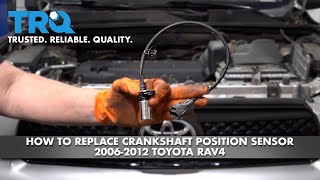
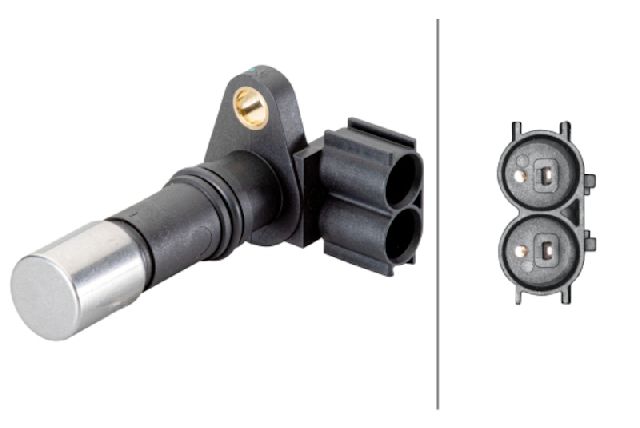
- Faulty Crankshaft Position Sensor 🔴 High Probability → Shop Engine Crankshaft Position Sensor The sensor is located on the front of the engine block, exposed to heat cycles and vibration, which can cause the internal electronics to fail over time. Access requires removing the alternator. 🎬 See this step-by-step guide to replacing the crankshaft position sensor
How to confirm: Use a multimeter to test the sensor's resistance against the manufacturer's specification (approx. 985-1,600 ohms cold, 1,265-1,890 ohms hot). A scan tool showing 0 RPM during cranking also points to a failed sensor or circuit. Visually inspect the sensor for damage upon removal.
Typical fix: Replace the crankshaft position sensor and its O-ring.
Est. part cost: $30-$120 - Faulty Intake Camshaft Gear Assembly (VVT) 🟡 Medium Probability → Shop Engine Camshaft A known issue on 2006-2008 models with the 2AZ-FE engine, as documented in Toyota TSB T-SB-0192-12. An internal failure in the gear's locking pin mechanism or oil passages causes it to respond incorrectly, creating a timing discrepancy the ECM flags as a P0335, typically when warm and at idle.
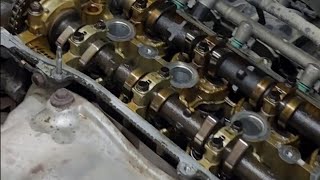
How to confirm: This is a difficult diagnosis. Per TSB T-SB-0192-12, confirm the code set when the engine was at operating temperature (>185°F) and at idle (<1000 RPM) using freeze frame data. This diagnosis is usually made after 🎬 Watch: A professional diagnosis of the P0335 code on a RAV4 a new crank sensor and wiring check fail to resolve the code.
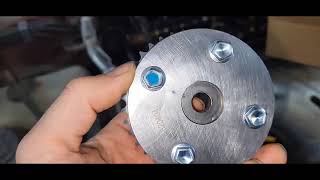
Typical fix: Replace the intake camshaft gear assembly with the updated part (Toyota P/N 13050-28021). This is a significant repair requiring removal of the valve cover and timing components. 🎬 Watch: How to replace the VVT gear without removing the front cover
Est. part cost: $150-$350 - Wiring or Connector Issue 🟡 Medium Probability The sensor wiring is routed near the alternator and other hot components. Wires can become brittle, frayed, or connectors can get corroded or filled with oil. The harness is routed down the front of the timing cover.
How to confirm: Visually inspect the wiring harness from the sensor to the ECM for any signs of damage, chafing, or melting. Check the connector for corrosion or loose pins. Wiggle the harness while the engine is running to see if it causes a stall.
Typical fix: Repair the damaged section of wiring or replace the connector pigtail.
Est. part cost: $10-$50 - Weak or Dead Battery ⚪ Low Probability → Shop Vehicle Battery As noted in Toyota Tech Tip T-TT-0010-10 Rev, low voltage during cranking can cause inconsistent rotational speed readings, triggering a P0335 and sometimes a P0340 (cam sensor code) simultaneously.
How to confirm: Test the battery voltage. A healthy, fully charged battery should read approximately 12.6 volts. Check the voltage during cranking; if it drops below 10 volts, the battery is weak or there's excessive starter draw.
Typical fix: Charge or replace the battery.
Est. part cost: $100-$250
Rare But Worth Checking
- Damaged Crankshaft Reluctor Ring: → Shop Engine Crankshaft The sensor reads teeth on this ring. If teeth are broken, bent, or covered in metallic debris, the signal will be incorrect. This usually requires significant engine work to inspect and is unlikely unless other recent work has been performed.
- Faulty Starter Motor: A failing starter can create excessive electrical noise or draw too much voltage, mimicking a weak battery and confusing the ECM during startup.
- Faulty Engine Control Module (ECM): → Shop Engine Control Module (ECM) This is extremely rare and should only be considered after all other possibilities (sensor, wiring, cam gear) have been exhaustively ruled out.
Diagnosis Steps
- Check Battery Health: Ensure the battery is fully charged and healthy. A weak battery can cause this code. Test voltage during cranking to ensure it stays above 10V.
- Scan Tool Data: Connect an OBD-II scanner. Check for any other codes, especially P0340. Monitor the 'Engine Speed' (RPM) data pid while cranking the engine. If it reads 0 RPM, the ECM is not receiving a signal from the CKP sensor or its circuit.
- Check Freeze Frame Data: If the code is intermittent, analyze the freeze frame data. If the fault occurred when the engine was warm (>185°F) and at idle (<1000 RPM) on a 2006-2008 model, suspect the intake cam gear per TSB T-SB-0192-12.
- Visual Inspection: Inspect the crankshaft position sensor's wiring harness and connector. The sensor is on the front of the engine block, near the crankshaft pulley; access may require removing the passenger wheel and splash shields. Look for frayed wires, melting, or corrosion.
- Test the Sensor: If the wiring appears intact, test the sensor itself. Disconnect the sensor and measure the resistance between its terminals. Compare the reading to the factory specification (typically 985-1,600 ohms when cold).
- Circuit Check: If the sensor tests good, check for continuity and check for shorts to power or ground in the wiring between the sensor connector and the ECM connector.
- Investigate Vehicle-Specific Issues: If steps 1-6 do not reveal the cause, especially on a 2006-2008 model where the freeze frame data matches the TSB criteria, the intake camshaft gear becomes the primary suspect. This repair is more involved and may require professional diagnosis.
Parts You'll Likely Need
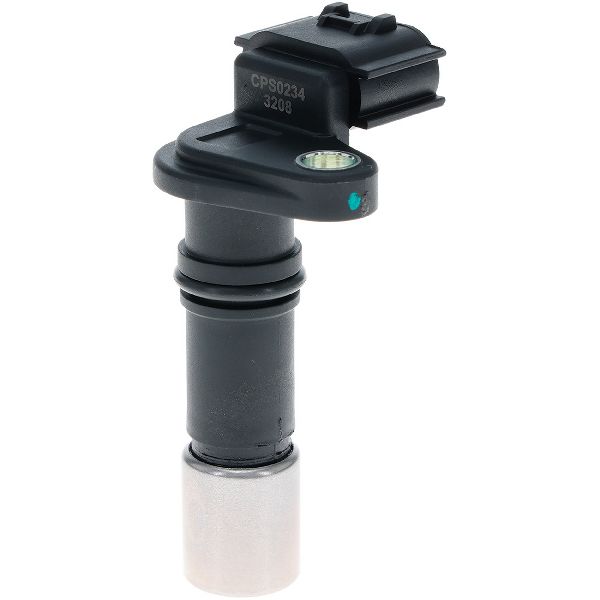
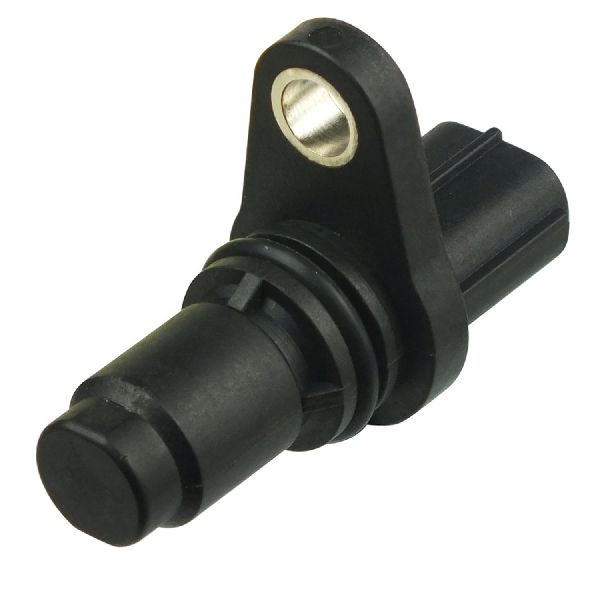
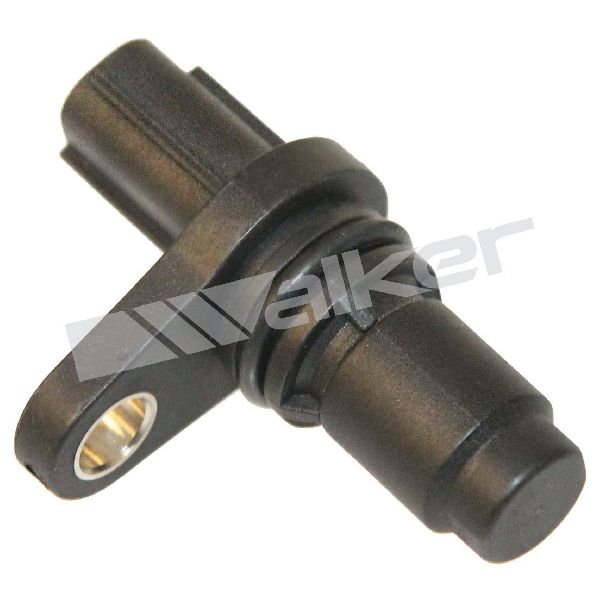
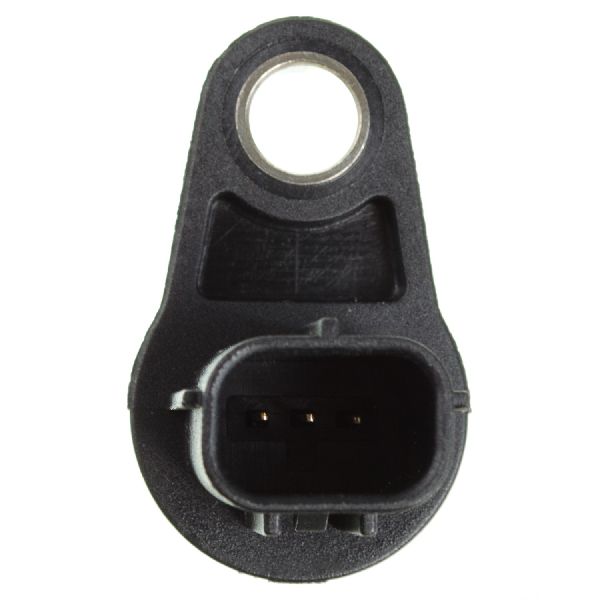
- Crankshaft Position Sensor
(OEM #90919-A5003 (replaces 90919-05057))— This is the most frequent cause of P0335. It is a critical sensor that fails from heat and age.
Trusted brands: Denso (OEM supplier), NGK/NTK, Aisin
OEM price range: $70-$110
Aftermarket price range: $30-$70 - Intake Camshaft Gear Assembly
(OEM #13050-28021 (updated part per TSB))— This is a known failure point on the 2006-2008 2AZ-FE engine that specifically triggers a P0335 code, as documented in Toyota TSB T-SB-0192-12.
Trusted brands: Toyota Genuine
OEM price range: $250-$350
Aftermarket price range: $150-$250
Related Codes That Often Appear With This One
- P0340 (Camshaft Position Sensor Circuit Malfunction): Can be triggered along with P0335 by low battery voltage during cranking, per TSB T-TT-0010-10 Rev.
Technical Service Bulletins (TSBs) & Recalls
- T-SB-0192-12: Notes that an intermittent P0335 on 2006-2008 2.4L models can be caused by a faulty intake camshaft gear assembly, specifically when the engine is warm and at idle. It specifies replacing the gear with updated part 13050-28021.
- T-TT-0010-10 Rev: A tech tip bulletin that mentions low battery voltage during cranking can cause the ECM to set P0335 and/or P0340 due to inconsistent engine speed signals.
Platform-Specific Known Issues
- On 2006-2008 RAV4 models with the 2.4L 2AZ-FE engine, a faulty intake camshaft gear assembly can cause a P0335 code, even though the crankshaft sensor and its circuit are functioning correctly. This is a common point of misdiagnosis. The TSB (T-SB-0192-12) specifies this occurs when the engine is warm and at idle.
Mechanic-Grade Diagnostic Values
- Crankshaft Position Sensor Resistance (2-wire sensor) — expected: 985 to 1,600 Ω (Cold, -10 to 50°C) / 1,265 to 1,890 Ω (Hot, 50 to 100°C). Failure: Resistance is outside the specified range, or shows an open (infinite) or short (zero) circuit.
- Scan Tool Live Data: Engine Speed (RPM) during cranking — expected: A stable value of 200+ RPM.. Failure: A value of 0 RPM while the engine is physically cranking indicates the ECM is not receiving a signal from the CKP sensor or its circuit.
- Oscilloscope Waveform (NE+ signal wire vs. ground) — expected: A consistent AC sine wave pattern that increases in frequency with engine RPM. The 2AZ-FE has a 34-tooth reluctor wheel.. Failure: A flat line, erratic or noisy waveform, or missing pulses indicates a faulty sensor, wiring issue, or damaged reluctor ring.
- Freeze Frame Data for TSB T-SB-0192-12 verification — expected: Coolant Temperature > 185°F (85°C) AND Engine RPM < 1000 RPM.. Failure: If the P0335 code was set under these specific conditions on a 2006-2008 model, the intake camshaft gear is the primary suspect, not the crank sensor.
Hidden / Shadow Codes Worth Checking
- P0335/12 or P0335/13: These are Toyota-specific sub-codes. P0335/12 indicates 'no crankshaft position sensor signal was detected during cranking'. P0335/13 indicates 'no signal was detected while the engine speed was 600 RPM or more'. (see via These may be visible on professional scan tools like Toyota Techstream, providing more context than a standard P0335 code.)
Scan Tool Commands That Help
- Toyota Techstream: Data List > Engine Speed (RPM) — This is the most fundamental test. Use this while cranking the engine. If it reads '0', it confirms the ECM is getting no signal, pointing directly to the sensor or its circuit.
- Toyota Techstream: Utility > All Readiness — After a repair, you can input 'P0335' into this utility to check if the specific monitor for the crankshaft sensor circuit has run and passed its self-test, confirming the fix before completing a full drive cycle.
- Toyota Techstream: Freeze Frame Data — Crucial for diagnosing the known cam gear issue. Check if the P0335 was set when coolant temp was >185°F and RPM was <1000. This data is the primary indicator for TSB T-SB-0192-12.
Wiring & Ground Locations
- B22 Connector — The electrical connector on the Crankshaft Position Sensor itself.. This is the primary connection point to test the sensor's resistance directly at its terminals (1 and 2).
- B30 Connector — The specific electrical connector at the Engine Control Module (ECM) that receives the crankshaft position sensor signals.. Testing for continuity and shorts between the B22 (sensor) connector and the B30 (ECM) connector will confirm if the wiring harness is intact or has a fault.
- Engine Ground Points (e.g., EA, EB) — Various points on the engine block, cylinder head, and chassis where the wiring harness is grounded. Specific locations are shown in service manual diagrams.. A corroded or loose engine ground can introduce electrical noise or cause voltage drops, potentially interfering with the weak signal from the crankshaft sensor and triggering a false P0335 code.
Real Owner Repair Stories
- YouTube channel 'Toyota Rav4 2.4 P0335 Diagnosis' (2006 Toyota RAV4 2.4L) — Persistent P0335 code with no drivability issues. Check engine light would return shortly after being cleared, especially under hard acceleration.
❌ Tried (didn't work) The crankshaft position sensor had already been replaced by a previous mechanic., Initial road tests after clearing the code showed no immediate problems.
✅ What actually fixed it The technician found a broken piece of the camshaft's thrust plate inside the valve cover. The camshaft was 'walking' forward under load, moving the cam reluctor away from the cam sensor, causing a momentary loss of the CAM signal. The ECM illogically interpreted this as a P0335 CRANK circuit fault. Replacing the damaged intake camshaft resolved the issue. - Boards.ie user 'podgesax' (2008 Toyota RAV4) — P0335 code and 'Check 4x4 system' message would appear after about 10 minutes of driving. Car ran perfectly. The code would reliably trigger when making a left turn at ~15km/hr or faster.
❌ Tried (didn't work) Replacing the crankshaft sensor., Checking the wiring and reluctor ring.
✅ What actually fixed it The final resolution was not posted by the user. However, another user suggested that on chain-driven Toyotas, a stretched timing chain or tired tensioner can sometimes cause a P0335, which could be exacerbated by the lateral G-force of a turn. This remains an unconfirmed but plausible theory for this specific symptom.
OEM Part Supersession History
90919-05057→90919-A5003— Standard part update/revision by Toyota.13050-0H010, 13050-28020, 13050-0H030→13050-28021— This is the updated Intake Camshaft Gear Assembly specified in TSB T-SB-0192-12 to resolve the intermittent P0335 issue on 2006-2008 models.
Heads up: When replacing the cam gear for this specific P0335 issue, it is critical to use the updated 13050-28021 part number or its equivalent, not the older versions.
Model Year Variations Within This Range
- 2006-2008: These model years are specifically called out in TSB T-SB-0192-12 as being prone to setting a P0335 due to a faulty intake camshaft gear assembly. Later models (2009-2012) with the same 2AZ-FE engine are not listed in this TSB and are less likely to have this specific misdiagnosis issue.
Diagnostic Flowchart
Other Known Issues on This Vehicle
Issues unrelated to this code that are worth knowing about as an owner of this generation:
- Excessive Oil Consumption 🔴 High — Very common, typically appearing after 60,000-100,000 miles. Caused by a piston ring design flaw leading to carbon buildup. Can consume as much as one quart every 600-1,200 miles. (Ref: Toyota issued Warranty Enhancement Program ZE7 (related to TSB T-SB-0094-11) to address this, which covered repair for 10 years or 150,000 miles. This program has since expired.)
- Stripped Cylinder Head Bolt Threads 🔴 High — A significant design flaw in earlier 2AZ-FE engines (pre-2007). Overheating causes the aluminum block threads to fail, leading to head gasket failure. Can occur between 50,000 and 100,000 miles, especially if the engine has ever overheated. (Ref: No specific recall, but a well-known issue in the repair community. The fix involves drilling out the old threads and installing a thread repair kit (e.g., Time-Sert).)
- Stretched Timing Chain 🟠 Medium → Shop Engine Timing Chain — The timing chain is known to stretch over time, typically becoming noticeable around 150,000 km (approx. 93,000 miles), often causing a rattling noise on startup.
Used vs. New Parts: Buying Guide for This Vehicle
When a used part is the smart pick: A used wiring harness pigtail from a junkyard is a perfectly acceptable and cost-effective fix if only the connector is damaged. A complete used engine wiring harness is also a viable option if the original is extensively damaged, provided it is from the exact same model and year range.
Donor-vehicle mileage cap: roughly under 120000 miles for the part to have meaningful remaining life.
What to inspect on the donor part:
- For wiring: Check for flexibility; avoid any harnesses that are stiff, brittle, or have cracked insulation.
- For connectors: Ensure locking tabs are intact and pins are clean, straight, and free of corrosion.
- For a VVT gear: Inspect for any visible signs of sludge or scoring. However, since the failure is internal, a used gear is a significant gamble.
OEM-only on this vehicle (don't cheap out):
- Intake Camshaft Gear Assembly: Due to the known defect addressed by TSB T-SB-0192-12, it is critical to use the new, updated OEM part (13050-28021) or a high-quality aftermarket equivalent that specifically meets the updated design. A used part from a donor vehicle will likely have the original, failure-prone design.
- Crankshaft Position Sensor: While not strictly 'OEM-only', the 2AZ-FE is known to be sensitive to the quality of this sensor. Using a cheap, no-name aftermarket sensor often leads to the code returning. Stick with the OEM supplier (Denso) or a reputable Tier 1 brand like NTK or Aisin to avoid repeat repairs.
Aftermarket brands forum-validated for this vehicle:
- Denso (for sensors - they are the OEM supplier)
- Aisin (for engine components)
- NTK (for sensors)
Brands owners have reported issues with on this vehicle:
- Unbranded, 'white-box' sensors from online marketplaces are frequently cited in forums as being dead-on-arrival or failing within a short period.
Real Owner Stories
Aggregated from forums and TSBs cited above. Mileages and costs reflect what owners reported in those sources.
2006 Toyota RAV4 2.4L
Symptoms: The vehicle threw a P0335 code, but the issue was not actually the crankshaft sensor.
What fixed it: Replacing a broken piece on the camshaft (corroborating the TSB regarding the intake camshaft gear).
Source hint: YouTube video: Toyota Rav4 2.4 P0335 Diagnosis
2007 Toyota Camry 2.4L (2AZ-FE)
Symptoms: Engine would crank but not start. The owner replaced the crankshaft sensor, but the no-start condition persisted.
What fixed it: Further diagnostic steps were required to check for spark, fuel, and a true RPM signal after the initial sensor replacement failed.
Source hint: 2CarPros - 2007 Toyota Camry Code P0335, Crank No Start
Related OBD-II Codes
Frequently Asked Questions
My 2007 RAV4 2.4L has a P0335 code that only happens when the engine is warm and idling. Does TSB T-SB-0192-12 apply to me?
Can a weak battery really trigger a crankshaft sensor code on my Toyota?
I'm replacing the crank sensor on my 2AZ-FE; do I need to remove the alternator?
What is the resistance specification for a 2006-2012 RAV4 crankshaft sensor?
Is the P0335 code related to the oil consumption issues on the 2006-2012 RAV4?
Helpful Videos
We Have This Part in Stock

The information in this article is provided for general reference and educational purposes only. Vehicle specifications, procedures, and part compatibility can vary by production date, trim level, and region. Always consult your vehicle's factory service manual and verify part numbers before purchasing or performing repairs. Safety-critical components such as airbags, seat belts, and braking systems should be installed by a qualified professional.
- Toyota RAV4:
- 🧭 Diagnostic Flowchart
- 🎬 Helpful Videos
- 🛍️ Shop This Part
- What's Unique About the 2006-2012 Toyota RAV4
- Symptoms You May Notice
- Most Likely Causes
- Rare But Worth Checking
- Diagnosis Steps
- Parts You'll Likely Need
- Related Codes That Often Appear With This One
- Technical Service Bulletins (TSBs) & Recalls
- Platform-Specific Known Issues
- Mechanic-Grade Diagnostic Values
- Hidden / Shadow Codes Worth Checking
- Scan Tool Commands That Help
- Wiring & Ground Locations
- Real Owner Repair Stories
- OEM Part Supersession History
- Model Year Variations Within This Range
- Other Known Issues on This Vehicle
- Used vs. New Parts: Buying Guide for This Vehicle
- Real Owner Stories
- 2006 Toyota RAV4 2.4L
- 2007 Toyota Camry 2.4L (2AZ-FE)
- Related OBD-II Codes
- Frequently Asked Questions
- 🎟️ Get 5% Off