

P0335 on 2009-2012 Toyota RAV4 2.5L: Crank Sensor Causes and Fixes
P0335 on a 2009-2012 RAV4 most often means a failed crankshaft position sensor, causing stalling or a no-start condition. Before replacing the sensor, always test the battery, as low voltage is a known cause for this code per a Toyota TSB. A new Denso sensor costs about $85-$130.
- P0335 is a critical code that will likely cause a no-start or stalling condition; do not drive the vehicle.
- The most common cause is a failed crankshaft position sensor, but ALWAYS test the battery first.
- Toyota TSB T-TT-0010-10 Rev specifically warns that low battery voltage can trigger a false P0335.
- Wiring issues are a known secondary cause, especially for intermittent codes that appear with bumps or high RPMs.
- Use a Denso or genuine Toyota sensor for replacement; the updated part number is 90919-A5004.
What's Unique About the 2009-2012 Toyota RAV4
For the 2AR-FE engine in this RAV4, P0335 is a very common code. While the sensor itself can fail, this platform is particularly sensitive to voltage issues. Toyota issued a technical tip (T-TT-0010-10 Rev) specifically warning technicians that low battery voltage during cranking can cause the ECM to set a false P0335. Additionally, owners have reported intermittent issues caused by wiring problems, where the code only appears when hitting a bump or at high RPMs. The sensor itself is located on the front of the engine block, near the crankshaft pulley, making it relatively accessible after removing the right front wheel.
Symptoms You May Notice
- Engine will not start or has a long crank time
- Engine stalls unexpectedly while driving
- Hard starting (prolonged cranking)
- Rough idle or engine stumbling
- Engine misfires or hesitates on acceleration
- Check Engine Light is on
- Reduced engine power and fuel economy
- Replacing the crankshaft position sensor without first checking the battery and wiring. A weak battery is a very common cause of a false P0335 on this vehicle.
Most Likely Causes
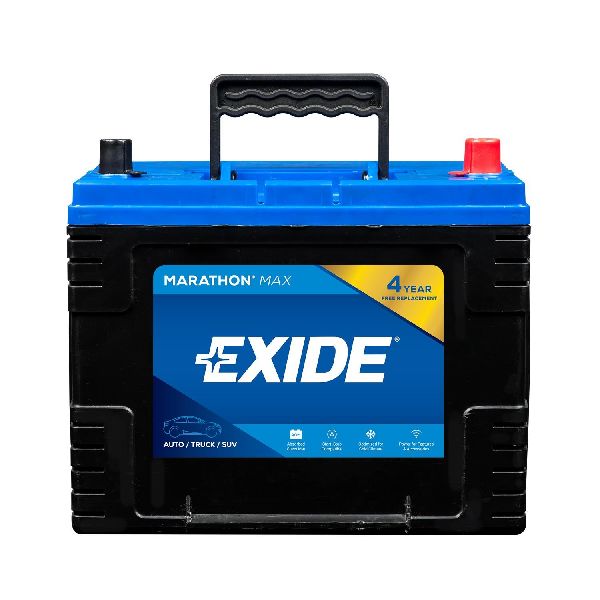
- Low Battery Voltage or Failing Charging System 🔴 High Probability → Shop Vehicle Battery A specific Toyota Technical Service Bulletin (T-TT-0010-10 Rev) confirms that low voltage during cranking can cause inconsistent rotational speed readings, triggering a false P0335 code. This applies to a wide range of Toyota vehicles, including the RAV4.
How to confirm: Check the freeze frame data with a scan tool to see the battery voltage when the code was set; if it's below 11 volts, the battery is the likely culprit. Perform a load test on the battery and check the alternator's output (should be 13.7-14.7V when running).
Typical fix: Charge or replace the battery. If the charging system is faulty, replace the alternator.
Est. part cost: $120-$250 - Faulty Crankshaft Position Sensor 🔴 High Probability → Shop Engine Crankshaft Position Sensor The sensor operates in a high-heat environment near the engine block and can fail electronically over time. It is the most frequently reported direct cause of this code after ruling out voltage issues.
How to confirm: After confirming battery and wiring are good, test the sensor's internal resistance with a multimeter. The resistance should be within the specification listed in the service manual (conflicting values exist, but a common range for similar Toyota engines is 1,630 - 2,740 ohms when cold). A scan tool showing 0 RPM during cranking also points to a bad sensor.
Typical fix: Replace the crankshaft position sensor. Using an OEM or Denso part is highly recommended for reliability.
Est. part cost: $40-$130 - Wiring Harness or Connector Damage 🟡 Medium Probability Owners of vehicles with the 2AR-FE engine have reported intermittent P0335 codes that are traced to chafed or broken wires in the harness leading to the sensor. A Reddit user with a 2010 RAV4 2.5L specifically noted the code would trigger when hitting a bump or at high RPM, which ultimately points to a wiring fault.
How to confirm: Visually inspect the wiring harness from the sensor to the ECM for any signs of melting, chafing, or breaks. Wiggle the connector and harness with the engine running (if possible) to see if it triggers the stall. Perform a continuity test on each wire from the sensor connector to the ECM connector.
Typical fix: Repair the broken wire or replace the connector pigtail. In some cases, a wire breaks internally inside the insulation near the connector.
Est. part cost: $15-$50
Rare But Worth Checking
- Damaged Reluctor Ring: The sensor reads teeth on a ring attached to the crankshaft. If this ring is bent, has broken teeth, or is excessively rusty, it can cause an erratic signal. This usually only happens if the engine has had major internal work done incorrectly or has suffered a catastrophic failure.
- Faulty Starter Motor: A failing starter can draw excessive current during cranking, causing a significant voltage drop that mimics a weak battery and can trigger P0335 per TSB T-TT-0010-10 Rev.
- Faulty Engine Control Module (ECM): → Shop Engine Control Module (ECM) This is extremely rare and should only be considered after all other possibilities (sensor, wiring, battery, reluctor ring) have been exhaustively ruled out.
Diagnosis Steps
- Read the trouble codes with an OBD-II scanner and check the freeze frame data. Pay close attention to the battery voltage parameter when the code was set. If below 11V, address the battery/charging system first.
- Test the battery's state of charge and health with a multimeter and a load tester. A healthy battery should read ~12.6V at rest and maintain voltage above 10.5V during cranking.
- If the battery is weak, charge or replace it, clear the codes, and see if the problem returns.
- If the battery is healthy, locate the crankshaft position sensor. On the 2AR-FE, it is on the front of the engine block, toward the passenger side, accessible by removing the front passenger wheel and splash shield.
- Visually inspect the sensor's connector and wiring harness for damage, melting, or loose connections. Trace the harness as far as possible, looking for chafing against other components.
- Use a scan tool to monitor the 'Engine RPM' live data parameter while cranking the engine. If the RPM reads 0 or is erratic, it confirms the ECM is not receiving a valid signal.
- If the wiring appears intact, disconnect the sensor and test its resistance with a multimeter. Compare the reading to the factory specification (Note: sources conflict, one states 985-1,600 Ω cold, another 1,630-2,740 Ω cold. Test and compare to the specific manual for this vehicle if possible).
- If the sensor tests out of spec, replace it. If it tests good, a more advanced check of the wiring for continuity and shorts to ground/power is necessary.
- As a final, rare step, the ECM itself would be tested.
Parts You'll Likely Need
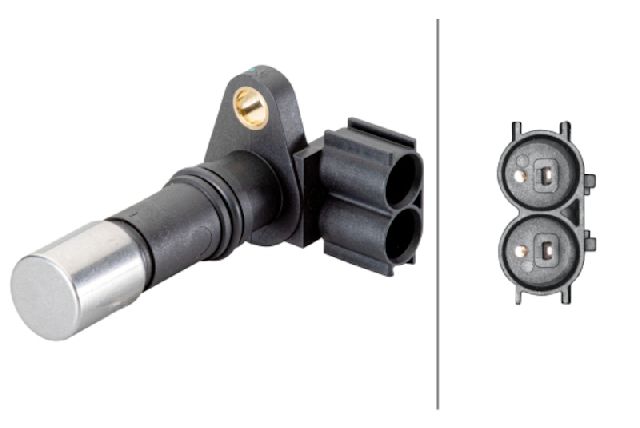
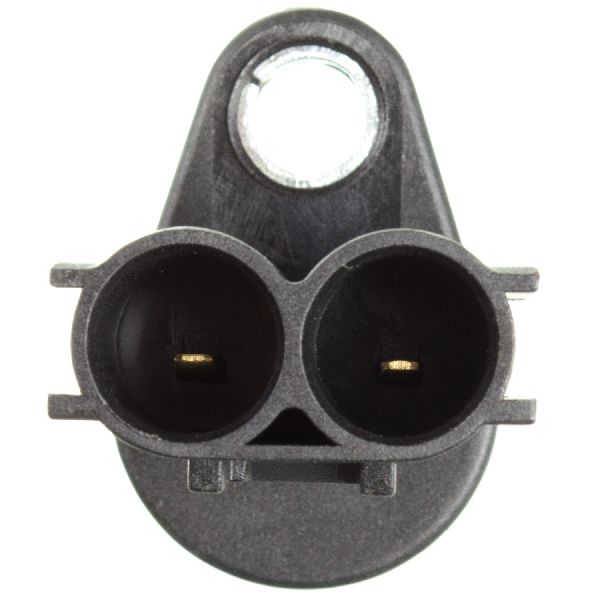
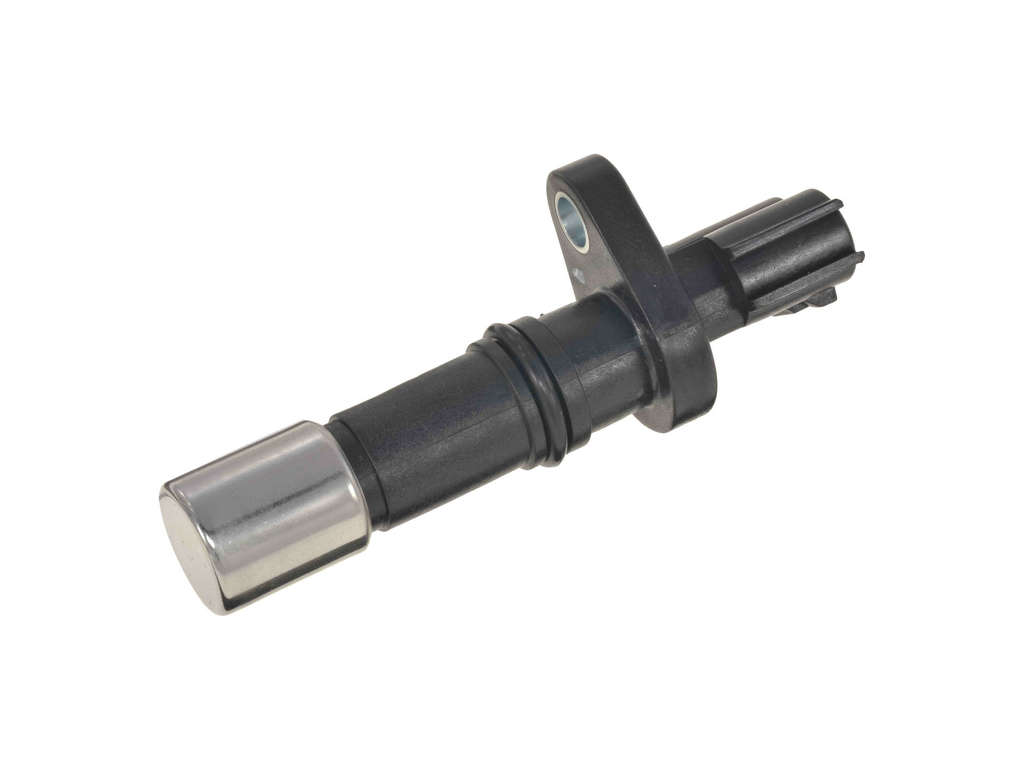
- Crankshaft Position Sensor
(OEM #90919-A5004)— This is the most common component to fail and directly cause the P0335 code, after ruling out battery and wiring issues. The original part number 90919-05070 has been superseded by 90919-A5004.
Trusted brands: Toyota (Genuine), Denso (OEM), NTK
OEM price range: $85-$130
Aftermarket price range: $40-$90 - Car Battery — A weak battery is a documented cause of a false P0335 code on this vehicle per Toyota TSB T-TT-0010-10 Rev.
Trusted brands: Interstate, DieHard, Duralast
OEM price range: $180-$300
Aftermarket price range: $120-$250
Related Codes That Often Appear With This One
- P0340 — The same TSB (T-TT-0010-10 Rev) that links P0335 to low battery voltage also applies to P0340 (Camshaft Position Sensor 'A' Circuit). It's common to see both codes appear together when the root cause is a weak battery.
Technical Service Bulletins (TSBs) & Recalls
- T-TT-0010-10 Rev - Notes that low battery voltage (below 11V) during cranking can cause the ECM to set P0335 and/or P0340 codes due to inconsistent engine rotational speed. The TSB advises checking freeze frame data for battery voltage before replacing any parts.
Platform-Specific Known Issues
- Intermittent Code from Wiring Harness Stress: A 2010 RAV4 owner on Reddit (u/ponderablepine) reported a persistent, intermittent P0335 that only occurred at high RPM or when hitting a large bump. Despite replacing the sensor, the issue continued, strongly pointing to a fault within the wiring harness that only manifests under specific stress conditions. This highlights the need to inspect the harness for non-obvious breaks or chafing.
Mechanic-Grade Diagnostic Values
- Crankshaft Position Sensor Resistance (Cold) — expected: 985 - 1,600 Ω. Failure: Resistance is outside of this range or shows an open/short circuit.
- Crankshaft Position Sensor Resistance (Hot) — expected: 1,265 - 1,890 Ω. Failure: Resistance is outside of this range.
- Crankshaft Position Sensor Resistance (Cold) - Conflicting Data — expected: 1,630 - 2,740 Ω. Failure: This value is cited for the 2TR-FE engine but often appears in general Toyota P0335 guides. If measured values fall in this range, cross-reference with a model-specific manual is critical.
- ECM Live Data 'Engine SPD' (Cranking) — expected: Greater than 0 RPM. Failure: A consistent 0 RPM reading while the engine is physically cranking indicates the ECM is receiving no signal from the CKP sensor.
- Freeze Frame Data 'Battery Voltage' at time of fault — expected: Above 11.0 Volts. Failure: Voltage below 11.0V strongly suggests the code was falsely triggered by a weak battery or charging system issue, per TSB T-TT-0010-10 Rev.
Scan Tool Commands That Help
- Toyota Techstream: All Readiness — After a repair, a technician can use the 'All Readiness' utility and input 'P0335' to check the DTC judgment result. This confirms if the specific monitor for the crankshaft sensor circuit has run and passed, verifying the fix without extensive driving.
- Toyota Techstream: Data List > Engine SPD — This is the primary live data parameter to watch while cranking the engine. If 'Engine SPD' (Engine Speed) remains at 0, it confirms the ECM is not getting a signal, pointing directly to the sensor or its circuit.
Wiring & Ground Locations
- ECM Connector C24 — In the engine compartment, connected to the Engine Control Module (ECM).. This connector contains the pins for the crankshaft position sensor (NE+, NE-). Technicians can back-probe these pins to test for signal with an oscilloscope or check for continuity back to the sensor connector.
- ECM Pins NE+ and NE- — Located within the C24 ECM connector. A wiring diagram for the specific 2010 RAV4 2.5L shows these are the signal input pins from the crankshaft sensor.. These are the exact pins where the ECM receives the crankshaft signal. Testing here is the most definitive way to determine if a signal is reaching the computer, isolating the problem to the sensor/wiring or the ECM itself.
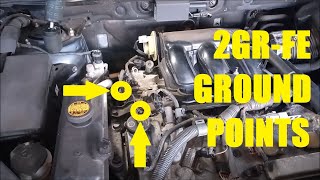
- Engine Ground Point — A primary engine harness ground point for Toyota engines is often located on the side of the cylinder head or on a bracket on top of the strut tower.. A poor engine ground can introduce electrical noise or cause voltage drops that affect various sensors, including the crankshaft position sensor. Ensuring this ground connection is clean and tight is a crucial step in diagnosing elusive electrical faults.
OEM Part Supersession History
90919-05070→90919-A5004— Standard part revision and update by the manufacturer.
Heads up: No known incompatibilities; 90919-A5004 is the correct direct replacement for 90919-05070 for this application.
Model Year Variations Within This Range
- 2009: The 2009 model year was the first year the 2.5L 2AR-FE engine was introduced in the RAV4, replacing the previous 2.4L 2AZ-FE. Vehicles from 2006-2008 with the 2.4L engine had a different known issue (TSB T-SB-0192-12) where a faulty intake camshaft gear could cause P0335, which does not apply to the 2009-2012 2.5L models.
Diagnostic Flowchart
Other Known Issues on This Vehicle
Issues unrelated to this code that are worth knowing about as an owner of this generation:
- Excessive Oil Consumption 🟠 Medium — Less common than the earlier 2AZ-FE engine, but can occur at higher mileage (100k+ miles), especially with extended oil change intervals. Caused by piston rings getting stuck.
- Rear Lower Suspension Arm Corrosion 🔴 High — Common enough to warrant multiple safety recalls, particularly in regions using road salt. The arm can corrode, leading to alignment issues or failure. (Ref: NHTSA Recalls 12V491000, 13V383000, 16V596000)
- Steering Intermediate Shaft Clunk 🟡 Low — A clunking or knocking noise may develop in the steering column when turning. This is typically caused by a worn intermediate steering shaft.
- Water Pump Leak 🟠 Medium — The water pump may develop a coolant leak over time. This is a fairly common repair for high-mileage 2AR-FE engines.
- Unintended Acceleration Recalls 🔴 High — This model range was part of Toyota's massive recalls for potential unintended acceleration related to floor mat entrapment and sticky accelerator pedals. (Ref: NHTSA Recalls 10V017000, 11V113000)
Used vs. New Parts: Buying Guide for This Vehicle
When a used part is the smart pick: For this repair, a used part is generally not recommended for the sensor itself due to its critical function and electronic nature. However, sourcing a used wiring harness pigtail from a junkyard is a viable option if only the connector is damaged.
Donor-vehicle mileage cap: roughly under 100000 miles for the part to have meaningful remaining life.
What to inspect on the donor part:
- For a wiring pigtail, inspect for any brittleness, cracking, or signs of melting.
- Ensure the locking tab on the connector is intact and clicks firmly.
- Check for corrosion or damage on the internal pins.
- Verify the donor vehicle was not in a front-end collision that could have stressed the engine harness.
OEM-only on this vehicle (don't cheap out):
- Crankshaft Position Sensor
Aftermarket brands forum-validated for this vehicle:
- Denso (OEM manufacturer)
- NTK
Brands owners have reported issues with on this vehicle:
- Unnamed, low-cost 'white box' sensors from online marketplaces are frequently reported to be dead-on-arrival or fail prematurely on Toyota vehicles.
Real Owner Stories
Aggregated from forums and TSBs cited above. Mileages and costs reflect what owners reported in those sources.
2010 Toyota RAV4 2.5L 2AR-FE — 175000 miles
Symptoms: Intermittent P0335 code appearing after flooring it at high speeds/high RPM or after going over a big bump. The car appeared to run fine otherwise, though the idle RPM might have been slightly low.
What fixed it: The issue was traced to a fault within the wiring harness leading to the sensor, as the code persisted even after the sensor was replaced.
Source hint: Reddit (r/AskMechanics) - A user with a 2010 RAV4 2.5L reported an intermittent P0335
Related OBD-II Codes
Frequently Asked Questions
Does Toyota Technical Service Bulletin T-TT-0010-10 Rev apply to my 2.5L RAV4?
Why does my RAV4 trigger P0335 only when I hit a bump or at high RPM?
Where is the crankshaft position sensor located on the 2AR-FE engine?
What brand of replacement sensor should I use for my RAV4?
What should the resistance of the crankshaft position sensor be?
Can a bad battery really cause a P0335 code on a Toyota?
Helpful Videos
We Have This Part in Stock

The information in this article is provided for general reference and educational purposes only. Vehicle specifications, procedures, and part compatibility can vary by production date, trim level, and region. Always consult your vehicle's factory service manual and verify part numbers before purchasing or performing repairs. Safety-critical components such as airbags, seat belts, and braking systems should be installed by a qualified professional.
- Toyota RAV4:
- 🧭 Diagnostic Flowchart
- 🎬 Helpful Videos
- 🛍️ Shop This Part
- What's Unique About the 2009-2012 Toyota RAV4
- Symptoms You May Notice
- Most Likely Causes
- Rare But Worth Checking
- Diagnosis Steps
- Parts You'll Likely Need
- Related Codes That Often Appear With This One
- Technical Service Bulletins (TSBs) & Recalls
- Platform-Specific Known Issues
- Mechanic-Grade Diagnostic Values
- Scan Tool Commands That Help
- Wiring & Ground Locations
- OEM Part Supersession History
- Model Year Variations Within This Range
- Other Known Issues on This Vehicle
- Used vs. New Parts: Buying Guide for This Vehicle
- Real Owner Stories
- 2010 Toyota RAV4 2.5L 2AR-FE — 175000 miles
- Related OBD-II Codes
- Frequently Asked Questions
- 🎟️ Get 5% Off