

P0335 on 1995-1999 Toyota Tercel: Crankshaft Sensor Circuit Malfunction Causes and Fixes
P0335 on a Toyota Tercel indicates a problem with the crankshaft position sensor circuit. This often leads to a no-start or stalling condition. The most common fix is replacing the crankshaft position sensor itself, but wiring issues and even low battery voltage should be checked first. A key diagnostic step is to check for an RPM signal on a scan tool while cranking; no signal strongly points to this circuit.
- P0335 on a 1995-1999 Tercel means the ECM has lost the crankshaft position signal, which can cause a no-start or stalling.
- Before buying parts, check the battery. A weak battery is a known cause for this specific code on Toyotas.
- The most common mechanical failure is the crankshaft position sensor itself, followed by damaged wiring or a bad connector.
- A definitive diagnostic check is to monitor engine RPM on a scan tool while cranking; a zero RPM reading strongly points to the crank sensor circuit.
- The repair is generally affordable and accessible for a DIY mechanic with basic tools, often just requiring a 10mm socket and ratchet.
What's Unique About the 1995-1999 Toyota TERCEL
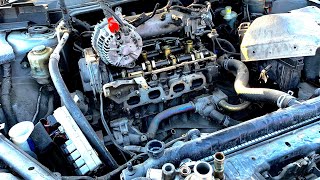
For the 1995-1999 Toyota Tercel with the 5E-FE engine, the ignition system is a relatively simple distributor-less 'wasted spark' setup. The crankshaft position sensor is located on the front of the engine near the crankshaft pulley. A unique issue highlighted by Toyota is that low battery voltage (below 11V) can trigger a P0335 code due to inconsistent engine cranking speed, which the ECM misinterprets as a sensor fault. This means a weak battery could be the root cause, not necessarily the sensor itself, a fact noted in official manufacturer documents.
Diagnostic Flowchart
Tap your situation to follow the diagnostic path that matches what you're seeing on this vehicle.
Symptoms You May Notice
- Engine cranks but will not start.
- Engine stalls intermittently, sometimes after warming up and may restart after cooling down.
- Check Engine Light is on.
- No RPM reading on scan tool during cranking.
- Rough idling or engine misfiring.
- Noticeable loss of engine power and jerky acceleration.
- Reduced fuel economy.
- Replacing the camshaft position sensor. While related, the camshaft sensor has its own trouble code (P0340). 🎬 Watch: Locating the camshaft position sensor on a Tercel.
- Replacing ignition coils or spark plugs without first diagnosing the P0335 code, as a bad crank sensor can mimic the symptoms of a weak ignition system.
- Replacing the fuel pump. A no-start condition can be caused by a lack of fuel, but P0335 specifically points to an ignition signal problem. If the ECM doesn't see an RPM signal, it won't command the fuel pump to run continuously or fire the injectors.
Most Likely Causes
- Failed Crankshaft Position Sensor 🔴 High Probability → Shop Engine Crankshaft Position Sensor After decades of heat cycles and vibration, the internal electronics of the sensor can fail. This often manifests as a 'heat soak' failure, where the car stalls when hot but restarts after cooling.
How to confirm: Check the sensor's internal resistance with a multimeter. For the 5E-FE, the specification is typically 985-1600 Ω when cold. A reading of infinity or zero indicates failure. A more definitive test is to watch the sensor's output signal on an oscilloscope while cranking the engine; a flat or erratic signal indicates failure.
Typical fix: Replace the crankshaft position sensor. It is located near the crankshaft pulley and held by a single 10mm bolt.
Est. part cost: $20-$60 - Damaged Wiring or Connector 🟡 Medium Probability The wiring harness and connector can become brittle, corroded, or damaged from engine heat and vibrations over many years. Oil leaks from nearby seals can also contaminate the connector, causing a poor connection.
How to confirm: Visually inspect the wiring harness from the sensor to the ECM for any signs of cracking, melting, or breaks. Check the connector for corrosion, moisture, or bent pins. Check for continuity and for shorts to ground on the signal wire.
Typical fix: Repair the damaged section of wire or clean/replace the connector.
Est. part cost: $5-$25 - Low Battery Voltage ⚪ Low Probability → Shop Vehicle Battery A Toyota Technical Service Bulletin (T-TT-0010-10 Rev) specifically notes that low battery voltage (below 11 volts) can cause inconsistent cranking speed, leading the ECM to incorrectly flag a P0335 code.
How to confirm: Test the battery's voltage with a multimeter. A healthy, fully charged battery should read approximately 12.6 volts with the engine off. Check freeze frame data with a scan tool to see what the battery voltage was when the code was set.
Typical fix: Recharge or replace the weak battery.
Est. part cost: $100-$200
Rare But Worth Checking
- Damaged Reluctor Ring: The sensor reads teeth on a reluctor ring (or plate) on the crankshaft. If this ring is damaged, has broken/dirty teeth, or has slipped, the signal will be incorrect. This is uncommon but can happen, especially if other engine work was recently performed.
- Faulty Engine Control Module (ECM): → Shop Engine Control Module (ECM) In very rare cases, the ECM itself can fail. This should only be considered after all other possibilities (sensor, wiring, battery) have been thoroughly ruled out.
Diagnosis Steps
- Check Battery Health: Before any other steps, test the battery voltage. A weak battery is a known cause for this code on Toyotas. Ensure it is above 12.4V and check freeze frame data for voltage below 11V when the code was set.
- Scan for Codes & Live Data: Use an OBD-II scanner to confirm P0335 is the active code. Watch the 'Engine RPM' data PID while cranking the engine. A reading of zero RPM is a strong confirmation of a problem in the crankshaft position sensor circuit.
- Inspect Wiring and Connector: Visually inspect the entire circuit for the crankshaft position sensor, located near the main crankshaft pulley. Look for frayed wires, loose connections, oil contamination, or corrosion on the connector pins.
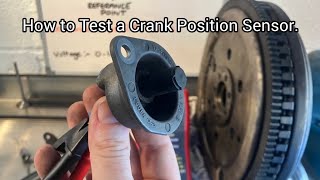
- Test the Sensor: If the wiring is good, test the sensor itself. Disconnect it and measure its internal resistance with a multimeter. The specification is 985 to 1,600 Ω when cold (approx. -10 to 50°C) and 1,265 to 1,890 Ω when hot (approx. 50 to 100°C). A reading outside this range indicates a bad sensor.
- Inspect the Reluctor Ring: If possible, visually inspect the teeth on the crankshaft pulley that the sensor reads. Ensure there are no broken, bent, or heavily rusted teeth.
- Check for Power at the Connector: If there is no voltage at the sensor's wiring harness, check for a blown fuse, which may be labeled 'EM2' or 'SNS' in the engine bay fuse box.
- Replace the Sensor: If the sensor is confirmed to be faulty, replace it. It is typically held by a single 10mm bolt. 🎬 See this walkthrough on how to replace the sensor.
Parts You'll Likely Need
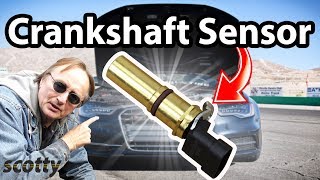
- Crankshaft Position Sensor
(OEM #90919-05011)— This is the most frequent point of failure in the circuit, typically due to age and heat exposure. Always verify part number with vehicle VIN.
Trusted brands: Denso (OEM), NGK/NTK, Hitachi
OEM price range: $60-$130
Aftermarket price range: $20-$60
Related Codes That Often Appear With This One
- P0340 — P0340 is for the Camshaft Position Sensor. The TSB T-TT-0010-10 Rev mentions that low battery voltage can cause both P0335 and P0340 to appear together. A timing belt/chain issue could also cause both codes to set.
Technical Service Bulletins (TSBs) & Recalls
- T-TT-0010-10 Rev: Notes that low battery voltage (below 11V) can contribute to a MIL 'ON' for P0335 due to inconsistent engine rotational speed during cranking.
Platform-Specific Known Issues
- A Toyota Technical Service Bulletin (T-TT-0010-10 Rev) confirms that low battery voltage can be a direct cause of code P0335 on this platform.
- The sensor is known to fail from 'heat soak', causing the engine to stall when hot and restart only after it has cooled down.
Mechanic-Grade Diagnostic Values
- Crankshaft Position Sensor Resistance (Cold) — expected: 985 - 1,600 Ω. Failure: A reading of zero, infinity, or outside the specified range.
- Crankshaft Position Sensor Resistance (Hot) — expected: 1,265 - 1,890 Ω. Failure: A reading outside the specified range when the sensor is at operating temperature.
- Crankshaft Position Sensor Air Gap — expected: Not specified, but must be minimal and consistent.. Failure: An excessive air gap, caused by rust on the mounting surface or an improperly seated O-ring, can lead to a weak or erratic signal, triggering P0335 even with a good sensor.
Wiring & Ground Locations
- NE+, NE- (CKP Signals at ECM) — On the 5E-FE ECU, the crankshaft position sensor signals are typically labeled NE+ and NE-. The ECU is located behind the center console/radio.. Testing for the signal waveform directly at the ECM pins NE+ and NE- can confirm if the signal from the sensor is reaching the computer, which helps differentiate between a sensor/wiring issue and an ECM fault.
- E1, E01, E02 (ECM Grounds) — The 5E-FE ECU uses multiple ground pins, typically labeled E1, E01, and E02. These are grounded to the chassis or engine block.. A poor ground connection for the ECU can cause a variety of incorrect sensor readings and codes, including P0335. Ensuring these grounds are clean and secure is a critical step in diagnosing electrical issues.
- Engine Block to Firewall Ground — A primary ground strap typically runs from the back of the cylinder head to a bolt on the vehicle's firewall.. This is a main ground path for the engine's electrical systems. Corrosion or a loose connection here can create a weak ground for multiple sensors, including the crankshaft position sensor, leading to erratic signals.
- Engine Block to Frame Ground — A heavy gauge ground wire connects the engine block (often near the A/C compressor or alternator bracket) to the vehicle's frame.. This is the main ground return path to the battery. A fault here can cause widespread electrical problems, including no-start conditions and sensor errors like P0335.
Real Owner Repair Stories
- Reddit User r0Lf (Infiniti G37 (Note: Not a Tercel, but the diagnostic principle for P0335 is identical)) — Random engine stuttering, knocking sound, and P0335 code.
❌ Tried (didn't work) Replacing the crankshaft, Replacing the crankshaft position sensor
✅ What actually fixed it The user's issue was not resolved in the thread after replacing the sensor and crankshaft, and other users suggested the problem was likely a wiring issue between the sensor and the ECM, which is a common cause that is often overlooked after parts replacement fails.
OEM Part Supersession History
90919-05011→90919-05018, 90919-05030— Standard part evolution and minor revisions by the manufacturer.
Heads up: While later part numbers may supersede the original, for a 1995-1999 Tercel, 90919-05011 is the most commonly cited and correct part. Using a superseded part intended for a different application, even if it fits, could cause issues. Always verify with VIN.
Helpful Videos
We Have This Part in Stock


The information in this article is provided for general reference and educational purposes only. Vehicle specifications, procedures, and part compatibility can vary by production date, trim level, and region. Always consult your vehicle's factory service manual and verify part numbers before purchasing or performing repairs. Safety-critical components such as airbags, seat belts, and braking systems should be installed by a qualified professional.
- Toyota TERCEL:
- 🧭 Diagnostic Flowchart
- 🎬 Helpful Videos
- 🛍️ Shop This Part
- What's Unique About the 1995-1999 Toyota TERCEL
- Symptoms You May Notice
- Most Likely Causes
- Rare But Worth Checking
- Diagnosis Steps
- Parts You'll Likely Need
- Related Codes That Often Appear With This One
- Technical Service Bulletins (TSBs) & Recalls
- Platform-Specific Known Issues
- Mechanic-Grade Diagnostic Values
- Wiring & Ground Locations
- Real Owner Repair Stories
- OEM Part Supersession History
- 🎟️ Get 5% Off