

P0335 on 2009-2013 Toyota Yaris: Crankshaft Sensor Circuit Fixes
For a 2009-2013 Toyota Yaris, code P0335 almost always points to a failed crankshaft position sensor. It's an affordable, accessible part located near the main crankshaft pulley, making it a common DIY fix for about $30-$80. Before replacing, always check the battery, as low voltage during cranking is a known issue that can falsely trigger this code per a Toyota TSB.
- Before replacing any parts for a P0335 code, test your car's battery. A weak battery is a known cause of this code on a Toyota Yaris, as confirmed by a Toyota TSB.
- The most likely fix is replacing the crankshaft position sensor, which is a relatively simple and inexpensive DIY job.
- Symptoms are severe and include no-start or stalling, making the car unreliable and unsafe to drive until repaired.
- The sensor is located behind the passenger-side front wheel, near the main engine pulley.
- When replacing, use a quality OEM (90919-05087) or reputable aftermarket brand like Denso to ensure reliability and avoid repeat failures.
What's Unique About the 2009-2013 Toyota YARIS
The Toyota Yaris from this era, typically equipped with the durable 1NZ-FE engine, is generally very reliable. However, the crankshaft position sensor is a known common failure point that can cause sudden no-start or stalling issues. A unique quirk for this platform, as noted by Toyota in TSB T-TT-0010-10 Rev, is that low battery voltage (below 11V) during cranking can also trigger a P0335 code due to inconsistent engine cranking speed, making a battery check a crucial first diagnostic step. Forum users have confirmed that replacing an old battery resolved the code without touching the sensor. Additionally, a separate TSB (EG040-07) was issued for 2007 Yaris models to update the ECM calibration to reduce the possibility of a false P0335, indicating a sensitivity in the system's monitoring logic.
Diagnostic Flowchart
Tap your situation to follow the diagnostic path that matches what you're seeing on this vehicle.
Generation note: The 2009-2013 range covers two Yaris generations: the end of the 2nd generation (XP90, 2009-2011) and the start of the 3rd generation (XP130, 2012-2013). However, both generations in the North American market primarily used the same 1.5L 1NZ-FE engine and a similar crankshaft position sensor setup (part number 90919-05087), so the causes and fixes are nearly identical.
Symptoms You May Notice
- Check Engine Light is on
- Engine cranks but will not start (no-start)
- Engine stalls unexpectedly, especially when coming to a stop or at idle
- Rough idle and/or engine misfires
- Hesitation or jerky acceleration
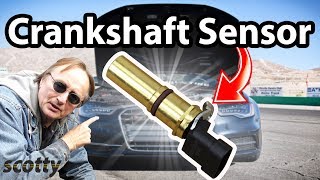
- Noticeable loss of engine power 🎬 Watch: A breakdown of common Toyota crank sensor failure symptoms
- Extended cranking time before the engine starts
- Replacing the camshaft position sensor. While a P0340 (Camshaft Position Sensor) code can sometimes appear with P0335, P0335 by itself points specifically to the crankshaft sensor circuit. A user on Reddit mistakenly replaced the cam sensor first.
- Replacing spark plugs or ignition coils. While a bad crank sensor can cause misfires, the root cause is the lack of timing information, not the ignition components themselves.
Most Likely Causes
- Failed Crankshaft Position Sensor 🔴 High Probability → Shop Engine Crankshaft Position Sensor This is a common wear-and-tear component. Heat and vibration from the engine eventually cause the sensor's internal electronics to fail, leading to an open or shorted circuit.
How to confirm: Use a scan tool to check for engine RPM data while cranking. If it reads 0, the sensor is likely dead. You can also test the sensor's internal resistance with a multimeter. For the 1NZ-FE, the resistance should be between 1,630-2,740 Ohms when cold and 2,065-3,225 Ohms when hot. Readings outside this range indicate a bad sensor.
Typical fix: Replace the crankshaft position sensor.
Est. part cost: $25-$80 - Low Battery Voltage 🟡 Medium Probability → Shop Vehicle Battery Toyota issued TSB T-TT-0010-10 Rev stating that low battery voltage (below 11V) can cause inconsistent engine cranking speed, which the ECU can misinterpret as a crankshaft sensor fault. This is a well-documented issue on Toyota forums for this era.
How to confirm: Test the battery's voltage with a multimeter. A healthy, fully charged battery should read approximately 12.6 volts with the engine off. Check freeze frame data on a scan tool to see what the battery voltage was when the code was set. Also, check for corroded or loose battery terminals.
Typical fix: Charge or replace the battery. Clean the battery terminals.
Est. part cost: $0-$200 - Damaged Wiring or Loose Connector ⚪ Low Probability The sensor's location near the front of the engine exposes its wiring to potential damage from road debris, heat, and oil. The harness can also be damaged by physical impact, as noted in a YarisWorld forum thread where a user hit a curb.
How to confirm: Visually inspect the wiring harness and connector leading to the crankshaft position sensor for any signs of fraying, melting, corrosion, or loose pins. Wiggling the harness while monitoring sensor data can help identify intermittent connections. Perform a continuity test from the sensor connector back to the ECU.
Typical fix: Repair the damaged section of wire or replace the connector pigtail.
Est. part cost: $5-$50
Rare But Worth Checking
- Damaged Reluctor Ring: The sensor reads teeth on a 'reluctor ring' (or wheel) on the crankshaft. While rare, this ring can become damaged, bent, or have broken/dirty teeth, leading to an erratic signal. This is usually a more involved repair requiring removal of the crankshaft pulley.
- Faulty Engine Control Unit (ECU): This is extremely rare. The ECU itself can fail, but all other possibilities, including wiring continuity, should be exhausted before considering ECU replacement.
- Failing Starter Motor: A failing starter can cause voltage drops and erratic cranking, which may trick the ECU into thinking there is a crank sensor issue. One user on a forum noted that a P0335 code can be a symptom of a failing starter.
Diagnosis Steps
- Check for any other stored DTCs with an OBD-II scanner. Note any freeze frame data, paying close attention to battery voltage when the code was set.
- Check the battery voltage. Ensure it is above 12.4V and that terminals are clean and tight. This is a specific weak point noted in Toyota TSB T-TT-0010-10 Rev.
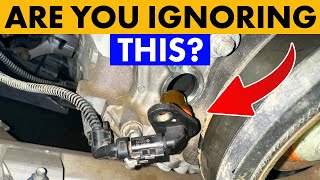
- Visually inspect the crankshaft position sensor and its wiring harness for obvious damage, loose connections, or corrosion. The sensor is located on the front of the engine block (passenger side), near the main crankshaft pulley. 🎬 See this video to help locate the sensor on your Yaris
- Use a scan tool to monitor the 'Engine Speed' PID while cranking the engine. If the RPM reads 0 or is erratic, the ECU is not receiving a valid signal.
- If accessible, disconnect the sensor and inspect the connector for corrosion or damage.
- Test the sensor's internal resistance with a multimeter. For the 1NZ-FE, it should be ~1,630-2,740 Ohms (cold) or ~2,065-3,225 Ohms (hot). An open circuit (infinite resistance) means the sensor is dead.
- If the sensor tests good, check for continuity on the wiring harness between the sensor connector and the ECU connector.
- If the sensor and wiring are good, but the issue persists, inspect the reluctor ring on the crankshaft pulley for damage or debris.
- If a new sensor does not resolve the issue, a more in-depth diagnosis with an oscilloscope to view the sensor's waveform is the next professional step.
Parts You'll Likely Need
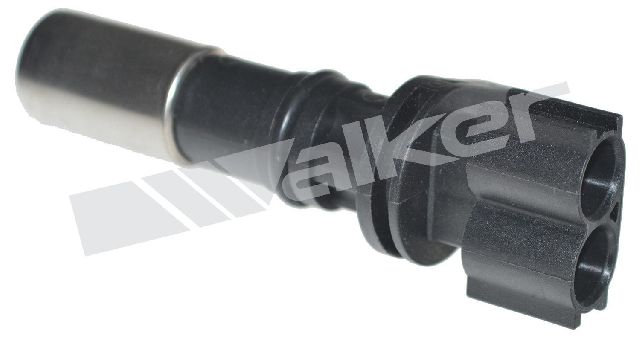
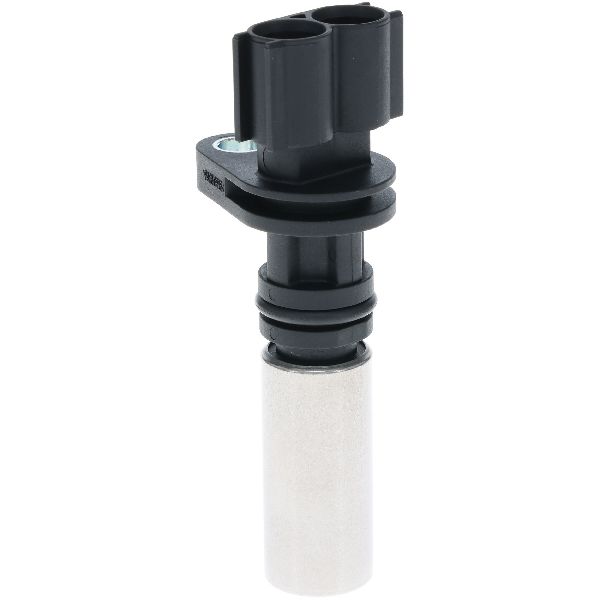
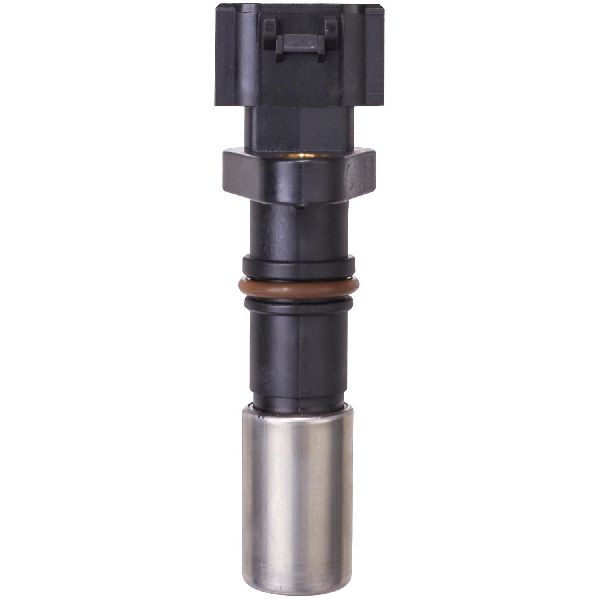
- Crankshaft Position Sensor
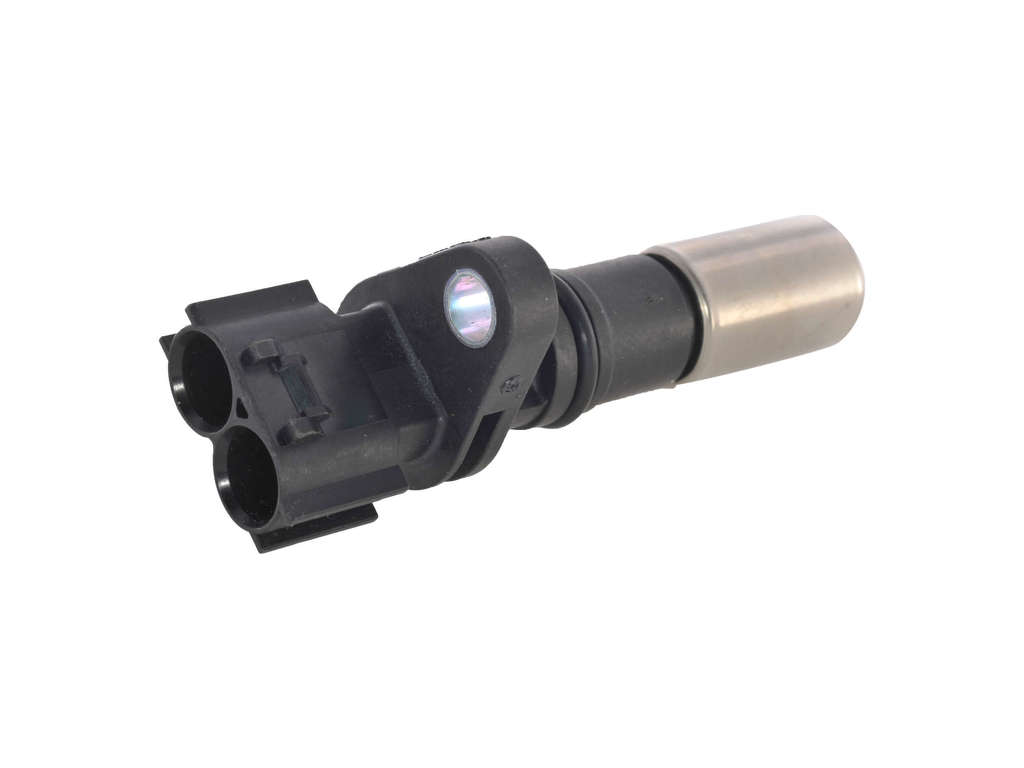
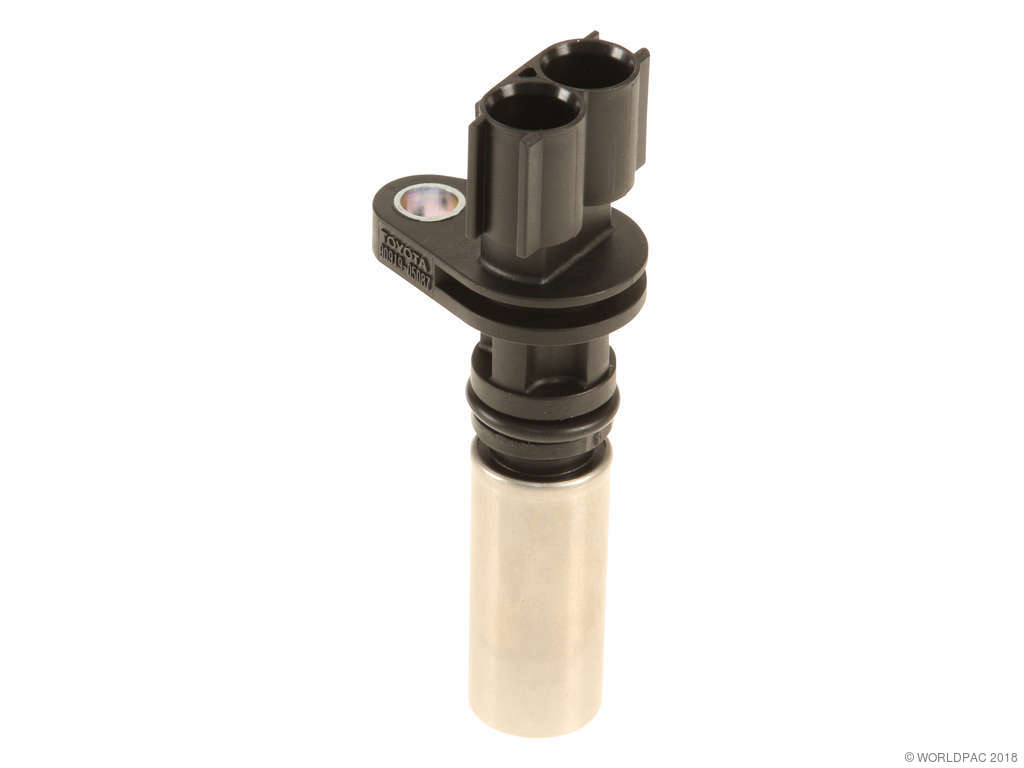
(OEM #90919-05087)— This sensor is the most common cause of failure for a P0335 code on this vehicle. It is a wear item.
Trusted brands: Denso (OEM supplier), NGK/NTK, Hitachi, Aisan
OEM price range: $80-$115
Aftermarket price range: $25-$75
Related Codes That Often Appear With This One
- P0340 — P0340 is for the Camshaft Position Sensor. The ECU compares signals from both the crank and cam sensors for timing. A fault in one can sometimes cause the ECU to flag a fault in the other, or a wiring issue could be shared between them. The TSB T-TT-0010-10 Rev also mentions that low battery voltage can trigger both codes.
Technical Service Bulletins (TSBs) & Recalls
- T-TT-0010-10 Rev - Notes that low battery voltage can contribute to a MIL "ON" condition for P0335 and/or P0340 due to inconsistent rotational speed of the engine's crankshaft. Advises checking freeze frame data for battery voltage below 11V when the code was set.
- EG040-07 - An updated ECM calibration was released for some 2007 Yaris models to reduce the possibility of a MIL 'ON' with DTC P0335. This suggests an early sensitivity in the diagnostic logic.
Platform-Specific Known Issues
- Per Toyota Technical Service Bulletin T-TT-0010-10 Rev, a low battery (below 11V) can cause this code to set without there being an actual fault in the crankshaft position sensor circuit.
- A user on YarisWorld forums reported triggering a P0335 code after hitting a curb on the passenger side, suggesting the wiring harness in that location is susceptible to physical damage.
Mechanic-Grade Diagnostic Values
- Crankshaft Position Sensor Resistance (Cold) — expected: 1,630 - 2,740 Ohms. Failure: Reading is open (infinite) or shorted (zero), or outside the specified range.
- Crankshaft Position Sensor Resistance (Hot) — expected: 2,065 - 3,225 Ohms. Failure: Reading is open (infinite) or shorted (zero), or outside the specified range.
- Crankshaft Position Sensor AC Voltage Output (while cranking) — expected: ~200mV AC or higher. Failure: No voltage or significantly lower voltage indicates a dead sensor.
- Engine RPM on Scan Tool (while cranking) — expected: 100 - 500 RPM. Failure: A reading of 0 RPM while the engine is audibly cranking points directly to a lack of signal from the CKP sensor.
Scan Tool Commands That Help
- Toyota Techstream: Live Data Monitoring (Data List) — Use the 'Engine Speed' parameter in the Data List to confirm if the ECU is receiving an RPM signal while cranking. A value of 0 RPM during cranking is a primary indicator of a P0335 fault.
- Toyota Techstream: Utility -> ECU Flash Reprogramming — For early models (e.g., 2007 Yaris), a specific TSB (EG040-07) called for an ECM calibration update to reduce the chance of a false P0335. This would only be applicable if the vehicle has never had this update performed.
Wiring & Ground Locations
- CKP Sensor Connector — On the front of the engine block, passenger side, near the main crankshaft pulley and oil pan.. This is the primary connection point. It is exposed to heat, oil, and potential physical damage from road debris or impacts (like hitting a curb). A poor connection here will cause a P0335.
- ECU Connector Pins (NE+, NE-) — At the Engine Control Unit (ECU), typically located in the engine bay or behind the glove box.. These are the specific terminals where the crankshaft position sensor signal arrives at the ECU. A continuity test from the sensor connector to these pins is required to rule out a wiring break in the harness.
- Shared Ground (Cam/Crank Sensors) — The wiring diagram for the 1NZ-FE often shows the ground wire for the crankshaft and camshaft sensors are shared and run back to the ECU.. A single fault in this shared ground wire could potentially cause both P0335 (crank) and P0340 (cam) codes simultaneously. A video for a 2007 Yaris showed a loose ground connection was the cause of both codes.
Real Owner Repair Stories
- YarisWorld Forums user 'rcvmini' (2009 Toyota Yaris Hatchback, Automatic) — Clunking sound from engine bay, Check Engine Light with code P0335.
❌ Tried (didn't work) Initial assumption was timing chain issue due to noise.
✅ What actually fixed it The problem started immediately after the user's wife ran the passenger side of the car up on a curb. This strongly implies the P0335 was caused by physical damage to the sensor or its wiring harness, which are located in that area. The final resolution was a new engine due to being run with no oil, but the P0335 code was a direct result of the curb impact. - YouTube video by 'Schrodingers Box' (2000 Chevrolet Silverado (Illustrates a universal problem)) — Crank no-start, P0335 code present even after another shop replaced the crankshaft sensor.
❌ Tried (didn't work) Replacing the crankshaft position sensor with a no-name aftermarket part.
✅ What actually fixed it The root cause was an incorrect installation. An 'insane amount of rust' on the engine block where the sensor mounts prevented the new sensor from sitting flush. This created an excessive air gap between the sensor and the reluctor wheel, resulting in a weak or no signal. The fix was to remove the sensor, thoroughly clean the mounting surface on the block, and properly install a quality sensor. - YouTube video by 'Abdullah Auto Electrician' (2007 Toyota Yaris) — Long crank, sometimes no start, CEL with P0335 and P0340.
❌ Tried (didn't work) Replacing both the crankshaft and camshaft sensors with new parts did not solve the issue.
✅ What actually fixed it A wiring issue was found. The ground wire for the camshaft position sensor had a loose connection/break. On this vehicle, the ground for the cam and crank sensors are spliced together from a single wire from the ECU. Fixing the broken ground wire for the cam sensor resolved both the P0335 and P0340 codes.
OEM Part Supersession History
90919-05045, 90919-05081→90919-05087— Standard part evolution, likely for improved reliability or manufacturing consistency.
Model Year Variations Within This Range
- 2007 (Pre-dates target range but relevant): A Technical Service Bulletin (EG040-07) was issued for some 2007 Yaris models, providing an ECM software update to make the system less likely to falsely trigger a P0335 code. This indicates the diagnostic logic was refined after the initial release.
Helpful Videos


We Have This Part in Stock


The information in this article is provided for general reference and educational purposes only. Vehicle specifications, procedures, and part compatibility can vary by production date, trim level, and region. Always consult your vehicle's factory service manual and verify part numbers before purchasing or performing repairs. Safety-critical components such as airbags, seat belts, and braking systems should be installed by a qualified professional.
- Toyota YARIS:
- 🧭 Diagnostic Flowchart
- 🎬 Helpful Videos
- 🛍️ Shop This Part
- What's Unique About the 2009-2013 Toyota YARIS
- Symptoms You May Notice
- Most Likely Causes
- Rare But Worth Checking
- Diagnosis Steps
- Parts You'll Likely Need
- Related Codes That Often Appear With This One
- Technical Service Bulletins (TSBs) & Recalls
- Platform-Specific Known Issues
- Mechanic-Grade Diagnostic Values
- Scan Tool Commands That Help
- Wiring & Ground Locations
- Real Owner Repair Stories
- OEM Part Supersession History
- Model Year Variations Within This Range
- 🎟️ Get 5% Off