

P0336 on 2014-2018 Ram 1500: Crank Sensor vs. Tone Wheel Failure Guide
Code P0336 on a 2014-2018 Ram 1500 often points to a failing crankshaft position sensor or a damaged crankshaft tone wheel. On EcoDiesel models, a delaminating tone wheel is a very common cause, confirmed by numerous owner complaints and a specific recall. Replacing the sensor is a simple first step, but if the problem persists, the tone wheel is the likely culprit, which is a much larger and more expensive repair requiring transmission removal.
- P0336 on a 2014-2018 Ram 1500 indicates a performance problem with the crankshaft position signal.
- On the 3.0L EcoDiesel, the most likely cause is a physically damaged or delaminated tone wheel, which is a labor-intensive repair.
- For all engines, a failing crankshaft position sensor is also a high-probability cause and is a much easier and cheaper part to replace first.
- A recall (W58) was issued to update software as a workaround, but it does not fix the root mechanical problem of a failing tone wheel.
- Driving with this code is risky due to the potential for sudden stalling and loss of power.
What's Unique About the 2014-2018 Ram 1500

For the 2014-2018 Ram 1500, particularly those with the 3.0L EcoDiesel engine, this code is notoriously linked to a failing crankshaft tone wheel (also called a reluctor ring). The magnetic material on the wheel can delaminate, break, or lose teeth, causing a distorted signal that the sensor reads. This issue is so prevalent that FCA issued recalls (like W58 / NHTSA 20V-475) which involved a software update to help the engine keep running by using the camshaft sensor if the crank signal was lost. However, many owners and mechanics report that this is just a "band-aid" and the root cause, the physical tone wheel, eventually requires replacement to truly fix the issue.
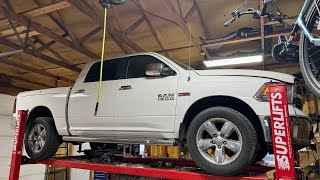
🎬 Watch: A complete walkthrough of the EcoDiesel tone wheel replacement process.Diagnostic Flowchart

Tap your situation to follow the diagnostic path that matches what you're seeing on this vehicle.
Generation note: This guide covers the fourth-generation Ram 1500 (DS/DJ). While the P0336 code can appear on all engines, the tone wheel delamination issue is most famously and frequently documented on the 3.0L EcoDiesel engine within this generation. The same engine used in the Jeep Grand Cherokee (WK2) suffers from the identical tone wheel failure.
Symptoms You May Notice

- Check Engine Light is on
- Engine is hard to start or has an extended crank time
- Sudden loss of power or hesitation during acceleration
- Engine may stall, sometimes without warning
- Rough or erratic idle
- Vehicle enters 'limp mode' with reduced power
- Reduced fuel economy
- 'Service Electronic Throttle Control' message may appear on the dash
- Replacing only the crankshaft position sensor when the underlying problem is a damaged tone wheel. If the code returns after replacing the sensor, the tone wheel is the next logical suspect, especially on an EcoDiesel.
Most Likely Causes

- Damaged or Delaminated Crankshaft Tone Wheel 🔴 High Probability → Shop Engine Crankshaft A known design flaw on the 3.0L EcoDiesel, where the magnetic material on the tone wheel separates, cracks, or breaks off. This was confirmed by owner complaint NHTSA ODI #11707990 and led to warranty extension X95. Owners on forums and in repair videos extensively document this failure.
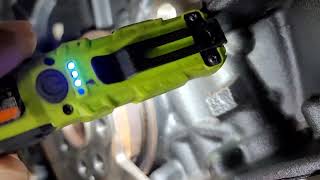
How to confirm: This is difficult to confirm without significant labor. A mechanic-level trick is to remove the starter and use a borescope to inspect the tone wheel for visible damage before committing to transmission removal. 🎬 Watch: A clever trick to inspect the tone wheel without removing the transmission. If damage isn't visible this way, confirmation requires removing the transmission for direct visual inspection.
Typical fix: The transmission must be removed to replace the tone wheel. It is highly recommended to replace the rear main seal and the crankshaft position sensor at the same time.
Est. part cost: $40-$100 for the tone wheel itself. - Failing Crankshaft Position Sensor (CKP) 🔴 High Probability → Shop Engine Crankshaft Position Sensor The sensor is a sensitive electronic component exposed to heat and vibration, and it can fail over time like any other sensor. It's a common first-step replacement due to its relatively low cost compared to the tone wheel repair.
How to confirm: Use a scan tool to monitor the RPM signal while cranking; dropouts or erratic readings indicate a problem. You can also test the sensor's resistance with a multimeter against factory specs (a general range is 200-2500 ohms). Given its low cost, many owners replace it as a first step.
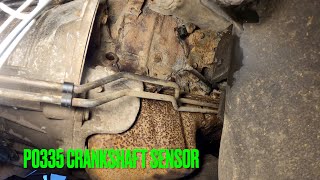
Typical fix: Replace the crankshaft position sensor. On the 5.7L HEMI and 3.6L Pentastar, it is located on the passenger side of the engine block toward the rear. 🎬 See how to replace the crankshaft sensor on a 5.7L HEMI. On the 3.0L EcoDiesel, the sensor is also at the rear of the engine, but replacing it is often done during the tone wheel job since the transmission is already removed.
Est. part cost: $20-$90 - Wiring or Connector Issue 🟡 Medium Probability The wiring harness to the sensor is located near hot exhaust components and can be subject to damage from heat, oil, or road debris. Wires can become brittle and break, or connector pins can corrode.
How to confirm: Visually inspect the wiring and connector for any signs of melting, chafing, corrosion, or breaks. Wiggle the harness while monitoring the live RPM data on a scan tool to see if the signal cuts out.
Typical fix: Repair the damaged section of wiring or replace the connector pigtail.
Est. part cost: $10-$30 - Outdated PCM Software ⚪ Low Probability Recall W58 (NHTSA 20V-475) was a software update specifically to address the consequences of a lost crank signal. If this recall was never performed, the PCM may be more sensitive to minor signal variations and more likely to stall the engine.
How to confirm: A dealership or a shop with advanced tools like wiTECH can check the vehicle's software calibration level against the latest version from FCA/Stellantis.
Typical fix: Have a dealership or qualified shop update the Powertrain Control Module (PCM) software. This is often done under recall for no charge.
Est. part cost: $0 if covered by a recall, otherwise $100-$200 for a software flash.
Rare But Worth Checking
- Low Battery Voltage / Weak Charging System:
Diagnosis Steps
- Read the fault codes with an OBD-II scanner. Note P0336 and any other codes like U1401 or P0335.
- Visually inspect the crankshaft position sensor's wiring and connector for obvious damage, melting, or corrosion. Ensure the harness is not routed too close to spark plug wires.
- Using a scan tool with live data, monitor the engine RPM while cranking and running. Look for any signal dropouts, erratic jumps, or a complete lack of an RPM signal. The signal should change smoothly with engine speed.
- If the signal is faulty, and the wiring appears okay, the next step is to replace the crankshaft position sensor. It is relatively inexpensive and a common failure point.
- After replacing the sensor, clear the codes. Some models, particularly the 3.6L, require a crankshaft position sensor relearn procedure using a manufacturer-level scan tool to calibrate the new sensor.
- If the P0336 code returns, the suspicion shifts heavily to the tone wheel, especially on the 3.0L EcoDiesel. A borescope can be inserted into the starter motor mounting hole to attempt a visual inspection of the tone wheel, looking for missing teeth or delamination.
- If tone wheel damage is confirmed or strongly suspected, the final step is a major repair that requires removing the transmission for visual inspection and replacement.
Parts You'll Likely Need
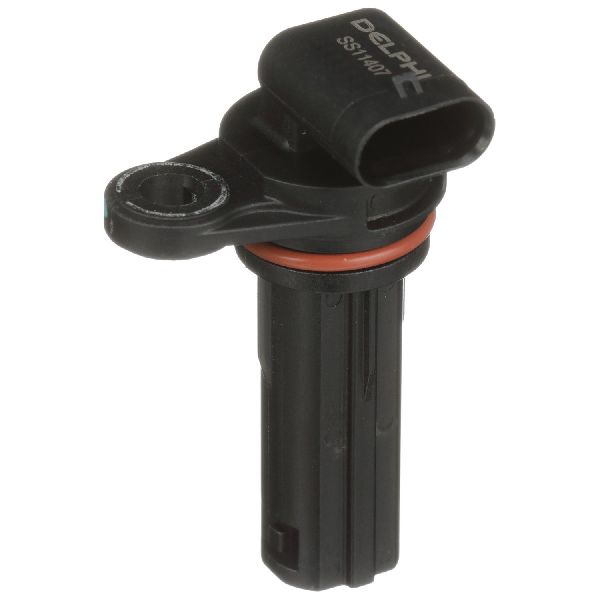
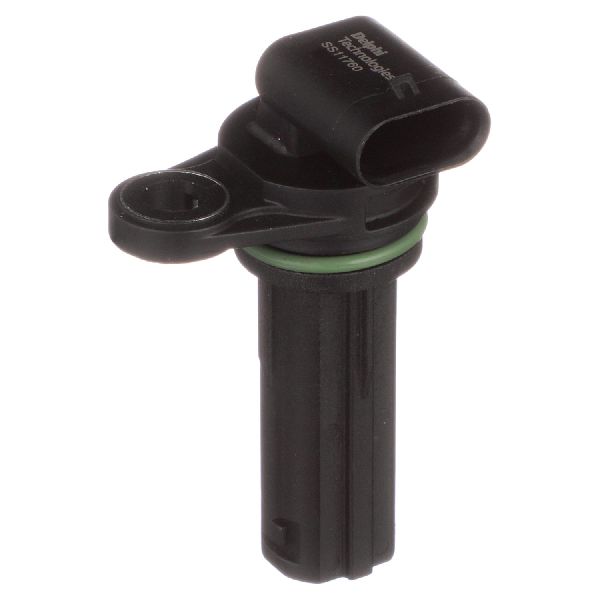
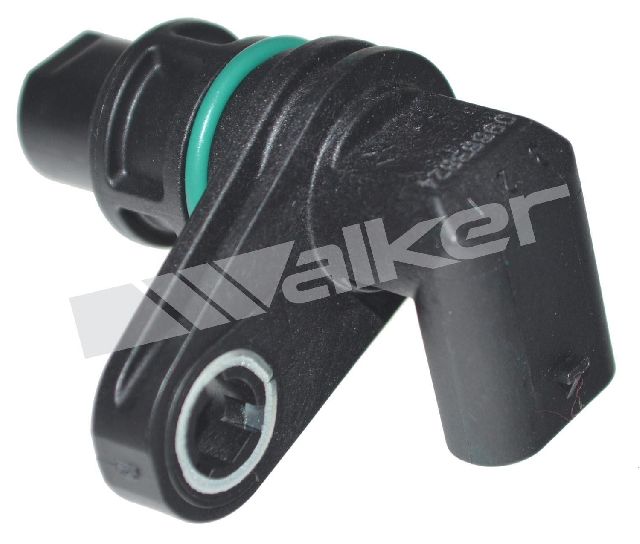
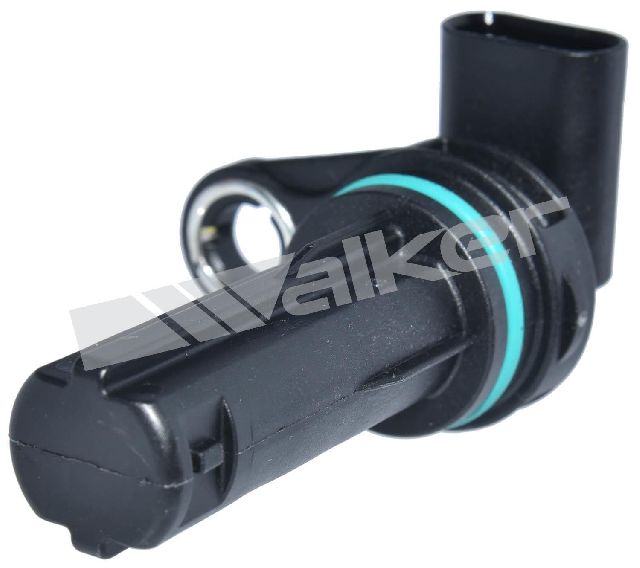
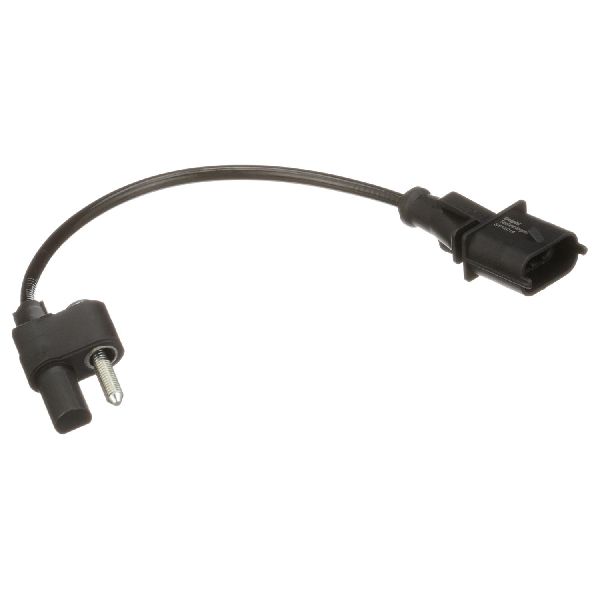
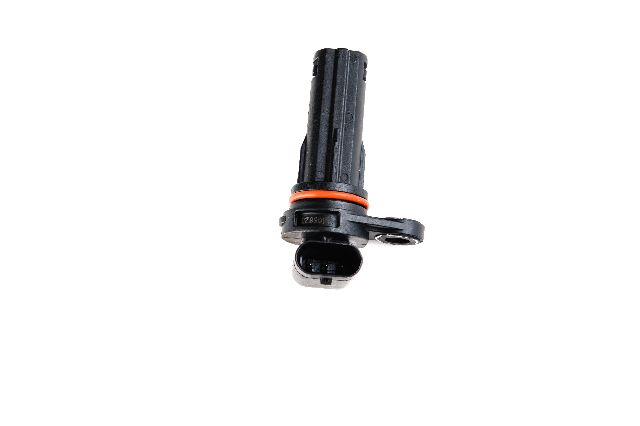
- Crankshaft Position Sensor
(OEM #3.0L EcoDiesel: 68448908AA (replaces older numbers); 5.7L HEMI: 5149230AA; 3.6L Pentastar: 05149167AF)— This is the most common and accessible part to fail in the circuit. It's the logical first replacement before attempting a more complex repair.
Trusted brands: Mopar, Bosch, Delphi, NGK/NTK
OEM price range: $60-$90
Aftermarket price range: $20-$75 - Crankshaft Tone Wheel (Reluctor Ring)
(OEM #3.0L EcoDiesel: 68211239AA)— This is the primary cause of P0336 on the 3.0L EcoDiesel engine due to a known issue with delamination.
Trusted brands: Mopar
OEM price range: $40-$100
Aftermarket price range: $30-$70
Related Codes That Often Appear With This One
- P0335 — P0335 indicates a complete loss of the crankshaft position sensor circuit, while P0336 indicates a performance issue. A failing sensor or tone wheel can trigger either code depending on the nature of the failure.
- U1401 — This code for 'Implausible Engine Speed Signal Received' often accompanies P0336, as the faulty crank signal provides an engine speed reading that the PCM deems impossible or illogical.
Technical Service Bulletins (TSBs) & Recalls
- Bulletin #14-007-21: Notes that P0336-00 can be set and may be accompanied by a customer complaint of poor acceleration.
- Bulletin #14-008-21 (Warranty Extension X95): Specifically for the 3.0L Diesel, this bulletin outlines the procedure for replacing the crankshaft tone wheel due to missing magnetic material causing P0335/P0336 codes and limp mode. It extends the warranty for this specific part.
Platform-Specific Known Issues
- Tone Wheel Delamination (EcoDiesel): The most significant issue for this platform is the tendency for the magnetic material on the crankshaft tone wheel to break or peel off, especially on the 3.0L EcoDiesel. This was confirmed by owner complaint NHTSA ODI #11707990. The repair requires transmission removal. Forum threads on
ram1500diesel.comandEcoDieselRam.comcontain dozens of owner experiences with this exact failure, with repair costs often exceeding $2,000. - Recall W58 / NHTSA 20V-475: FCA issued a recall for the 3.0L EcoDiesel involving a PCM software update. The update allows the engine to use the camshaft position sensor as a backup to prevent stalling if the crankshaft signal is lost. However, this does not fix the underlying mechanical issue with the tone wheel, and many owners report needing the physical repair eventually.
- Warranty Extension X95: In response to the widespread tone wheel failures, FCA issued warranty extension X95 (related to TSB 14-008-21), extending the warranty for the crankshaft tone wheel to 8 years/unlimited mileage for affected 3.0L EcoDiesel vehicles. This bulletin explicitly states the cause is missing magnetic material on the tone wheel.
Mechanic-Grade Diagnostic Values
- CKP Sensor Connector Pin 3 (Supply) Voltage — expected: 5 Volts with key on, engine off.. Failure: 0 Volts may indicate a blown fuse or an open in the supply wire.
- CKP Sensor Connector Pin 2 (Ground) Circuit — expected: Near 0 Volts / Good continuity to chassis ground.. Failure: Any significant voltage indicates a bad ground connection.
- CKP Sensor Internal Resistance — expected: Typically 200 - 2,500 Ohms (varies by sensor type).. Failure: 0 Ohms indicates a shorted sensor; infinite resistance (OL) indicates an open circuit inside the sensor.
- CKP Sensor Signal (Digital/Hall Effect) — expected: A square wave signal switching between 0V and 5V when viewed on an oscilloscope while the engine is cranking/running.. Failure: A flatline signal, or a distorted/missing pattern indicates a failed sensor or a damaged tone wheel.
Scan Tool Commands That Help
- wiTECH or equivalent manufacturer-level scan tool: Cam/Crank Variation Relearn (or Crankshaft Position Sensor Relearn) — This procedure is required after replacing the crankshaft position sensor, particularly on the 3.6L Pentastar engine, to calibrate the PCM to the new sensor's signal characteristics. Failure to perform this may result in the P0336 code persisting even with a new part.
Wiring & Ground Locations
- Crankshaft Position Sensor Connector — On the sensor body, located at the rear of the engine block on the passenger side (HEMI/Pentastar) or at the rear of the engine near the transmission bell housing (EcoDiesel).. This is the primary point for electrical testing. A representative 3-pin connector pinout is: Pin 1 - Signal (to PCM), Pin 2 - Sensor Ground, Pin 3 - 5V Supply (from PCM).
Real Owner Repair Stories
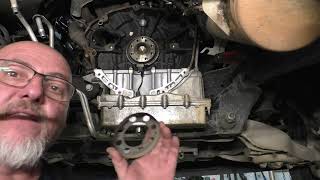
- YouTube channel 'Bennie Aust' (2014 Ram 1500 EcoDiesel) — Crank no-start, codes P0336 and U1401.
❌ Tried (didn't work) Diagnosis pointed directly to the common failure point.
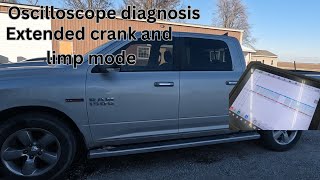
✅ What actually fixed it The transmission was removed and the broken crankshaft tone wheel was replaced. The video confirms the part was around $41 from a dealer and the truck started immediately after the repair. - YouTube channel 'HR Repair' (2015 Ram 1500 EcoDiesel with 209,747 miles.) — Extended crank, limp mode (won't exceed ~3000 RPM), 'Service Electronic Throttle Control' message, code P0336.
❌ Tried (didn't work) The diagnosis using an oscilloscope quickly identified the root cause.
✅ What actually fixed it An oscilloscope waveform confirmed a missing piece of the tone ring. The fix was to remove the transmission and replace the tone wheel, crankshaft position sensor, and rear main seal. The truck ran perfectly after the repair. - YouTube channel 'Julio Auto MekaniKo' (2015 Ram 1500 EcoDiesel) — Crank but no start, code P0336.
❌ Tried (didn't work) The mechanic skipped straight to advanced diagnostics instead of just replacing the sensor.
✅ What actually fixed it Before removing the transmission, the mechanic removed the starter and used a borescope (small camera) to look at the tone wheel. He was able to visually confirm a piece of the magnetic ring was missing. This confirmed the need for transmission removal and tone wheel replacement.
"I Checked Everything" — The Actual Cause
- For code P0336, the equivalent of a 'smoke test clean' scenario is when the crankshaft sensor is replaced and the wiring is visually inspected and tests okay for continuity, yet the code persists. On the 3.0L EcoDiesel, this situation almost invariably points to a mechanically failed tone wheel, which requires transmission removal to access and replace.
OEM Part Supersession History
05149230AA→5149230AA— Standard part number revision by Mopar.
Heads up: These parts are generally interchangeable, but 5149230AA is the current part number for the 5.7L HEMI sensor.
Model Year Variations Within This Range
- 2014-2018: No significant variations related to the P0336 diagnosis have been identified within this year range. The primary differentiator for cause is engine type (EcoDiesel vs. gas), not the specific model year.
Helpful Videos
We Have This Part in Stock

The information in this article is provided for general reference and educational purposes only. Vehicle specifications, procedures, and part compatibility can vary by production date, trim level, and region. Always consult your vehicle's factory service manual and verify part numbers before purchasing or performing repairs. Safety-critical components such as airbags, seat belts, and braking systems should be installed by a qualified professional.
- Ram 1500:
- 🧭 Diagnostic Flowchart
- 🎬 Helpful Videos
- 🛍️ Shop This Part
- What's Unique About the 2014-2018 Ram 1500
- Symptoms You May Notice
- Most Likely Causes
- Rare But Worth Checking
- Diagnosis Steps
- Parts You'll Likely Need
- Related Codes That Often Appear With This One
- Technical Service Bulletins (TSBs) & Recalls
- Platform-Specific Known Issues
- Mechanic-Grade Diagnostic Values
- Scan Tool Commands That Help
- Wiring & Ground Locations
- Real Owner Repair Stories
- "I Checked Everything" — The Actual Cause
- OEM Part Supersession History
- Model Year Variations Within This Range
- 🎟️ Get 5% Off