

P0339 on 2017-2019 Ford Escape 1.5L: Crank Sensor Intermittent Causes and Fixes
On a 2017-2019 Ford Escape with the 1.5L EcoBoost engine, code P0339 is most often caused by a failing crankshaft position sensor. This can cause intermittent stalling, a no-start condition, or hard starting. Replacing the sensor is a common and relatively inexpensive DIY fix, but a relearn procedure may be required afterward.
- P0339 on your 2017-2019 Escape 1.5L means the engine computer is losing the crankshaft position signal, which is critical for engine operation. The most likely cause is a failing sensor itself, followed by wiring issues. It is a serious fault that can cause stalling and should be addressed promptly. A 'Misfire Monitor Neutral Profile Correction' may be needed after repair.
What's Unique About the 2017-2019 Ford Escape
For the 1.5L EcoBoost engine in this generation of Escape, the P0339 code is a fairly common issue, with the sensor itself being the most frequent point of failure. While the engine has other known issues, such as those related to the cooling system, P0339 typically points directly to a problem with the CKP sensor or its wiring. The sensor is located at the bottom of the engine, where it's exposed to high heat and potential oil leaks, which can lead to its eventual failure. Additionally, known coolant intrusion problems on this engine can lead to coolant contaminating wiring harnesses, potentially causing the intermittent electrical fault that triggers this code.
Symptoms You May Notice
- Engine stalling unexpectedly, sometimes while driving or when coming to a stop
- Hard starting or long crank times before the engine fires
- Engine cranks but will not start at all
- Rough or uneven idle
- Hesitation or stumbling during acceleration
- Check Engine Light is on
- Tachometer needle drops to zero intermittently while the engine is still running
- Replacing the camshaft position sensors instead of the crankshaft sensor.
- Replacing ignition coils or spark plugs without diagnosing the intermittent signal from the CKP sensor first.
- Assuming a no-start condition is due to a bad starter or battery without checking for trouble codes.
Most Likely Causes
- Failing Crankshaft Position Sensor 🔴 High Probability → Shop Engine Crankshaft Position Sensor The sensor is located at the bottom of the engine, where it is exposed to high heat cycles and potential oil contamination from common leak points like the valve cover or vacuum pump, which can degrade the sensor's internal components over time.
How to confirm: Use a scan tool to monitor RPMs during cranking; if the reading is zero or erratic, the sensor is likely bad. You can also test the sensor's resistance with a multimeter to see if it's within the manufacturer's specified range (typically 0.5–2 kΩ). An oscilloscope provides the most definitive test by visualizing the sensor's waveform.
Typical fix: Replace the crankshaft position sensor. This is often accessible by removing the front passenger-side wheel and splash shield. Some mechanics also remove the serpentine belt and tensioner for better access. Lubricate the new sensor's O-ring with clean engine oil before installation.
Est. part cost: $20-$60 - Wiring Harness or Connector Damage 🟡 Medium Probability The wiring to the sensor can become brittle from heat or contaminated by leaking engine oil or coolant, leading to chafing, breaks, or corrosion in the connector pins. The engine's known coolant intrusion issue can be a source of this contamination.
How to confirm: Visually inspect the entire length of the sensor's wiring harness for any signs of physical damage, melting, or fluid saturation. Perform a 'wiggle test' by gently moving the connector and wiring while the engine is running (if possible) to see if it causes the engine to stumble or stall.
Typical fix: Repair the damaged section of wire or replace the connector pigtail. The Motorcraft pigtail connector is often part number WPT-1277 (CU2Z-14S411-AA). Ensure the harness is properly secured away from heat sources or moving parts and apply dielectric grease to the connector to prevent moisture intrusion.
Est. part cost: $15-$40
Rare But Worth Checking
- Damaged Reluctor Wheel: The reluctor wheel (or tone ring) on the crankshaft has teeth that the sensor reads. If this wheel is damaged, bent, or has debris on it, it can cause an intermittent signal. This is rare and usually only happens during major engine work or if there is a catastrophic failure.
- Faulty Powertrain Control Module (PCM): → Shop Engine Control Module (ECM) In very rare cases, the PCM itself may have a fault in the circuit that reads the CKP sensor. This should only be considered after all other possibilities have been exhaustively ruled out.
- Low Battery Voltage / Electrical System Issues: A low or unstable battery voltage, especially during cranking, can sometimes cause intermittent sensor codes. One owner of a Ford Fusion with a similar engine reported a P0339 code appearing after jumping a dead battery, which then resolved itself, suggesting a transient voltage-related glitch.
Diagnosis Steps
- Connect an OBD-II scanner and confirm the P0339 code is present. Check for any other codes and view freeze frame data.
- Use the scanner's live data function to monitor the engine RPM signal while cranking the engine. A stable RPM reading should be present. If it's zero, erratic, or drops out, the CKP circuit is the problem.
- Perform a thorough visual inspection of the crankshaft position sensor, its connector, and wiring harness. Look for loose connections, corrosion, or any signs of damage from heat or oil/coolant contamination.
- If the wiring looks good, the next step is to test the sensor. This can be done by checking its internal resistance with a multimeter (if specs are available) or by using an oscilloscope to view the signal pattern during cranking, which is the most definitive test.
- If the sensor and wiring test good, check the reluctor ring for damage, although this may require significant engine disassembly.
- After replacing the sensor, a crankshaft position sensor relearn procedure may be required. Ford often refers to this as a 'Misfire Monitor Neutral Profile Correction'. This can sometimes be done with a capable scan tool or by following a specific drive cycle. 🎬 Watch how to perform the Ford misfire monitor neutral profile correction.
Parts You'll Likely Need
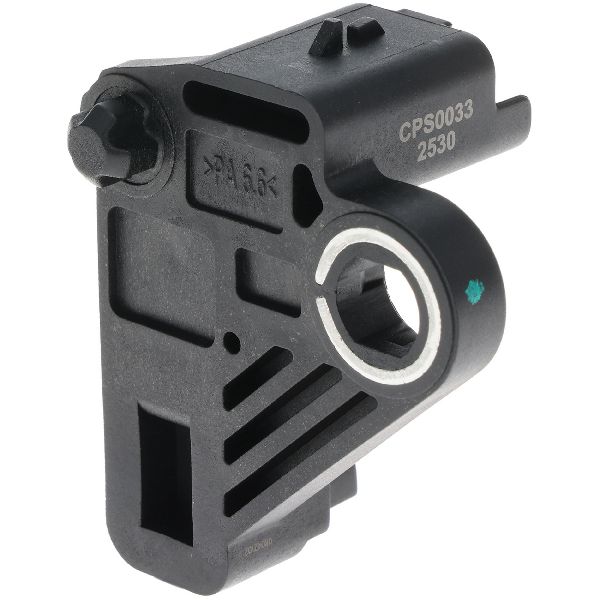
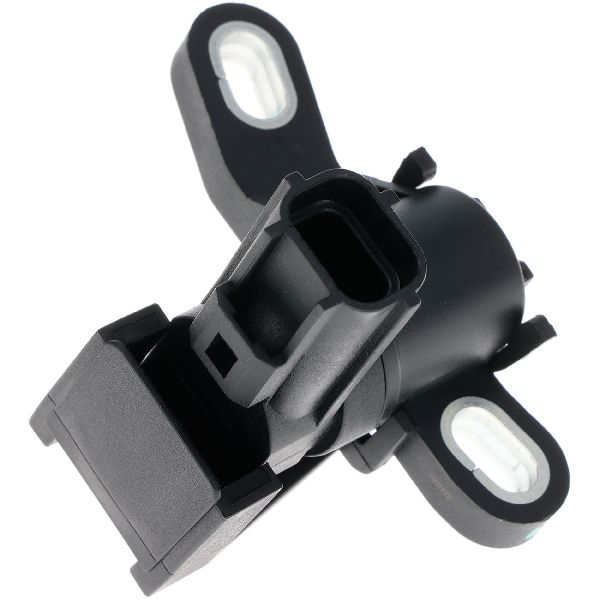
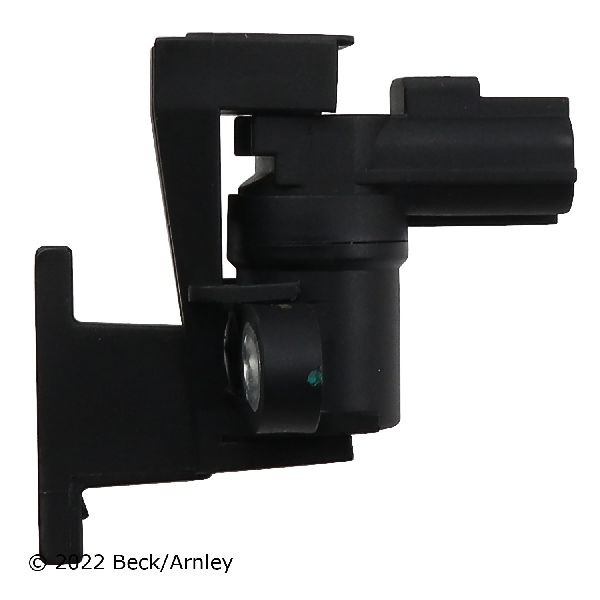
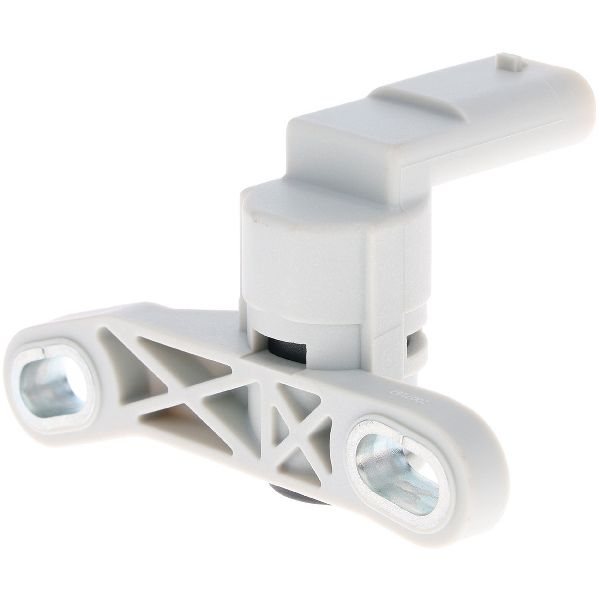
- Crankshaft Position Sensor
(OEM #BM5Z-6C315-A)— This is the most common failure point for code P0339 on this specific vehicle and engine combination.
Trusted brands: Motorcraft, Bosch, Delphi, NTK/NGK
OEM price range: $40-$70
Aftermarket price range: $20-$50
Related Codes That Often Appear With This One
- P0335 — P0335 indicates a constant failure of the CKP circuit, while P0339 is for an intermittent failure. A failing sensor might first trigger P0339 and eventually lead to P0335 as it fails completely.
- P0300-P0304 — Random or specific cylinder misfire codes can occur because the intermittent CKP signal disrupts ignition timing, leading to inefficient combustion.
- P0016 — If the CKP signal is erratic, it can be flagged as a correlation issue against the camshaft position sensor (CMP) signal, leading to a P0016 code.
Technical Service Bulletins (TSBs) & Recalls
- SSM 49596: Mentions incorrect CKP sensor signals can result from improper crankshaft pulley alignment on 2017-2019 Escapes with the 1.5L engine, causing rolling idle.
- TSB 19-2342 / 20-2315: While not for P0339 directly, these TSBs address the known coolant intrusion issue on 1.5L/2.0L EcoBoost engines. This is relevant as leaking coolant can damage the CKP sensor wiring harness, providing a potential root cause for the P0339 electrical fault.
Platform-Specific Known Issues
- There is a Ford Special Service Message (SSM 49596) for the 1.5L engine that notes a rolling idle can be caused by an incorrect CKP signal if the crankshaft pulley was misaligned during a previous repair. While this doesn't directly set a P0339, it highlights the sensitivity of the CKP system on this engine.
- The well-documented coolant intrusion issue (covered under TSBs like 19-2342) can cause coolant to leak and wick into nearby wiring harnesses, potentially causing the intermittent short or open in the CKP sensor circuit that triggers P0339.
Mechanic-Grade Diagnostic Values
- CKP Sensor Bias Voltage — expected: 1.0V - 2.0V. Failure: Voltage outside of this range indicates a fault in the sensor or wiring.
- CKP Sensor 3-Wire Connector Test (General) — expected: Pin 1: 5V reference; Pin 2: Ground (continuity to chassis ground); Pin 3: Signal (voltage varies).. Failure: Missing 5V reference or ground indicates a wiring or PCM issue, not necessarily a bad sensor.
- Live Data RPM During Cranking — expected: A stable reading between 100-500 RPM.. Failure: A reading of zero, or one that is erratic and drops out, points to a fault in the CKP circuit.
Scan Tool Commands That Help
- Ford IDS, FORScan, or equivalent professional scanner: Misfire Monitor Neutral Profile Correction — This procedure is required after replacing the crankshaft position sensor, PCM, or performing major engine repairs like timing belt service. It allows the PCM to learn the profile of the reluctor wheel's teeth to accurately detect misfires. Failing to perform this relearn can cause false misfire codes or even cause P0339 to return.
Wiring & Ground Locations
- G103 — Right side of the engine compartment.. This is a main ground point for engine electronics. A loose or corroded connection at G103 can cause intermittent electrical faults, including the erratic signal from the CKP sensor that triggers P0339.
- Main Ground Studs near Airbox — On the driver's side inner fender/wheel well area, near the air filter box.. Mechanics report that these ground studs can become loose or corroded, especially after service. One technician noted that a stud felt tight by hand but required removal and cleaning to establish a good connection, resolving an intermittent no-start. This is a prime location to check for an intermittent fault like P0339.
- CKP Sensor Connector — At the crankshaft position sensor, located on the lower part of the engine near the main crankshaft pulley.. The connector itself is a common failure point. Oil and coolant leaks can saturate the connector, causing pin corrosion. The wiring can also become brittle from heat, leading to breaks or shorts right at the connector. A 'wiggle test' of this connector and its harness is a key diagnostic step.
Real Owner Repair Stories
- YouTube channel 'Antonio Aguirre' (2015 Ford Escape 2.2L EcoBoost (similar platform and electrical architecture)) — Intermittent no-crank, no-start. No communication with the scan tool. Sometimes the fuel pump could be heard priming, and then it would start; other times, nothing. Wiggling the battery junction box could sometimes induce the fault or cause it to work.
❌ Tried (didn't work) Initial assumption was a bad battery or starter.
✅ What actually fixed it The owner discovered a 50-amp 'mega fuse' in the high-current battery junction box was internally cracked. It was not visibly blown but had an internal break, causing an intermittent connection. Replacing this fuse, which supplied power to the Body Control Module and fuel pump relay, permanently solved the no-start condition. - ScannerDanner Forum user 'aggiediesel01' (2018 Ford Escape 1.5L EcoBoost) — Crank but no start, with no diagnostic trouble codes stored.
❌ Tried (didn't work) Replaced the Powertrain Control Module (PCM)., Replaced the entire main engine wiring harness.
✅ What actually fixed it The user discovered the original PCM and wiring harness were saturated with engine oil, prompting their replacement. However, this did not fix the no-start condition. The diagnostic process then shifted to suspecting a damaged CKP reluctor wheel. While the final resolution was not posted, this story is a critical warning that oil contamination can be severe and that even replacing the entire harness and PCM may not be the fix if the reluctor wheel itself is the underlying problem.
When the Usual Fixes Don't Work
- While a faulty CKP sensor is the most common cause, there are documented cases where the root cause is far removed from the sensor itself. In one instance with similar symptoms, an intermittent no-start was traced to an internally cracked 50A mega fuse in the battery junction box, which intermittently cut power to the body control module. In another complex case, a technician replaced both the PCM and the entire engine wiring harness due to oil contamination, but the no-start condition persisted, pointing towards a deeper mechanical issue like the reluctor wheel. These cases show that if a sensor replacement doesn't work, the fault can be in the vehicle's main power distribution or the mechanical components the sensor reads.
Diagnostic Flowchart
Other Known Issues on This Vehicle
Issues unrelated to this code that are worth knowing about as an owner of this generation:
- Engine Coolant Intrusion 🔴 High — Common on models built before mid-2019. Can occur at moderate mileage (e.g., 60k-80k miles). Leads to misfires and eventual engine failure. (Ref: TSB 19-2342, TSB 20-2315, Customer Satisfaction Program 21N03.)
- Oil Leaking from Brake Vacuum Pump 🟠 Medium — A common leak point. The pump is located on the cylinder head and its gasket can fail, causing oil to drip down the back of the engine and onto the transmission. (Ref: No specific TSB, but a widely documented issue in owner forums and by mechanics.)
- Carbon Buildup on Intake Valves 🟠 Medium — Common to all direct-injection (GDI) engines, including the 1.5L EcoBoost. Becomes noticeable after 60,000-100,000 miles, causing reduced performance and rough idle. (Ref: null)
Used vs. New Parts: Buying Guide for This Vehicle
When a used part is the smart pick: For this repair, a used part is only a smart choice for the connector pigtail. If just the plastic connector housing is broken but the sensor is fine, sourcing a used pigtail from a junkyard is a cost-effective repair.
Donor-vehicle mileage cap: roughly under 100000 miles for the part to have meaningful remaining life.
What to inspect on the donor part:
- For a pigtail, ensure the plastic is not brittle or cracked.
- Check that the locking tab is intact and functional.
- Inspect the wire insulation for at least a few inches back from the connector to ensure it's not heat-damaged or oil-soaked.
OEM-only on this vehicle (don't cheap out):
- While not strictly 'OEM-only', using a name-brand OEM (Motorcraft) or reputable OE-supplier (Bosch, NTK) for the Crankshaft Position Sensor itself is highly recommended. Cheap, no-name sensors have a high failure rate and can cause repeat repairs.
Aftermarket brands forum-validated for this vehicle:
- Motorcraft (OEM)
- Bosch
- Delphi
- NTK/NGK
Brands owners have reported issues with on this vehicle:
- Generic, unbranded 'white-box' parts from online marketplaces should be avoided due to inconsistent quality and high likelihood of premature failure.
Real Owner Stories
Aggregated from forums and TSBs cited above. Mileages and costs reflect what owners reported in those sources.
2019 Ford Escape 1.5L EcoBoost
Symptoms: Stalling and long crank times with the check engine light on.
What fixed it: Replacement of the crankshaft position sensor.
Source hint: YouTube comment: 'how to replace crank position sensor Ford escape 1.5 l EcoBoost - YouTube'
2017 Ford Escape 1.5L EcoBoost
Symptoms: Stalling when coming to a stop and intermittent no-start conditions.
What fixed it: Replacing the crankshaft position sensor.
Source hint: FordEscape.org Forum - '1.5 Ecoboost Stalling'
2017 Ford Fusion 1.5L EcoBoost
Symptoms: P0339 code and rough running immediately after jumping the battery.
What fixed it: The code cleared on its own, suggesting sensitivity to voltage irregularities.
Source hint: Reddit r/autorepair - 'Crankshift Position Sensor P0339 Code after jumping battery'
2017 Ford Escape 1.5L EcoBoost
Symptoms: P0339 code along with a no-start condition following other electrical issues.
What fixed it: Diagnosed as a CKP circuit failure.
Source hint: Reddit r/MechanicAdvice
2018 Ford Escape 1.5L EcoBoost
Symptoms: Crank-no-start condition requiring deep analysis of the CKP waveform.
What fixed it: Complex diagnosis of the CKP signal pattern via oscilloscope.
Source hint: ScannerDanner Forum
Related OBD-II Codes
Frequently Asked Questions
Does the Ford coolant intrusion TSB 19-2342 relate to my P0339 code on a 2018 Escape 1.5L?
Is there a specific part number for the connector if my CKP wiring is damaged?
Can a battery jump-start cause a P0339 code on my Ford Escape platform mate, the Fusion?
I recently had my crankshaft pulley worked on and now have a rolling idle; is this related to the CKP sensor?
What is the 'Misfire Monitor Neutral Profile Correction' I see in the service manual?
Where is the crankshaft position sensor located on the 1.5L EcoBoost engine?
Helpful Videos


We Have This Part in Stock


The information in this article is provided for general reference and educational purposes only. Vehicle specifications, procedures, and part compatibility can vary by production date, trim level, and region. Always consult your vehicle's factory service manual and verify part numbers before purchasing or performing repairs. Safety-critical components such as airbags, seat belts, and braking systems should be installed by a qualified professional.
- Ford Escape:
- 🧭 Diagnostic Flowchart
- 🎬 Helpful Videos
- 🛍️ Shop This Part
- What's Unique About the 2017-2019 Ford Escape
- Symptoms You May Notice
- Most Likely Causes
- Rare But Worth Checking
- Diagnosis Steps
- Parts You'll Likely Need
- Related Codes That Often Appear With This One
- Technical Service Bulletins (TSBs) & Recalls
- Platform-Specific Known Issues
- Mechanic-Grade Diagnostic Values
- Scan Tool Commands That Help
- Wiring & Ground Locations
- Real Owner Repair Stories
- When the Usual Fixes Don't Work
- Other Known Issues on This Vehicle
- Used vs. New Parts: Buying Guide for This Vehicle
- Real Owner Stories
- 2019 Ford Escape 1.5L EcoBoost
- 2017 Ford Escape 1.5L EcoBoost
- 2017 Ford Fusion 1.5L EcoBoost
- 2017 Ford Escape 1.5L EcoBoost
- 2018 Ford Escape 1.5L EcoBoost
- Related OBD-II Codes
- Frequently Asked Questions
- 🎟️ Get 5% Off