

P0340 on 2017-2018 Buick Encore: Camshaft Sensor Circuit Causes and Fixes
On a 2017-2018 Buick Encore, code P0340 often points to a failing camshaft position sensor, but manufacturer bulletins suggest checking the battery first. A weak battery, especially after the car has sat for an extended period, can trigger this code, often along with P0335 and P0365. If the battery is healthy, the sensor is the next likely cause, costing around $30-$50 for an aftermarket part.
- For a P0340 code on a 2017-2018 Encore, **test the battery first**. Manufacturer bulletins confirm a weak battery can cause this code.
- The code refers to the Camshaft Position Sensor 'A' circuit, which is the intake sensor.
- If the battery is good, the sensor itself is the next most likely culprit and is a relatively inexpensive and accessible part to replace for a DIYer.
- This code is often seen with P0335 (crankshaft sensor) and P0365 (exhaust camshaft sensor); their simultaneous appearance strongly suggests a systemic electrical issue like a bad battery.
- Driving with this code can lead to stalling and no-start conditions, so it should be addressed promptly.
What's Unique About the 2017-2018 Buick ENCORE
For this specific generation of Buick Encore and its platform mates (like the Chevy Trax and Cruze with the 1.4L engine), the appearance of P0340, especially alongside codes P0335 (crankshaft sensor) or P0365 (exhaust camshaft sensor), doesn't automatically condemn the sensor. General Motors issued multiple Technical Service Bulletins (TSBs) advising technicians to investigate the vehicle's electrical system. Specifically, TSB #PIP5482B directs technicians to perform a thorough battery inspection and test as a primary diagnostic step before replacing any parts. The bulletin notes that a low battery state of charge during two consecutive engine starts can cause this cluster of codes, particularly on vehicles with low mileage or those that have been parked for an extended time.
Diagnostic Flowchart
Tap your situation to follow the diagnostic path that matches what you're seeing on this vehicle.
Symptoms You May Notice
- Check Engine Light is on
- Engine is hard to start or won't start
- Engine stalls or idles roughly
- Reduced engine power and poor acceleration
- Possible engine misfires
- Increased fuel consumption
- Replacing the camshaft position sensor without first testing the battery and charging system. The provided TSBs strongly suggest that a weak battery is a primary suspect, especially if codes P0335 and P0365 are also present.
Most Likely Causes
- Weak or Failing Battery 🔴 High Probability → Shop Vehicle Battery Manufacturer TSB #PIP5482B specifically directs technicians to perform a battery test when P0340, P0335, and P0365 are present together. It states a low state of charge can cause these codes, especially on low-mileage vehicles or those parked for extended periods. Forum discussions among owners of platform-mate vehicles confirm that a weak or dying battery can cause a no-start condition with these codes, which is resolved by a new battery.
How to confirm: Use a multimeter to test the battery voltage (should be ~12.6V with engine off) and the charging system voltage (should be ~13.7-14.7V with engine running). An auto parts store can perform a load test, which is more definitive. A Reddit user with a 2017 Encore reported similar starting issues that were ultimately traced to a dead cell in the battery, even after initial tests seemed okay.
Typical fix: Replace the vehicle's battery.
Est. part cost: $150-$250 - Failing Camshaft Position Sensor 🟡 Medium Probability → Shop Engine Camshaft Position Sensor The sensor is an electronic component that operates in a high-heat engine environment and can fail over time due to heat cycles and vibration. It's a common replacement part for this engine family. 🎬 Watch: Identifying bad camshaft sensors on the 1.4L Turbo engine.
How to confirm: After confirming the battery and wiring are good, the sensor is the next logical point of failure. It can be tested with a multimeter for resistance (typically between 200-900 ohms) or by observing its signal with an oscilloscope. However, given the low cost of the part, replacement is often the most straightforward diagnostic step.
Typical fix: Replace the Camshaft Position Sensor 'A' (Intake). On the 1.4L engine, both the intake and exhaust sensors are the same part and are located on the top passenger side of the engine. The intake sensor is the one closer to the front of the vehicle.
Est. part cost: $25-$70 - Wiring Harness or Connector Issue ⚪ Low Probability Engine vibration and heat can cause wires to chafe or the plastic connector to become brittle and fail. The locking tab on the connector can break, leading to a poor connection.
How to confirm: Visually inspect the wiring harness leading to the camshaft position sensor for any signs of damage, fraying, or melting. Check that the connector is securely plugged in and free of corrosion or bent pins. Wiggle the connector with the engine running to see if it affects engine behavior.
Typical fix: Repair the damaged section of wiring or replace the pigtail connector. A replacement connector pigtail like the Standard Motor Products S-1025 or Dorman 645-688 is available.
Est. part cost: $15-$40
Rare But Worth Checking
- Timing Chain/Belt Issues: → Shop Engine Timing Chain If the timing chain has stretched or jumped a tooth, the camshaft's actual position will not match what the ECM expects, which can trigger a P0340 code. This is a more serious mechanical issue often accompanied by rattling noises.
- Faulty Engine Control Module (ECM): → Shop Engine Control Module (ECM) This is very rare, but the ECM itself can fail. All other possibilities, especially battery, sensor, and circuit issues, should be exhausted before considering ECM replacement.
- Weak Key Fob Battery: → Shop Vehicle Battery In a peculiar case reported by a Chevy Trax owner, a cluster of codes including P0340 was traced back to a weak key fob battery, causing intermittent no-start conditions. Testing with the spare key resolved the issue, pointing to an immobilizer-related fault triggered by the weak primary key.
Diagnosis Steps
- Scan for any other trouble codes. Note if P0335 or P0365 are also present, as this strongly points towards the TSB-identified electrical issue.
- Crucial First Step: Perform a complete battery and charging system test, as recommended by GM TSB #PIP5482B. Do not skip this step. Ensure the battery holds a proper charge under load and the alternator is functioning correctly. A simple voltage check may not be sufficient.
- If the battery is healthy, locate the intake camshaft position sensor ('A' sensor) on the passenger side of the engine. It is the front-most of the two identical sensors.
- Inspect the sensor's electrical connector and wiring for any visible damage, corrosion, or loose connections. The connector has a locking tab that can become brittle.
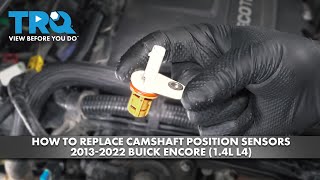
- If the wiring appears intact, the most common repair is to replace the camshaft position sensor. It is typically held in by a single E10 Torx or 10mm bolt. 🎬 Watch: Step-by-step guide to replacing the camshaft position sensor.
- After replacement, clear the trouble codes using a scan tool and test drive the vehicle to see if the code returns.
- If the code persists, a more in-depth diagnosis of the sensor circuit with a multimeter or an investigation into mechanical timing may be required.
Parts You'll Likely Need
- Camshaft Position Sensor
(OEM #55566932)— This sensor is the most common part to fail after ruling out battery issues. On the 1.4L engine, the intake and exhaust sensors are identical and interchangeable. This part number is widely confirmed for the Buick Encore, Chevy Trax, Cruze, and Sonic with the 1.4L engine.
Trusted brands: ACDelco (GM Genuine), Delphi, NGK, Standard Motor Products
OEM price range: $50-$80
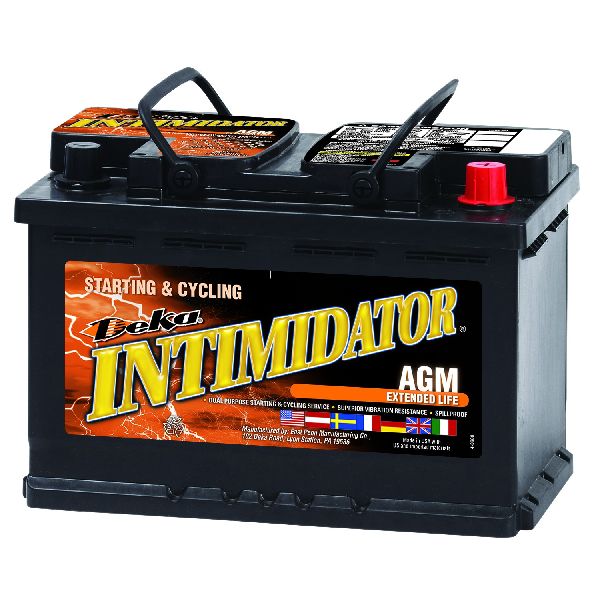
Aftermarket price range: $25-$50 - Car Battery — A weak battery is a known cause for triggering P0340 on this vehicle, as documented in manufacturer TSBs. Owner forums corroborate that replacing an aging battery often resolves mysterious electrical codes.
Trusted brands: ACDelco, DieHard, Duralast
OEM price range: $200-$300
Aftermarket price range: $150-$250 - Camshaft Position Sensor Connector Pigtail
(OEM #ECH EC2181 (NAPA), S-1025 (Standard Motor Products))— The plastic connector or its wiring can become damaged from engine heat and vibration, causing an intermittent or failed connection to the sensor.
Trusted brands: Dorman, Standard Motor Products (SMP), NAPA Echlin
Aftermarket price range: $20-$45
Related Codes That Often Appear With This One
- P0335 — This is the code for the Crankshaft Position Sensor. TSBs #PIE0416A, #PIP5482B, and #PIE0416 all group P0340 with P0335, suggesting a common underlying cause, like a weak battery, can trigger faults in both circuits simultaneously.
- P0365 — This is the code for the Camshaft Position Sensor 'B' (Exhaust). The same TSBs group this code with P0340, indicating a systemic electrical issue is likely affecting multiple position sensors. A Reddit thread about a Chevy Cruze with a 1.4L engine also showed this combination of codes stemming from an electrical issue.
Technical Service Bulletins (TSBs) & Recalls
- PIP5482B: Advises technicians to perform a battery inspection and test when diagnosing DTCs P0335, P0340, or P0365, especially on low-mileage vehicles or those that have sat for long periods. States a low state of charge can be the cause.
- PIE0416A / PIE0416: Bulletins created for engineers to gather information from the field regarding vehicles setting DTCs P0335, P0340, or P0365, confirming this was a known issue under investigation by GM.
Platform-Specific Known Issues
- TSB-Documented Electrical Sensitivity: Manufacturer bulletins #PIE0416A, #PIP5482B, and #PIE0416 indicate a known condition where P0340, P0335, and P0365 can be set due to underlying electrical system problems. TSB #PIP5482B specifically advises technicians to perform a battery inspection/test as a key diagnostic step, noting the issue can be caused by a low state of charge over two consecutive starts.
- Owner Experience - Battery is the Culprit: A Reddit thread discussing a 2017 Encore with starting problems that eventuall
Mechanic-Grade Diagnostic Values
- Camshaft Position Sensor Power Supply — expected: ~5V at the sensor connector with key on, engine off.. Failure: 0V or significantly lower voltage points to a wiring issue or a problem with the ECM's 5V reference circuit.
- Camshaft Position Sensor Signal (Hall-Effect Test) — expected: The voltage should switch between ~5V and 0V as a metal object is passed in front of the sensor tip.. Failure: Voltage that is stuck high or low, or does not switch, indicates a failed sensor.
- Camshaft Position Sensor Ground Circuit — expected: Near 0 Ohms of resistance between the ground pin on the connector and the chassis ground.. Failure: High resistance indicates a poor ground connection, which can cause erratic sensor readings.
- Camshaft Position Sensor Retaining Bolt Torque — expected: 53 inch-pounds (approx. 6 Nm). Failure: Over-tightening can crack the plastic sensor housing; under-tightening can allow the sensor to vibrate or move.
Scan Tool Commands That Help
- GDS2/High-End OBD2 Scanner: Crankshaft Position Variation Learn — After replacing a crankshaft sensor (often done with camshaft sensors), this procedure is required to allow the ECM to learn the new sensor's specific tolerances. While not directly for the P0340, it's critical if P0335 is also present and the crank sensor is replaced.
Wiring & Ground Locations
- Main Engine Ground — On the 1.4L engine, a primary ground strap runs from the main wiring harness near the ignition coil to a bolt on the top of the engine/valve cover.. A loose or corroded main engine ground is a known issue on this platform that can cause multiple, seemingly unrelated electrical faults and codes, including for the camshaft and crankshaft sensors. The ECM and its sensors rely on this ground for a stable reference.
- G103 — On some GM platforms, G103 is a key ground for the ECM. On a 2014 Cruze (platform mate), it is on the shock tower. Its exact location can vary by model year and platform, but checking major chassis and engine grounds is crucial.. The camshaft position sensor is grounded through the Engine Control Module (ECM). A poor ground connection for the ECM itself can cause erratic sensor readings and trigger a P0340 code.
Real Owner Repair Stories
- Reddit user in r/cruze (2015 Chevy Cruze 1.4L (platform mate)) — Car went into limp mode with 21 codes after an air filter change. After clearing, permanent codes P0335, P0340, and P0365 remained.
❌ Tried (didn't work) Resetting codes, One mechanic suggested replacing the PCM, A GM mechanic found nothing wrong
✅ What actually fixed it After visiting three mechanics, the cause was found to be a failed aftermarket GPS unit that had been installed between the starter and the ECM. Removing the faulty unit resolved the codes. - Reddit user in r/ChevyTrax (2015 Chevy Trax (platform mate)) — Car would not attempt to turn over for 2-3 days, then would start but with the check engine light on. Codes P0335, P0340, P0365 were present.
❌ Tried (didn't work) Replacing the Camshaft 'B' (exhaust) sensor, Replacing the starter (mechanic noted the old one was a poor quality brand)
✅ What actually fixed it The issue was a weak battery in the primary key fob. The car would start reliably with the spare key but not the main key. Replacing the key fob battery resolved the no-start condition and the codes.
OEM Part Supersession History
55566932→55566932 (current)— No supersession found. The part number remains active.
Heads up: The intake and exhaust camshaft position sensors are the same part number and are interchangeable on the 1.4L LUV/LE2 engine.
Helpful Videos
We Have This Part in Stock


The information in this article is provided for general reference and educational purposes only. Vehicle specifications, procedures, and part compatibility can vary by production date, trim level, and region. Always consult your vehicle's factory service manual and verify part numbers before purchasing or performing repairs. Safety-critical components such as airbags, seat belts, and braking systems should be installed by a qualified professional.
- Buick ENCORE:
- 🧭 Diagnostic Flowchart
- 🎬 Helpful Videos
- 🛍️ Shop This Part
- What's Unique About the 2017-2018 Buick ENCORE
- Symptoms You May Notice
- Most Likely Causes
- Rare But Worth Checking
- Diagnosis Steps
- Parts You'll Likely Need
- Related Codes That Often Appear With This One
- Technical Service Bulletins (TSBs) & Recalls
- Platform-Specific Known Issues
- Mechanic-Grade Diagnostic Values
- Scan Tool Commands That Help
- Wiring & Ground Locations
- Real Owner Repair Stories
- OEM Part Supersession History
- 🎟️ Get 5% Off