

P0340 on 2010-2017 Chevrolet Equinox 2.4L: Cam Sensor vs. Timing Chain Causes
P0340 on a 2.4L Equinox is often a failing intake camshaft position sensor, a ~$40 part that's a moderate DIY fix. However, this code can also be the first sign of a stretched timing chain, a serious and common issue on this engine that requires a $1,500+ professional repair. Due to rampant oil consumption issues, a timing chain problem is highly probable.
- On a 2.4L Equinox, P0340 is a serious code that demands careful diagnosis.
- ALWAYS check the oil level first; low oil is a major cause of the underlying issues on this engine.
- Do not automatically replace the sensor. Suspect a stretched timing chain or faulty VVT solenoid, as these are extremely common, well-documented failures for this vehicle.
- The presence of codes P0016 or P0017 alongside P0340 is a near-certain confirmation of a mechanical timing chain problem requiring professional service.
- If you replace the sensor and the code returns, the root cause is almost certainly the timing chain or VVT system.
What's Unique About the 2010-2017 Chevrolet Equinox
The 2010-2017 Equinox with the 2.4L Ecotec engine is notorious for two issues that are directly linked to code P0340: excessive oil consumption and premature timing chain failure. A class-action lawsuit was filed over the oil consumption issue, which stems from faulty piston rings. Low oil levels starve the hydraulic timing chain tensioner, leading to a stretched chain. A stretched chain causes the camshaft and crankshaft to go out of sync, which can trigger a P0340 code even if the sensor itself is perfectly fine. Owners should be extremely cautious and not assume P0340 is just a simple sensor problem on this specific vehicle.
Symptoms You May Notice
- Check Engine Light is on
- Engine is hard to start or cranks for a long time
- Engine stalls, especially at idle or low speeds
- Rough or vibrating idle
- Hesitation or lack of power during acceleration
- Reduced fuel economy
- Rattling or 'diesel-like' noise from the engine for 2-3 seconds on a cold start (strong indicator of timing chain issue)
- Replacing only the camshaft position sensor without investigating the possibility of a stretched timing chain. If the chain is the root cause, the P0340 code will return, and the underlying mechanical issue will persist.
- Replacing the camshaft position sensor when the actual fault is with a clogged or failed VVT solenoid, which produces similar symptoms.
- Using aftermarket camshaft position sensors. Many owner forums report that non-ACDelco sensors fail within months, causing the code to return.
Most Likely Causes
- Stretched Timing Chain and/or Failed Tensioner & Guides 🔴 High Probability → Shop Engine Timing Chain This engine is widely known for premature timing chain system wear, often accelerated by oil consumption issues that starve the hydraulic tensioner. The plastic guides can also break, causing further damage and slack.
How to confirm: Listen for a distinct rattling noise from the passenger side of the engine on a cold start that lasts a few seconds. 🎬 Watch: Hear what a failing timing chain rattle sounds like. A mechanic can remove the valve cover to physically check for slack in the timing chain. The presence of codes like P0016 or P0017 alongside P0340 strongly indicates a timing chain problem.
Typical fix: Replace the entire timing chain kit, including chains, tensioners, and guides. This is a labor-intensive job, often costing over $1,500.
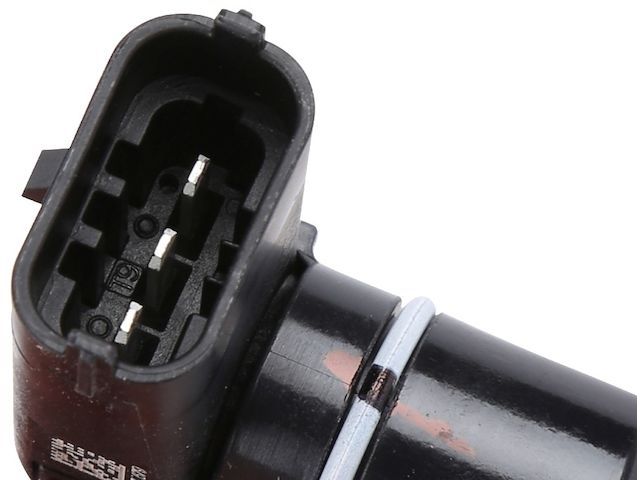
Est. part cost: $150-$400 - Failed Intake Camshaft Position Sensor (CMP) 🟡 Medium Probability → Shop Engine Camshaft Position Sensor The sensor is a common failure point due to heat cycles and potential oil contamination. Forum users strongly recommend using only ACDelco OEM sensors, as aftermarket brands (like Dorman) are reported to fail quickly.
How to confirm: After checking wiring, swap the intake and exhaust camshaft position sensors (they are the same part). If the code changes to P0365 (Exhaust Camshaft Position Sensor), the sensor you moved is bad. You can also test the sensor's signal with a multimeter.
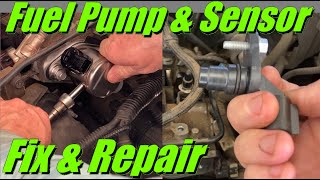
Typical fix: Replace the intake camshaft position sensor. It is located under the high-pressure fuel pump cover on the front of the engine. 🎬 See this walkthrough on replacing the camshaft sensor and pump.
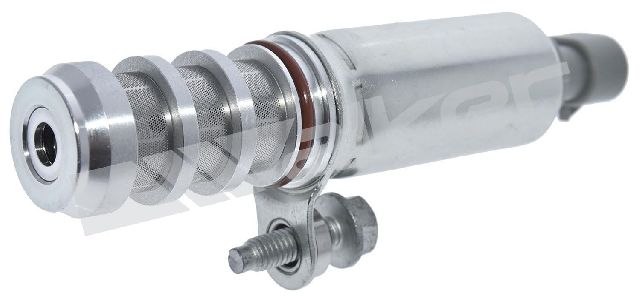
Est. part cost: $25-$60 - Faulty Camshaft Actuator Solenoids (VVT Solenoids) 🟡 Medium Probability → Shop Engine Camshaft Low or dirty oil can clog the fine mesh screens on the solenoids, causing them to stick or fail. This is a known issue addressed by GM in TSB 17-NA-098.
How to confirm: Check for related codes like P0010, P0011, P0013, or P0014. The solenoids can be removed, cleaned, and tested. A common diagnostic step is to swap the intake and exhaust solenoids to see if the fault code follows the part.
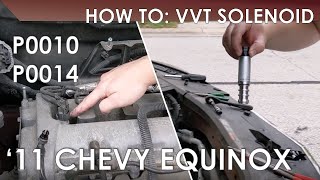
Typical fix: Replace both the intake and exhaust VVT solenoids. They are located on the top of the valve cover and are easy to access. TSB 17-NA-098 specifically recommends replacing both at the same time. 🎬 Watch: Easy DIY guide for replacing your VVT solenoids.
Est. part cost: $40-$80 for a pair - Low or Dirty Engine Oil ⚪ Low Probability The 2.4L Ecotec is known for consuming oil between changes due to a piston ring defect, especially in 2010-2013 models. Low oil pressure affects the VVT system and the timing chain tensioner, which can trigger timing-related codes.
How to confirm: Check the engine oil dipstick. If the level is low or the oil is very dark and sludgy, this is a likely contributor. Owners should check oil levels at every fuel fill-up, not just at scheduled changes.
Typical fix: Perform an oil and filter change using the correct viscosity oil (5W-30 full synthetic). Monitor oil levels frequently to prevent recurrence.
Est. part cost: $40-$70 - Damaged Wiring or Connector ⚪ Low Probability
How to confirm: Visually inspect the wiring harness and connector for the intake camshaft position sensor for any signs of fraying, corrosion, or loose pins. Trace the harness for any heat damage from the exhaust manifold. A manufacturer service bulletin, TSB Bulletin #PIP5724, notes that a pinched wiring jumper harness can cause P0340 and P0341, potentially leading to a stall or a crank-no-start condition.
Typical fix: Repair the damaged section of wiring or replace the connector pigtail.
Est. part cost: $10-$25
Rare But Worth Checking
- Failed Engine Control Module (ECM): → Shop Engine Control Module (ECM) This is extremely rare. The ECM should only be considered after all other possibilities, including mechanical timing, sensors, and wiring, have been exhaustively tested and ruled out.
Diagnosis Steps
- Check Engine Oil Level and Condition: Before any other step, verify the oil is full and clean. Low or dirty oil is a primary contributor to timing issues on this engine. Due to known consumption issues, check the oil level weekly.
- Scan for Other Codes: Check for codes like P0016, P0017, P0010, or P0011. The presence of these codes strongly points towards a mechanical timing or VVT system issue rather than just a bad sensor. TSB Bulletin #PIT5677E indicates that P0340 and P0341 may be found in combination with various other electrical and engine codes during diagnostics.
- Listen for Cold Start Rattle: On a cold engine, start the vehicle and listen for a 2-4 second rattling or grinding noise from the passenger side of the engine. This is a classic symptom of a failing timing chain tensioner.
- Inspect Sensor Wiring: Visually inspect the wiring harness and connector for the intake camshaft position sensor. Look for any damage, corrosion, or loose connections. TSB Bulletin #PIP5335D advises technicians to use normal published service information diagnostics when P0340 and P0341 are setting.
- Swap Intake and Exhaust Sensors: The intake and exhaust CMP sensors are identical. Swap their positions. Clear the codes and run the engine. If the code changes to P0365 (Exhaust CMP Sensor), the original intake sensor is faulty and needs replacement.
- Inspect VVT Solenoids: Remove and inspect the intake and exhaust VVT solenoids on top of the engine. Check for clogged screens. You can swap them to see if any VVT-related codes (like P0010/P0011) follow the solenoid.
- Professional Mechanical Inspection: If the steps above do not resolve the issue, the vehicle must be inspected for a stretched timing chain. This involves removing the valve cover to measure chain slack and is best performed by a professional.
Parts You'll Likely Need
- Intake Camshaft Position Sensor
(OEM #12674704)— This is the sensor directly indicated by code P0340 and is a common electrical failure point. It is identical to the exhaust sensor.
Trusted brands: ACDelco (GM Genuine), Delphi, Standard Motor Products
OEM price range: $40-$60
Aftermarket price range: $25-$45 - Engine Timing Chain Kit — A stretched timing chain is a very common root cause of P0340 on this engine. A complete kit is required to properly fix the issue.
Trusted brands: Cloyes (e.g., Kit 9-0753S), Melling, GM Genuine
OEM price range: $300-$450
Aftermarket price range: $150-$250 - Camshaft Position Actuator Solenoid Kit (VVT Solenoids)
(OEM #12679099 (Intake), 12679100 (Exhaust) - Supersedes 12655420/12655421)— These solenoids get clogged by dirty/low oil, causing timing issues that can trigger P0340. TSB 17-NA-098 recommends replacing both as a pair with the updated part numbers.
Trusted brands: ACDelco (GM Genuine), Dorman, Delphi
OEM price range: $60-$90 for a pair
Aftermarket price range: $40-$70
Related Codes That Often Appear With This One
- P0016 / P0017 — These codes indicate a direct correlation error between the crankshaft and camshaft. If you see these with P0340, a stretched timing chain is almost certain.
- P0365 — This is the code for the exhaust camshaft position sensor. Seeing both P0340 and P0365 could point to a shared wiring issue or a major timing chain problem affecting both cams.
- P0010 / P0011 — These codes relate to the intake camshaft position actuator (VVT) system. Their presence suggests the problem may be with the VVT solenoid rather than, or in addition to, the position sensor itself. TSB 17-NA-098 addresses this scenario.
Technical Service Bulletins (TSBs) & Recalls
- TSB 17-NA-098: Addresses rough running, hesitation, and stalling with codes P0010, P0011, P0013, or P0014, caused by failing camshaft position actuator solenoid valves. Recommends replacing both solenoids.
- TSB Bulletin #PIP5724: Notes that P0340 and P0341 can be caused by a pinched wiring jumper harness, potentially resulting in a stall or a crank-no-start condition.
- TSB Bulletin #PIP5335D: Provides information for technicians regarding vehicles with the Malfunction Indicator Lamp on and codes P0340 and P0341 setting at times.
- TSB Bulletin #PIT5677E: Lists P0340 and P0341 among a wide combination of DTCs that may be found when checking for electrical system issues.
Platform-Specific Known Issues
- Owner Experience: Sensor Replacement Doesn't Fix It: An owner on equinoxforum.com reported getting P0340. They replaced the camshaft position sensor, but the code returned. Further diagnosis revealed a stretched timing chain, which was the actual root cause. This is a common story for this platform.
- Real-World Repair: Timing Chain Rattle: → Shop Engine Timing Chain A user on Reddit's r/AskMechanics described a lack of power in their 2010 Equinox. Their mechanic diagnosed a needed timing chain replacement, quoting over $1000. The owner admitted to neglecting oil changes, which is a primary accelerator of this failure.
- The VVT Solenoid Fix: In several forum threads, owners with P0340, sometimes accompanied by P0010 or P0011, resolved their stalling and rough idle issues by replacing both VVT solenoids. Many noted the screens on the old solenoids were clogged with sludge, reinforcing the importance of clean oil.
Mechanic-Grade Diagnostic Values
- VVT Solenoid Resistance — expected: 8-13 Ohms. Failure: A reading outside this range, or a meter that bounces around when testing, indicates a faulty solenoid.
- CMP Sensor Connector Voltage (Key On, Engine Off) — expected: 5V on the reference terminal, 5V on the signal terminal, and 12.6V (battery voltage) at the ground terminal (when probing from the positive battery terminal).. Failure: Readings outside these ranges indicate a wiring or ECM issue, not a sensor failure.
- ECM/PCM Ground Circuit Resistance — expected: Less than 1.0 Ohm. Failure: Higher resistance points to a poor ground connection at locations like G112, which can cause erratic sensor readings.
Scan Tool Commands That Help
- GDS2 / Tech2: VVT Solenoid Actuator Test — This bidirectional control allows a technician to command the VVT solenoids on and off to verify their mechanical operation and observe the engine's response, helping to isolate a sticky or non-responsive solenoid from an electrical circuit fault.
- GDS2 / Tech2: Crankshaft Position Variation Relearn — This procedure is required after replacing the crankshaft position sensor, ECM, or performing major engine work like a timing chain replacement. Failure to perform the relearn can cause other timing-related codes and drivability issues, even if the P0340 is resolved.
Wiring & Ground Locations
- CMP Sensor Connector (Intake) — Located under the high-pressure fuel pump cover on the front (radiator side) of the engine.. This is the primary connection point for the sensor. The connector or its wiring can be damaged by heat or oil contamination.
- G112 — Main PCM ground location for the 2.4L engine.. A poor connection at this ground can cause the PCM to receive incorrect sensor data from the CMP sensor, leading to a P0340 code even with a good sensor and wiring.
- G103 — Located at the left rear of the engine compartment on the cowl, above the brake booster.. This is a major ground for the BCM and Data Link Connector (DLC). A poor connection here can cause communication issues with scan tools, making diagnosis difficult.
- ECM Connector (Black w/ Gray Lock) — At the Engine Control Module (ECM).. The crankshaft position sensor circuit uses pins 10, 25, and 26 on this connector. This is the endpoint for continuity and short-to-ground tests from the sensor connector.
Real Owner Repair Stories
- Reddit user in r/MechanicAdvice (2005 Mini Cooper S (Note: Different vehicle, but illustrates the direct link between timing and P0340)) — Crank no-start condition after replacing rocker arms and camshaft. Code P0340 present.
❌ Tried (didn't work) Replacing the camshaft position sensor.
✅ What actually fixed it The timing chain had jumped the sprocket completely and destroyed the guides. The final fix was a new timing chain kit. - NHTSA ODI #11139374 — An owner reported intermittent issues where the current codes stored were P0340, P0300, and P0341. Despite taking the vehicle to a dealer and multiple shops on several occasions, the problem remained unresolved.
- NHTSA ODI #10809597 — A report describes a vehicle where reduced engine power increased to a long list of OBD codes, including P0010, P0340, and P2089, noting that at that point there didn't appear to be anything left on the vehicle that worked.
OEM Part Supersession History
12655420 (Intake), 12655421 (Exhaust)→12679099 (Intake), 12679100 (Exhaust)— Updated design to improve reliability and resistance to oil contamination for the VVT Solenoids.Older revisions of 12674704→12674704 (current revision)— Minor internal improvements to the Camshaft Position Sensor for durability.
Heads up: The part number remains the same, but always purchase from a reputable source to ensure you are getting the latest revision and not old stock.
Model Year Variations Within This Range
- 2010-2013: These earlier models with LAF and early LEA engines are most prone to the excessive oil consumption issue due to the original piston ring design. This directly increases the likelihood that P0340 is caused by a timing chain problem resulting from oil starvation.
- 2014-2017: Later LEA engines received updated piston rings to mitigate oil consumption. While not completely immune, they are less likely to suffer from oil-starvation-induced timing failures compared to earlier models. On these later years, a direct sensor or wiring failure becomes a slightly more probable cause relative to the timing chain.
Diagnostic Flowchart
Other Known Issues on This Vehicle
Issues unrelated to this code that are worth knowing about as an owner of this generation:
- Excessive Oil Consumption 🔴 High — Extremely common on 2010-2013 models due to piston ring design. Many owners report consuming 1 quart per 1,000-2,000 miles. Less frequent on 2014+ models after a piston ring redesign. (Ref: Special Coverage Adjustment 14159 / 15285D)
- Frozen/Clogged PCV Orifice & Blown Rear Main Seal 🔴 High — Common in cold weather climates on 2010-2014 models. A clogged PCV orifice in the intake manifold builds crankcase pressure, blowing out the rear main seal, leading to a massive oil leak. (Ref: TSB #14882 / PIP5093B)
- High-Pressure Fuel Pump (HPFP) Failure 🟠 Medium — The direct-injection HPFP can fail, leading to rough idle, stalling, and reduced power. Sometimes the pump's internal seal fails, leaking fuel into the engine oil, which thins the oil and accelerates wear.
- Wiper Transmission Failure 🟡 Low — A link ball socket in the wiper transmission can separate, causing one or both wipers to stop working suddenly. (Ref: Special Coverage Adjustment N192266180)
Used vs. New Parts: Buying Guide for This Vehicle
When a used part is the smart pick: For this repair, used parts are generally not recommended due to the high failure rate of the key components. The only exception might be a connector pigtail from a junkyard harness if the original is physically damaged, or a low-mileage high-pressure fuel pump cover if the original was lost or broken during service.
Donor-vehicle mileage cap: roughly under 50000 miles for the part to have meaningful remaining life.
What to inspect on the donor part:
- For a wiring pigtail, ensure the wires are flexible with no cracking in the insulation.
- Check that the connector's locking tabs are intact and not brittle.
- Avoid any parts from a vehicle that shows signs of a severe engine fire or front-end collision.
OEM-only on this vehicle (don't cheap out):
- Camshaft Position Sensor: Forum consensus is overwhelming that aftermarket sensors, particularly budget brands, have a very high rate of premature failure on this engine. Stick with ACDelco GM Genuine parts.
- Timing Chain Kit: Given the labor-intensive nature of the job and the engine's sensitivity, using a high-quality OEM or top-tier aftermarket kit (like Cloyes or a specialty kit like ZZP) is critical to avoid repeat failure.
Aftermarket brands forum-validated for this vehicle:
- Cloyes (for Timing Chain Kits)
- Melling (for Timing Chain Kits)
- Delphi (for Sensors and Solenoids, often an OE supplier)
- Standard Motor Products (SMP) (for Sensors and Solenoids)
- ZZP (for upgraded, performance-oriented timing chain kits)
Brands owners have reported issues with on this vehicle:
- Unbranded, 'white-box' sensors from online marketplaces.
- Dorman (some forum users report quick failure of their camshaft sensors and VVT solenoids for this application, though their other products may be fine).
Real Owner Stories
Aggregated from forums and TSBs cited above. Mileages and costs reflect what owners reported in those sources.
2010 Chevrolet Equinox 2.4L
Symptoms: Lack of power and a P0340 code. The owner admitted to neglecting regular oil changes.
What fixed it: Replacement of the timing chain.
Cost: $1000-$1500
Source hint: Reddit r/AskMechanics
2010-2017 Chevrolet Equinox 2.4L
Symptoms: P0340 code persisted even after the owner replaced the camshaft position sensor.
What fixed it: Diagnosis of a stretched timing chain, which was the actual root cause.
Source hint: equinoxforum.com
2010-2017 Chevrolet Equinox 2.4L
Symptoms: Stalling and rough idle issues accompanied by codes P0340, P0010, and P0011.
What fixed it: Replacing both VVT solenoids; the owner noted the old solenoid screens were clogged with sludge.
Source hint: vehicle_specific_issues: The VVT Solenoid Fix
2010-2017 Chevrolet Equinox 2.4L
Symptoms: Multiple timing-related codes including P0340, P0341, P0016, and P0017.
What fixed it: Timing chain replacement.
Source hint: chevroletforum.com thread titled 'P0340 P0341 P0016 P0017 Timing Chain'
Chevrolet Silverado 2500 Owner
Symptoms: Reduced engine power and a wide range of OBD codes including P0010, P0340, and P2089.
What fixed it: The owner reported that at this point there didn't appear to be anything left on the vehicle that worked.
Source hint: NHTSA ODI #10809597
Chevrolet Cobalt Owner
Symptoms: Intermittent issues with stored codes P0340, P0300, and P0341.
What fixed it: The owner had the car at the dealer and multiple shops on multiple occasions without resolution.
Source hint: NHTSA ODI #11139374
Related OBD-II Codes
Frequently Asked Questions
I replaced the camshaft sensor on my Equinox but the P0340 code came back. What else could it be?
Which brand of camshaft position sensor should I use for the 2.4L Ecotec?
My Equinox is stalling and has codes P0010 and P0011 along with P0340. Does GM have a bulletin for this?
Can I test if the sensor is actually bad without buying a new one?
How does low oil cause a P0340 code on the 2.4L Equinox?
What is the rattling sound I hear for a few seconds when I start my Equinox in the morning?
Helpful Videos
We Have This Part in Stock


The information in this article is provided for general reference and educational purposes only. Vehicle specifications, procedures, and part compatibility can vary by production date, trim level, and region. Always consult your vehicle's factory service manual and verify part numbers before purchasing or performing repairs. Safety-critical components such as airbags, seat belts, and braking systems should be installed by a qualified professional.
- Chevrolet Equinox:
- 🧭 Diagnostic Flowchart
- 🎬 Helpful Videos
- 🛍️ Shop This Part
- What's Unique About the 2010-2017 Chevrolet Equinox
- Symptoms You May Notice
- Most Likely Causes
- Rare But Worth Checking
- Diagnosis Steps
- Parts You'll Likely Need
- Related Codes That Often Appear With This One
- Technical Service Bulletins (TSBs) & Recalls
- Platform-Specific Known Issues
- Mechanic-Grade Diagnostic Values
- Scan Tool Commands That Help
- Wiring & Ground Locations
- Real Owner Repair Stories
- OEM Part Supersession History
- Model Year Variations Within This Range
- Other Known Issues on This Vehicle
- Used vs. New Parts: Buying Guide for This Vehicle
- Real Owner Stories
- 2010 Chevrolet Equinox 2.4L
- 2010-2017 Chevrolet Equinox 2.4L
- 2010-2017 Chevrolet Equinox 2.4L
- 2010-2017 Chevrolet Equinox 2.4L
- Chevrolet Silverado 2500 Owner
- Chevrolet Cobalt Owner
- Related OBD-II Codes
- Frequently Asked Questions
- 🎟️ Get 5% Off