

P0340 on 2008-2014 Dodge Avenger 2.4L: Camshaft Sensor Causes and Fixes
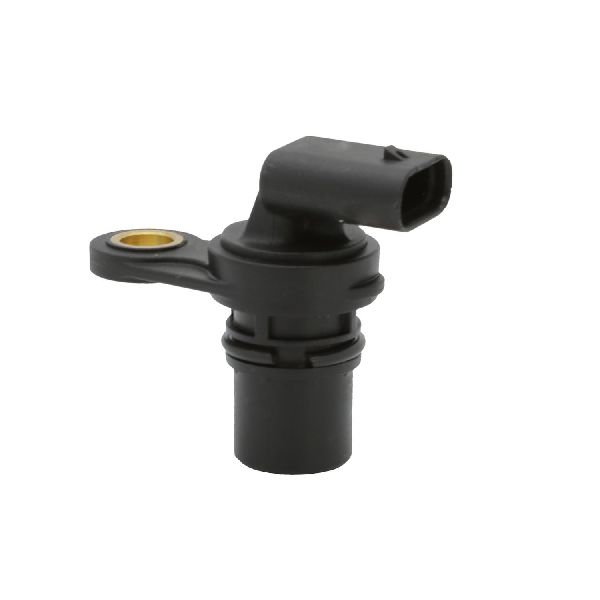
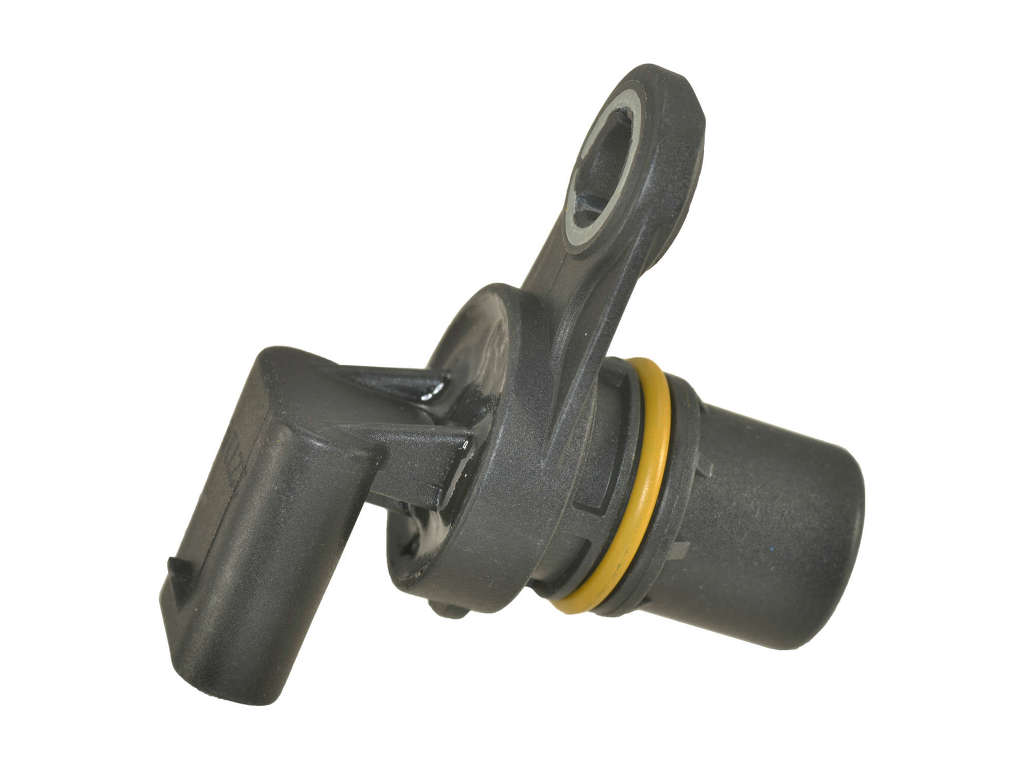
On a 2008-2014 Dodge Avenger with the 2.4L engine, code P0340 is most often caused by a failed intake camshaft position sensor. Replacing the sensor is a straightforward DIY fix, with an OEM Mopar part costing around $45-$70. Aftermarket sensors are known to fail quickly on this platform.
- P0340 on a 2.4L Avenger almost always points to a bad intake camshaft position sensor.
- Using a cheap aftermarket sensor is likely to result in the code returning; an OEM Mopar part (68080819AD) is strongly recommended.
- The repair is simple, accessible, and a good DIY task for a beginner.
- Before replacing parts, check for relevant TSBs, as a PCM software update may be the required fix.
What's Unique About the 2008-2014 Dodge Avenger
The 2.4L World Engine used in this generation of the Dodge Avenger is known to be sensitive to the quality of its electronic sensors. While the P0340 code is generic, owners and mechanics frequently report that using aftermarket camshaft position sensors can lead to the code returning quickly. For a lasting repair, using an OEM Mopar sensor is strongly recommended for this specific vehicle. The 2.4L engine has two identical camshaft position sensors (one for intake, one for exhaust), and it is often recommended to replace them in pairs. The issue is almost always the sensor itself or its wiring, rather than more complex mechanical problems.
Symptoms You May Notice
- Check Engine Light is on
- Engine is difficult to start or cranks but won't start
- Engine stalls unexpectedly, sometimes while driving
- Rough or unstable idle
- Noticeable loss of power and poor acceleration
- Reduced fuel economy
- Transmission may seem to shift poorly or go into limp mode
- Replacing the crankshaft position sensor when the camshaft sensor is the actual problem.
- Replacing the sensor when the root cause is a simple wiring or connector issue.
- Replacing the VVT solenoids (oil control valves), which are a separate component related to cam timing but not directly indicated by a P0340 circuit code.
Most Likely Causes
- Failed Intake Camshaft Position Sensor 🔴 High Probability → Shop Engine Camshaft Position Sensor The camshaft position sensor is a documented common failure item on the 2.4L World Engine platform. The sensor is exposed to high heat and vibration, which can cause it to fail over time.
How to confirm: After visually inspecting the wiring, replacing the sensor is the most direct way to confirm. You can also test the sensor's output signal with a multimeter or oscilloscope. A real-world owner of a platform-mate (Jeep Patriot) confirmed that after an aftermarket sensor failed within 2 months, installing an OEM Mopar sensor permanently fixed the P0340 code.
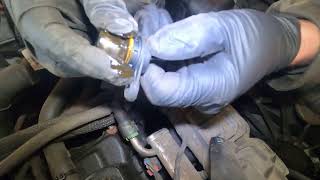
Typical fix: Replace the intake camshaft position sensor. 🎬 Watch this step-by-step guide to replacing the bank 1 sensor. It is highly recommended to use an OEM Mopar part (Part No. 68080819AD).
Est. part cost: $20-$70 - Damaged Wiring or Connector 🟡 Medium Probability The wiring harness in the engine bay is subject to heat, vibration, and oil exposure, which can cause wires to become brittle, frayed, or corroded over time. The connector's locking tab can also break. Oil leaking from the valve cover gasket can also contaminate the connector and wiring.
How to confirm: Visually inspect the wiring harness leading to the camshaft position sensor for any signs of chafing, melting, or corrosion. Check that the connector is securely plugged in and that the pins inside are clean and not bent.
Typical fix: Repair the damaged section of wiring or replace the pigtail connector.
Est. part cost: $10-$30 - Failed Crankshaft Position Sensor ⚪ Low Probability → Shop Engine Crankshaft Position Sensor The PCM relies on both the cam and crank sensors to understand the engine's timing. A failing crankshaft sensor can send erratic signals that the PCM may misinterpret as a problem with the camshaft sensor circuit, triggering P0340.
How to confirm: This is typically diagnosed after a new camshaft sensor fails to resolve the P0340 code. A scan tool may show corresponding crankshaft sensor codes like P0335.
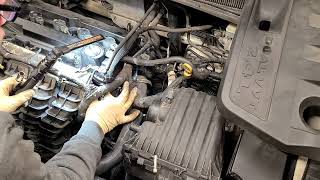
Typical fix: Replace the crankshaft position sensor. 🎬 See how to access and swap the crankshaft position sensor.
Est. part cost: $25-$95
Rare But Worth Checking
- Stretched or Jumped Timing Chain: → Shop Engine Timing Chain While uncommon, if the timing chain has stretched or jumped a tooth, the correlation between the camshaft and crankshaft will be incorrect, which can trigger a P0340 code. This is a more serious mechanical issue and would likely be accompanied by other timing correlation codes (like P0016) and engine noise.
- Failing Powertrain Control Module (PCM): → Shop Engine Control Module (ECM) This is the least likely cause. The PCM itself can fail, but all other possibilities should be exhausted before condemning the computer. In some cases, the PCM may simply need a software update per a TSB, rather than a full replacement.
- Broken Crankshaft Woodruff Key: → Shop Engine Crankshaft Extremely rare, but documented in one forum case on a platform-mate. If the small key that aligns the timing gear on the crankshaft shears or breaks, the timing will be off, causing a P0340 code that replacing sensors will not fix. This was discovered after a timing chain service.
Diagnosis Steps
- Scan for Codes: Use an OBD-II scanner to confirm P0340 is the primary code. Note any other codes that are present, such as P0344, P0335, or C121C.
- Check for TSBs: For the 2.4L engine family, some P0340 codes can be erroneously set. A Chrysler/Jeep TSB (#18-022-17 REV. A) addresses this with a PCM software update. Check with a dealer or equipped shop if this applies before replacing parts.
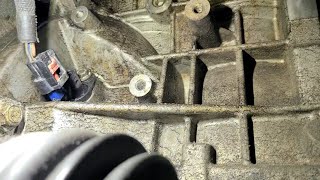
- Inspect Wiring and Connector: Locate the intake camshaft position sensor on the cylinder head. Carefully inspect the electrical connector and wiring harness for any visible damage, such as cracks, melting, or oil contamination. Ensure the connector is securely fastened.
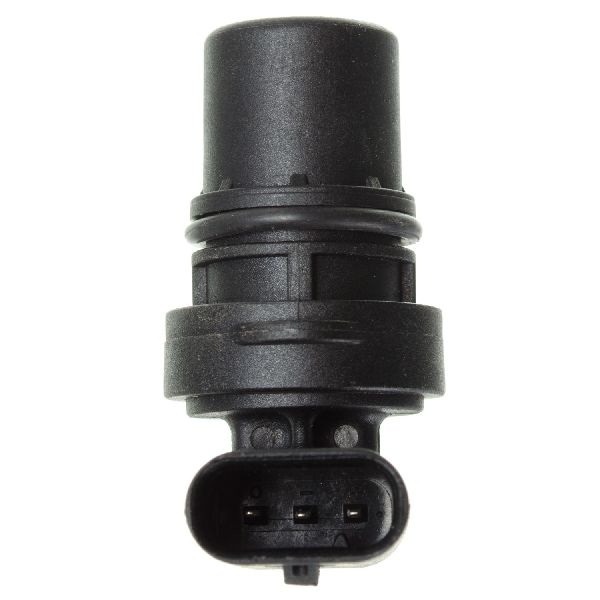
- Test the Sensor (Optional): If you have a multimeter, you can test the sensor. It's a 3-wire sensor. You should find a 5-volt reference, a ground, and a signal wire that fluctuates as the engine is cranked.
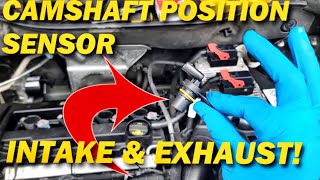
- Replace the Camshaft Position Sensor: Given the high failure rate, the most common and practical step is to replace the sensor. The sensor is held in by a single 10mm bolt 🎬 Watch this fast DIY walkthrough for intake and exhaust sensors. and is relatively easy to access. It is highly recommended to use an OEM Mopar part.
- Clear Codes and Test Drive: After replacing the sensor, clear the trouble codes with your scanner and perform a test drive to see if the symptoms and code return.
- Investigate Further: If the code comes back, re-inspect the wiring. If the wiring is good, the next step would be to investigate the crankshaft position sensor or, in rare cases, check the engine's mechanical timing.
Parts You'll Likely Need
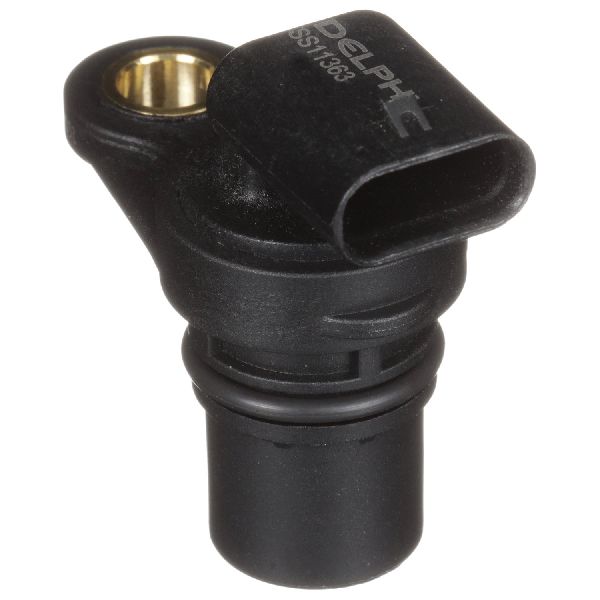
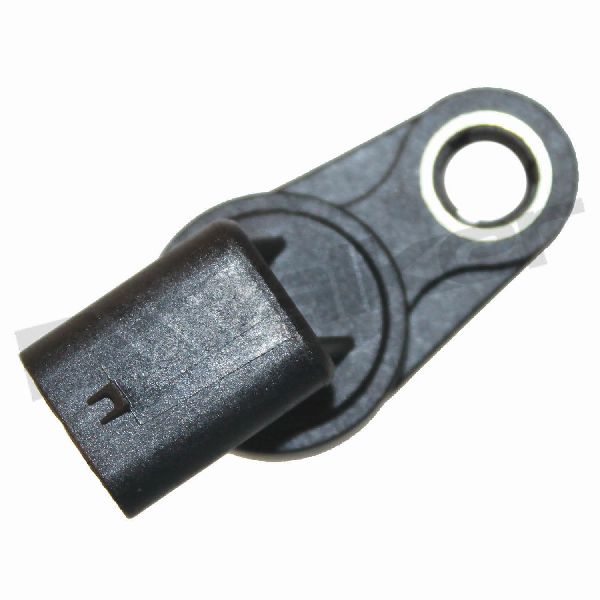
- Intake Camshaft Position Sensor
(OEM #68080819AC (Superseded by 68080819AD))— This is the most common failure point for code P0340 on this engine. Using an OEM part is critical for a lasting repair.
Trusted brands: Mopar (Highly Recommended), NTK/NGK, Delphi, Standard Motor Products
OEM price range: $45-$70
Aftermarket price range: $20-$50
Related Codes That Often Appear With This One
- P0344 — This code indicates an intermittent signal from the same camshaft position sensor circuit, often preceding a complete failure that sets P0340.
- P0335 — This is the code for the crankshaft position sensor. The two sensors work together, and a fault in one can sometimes lead to codes for the other.
- C121C — This code means 'Torque Request Denied' and often appears with P0340 on platform-mates like the Jeep Patriot. It indicates the traction control/ABS module has detected an engine fault and is disabling certain features, often putting the car in limp mode.
Technical Service Bulletins (TSBs) & Recalls
- TSB #18-022-17 REV. A: While specifically for the 2014-2015 Jeep Cherokee/Chrysler 200 with the 2.4L engine, this bulletin is highly relevant. It notes that codes P0340 and P0335 can be set erroneously and advises a PCM software update as the solution. This should be investigated before replacing hardware on any 2.4L World Engine family vehicle.
Platform-Specific Known Issues
- A recall was issued for some 2013 Dodge Avengers with the 2.4L engine (Recall no. 13V557000, Chrysler N52) for potential loss of oil pressure due to debris in balance shaft bearings, which could lead to engine stall or failure. While not directly citing P0340, severe oil pressure issues can affect timing components.
Mechanic-Grade Diagnostic Values
- Camshaft Position Sensor Connector Pinout (2008 Avenger 2.4L) — expected: Pin 1 (YL/PK wire): 5V Supply; Pin 2 (DB/LB wire): Sensor Ground; Pin 3 (DB/GY wire): CMP Signal.. Failure: Missing 5V supply, high resistance to ground, or no signal from Pin 3 indicates a wiring or PCM issue.
- Camshaft Position Sensor Signal Voltage (Key On, Engine Off) — expected: Approximately 4.8V to 5V on the signal wire with the sensor connected.. Failure: A constant 0V or a voltage significantly lower than 4.8V on the signal wire suggests a faulty sensor or a short in the wiring.
- Camshaft Position Sensor Signal Response — expected: When a metal object (like a wrench) is passed in front of the sensor tip, the signal voltage should momentarily drop to 0V.. Failure: If the voltage does not drop to 0V when the metal object is present, the sensor is not reading the change in the magnetic field and is faulty.
- Battery & Charging System Voltage — expected: A healthy battery should be 12.4V or higher with the engine off, and the charging system should produce 13.8V to 14.8V with the engine running.. Failure: Low system voltage can cause various electronic modules and sensors to behave erratically, potentially triggering false codes.
Scan Tool Commands That Help
- wiTECH or equivalent (Appcar DiagFCA, Autel): Cam/Crank Relearn — This procedure is required after replacing the camshaft or crankshaft position sensor, or after performing a PCM software update. It synchronizes the PCM with the new sensor's signal characteristics. Failure to perform this step will often cause the P0340 code to return even with a good part.
- wiTECH or equivalent: ECU Reset — Recommended to be performed along with the 'Cam/Crank Relearn' procedure to clear adaptive memory and ensure the PCM starts fresh with the new component values.
Wiring & Ground Locations
- Camshaft Position Sensor Connector — On the cylinder head, typically on the left rear for the intake sensor ('A').. This is the primary connection point. Corrosion, oil contamination, or backed-out pins will directly cause a P0340 circuit code.
- G902a — Located on the left rear of the engine itself.. This is a primary engine ground. A loose or corroded connection here can disrupt the ground reference for multiple engine sensors, including the camshaft position sensor.
- G301 — At the base of the driver's side 'B' pillar, inside the cabin.. This is a major chassis ground point. While less direct, a poor chassis ground can create electrical noise and voltage drop issues that affect PCM operation and sensor readings.
- Powertrain Control Module (PCM) — Located in the left rear of the engine compartment.. All sensor wiring terminates here. Any diagnosis that rules out the sensor and wiring must eventually lead to checking the connections at the PCM itself.
Real Owner Repair Stories
- Reddit user in r/MitsubishiEclipse (2007 Mitsubishi Eclipse SE 2.4L (similar engine class)) — P0340 code, stalling, limp mode.
❌ Tried (didn't work) Replaced spark plugs, Replaced fuel pump, Replaced camshaft position sensor with an OEM part, Replaced the sensor connector
✅ What actually fixed it The owner discovered the crankshaft pulley was wobbling, indicating a mechanical issue at the crankshaft level that was likely causing a cam/crank correlation error the PCM interpreted as a P0340 fault. - NHTSA ODI #11328617 — An owner reported that the P0340 code would not clear even after changing the camshaft position sensor twice. The issue was described as random and occurred while driving or when the car had been running for a few minutes.
When the Usual Fixes Don't Work
- While the most common cause of P0340 is a failed sensor, there are documented cases where replacing the sensor and connector does not fix the issue. In one instance involving a similar 2.4L engine, the ultimate cause was a wobbling crankshaft pulley. This created an unstable crankshaft position signal, which the PCM could not correlate with the camshaft signal, leading it to incorrectly flag the cam sensor circuit. This highlights the importance of considering the entire timing system (both cam and crank) when a simple sensor replacement fails.
OEM Part Supersession History
5033308AB, 68080819AB, 68080819AC→68080819AD— Part has been revised multiple times by the manufacturer to improve reliability.
Heads up: The newest part number (68080819AD) should be used for all repairs to ensure the latest revision is installed.
Diagnostic Flowchart
Other Known Issues on This Vehicle
Issues unrelated to this code that are worth knowing about as an owner of this generation:
- Electronic Throttle Body Failure 🔴 High — Very common. Often occurs between 60,000 and 120,000 miles. The internal plastic gears wear out, causing the throttle plate to stick.
- Alternator Failure 🔴 High — A widely reported problem, especially on the 2008 model year. Can fail without much warning, leading to a dead battery and stalling. The voltage regulator is integrated with the PCM, which can complicate diagnosis.
- Front Subframe (Engine Cradle) Rust 🔴 High — A serious safety issue where the subframe can rust completely through, causing it to break. This is most common on vehicles driven in rust-belt states. (Ref: While no formal recall was issued for all vehicles, numerous owner complaints have been filed with the NHTSA.)
- Transmission Shifting Problems 🟠 Medium — Owners report issues with automatic transmissions, including rough/erratic shifting, getting stuck in limp mode (first or second gear), and delayed engagement.
Used vs. New Parts: Buying Guide for This Vehicle
When a used part is the smart pick: For this specific P0340 repair, using a used camshaft position sensor from a junkyard is strongly discouraged. The failure rate is high and the part's reliability is critical. A used part would only be a cost-effective choice for major related components in an edge-case scenario, such as replacing a cylinder head or timing cover.
What to inspect on the donor part:
- Not applicable for the sensor itself. Avoid used sensors.
OEM-only on this vehicle (don't cheap out):
- Camshaft Position Sensor
Aftermarket brands forum-validated for this vehicle:
- NTK/NGK
- Delphi
- Standard Motor Products (SMP) - non 'T-series' (economy) line
Brands owners have reported issues with on this vehicle:
- Dorman (for sensors on this platform, reviews are consistently poor)
- Unbranded or 'white-box' parts from online marketplaces
Real Owner Stories
Aggregated from forums and TSBs cited above. Mileages and costs reflect what owners reported in those sources.
2014 Jeep Patriot 2.4L
Symptoms: P0340 and C121C codes causing the vehicle to enter limp mode.
What fixed it: Installing an OEM Mopar sensor after an aftermarket sensor failed within 2 months.
Source hint: reddit.com/r/JeepPatriot thread titled 'p0340_and_c121c_codes'
2007-2010 Chrysler Sebring 2.4L
Symptoms: Baffling no-start P0340 issue where the car would only start if the cam sensor was unplugged.
What fixed it: Repairing a broken woodruff key on the crankshaft timing gear that occurred after a timing chain replacement.
Source hint: 200forums.com (Chrysler 200 Convertible Club) thread titled 'po340-no-start'
NHTSA ODI #11328617
Symptoms: The P0340 code persists even after changing the sensor twice. Stalling occurs randomly while driving or after the car has been running for a few minutes.
What fixed it: This owner report highlights a persistent circuit fault where standard sensor replacement failed to clear the code.
Related OBD-II Codes
Frequently Asked Questions
Is there a TSB for the P0340 code on my 2.4L World Engine?
Should I use an aftermarket sensor to fix the P0340 code on my Avenger?
Can a bad crankshaft sensor cause a P0340 code on the 2008-2014 Avenger?
Is there a recall for the 2013 Dodge Avenger 2.4L that might be related to stalling?
Why does my Avenger go into 'limp mode' when the P0340 code appears?
Could a mechanical failure cause this code even if the sensor is new?
Helpful Videos
We Have This Part in Stock


The information in this article is provided for general reference and educational purposes only. Vehicle specifications, procedures, and part compatibility can vary by production date, trim level, and region. Always consult your vehicle's factory service manual and verify part numbers before purchasing or performing repairs. Safety-critical components such as airbags, seat belts, and braking systems should be installed by a qualified professional.
- Dodge Avenger:
- 🧭 Diagnostic Flowchart
- 🎬 Helpful Videos
- 🛍️ Shop This Part
- What's Unique About the 2008-2014 Dodge Avenger
- Symptoms You May Notice
- Most Likely Causes
- Rare But Worth Checking
- Diagnosis Steps
- Parts You'll Likely Need
- Related Codes That Often Appear With This One
- Technical Service Bulletins (TSBs) & Recalls
- Platform-Specific Known Issues
- Mechanic-Grade Diagnostic Values
- Scan Tool Commands That Help
- Wiring & Ground Locations
- Real Owner Repair Stories
- When the Usual Fixes Don't Work
- OEM Part Supersession History
- Other Known Issues on This Vehicle
- Used vs. New Parts: Buying Guide for This Vehicle
- Real Owner Stories
- 2014 Jeep Patriot 2.4L
- 2007-2010 Chrysler Sebring 2.4L
- NHTSA ODI #11328617
- Related OBD-II Codes
- Frequently Asked Questions
- 🎟️ Get 5% Off