

P0340 on 2011-2023 Dodge Durango 3.6L: Cam Sensor, Phaser, and Rocker Arm Guide
On a 3.6L Durango, P0340 is often more than a bad sensor. If you hear a rattle on startup, suspect failing cam phasers. If there's no noise, it's likely the passenger-side camshaft position sensor, which requires removing the upper intake manifold to replace. Expect to pay $40-$70 for an OEM Mopar sensor. Do not ignore the code if a new sensor doesn't fix it, as it points to a deeper mechanical issue.
- For code P0340, listen to your engine: a brief rattle on startup points to cam phasers, while a constant tick points to rocker arms.
- If there are no unusual engine noises, the cause is likely the passenger-side camshaft position sensor.
- Replacing the sensor requires removing the upper intake manifold, making it a 2-3 hour job.
- Always use an OEM Mopar sensor (Part # 5149141AF) for this repair; aftermarket sensors are known to fail.
- Do not ignore this code, as a stalling engine is a major safety hazard.
What's Unique About the 2011-2023 Dodge Durango
On the 3.6L Pentastar engine, P0340 is a notorious 'check deeper' code. While it can be a simple sensor failure, it is very frequently a symptom of a more serious underlying mechanical issue. This engine is known for problems with camshaft phasers and rocker arms, both of which can trigger this code. The failure is often in the phaser's internal locking pins, which wear out and fail to hold the cam gear steady on startup until oil pressure builds. Unlike in many other vehicles, the Bank 1 sensor on the Durango is located at the rear of the cylinder head, meaning the upper intake manifold must be removed for access, making the repair more involved.
Symptoms You May Notice
- Check Engine Light is on
- Engine is hard to start or has a long crank time
- Engine stalls, sometimes unexpectedly at low speeds or in traffic
- Rough idle or misfiring
- Lack of acceleration and reduced engine power
- Vehicle may enter 'limp mode', preventing proper shifting
- Traction control light may illuminate simultaneously with the Check Engine Light
- Rattling or chattering noise from the engine for 2-5 seconds on cold startup (indicates phaser issue)
- Persistent, rhythmic ticking/tapping noise that increases with engine RPM (indicates rocker arm issue)
- Repeatedly replacing the camshaft position sensor without diagnosing underlying mechanical issues like failing cam phasers or worn rocker arms.
- Replacing the crankshaft position sensor (Part # 5149230AA) instead of the correct camshaft position sensor (Part # 5149141AF).
- Assuming the code means the sensor is bad, when it may be accurately reporting a mechanical timing problem.
Most Likely Causes
- Failing Camshaft Phaser 🔴 High Probability → Shop Engine Camshaft This is a widely documented failure point on the 3.6L Pentastar engine. The internal locking pins that hold the phaser at a base position for startup wear out, causing slack and a rattle until oil pressure stabilizes the phaser.
How to confirm: Listen for a distinct rattling or chattering noise lasting 2-5 seconds on a cold startup. If this noise is present with code P0340, a failing phaser is the most likely cause. A mechanic can also test for excessive rotational play in the phaser with the valve cover removed by attempting to turn the camshaft independently of the phaser.
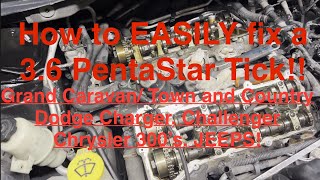
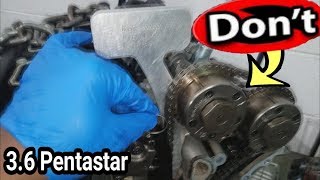
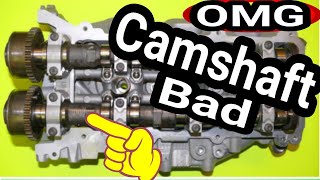
Typical fix: This is a significant mechanical repair that involves replacing the faulty camshaft phaser(s), timing chain, and related guides. It is often recommended to replace all four phasers, chains, and tensioners 🎬 See this walkthrough on fixing cam phaser and rocker noise. at the same time.
Est. part cost: $200-$800 - Faulty Camshaft Position Sensor 🔴 High Probability → Shop Engine Camshaft Position Sensor Sensors can fail from heat cycles and age. Using aftermarket sensors is a common cause of repeat failures; an OEM Mopar sensor is strongly recommended as the Pentastar is sensitive to sensor quality.
How to confirm: If there are no engine noises (startup rattle or ticking), the sensor is the primary suspect. A definitive test is to swap the Bank 1 (passenger side) and Bank 2 (driver side) sensors. Clear the codes and drive. If the code returns as P0345 (Bank 2), the sensor is bad. If P0340 returns, the problem is mechanical or wiring-related.
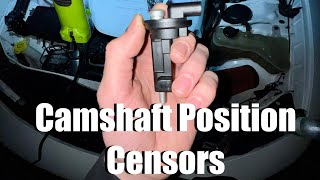
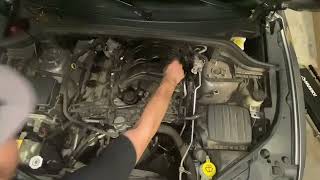
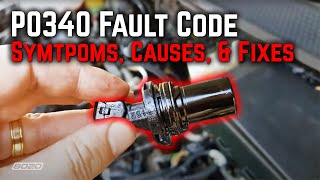
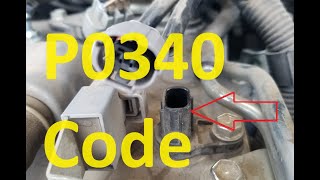
Typical fix: Replace the Bank 1 (passenger side) camshaft position sensor. This requires removing the upper intake manifold for access. 🎬 Watch: Step-by-step guide to replacing the Pentastar camshaft sensors.
Est. part cost: $40-$70 - Low or Dirty Engine Oil 🟡 Medium Probability The cam phasers are hydraulically actuated by engine oil. Low oil level or pressure, or using the wrong viscosity oil (e.g., not 5W-20), can prevent the phasers from operating correctly, triggering timing codes. Using an incorrect or collapsed aftermarket oil filter can also restrict flow and cause pressure issues.
How to confirm: Check the engine oil level and condition. If it is low, black, or sludgy, this could be the cause. Ensure the correct oil filter and manufacturer-specified oil are being used. An oil pressure test can confirm low pressure.
Typical fix: Perform an oil and filter change using the manufacturer-specified oil (e.g., 5W-20 or 5W-30 depending on the year) and a quality OEM or equivalent filter. Clear the codes and see if the issue returns.
Est. part cost: $50-$100 - Worn Rocker Arms 🟡 Medium Probability The needle bearings in the rocker arms are a known failure point, especially in earlier Pentastar engines (2011-2014). The bearings disintegrate, causing the arm to wobble, which in turn scores the camshaft lobe. This creates a persistent ticking noise and can lead to misfires and timing codes.
How to confirm: Listen for a persistent, rhythmic ticking noise that increases in speed with engine RPM. This is different from the short startup rattle of a phaser. Visual inspection with the valve cover removed will confirm a failed rocker arm (it will be loose) and any corresponding damage to the camshaft lobe.
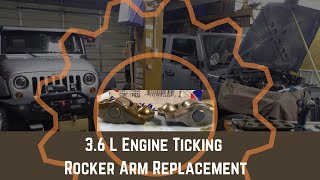
Typical fix: Replace all rocker arms and lifters on the affected cylinder head. If the camshaft lobe is scored, it must also be replaced. This is a labor-intensive job. 🎬 Watch: How to identify and replace failing Pentastar rocker arms.
Est. part cost: $150-$400 - Wiring or Connector Issue ⚪ Low Probability
How to confirm: Visually inspect the wiring harness and connector going to the Bank 1 camshaft position sensor. Look for any signs of melting, chafing, corrosion, or loose pins. The harness can sometimes rub against the back of the cylinder head.
Typical fix: Repair the damaged section of wiring or replace the connector pigtail.
Est. part cost: $20-$50
Rare But Worth Checking
- Loose Oil Gallery Plugs: A known issue where bolts for oil passages inside the cylinder head can back out, causing a loss of oil pressure to the valvetrain and triggering timing codes. This requires removing the valve cover to inspect.
- Stretched Timing Chain: → Shop Engine Timing Chain While less common than phaser failure, a stretched primary timing chain can cause correlation issues and trigger this code, usually along with P0016.
- Faulty Powertrain Control Module (PCM): → Shop Engine Control Module (ECM) This is extremely rare. The PCM should only be considered after all other possibilities, including all mechanical and wiring issues, have been exhaustively ruled out.
Diagnosis Steps
- Check the engine oil level and condition. Top off or change if necessary, ensuring the correct viscosity oil and a quality filter are used.
- Listen carefully during a cold start. A 2-5 second rattle strongly suggests a failing cam phaser. A constant ticking noise that follows RPM suggests a rocker arm issue.
- If no noises are present, proceed with sensor diagnosis. Locate the cam position sensors on the rear of both cylinder heads.
- Inspect the wiring and connector for the Bank 1 (passenger side) sensor for any visible damage, such as chafing against the cylinder head or melting.
- Swap the Bank 1 and Bank 2 camshaft position sensors. They are identical parts.
- Clear the codes with a scanner and start the engine. If code P0345 appears, the sensor you moved is faulty and needs to be replaced.
- If code P0340 returns, the problem lies in the Bank 1 wiring or, more likely, is a mechanical issue on Bank 1 (phaser, rocker arm, etc.).
- If a mechanical issue is suspected, professional diagnosis is recommended to confirm before attempting a costly repair. This may involve removing the valve cover for inspection.
Parts You'll Likely Need
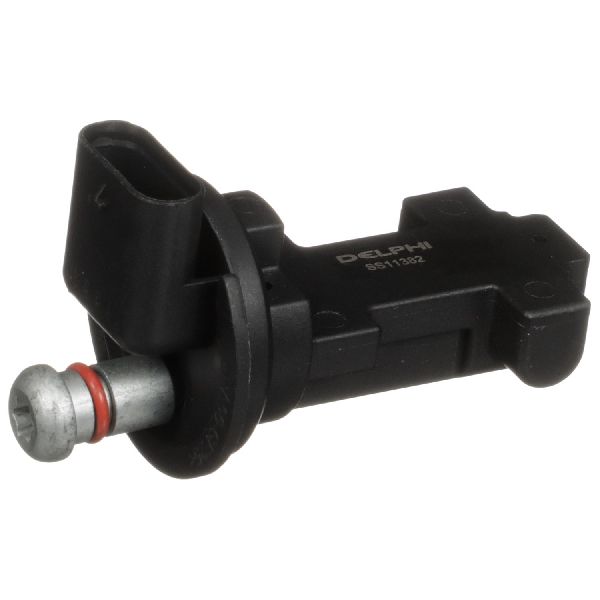
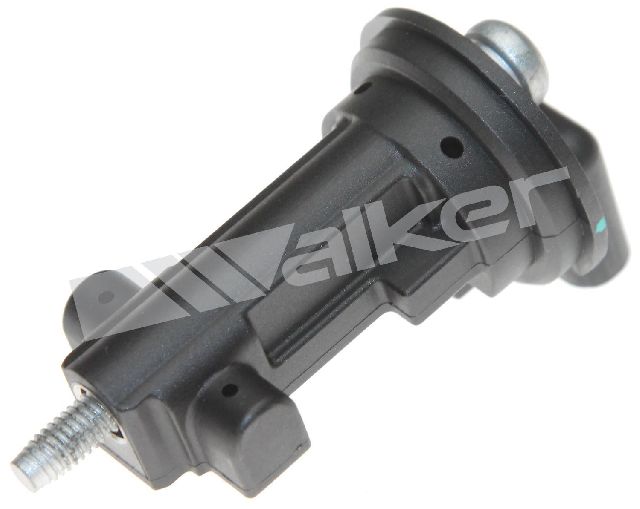
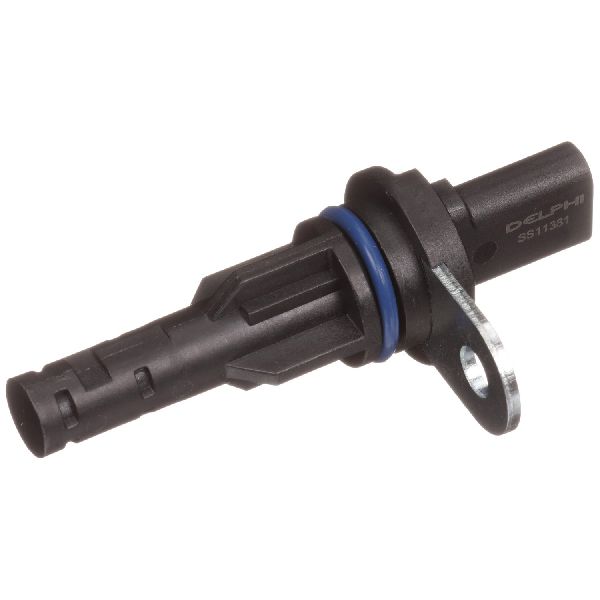
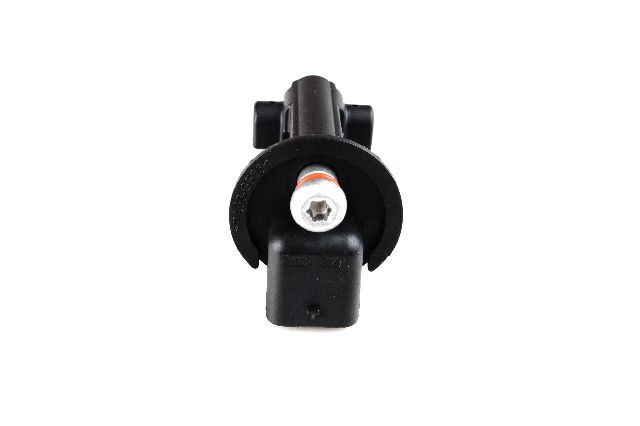
- Camshaft Position Sensor
(OEM #5149141AF)— This is the most common fix when there are no mechanical engine noises. An OEM Mopar part is highly recommended to avoid repeat failure.
Trusted brands: Mopar
OEM price range: $40-$70
Aftermarket price range: $25-$50 - Upper Intake Manifold Gaskets — These must be replaced when removing the upper intake manifold to access the camshaft position sensors.
Trusted brands: Fel-Pro, Mahle, Mopar
OEM price range: $30-$50
Aftermarket price range: $20-$40
Related Codes That Often Appear With This One
- P0345 — This is the equivalent code for Bank 2 (driver's side). Seeing both may indicate a systemic issue like low oil pressure or a bad batch of sensors. It will also appear if a faulty Bank 1 sensor is swapped to Bank 2 for diagnosis.
- P0016 — Crankshaft/Camshaft Position Correlation error. Seeing this with P0340 strongly points to a mechanical timing problem (stretched chain, bad phaser) rather than just a sensor fault.
- P0300 — Random/Multiple Cylinder Misfire. This occurs because the incorrect cam timing disrupts the engine's ability to run smoothly. It is also a primary code for failing rocker arms.
- P0344 — Camshaft Position Sensor 'A' Circuit Intermittent (Bank 1). This often appears with P0340 and can point towards a wiring harness issue or the very beginning of a mechanical failure.
Technical Service Bulletins (TSBs) & Recalls
- TSB 18-054-14: Addresses intermittent engine crank times longer than 3 seconds for some 2014 models, which can be related to cam/crank sensor signal issues.
- A service bulletin was released in March 2014 to address rocker arm failures, recommending inspection and replacement with updated parts.
Platform-Specific Known Issues
- Owner Experience: Sensor Swap Confirms Diagnosis: Multiple owners on forums for Durango, Grand Cherokee, and Ram 1500 confirm the validity of the sensor swap test. After getting a P0340, they swapped the passenger side (Bank 1) sensor with the driver's side (Bank 2) sensor. When the code changed to P0345, it definitively proved the sensor itself was the faulty component, saving them from unnecessary mechanical diagnosis.
- Repair Story: The Startup Rattle and Phaser Replacement: A common story involves owners who first replace the camshaft position sensor for P0340, only for the code to return. They then notice a distinct 2-3 second rattle on cold starts. This symptom leads to a professional diagnosis of failing cam phasers. The actual fix involves a costly, multi-hour repair to replace the timing chains and all four phasers, which permanently resolves the code and the noise.
- Repair Story: Ticking Noise Leads to Rocker Arm and Camshaft Replacement: → Shop Engine Camshaft In another scenario, owners report a persistent ticking noise along with P0340 and sometimes a misfire code (e.g., P0302). After replacing the sensor doesn't work, a mechanic removes the valve cover to find failed rocker arms with destroyed needle bearings and a scored camshaft lobe. The repair requires replacing all rocker arms on that bank and the damaged camshaft.
Mechanic-Grade Diagnostic Values
- Camshaft Position Sensor 5-Volt Supply Circuit Voltage — expected: 4.8 - 5.2 Volts with key on, engine off.. Failure: Voltage outside this range indicates an open or short in the supply circuit from the PCM.
- Camshaft Position Sensor Ground Circuit Resistance — expected: Below 3.0 Ohms to chassis ground.. Failure: Resistance above this value points to an open or high resistance in the ground circuit.
- Camshaft Position Sensor Signal Voltage (Dynamic/Bench Test) — expected: Switches between approximately 0V and 5V when the engine is cranked or a magnet is passed over the sensor tip.. Failure: Voltage that does not switch, or is erratic, indicates a faulty sensor.
- VVT Control Solenoid (Oil Control Valve) Resistance — expected: 8 to 12 ohms between the two pins on the solenoid.. Failure: A reading of 0 Ohms (short circuit) or infinite/OL (open circuit) indicates a failed solenoid coil.
Scan Tool Commands That Help
- wiTECH or equivalent professional scanner: View Live Data for Cam/Crank Difference — When suspecting a mechanical timing issue (phaser or chain). A fluctuating or out-of-spec value for 'Exhaust Cam 1 Crank Difference' while the code is active can confirm a physical misalignment that a sensor is correctly reporting.
- wiTECH or equivalent professional scanner: PCM Reprogramming — On applicable models, to apply TSBs like #18-024-17 REV. C, which adjusts the fault logic to be less sensitive and may resolve a persistent P0340 that has no other symptoms.
Wiring & Ground Locations
- Bank 1 Camshaft Position Sensor Connector — Rear of the passenger-side cylinder head, under the upper intake manifold.. This is the primary connection point for the sensor triggering P0340. The connector and its wiring are the first places to check for damage, oil contamination, or poor pin tension.
- Engine To Body Ground Strap — A braided strap connecting the engine block to the chassis/frame rail.. A poor or corroded engine ground can create floating voltages and erratic behavior from multiple engine sensors, including the camshaft position sensor, by disrupting its ground reference.
Real Owner Repair Stories
- JeepGarage.org user report (2014 Grand Cherokee 3.6L) — Persistent P0340 code.
❌ Tried (didn't work) Replacing the camshaft position sensor multiple times
✅ What actually fixed it The final fix was replacing the entire intake camshaft and all rocker arms on Bank 1. The camshaft lobes had worn down, causing a true mechanical timing problem that the sensor was accurately reporting. - YouTube Commenter (Dodge Grand Caravan 3.6L) — The famous 'Pentastar tick' and associated codes P0340 and P000B.
❌ Tried (didn't work) Initial diagnosis pointed towards sensor or phaser.
✅ What actually fixed it Upon inspection, found a bad right exhaust camshaft, one broken rocker arm, and one damaged rocker arm. Replacing the camshaft and affected rocker arms resolved the ticking and codes.
OEM Part Supersession History
05149141AE→5149141AF— Standard part revision and update by the manufacturer.
Heads up: The 'AF' revision is the current recommended replacement for the 3.6L V6 and is backward compatible. Using older stock or non-OEM parts can lead to repeat failures.
Model Year Variations Within This Range
- 2011-2013: These early Pentastar engines had a higher incidence of left cylinder head and rocker arm bearing failures, which can lead to ticking noises and timing-related codes like P0340. TSB #09-002-14 REV. B and an extended warranty (X56) were issued for this.
- 2016-2023: For the 2016 model year, the 3.6L Pentastar engine was significantly updated. Changes included a two-stage variable valve lift (VVL) system, a cooled EGR system, and an increased compression ratio (from 10.2:1 to 11.3:1). While P0340's meaning is the same, diagnostics on these later models must also consider the VVL system's function as a potential factor.
Diagnostic Flowchart
Other Known Issues on This Vehicle
Issues unrelated to this code that are worth knowing about as an owner of this generation:
- Cracked Oil Filter Housing / Cooler Assembly 🔴 High — Very common across all model years. The plastic housing, located in the engine valley, becomes brittle from heat cycles and cracks, causing significant oil or coolant leaks. (Ref: While no specific recall exists for the Durango, this is a widely acknowledged design flaw of the Pentastar engine.)
- Water Pump Failure 🟠 Medium — Premature failure is common, often occurring before 100,000 miles. Symptoms include coolant leaks from the front of the engine (weep hole), overheating, and whining noises.
- TIPM (Totally Integrated Power Module) Failure 🔴 High — Especially prevalent in 2011-2013 models. Can cause a wide range of bizarre electrical issues, including no-start conditions, fuel pump staying on (draining the battery), horn honking randomly, and wipers activating on their own.
- Heater Core Clogging/Failure 🟠 Medium — Often caused by casting sand left in the engine block from manufacturing, which eventually clogs the heater core, resulting in poor or no heat on the driver or passenger side. Requires dashboard removal to replace.
- Left Cylinder Head Failure (Early Models) 🔴 High — Primarily affected 2011-2013 engines, causing misfires (especially P0302) and a ticking noise due to excessive wear on valve guides and seats. (Ref: Chrysler extended the warranty on the left cylinder head for affected vehicles to 10 years/150,000 miles.)
Used vs. New Parts: Buying Guide for This Vehicle
When a used part is the smart pick: For this specific repair, used parts are generally not recommended due to the high failure rate of the key components. A used wiring harness connector pigtail or a used PCM (if professionally verified as the last resort) could be considered, but mechanical parts are a significant risk.
Donor-vehicle mileage cap: roughly under 50000 miles for the part to have meaningful remaining life.
What to inspect on the donor part:
- For a wiring connector, ensure there is no brittleness, corrosion, or cut wires.
- For a PCM, verify it comes from an identical vehicle (year, model, engine, transmission) and has a return policy.
- Avoid any parts from a donor vehicle that shows signs of engine sludge, overheating, or has a high mileage.
OEM-only on this vehicle (don't cheap out):
- Camshaft Position Sensor: Aftermarket sensors are notoriously problematic on the Pentastar engine and a leading cause of repeat failures. Only use Mopar part #5149141AF.
- Camshaft Phasers: This is a critical timing component with a known design weakness. Aftermarket phasers often have a poor reputation for longevity. Stick with OEM Mopar phasers to ensure the repair lasts.
- Oil Filter: Using a non-OEM or poorly constructed oil filter can cause the internal bypass to collapse, leading to oil pressure issues that can trigger VVT and timing codes.
Brands owners have reported issues with on this vehicle:
- Unspecified/generic camshaft position sensors and cam phasers from online marketplaces are frequently cited in forums as failing quickly.
Real Owner Stories
Aggregated from forums and TSBs cited above. Mileages and costs reflect what owners reported in those sources.
2014 Dodge Durango 3.6L
Symptoms: Intermittent engine crank times longer than 3 seconds.
What fixed it: Diagnosis and repair following TSB 18-054-14 regarding cam/crank sensor signal issues.
Source hint: TSB 18-054-14
2011-2023 Dodge Durango 3.6L
Symptoms: P0340 code present; owner swapped the passenger side (Bank 1) sensor with the driver's side (Bank 2) sensor and the code changed to P0345.
What fixed it: Replacing the faulty camshaft position sensor with a new unit.
Source hint: Vehicle_specific_issues: Owner Experience: Sensor Swap Confirms Diagnosis
2011-2023 Dodge Durango 3.6L
Symptoms: Distinct 2-3 second rattle on cold starts; P0340 code returned even after replacing the camshaft position sensor.
What fixed it: Replacement of the timing chains and all four camshaft phasers.
Source hint: Vehicle_specific_issues: Repair Story: The Startup Rattle and Phaser Replacement
2011-2014 Dodge Durango 3.6L
Symptoms: Persistent ticking noise, P0340 code, and a P0302 misfire code.
What fixed it: Replacing all rocker arms on the affected bank and the damaged camshaft (scored by failed needle bearings).
Source hint: Vehicle_specific_issues: Repair Story: Ticking Noise Leads to Rocker Arm and Camshaft Replacement
Dodge Durango 3.6L — ~210000 miles
Symptoms: Intermittent P0340 after replacing the sensor and connector.
What fixed it: Owner explored possibilities like a bad battery or wiring issues after standard sensor replacement failed.
Source hint: Reddit r/DodgeDurango: 'Help me with the p0340'
Related OBD-II Codes
Frequently Asked Questions
My 2014 Durango has a long crank time; is there a specific TSB for this?
I have a P0340 and a ticking noise in my 2012 Pentastar engine. What should I check?
Can I use any camshaft sensor to fix the P0340 code on my Durango?
How can I tell if my P0340 is a bad sensor or a mechanical timing issue without a shop?
Why does my Durango rattle for a few seconds only when I first start it in the morning?
Could the oil filter cause a P0340 code on the 3.6L V6?
Helpful Videos
We Have This Part in Stock


The information in this article is provided for general reference and educational purposes only. Vehicle specifications, procedures, and part compatibility can vary by production date, trim level, and region. Always consult your vehicle's factory service manual and verify part numbers before purchasing or performing repairs. Safety-critical components such as airbags, seat belts, and braking systems should be installed by a qualified professional.
- Dodge Durango:
- 🧭 Diagnostic Flowchart
- 🎬 Helpful Videos
- 🛍️ Shop This Part
- What's Unique About the 2011-2023 Dodge Durango
- Symptoms You May Notice
- Most Likely Causes
- Rare But Worth Checking
- Diagnosis Steps
- Parts You'll Likely Need
- Related Codes That Often Appear With This One
- Technical Service Bulletins (TSBs) & Recalls
- Platform-Specific Known Issues
- Mechanic-Grade Diagnostic Values
- Scan Tool Commands That Help
- Wiring & Ground Locations
- Real Owner Repair Stories
- OEM Part Supersession History
- Model Year Variations Within This Range
- Other Known Issues on This Vehicle
- Used vs. New Parts: Buying Guide for This Vehicle
- Real Owner Stories
- 2014 Dodge Durango 3.6L
- 2011-2023 Dodge Durango 3.6L
- 2011-2023 Dodge Durango 3.6L
- 2011-2014 Dodge Durango 3.6L
- Dodge Durango 3.6L — ~210000 miles
- Related OBD-II Codes
- Frequently Asked Questions
- 🎟️ Get 5% Off