

P0340 on 1997-2001 Ford Explorer 4.0L OHV: Camshaft Sensor Circuit Causes and Fixes
On the 1997-2001 Ford Explorer with the 4.0L OHV V6, code P0340 is almost always caused by a failed Camshaft Position Sensor Synchronizer assembly, not just the sensor itself. A distinct "chirping" or "squeaking" noise from the engine often precedes failure. Replacing the entire synchronizer assembly is critical and costs between $45 and $150 for an aftermarket part. Ignoring this can lead to oil pump failure and catastrophic engine damage.
- For a 1997-2001 Explorer with the 4.0L OHV engine, P0340 almost always points to a failing Camshaft Synchronizer Assembly, not just the sensor.
- A distinct "chirping" or "squeaking" noise is the key symptom of a failing synchronizer. Do not ignore this sound.
- Ignoring a failing synchronizer can lead to oil pump failure and catastrophic engine damage.
- Replacement requires an alignment tool and setting the engine to Top Dead Center (TDC). While DIY-possible, it requires precision.
- Do not just replace the sensor on top of the synchronizer; this will not fix the mechanical failure and the code will return.
What's Unique About the 1997-2001 Ford Explorer
The 4.0L OHV V6 engine in this generation of Explorer doesn't have a simple camshaft sensor. Instead, it uses a device called a Camshaft Position Sensor Synchronizer. This is a distributor-like assembly that is driven by the camshaft, houses the actual sensor, and also drives the oil pump via a long shaft. The internal bushings of this synchronizer are notorious for wearing out due to a lack of lubrication, which causes the internal shaft to wobble, leading to the P0340 code. In many cases, the sensor itself is still functional, but the mechanical failure of the synchronizer prevents it from getting a correct reading.
Symptoms You May Notice
- Check Engine Light is on.
- A high-pitched "chirping" or "squeaking" noise from the engine bay, often described as sounding like a bad belt or crickets, originating from the rear of the engine near the firewall.
- Engine is hard to start or cranks but won't start.
- Engine stalls unexpectedly, especially at idle or when coming to a stop.
- Rough running, unstable idle, and engine misfires.
- Noticeable loss of power and poor acceleration.
- Decreased fuel economy.
- In some cases, the engine may seem to run fine initially, with the code only appearing after a restart.
- Replacing only the camshaft position sensor when the underlying synchronizer assembly has failed. This will not fix the problem, as the new sensor will still not receive a rotational signal from the failed mechanical part. The code will often return immediately or after a short drive.
Most Likely Causes
- Failed Camshaft Position Sensor Synchronizer Assembly 🔴 High Probability → Shop Engine Camshaft Position Sensor The 4.0L OHV engine uses a synchronizer assembly with internal bushings that are not directly lubricated by engine oil. Over time, they dry out and wear, causing the shaft to wobble or seize. This is the primary failure mode.
How to confirm: Listen for a persistent chirping noise from the rear of the engine. When the sensor is removed (two 5.5mm or 7/32" bolts), check for excessive side-to-side play or wobble in the synchronizer shaft. Look for metal shavings on the sensor's magnetic tip. The failure of this mechanical part is what stops the sensor from sending a signal.
Typical fix: Replace the entire camshaft synchronizer assembly, which includes a new sensor. This requires setting the engine to Top Dead Center (TDC) for cylinder #1 and using a special alignment tool (like OTC 6472 or similar) to install the new synchronizer correctly. Failure to use the alignment tool can result in incorrect fuel and spark timing.
Est. part cost: $45 - $150 - Failed Camshaft Position Sensor (Sensor Only) ⚪ Low Probability → Shop Engine Camshaft Position Sensor While the sensor itself can fail electrically, it is far less common than the mechanical failure of the synchronizer it sits on. Often, the wobbling synchronizer shaft will physically damage the sensor, making it appear as if the sensor was the original point of failure.
How to confirm: If there is no chirping noise and no play in the synchronizer shaft, the sensor's electrical circuit can be tested with a multimeter for a proper signal while cranking the engine. A visual inspection may also reveal cracks in the sensor housing.
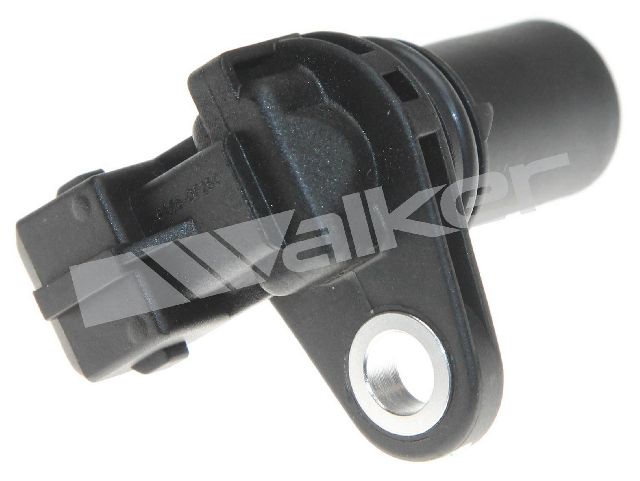
Typical fix: Replace the camshaft position sensor. This is a simple repair, involving removing two small bolts (typically 5.5mm or 7/32") and a connector.
Est. part cost: $20 - $60 - Wiring or Connector Issues ⚪ Low Probability The wiring harness is located at the back of the engine, where it can be exposed to heat and oil, potentially causing brittleness or damage over time. A manufacturer service bulletin for a different Ford model, Bulletin #SSM 50245, highlights how a harness located near moving parts like a steering shaft u-joint can result in an open fuse and multiple DTCs including P0340.
How to confirm: Visually inspect the wiring harness and connector going to the camshaft position sensor for any signs of damage, corrosion, or loose pins. Check for power and ground at the connector using a multimeter. A continuity test from the connector back to the PCM can confirm wire integrity.
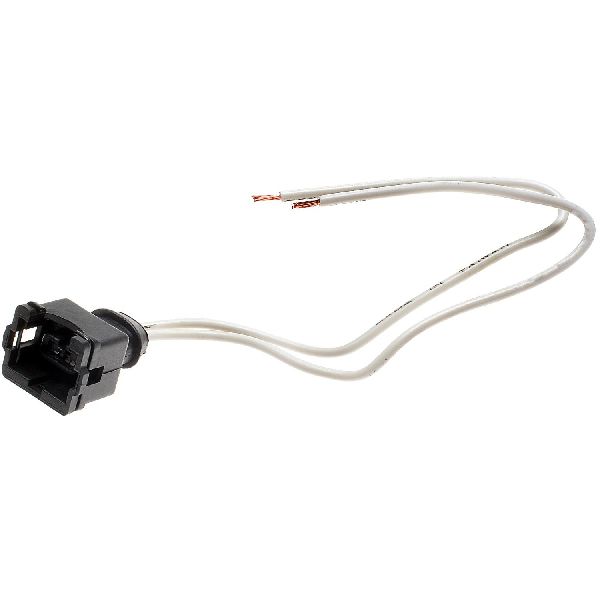
Typical fix: Repair the damaged section of wiring or clean/replace the connector pigtail.
Est. part cost: $5 - $30
Rare But Worth Checking
- Faulty Alternator: A failing alternator with a bad diode can introduce excessive AC ripple (electrical noise) into the vehicle's electrical system. This can interfere with the camshaft position sensor's signal and trigger a P0340 code even if the sensor and synchronizer are good. One user on a Ranger forum measured 0.49 volts of AC ripple, which was on the edge of passing but still suspect. A clean signal is crucial.
- Powertrain Control Module (PCM) Failure: → Shop Engine Control Module (ECM) In very rare cases, the PCM itself may have a faulty driver circuit for the camshaft sensor, preventing it from reading an otherwise good signal. This should only be considered after all other possibilities, including wiring and alternator issues, have been exhausted. Manufacturer Bulletin #20B14-S2 notes that signal quality issues during startup can lead to P0340 being stored in the PCM.
- Environmental Contamination: External factors can disrupt sensor readings. NHTSA ODI #11035325 describes a situation where grease was thrown onto a sensor, causing a Check Engine Light and P0340. Additionally, Bulletin #SSM 48598 notes that excessive moisture build-up in engine oil, often from short-distance driving, can trigger P0340 and P0344 codes.
Diagnosis Steps
- Scan the vehicle for trouble codes. Confirm P0340 is present.
- Start the engine and listen carefully for a high-pitched chirping or squeaking noise coming from the rear of the engine, near the firewall, where the synchronizer is located.
- If a chirp is present, the camshaft synchronizer assembly is almost certainly failing. Proceed with replacing the entire assembly.
- If no noise is present, inspect the wiring and connector for the camshaft position sensor. Look for damage, corrosion, or loose connections. The connector is a 3-wire Hall-effect type on this engine.
- If wiring appears okay, remove the camshaft position sensor (held by two 5.5mm or 7/32" bolts). Look down into the synchronizer and check the shaft for any side-to-side play. Any noticeable wobble indicates the synchronizer is worn and needs replacement.
- If the synchronizer shaft is tight, test the sensor circuit. With the key on, engine off, check for 5V reference and ground at the connector. Then, use a multimeter or oscilloscope to check for a signal while an assistant cranks the engine.
- If the sensor, synchronizer, and wiring are confirmed good, test the alternator for excessive AC ripple voltage. Using a multimeter set to AC volts, connect to the battery terminals while the engine is running. A reading above 0.5V AC suggests a bad diode in the alternator is creating electrical noise that can disrupt the CMP signal.
- As a final step, if all other components test good, the PCM may be at fault, though this is highly unlikely.
Parts You'll Likely Need
- Camshaft Position Sensor Synchronizer Assembly
(OEM #F77Z-12A362-AA)— This is the complete assembly that fails mechanically. On the 4.0L OHV engine, the internal bushings wear out, causing the code and a characteristic chirp. Replacing the whole unit is the correct and permanent fix. Using only a Motorcraft or other high-quality replacement is recommended, as some aftermarket units (like Dorman) have poor reviews regarding longevity.
Trusted brands: Motorcraft, Dorman (use with caution), Standard Motor Products (SMP), Cardone
OEM price range: $100-$220
Aftermarket price range: $45-$150 - Camshaft Synchronizer Alignment Tool
(OEM #OTC 6472 (for 3-wire sensor))— This tool is essential for correctly 'clocking' the new synchronizer during installation to ensure proper timing. Many replacement synchronizers come with a disposable plastic alignment tool included. If not, one must be purchased separately.
Trusted brands: OTC, Lisle, Included with synchronizer kit
OEM price range: $25-$40
Aftermarket price range: $15-$30
Technical Service Bulletins (TSBs) & Recalls
- TSB #5744 (March 1, 1999): Specifically mentions that some vehicles may exhibit a miss/rough idle with the Malfunction Indicator Light on and Diagnostic Trouble Code P0340 in self-test, indicating Ford was aware of this issue.
- Bulletin #SSM 50245: Notes that P0340 can be triggered by wiring harness interference near the steering shaft u-joint.
- Bulletin #20B14-S2: Discusses P0340 being present due to crankshaft and camshaft signal quality issues during start up.
- Bulletin #SSM 48598: Mentions P0340 and P0344 may occur due to excessive moisture build up in the engine oil from short-distance driving.
Platform-Specific Known Issues
- The most significant issue is the tendency for the camshaft synchronizer's internal bushings to fail from lack of lubrication, leading to a loud chirp.
- If the chirping is ignored, the synchronizer can seize and shear the gear that drives it and the oil pump. This will cause a sudden and complete loss of oil pressure, leading to catastrophic engine failure. This is not a theoretical risk; it is a well-documented failure mode for this engine design.
- The location at the back of the engine makes access difficult. While it can be done with the engine in the vehicle, it requires patience and working in a tight space.
Mechanic-Grade Diagnostic Values
- CMP Sensor Signal (3-wire Hall Effect) — expected: A square wave signal switching between approximately 0V and 5V (or battery voltage on some models) as the engine is cranked.. Failure: No signal, a signal that is stuck high or low, or an erratic/intermittent signal that drops out.
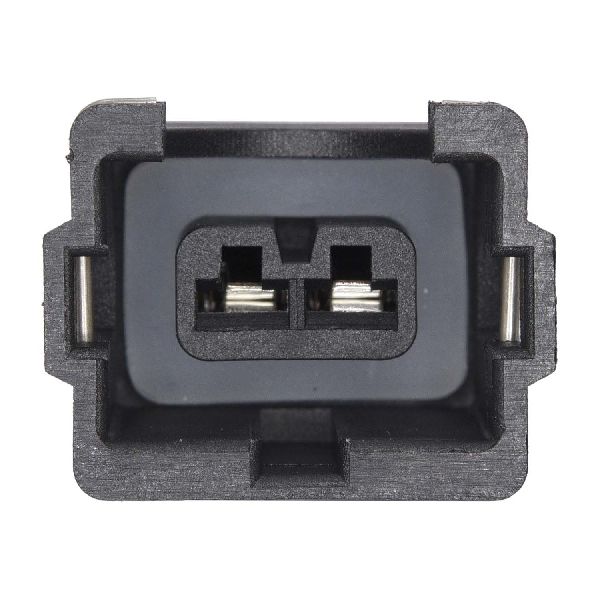
- CMP Connector Pinout (1997-1998 3-wire) — expected: Red wire: Switched battery voltage from PCM Power Relay. Black/White wire: Chassis ground. Dark Blue/Orange wire: Shielded signal wire to PCM.. Failure: Missing voltage or ground, or high resistance on the signal wire.
- Alternator AC Ripple Voltage — expected: Less than 0.5 Volts AC (500mV AC) with the engine running. Ideally, below 100mV AC.. Failure: A reading above 0.5V AC indicates a failing diode in the alternator's rectifier, which can introduce electrical noise and disrupt the CMP signal.
- Crankshaft Position (CKP) Sensor Signal (for correlation) — expected: An AC voltage signal between 0.5 and 1.2 Volts AC while cranking the engine.. Failure: No AC voltage output from the CKP sensor can indicate a failure, which may cause the PCM to default to other codes, though P0340 is specific to the CMP circuit.
Wiring & Ground Locations
- CMP Sensor Connector — At the rear of the engine, near the firewall, on top of the camshaft synchronizer assembly.. This is the primary connection point for the sensor. It is prone to heat damage, oil contamination, and corrosion, which can interrupt the signal and cause a P0340.
- G101 — Left front of the engine compartment, near the radiator. Also serves as a chassis ground.. The Black/White ground wire for the CMP sensor circuit ultimately connects to a chassis ground. A corroded or loose G101 can cause an unstable ground reference for the sensor, leading to an erratic signal.
- G102 — Center rear of the engine compartment on the 4.0L engine.. This is a primary engine ground point. A poor connection here can cause a variety of sensor issues, including interference that could affect the CMP signal.
Real Owner Repair Stories
- Ranger-Forums user (1998 Mazda B4000 (rebadged Ranger) with 4.0L OHV V6) — P0340 code that would not clear, slight misfire, valvey sound under heavy load.
❌ Tried (didn't work) Replaced camshaft synchronizer, sensor, and wiring pigtail., Replaced spark plugs and wires.
✅ What actually fixed it The user tested the alternator and found it had 0.49 volts of AC ripple. While technically 'passing' (under the 0.5V threshold), this electrical noise was suspected to be the cause. The final fix was replacing the alternator, which produced a much cleaner signal (30mV) and resolved the P0340 code. - NHTSA ODI #11065568 — An owner reported the Check Engine Light coming on with codes P0340 and P0344. Despite replacing the cam sensor and clearing codes, the light began flashing again after only a few days of driving.
OEM Part Supersession History
F77Z-12A362-AA→XF2Z-12A362-AA (Motorcraft DA2091)— Standard part revision and update by manufacturer.
Heads up: The F77Z part number is for the 3-wire sensor used from 1997-1998. The XF2Z part number also corresponds to the 3-wire sensor. The key change occurred in 1999 when some 4.0L OHV engines switched to a 2-wire Variable Reluctance sensor, which uses a different synchronizer and is not interchangeable.F7TZ-12A362-AC→Standard Motor Products CSA3— Aftermarket cross-reference.
Model Year Variations Within This Range
- 1997-1998: These years exclusively use a 3-wire Hall-effect CMP sensor and corresponding synchronizer.
- 1999-2001: Ford began phasing in a 2-wire Variable Reluctance (VR) type CMP sensor on the 4.0L OHV during these years. The 3-wire and 2-wire sensors, synchronizers, and connectors are not interchangeable as the PCM is programmed for a different type of signal. It is critical to verify which type is on the vehicle before ordering parts.
Diagnostic Flowchart
Real Owner Stories
Aggregated from forums and TSBs cited above. Mileages and costs reflect what owners reported in those sources.
2000 Ford Explorer XLS 4.0L
Symptoms: Stall, MIL Lamp on. Code P0340.
What fixed it: The report describes the recurrence of the code shortly after the camshaft position sensor and the synchronizer were replaced during an engine job, indicating the problem was not resolved. The final fix is not stated.
Source hint: iATN (International Automotive Technicians Network)
1999 Ford Explorer XL 4.0L
Symptoms: Check Engine Light (MIL) on with code P0340.
What fixed it: The technician notes that the synchronizers failing and breaking are common, and diagnosed the issue by scoping the cam sensor.
Source hint: iATN (International Automotive Technicians Network)
Related OBD-II Codes
Frequently Asked Questions
Does TSB #5744 apply to my 1997-2001 Ford Explorer 4.0L?
I hear a chirping noise from the back of my 4.0L OHV engine. Is this related to P0340?
What happens if I ignore the chirping noise and the P0340 code on my Explorer?
Do I need a special tool to replace the camshaft synchronizer on my 4.0L Cologne V6?
Could a bad alternator cause a P0340 code on my Explorer?
Are other vehicles prone to this exact same synchronizer failure?
We Have This Part in Stock


The information in this article is provided for general reference and educational purposes only. Vehicle specifications, procedures, and part compatibility can vary by production date, trim level, and region. Always consult your vehicle's factory service manual and verify part numbers before purchasing or performing repairs. Safety-critical components such as airbags, seat belts, and braking systems should be installed by a qualified professional.
- Ford Explorer:
- 🧭 Diagnostic Flowchart
- 🛍️ Shop This Part
- What's Unique About the 1997-2001 Ford Explorer
- Symptoms You May Notice
- Most Likely Causes
- Rare But Worth Checking
- Diagnosis Steps
- Parts You'll Likely Need
- Technical Service Bulletins (TSBs) & Recalls
- Platform-Specific Known Issues
- Mechanic-Grade Diagnostic Values
- Wiring & Ground Locations
- Real Owner Repair Stories
- OEM Part Supersession History
- Model Year Variations Within This Range
- Real Owner Stories
- 2000 Ford Explorer XLS 4.0L
- 1999 Ford Explorer XL 4.0L
- Related OBD-II Codes
- Frequently Asked Questions
- 🎟️ Get 5% Off