

P0340 on 2012-2018 Ford Focus 2.0L: Camshaft Position Sensor Circuit Causes and Fixes
On a 2012-2018 Ford Focus, code P0340 is most often caused by a failed intake camshaft position sensor. Before replacing it, check for wiring harness damage near the intake manifold, a known issue on 2012-2014 models (TSB 18-2062). A new sensor costs $25-$90 and is a simple 15-minute DIY job.
- P0340 on a 2012-2018 Focus points to the intake camshaft position sensor circuit.
- For 2012-2014 models, ALWAYS inspect the wiring harness near the intake manifold for chafing (TSB 18-2062) before buying any parts.
- If the wiring is good, the sensor itself is the next likely culprit. It's an easy, 15-minute DIY replacement with a single 8mm bolt.
- Symptoms include stalling, hard starting, rough idle, and power loss.
- Using an OEM Motorcraft sensor (DU-103) is highly recommended to avoid persistent issues.
What's Unique About the 2012-2018 Ford Focus
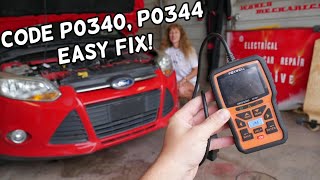
For the 2012-2014 Ford Focus specifically, this code is often linked to a known wiring issue. Ford issued Technical Service Bulletin (TSB) 18-2062, which supersedes a previous TSB (15-0036), for a problem where the engine wiring harness can rub against the intake manifold. This chafing can cause wires to short out, triggering P0340, P0344 (intermittent fault), and a host 🎬 Watch: How to diagnose and fix P0340 and P0344 codes of other electrical codes. Therefore, a visual inspection of the harness, especially behind the throttle body, is a critical first step before assuming the sensor itself has failed.
Symptoms You May Notice
- Check Engine Light is on
- Engine is difficult to start or cranks for a long time before starting
- Engine stalls, especially at idle, at stop lights, or during low-speed maneuvers
- Rough or unstable idle
- Noticeable loss of engine power and poor acceleration
- Reduced fuel economy
- Engine may not start at all
- Replacing the camshaft position sensor without first inspecting the wiring harness for chafing, especially on 2012-2014 models. The new sensor will not fix a wiring problem.
- Replacing the crankshaft position sensor instead of the camshaft position sensor.
- Using a cheap, low-quality aftermarket sensor. Some owners report that issues persist until an OEM Motorcraft or premium aftermarket sensor is used.
- Replacing the intake sensor (Sensor 'A') when the issue is with the exhaust sensor (Sensor 'B'), or vice-versa. P0340 specifically points to Sensor 'A', the intake sensor.
Most Likely Causes
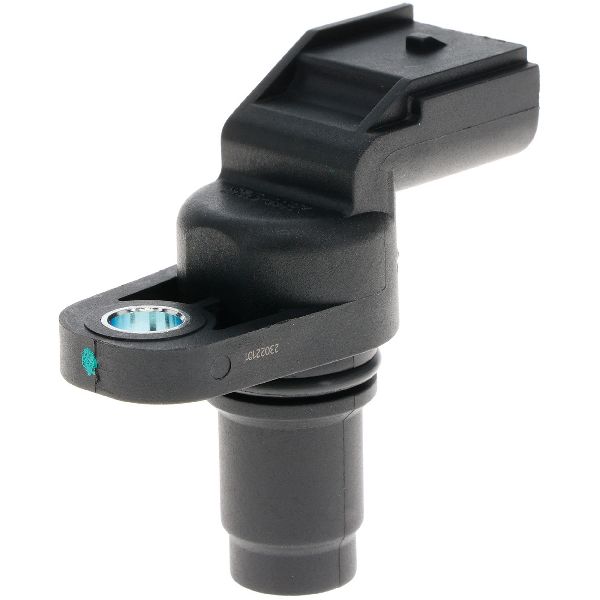
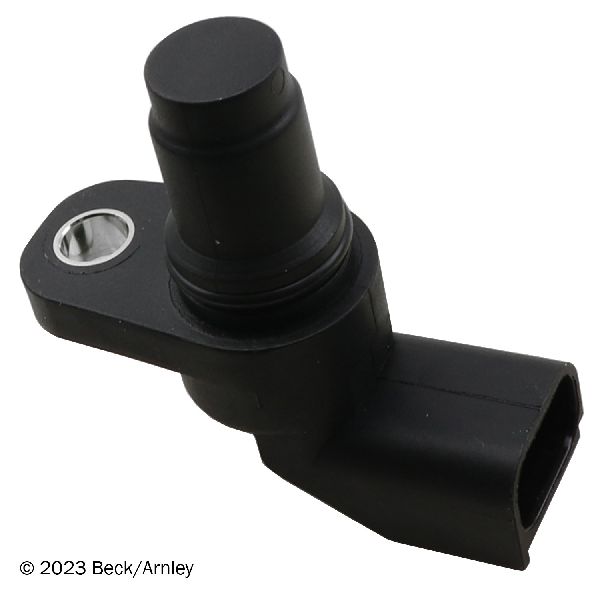
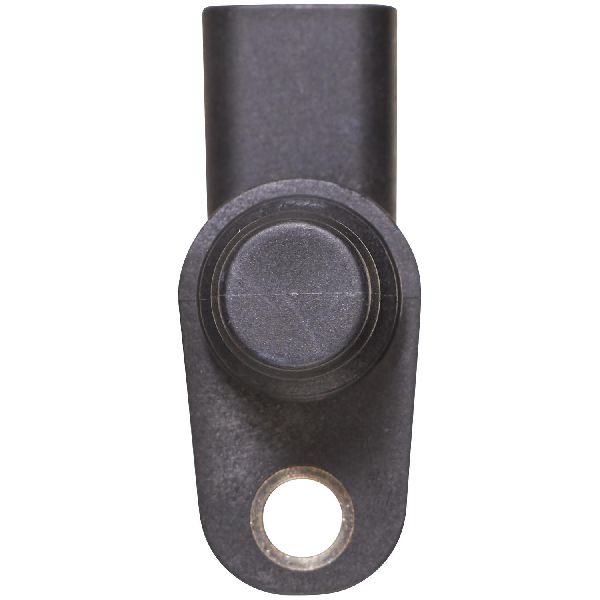
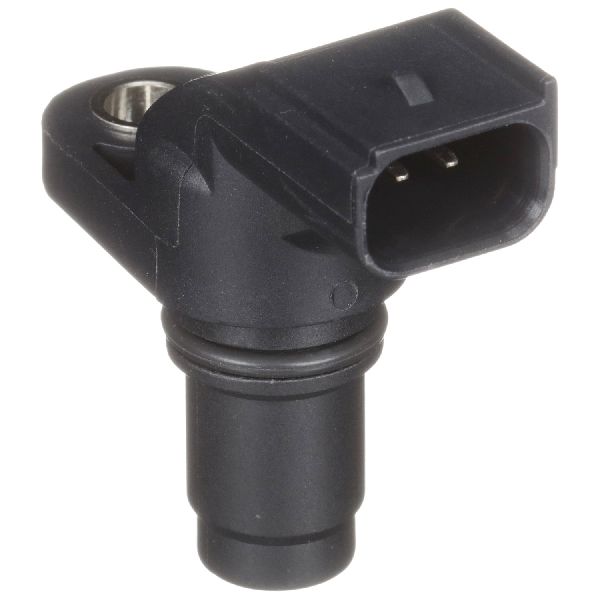
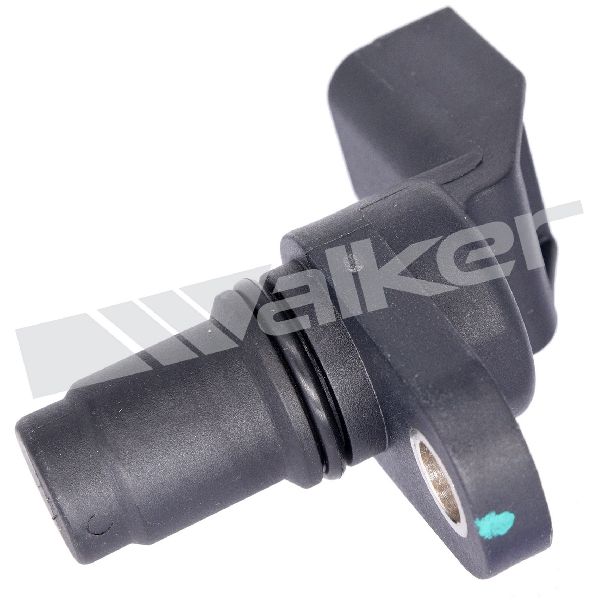
- Failed Intake Camshaft Position Sensor 🔴 High Probability → Shop Engine Camshaft Position Sensor The sensor is a common failure point due to constant heat cycles and electronic wear over time. It is a frequently replaced part for this code.
How to confirm: After confirming the wiring is intact, replacing the sensor is the most direct way to confirm. The part is relatively inexpensive. You can also test the sensor with a multimeter.
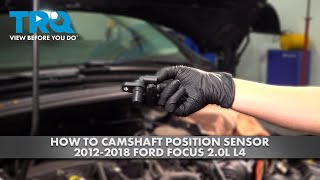
Typical fix: Replace the intake camshaft position sensor. It is located on the top of the valve cover, on the left side when facing the engine, and held by a single 8mm bolt. 🎬 Watch: A quick walkthrough of the sensor replacement process
Est. part cost: $25-$90 - Wiring Harness Chafing (TSB 18-2062) 🟡 Medium Probability Specific to 2012-2014 models, the engine wiring harness was routed in a way that it can rub against the intake manifold, causing damaged wires. This TSB was issued to address a wide range of DTCs stemming from this single issue.
How to confirm: Visually inspect the engine wiring harness, particularly in the area around the throttle body and intake manifold, for signs of rubbing, exposed copper, or breaks. The TSB procedure involves removing the air cleaner assembly to gain better access.
Typical fix: Repair the damaged wires by splicing in new sections (Ford specifies adding wire to maintain length) and protect the harness with convoluted tubing or electrical tape to prevent future damage.
Est. part cost: $5-$20 - Damaged or Corroded Connector ⚪ Low Probability
How to confirm: Unplug the sensor and inspect the electrical connector and the sensor's pins for corrosion, moisture, or bent/broken pins.
Typical fix: Clean the connector terminals with electrical contact cleaner. If the connector or its locking tab is broken, replace the pigtail connector.
Est. part cost: $10-$30
Rare But Worth Checking
- Timing Chain Issue: → Shop Engine Timing Chain While rare, a stretched timing chain or failed tensioner can cause the camshaft and crankshaft signals to be out of sync, potentially triggering a P0340 code. This would typically be accompanied by rattling noises from the engine, especially on startup.
- Failed Powertrain Control Module (PCM): → Shop Engine Control Module (ECM) This is very rare. The PCM itself can fail, but all other potential causes, especially wiring and the sensor itself, should be exhaustively ruled out before considering PCM replacement.
- External Contamination: In some instances, external debris can interfere with sensor signals. NHTSA ODI #11035325 describes a situation where grease was thrown onto a sensor, resulting in a P0340 code along with a wide array of other electrical DTCs.
Diagnosis Steps
- Read the trouble codes with an OBD-II scanner. Confirm P0340 is present. Check for pending codes as well.
- Crucial Step for 2012-2014 models: Carefully inspect the engine wiring harness where it runs near the intake manifold for any signs of chafing or damage, as detailed in TSB 18-2062. This may require removing the air cleaner assembly for full visibility.
- Locate the intake camshaft position sensor (Sensor 'A'). It is on the top-left of the valve cover (passenger side of the engine bay), easily accessible.
- Inspect the sensor's electrical connector for damage, corrosion, or a loose fit. Ensure it's securely plugged in. Check for oil contamination inside the connector.
- If wiring and the connector look good, the most likely cause is a failed sensor. The replacement is simple and often the next logical step.
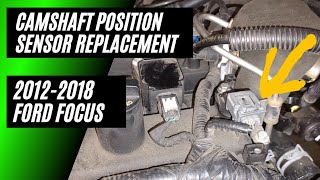
- To replace, disconnect the connector, remove the single 8mm bolt, and pull the old sensor straight out. 🎬 See this step-by-step guide for replacing the sensor
- Lightly lubricate the O-ring on the new sensor with clean engine oil and install it. Reinstall the bolt (do not overtighten) and reconnect the electrical connector.
- Clear the trouble codes with the scanner and start the vehicle. Perform a drive cycle to see if the code returns.
Parts You'll Likely Need
- Intake Camshaft Position Sensor
(OEM #DU-103)— This is the most common component to fail for this code after wiring issues are ruled out.
Trusted brands: Motorcraft, Bosch, Delphi, NTK
OEM price range: $50-$90
Aftermarket price range: $25-$60
Related Codes That Often Appear With This One
- P0344 — P0344 indicates an intermittent signal from the same sensor ('A' - Intake). It is often caused by a loose connection or a chafing wire that hasn't broken completely, which is a hallmark of the issue described in TSB 18-2062.
- P0011, P0014 — These codes relate to camshaft timing being over-advanced. While they often point to VVT solenoid issues, an erratic signal from the camshaft position sensor can sometimes contribute to these codes being set.
Technical Service Bulletins (TSBs) & Recalls
- TSB 18-2062: Details a potential for the engine wiring harness to chafe on the intake manifold on 2012-2014 Focus 2.0L GDI models, causing various DTCs including P0344 (intermittent version of P0340). This TSB supersedes TSB 15-0036.
Platform-Specific Known Issues
- TSB 18-2062: Affects 2012-2014 Focus models. The engine wiring harness may chafe against the intake manifold, causing an intermittent short and triggering codes like P0344 or P0340. A thorough inspection of this area is required before replacing parts.
Mechanic-Grade Diagnostic Values
- CMP Sensor Signal Wire Voltage (Key On, Engine Off) — expected: ~4.8V to 5.0V. Failure: Voltage is 0V or significantly lower, indicating a short to ground or open circuit.
- CMP Sensor Power Supply Wire Voltage (Key On, Engine Off) — expected: ~5.0V. Failure: Voltage is 0V, indicating a wiring or PCM issue.
- CMP Sensor Ground Wire Test — expected: Should have continuity to ground and show battery voltage (~12.6V) when probing from the positive battery terminal.. Failure: No continuity or no voltage indicates a broken ground wire.
- CMP Sensor Signal Voltage (while passing metal object in front) — expected: Voltage should drop from ~5V to 0V momentarily.. Failure: Voltage does not change, indicating a failed sensor.
Scan Tool Commands That Help
- FORScan or Ford IDS: Variable Camshaft Timing (VCT) Relearn Procedure — After replacing a camshaft position sensor or performing timing work, if the engine runs rough, this procedure may be needed to correctly synchronize the VCT system with the new sensor data.
Wiring & Ground Locations
- G103 — On the engine, near the area where the wiring harness chafing occurs.. TSB 18-2062 specifically instructs technicians to remove the bolt for ground G103 to gain access to the damaged wiring harness area for repair. A poor connection at this ground could also contribute to electrical issues.
- CMP Sensor Connector — On top of the valve cover, connecting to the intake camshaft position sensor (left side when facing engine).. This is the primary connection point. It is a 3-wire connector containing power, ground, and signal wires. Testing voltages here is the first step in electrical diagnosis.
Real Owner Repair Stories
- Reddit user on r/MechanicAdvice (2017 Ford Focus ST (2.0L EcoBoost, similar architecture)) — Intermittent P0340/P0344, poor acceleration, and rough starting.
❌ Tried (didn't work) Taking the car to multiple dealerships who provided no insight.
✅ What actually fixed it The user found that unplugging the sensor connector and plugging it back in would temporarily resolve the issue for a single trip, strongly indicating the problem was a poor connection at the pigtail connector itself, not the sensor or main harness. The planned fix was to solder in a new pigtail connector. - Reddit user on r/AskMechanics (2014 Ford Focus) — P0340 code returns immediately after clearing.
❌ Tried (didn't work) Replacing both camshaft position sensors., Visually inspecting the wiring harness for breaks.
✅ What actually fixed it The user discovered a lack of continuity on the middle wire of the connector plug. The final resolution was not posted, but the diagnosis pointed directly to a wiring fault within the harness or a bad ground connection, confirming that replacing the sensor alone is often not the fix. - NHTSA ODI #11065568 — An owner reported that their check engine light came on with codes P0340 and P0344.
❌ Tried (didn't work) Replacing the cam sensor and clearing codes.
⚠️ Result The check engine light began flashing and then stayed on again after only three days of driving.
Model Year Variations Within This Range
- 2012-2014: These model years are specifically called out in TSB 18-2062 for a wiring harness that can chafe against the intake manifold. Models from 2015-2018 received a mid-cycle refresh which may have included rerouting this harness, as they are not included in the TSB.
Diagnostic Flowchart
Other Known Issues on This Vehicle
Issues unrelated to this code that are worth knowing about as an owner of this generation:
- DPS6 'PowerShift' Automatic Transmission Failure 🔴 High — Extremely common on 2012-2016 models with automatic transmission. Symptoms include shuddering, hesitation, and complete failure to engage gears. (Ref: Multiple lawsuits, recalls (e.g., 19S09), and extended warranty programs (e.g., 14M02) have been issued.)
- Faulty Canister Purge Valve 🟠 Medium — Very common across all years. Often fails 'stuck open', causing difficulty starting after refueling, rough idle, and stalling. (Ref: Subject of recall 18S32 / NHTSA 18V735, which also involves a PCM software update.)
- Passenger-Side Engine Mount Collapse 🟠 Medium — Common after 60,000 miles. The hydraulic mount fails, causing the engine to sag and transmit severe vibration and noise into the cabin, especially at idle. (Ref: No TSB, but a widely documented failure. The collapsed mount will be visibly touching the bracket.)
- Electronic Power Steering (EPAS) Failure 🔴 High — Reported frequently, especially on 2012-2014 models. Can cause a sudden loss of power steering assist while driving. (Ref: No specific recall, but a known issue that often requires expensive replacement of the entire steering rack.)
Used vs. New Parts: Buying Guide for This Vehicle
When a used part is the smart pick: For this repair, using a used part is generally not recommended for the sensor itself. However, sourcing a used wiring harness pigtail connector from a junkyard is a viable and cost-effective option if only the connector is damaged.
Donor-vehicle mileage cap: roughly under 80000 miles for the part to have meaningful remaining life.
What to inspect on the donor part:
- For a pigtail connector, ensure the locking tab is intact and not brittle.
- Check for at least 4-6 inches of clean, un-spliced wire attached to the connector.
- Inspect the pins inside the connector for any signs of green or white corrosion or oil contamination.
OEM-only on this vehicle (don't cheap out):
- Camshaft Position Sensor
Aftermarket brands forum-validated for this vehicle:
- Bosch
- Delphi
- NTK
Brands owners have reported issues with on this vehicle:
- Unbranded, 'white-box' sensors from online marketplaces are frequently reported by forum users to be dead-on-arrival or fail quickly.
Real Owner Stories
Aggregated from forums and TSBs cited above. Mileages and costs reflect what owners reported in those sources.
2010 Ford Focus 2.0 4 cylinder
Symptoms: Stalling after starting, especially when cold (below 40 degrees). Stalling occurred regardless of fuel level. Noticed a drop in fuel economy from 29 MPG to 22-24 MPG.
What fixed it: Replacing the camshaft position sensor.
Source hint: youtube_comment - Blue Collar DIY
2012-2014 Ford Focus 2.0L GDI
Symptoms: Intermittent short triggering codes like P0344 or P0340 due to the engine wiring harness chafing against the intake manifold.
What fixed it: Inspecting the harness near the throttle body, splicing in new wire to maintain length, and adding protective convoluted tubing.
Source hint: TSB 18-2062
2012-2018 Ford Focus Duratec 2.0L GDI
Symptoms: User replaced the sensor with an aftermarket Hitachi part but was still getting the P0340 code.
What fixed it: The discussion suggests using Motorcraft OEM parts instead of aftermarket sensors to resolve persistent codes.
Source hint: Reddit r/MechanicAdvice - Aftermarket vs OEM Sensor
Related OBD-II Codes
Frequently Asked Questions
Does TSB 18-2062 apply to my 2015 Ford Focus?
Where is the intake camshaft position sensor located on the Duratec 2.0L GDI engine?
Should I use an aftermarket sensor to fix the P0340 code?
Can a bad wiring harness cause P0340 even if the sensor is new?
Is the P0340 code related to the common transmission shuddering on this car?
What is the recommended fix for the wiring harness issue described in TSB 18-2062?
Helpful Videos
We Have This Part in Stock


The information in this article is provided for general reference and educational purposes only. Vehicle specifications, procedures, and part compatibility can vary by production date, trim level, and region. Always consult your vehicle's factory service manual and verify part numbers before purchasing or performing repairs. Safety-critical components such as airbags, seat belts, and braking systems should be installed by a qualified professional.
- Ford Focus:
- 🧭 Diagnostic Flowchart
- 🎬 Helpful Videos
- 🛍️ Shop This Part
- What's Unique About the 2012-2018 Ford Focus
- Symptoms You May Notice
- Most Likely Causes
- Rare But Worth Checking
- Diagnosis Steps
- Parts You'll Likely Need
- Related Codes That Often Appear With This One
- Technical Service Bulletins (TSBs) & Recalls
- Platform-Specific Known Issues
- Mechanic-Grade Diagnostic Values
- Scan Tool Commands That Help
- Wiring & Ground Locations
- Real Owner Repair Stories
- Model Year Variations Within This Range
- Other Known Issues on This Vehicle
- Used vs. New Parts: Buying Guide for This Vehicle
- Real Owner Stories
- 2010 Ford Focus 2.0 4 cylinder
- 2012-2014 Ford Focus 2.0L GDI
- 2012-2018 Ford Focus Duratec 2.0L GDI
- Related OBD-II Codes
- Frequently Asked Questions
- 🎟️ Get 5% Off