

P0340 on 2022-2024 Ford Maverick: Camshaft Sensor Causes and Fixes
For a 2022-2024 Ford Maverick, code P0340 is most often caused by a failed camshaft position sensor or a wiring issue. Replacing the sensor is a straightforward DIY job costing between $35-$75 for the part. However, on platform mates like the Ford Escape, wiring harness issues are a known problem that can also trigger this code.
- P0340 on a Maverick most likely means you need a new camshaft position sensor, which is an easy and affordable DIY replacement.
- Before replacing the sensor, always perform a quick visual inspection of the wiring and connector for obvious damage.
- If you have a 2.5L Hybrid, ensure your 12V battery is healthy, as low voltage can cause random electrical codes.
- If the code persists after replacing the sensor, the problem could be more complex (timing chain, PCM) and may require a professional mechanic.
- There are different part numbers for the 2.0L EcoBoost and 2.5L Hybrid engines; make sure you buy the correct one for your vehicle.
What's Unique About the 2022-2024 Ford Maverick
While P0340 is a generic code, its context on the Maverick is unique. This code is not a widespread, common complaint on Maverick owner forums, suggesting failures are isolated incidents rather than a systemic flaw. However, it's important to distinguish between the two available engines. On the 2.0L EcoBoost, a worn camshaft can, in rare cases, trigger this code, which is a significant mechanical issue. For the 2.5L Hybrid, electrical issues like a degrading 12-volt battery or complications from PCM software recalls have been reported by owners, which could potentially manifest as sensor circuit codes. Furthermore, platform mates like the 2020-2022 Ford Escape have documented issues with wiring harnesses chafing on the steering shaft, causing a short that triggers P0340, a possibility that Maverick owners should not overlook. A Ford Special Service Message (SSM 48598) for the related 2.5L hybrid powertrain in other models notes that P0340 can be caused by excessive moisture in the engine oil from frequent short-trip driving where the engine doesn't get hot enough to evaporate condensation. Additionally, manufacturer bulletin #20B14-S2 for related models indicates that P0340 can be triggered by poor crankshaft and camshaft signal quality specifically during start-up, which may also display a "Stop Safely Now" message.
Symptoms You May Notice
- Check Engine Light is on
- Engine is difficult to start or cranks but won't start
- Engine stalls, especially at low speeds or idle
- Rough, unstable idle
- Noticeable loss of engine power and acceleration
- Reduced fuel economy
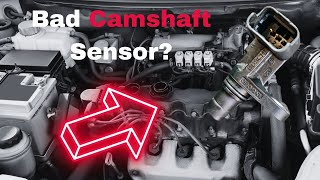
- Engine runs erratically 🎬 Watch: 7 telltale signs of a bad camshaft sensor
- Replacing the Crankshaft Position Sensor. While the two sensors work together, P0340 specifically points to the camshaft sensor circuit. However, in some cases, a failing crankshaft sensor can cause erratic signals that lead the PCM to flag the camshaft sensor.
- Replacing the sensor without checking for wiring harness damage. On platform mates, a chafed wiring harness is a very common cause for P0340 and is often overlooked.
Most Likely Causes
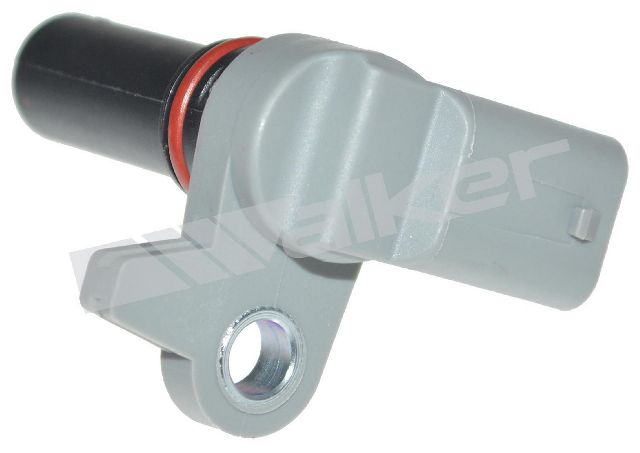
- Failed Camshaft Position Sensor 🔴 High Probability → Shop Engine Camshaft Position Sensor Sensors can fail over time due to heat cycles and electronic failure. It is the most common point of failure in the circuit. On some Ford models, oil contamination in the sensor connector has also been noted as a cause of failure. A Ford technical bulletin for other models with the 2.5L hybrid powertrain indicates that sensors built on or before Feb 5, 2015, were prone to failure and should be replaced if found.
How to confirm: After checking wiring, replacing the sensor is the most direct way to confirm. A multimeter can be used to test the sensor's resistance against specifications found in a service manual. On some Ford engines with two accessible cam sensors, swapping the intake and exhaust sensors can help diagnose the issue; if the code changes to P0365 (exhaust sensor), the original sensor is confirmed faulty.
Typical fix: Replace the camshaft position sensor. It is typically held by a single 8mm or 10mm bolt on the valve cover or cylinder head.
Est. part cost: $35-$75 - Damaged Wiring or Connector 🟡 Medium Probability The engine bay is a harsh environment. Wires can become brittle, and connectors can be damaged by vibration, heat, or oil contamination. On the related Ford C2 platform (Escape, Bronco Sport), a known issue involves the engine wiring harness chafing against the steering shaft, causing a short circuit. Manufacturer Bulletin #SSM 50245 notes that if the 14290 harness directly above the steering shaft u-joint is damaged, it can cause the engine to run rough and set P0340.
How to confirm: Visually inspect the wiring harness leading to the camshaft position sensor for any signs of cracking, melting, or rodent damage. Unplug the connector and check for corrosion or bent pins. Pay special attention to the harness routing near the steering shaft.
Typical fix: Repair the damaged section of wire or replace the pigtail connector. If chafing is found, the harness must be repaired and rerouted or properly secured to prevent recurrence.
Est. part cost: $15-$40 - Weak or Failing 12V Battery ⚪ Low Probability → Shop Vehicle Battery Particularly relevant for Hybrid models. A weak battery can cause widespread, erratic electrical issues and trigger various fault codes in modern vehicles. There is a known recall for 12V battery degradation on some Maverick models. Forum users frequently cite a bad 12V battery as the source of numerous electrical faults.
How to confirm: Test the 12V battery with a multimeter or a battery tester. A healthy battery should read approximately 12.6 volts with the engine off and above 13.7 volts with the engine running.
Typical fix: Replace the 12V battery. Many owners recommend upgrading to an aftermarket AGM battery for better longevity.
Est. part cost: $150-$300
Rare But Worth Checking
- Worn Timing Chain or Timing Issue: → Shop Engine Timing Chain If a timing chain has stretched or skipped a tooth, the camshaft and crankshaft will no longer be synchronized, causing the sensor to report an implausible signal. This is a more serious mechanical issue.
- Worn Camshaft (2.0L EcoBoost): → Shop Engine Camshaft On EcoBoost engines, it's possible for the camshaft lobes to wear down, which affects valve timing and can trigger camshaft position sensor codes even if the sensor is working correctly. This would likely be accompanied by ticking noises and misfire codes.
- Faulty Powertrain Control Module (PCM): → Shop Engine Control Module (ECM) A PCM failure is very rare but possible. On Maverick Hybrids, some owners have experienced PCM-related issues after recall updates, so a faulty software flash could be a remote possibility. Using non-Ford aftermarket PCM software has also been linked to this code on other Ford models.
- Damaged Reluctor Wheel: The sensor reads a toothed wheel (reluctor) on the camshaft. If this wheel is damaged, cracked, or has broken teeth, the signal will be incorrect, triggering P0340.
- Failing Alternator / Electrical Interference: On other Ford models, a failing alternator with a bad diode has been shown to introduce excessive AC ripple (electrical noise) into the vehicle's electrical system. This noise can interfere with the low-voltage signal from the camshaft position sensor, causing the PCM to incorrectly flag a P0340 code even when the sensor and its wiring are perfectly fine. This is often missed because mechanics focus on the sensor circuit itself.
- External Contamination: As noted in NHTSA ODI #11035325 for other Ford models, external factors like a leaking axle throwing grease onto a sensor can cause a check engine light with DTC P0340.
Diagnosis Steps
- Read the Code: Confirm P0340 is the primary code stored using an OBD-II scanner.
- Inspect the Wiring: Visually inspect the entire wiring harness for the camshaft position sensor (Sensor 'A', typically for the intake cam). Look for obvious damage, loose connections, or corrosion at the connector. Pay close attention to harness routing, especially near the steering shaft where chafing has been reported on platform mates.
- Check Battery Voltage: Ensure the 12V battery is healthy and providing stable voltage. A weak battery can cause spurious electrical codes, especially on hybrid models.
- Replace the Camshaft Position Sensor: Given the low cost of the part and high probability of failure, the most common next step is to replace the sensor. It is usually located on the top of the valve cover and secured with one 8mm or 10mm bolt. 🎬 Watch: How to replace Camshaft Position Sensor A
- Clear Code and Test Drive: After replacing the sensor, clear the trouble code with the scanner and perform a test drive to see if the code returns.
- Advanced Diagnostics: If the code returns, a more in-depth diagnosis is needed. This involves using a multimeter to check for voltage and ground at the sensor connector, and testing for continuity between the connector and the PCM. An oscilloscope can be used to check for electrical noise from a failing alternator. If wiring is good, the issue could be mechanical (timing chain, reluctor wheel) or a faulty PCM, which may require professional diagnosis.
Parts You'll Likely Need
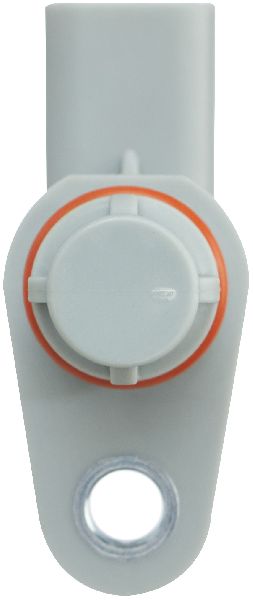
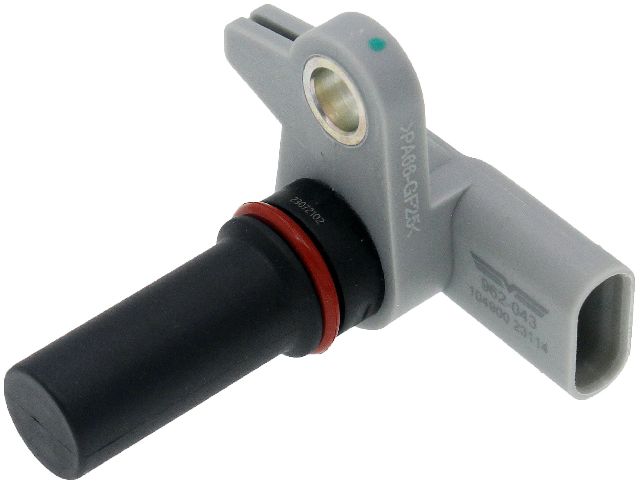
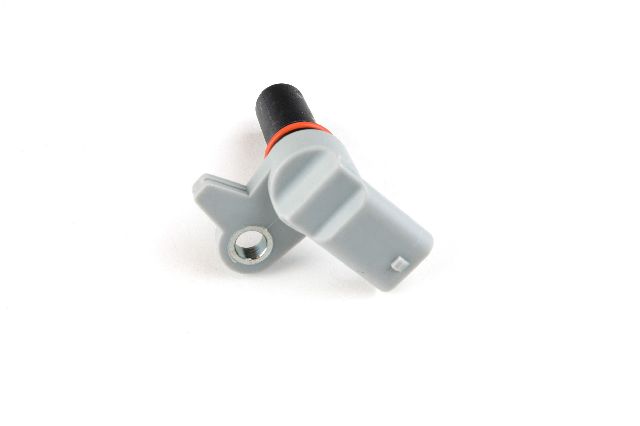
- Camshaft Position Sensor (2.5L Hybrid)
(OEM #BL3Z-6B288-C)— This is the most likely component to fail in the circuit for the 2.5L Hybrid engine. This part number fits a wide range of Ford vehicles, including the Maverick.
Trusted brands: Motorcraft (DU-102)
OEM price range: $35-$55
Aftermarket price range: $25-$45 - Camshaft Position Sensor (2.0L EcoBoost)
(OEM #P2GZ-6B288-C)— This is the most likely component to fail in the circuit for the 2.0L EcoBoost engine. This part fits various Ford models with 2.0L and 2.3L engines.
Trusted brands: Motorcraft (DU-107)
OEM price range: $45-$70
Aftermarket price range: $30-$50
Related Codes That Often Appear With This One
- P0344 — This code means 'Camshaft Position Sensor 'A' Circuit Intermittent,' indicating the signal is dropping out, which is closely related to a complete circuit failure (P0340). A Ford TSB for other models links P0340 and P0344 to excessive moisture in the engine oil.
- P0335 — This code is for the Crankshaft Position Sensor circuit. Since the cam and crank sensors' signals are compared by the PCM, a fault in one can sometimes lead to a code for the other.
- P0365 — This is the code for the 'B' (exhaust) camshaft position sensor. If both P0340 and P0365 appear, it could point to a common issue like a wiring problem affecting both sensors or a timing issue.
Technical Service Bulletins (TSBs) & Recalls
- TSB SSM 50116: While for the 2020-2021 Ford Escape, this TSB is highly relevant as it addresses P0340 caused by the engine wiring harness chafing against the steering shaft. Given the shared C2 platform, this is a critical check for Maverick owners.
- SSM 48598: For 2013-2018 C-Max and Fusion Hybrids with similar 2.0L/2.5L engines, this bulletin attributes P0340 and P0344 to excessive moisture in the engine oil, often from short-trip driving habits.
- Bulletin #SSM 50245: Notes that the 14290 harness directly above the steering shaft u-joint should be inspected if P0340 is present, as chafing here can cause the engine to run rough.
- Bulletin #20B14-S2: For related models, this bulletin links P0340 to crankshaft and camshaft signal quality during start up, which can trigger a "Stop Safely Now" message.
Platform-Specific Known Issues
- Some 2022-2023 Maverick Hybrids were subject to recall 22S47 for potential engine failure, and recall 23S27 for under-hood fire risk, with the fix being a PCM software update. Some owners reported drivability issues after these updates were performed. The 23S27 recall remedy involves a software update to detect impending rod bearing failure and limit engine power.
- A recall was issued for some 2021-2023 Bronco Sport and 2022-2023 Maverick vehicles for 12-volt battery degradation that could lead to sudden failure.
- A recall (24V-330) was issued for 2022-2024 Mavericks for HPCM software that could cause the vehicle to unexpectedly shift into neutral.
Mechanic-Grade Diagnostic Values
- CMP Sensor Power Supply Voltage (3-wire sensor) — expected: Approximately 5 volts or 12 volts (check schematic) with key on, engine off.. Failure: 0 volts or significantly lower than reference indicates an open in the power supply circuit or a PCM fault.
- CMP Sensor Ground Circuit Continuity — expected: A beeping sound or near 0 ohms resistance between the ground pin on the connector and a known good chassis ground.. Failure: High or infinite resistance (no beep) indicates an open in the ground circuit.
- CMP Sensor Signal Wire (Oscilloscope) — expected: A clean square wave pattern that switches between approximately 0V and 5V as the engine is cranked or running.. Failure: A missing, erratic, or noisy waveform. Excessive AC ripple on the signal can point to a failing alternator.
- CMP Sensor Internal Resistance (2-wire inductive sensor) — expected: Typically between 200 and 600 ohms, but can vary. Some Ford 2.0L EcoBoost sensors show around 450-550 ohms.. Failure: Resistance is out of the specified range (open or shorted).
Scan Tool Commands That Help
- Ford IDS / High-End OBD-II Scanner: Camshaft Sensor Relearn / Crankshaft Position Relearn — Some Ford vehicles may require a relearn procedure after replacing the camshaft or crankshaft position sensor to ensure the PCM has the correct baseline timing data. This is performed after the new part is installed and codes are cleared.
Wiring & Ground Locations
- CMP Sensor Connector (3-wire Hall-effect type) — Plugged into the camshaft position sensor, typically on the valve cover or side of the cylinder head.. This is the primary point for testing. Pin 1 is typically the voltage supply (5V or 12V), Pin 2 is the ground from the PCM, and Pin 3 is the signal wire back to the PCM. Verifying power, ground, and signal at this connector is the core of diagnosing the circuit.
- Engine Wiring Harness near Steering Shaft — Where the main engine harness passes near the intermediate steering shaft in the engine bay.. On the shared C2 platform, this is a known chafe point that can cause wires, including the CMP sensor circuit, to short to ground, triggering P0340. This is a critical inspection area mentioned in TSB SSM 50116 for the Ford Escape.
- Signal Return (SIGRTN) Circuit — This is a shared ground circuit within the wiring harness that connects multiple sensors back to the PCM.. A fault or open in the SIGRTN circuit can cause multiple sensor codes, including P0340. If other sensor codes are present, a problem with the shared signal return is a possibility.
Real Owner Repair Stories
- YouTube channel 'Oz Mechanics' (2003 Ford Mustang GT (demonstrates a principle applicable to many Fords)) — Check engine light with P0340 code.
❌ Tried (didn't work) The owner was about to replace the camshaft position sensor based on the code alone.
✅ What actually fixed it The technician used an oscilloscope on the CMP sensor signal wire and noticed excessive electrical noise ('ripple'). This noise was traced back to a failing alternator with a bad diode. Disconnecting the alternator's field wire cleaned up the CMP signal instantly. Replacing the alternator, not the cam sensor, resolved the P0340 code.
OEM Part Supersession History
BL3Z-6B288-A (also DU-95)→BL3Z-6B288-C— Standard part revision and update by the manufacturer.
Heads up: The new part number (BL3Z-6B288-C) is the correct service part for the 2.5L Hybrid engine.DU-107, JX6Z-6B288-B, P2GZ-6B288-A→P2GZ-6B288-C— Standard part revision and update by the manufacturer.
Heads up: The new part number (P2GZ-6B288-C) is the correct service part for the 2.0L EcoBoost engine.
Diagnostic Flowchart
Other Known Issues on This Vehicle
Issues unrelated to this code that are worth knowing about as an owner of this generation:
- Under-Hood Fire Risk (2.5L Hybrid) 🔴 High — Affects a large number of 2022-2023 Hybrid models, leading to major recalls. (Ref: Recall 22S47, 23S27)
- Grabby Brakes at Low Speed (Hybrid) 🟠 Medium — Widespread complaint among 2022 hybrid owners, related to regenerative braking calibration. (Ref: TSB 22-2493)
- Unexpected Shift to Neutral (Hybrid) 🔴 High — Affects 2022-2024 models, caused by a software fault in the Hybrid Powertrain Control Module (HPCM). (Ref: Recall 24V-330)
- Failing 12V Battery 🟠 Medium → Shop Vehicle Battery — Common issue on 2022-2023 models, causing various electrical faults and no-start conditions. (Ref: Recall 23S55)
- Leaking Fuel Tank 🔴 High — Very rare, limited to a small batch of 2024 models (217 units) manufactured in a specific week. (Ref: Recall 24S17 / NHTSA 24V-185)
- Hybrid System Integration & Reliability 🟠 Medium — Early 2022 Hybrid models have numerous owner complaints of intermittent power loss, jerky operation, and major component failures (battery, transmission).
Used vs. New Parts: Buying Guide for This Vehicle
When a used part is the smart pick: For this repair, buying a used camshaft position sensor is not recommended. It is a relatively low-cost electronic component that is critical for engine timing. The risk of getting a part that is already near the end of its service life outweighs the small cost savings.
What to inspect on the donor part:
- Not applicable as used sensors are not advised.
OEM-only on this vehicle (don't cheap out):
- While not strictly 'OEM-only', using a Motorcraft sensor or a high-quality OE-equivalent brand (like NTK, Bosch, Delphi) is strongly recommended. Cheap, unbranded sensors are known to have high failure rates, causing the code to return quickly.
Aftermarket brands forum-validated for this vehicle:
- Motorcraft
- NTK
- Bosch
- Delphi
- Standard Motor Products (SMP)
Brands owners have reported issues with on this vehicle:
- Generic, no-name brands from online marketplaces are often cited in forums as being unreliable or failing out of the box.
Real Owner Stories
Aggregated from forums and TSBs cited above. Mileages and costs reflect what owners reported in those sources.
2022 Ford Maverick Hybrid
Symptoms: Experienced a long history of major electrical and mechanical failures, including hybrid battery and transmission issues; forum discussions highlight widespread electrical faults linked to the 12V system.
What fixed it: Replacing the 12V battery, with a recommendation to upgrade to an aftermarket AGM battery for better longevity.
Source hint: Reddit.com/r/FordMaverickTruck thread detailing a history of failures and MaverickTruckClub.com discussions
2022-2023 Ford Maverick Hybrid
Symptoms: Vehicle entered 'limp mode' and experienced drivability issues immediately following a PCM recall update.
What fixed it: Ford later issued a subsequent software fix to address the issues caused by the initial PCM recall update.
Source hint: Reddit.com/r/FordMaverickTruck thread regarding Hybrid 'limp mode' after recall
Ford Owner Report (NHTSA ODI #11065568)
Symptoms: Check engine light came on at 5,800 miles with codes P0340 and P0344. After replacing the cam sensor and clearing codes, the check engine light flashed and stayed on again after only 3 days at 5,980 miles.
What fixed it: Initial sensor replacement did not resolve the recurring issue, suggesting deeper electrical or mechanical faults.
Documented NHTSA Reports
Owner reports and investigations provide additional insight into how P0340 manifests in the field. NHTSA ODI #11035325 describes a situation where a leaking axle threw grease onto a sensor, triggering multiple codes including P0340, P0344, and P0365. This highlights the importance of checking for external contamination during your visual inspection.
Related OBD-II Codes
Frequently Asked Questions
Could the 12V battery recall on my 2022 Maverick be causing this P0340 code?
Is there a TSB for wiring harness issues on the Maverick like there is for the Ford Escape?
I just had the 23S27 under-hood fire recall performed and now my Maverick is driving poorly. Is this related to P0340?
Can I swap sensors to test if the Camshaft Position Sensor is actually bad?
Does short-trip driving affect the camshaft sensor on the Maverick Hybrid?
Helpful Videos
Used OEM Parts in Stock
New Aftermarket Parts Available


The information in this article is provided for general reference and educational purposes only. Vehicle specifications, procedures, and part compatibility can vary by production date, trim level, and region. Always consult your vehicle's factory service manual and verify part numbers before purchasing or performing repairs. Safety-critical components such as airbags, seat belts, and braking systems should be installed by a qualified professional.
- Ford Maverick:
- 🧭 Diagnostic Flowchart
- 🎬 Helpful Videos
- 🛍️ Shop This Part
- What's Unique About the 2022-2024 Ford Maverick
- Symptoms You May Notice
- Most Likely Causes
- Rare But Worth Checking
- Diagnosis Steps
- Parts You'll Likely Need
- Related Codes That Often Appear With This One
- Technical Service Bulletins (TSBs) & Recalls
- Platform-Specific Known Issues
- Mechanic-Grade Diagnostic Values
- Scan Tool Commands That Help
- Wiring & Ground Locations
- Real Owner Repair Stories
- OEM Part Supersession History
- Other Known Issues on This Vehicle
- Used vs. New Parts: Buying Guide for This Vehicle
- Real Owner Stories
- 2022 Ford Maverick Hybrid
- 2022-2023 Ford Maverick Hybrid
- Ford Owner Report (NHTSA ODI #11065568)
- Documented NHTSA Reports
- Related OBD-II Codes
- Frequently Asked Questions
- 🎟️ Get 5% Off