

P0340 on 1998-2000 Ford Ranger 4.0L: Cam Sensor vs. Synchronizer Fixes
On the 4.0L OHV Ranger, P0340 is almost always caused by a failing camshaft synchronizer, not just the sensor. A distinct 'chirping' from the back of the engine is the key symptom. Expect to replace the entire synchronizer assembly, which costs around $150-$250 for the part. Ignoring this can lead to oil pump failure and catastrophic engine damage.
- For a 1998-2000 Ranger 4.0L OHV, P0340 almost always points to a failing camshaft synchronizer, not just the sensor.
- Listen for a 'chirping' noise from the back of the engine; this is the definitive symptom of synchronizer failure.
- Ignoring the chirp and code can lead to oil pump failure and catastrophic engine damage.
- Always replace the synchronizer and sensor as a complete assembly, preferably using a Motorcraft part.
- Proper installation requires setting the engine to TDC and using an alignment tool.
What's Unique About the 1998-2000 Ford Ranger
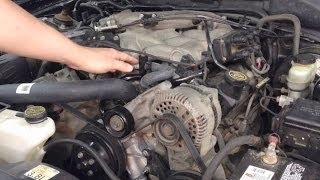
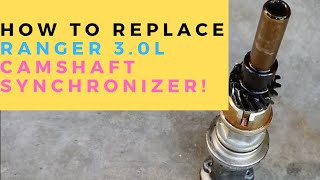
The defining issue for the Ford 4.0L OHV engine is not the camshaft position sensor itself, but the 'camshaft synchronizer' it mounts to. This assembly, which looks like a small distributor, is located at the back of the engine. Its internal bushings wear out due to a lack of forced lubrication, causing a wobble that disrupts the sensor's reading and triggers the P0340 code. A classic symptom is a high-pitched 'chirping' or 'squeaking' sound, often mistaken for a bad belt, 🎬 Watch: Hear the specific chirping sound of a failing synchronizer. which signals the synchronizer is failing. This part also drives the oil pump, making its failure a critical issue.
Symptoms You May Notice
- Check Engine Light is on
- High-pitched 'chirping' or 'squeaking' from the back of the engine, near the firewall.
- Engine is difficult to start or cranks but won't start.
- Engine stalls, especially when warm or during acceleration.
- Rough idling or hesitation during acceleration.
- Loss of engine power.
- Poor fuel economy (around 12 MPG reported by one owner).
- Replacing only the camshaft position sensor when the underlying cause is the failing synchronizer assembly. The new sensor will not fix the wobble from the bad synchronizer, and the code will return.
- Mistaking the synchronizer chirp for a bad serpentine belt or pulley.
Most Likely Causes
- Failing Camshaft Synchronizer Assembly 🔴 High Probability → Shop Engine Camshaft The design of the synchronizer on the 4.0L OHV engine uses bushings that are known to wear out over time due to a lack of direct lubrication, leading to shaft wobble and eventual failure.
How to confirm: Listen for a persistent chirping noise from the rear of the engine that may change with RPM. The noise is the primary indicator. After removal, the old unit will often show excessive side-to-side play in the shaft or scoring marks where the shutter wheel has contacted the sensor.
Typical fix: Replace the entire camshaft synchronizer assembly and the camshaft position sensor as a unit. This requires setting the engine to TDC and using an alignment tool for proper installation.
Est. part cost: $150-$250 - Failed Camshaft Position Sensor (CMP) 🟡 Medium Probability → Shop Engine Camshaft Position Sensor While less common than synchronizer failure, the sensor itself can fail electronically. It is often damaged by a wobbling synchronizer shaft hitting it.
How to confirm: If the synchronizer is not making noise and appears to be in good condition (no shaft play), the sensor is the next suspect. Testing with a multimeter or oscilloscope is possible, but swapping with a known-good sensor is a common diagnostic step. Often, replacing the sensor alone is a misdiagnosis.
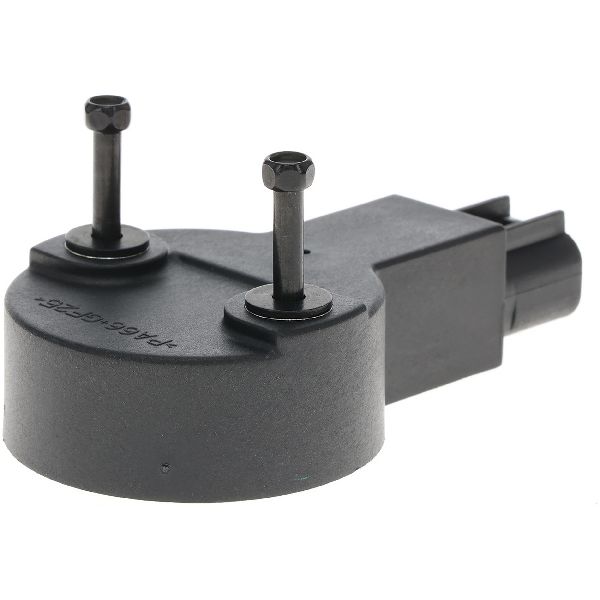
Typical fix: Replace the camshaft position sensor. It is held onto the synchronizer by two small (often 5.5mm or 7/32") bolts.
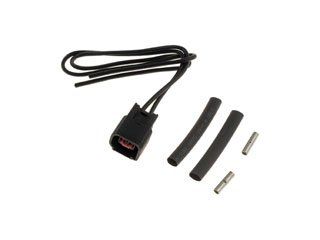
Est. part cost: $30-$60 - Damaged Wiring or Connector ⚪ Low Probability The wiring harness is located at the back of the engine where it is exposed to high heat, which can make wires and connectors brittle over time. The connector itself can become loose or corroded.
How to confirm: Visually inspect the wiring harness and connector for cracks, corrosion, or loose pins. Perform a continuity test on the wires between the sensor and the PCM; one user on a forum detailed checking continuity from the pigtail to pin 85 on the PCM connector.
Typical fix: Repair the damaged section of the harness or replace the connector pigtail.
Est. part cost: $15-$30
Rare But Worth Checking
- Failing Alternator: A failing diode in the alternator can introduce excessive AC ripple (electrical noise) into the vehicle's electrical system. This can interfere with the sensitive CMP sensor signal and trigger a P0340 code. This is a known, though uncommon, issue on these trucks. A user on Ranger-Forums noted that AC ripple under 0.50 volts is considered passing, but theirs was at 0.49V and was still suspect.
- Powertrain Control Module (PCM) Fault: → Shop Engine Control Module (ECM) While rare, it is possible for the internal circuit in the PCM that processes the CMP signal to fail. This should only be considered after all other possibilities, including wiring and alternator issues, have been exhaustively ruled out.
- Moisture Contamination: Manufacturer service bulletin #SSM 48598 notes that P0340 can occur due to excessive moisture build-up in the engine oil, which may happen when a vehicle is driven only short distances.
Diagnosis Steps
- Scan for any other trouble codes to ensure P0340 is the primary issue. Codes like P1309 or P1336 can also be related to synchronizer issues.
- Start the engine and listen carefully at the back of the engine, near the firewall, for a distinct 'chirping' or 'squeaking' sound. This is the primary indicator of a failing synchronizer.
- If the chirp is present, the camshaft synchronizer assembly must be replaced. It is highly recommended to use a Motorcraft part, as some aftermarket units (like Dorman) have poor reviews regarding longevity.
- If no chirp is heard, inspect the wiring and connector for the camshaft position sensor. Look for any signs of damage, corrosion, or looseness. Check for continuity between the sensor connector and the PCM. Manufacturer bulletin #SSM 50245 suggests inspecting the harness directly above the steering shaft u-joint for potential damage that could trigger P0340.
- If the wiring appears intact, consider testing the alternator for AC ripple voltage. Set a multimeter to AC Volts. 🎬 Watch: How to test your alternator for AC ripple voltage. With the engine running at a high idle (around 1500-2000 RPM), touch the probes to the positive and negative battery terminals. AC voltage should be below 0.5V, but some forum users report issues even with readings as low as 0.49V. An oscilloscope provides a much clearer diagnosis of electrical noise.
- If the alternator tests good and wiring is intact, the sensor itself may be faulty. Replace the camshaft position sensor.
- If the code persists after all other steps, the issue may lie with the camshaft synchronizer's alignment (if recently replaced) or, in rare cases, the PCM. Professional diagnosis is recommended at this point.
Parts You'll Likely Need
- Camshaft Synchronizer Assembly
(OEM #XF2Z-12A362-AA (Motorcraft DA-2089))— This is the most common failure point for a P0340 code on the 4.0L OHV engine. The assembly wears out, causing the sensor signal to become erratic. Many owners strongly recommend using the OEM Motorcraft part over aftermarket alternatives due to reports of premature failure.
Trusted brands: Motorcraft (highly recommended), Dorman (689-112, use with caution)
OEM price range: $180-$250
Aftermarket price range: $100-$180 - Camshaft Position Sensor
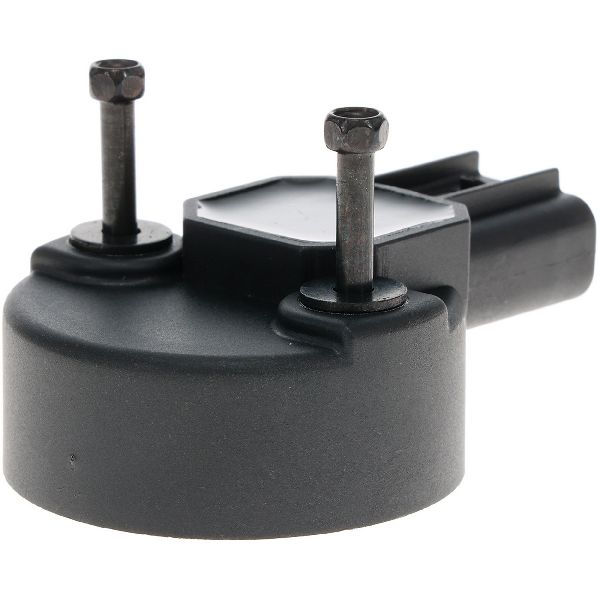
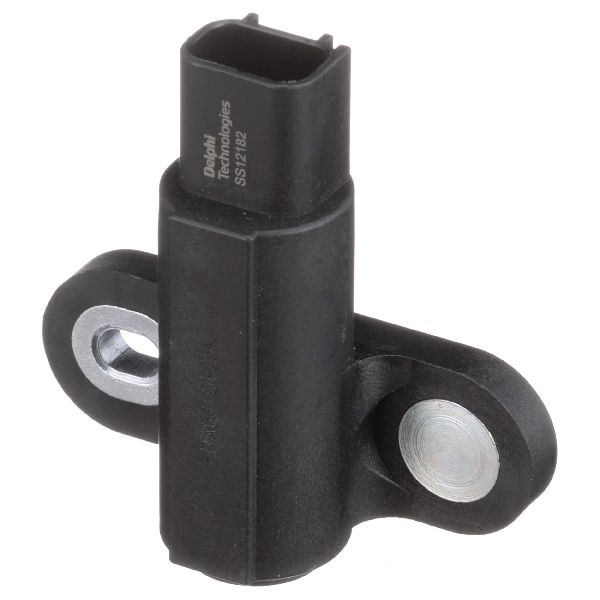
(OEM #F58Z-12A112-AA (Motorcraft DU-87))— If the synchronizer is confirmed to be in good condition, the sensor itself may have failed. It is often included with a new synchronizer assembly and is always recommended to be replaced at the same time.
Trusted brands: Motorcraft, Bosch, Delphi
OEM price range: $30-$50
Aftermarket price range: $20-$40 - Synchronizer Alignment Tool — Required to properly time the new synchronizer during installation. Some aftermarket synchronizer kits include a disposable plastic alignment tool.
Trusted brands: Included with Dorman kits, Available separately
OEM price range: N/A
Aftermarket price range: $5-$15
Related Codes That Often Appear With This One
- P1309 (Misfire Monitor Disabled)
- P1336 (Crankshaft Position Sensor System Variation Not Learned)
- P1A0C (Hybrid Powertrain Control Module - Engine Failed to Start) — As noted in Bulletin #20B14-S2, this may appear with P0340 due to signal quality issues during startup.
Technical Service Bulletins (TSBs) & Recalls
- TSB 870197 (NHTSA ID: 10000592): Directly addresses incorrectly installed gear-driven camshaft position (CMP) sensor synchronizer assemblies causing surge, loss of power, MIL on, and DTCs including P0340, P1309, and P1336.
- TSB 02-22-1: Addresses issues caused by incorrect installation of the gear-driven synchronizer assembly, highlighting the importance of proper timing procedures which are critical when fixing P0340.
- TSB 98-5-10: A more specific TSB for some 1998 models that may be relevant.
- TSB 6997 (NHTSA ID: 6090310): Notes that some service manuals may list the incorrect camshaft position sensor alignment tool for various engine sizes, emphasizing the need to verify the correct tool is used.
- Bulletin #20B14-S2: Notes that P0340 can be present due to crankshaft and camshaft signal quality during start up, which may also trigger a "Stop Safely Now" message.
- Bulletin #SSM 48598: Highlights that excessive moisture build-up in engine oil from short-distance driving can trigger P0340 and P0344.
- Bulletin #SSM 50245: Recommends inspecting the 14290 harness for damage if P0340 is present alongside other electrical codes.
Platform-Specific Known Issues
- The camshaft synchronizer on the 4.0L OHV engine also drives the oil pump via an intermediate shaft. A complete failure of the synchronizer's gear can cause the oil pump to stop, leading to a sudden and total loss of oil pressure, which will destroy the engine. This makes addressing the 'chirping' noise and P0340 code a high priority.
- Access to the synchronizer is tight, located at the rear of the engine against the firewall, more towards the passenger side. Some owners find it difficult to reach the 10mm hold-down bolt.
Mechanic-Grade Diagnostic Values
- CMP Sensor Signal (at PCM Pin 85) — expected: A clean 12V square wave pulse that increases in frequency with engine RPM.. Failure: No signal, an erratic signal, or a signal that does not change with RPM.
- CMP Sensor Power Supply — expected: 12V on the Light Blue/Orange stripe wire at the sensor connector with key on.. Failure: Low or no voltage indicates a problem with the power supply from the fuse box.
- CMP Sensor Ground — expected: Good continuity to ground on the Black/White stripe wire.. Failure: High resistance or an open circuit indicates a bad ground.
- Alternator AC Ripple Voltage — expected: Less than 0.5V AC measured across the battery terminals with the engine at 1500-2000 RPM.. Failure: AC voltage approaching or exceeding 0.5V indicates failing alternator diodes, which can create electrical noise that disrupts the CMP signal.
Scan Tool Commands That Help
- General Procedure: Cam/Crank Relearn Procedure — After replacing the camshaft synchronizer or sensor, some vehicles may require a relearn procedure for the PCM to recognize the new sensor's signal correctly. This is not always required and may involve a specific drive cycle rather than a direct scan tool command.
Wiring & Ground Locations
- Main PCM Ground Strap — A ground strap running from the back of the driver's side cylinder head to the firewall.. This is the main ground for the PCM and the cab. It is often left loose or disconnected after engine work, leading to erratic sensor readings and codes like P0340.
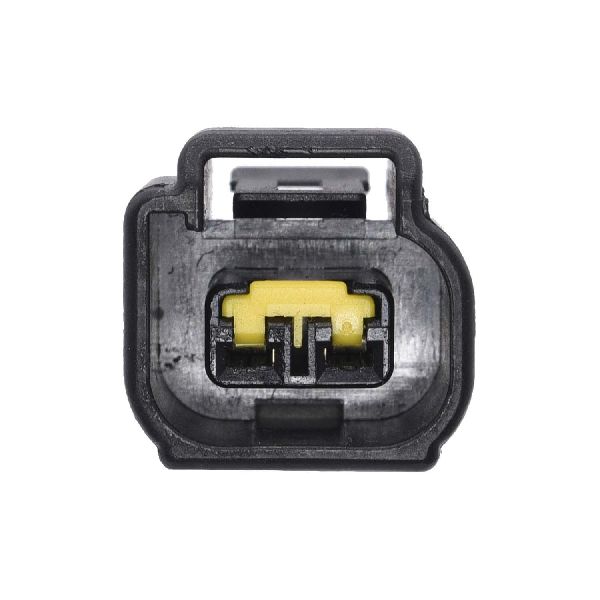
- CMP Sensor Connector (1998 3-wire) — On top of the camshaft synchronizer assembly at the rear of the engine.. Knowing the pinout is essential for testing. Pin 85 at the PCM (Dark Blue/Orange wire) is the signal wire. The other wires are 12V power (Light Blue/Orange) and ground (Black/White). The signal wire is also noted as being shielded.
Real Owner Repair Stories
- Reddit user on r/fordranger (1998 Ford Ranger 2.5L (different engine, but common Ford issue)) — Engine cutting out on the freeway, P0340 code.
❌ Tried (didn't work) Replaced fuel pump (fixed a separate low-pressure issue).
✅ What actually fixed it Replacing the alternator. The original was producing electrical noise (AC ripple) that interfered with the camshaft position sensor signal. - ScannerDanner Forum user (2001 Ford Ranger 3.0L (different engine, but identical synchronizer design)) — Hard set P0340 code, hesitation, and bucking.
❌ Tried (didn't work) Confirmed sensor signal and wiring were good with an oscilloscope., Tested alternator AC ripple and it was within spec.
✅ What actually fixed it The camshaft synchronizer had been installed incorrectly. The fix was to remove the synchronizer and rotate it slightly (1/4 turn) to correct the timing relationship between the CMP and CKP signals, which was verified on the oscilloscope. - BobIsTheOilGuy Forum user (Ford Ranger 3.0L) — Preventative maintenance discussion for the known synchronizer squeak/failure.
✅ What actually fixed it A user reported success in preventing failure by periodically removing the CMP sensor cap (2 screws) and adding engine oil directly to the synchronizer's upper bushing every oil change. - NHTSA ODI #11065568 — An owner reported the check engine light coming on with codes P0340 and P0344. After replacing the cam sensor and clearing codes, the light began flashing again after only three days of driving.
- NHTSA ODI #11035325 — A report describes a vehicle throwing grease onto a sensor, which triggered a series of codes including P0340 and P0344, leading to persistent diagnostic difficulties.
OEM Part Supersession History
XF2Z-12A362-AA→Motorcraft DA-2089— Motorcraft is Ford's OEM parts brand. DA-2089 is the service part number for the assembly.
Heads up: The DA-2089 part fits multiple Ford engines including the 3.0L and 4.0L from 1998 up to 2008, but ensure you have the correct alignment tool for your specific year/engine combination.
Model Year Variations Within This Range
- 1998-2000+ (4.0L OHV): There are different versions of the synchronizer assembly (early 3-wire, late 3-wire, and 2-wire) used across the 4.0L's production life. The 1998 model uses a 3-wire Hall-effect sensor. Using the correct specific alignment tool is critical. For example, the OTC 6472 tool is for the 'Late 3 Wire' version and the OTC 6483 is for the '2 Wire' version. Failure to use the correct tool can result in improper timing and a persistent P0340 code.
Diagnostic Flowchart
Real Owner Stories
Aggregated from forums and TSBs cited above. Mileages and costs reflect what owners reported in those sources.
1998 Ford Ranger 4.0L
Symptoms: Persistent P0340 code, but no problem starting or driving; no knocks, no efficiency or performance issues.
What fixed it: The owner tried replacing the CMP sensor, rewiring the connector, and replacing the alternator, but the issue remained unresolved in the thread.
Source hint: Reddit r/fordranger
1998 Mazda B4000 4.0L OHV
Symptoms: P0340 code returned 6 months after having the camshaft synchronizer, camshaft position sensor, and wiring replaced for a previous P1309 code.
What fixed it: Unresolved in the provided forum post.
Source hint: Ranger-Forums
Related OBD-II Codes
Frequently Asked Questions
Why is my 4.0L OHV Ranger making a chirping noise along with the P0340 code?
Can a P0340 code on this engine lead to catastrophic engine failure?
Should I use an aftermarket camshaft synchronizer to fix my P0340?
Are there any TSBs for the 1998-2000 Ranger regarding the P0340 code?
I replaced the camshaft position sensor but the P0340 code came back. What else could it be?
How do I test if my alternator is causing the P0340 code on my Ranger?
Helpful Videos

We Have This Part in Stock


The information in this article is provided for general reference and educational purposes only. Vehicle specifications, procedures, and part compatibility can vary by production date, trim level, and region. Always consult your vehicle's factory service manual and verify part numbers before purchasing or performing repairs. Safety-critical components such as airbags, seat belts, and braking systems should be installed by a qualified professional.
- Ford Ranger:
- 🧭 Diagnostic Flowchart
- 🎬 Helpful Videos
- 🛍️ Shop This Part
- What's Unique About the 1998-2000 Ford Ranger
- Symptoms You May Notice
- Most Likely Causes
- Rare But Worth Checking
- Diagnosis Steps
- Parts You'll Likely Need
- Related Codes That Often Appear With This One
- Technical Service Bulletins (TSBs) & Recalls
- Platform-Specific Known Issues
- Mechanic-Grade Diagnostic Values
- Scan Tool Commands That Help
- Wiring & Ground Locations
- Real Owner Repair Stories
- OEM Part Supersession History
- Model Year Variations Within This Range
- Real Owner Stories
- 1998 Ford Ranger 4.0L
- 1998 Mazda B4000 4.0L OHV
- Related OBD-II Codes
- Frequently Asked Questions
- 🎟️ Get 5% Off