

P0340 on 2017-2020 Genesis G80 3.8L: Camshaft Sensor Circuit Causes and Fixes
P0340 on a Genesis G80 3.8L most often indicates a failed intake camshaft position sensor on Bank 1 (passenger side). This can cause hard starting, stalling, and a rough idle. Replacing the sensor is the usual fix, with the OEM part costing between $100 and $150. Before replacing, it's wise to swap the Bank 1 and Bank 2 intake sensors to confirm the failure.
- P0340 on the G80 3.8L specifically points to the intake camshaft position sensor on the passenger side.
- The most likely cause is a failed sensor, which is a common issue.
- A simple and effective diagnostic is to swap the passenger-side intake sensor with the driver-side intake sensor to see if the trouble code follows the part (changes to P0345).
- Always use a high-quality OEM or reputable aftermarket sensor for the replacement to ensure reliability.
- While the part is relatively inexpensive, be prepared for a slightly more involved replacement process due to potentially tight access on the passenger side of the engine.
What's Unique About the 2017-2020 Genesis G80
The Lambda II 3.8L GDI V6 is a sophisticated dual overhead cam (DOHC) engine with four camshaft position sensors in total—one for the intake and one for the exhaust cam on each bank. Code P0340 specifically points to the intake sensor on the passenger side. While the sensor itself is a common failure point across many Hyundai and Genesis models, accessing it on the G80's rear-wheel-drive platform can be more involved than on other vehicles, particularly for the passenger side (Bank 1) which is set further back toward the firewall. The issue is common enough on the Lambda engine family that it is also seen on platform mates like the Kia K900 and Genesis Coupe.
Symptoms You May Notice
🎬 Watch: 11 common symptoms of a failing camshaft sensor.- Check Engine Light is on
- Engine is hard to start or cranks for a long time
- Engine stalls, especially at low speeds or when stopping
- Rough or unstable idle
- Noticeable loss of power and acceleration
- Engine may crank but fail to start at all
- Sputtering or hesitation from the engine.
- Transmission may exhibit shifting problems.
- Replacing the crankshaft position sensor. While related, a fault with the crankshaft sensor would typically set a P0335 code. P0340 is specific to the camshaft sensor circuit.
- Replacing the wrong camshaft sensor. The 3.8L V6 has four cam sensors. P0340 points specifically to the intake sensor on the passenger side (Bank 1). Replacing any other sensor will not fix the issue.
- Ignoring oil in the sensor connector. If the old sensor leaked oil into the harness connector, simply replacing the sensor without thoroughly cleaning the connector with electrical contact cleaner can cause the code to return.
Most Likely Causes
- Failed Bank 1 Intake Camshaft Position Sensor 🔴 High Probability → Shop Engine Camshaft Position Sensor The sensor is an electronic component that can fail over time due to constant heat cycles and vibration. It is the most common point of failure 🎬 See this diagnostic breakdown of the P0340 circuit code. for a P0340 circuit code. Some owners on forums report the sensor leaking oil through the electrical connector itself, which disrupts the signal.
How to confirm: The most effective diagnostic step is to swap the Bank 1 (passenger side) intake sensor with the Bank 2 (driver's side) intake sensor. Clear the codes and drive the vehicle. If the code changes to P0345 (Camshaft Position Sensor 'A' Circuit Malfunction Bank 2), the sensor is faulty. This is a widely accepted diagnostic method.
Typical fix: Replace the Bank 1 intake camshaft position sensor. It is highly recommended to use a genuine OEM Hyundai/Genesis sensor (Part No. 39318-3L000) to avoid premature failure or compatibility issues, a common complaint with aftermarket sensors.
Est. part cost: $100-$150 - Wiring Harness or Connector Issue 🟡 Medium Probability The engine bay environment can cause wiring to become brittle or connectors to corrode. The sensor's wiring can be damaged by heat, oil, or chafing against other components. Oil contamination in the connector from a leaking sensor or valve cover gasket is a known issue.
How to confirm: Visually inspect the wiring harness leading to the Bank 1 intake cam sensor for any signs of damage, melting, or corrosion. Check that the connector is securely plugged in and that the pins are clean and tight. Use a multimeter to test for 5V power, ground, and a signal at the connector with the key on. If the connector is full of oil, clean it thoroughly with contact cleaner and see if the issue becomes intermittent.
Typical fix: Repair the damaged section of wiring or clean/replace the connector pigtail. If oil contamination is from a leaky valve cover gasket, the gasket should be replaced to prevent repeat failure.
Est. part cost: $10-$50 - Weak Battery or Faulty Alternator ⚪ Low Probability → Shop Vehicle Battery Low system voltage or electrical noise (AC ripple) from a failing alternator can interfere with the sensitive signals from the cam and crank sensors, leading to erroneous codes. This is a general cause for many electronic sensor codes, not specific to this platform.
How to confirm: Test the battery voltage with the engine off (should be ~12.6V). Test the alternator output with the engine running (should be ~13.5-14.5V). Many auto parts stores offer free battery and alternator testing. An advanced diagnostic would involve checking for AC ripple from the alternator with an oscilloscope.
Typical fix: Replace the weak battery or failing alternator.
Est. part cost: $150-$500
Rare But Worth Checking
- Stretched Timing Chain or Failed Tensioner: → Shop Engine Timing Chain While possible, a timing chain issue is more likely to cause a correlation code (like P0016 or P0017) rather than a circuit malfunction code like P0340. However, if the chain has significant slack, it could potentially cause an erratic signal that the ECM interprets as a circuit fault. This would often be accompanied by a characteristic startup rattle.
- Failed Powertrain Control Module (ECM): → Shop Engine Control Module (ECM) This is extremely rare. The ECM itself could be failing to process the sensor's signal correctly. All other possibilities, especially the sensor and its wiring, should be exhaustively ruled out before considering ECM replacement.
Diagnosis Steps
- Read the code with an OBD-II scanner and confirm P0340 is the primary code present. Note any other codes, especially correlation codes like P0016/P0017.
- Clear the code and test drive the vehicle to see if the code returns immediately. This helps confirm a hard fault.
- Inspect the engine oil level and condition. Low or very dirty oil can affect the variable valve timing system, though it's less likely to cause a pure circuit code.
- Locate the Bank 1 (passenger side) intake camshaft position sensor on the top of the valve cover, towards the rear of the engine. 🎬 Watch: How to identify and locate Bank 1 vs Bank 2 sensors.
- Carefully inspect the sensor's electrical connector and wiring harness for any visible damage, corrosion, or loose connections. Check for oil inside the connector itself.
- Sensor Swap Test: The most definitive DIY step. Swap the Bank 1 intake sensor with the Bank 2 (driver's side) intake sensor. They are the same part (OEM P/N: 39318-3L000). Clear the codes and drive. If the code returns as P0345, the sensor you moved is faulty and needs to be replaced.
- If the P0340 code returns after the swap, the problem is in the Bank 1 circuit wiring or the ECM. Use a multimeter to verify power (approx. 5V), ground, and signal integrity at the Bank 1 sensor connector.
- Check related fuses. The cam sensors may share a fuse with other components, often labeled 'SENSOR' or 'ECU' in the fuse box.
- If wiring and the sensor are confirmed to be good, the issue may be a more complex mechanical problem (timing) or a rare ECM fault, which may require professional diagnosis.
Parts You'll Likely Need
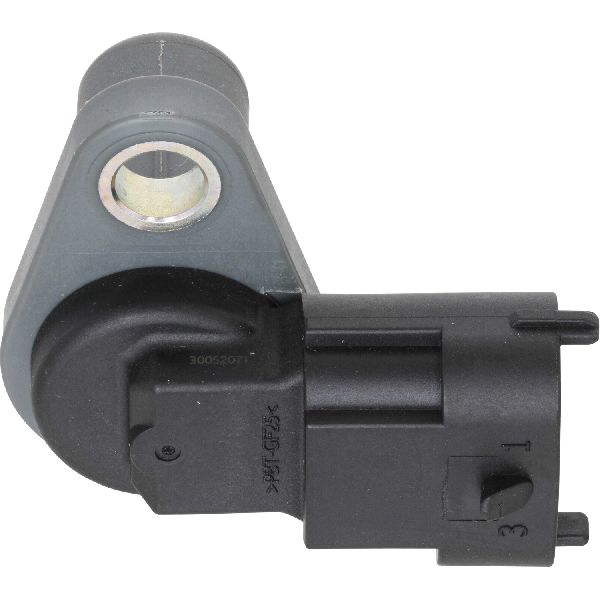
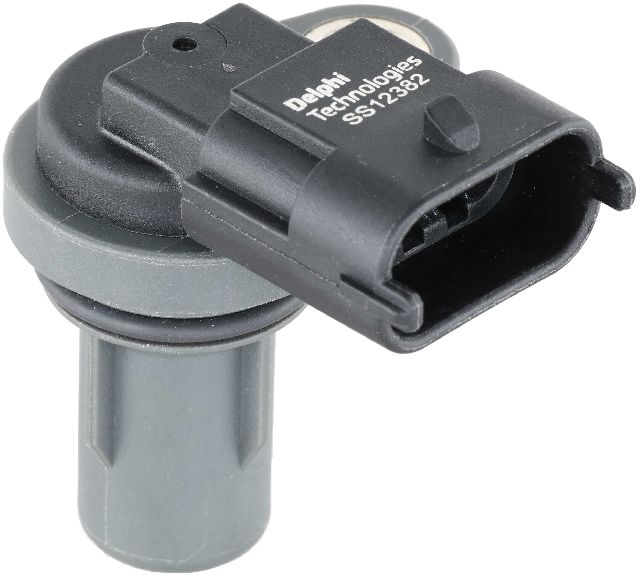
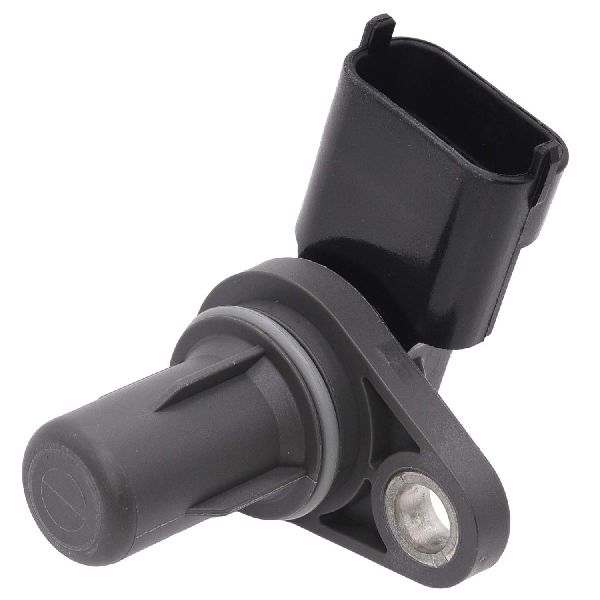
- Camshaft Position Sensor (Bank 1 Intake)
(OEM #39318-3L000)— This is the most common component to fail and directly cause a P0340 code. It is responsible for sending the camshaft's position signal to the engine computer. This part number is confirmed to fit the 2017-2020 G80 and is used for multiple cam sensor locations on this engine.
Trusted brands: Hyundai/Genesis (OEM), Delphi, Standard Motor Products (SMP), Hitachi
OEM price range: $100-$150
Aftermarket price range: $40-$90
Related Codes That Often Appear With This One
- P0345 — This is the equivalent code for the Bank 2 (driver's side) intake camshaft sensor. Seeing both may indicate a systemic issue like a wiring problem common to both sensors, a blown fuse, or a voltage supply issue.
- P0335 — This code is for the crankshaft position sensor. Sometimes a failing crankshaft sensor can cause erratic signals that lead the ECM to also flag the camshaft sensor, or vice-versa. The two sensors' signals are used together for timing.
- P0016 — This is a crankshaft/camshaft correlation code for Bank 1. While P0340 is a circuit fault, a failing sensor can sometimes send bad data that leads the ECM to also flag a correlation error. Seeing both could point towards a deeper mechanical timing issue.
Platform-Specific Known Issues
- Access to the Bank 1 (passenger side) sensors can be tight due to the engine's position in the bay, potentially requiring the removal of other components for clearance, which increases labor time compared to more accessible sensors.
- A forum user on r/genesiscoupe with a similar Lambda engine reported chasing an intermittent P0340 that was ultimately caused by oil leaking from the sensor itself into the electrical connector, highlighting the importance of checking for oil contamination.
Mechanic-Grade Diagnostic Values
- Camshaft Position Sensor Connector Pin Voltages (Key On, Engine Off) — expected: Pin 1: ~5V (Power from ECM), Pin 2: ~0V or ~5V (Signal - depends on cam position), Pin 3: ~0V (Ground). Failure: No voltage on Pin 1 indicates a power supply issue (fuse, wiring, ECM). No ground on Pin 3 indicates a bad ground wire. Signal on Pin 2 that doesn't change when cranking indicates a bad sensor.
- Camshaft Position Sensor Signal Waveform (at idle) — expected: A square wave alternating between a low voltage (below 0.8V) and a high voltage (above 4.1V), with a frequency of approximately 5-8 Hz.. Failure: A missing, flat-lined, or noisy waveform indicates a failed sensor or wiring issue.
- Alternator AC Ripple Voltage (Engine Running) — expected: Less than 0.5V AC. Failure: A reading above 0.5V AC indicates a failing alternator diode, which can introduce electrical noise that interferes with the cam sensor signal.
Scan Tool Commands That Help
- Hyundai GDS (Global Diagnostic System): Live Data Graphing: Camshaft and Crankshaft Position Sensors — Use this to visually compare the signal waveforms from the cam and crank sensors in real-time. A missing or erratic waveform from the Bank 1 intake cam sensor while the others appear normal confirms the fault location.
- Hyundai GDS (Global Diagnostic System): DTC Guide / Fault Code Diagnosis — After retrieving P0340, this function provides a guided diagnostic workflow specific to the vehicle, including component locations, wiring diagrams, and step-by-step test procedures.
- Advanced OBD-II Scanner: Cam/Crank Relearn Procedure — While Hyundai/Genesis vehicles do not typically require a manual relearn after replacing a cam sensor, some scan tools offer this function. It may be used as a last resort if a new OEM sensor does not immediately resolve the code.
Wiring & Ground Locations
- Bank 1 Intake Camshaft Position Sensor Connector — On the top of the passenger side (Bank 1) valve cover, typically the rearmost sensor on the cover.. This is the direct connection point for the sensor. Pin 1 is 5V power, Pin 2 is the signal wire, and Pin 3 is ground. All multimeter tests for the circuit begin here.
- Starter / Bell Housing Ground — A primary ground wire is typically attached to one of the starter-to-transmission bell housing bolts.. A loose or corroded ground at this location can introduce significant electrical noise into the system, especially during cranking. This noise can interfere with the low-voltage signals from the cam and crank sensors, potentially triggering a P0340 code even if the sensor and its direct wiring are good.
Real Owner Repair Stories
- Reddit user on r/genesiscoupe (2011 Genesis Coupe 2.0T (Lambda engine family principles apply)) — Extended crank (5 seconds) before starting, reduced power, P0340 code present.
❌ Tried (didn't work) Initially replaced the camshaft position sensor which was visibly leaking oil from the connector; this did not fix the problem.
✅ What actually fixed it The problem became intermittent after replacing the crankshaft position sensor, which had a small break in its wire. The final resolution involved addressing both the faulty crank sensor wiring and ensuring the oil contamination was thoroughly cleaned from the cam sensor connector. This highlights how a fault in a related circuit (crank sensor) can contribute to cam sensor codes.
OEM Part Supersession History
39318-3L000→39318-3L000— No supersession found. This part number appears to be stable for the specified vehicle range.
Heads up: This part number is used for multiple camshaft sensor positions (intake/exhaust, Bank 1/Bank 2) on the Lambda II 3.8L engine, confirming they are interchangeable.
Model Year Variations Within This Range
- 2017-2020: No significant variations within the 2017-2020 (DH) model years for the 3.8L Lambda II V6 engine have been identified that would alter the diagnosis or repair of a P0340 code. The major powertrain change occurred with the next generation (RG3) G80.
Diagnostic Flowchart
Other Known Issues on This Vehicle
Issues unrelated to this code that are worth knowing about as an owner of this generation:
- Intake Valve Carbon Buildup 🟠 Medium — Becomes a potential issue around 80,000-120,000 miles. As a GDI engine, fuel does not wash over the intake valves, allowing oil deposits from the PCV system to bake on over time.
- ABS Module Short Circuit 🔴 High — Subject to a safety recall (NHTSA #21V160000). The ABS module can malfunction and cause an electrical short, increasing the risk of an engine compartment fire while parked or driving. (Ref: Hyundai Recall 201 / 006G)
- Excessive Oil Consumption 🟠 Medium — Some owners of higher-mileage Lambda V6 engines have reported excessive oil consumption between oil changes. This is not universal but has been noted in forums and media reports for Hyundai GDI engines.
- Starter Solenoid Water Intrusion 🔴 High → Shop Starter Motor — Covered by a safety recall. Water can enter the starter solenoid, potentially causing an electrical short and engine compartment fire. (Ref: Hyundai Recall)
- Early Model Transmission Hard Shifting 🟡 Low — More common on the pre-2018 models of the underlying platform (Hyundai Genesis). Some owners reported rough or delayed shifting, which was reportedly improved with transmission revisions in 2018+.
Used vs. New Parts: Buying Guide for This Vehicle
When a used part is the smart pick: For this specific repair, a used part is not recommended. The camshaft position sensor is a sensitive electronic component prone to failure from heat and vibration. The cost savings of a used part do not outweigh the risk of premature failure and the labor involved in replacement.
Donor-vehicle mileage cap: roughly under 40000 miles for the part to have meaningful remaining life.
What to inspect on the donor part:
- Ensure the part is a genuine Hyundai/Genesis OEM part, not an aftermarket replacement.
- Inspect the plastic housing for any cracks or signs of heat damage.
- Check the electrical connector pins for any corrosion, bending, or signs of oil leakage from within the sensor body.
OEM-only on this vehicle (don't cheap out):
- Camshaft Position Sensor
- Crankshaft Position Sensor
Aftermarket brands forum-validated for this vehicle:
- Delphi (Often an OEM supplier)
Brands owners have reported issues with on this vehicle:
- Unbranded or 'white-box' sensors from online marketplaces are frequently cited in forums as being unreliable or dead-on-arrival. It is strongly advised to stick with OEM or a top-tier OEM supplier.
Real Owner Stories
Aggregated from forums and TSBs cited above. Mileages and costs reflect what owners reported in those sources.
2010-2016 Hyundai Genesis Coupe 3.8L V6
Symptoms: Chasing an intermittent P0340 code; found the camshaft position circuit was malfunctioning.
What fixed it: Discovered oil leaking from the sensor itself into the electrical connector; cleaned/replaced to resolve the signal disruption.
Source hint: genesiscoupe (Reddit) - A thread titled 'P0340 Camshaft position circuit
Related OBD-II Codes
Frequently Asked Questions
Which specific part number should I use for the Bank 1 intake camshaft sensor on my 2017-2020 Genesis G80 3.8L?
Is there a recall for my Genesis G80 that could cause electrical shorts or engine fires?
How can I tell if the P0340 code is definitely a bad sensor without buying a new one first?
I see oil inside the electrical connector of the cam sensor; is this normal for the Lambda II engine?
Does the 3.8L GDI engine in the G80 have issues with carbon buildup that might affect performance?
Is the Bank 1 intake sensor easy to reach on the G80?
Helpful Videos
We Have This Part in Stock


The information in this article is provided for general reference and educational purposes only. Vehicle specifications, procedures, and part compatibility can vary by production date, trim level, and region. Always consult your vehicle's factory service manual and verify part numbers before purchasing or performing repairs. Safety-critical components such as airbags, seat belts, and braking systems should be installed by a qualified professional.
- Genesis G80:
- 🧭 Diagnostic Flowchart
- 🎬 Helpful Videos
- 🛍️ Shop This Part
- What's Unique About the 2017-2020 Genesis G80
- Symptoms You May Notice
- Most Likely Causes
- Rare But Worth Checking
- Diagnosis Steps
- Parts You'll Likely Need
- Related Codes That Often Appear With This One
- Platform-Specific Known Issues
- Mechanic-Grade Diagnostic Values
- Scan Tool Commands That Help
- Wiring & Ground Locations
- Real Owner Repair Stories
- OEM Part Supersession History
- Model Year Variations Within This Range
- Other Known Issues on This Vehicle
- Used vs. New Parts: Buying Guide for This Vehicle
- Real Owner Stories
- 2010-2016 Hyundai Genesis Coupe 3.8L V6
- Related OBD-II Codes
- Frequently Asked Questions
- 🎟️ Get 5% Off