

P0340 on 2013-2018 Hyundai Santa Fe 3.3L V6: Camshaft Sensor Circuit Causes and Fixes
This code indicates a problem with the Bank 1 intake camshaft position sensor circuit. The most common fix is replacing the sensor itself, which is a relatively inexpensive part and accessible for DIY replacement. Expect to pay $30-$60 for an aftermarket sensor or around $110-$150 for an OEM part. Before replacing, check the connector for oil contamination from a leaky valve cover gasket.
- P0340 on a 3.3L V6 Santa Fe almost always points to a faulty intake camshaft position sensor on the rear cylinder bank (Bank 1).
- Before replacing the sensor, always check its electrical connector for damage or oil contamination from a leaky valve cover gasket, a very common issue.
- The repair is DIY-friendly, requiring basic tools and about 30-60 minutes.
- While the code itself is a moderate issue, the 3.3L V6 engine in this platform has a documented history of more severe problems like bearing failure and steering coupler disintegration that owners should be aware of.
What's Unique About the 2013-2018 Hyundai Santa Fe
The 2013-2018 Santa Fe (long wheelbase, not the 'Sport' model) uses the Lambda II 3.3L V6 engine. On this engine, the camshaft position sensors are located on the rear of the cylinder heads, which can make access slightly tight but still manageable for a DIY repair. Unlike the 4-cylinder Theta II engines in the Santa Fe Sport models which were subject to numerous engine failure recalls, the 3.3L V6 has a different set of potential issues, though it has also faced scrutiny for premature engine failures. For P0340, the problem is most often a standard component failure rather than a systemic design flaw directly causing the code.
Symptoms You May Notice
- Check Engine Light is on
- Engine is hard to start or cranks but won't start
- Engine stalls or idles erratically
- Noticeable loss of power during acceleration
- Rough running engine or misfiring
- Vehicle may enter a limp mode with reduced performance
- Replacing the Crankshaft Position Sensor. While related, a P0340 code specifically points to the camshaft sensor circuit, not the crankshaft sensor.
- Replacing the wrong camshaft sensor. The 3.3L V6 has four camshaft position sensors (intake and exhaust for each bank). P0340 specifically refers to the Bank 1 Intake sensor.
Most Likely Causes
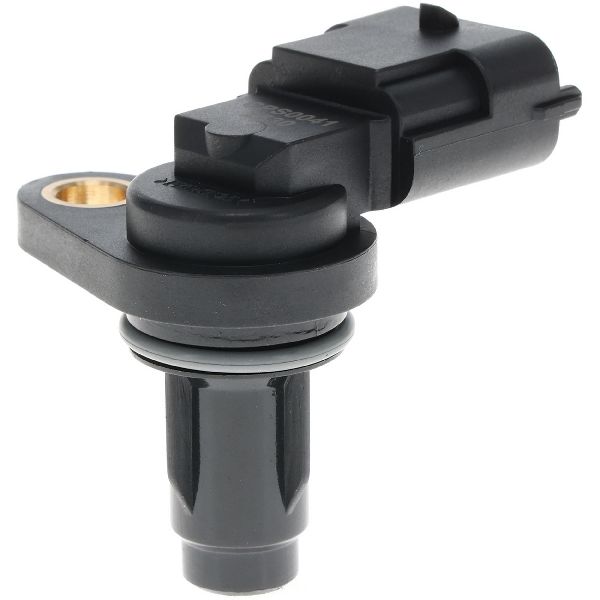
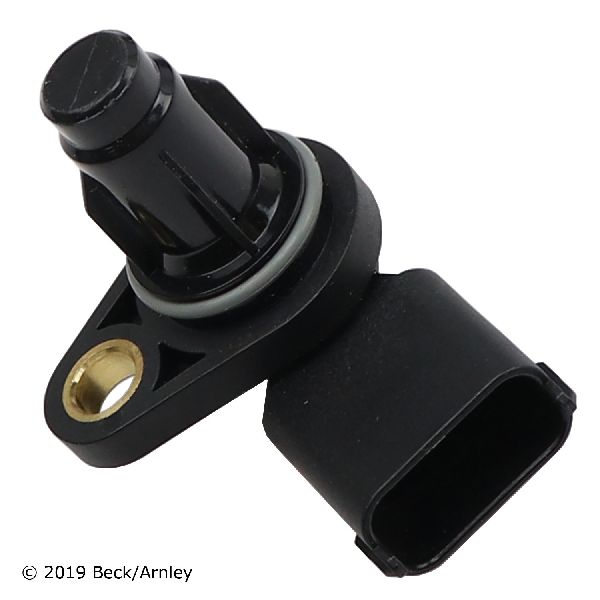
- Failed Camshaft Position Sensor (Bank 1 Intake) 🔴 High Probability → Shop Engine Camshaft Position Sensor Sensors are electronic components that can fail over time due to heat cycles and age. It's the most frequently reported cause for this code across Hyundai and Kia vehicles with this engine.
How to confirm: After checking the wiring, the easiest way to confirm is to replace the sensor. A more advanced method involves using a multimeter to test for a correct voltage signal (typically a 0-5V square wave) while the engine is cranked.
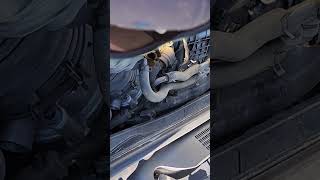
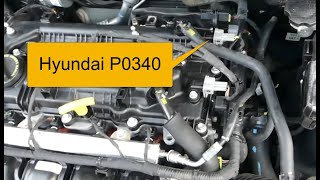
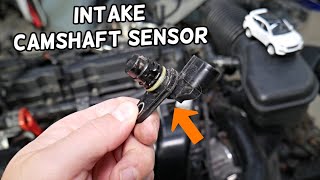
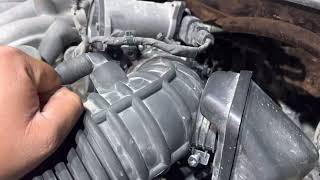
Typical fix: Replace the Bank 1 intake camshaft position sensor. It is held by a single 10mm bolt. 🎬 Watch this video to see the sensor location and removal.
Est. part cost: $30 - $150 - Damaged Wiring or Connector 🟡 Medium Probability The wiring harness connector can become brittle, or wires can be damaged. A very common issue on this platform is an oil leak from the valve cover gasket, which drips directly onto the camshaft position sensor and its connector, saturating it with oil and disrupting the signal.
How to confirm: Visually inspect the sensor's electrical connector and wiring for signs of cracking, corrosion, loose pins, or significant oil saturation. Unplug the connector and check for clean, tight-fitting terminals.
Typical fix: Clean the connector thoroughly with electrical contact cleaner. If the connector or wiring is damaged, it will need to be repaired or replaced. If oil contamination is present, the source of the leak (likely the valve cover gasket) should also be repaired.
Est. part cost: $5 - $50 for cleaning/repair, more if the valve cover gasket needs replacement.
Rare But Worth Checking
- Stretched Timing Chain: → Shop Engine Timing Chain While less common for this specific code, a stretched timing chain can cause the camshaft and crankshaft signals to go out of sync, which may trigger a sensor circuit code. This is a much more serious issue and usually comes with other timing correlation codes (like P0016) and rattling noises from the engine.
- Faulty Engine Control Module (ECM): → Shop Engine Control Module (ECM) In very rare cases, the ECM itself can be the problem. This should only be considered after all other possibilities (sensor, wiring, timing) have been exhaustively ruled out. One owner reported this after a voltage spike from a battery issue.
Diagnosis Steps
- Read the code with an OBD-II scanner to confirm P0340 is present.
- Turn off the vehicle and locate the Bank 1 intake camshaft position sensor. It is on the rear cylinder head (closer to the firewall), on the driver's side of the engine.
- Inspect the electrical connector for damage, corrosion, or oil contamination. A common failure point is an oil-soaked connector from a leaking valve cover gasket.
- Inspect the wiring leading to the sensor for any visible signs of damage, fraying, or melting.
- If the wiring looks good, the most common and straightforward next step is to replace the sensor. It is held in by a single 10mm bolt. Apply a small amount of clean engine oil to the new sensor's O-ring before installation.
- After replacing the sensor, clear the code with the scanner and start the vehicle. Drive to see if the code returns.
- If the code returns, a more advanced diagnosis is needed. Use a multimeter or oscilloscope to verify that the sensor is receiving power and ground, and that it is producing a signal.
- If the sensor and wiring are confirmed to be good, the issue may be mechanical (e.g., timing chain) or, in very rare cases, a faulty ECM.
Parts You'll Likely Need
- Camshaft Position Sensor (Bank 1 Intake)
(OEM #39318-3C100)— This is the sensor that fails most frequently, causing the P0340 code. This part number supersedes the older 39318-3C300. It is critical to ensure the new sensor's O-ring is properly seated to prevent oil leaks.
Trusted brands: Hyundai (OEM), Delphi, Mando, Hitachi, Walker
OEM price range: $110-$150
Aftermarket price range: $30-$75
Related Codes That Often Appear With This One
- P0341 — This code indicates a 'Range/Performance' problem with the same sensor, suggesting the signal is present but erratic or out of the expected range.
- P0335 — This is a code for the Crankshaft Position Sensor. If both cam and crank sensor codes appear together, it can point towards a more significant timing issue or a widespread wiring problem.
- P0016 — Crankshaft/Camshaft Correlation (Bank 1 Sensor A). This code appearing with P0340 strongly suggests a mechanical timing issue, such as a stretched timing chain, rather than just a sensor circuit fault.
Technical Service Bulletins (TSBs) & Recalls
- TSB 15-01-031 / Service Campaign 936: While this TSB is for the older 2007-2009 Santa Fe 3.3L, it is highly relevant as it documents a service campaign to inspect for and repair valve cover oil leaks that drip onto the alternator. This establishes a known history of this specific leak point on the Lambda V6 engine family, which is a direct contributing factor to P0340 on the 2013-2018 models.
Platform-Specific Known Issues
- Valve Cover Gasket Leak Causing Connector Failure: A prevalent issue on the 3.3L Lambda V6 is the deterioration of the valve cover gaskets, particularly the one on the rear bank (Bank 1). Oil weeps from the gasket and drips directly onto the camshaft position sensor and its electrical connector below. This oil saturation degrades the connector's seal, contaminates the electrical pins, and ultimately causes the P0340 circuit malfunction code. When diagnosing P0340, finding an oil-soaked connector is a strong indicator that the valve cover gasket should be replaced along with cleaning or replacing the sensor.
Mechanic-Grade Diagnostic Values
- Camshaft Position Sensor (CMP) Connector Voltages (Key On, Engine Off) — expected: The 3-wire connector should have: one wire with 5V reference from the ECM, one signal wire that sends a 0V or 5V pulse back to the ECM, and one ground wire.. Failure: Absence of the 5V reference or a faulty ground indicates a wiring or ECM issue, not a sensor failure. The signal wire should pulse when the engine is cranked. 🎬 Watch a professional diagnostic breakdown of the P0340 circuit code.
- Oil Control Valve (OCV) Resistance — expected: Approximately 6.9 - 7.9 ohms.. Failure: A reading outside this range indicates a faulty OCV, which can affect cam timing and potentially trigger cam sensor codes.
Scan Tool Commands That Help
- Hyundai GDS (or equivalent advanced scanner): Cam/Crank Relearn Procedure — After replacing a camshaft sensor, crankshaft sensor, or timing components, this procedure may be required to synchronize the new sensor signals with the ECM. While many Hyundai models relearn automatically, if a P0340 code persists after a repair, performing this function can resolve the issue.
Wiring & Ground Locations
- Ignition Switch Connector — At the ignition switch in the steering column, a black 6-pin plug.. This connector is a central power distribution point. Pin 1 (Red) is constant 12V, Pin 4 (Green) is Ignition 1 power. A fault at this connector could interrupt power to the ECM and its sensor circuits, including the camshaft position sensor.
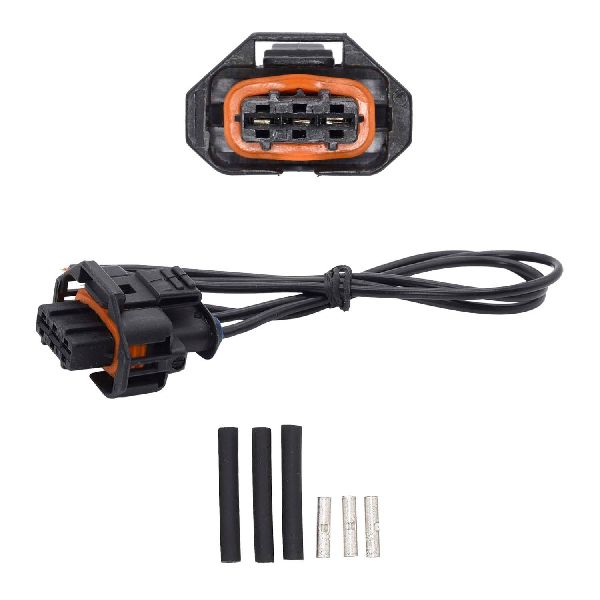
- CMP Sensor Connector — Plugged directly into the Bank 1 (rear) intake camshaft position sensor.. This is the primary point of failure for wiring issues. It is a 3-pin connector carrying power, ground, and signal. It is highly susceptible to oil contamination from valve cover leaks, which can degrade the connection and cause a P0340.
Real Owner Repair Stories
- YouTube Commenter (Hyundai Santa Fe, unspecified year with 3.3L V6) — P0340 code, no-start or hard start condition.
❌ Tried (didn't work) Replaced the camshaft position sensor twice with aftermarket parts., Replaced the crankshaft position sensor.
✅ What actually fixed it The problem was a damaged tone ring (reluctor wheel) on the camshaft. The teeth were damaged, providing an erratic signal to the sensor. Replacing the tone ring resolved the code.
OEM Part Supersession History
39318-3C300→39318-3C100— Standard part revision and update by the manufacturer.
Heads up: The new part number (39318-3C100) is the correct and direct replacement for the old one. There are no known incompatibility issues.
Model Year Variations Within This Range
- 2017-2018: For the 2017 model year, the Santa Fe received a mid-cycle refresh, and the long-wheelbase model was often marketed as the 'Santa Fe XL'. While the core 3.3L V6 engine and P0340 diagnosis remained the same, there were minor cosmetic and feature changes. No significant changes to the engine management or sensor part numbers related to this code have been noted for the refresh.
Diagnostic Flowchart
Other Known Issues on This Vehicle
Issues unrelated to this code that are worth knowing about as an owner of this generation:
- Catastrophic Engine Failure / Rod Bearing Failure 🔴 High — Reported in some vehicles under 100,000 miles. Subject of class-action lawsuits and an NHTSA preliminary evaluation. Hyundai extended the warranty for some models to 15 years/150,000 miles. (Ref: Warranty Extension (not a formal recall for all))
- Steering Coupler Failure 🟠 Medium — Very common issue. The flexible rubber coupler in the electronic power steering column disintegrates, causing a distinct clicking or clunking noise when turning the wheel.
- Valve Cover Gasket Oil Leaks 🟠 Medium — Common source of oil leaks. The front bank gasket can leak oil onto the alternator, causing charging system failure. Leaks can also contaminate sensor connectors, including the camshaft position sensor. (Ref: Service Campaign 936 / TSB 15-01-031 (for older 2007-2009 models, but indicates a known issue with the engine family))
- Intake Valve Carbon Buildup 🟡 Low — As a Gasoline Direct Injection (GDI) engine, it is susceptible to carbon deposits on the intake valves over time, which can affect performance. Some sources suggest Hyundai's injection strategy helps reduce the severity.
Used vs. New Parts: Buying Guide for This Vehicle
When a used part is the smart pick: A used part is a reasonable choice for the wiring harness pigtail if the original connector is broken or oil-saturated. Buying a used sensor is generally not recommended as it's an electronic component with a finite lifespan, and the cost of a new aftermarket part is low.
Donor-vehicle mileage cap: roughly under 80000 miles for the part to have meaningful remaining life.
What to inspect on the donor part:
- For a wiring pigtail, ensure the plastic is not brittle and the locking tab is intact.
- Check for any signs of oil saturation or corrosion on the connector pins.
- Ensure at least 6 inches of wire is left on the pigtail for easier splicing.
OEM-only on this vehicle (don't cheap out):
- While not strictly required, many technicians report higher success rates and fewer comebacks when using the OEM (Genuine Hyundai) camshaft position sensor. Some aftermarket sensors can be poorly calibrated and may not work correctly or fail prematurely.
Aftermarket brands forum-validated for this vehicle:
- Delphi
- NTK
- Mando (often an OEM supplier for Hyundai)
Brands owners have reported issues with on this vehicle:
- Unbranded, 'white-box' sensors from online marketplaces are frequently cited as being unreliable.
Real Owner Stories
Aggregated from forums and TSBs cited above. Mileages and costs reflect what owners reported in those sources.
2015 Hyundai Santa Fe 3.3L
Symptoms: Check-engine light came on with code P0340. Noticed rough idling followed by sudden hesitation mid-acceleration between gears. Scanner also showed occasional P0341.
What fixed it: Replaced the camshaft position sensor with an aftermarket unit (labeled as 'Fits 39318-3C100').
Source hint: AliExpress Review
2015 Hyundai Santa Fe 3.3L
Symptoms: Experienced a P0340 with a no-start condition following a battery issue.
What fixed it: The issue was identified as a rare ECU failure.
Source hint: AliExpress Blog/Review
Hyundai Santa Fe (Lambda V6)
Symptoms: The car would crank but not start, or start and stall immediately, particularly after sitting for a while.
What fixed it: Replacement of the camshaft position sensor to restore initial engine startup timing.
Source hint: reddit.com/r/Cartalk
Related OBD-II Codes
Frequently Asked Questions
Where is the Bank 1 intake camshaft position sensor located on my 3.3L Santa Fe?
Does TSB 15-01-031 apply to my 2013-2018 Santa Fe?
Can an oil leak cause the P0340 code on this vehicle?
What is the specific part number for the replacement sensor mentioned in owner reports?
Is there a warranty extension that covers engine issues related to this model?
Why is my Santa Fe entering 'limp mode' with this code?
Helpful Videos
We Have This Part in Stock


The information in this article is provided for general reference and educational purposes only. Vehicle specifications, procedures, and part compatibility can vary by production date, trim level, and region. Always consult your vehicle's factory service manual and verify part numbers before purchasing or performing repairs. Safety-critical components such as airbags, seat belts, and braking systems should be installed by a qualified professional.
- Hyundai Santa Fe:
- 🧭 Diagnostic Flowchart
- 🎬 Helpful Videos
- 🛍️ Shop This Part
- What's Unique About the 2013-2018 Hyundai Santa Fe
- Symptoms You May Notice
- Most Likely Causes
- Rare But Worth Checking
- Diagnosis Steps
- Parts You'll Likely Need
- Related Codes That Often Appear With This One
- Technical Service Bulletins (TSBs) & Recalls
- Platform-Specific Known Issues
- Mechanic-Grade Diagnostic Values
- Scan Tool Commands That Help
- Wiring & Ground Locations
- Real Owner Repair Stories
- OEM Part Supersession History
- Model Year Variations Within This Range
- Other Known Issues on This Vehicle
- Used vs. New Parts: Buying Guide for This Vehicle
- Real Owner Stories
- 2015 Hyundai Santa Fe 3.3L
- 2015 Hyundai Santa Fe 3.3L
- Hyundai Santa Fe (Lambda V6)
- Related OBD-II Codes
- Frequently Asked Questions
- 🎟️ Get 5% Off