

P0340 on 2007-2017 Jeep Compass: Camshaft Sensor Causes and Fixes
For a 2007-2017 Jeep Compass, code P0340 is most often caused by a failed camshaft position sensor. Replacing the sensor is a common DIY fix with the part costing between $25 and $80. However, faulty wiring, especially on 2016 models subject to a recall, is also a significant cause and should be inspected first.
- P0340 on a Jeep Compass almost always points to a problem in the camshaft position sensor circuit.
- The most likely fix is replacing the camshaft position sensor, a task that is accessible for most DIYers.
- Before replacing the sensor, inspect the wiring connector for damage, especially on 2016 models which were subject to a recall for this part.
- Using a high-quality OEM (Mopar) or reputable aftermarket sensor is strongly recommended, as these vehicles can be sensitive to cheaper electronic parts.
What's Unique About the 2007-2017 Jeep Compass
The 2.0L and 2.4L "World Engine" used in the first-generation Jeep Compass (MK49), Patriot, and Dodge Caliber has a single camshaft position sensor located on the cylinder head. While the sensor itself is a common failure point, these vehicles are also known to be sensitive to the quality of aftermarket electronic parts; using an OEM Mopar sensor is often recommended for a lasting repair. Additionally, a recall for some 2016 models (NHTSA #16V907) highlights that the wiring connector pigtail, not the sensor, can be the root cause of the fault due to being improperly manufactured.
Symptoms You May Notice
- Check Engine Light is on
- Engine is hard to start or cranks but won't start
- Engine stalls unexpectedly while driving
- Rough idle
- Lack of acceleration or loss of power
- Traction Control Light may illuminate simultaneously with the Check Engine Light
- Replacing the crankshaft position sensor. While related, the P0340 code specifically points to the camshaft sensor circuit.
- Replacing aftermarket sensors repeatedly. Some owners report that only OEM Mopar sensors solve the issue permanently, suggesting some aftermarket parts have reliability or compatibility issues on this platform.
- Ignoring a wiring problem. Because the sensor is the most common failure, many people replace it without first thoroughly inspecting the connector and harness, leading to the code returning.
Most Likely Causes
- Failed Camshaft Position Sensor (CMP) 🔴 High Probability → Shop Engine Camshaft Position Sensor The sensor is exposed to high heat cycles on the cylinder head, which can lead to electronic failure over time. It is the most frequently cited cause for this code on this platform and its platform mates.
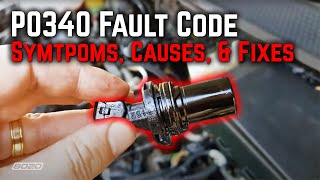
How to confirm: After visually inspecting the wiring, the most common diagnostic step is to replace the sensor. A more advanced method involves using a multimeter or oscilloscope to check for a proper signal waveform from the sensor 🎬 Watch a professional diagnostic walkthrough for the P0340 circuit code. while the engine is cranking.
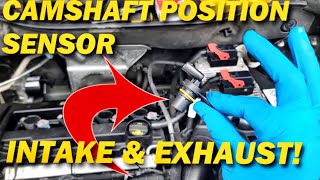
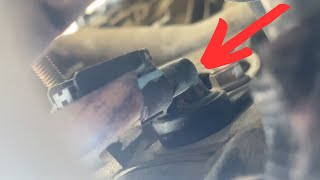
Typical fix: Replace the camshaft position sensor. It is held in by a single 10mm bolt and is located on the right side of the cylinder head. 🎬 Watch this video to see the sensor location and replacement.
Est. part cost: $25-$80 - Damaged Wiring or Loose Connector 🟡 Medium Probability The wiring harness connector can become brittle or loose. A recall (NHTSA #16V907 / FCA #S89) was issued for some 2016 models specifically for a faulty connector causing an intermittent signal. The plastic wire loom can also disintegrate over time, exposing wires to potential damage.
How to confirm: Visually inspect the sensor's electrical connector and wiring harness for signs of damage, corrosion, or looseness. Wiggle the harness while the engine is running to see if it causes a stall or stumble. Ensure the red locking tab on the connector is fully engaged.
Typical fix: Repair the damaged section of wiring or replace the pigtail connector. For affected 2016 models, a dealer can perform the recall service, which involves cutting out the old connector and splicing in a new one.
Est. part cost: $15-$40 - Weak Battery or Faulty Starter ⚪ Low Probability → Shop Vehicle Battery On many Chrysler/Jeep vehicles, a weak battery or a starter drawing excessive current during cranking can cause a voltage drop sufficient to trigger a fault code for the camshaft sensor, even if the sensor and its circuit are good. The PCM interprets the low voltage during cranking as a sensor circuit fault.
How to confirm: Test the battery voltage (should be >12.4V at rest) and have it load tested at an auto parts store. If the vehicle cranks very slowly before starting and setting the code, the starter may be the underlying issue.
Typical fix: Replace the weak battery or failing starter motor.
Est. part cost: $150-$400
Rare But Worth Checking
- Failed Powertrain Control Module (PCM): → Shop Engine Control Module (ECM) This is an uncommon cause. Before condemning the PCM, all other possibilities, including the sensor, wiring, connections, and timing components, must be thoroughly ruled out.
- Damaged Camshaft Reluctor Wheel: → Shop Engine Camshaft The tone ring on the camshaft that the sensor reads can be damaged or slip, typically only during major engine work like a timing chain replacement. This is very rare in normal operation.
- Base Engine Timing Issue: If the timing chain has stretched or jumped a tooth, the correlation between the camshaft and crankshaft sensors will be incorrect, which can sometimes trigger a P0340 code, although other timing-specific codes are more common.
Diagnosis Steps
- Read the code with an OBD-II scanner to confirm P0340 is present and note any other codes.
- Visually inspect the camshaft position sensor and its electrical connector on the right side of the cylinder head. Look for loose connections, damaged/brittle wires, oil contamination, or signs of corrosion.
- Ensure the connector's red locking tab is secure. Wiggle the connector and nearby harness with the engine running to see if it affects the engine's behavior.
- If wiring looks suspect or the vehicle is a 2016 model, prioritize checking the wiring harness. The recall fix for 2016 models involved replacing the connector pigtail.
- If wiring looks good, the most common repair is to replace the camshaft position sensor. It is secured by a single 10mm bolt. Using an OEM Mopar part is highly recommended.
- After replacement, clear the code with the scanner and start the engine to see if the code returns.
- If the code persists with a new sensor, perform electrical checks. Use a multimeter to verify you have a 5-volt reference and a good ground at the sensor connector with the key on.
- Test the battery and charging system to rule out low voltage as the root cause.
- If all else fails, the issue may be with the base engine timing or the PCM, which requires professional diagnosis.
Parts You'll Likely Need
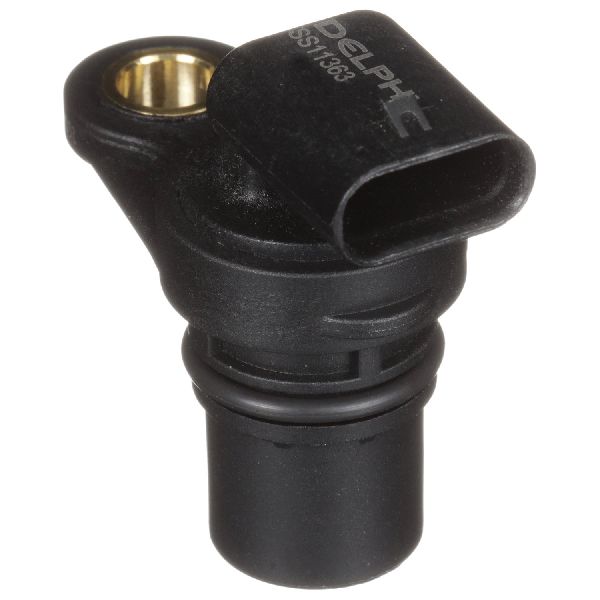
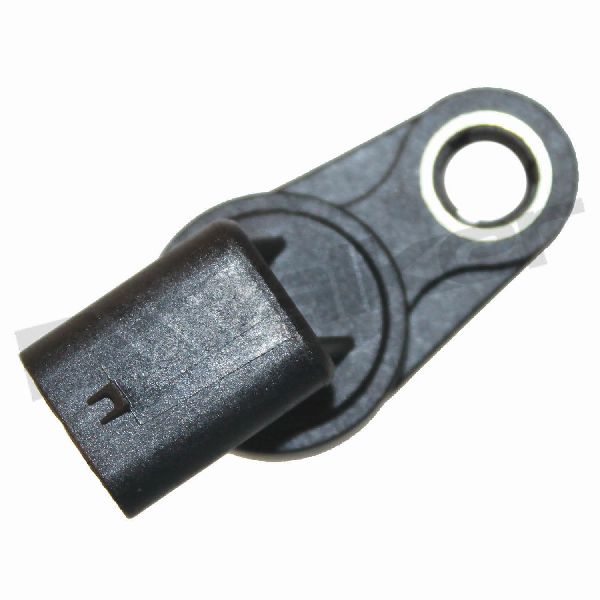
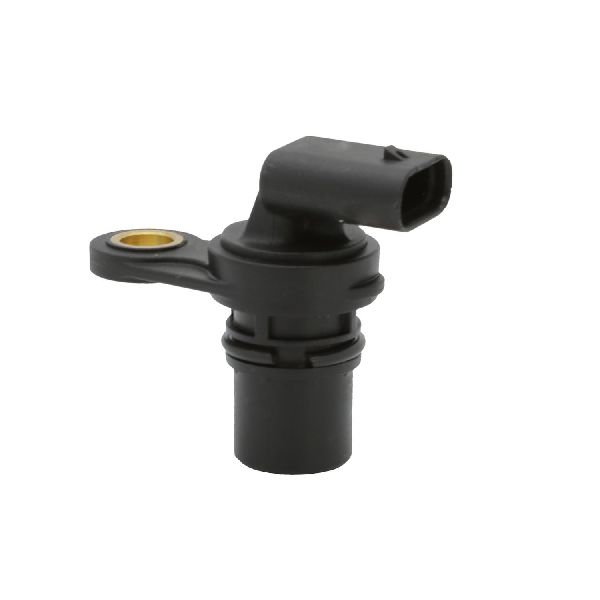
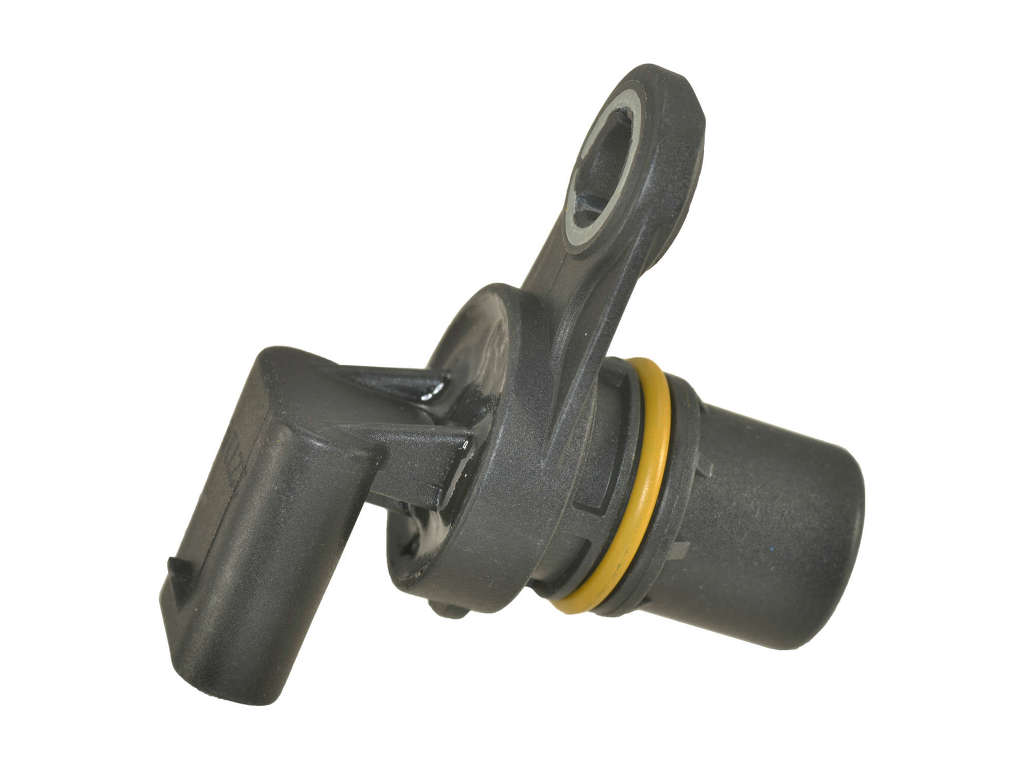
- Camshaft Position Sensor
(OEM #68080819AD)— This is the most frequent point of failure for code P0340 on this engine. This part number supersedes previous numbers 5033308AB, 68080819AB, and 68080819AC.
Trusted brands: Mopar (OEM), Delphi, NGK/NTK, Standard Motor Products (SMP)
OEM price range: $50-$85
Aftermarket price range: $25-$60
Related Codes That Often Appear With This One
- P0344 — P0344 indicates an intermittent signal from the same camshaft position sensor. It often appears as the sensor or wiring begins to fail, before the complete circuit malfunction of P0340 is logged.
- P0335 — This code points to a fault in the Crankshaft Position Sensor circuit. Sometimes, an underlying electrical issue or a significant timing problem can cause both cam and crank sensor codes to appear together.
Technical Service Bulletins (TSBs) & Recalls
- NHTSA #16V907 / FCA #S89: Recall for faulty camshaft position sensor electrical connector on certain 2016 models.
Platform-Specific Known Issues
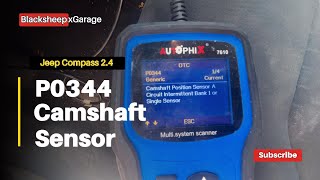
- Safety Recall S89 / NHTSA 16V-907: A safety recall was issued for 42,231 vehicles, including some 2016 Jeep Compass, Patriot, and Dodge Journey models built between May 9, 2016, and July 15, 2016. The cause was an improperly manufactured electrical connector for the camshaft and/or crankshaft position sensors, which could lead to an intermittent signal and cause the engine to stall. The fix involves a dealer cutting out the faulty connector(s) and splicing in a new pigtail harness. 🎬 See how to replace the sensor plug to fix P0344.
Mechanic-Grade Diagnostic Values
- Camshaft Sensor 5V Supply Circuit Voltage — expected: Approximately 5.0 volts with key on, engine off.. Failure: Voltage below 4.5 volts indicates an open or high resistance in the supply circuit from the PCM.
- Camshaft Sensor Ground Circuit Resistance — expected: Below 5.0 ohms.. Failure: Resistance higher than 5.0 ohms indicates a poor ground connection between the sensor connector and the PCM or chassis ground.
- Alternator AC Ripple Voltage — expected: Less than 0.5 volts AC with the engine running.. Failure: Voltage greater than 0.5V AC indicates failing diodes in the alternator, which creates electrical noise that can interfere with the cam sensor signal and trigger a false P0340.
Scan Tool Commands That Help
- wiTECH, Appcar DiagFCA, or other professional FCA scan tool: Cam Crank Relearn / Calibrate Relearn Crankshaft Camshaft Position Sensor — This procedure should be performed after replacing the camshaft or crankshaft position sensor, or after any major engine work involving the timing chain or cylinder head, to synchronize the sensors with the PCM.
Wiring & Ground Locations
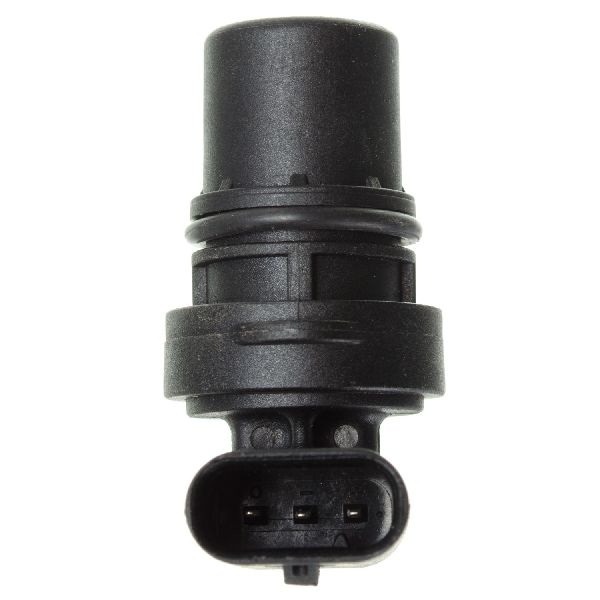
- Camshaft Position Sensor Connector — On the right side of the cylinder head, connecting to the camshaft position sensor.. This is a 3-pin connector. Pin 1 is the 5-volt power supply from the PCM, Pin 2 is the signal wire back to the PCM, and Pin 3 is the ground. Testing for voltage and ground integrity at these specific pins is the primary electrical diagnostic step.
- PCM Ground Circuit — The ground path runs from the sensor connector through the wiring harness to one of the Powertrain Control Module (PCM) connectors.. A high resistance in the ground circuit can cause an incorrect signal, leading to a P0340 code. A definitive test involves measuring resistance between the ground pin on the sensor connector and the corresponding pin at the PCM connector.
Real Owner Repair Stories
- Mechanic diagnostic video and forum reports (Multiple Chrysler/Dodge/Jeep vehicles, principle applies directly to the 2007-2017 Compass) — Persistent P0340 code, stalling, no-start, rough running.
❌ Tried (didn't work) Replacing the camshaft position sensor (sometimes multiple times), Replacing the crankshaft position sensor, Inspecting the visible wiring near the sensor
✅ What actually fixed it Replacing a failing alternator. The old alternator had bad diodes causing excessive AC ripple (electrical noise) on the vehicle's DC system. This noise interfered with the sensitive camshaft position sensor signal, causing the PCM to log a P0340 code even though the sensor and its dedicated circuit were perfectly fine. The fix was confirmed by measuring AC voltage at the battery terminals while the engine was running. - 2016 Jeep Compass Recall Information (2016 Jeep Compass (specific build dates)) — Intermittent stalling, Check Engine Light with P0340 and/or P0344.
❌ Tried (didn't work) Replacing the camshaft position sensor.
✅ What actually fixed it Performing the official recall repair (FCA #S89). A dealership technician cut out the improperly manufactured sensor connector and spliced in a new, updated pigtail connector. The fault was in the connector itself, not the sensor or the main harness.
When the Usual Fixes Don't Work
- While replacing the camshaft position sensor is the most common fix, a significant number of owners report the P0340 code returning shortly after. In these cases, the actual cause is often not the sensor itself. For 2016 models, the root cause is frequently the factory-defective wiring connector pigtail, which was subject to a recall. In other model years, a less common but confounding cause is a failing alternator producing excessive AC ripple voltage, which introduces electrical noise that the PCM misinterprets as a sensor fault. These cases demonstrate that a 'by the book' diagnosis pointing to the sensor can be misleading, and checking the wiring connector integrity and alternator health is a critical second step before assuming a new sensor is defective.
OEM Part Supersession History
5033308AB, 68080819AB, 68080819AC→68080819AD— Part has been revised and updated by the manufacturer over time for improved reliability or manufacturing changes.
Model Year Variations Within This Range
- 2011-2017: A significant facelift occurred for the 2011 model year, changing the exterior appearance to look more like the Grand Cherokee. While the 2.0L/2.4L World Engine powertrain remained, some wiring and component locations may have minor differences from the 2007-2010 models.
- 2016: A specific batch of 2016 models was subject to recall NHTSA #16V907 for a faulty camshaft sensor electrical connector, making wiring the primary suspect for this model year.
- 2017: The 2017 model year was a transition year. Jeep sold both the first-generation 'MK49' Compass (the subject of this article) and the all-new second-generation 'MP' Compass. The MP generation uses a different engine (2.4L Tigershark) and does not share the same parts or issues. It is critical to identify which 2017 version is being worked on.
Diagnostic Flowchart
Other Known Issues on This Vehicle
Issues unrelated to this code that are worth knowing about as an owner of this generation:
- Premature CVT Transmission Failure 🔴 High — Common across all model years, particularly 2007-2012. Symptoms include overheating, whining noises, slipping, and hesitation. Failure can occur under 100,000 miles, with replacement costs ranging from $3,000 to $5,000.
- Front and Rear Subframe Rust/Corrosion 🔴 High — Widespread issue, especially in salt-belt regions. The subframe can rust to the point of structural failure, making the vehicle unsafe to drive. Chrysler issued a 10-year extended warranty (X69) for this, but many owners discovered the issue after the warranty expired. (Ref: Warranty Extension X69)
- Sunroof and Roof Rack Water Leaks 🟠 Medium — Commonly reported problem where clogged sunroof drain tubes or failed roof rack seals allow water to leak into the cabin, often through the dome light or A-pillars. Can lead to electrical issues and mold.
- Throttle Body Failure 🟠 Medium — The electronic throttle body can fail, causing the vehicle to enter a low-power 'limp mode' unexpectedly. This can be a safety hazard in traffic.
- Wheel Bearing Failure 🟡 Low — Front wheel bearings are known to fail prematurely, causing a loud humming noise that changes with speed and turning. Failure also disables the ABS and traction control systems as the wheel speed sensor is integrated into the hub assembly.
Used vs. New Parts: Buying Guide for This Vehicle
When a used part is the smart pick: A used wiring harness pigtail from a junkyard is a reasonable choice if the connector is in excellent physical condition, with no brittleness, cracking, or corrosion. This can be a cost-effective alternative to a new pigtail if the original connector is damaged.
Donor-vehicle mileage cap: roughly under 100000 miles for the part to have meaningful remaining life.
What to inspect on the donor part:
- For a wiring pigtail, check that the plastic is not brittle and the locking tab is intact.
- Ensure the wire insulation is flexible and not cracked or frayed.
- Look for clean, corrosion-free metal pins inside the connector.
OEM-only on this vehicle (don't cheap out):
- Camshaft Position Sensor
Aftermarket brands forum-validated for this vehicle:
- Delphi
- NGK/NTK
- Standard Motor Products (SMP)
Brands owners have reported issues with on this vehicle:
- Unbranded, 'white-box' sensors from online marketplaces are frequently reported to fail quickly or be dead-on-arrival for this specific application.
Real Owner Stories
Aggregated from forums and TSBs cited above. Mileages and costs reflect what owners reported in those sources.
2014 Jeep Compass
Symptoms: Intermittent P0340 code along with the traction control light illuminating.
What fixed it: Replacing the camshaft position sensor (noted as a 10-minute fix).
Source hint: Reddit r/JeepCompass - P0340 error code
2010 Jeep Compass
Symptoms: Persistent P0340 code, limp mode, and traction control light appearing immediately after a coolant flush; caused a no-start or immediate stall.
What fixed it: Diagnosing the entire circuit rather than just 'throwing parts at it,' as brittle wiring may have been disturbed during other maintenance.
Source hint: Jeeps.net - P0340 code woes
2016 Jeep Compass
Symptoms: Intermittent signal causing the engine to stall unexpectedly while driving.
What fixed it: Dealer performed Safety Recall S89 by cutting out the faulty connector and splicing in a new pigtail harness.
Source hint: Safety Recall S89 / NHTSA 16V-907
Related OBD-II Codes
Frequently Asked Questions
Is there a recall for the camshaft sensor issue on my 2016 Jeep Compass?
Why did my Traction Control Light come on at the same time as the P0340 Check Engine Light?
Can a weak battery cause a P0340 code on a 2.4L World Engine?
Where is the camshaft position sensor located on the 2.0L/2.4L engine, and what tools do I need?
Should I use an aftermarket sensor or an OEM part for this repair?
What does the dealer do to fix the 2016 model year connector recall?
Helpful Videos
![How to Fix P0340 Engine Code in 7 Minutes [7 DIY / Under $9.99]](https://img.youtube.com/vi/9XUV4ds8R4Q/mqdefault.jpg)
We Have This Part in Stock


The information in this article is provided for general reference and educational purposes only. Vehicle specifications, procedures, and part compatibility can vary by production date, trim level, and region. Always consult your vehicle's factory service manual and verify part numbers before purchasing or performing repairs. Safety-critical components such as airbags, seat belts, and braking systems should be installed by a qualified professional.
- Jeep Compass:
- 🧭 Diagnostic Flowchart
- 🎬 Helpful Videos
- 🛍️ Shop This Part
- What's Unique About the 2007-2017 Jeep Compass
- Symptoms You May Notice
- Most Likely Causes
- Rare But Worth Checking
- Diagnosis Steps
- Parts You'll Likely Need
- Related Codes That Often Appear With This One
- Technical Service Bulletins (TSBs) & Recalls
- Platform-Specific Known Issues
- Mechanic-Grade Diagnostic Values
- Scan Tool Commands That Help
- Wiring & Ground Locations
- Real Owner Repair Stories
- When the Usual Fixes Don't Work
- OEM Part Supersession History
- Model Year Variations Within This Range
- Other Known Issues on This Vehicle
- Used vs. New Parts: Buying Guide for This Vehicle
- Real Owner Stories
- 2014 Jeep Compass
- 2010 Jeep Compass
- 2016 Jeep Compass
- Related OBD-II Codes
- Frequently Asked Questions
- 🎟️ Get 5% Off