

P0340 on 2016-2018 Jeep Renegade: Camshaft Sensor Circuit Fault Causes & Fixes
P0340 on a Jeep Renegade typically points to a faulty camshaft position sensor or its associated wiring. This is a common and relatively inexpensive DIY repair, with the OEM Mopar part costing between $50 and $90. For the 2.4L engine, the sensor is easily accessible on the rear of the valve cover.
- P0340 on a Renegade most often points to a failed camshaft position sensor, but wiring and low engine oil (on the 2.4L) are also strong possibilities.
- Symptoms are serious and can include a no-start condition or stalling, so it should be addressed promptly.
- For the 2.4L engine, the sensor is easy to access on the back of the valve cover, making this a very DIY-friendly repair.
- Before buying parts, check the engine oil level and visually inspect the wiring and connector for any obvious damage.
- Using an OEM Mopar sensor is highly recommended, as aftermarket sensors are known to cause persistent issues on Chrysler/Jeep vehicles.
What's Unique About the 2016-2018 Jeep RENEGADE
The 2016-2018 Renegade primarily uses the 2.4L Tigershark MultiAir and the 1.4L Turbo engines. The P0340 code is extremely common across the FCA (now Stellantis) lineup that uses the 2.4L engine, including the Dodge Dart, Jeep Cherokee, and Chrysler 200. While the sensor itself is a frequent failure point, it's critical to note that the 2.4L Tigershark engine has a well-documented history of excessive oil consumption. Low or dirty oil can degrade engine performance, affect the variable valve timing system, and potentially trigger timing-related codes like P0340, sometimes as a secondary fault. Additionally, some 2018 models with the 2.4L engine may have a PCM software update available under TSB 18-054-20 that addresses this code, indicating a potential software logic issue.
Diagnostic Flowchart
Tap your situation to follow the diagnostic path that matches what you're seeing on this vehicle.
Symptoms You May Notice
- Check Engine Light is on
- Difficulty starting the engine, or it cranks but won't start
- Engine stalling or stopping on its own, sometimes when decelerating to a stop
- Rough idle and engine shaking
- Loss of engine power and poor acceleration
- Reduced fuel economy
- Traction control light may illuminate simultaneously
- Replacing the crankshaft position sensor when the camshaft sensor is the actual problem (or vice-versa).
- Replacing the PCM without thoroughly testing the sensor, wiring, and checking for available software updates first.
- Using cheap aftermarket sensors that fail quickly or are dead-on-arrival, leading to the belief that the sensor was not the problem.
Most Likely Causes
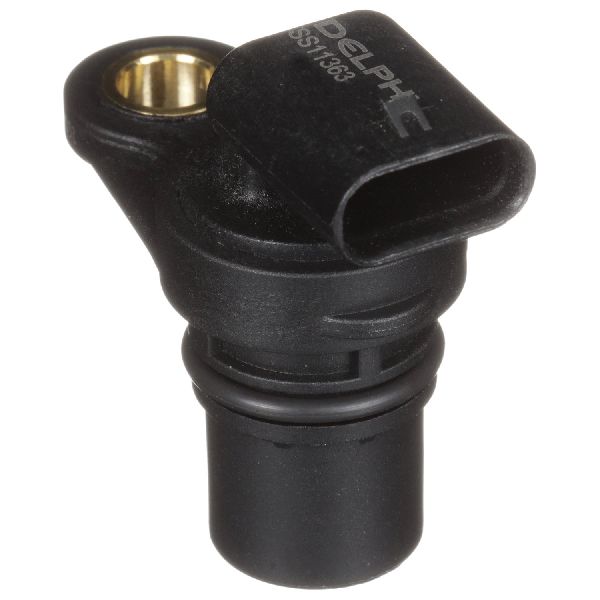
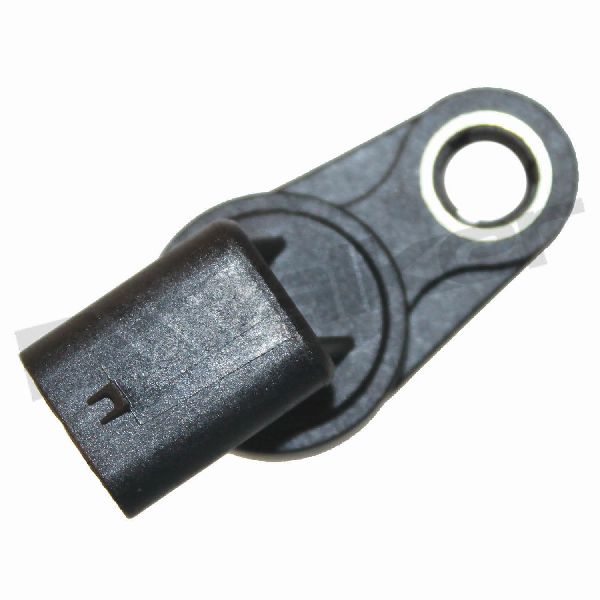
- Failed Camshaft Position Sensor 🔴 High Probability → Shop Engine Camshaft Position Sensor This is a very common failure part across many FCA vehicles sharing the 2.4L and 1.4L engines. Aftermarket sensors are known to fail prematurely, so using an OEM Mopar part is highly recommended.
How to confirm: After checking wiring and ensuring the oil level is correct, replacing the sensor is the most direct diagnostic step. The part is relatively inexpensive.
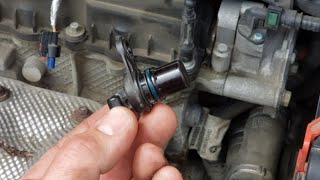
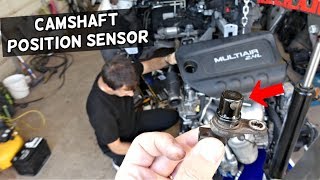
Typical fix: Replace the camshaft position sensor. On the 2.4L engine, it is located on the rear of the valve cover, held by a single 10mm bolt/stud 🎬 Watch: See the exact sensor location and replacement steps., sometimes under a small heat shield. On the 1.4L Turbo, the sensor is also on the cylinder head. Ensure the O-ring is transferred to the new sensor to prevent oil leaks.
Est. part cost: $50-$90 for OEM Mopar - Damaged Wiring or Connector 🟡 Medium Probability The sensor's location near the hot exhaust manifold can make the wiring harness and plastic connector brittle over time. The code P0340 specifically points to a circuit malfunction, making wiring a key suspect.
How to confirm: Visually inspect the wiring harness for signs of melting, chafing, or corrosion. Check that the connector is fully seated and that the red locking tab is engaged. Test for 5-volt supply, ground, and a signal wire at the connector with a multimeter.
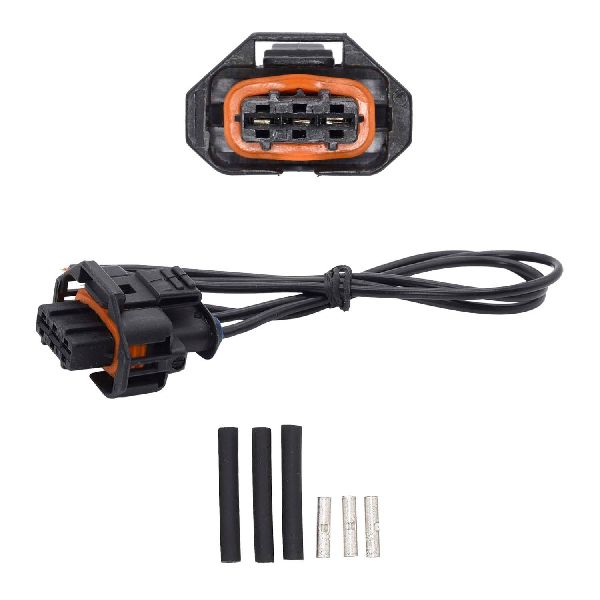
Typical fix: Repair the damaged section of the wiring harness or replace the connector pigtail. Ensure the connection is secure.
Est. part cost: $15-$40 - Low or Dirty Engine Oil 🟡 Medium Probability The 2.4L Tigershark engine is known for high oil consumption. Low oil levels can affect the operation of the MultiAir valve actuation system and cam phasers, leading to timing deviations that can be misinterpreted as a sensor circuit fault.
How to confirm: Check the engine oil level via the dipstick. If it is low, top it off immediately. Note the color and condition of the oil.
Typical fix: Top off or change the engine oil and filter. Clear the code and see if it returns. If oil consumption is the root cause, the code may reappear as the level drops again.
Est. part cost: $30-$70 for oil and filter
Rare But Worth Checking
- Stretched Timing Chain/Belt or Timing Misalignment: → Shop Engine Timing Chain This is a more serious mechanical issue. It's often accompanied by other codes like P0016 (Crank/Cam Correlation), as noted in TSB 18-054-20 for the 2018 model year.
- Faulty Crankshaft Position Sensor: → Shop Engine Crankshaft Position Sensor A bad crankshaft sensor can sometimes cause the PCM to report a fault with the camshaft sensor, as the two signals are compared for timing. TSB 18-061-16 REV. C lists both P0340 and P0335 (Crankshaft Position Sensor Circuit) appearing together, often solvable by a PCM software update on 2016 models.
- Faulty Powertrain Control Module (PCM) or Outdated Software: → Shop Engine Control Module (ECM) This is an unlikely hardware failure, but software updates have been issued to address this code. TSB 18-054-20 for 2018 models and TSB 18-061-16 REV. C for 2016 models both involve PCM reprogramming that can resolve a false P0340. This should be considered after physical parts and wiring are confirmed to be good.
Diagnosis Steps
- Check Engine Oil Level: Before any other step, especially on the 2.4L engine, verify the engine oil is at the proper level and in good condition. Low oil is a known cause of performance issues that can trigger this code.
- Scan for Other DTCs: Use a quality OBD-II scanner. Codes like P0335 or P0016 point towards a timing or correlation issue rather than just a bad sensor.
- Inspect Wiring and Connector: Visually inspect the camshaft position sensor's wiring harness for melting, chafing, or loose connections. Ensure the connector is securely plugged in and the red locking tab is engaged.
- Check for TSBs: A dealer or well-equipped shop can check if your vehicle's VIN has an open campaign or is eligible for a software update under TSB 18-054-20 (2018 models) or 18-061-16 REV. C (2016 models).
- Replace the Camshaft Position Sensor: If wiring appears intact and oil level is good, the most common fix is to replace the sensor. It's a low-cost part and easy to access on the 2.4L. It is highly recommended to use an OEM Mopar part.
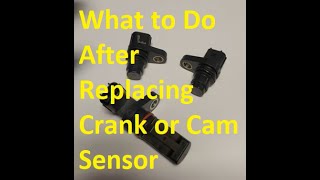
- Clear Codes and Test Drive: After replacing the sensor, clear the codes and drive the vehicle 🎬 Watch: What to do if it runs rough after replacement. to see if the fault returns.
- Perform Circuit Test: If the code returns, use a multimeter to test the circuit. Check for a 5V reference signal, a good ground, and a fluctuating signal voltage from the sensor while cranking the engine.
- Investigate Mechanical Timing: If the circuit and sensor are confirmed good, the issue may be mechanical (e.g., stretched timing chain). This is a more complex job for an experienced mechanic.
Parts You'll Likely Need
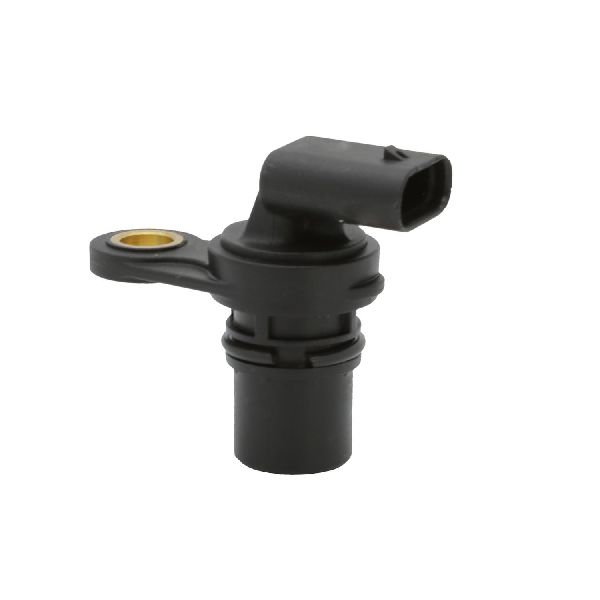
- Camshaft Position Sensor
(OEM #68080819AC (for 2.4L, has been superseded by 68080819AD), 68070491AB (for 1.4L))— This sensor is the most frequent cause of the P0340 code due to electronic failure.
Trusted brands: Mopar (OEM - Recommended), NTK, Delphi, Duralast
OEM price range: $50-$90
Aftermarket price range: $25-$60
Related Codes That Often Appear With This One
- P0335 — This is the code for the Crankshaft Position Sensor. The PCM compares signals from both the cam and crank sensors. A fault in one can be related to the other. TSB 18-061-16 REV. C notes they can appear together on 2016 models and may be fixed with a PCM flash.
- P0016 — This code indicates a Crankshaft/Camshaft Timing Misalignment. If the timing chain has stretched or jumped, the sensor signals won't align, triggering both codes. TSB 18-054-20 mentions this combination for 2018 models.
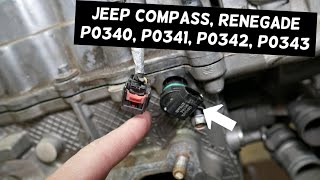
- P0341, P0342, P0343 — These are related codes for the same sensor, indicating specific circuit issues like range/performance, low input, or high input, respectively, pointing more directly at the sensor 🎬 Watch: Troubleshooting P0340 and related camshaft sensor codes. or its wiring.
- P0128 — Thermostat Rationality. This code is listed alongside P0340 in TSB 18-061-16 REV. C, suggesting a group of faults that can be resolved with a single PCM software update for 2016 models.
Technical Service Bulletins (TSBs) & Recalls
- 18-054-20: For 2018 2.4L models, involves a PCM flash to correct P0340, P0016, and other issues.
- 18-061-16 REV. C: For 2016 2.4L models, involves a PCM flash to correct P0340, P0335, and other DTCs.
Platform-Specific Known Issues
- TSB 18-054-20 for 2018 2.4L Models: For 2018 models with the 2.4L engine, Jeep issued a TSB that involves a PCM software update. This update addresses several codes, including P0340, P0016 (Timing Misalignment), and P0456 (EVAP Leak), and may also fix a periodic no-start condition.
- TSB 18-061-16 REV. C for 2016 2.4L Models: For 2016 models with the 2.4L engine, this TSB provides a PCM software update to fix a list of potential DTCs, including P0340, P0335 (Crankshaft Sensor), and P0128 (Thermostat Rationality), indicating a known software logic issue.
- Oil Consumption on 2.4L Tigershark: A widely known issue with the 2.4L engine is excessive oil consumption. A low oil level can cause the P0340 code to appear as a symptom of poor engine performance or timing phaser issues, even if the sensor itself is functional. Always check oil level first.
Mechanic-Grade Diagnostic Values
- Camshaft Sensor 5V Supply Circuit Voltage — expected: Approximately 5.0 volts. Failure: Voltage below 4.5 volts indicates an open or high resistance in the supply circuit from the PCM.
- Camshaft Sensor Ground Circuit Resistance — expected: Below 5.0 ohms. Failure: Resistance higher than 5.0 ohms indicates a poor ground connection, which can cause an erratic signal.
- Alternator AC Ripple Voltage — expected: Less than 0.5 volts AC. Failure: Voltage greater than 0.5V AC indicates failing diodes in the alternator, which creates electrical noise that can interfere with the cam sensor signal.
Scan Tool Commands That Help
- Appcar DiagFCA, Witech, or other professional FCA scan tools: Cam Crank Relearn / Cam Crank Misalignment — This procedure is required to synchronize the PCM with the signals from the new sensors after replacing a camshaft or crankshaft position sensor, or after performing any work on the timing chain or cylinder head. Failure to perform this may cause the code to persist even with good parts. The engine must be warmed up (coolant temp > 158°F / 70°C) to run the procedure.
Wiring & Ground Locations
- Camshaft Position Sensor Connector (2.4L) — On the rear of the valve cover, on the right (passenger) side of the engine.. This is the primary connection point for the sensor. It has a red locking tab that must be fully engaged for a secure connection. The connector and its wiring are prone to heat damage from the nearby exhaust.
- Sensor Pinout (Generic 3-wire Hall Effect) — At the sensor connector.. For circuit testing, you must identify the three wires: Pin 1 is typically the 5-volt supply from the PCM, Pin 2 is the sensor ground, and Pin 3 is the signal wire back to the PCM. These must be tested individually to rule out a wiring fault.
When the Usual Fixes Don't Work
- While replacing the camshaft position sensor is the most common fix, this code can be triggered by systemic electrical issues rather than a component failure in the sensor's direct circuit. In cases where a new OEM sensor does not resolve the issue, technicians should investigate 'edge case' causes like excessive AC ripple from a failing alternator or significant voltage drop during cranking from a weak battery or starter before suspecting a faulty PCM. These issues can create false P0340 codes that will not be resolved by replacing the sensor or repairing its wiring.
OEM Part Supersession History
5033308AB, 68080819AB, 68080819AC→68080819AD— Standard part revision and consolidation by the manufacturer.
Heads up: The newest part number (68080819AD) is the correct replacement for all previous versions for the 2.4L engine in this vehicle range.
Helpful Videos
We Have This Part in Stock


The information in this article is provided for general reference and educational purposes only. Vehicle specifications, procedures, and part compatibility can vary by production date, trim level, and region. Always consult your vehicle's factory service manual and verify part numbers before purchasing or performing repairs. Safety-critical components such as airbags, seat belts, and braking systems should be installed by a qualified professional.
- Jeep RENEGADE:
- 🧭 Diagnostic Flowchart
- 🎬 Helpful Videos
- 🛍️ Shop This Part
- What's Unique About the 2016-2018 Jeep RENEGADE
- Symptoms You May Notice
- Most Likely Causes
- Rare But Worth Checking
- Diagnosis Steps
- Parts You'll Likely Need
- Related Codes That Often Appear With This One
- Technical Service Bulletins (TSBs) & Recalls
- Platform-Specific Known Issues
- Mechanic-Grade Diagnostic Values
- Scan Tool Commands That Help
- Wiring & Ground Locations
- When the Usual Fixes Don't Work
- OEM Part Supersession History
- 🎟️ Get 5% Off