

P0340 on 2007-2011 Jeep Wrangler 3.8L: Camshaft Sensor Causes and Fixes
On a 2007-2011 Jeep Wrangler with the 3.8L V6, code P0340 is most often caused by a failed camshaft position sensor or its related wiring. Due to high heat exposure, both the sensor and its connector are prone to failure. Replacing the sensor with a genuine Mopar part (5149078AD) and inspecting/repairing the connector pigtail is the most reliable fix.
- P0340 on a 3.8L JK Wrangler almost always points to the camshaft position sensor or its wiring.
- Before replacing the sensor, always inspect the wiring harness for heat damage, as brittle wires are a very common cause.
- Use a high-quality Mopar OEM sensor (part # 5149078AD) for the best chance of a lasting repair; aftermarket sensors have mixed reliability.
- Be prepared for the old sensor to break during removal; work patiently to avoid dropping plastic pieces into the engine.
- The repair is straightforward and requires only basic tools, making it a very manageable DIY job.
What's Unique About the 2007-2011 Jeep Wrangler
The 3.8L EGH V6 in the 2007-2011 JK Wrangler is an older pushrod engine design adapted from Chrysler's minivans. In this application, the wiring harness and the camshaft position sensor itself are exposed to significant heat at the front of the engine. Over time, the plastic components become brittle, leading to a high failure rate for both the sensor and its connector. Forum users frequently report that the wiring harness to the sensor is too short, putting constant strain on the connector and wires, which exacerbates the problem and can cause intermittent connections.
Symptoms You May Notice
- Check Engine Light is on
- Electronic Stability Control (ESC) or traction control light illuminates simultaneously with the Check Engine Light
- Engine stalls, often when coming to a stop or at idle
- Hard starting (engine cranks for a long time before firing) or a complete no-start condition
- Rough or unstable idle
- Noticeable loss of engine power or hesitation during acceleration
- Vehicle enters 'limp mode', sometimes restricting engine speed to ~2500 RPM
- Replacing the Crankshaft Position Sensor. While they work together, P0340 specifically points to the camshaft sensor circuit. Don't replace the crank sensor unless you also have a crank sensor-specific code (like P0335).
- Using cheap aftermarket sensors. Many owners report chasing the P0340/P0344 codes for months, replacing multiple aftermarket sensors that fail quickly or are dead on arrival. The issue is often resolved only after installing a genuine Mopar part.
Most Likely Causes
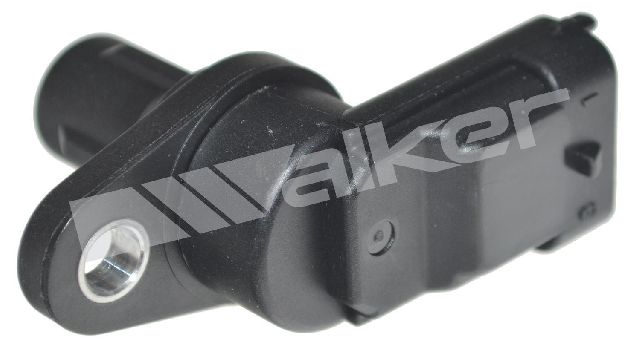
- Failed Camshaft Position Sensor 🔴 High Probability → Shop Engine Camshaft Position Sensor The sensor is made of plastic and is located at the front of the engine, where it is exposed to constant, high heat cycles. This causes the plastic to become brittle and fail internally over time. Many owners on forums report that aftermarket sensors are unreliable and that the P0340 code often returns until a genuine Mopar sensor is installed.
How to confirm: After confirming the wiring is intact and has the correct voltages (5V supply, ground, and a signal), the sensor is the most likely culprit. Given the high failure rate and the unreliability of aftermarket parts, replacing the sensor with an OEM Mopar part is a common and effective diagnostic step. A known-good sensor should show a voltage drop when a piece of metal is passed by its tip.
Typical fix: Replace the camshaft position sensor. It is highly recommended to use a genuine Mopar part (Part No. 5149078AD) for reliability.
Est. part cost: $55-$100 - Damaged Wiring Harness or Connector 🟡 Medium Probability Similar to the sensor, the plastic wire loom and connector are exposed to engine heat. The loom often disintegrates, and the wires or the connector itself can become brittle, cracked, or develop a short/open circuit. Multiple owners on JK-Forum.com specifically note that the factory wiring is often too short, creating tension that eventually damages the connector or pins.
How to confirm: Visually inspect the wiring leading to the sensor for any signs of cracking, exposed wires, or heat damage. A common diagnostic technique mentioned in forums is to wiggle the harness near the sensor with the engine running (if possible) or while cranking; if the engine starts or the symptoms change, it strongly points to a wiring issue. Use a multimeter to test for 5V power, ground, and signal continuity at the connector.
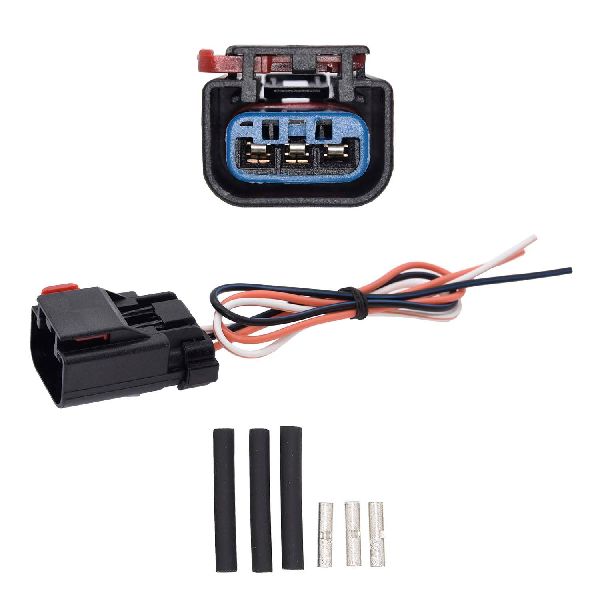
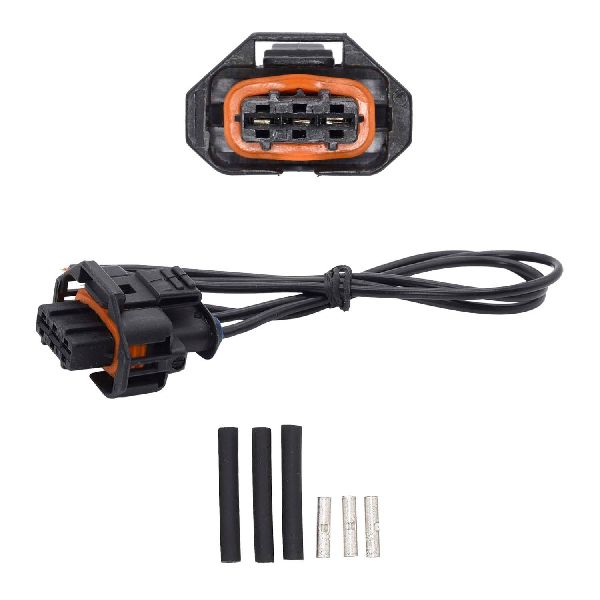
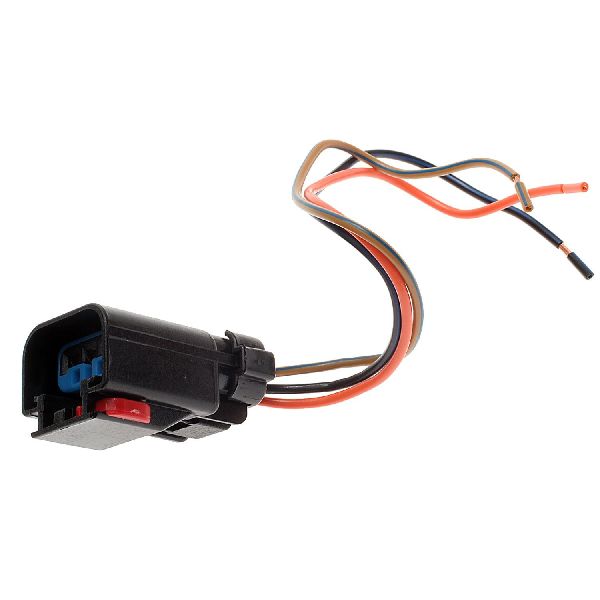
Typical fix: Repair the damaged section of wiring or replace the connector pigtail. Mopar offers a replacement pigtail (Part No. 68148103-AA). Aftermarket pigtails like NAPA EC2794 or Standard Motor Products S-738 are also available.
Est. part cost: $15-$40
Rare But Worth Checking
- Improper Sensor Air Gap: The camshaft position sensor on the 3.8L engine has a small amount of adjustability. If it's not installed correctly, the air gap between the sensor tip and the camshaft gear can be wrong, leading to a P0340 code even with a new sensor. New sensors come with a paper spacer to set this gap automatically; this spacer should be left on during installation. One forum user reported needing to tap the sensor with a mallet to ensure it was fully seated to resolve the code.
- Faulty Powertrain Control Module (PCM): → Shop Engine Control Module (ECM) While uncommon, the PCM itself can fail and stop processing the signal from the camshaft sensor, causing a P0340 code. This should only be considered after the sensor and wiring have been thoroughly tested and ruled out. One owner on a forum replaced the PCM which resolved the issue for 6 months before it returned, suggesting it's rarely the root cause.
- Timing Chain or Tone Ring Issue: → Shop Engine Timing Chain In very rare cases, a stretched timing chain or a damaged tone ring on the camshaft itself can cause the signal to be erratic or absent. This is a major mechanical repair and should be considered a last resort after all electrical possibilities are exhausted. A visual inspection of the trigger wheel (tone ring) inside the timing cover may be necessary. NHTSA ODI #10919983 describes a situation where P0340 and P0344 were linked to a Chrysler campaign requiring the replacement of the OPDA and camshaft.
Diagnosis Steps
- Scan for Codes: Read the OBD-II codes. Confirm P0340 is present. Note any other codes, especially P0344.
- Inspect the Wiring: Carefully inspect the wiring harness and connector for the camshaft position sensor. Look for brittle or cracked plastic loom, exposed wires, or a damaged connector. Pay close attention to the tension on the harness, as it's known to be too short.
- Perform a 'Wiggle Test': As suggested by forum members, try wiggling the wiring harness and connector while cranking the engine. If the engine starts or stumbles, the fault is almost certainly in the wiring or connector pigtail.
- Test the Circuit: Disconnect the sensor. With the key in the 'ON' position, use a multimeter to verify you have a 5-volt reference, a good ground, and a signal wire at the connector. A reading of 5V on the signal wire with the sensor disconnected indicates a short to power in the harness.
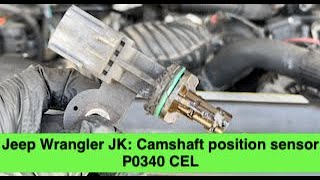
- Replace the Camshaft Position Sensor: If the wiring and voltages are correct, the sensor itself is the most likely cause. The sensor is located on the upper front of the engine, above the water pump. 🎬 Watch: This quick 4-minute walkthrough shows the sensor replacement process. It is highly recommended to use a genuine Mopar sensor (5149078AD).
- Installation Details: The sensor is held by a single 10mm bolt. The old sensor may be brittle and break upon removal; be prepared to carefully extract any pieces left in the engine block. Lubricate the new sensor's O-ring with clean engine oil. If the new sensor has a paper spacer on the tip, leave it in place for proper installation depth. Tighten the bolt to 106 in-lbs (about 9 ft-lbs).
- Perform Relearn Procedure: After installation, clear the codes. Disconnecting the negative battery terminal for 30 minutes to reset the PCM's adaptive memory is a common practice. Some scan tools offer a 'Cam/Crank Relearn' function which may be required. The engine coolant temperature must be above 158°F (70°C) to perform this routine.
- Final Test: Start the engine and confirm the Check Engine Light does not return. If the code reappears, re-check the wiring, consider replacing the connector pigtail (Mopar 68148103-AA), or investigate rarer causes.
Parts You'll Likely Need
- Engine Camshaft Position Sensor
(OEM #5149078AD)— This is the most common failure point for code P0340 on the 3.8L V6 due to heat degradation and high failure rates of aftermarket alternatives.
Trusted brands: Mopar (Highly Recommended), NGK/NTK (Often cited as OEM manufacturer), Delphi, Standard Motor Products
OEM price range: $60-$100
Aftermarket price range: $30-$75 - Camshaft Position Sensor Connector Pigtail
(OEM #68148103-AA)— The factory wiring is often too short and brittle, causing the connector or pins to fail. Replacing the pigtail adds length and ensures a solid connection.
Trusted brands: Mopar, Standard Motor Products (S-738), NAPA (EC2794)
OEM price range: $25-$40
Aftermarket price range: $15-$30
Related Codes That Often Appear With This One
- P0344 — P0344 indicates an intermittent signal from the same sensor, which often precedes or accompanies a complete circuit failure (P0340). Many owners report seeing both codes.
Technical Service Bulletins (TSBs) & Recalls
- No specific TSBs for code P0340 on the 2007-2011 3.8L Wrangler were identified in the search. TSBs found were for different model years or engines, such as TSB 18-054-14 for 2014 models with the 3.6L engine.
- Manufacturer TSB Bulletin #18-103-20 notes that P0340 (Camshaft Position Sensor Circuit - Bank 1 Sensor 1) can occur alongside other timing-related codes like P0344 and P0390.
Platform-Specific Known Issues
- The plastic sensor body can become extremely brittle from engine heat and may may snap off during removal, leaving the lower portion stuck in the timing chain cover.
- The wiring loom in the engine bay is known to degrade and crumble, exposing the sensor wires to potential damage and short circuits.
- The wiring harness leading to the sensor is often cited as being too short from the factory, putting constant tension on the connector and leading to premature failure of the connection.
Mechanic-Grade Diagnostic Values
- Camshaft Position Sensor Connector Pin Voltages (Key On, Engine Off, Connector Unplugged) — expected: Pin 1 (5V Reference): ~5.0 volts. Pin 2 (Signal): ~5.0 volts (on a pull-down circuit, voltage is supplied by PCM). Pin 3 (Ground): ~0 volts (continuity to ground).. Failure: No voltage on Pin 1 indicates a PCM or wiring issue. Voltage other than ~5V on Pin 2 (unplugged) could indicate a short. No ground on Pin 3 indicates a broken ground wire.
- Camshaft Position Sensor Signal (Engine Cranking/Running) — expected: Using an oscilloscope or a multimeter set to DC volts, the signal wire should alternate between approximately 0V and 5V as the camshaft rotates. This creates a square wave pattern on a scope.. Failure: A signal that is stuck high (at 5V) or low (at 0V), or a weak/erratic signal that doesn't cleanly switch, indicates a faulty sensor, poor connection, or a problem with the tone ring.
- Alternator AC Ripple Voltage — expected: Less than 0.5 Volts AC (500 millivolts) measured at the battery terminals with the engine running.. Failure: AC voltage exceeding 0.5V indicates failing diodes in the alternator. This AC ripple can induce electrical noise into the ignition system and be misinterpreted by the PCM, falsely triggering a P0340 code.
Scan Tool Commands That Help
- Appcar DiagFCA, WiTech, or other professional-grade scanners: Cam Crank Relearn — This routine should be used after replacing the camshaft sensor, crankshaft sensor, or timing components. It allows the PCM to learn the relationship between the cam and crank signals to account for manufacturing tolerances and mechanical wear. The engine must be at operating temperature (above 158°F / 70°C) to perform the relearn.
Wiring & Ground Locations
- Camshaft Position Sensor Connector (C104) — Front of the engine, above the water pump, plugged into the sensor.. This is the primary connection point. Pin 1 is the 5V supply, Pin 2 is the signal wire to the PCM, and Pin 3 is the sensor ground. A poor connection or damaged pin here is a very common cause of P0340.
- PCM Connector C2 (Gray) — The Powertrain Control Module (PCM) is located on the driver's side of the firewall. C2 is one of the large multi-pin connectors.. The camshaft sensor signal wire (typically Dark Blue/Dark Green) runs to a specific pin on this connector (Pin 25 on some diagrams). Testing for continuity between the sensor connector and this pin can rule out a break in the wiring harness.
- G102 Ground — Located on the passenger side of the engine block, near the front.. This is a major engine ground point. While the sensor has a dedicated ground wire back to the PCM, a poor main engine ground can cause electrical noise and voltage potential differences that may interfere with sensor readings.
Real Owner Repair Stories
- JK-Forum.com user (2007-2011 Jeep Wrangler JK) — P0340 code, limp mode, traction control light on, stumbling, and hard acceleration issues.
❌ Tried (didn't work) Replacing the camshaft position sensor (sometimes multiple times)
✅ What actually fixed it The connector pigtail to the camshaft position sensor was bad. Replacing the pigtail (Mopar Part #68148103-AA) resolved all symptoms and the code did not return. - JK-Forum.com user 'jchappies' (Jeep Wrangler JK (year not specified)) — P0340 code and limp mode, occurring consistently after about 40 miles of driving.
❌ Tried (didn't work) Replacing the camshaft position sensor, Replacing the crankshaft position sensor, Replacing the PCV valve
✅ What actually fixed it The user removed the sensor, used a new paper spacer, and physically tapped the top of the sensor with a screwdriver and mallet to ensure it was fully seated. They also slightly bent the pins in the sensor for a tighter fit in the connector. The combination of ensuring the sensor was fully seated (correct air gap) and improving the pin connection resolved the code. - NHTSA ODI #10748458 — An owner reported experiencing an intermittent P0340 while pulling a grade; when the code occurred, the vehicle lost significant power and was unable to maintain speed.
OEM Part Supersession History
5149078AB, 5149078AC→5149078AD— Standard part revision and improvement over time.
Heads up: The latest part number, 5149078AD, is the recommended replacement and is backward compatible with vehicles that used the AB or AC revisions.
Diagnostic Flowchart
Real Owner Stories
Aggregated from forums and TSBs cited above. Mileages and costs reflect what owners reported in those sources.
2010 Jeep Wrangler 3.8L
Symptoms: Threw a P0340 code along with the traction control light and went into limp mode. The wiring was tight and the brittle plastic loom had disintegrated. This all started a day after flushing the antifreeze and changing the oil.
What fixed it: Cleaned connections on the harness for the cam, air, and coolant sensors.
Source hint: JK-Forum.com owner report
2007-2011 Jeep Wrangler
Symptoms: Experienced simultaneous ESC light and P0340 code. Discovered the factory wiring harness was too short, putting tension on the connector.
What fixed it: Replaced the damaged connector pigtail with Mopar part 68148103-AA.
Source hint: JK-Forum.com - Thread 'P0340 Cam Sensor and Traction control Errors'
2008 Jeep Wrangler Unlimited (JKU)
Symptoms: Engine would not start. The wire loom above the sensor was found in a brittle, crumbled state.
What fixed it: Wiggling the wire loom above the sensor allowed the Jeep to start, confirming a wiring fault that required repair.
Source hint: JK-Forum.com - Thread 'P0340 cam shaft position sensor'
2007-2011 Jeep Wrangler
Symptoms: The P0340 code appeared immediately after performing a routine coolant flush.
What fixed it: Diagnosed as fragile, heat-damaged wiring that was accidentally disturbed during the coolant maintenance.
Source hint: Jeeps.net Forum - Thread 'P0340 code woes'
Related OBD-II Codes
Frequently Asked Questions
Why did my Traction Control / ESC light come on at the same time as the P0340 code on my 3.8L Wrangler?
Are there any TSBs for the P0340 code on the 2007-2011 Jeep Wrangler?
Should I use an aftermarket camshaft position sensor to fix P0340?
I replaced the cam sensor but the code came back. What else goes wrong on the 3.8L?
Do I need to do a relearn procedure after replacing the cam sensor on my Wrangler?
Why did P0340 appear right after I did a coolant flush on my Jeep?
Helpful Videos
We Have This Part in Stock


The information in this article is provided for general reference and educational purposes only. Vehicle specifications, procedures, and part compatibility can vary by production date, trim level, and region. Always consult your vehicle's factory service manual and verify part numbers before purchasing or performing repairs. Safety-critical components such as airbags, seat belts, and braking systems should be installed by a qualified professional.
- Jeep Wrangler:
- 🧭 Diagnostic Flowchart
- 🎬 Helpful Videos
- 🛍️ Shop This Part
- What's Unique About the 2007-2011 Jeep Wrangler
- Symptoms You May Notice
- Most Likely Causes
- Rare But Worth Checking
- Diagnosis Steps
- Parts You'll Likely Need
- Related Codes That Often Appear With This One
- Technical Service Bulletins (TSBs) & Recalls
- Platform-Specific Known Issues
- Mechanic-Grade Diagnostic Values
- Scan Tool Commands That Help
- Wiring & Ground Locations
- Real Owner Repair Stories
- OEM Part Supersession History
- Real Owner Stories
- 2010 Jeep Wrangler 3.8L
- 2007-2011 Jeep Wrangler
- 2008 Jeep Wrangler Unlimited (JKU)
- 2007-2011 Jeep Wrangler
- Related OBD-II Codes
- Frequently Asked Questions
- 🎟️ Get 5% Off