

P0340 on 2014-2018 Kia Forte: Camshaft Sensor 'A' Circuit Causes and Fixes
On a 2014-2018 Kia Forte, code P0340 almost always means the intake camshaft position sensor has failed. This can cause hard starting, stalling, and poor performance. Replacing the sensor is a simple, 20-minute DIY job with a part cost of about $25-$95. It is crucial to use an OEM or high-quality aftermarket sensor, as cheap alternatives are known to fail quickly or not work at all.
- P0340 on a 2014-2018 Forte is most likely a failed intake camshaft position sensor.
- This is a very easy and inexpensive DIY repair, typically taking less than 30 minutes with a single 10mm wrench or socket.
- Symptoms can be severe, including stalling or a no-start condition, so it should be addressed promptly.
- Always check with a Kia dealer for open recalls or warranty extensions related to the engine, as this code could be an early warning of a more serious, covered issue.
What's Unique About the 2014-2018 Kia Forte
The 2014-2018 Kia Forte uses the 'Nu' family of engines (1.8L and 2.0L), which have two easily accessible camshaft position sensors on top of the valve cover. While P0340 is a straightforward sensor circuit code, it's important to note that these Nu engines have been subject to class-action lawsuits, recalls, and warranty extensions for internal issues like oil pump failure, connecting rod bearing wear, and premature engine failure. A persistent P0340 code, especially when accompanied by engine noise or other timing codes after replacing the sensor, could hint at these deeper oiling or mechanical timing-related problems. Some owners have been incorrectly quoted for a full engine replacement by dealerships when faced with persistent timing correlation codes.
🎬 Watch: How to handle engine replacement and recall issues.Generation note: This guide covers the entire second generation (YD) of the Kia Forte (2014-2018). The 2014-2016 models primarily used a 1.8L MPI and 2.0L GDI engine. The 2017-2018 refresh replaced the 1.8L with a 2.0L MPI Atkinson cycle engine. The location and function of the camshaft position sensor are similar across all these 'Nu' engines for this generation, and the issue is also common on platform mates like the Hyundai Elantra and Kia Soul.
Symptoms You May Notice
- Check Engine Light is on
- Engine is hard to start or cranks for a long time before firing.
- Engine stalls unexpectedly, sometimes while driving or at idle.
- Rough or unstable idle.
- Noticeable loss of power and poor acceleration.
- Engine may crank but fail to start at all.
- Reduced fuel economy.
- In some automatic transmission models, difficulty shifting.
- Replacing the Crankshaft Position Sensor. While related, the P0340 code specifically points to the camshaft sensor circuit.
- Replacing the wrong camshaft sensor. P0340 is for sensor 'A' (intake). The exhaust sensor is 'B' and would trigger a different code (P0365).
- Using a cheap, low-quality aftermarket sensor that is faulty out of the box, leading to the assumption that the sensor was not the problem.
Most Likely Causes
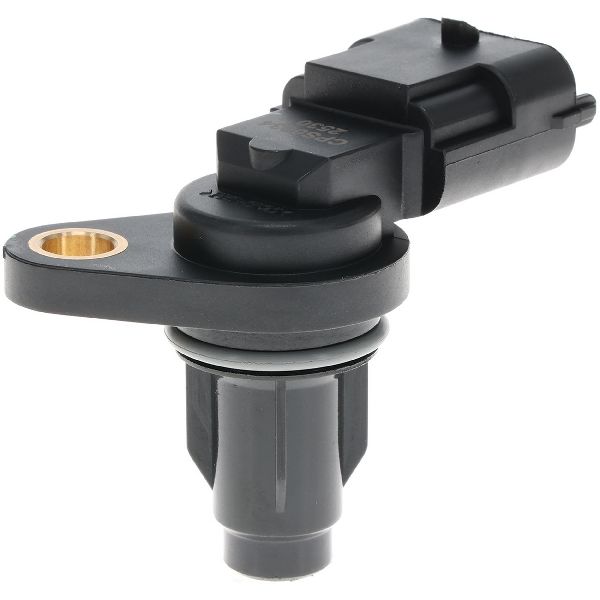
- Failed Intake Camshaft Position Sensor ('A') 🔴 High Probability → Shop Engine Camshaft Position Sensor The sensor is a common failure point on many modern vehicles, including this platform. It is an electronic component exposed to high heat cycles in the engine bay. Owners and mechanics strongly recommend using genuine OEM (Kia/Hyundai) or premium aftermarket sensors, as low-quality aftermarket sensors are frequently reported to be dead-on-arrival or fail shortly after installation.
How to confirm: After confirming no visible wiring damage, replacing the sensor is the most direct way to confirm. A more advanced method involves using an oscilloscope to check for a square wave signal from the sensor while the engine is cranking. You can also test the sensor with a multimeter. 🎬 See how to diagnose and fix P0340 and P0365 codes.
Typical fix: Replace the intake camshaft position sensor. It is located on the top of the valve cover, held in by a single 10mm bolt, and can be replaced in under 20 minutes.
Est. part cost: $25-$95 - Wiring Harness or Connector Damage 🟡 Medium Probability The engine harness is exposed to heat and vibration, which can cause wires to become brittle, chafe, or melt over time. Oil leaks from the valve cover can also contaminate the connector, leading to a poor connection.
How to confirm: Visually inspect the wiring leading to the sensor for any signs of melting, chafing, or breaks. Check inside the connector for corrosion, oil contamination, or bent/pushed-out pins. A multimeter can be used to check for power (often 5V or 12V reference), ground, and signal continuity at the connector with the key in the 'ON' position.
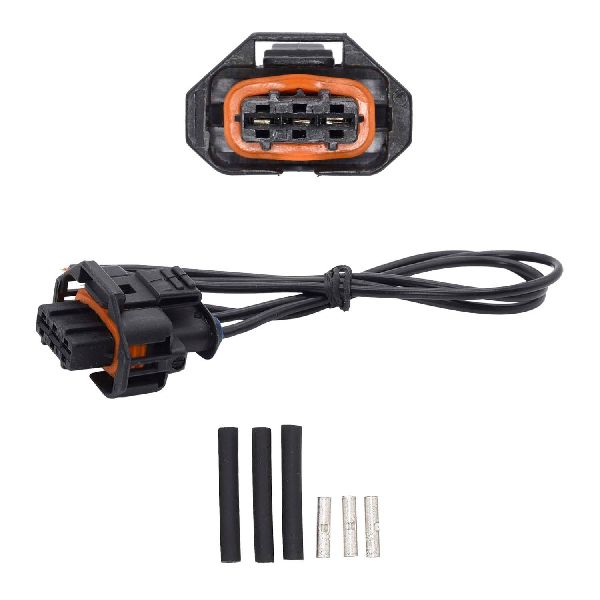
Typical fix: Repair the damaged section of wiring or replace the connector pigtail. Cleaning a contaminated connector with electrical contact cleaner can also resolve the issue.
Est. part cost: $10-$30 - Stretched Timing Chain or Timing Issue ⚪ Low Probability → Shop Engine Timing Chain
How to confirm: This is a more complex diagnosis. If new, quality sensors and verified wiring do not fix the code, a technician will need to check the correlation between the camshaft and crankshaft sensors with a scan tool or oscilloscope. A rattling noise on startup can be an indicator of a failing timing chain tensioner. Physical inspection of the timing chain requires removing the valve cover and/or timing cover.
Typical fix: Requires replacement of the timing chain, guides, and tensioners. On Nu engines, a known (though still uncommon) failure is the dowel pin on the camshaft shearing, allowing the CVVT phaser to spin independently and lose timing. This is a labor-intensive job best left to a professional.
Est. part cost: $200-$500
Rare But Worth Checking
- Failing Alternator: A bad alternator can introduce electrical noise (AC voltage) into the car's system, which can interfere with sensitive sensor signals and trigger a false P0340 code.
- Blown Fuse: The camshaft position sensor circuit is protected by a fuse, often located in the engine bay fuse box and may be labeled 'SNSR' or similar. If this fuse is blown, the sensor will not receive power, triggering the code.
- Faulty Powertrain Control Module (PCM): → Shop Engine Control Module (ECM) This is extremely rare. The PCM should only be considered after all other possibilities (sensor, wiring, mechanical timing) have been exhaustively ruled out by a professional.
Diagnosis Steps
- Read the code with an OBD-II scanner to confirm P0340 is present.
- Pop the hood and remove the plastic engine cover (it pulls straight up).
- Locate the two camshaft position sensors on top of the valve cover. Sensor 'A' (intake) is typically the one closer to the front of the vehicle (radiator side).
- Carefully inspect the sensor's electrical connector and the nearby wiring for any obvious signs of damage, such as melted plastic, frayed wires, or oil saturation. Ensure the connector is securely plugged in.
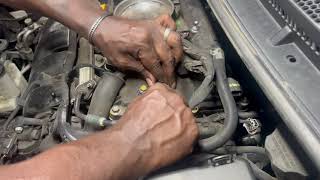
- If the wiring looks good, the most common and cost-effective next step is to replace the sensor with a high-quality OEM or reputable aftermarket part. It is held in by one 10mm bolt. 🎬 Watch: A quick walkthrough of the sensor replacement process.
- After replacing the sensor, clear the code with the scanner and start the vehicle. A short drive may be necessary for the system to relearn. If the code does not return, the problem is solved.
- If the code returns, check for a blown fuse for the sensor circuit in the engine bay fuse box.
- If the code returns, a more advanced diagnosis is needed. Use a multimeter to check for power, ground, and a signal voltage at the sensor connector. If the wiring is confirmed to be good, the issue may be mechanical (timing chain) and require professional inspection.
Parts You'll Likely Need
- Intake Camshaft Position Sensor
(OEM #39350-2E200)— This sensor is the most frequent cause of the P0340 code on the 2014-2018 Forte with Nu engines. It is an electronic component that wears out over time. Part number 39350-23910 is for older models and should not be used. 39350-2E600 is for hybrid models.
Trusted brands: Kia (Genuine), Hyundai (Genuine), Delphi, NTK/NGK, Beck/Arnley
OEM price range: $60-$95
Aftermarket price range: $25-$60
Related Codes That Often Appear With This One
- P0365 — Camshaft Position Sensor 'B' Circuit Malfunction. If both sensors fail simultaneously or there is a shared wiring problem (like a blown fuse), you may see both codes together.
- P0011 / P0014 / P0017 — These codes relate to camshaft timing being over-advanced, over-retarded, or out of correlation with the crankshaft. While often caused by oil control valve issues or stretched timing chains, a faulty camshaft position sensor providing incorrect data can also contribute to these codes appearing.
Technical Service Bulletins (TSBs) & Recalls
- SC210 - Recall for oil pump inspection and oil pan replacement on certain 2017-2018 Forte vehicles with the 2.0L Nu MPI engine.
- TSB CHA074 / CS1604 - Addresses replacement of the flexible coupler in the Motor Driven Power Steering (MDPS) to fix a common steering clunk.
- TSB TRA102 - Pertains to 2019+ models but is relevant context for IVT transmission issues that began appearing after this generation.
Platform-Specific Known Issues
- Engine Recalls and Warranty Extensions: The Nu engines in this generation of Forte are part of a massive class-action settlement (In re: Hyundai and Kia Engine Litigation II) covering defects that can lead to engine seizure, stalling, and failure. This resulted in a warranty extension to 15 years/150,000 miles for qualifying repairs and requires a free Knock Sensor Detection System (KSDS) software update. It is critical for owners to check with a Kia dealer to see if any recalls (like NHTSA 21V260000 for the oil pump) or warranty extensions apply to their VIN, as a persistent P0340 could be an early symptom of a larger engine problem covered under these programs.
Mechanic-Grade Diagnostic Values
- Sensor Power Supply Voltage — expected: Approximately 5.0 volts DC with key on, engine off.. Failure: Voltage below 4.8V or above 5.2V. No voltage could indicate a blown fuse or open in the supply wire.
- Sensor Signal Circuit Voltage (at sensor connector, backprobed) — expected: A digital square wave pattern switching between approximately 0V and 5V when the engine is cranking or running. This requires an oscilloscope to view properly.. Failure: No signal, a flat line, or a distorted/noisy pattern indicates a failed sensor or wiring issue.
- Signal Circuit Short to Voltage Test — expected: Less than 5.2 volts with sensor disconnected, key on.. Failure: Voltage above 5.2 volts indicates the signal wire is shorted to a power source.
- Sensor Ground Circuit Resistance — expected: Less than 3.0 Ohms of resistance between the ground pin on the connector and a known good chassis ground.. Failure: High resistance (or an open circuit/OL) indicates a bad ground connection, which is a common cause of sensor circuit codes.
- Alternator AC Ripple Voltage — expected: Less than 50 millivolts (0.050V) AC at the battery terminals with the engine running at 1500 RPM.. Failure: Excessive AC voltage (e.g., over 100mV) indicates a failing diode in the alternator, which can introduce electrical noise that disrupts the camshaft sensor signal.
Scan Tool Commands That Help
- Kia GDS (Global Diagnostic System) or equivalent professional scan tool: Cam/Crank Relearn Procedure — After replacing a camshaft sensor, crankshaft sensor, or performing any work on the timing system, this procedure may be required to resynchronize the PCM's understanding of the engine's base timing. Failure to perform this when needed can cause persistent timing-related codes.
Wiring & Ground Locations
- Camshaft Position Sensor Connector (3-pin) — On top of the valve cover, plugged into the sensor.. This is the primary connection point. The three pins are typically: Pin 1 - Signal, Pin 2 - Ground, Pin 3 - Power (5V). Pin assignments can vary, so a vehicle-specific diagram is best. Oil contamination and heat damage are common here.
- Fuse 'SNSR' or 'SENSOR' — In the under-hood fuse/relay box. On similar Kia platforms, it is often a 10-amp fuse labeled 'SNSR3'.. This fuse supplies power to the camshaft position sensors. If it blows, both sensors will lose power, and you may get P0340 and P0365 simultaneously.
- Ground Point GC402 — On some wiring diagrams for the Forte, this ground point is located on the left rear of the engine compartment.. The sensor circuit requires a clean ground path to the chassis. A loose or corroded ground at this location can cause intermittent and difficult-to-diagnose sensor codes like P0340.
Real Owner Repair Stories
- Reddit user in r/MechanicAdvice (Unknown year/engine, but behavior is universal) — Car immediately turned off, then threw P0340. Restarted and ran fine, but Check Engine Light remained.
❌ Tried (didn't work) Replacing the camshaft position sensor with a new Hitachi brand sensor.
✅ What actually fixed it The Check Engine Light remained on after replacing the part because the code was still stored in the computer's memory. The issue was resolved by clearing the diagnostic trouble code with an OBD-II scanner. The light did not return, confirming the new sensor fixed the original fault. - Commenter on a YouTube repair video (2005 Kia Sportage 2.7L (different vehicle, but same sensor principle and common issue)) — P0340 code returned after sensor replacement.
❌ Tried (didn't work) Replacing the camshaft position sensor.
✅ What actually fixed it The owner removed the electrical connector from the new sensor, sprayed the contacts with electrical contact cleaner, and plugged it back in. This resolved the code, indicating the problem was a poor electrical connection at the pigtail, not the sensor itself. - Reddit user in r/MechanicAdvice (Modified vehicle with intermittent P0340/P0344 codes) — Intermittent poor acceleration, rough starting, no power.
❌ Tried (didn't work) Taking it to multiple dealerships who were hesitant to diagnose it.
✅ What actually fixed it The owner discovered that unplugging the sensor connector and plugging it back in would temporarily resolve the drivability issues for that trip. This strongly pointed to a faulty connector pigtail or poor pin fitment, not the sensor itself. The final fix was to replace the wiring harness connector pigtail. - NHTSA ODI #11711571 — While reported on a different model from the same manufacturer, an owner noted that their vehicle showed multiple codes simultaneously, including P0340, P0365, P0780, and P0010, illustrating how camshaft sensor issues often cluster with other circuit and timing faults.
Model Year Variations Within This Range
- 2017-2018: For the 2017 model year refresh, the base 1.8L MPI engine was replaced with a 2.0L Nu MPI Atkinson cycle engine. The optional 2.0L GDI from 2014-2016 was also phased out for the standard sedan. While the engines differ, they are all part of the 'Nu' family and share the same fundamental design for the camshaft position sensors, meaning the P0340 diagnosis and repair procedure is virtually identical across the 2014-2018 range.
Diagnostic Flowchart
Other Known Issues on This Vehicle
Issues unrelated to this code that are worth knowing about as an owner of this generation:
- Engine Failure / Seizure (Nu Engines) 🔴 High — Widespread enough to trigger multiple class-action lawsuits. Can occur at various mileages, often cited between 60k-100k miles. (Ref: Multiple recalls (e.g., NHTSA 21V260000 for oil pump) and warranty extensions (to 15yr/150k miles for certain issues) are in place.)
- MDPS Steering Coupler Failure 🟠 Medium — Very common. Owners report a distinct clicking or clunking noise from the steering column when turning, typically starting after 50,000 miles. (Ref: Covered by TSBs (e.g., TSB CHA074) and a warranty extension program in some cases, but not a full recall for all models.)
- Excessive Oil Consumption 🟠 Medium — Frequently reported for the 1.8L and 2.0L Nu engines, can be a precursor to more serious engine damage. (Ref: Related to the broader engine class-action settlements which address internal component wear.)
- Ignition Coil Failure 🟡 Low — A common maintenance item that can fail, causing misfires, rough idle, and stalling. Often reported on 2017+ models around 20,000-40,000 miles.
- Parasitic Battery Drain 🟡 Low → Shop Vehicle Battery — Some owners experience batteries dying overnight. TSBs on other Kia models point to potential causes like faulty door latches or HECU modules. (Ref: TSB ELE163 and SC197 address this on other models, but may provide diagnostic clues for the Forte.)
Used vs. New Parts: Buying Guide for This Vehicle
When a used part is the smart pick: For this specific repair, a used part is almost never a smart choice for the sensor itself. However, if the wiring connector (pigtail) is damaged, obtaining a used pigtail from a junkyard vehicle is a viable and cost-effective repair method, often superior to using generic, non-sealed butt connectors on the original broken harness.
Donor-vehicle mileage cap: roughly under 150000 miles for the part to have meaningful remaining life.
What to inspect on the donor part:
- For a wiring pigtail: Ensure the plastic isn't brittle or cracked.
- Check that the locking tab clicks firmly and is not broken.
- Inspect the inside of the connector for any green/white corrosion or bent pins.
- Ensure there is at least 4-6 inches of wire attached to make splicing easy.
OEM-only on this vehicle (don't cheap out):
- Camshaft Position Sensor
Aftermarket brands forum-validated for this vehicle:
- NTK/NGK
- Delphi
- Beck/Arnley
- Hitachi
Brands owners have reported issues with on this vehicle:
- Unbranded, low-cost sensors from online marketplaces (e.g., Amazon, eBay) are frequently reported by mechanics and owners to be dead-on-arrival or fail within a short period.
Real Owner Stories
Aggregated from forums and TSBs cited above. Mileages and costs reflect what owners reported in those sources.
2018 Kia Forte
Symptoms: The dealership told the owner they needed to replace the entire engine after a camshaft sensor code appeared.
What fixed it: The context indicates this is often related to the Nu engine litigation and potential engine seizure/stalling issues covered under warranty extensions.
Source hint: Reddit r/kia - 'Got told by Kia dealership to replace entire engine over a camshaft sensor code. What?': A 2018 Fort
Related OBD-II Codes
Frequently Asked Questions
Is there a recall for my 2017-2018 Kia Forte that could be related to engine issues and code P0340?
Does the Kia engine litigation settlement cover my P0340 code?
Should I use a generic sensor from a local parts store to fix this?
Where is the Intake Camshaft Position Sensor located on the 2.0L Nu engine?
Can a bad oil pump cause a camshaft sensor code on this vehicle?
I have a clunking noise in my steering along with this engine code; are they related?
Helpful Videos

We Have This Part in Stock


The information in this article is provided for general reference and educational purposes only. Vehicle specifications, procedures, and part compatibility can vary by production date, trim level, and region. Always consult your vehicle's factory service manual and verify part numbers before purchasing or performing repairs. Safety-critical components such as airbags, seat belts, and braking systems should be installed by a qualified professional.
- Kia Forte:
- 🧭 Diagnostic Flowchart
- 🎬 Helpful Videos
- 🛍️ Shop This Part
- What's Unique About the 2014-2018 Kia Forte
- Symptoms You May Notice
- Most Likely Causes
- Rare But Worth Checking
- Diagnosis Steps
- Parts You'll Likely Need
- Related Codes That Often Appear With This One
- Technical Service Bulletins (TSBs) & Recalls
- Platform-Specific Known Issues
- Mechanic-Grade Diagnostic Values
- Scan Tool Commands That Help
- Wiring & Ground Locations
- Real Owner Repair Stories
- Model Year Variations Within This Range
- Other Known Issues on This Vehicle
- Used vs. New Parts: Buying Guide for This Vehicle
- Real Owner Stories
- 2018 Kia Forte
- Related OBD-II Codes
- Frequently Asked Questions
- 🎟️ Get 5% Off