

P0340 on 2018-2022 Kia Forte: Camshaft Sensor 'A' Circuit Malfunction Causes and Fixes
For a 2018-2022 Kia Forte with a P0340 code, the most likely fix is replacing the intake camshaft position sensor. This is a simple, low-cost DIY repair, with an aftermarket part costing around $25-$50 and an OEM part costing about $60-$90. The repair takes less than 15 minutes with a 10mm socket.
- P0340 on a 2018-2022 Forte almost always means the intake camshaft position sensor has failed.
- Symptoms include a check engine light, difficulty starting, and potential stalling.
- This is a very easy and inexpensive DIY fix that requires only a 10mm socket and about 15 minutes.
- Before buying parts, check the sensor's electrical connector for damage or oil. Wiggling the connector might reveal a bad connection.
- The correct OEM part number is 39350-2E200; ensure you are replacing the intake sensor (front of the engine), not the exhaust one (rear).
What's Unique About the 2018-2022 Kia Forte
On the 2.0L Nu engine used in the Forte and its platform mates, the P0340 code is an extremely common and straightforward issue. Unlike some vehicles where this code might point to complex timing or phaser problems, on the Forte it almost always indicates a simple failure of the sensor itself. The repair is well-documented and known to be one of the easiest and most common maintenance tasks for owners of these vehicles, often taking less than 15 minutes with basic tools.
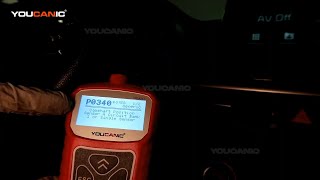
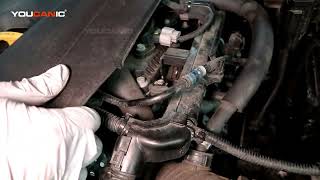
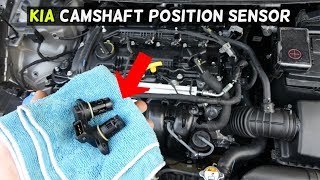
🎬 Watch: A quick 2019+ Forte sensor replacement walkthrough.Generation note: The 2018-2022 year range covers two generations of the Kia Forte: the end of the second generation (YD) in 2018 and the third generation (BD) from 2019-2022. Both generations in this range primarily use a 2.0L Nu or Atkinson cycle engine, and the P0340 fault, causes, and repair procedure are consistent for both.
Symptoms You May Notice
- Check Engine Light is on
- Engine is hard to start or requires extended cranking.
- Engine stalls unexpectedly, sometimes while at a stop or at low speeds.
- Rough or unstable idle.
- Noticeable loss of engine power and poor acceleration.
- Car may enter a limp mode with reduced performance.
- Replacing the Crankshaft Position Sensor: While related, the crankshaft sensor has its own set of codes (e.g., P0335). P0340 specifically points to the camshaft sensor circuit.
- Replacing the wrong Camshaft Position Sensor: The 2.0L engine has two camshaft sensors (intake and exhaust). P0340 is for Sensor 'A', which is the intake sensor, located towards the front of the vehicle. Replacing the exhaust sensor (Sensor 'B', code P0365) will not fix this issue.
Most Likely Causes
- Failed Intake Camshaft Position Sensor 🔴 High Probability → Shop Engine Camshaft Position Sensor The sensor is a very common failure point due to age and heat cycles in the engine bay. This is the most reported fix by owners in forums and repair guides.
How to confirm: After verifying the wiring is intact and has power, replacing the sensor is the most direct way to confirm. If the new sensor resolves the code and symptoms, the old sensor was faulty. The car will often start much easier immediately after replacement.
Typical fix: Replace the intake camshaft position sensor (Sensor 'A').
Est. part cost: $25-$90 - Wiring Harness or Connector Issue 🟡 Medium Probability The connector or wiring can become brittle, damaged, or contaminated with oil over time. The locking tab on the connector can also break.
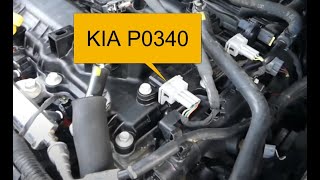
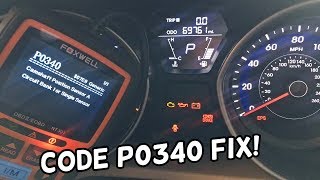
How to confirm: Visually inspect the sensor's connector for damage, corrosion, or pushed-out pins. Check the wiring for breaks or chafing. Use a multimeter to test for the correct voltage (typically 5V reference) and ground at the connector with the key on. Some owners report that wiggling the connector temporarily resolves the issue, pointing to a bad connection. 🎬 See how to diagnose and fix the P0340 circuit code.
Typical fix: Repair the damaged wiring or clean/replace the connector pigtail.
Est. part cost: $5-$30 - Blown Fuse ⚪ Low Probability An electrical short in the circuit can cause the fuse to blow as a protective measure.
How to confirm: Locate the fuse for the sensor circuit (often labeled 'SNSR' or similar in the engine bay fuse box) and check if it has blown. If you are not getting a reference voltage at the sensor connector, a blown fuse is a likely cause.
Typical fix: Replace the blown fuse. If it blows again, there is a short circuit that must be diagnosed.
Est. part cost: $1-$5
Rare But Worth Checking
- Stretched Timing Chain or Timing Issue: → Shop Engine Timing Chain While rare for this specific code, if the sensor and wiring are good, a mechanical timing issue could be the root cause. This would likely be accompanied by other rattling noises or performance problems, and potentially other codes like P0011 or P0014.
- Faulty Powertrain Control Module (PCM): → Shop Engine Control Module (ECM) This is extremely unlikely and should only be considered after all other possibilities (sensor, wiring, mechanical timing) have been completely ruled out by a professional.
Diagnosis Steps
- Scan the vehicle for trouble codes to confirm P0340 is present. Note any other codes.
- Turn off the engine. Remove the plastic engine cover by pulling it straight up.
- Locate the intake camshaft position sensor ('A'). On the 2.0L Nu engine, it is on the top of the valve cover on the passenger side, towards the front of the car (intake side). It is held in by a single 10mm bolt.
- Inspect the sensor's electrical connector and wiring harness. Look for any signs of damage, corrosion, oil contamination, or loose pins. Ensure the connector clicks securely into place.
- If the wiring looks good, use a multimeter to check the connector for power and ground with the ignition in the 'ON' position. You should find a 5-volt reference, a ground, and a signal wire.
- Check the fuse box in the engine compartment for any blown fuses related to engine sensors (often labeled 'SNSR').
- If the wiring and fuse are okay, the sensor itself is highly suspect. Replace the camshaft position sensor. This involves removing the 10mm bolt, pulling the old sensor straight out, and inserting the new one. Ensure the O-ring is seated correctly. 🎬 Watch this step-by-step guide for replacing the intake sensor.
- After replacement, clear the trouble codes with a scanner and start the engine. The check engine light should remain off and the engine should start more easily.
Parts You'll Likely Need
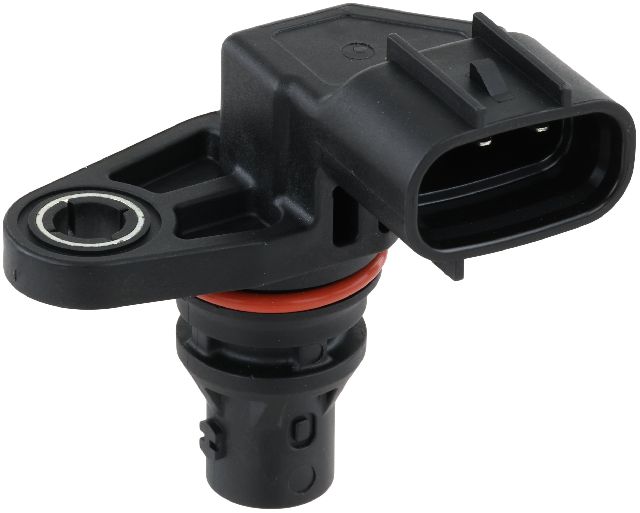
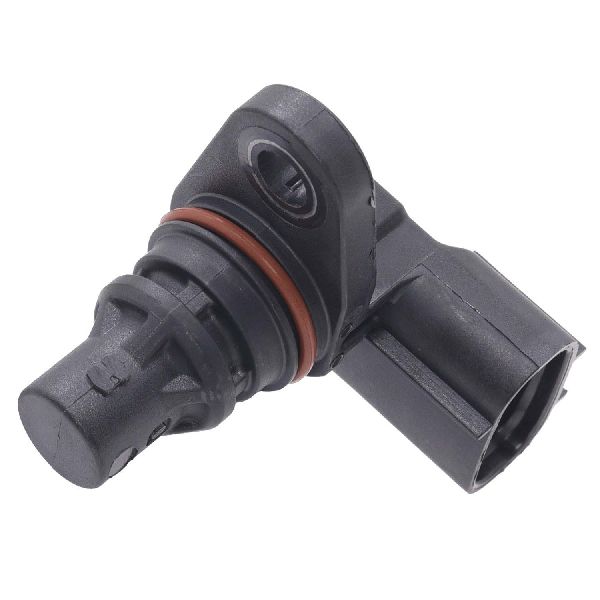
- Intake Camshaft Position Sensor
(OEM #39350-2E200)— This is the most common failure point for the P0340 code on this vehicle. The part is confirmed to fit the 2.0L engine in the Forte, Soul, Seltos, and Elantra.
Trusted brands: Kia (Genuine OEM), Mando, Standard Motor Products (SMP), NGK/NTK, Delphi
OEM price range: $60-$90
Aftermarket price range: $25-$50
Related Codes That Often Appear With This One
- P0365 — This is the code for the exhaust camshaft position sensor ('B'). If both P0340 and P0365 appear together, it could point to a common power/ground issue, a systemic problem like a timing chain jump, or simply both sensors failing around the same time.
- P0011 — This code relates to 'Camshaft Position 'A' - Timing Over-Advanced'. A faulty sensor sending bad data could potentially trigger this timing-related code, though it can also indicate issues with the oil control valve or timing.
Platform-Specific Known Issues
- Owner Experience: A user on Reddit with a Kia Soul (same engine) reported getting a P0340 code, replacing the sensor, but the code returned, suggesting a potential wiring issue as the next step.
- Owner Experience: In a Reddit thread, a user fixed their P0340 issue on a Sentra (different vehicle, same code principle) only after finding frayed wires at the connector, highlighting the importance of checking the wiring even after replacing the sensor.
- Mileage Trend: This failure is commonly reported on various forums for the 2.0L Nu engine in the 60,000 to 100,000-mile range.
- Manufacturer Context: While diagnosing the Forte, it is worth noting that other Kia models have shown similar patterns; for instance, NHTSA ODI #11711571 describes a Kia Sorento showing a cluster of related codes including P0340 and P0365 simultaneously.
Mechanic-Grade Diagnostic Values
- Camshaft Position Sensor Connector - Power Supply Pin to Ground — expected: ~5.0V with Key On, Engine Off (KOEO).. Failure: No voltage or significantly lower voltage points to a wiring issue, blown fuse, or PCM fault.
- Camshaft Position Sensor Connector - Signal Pin to Ground — expected: ~5.0V with sensor disconnected and Key On, Engine Off (KOEO).. Failure: No voltage suggests an open or short in the signal wire to the PCM.
- Camshaft Position Sensor Connector - Ground Pin to Chassis Ground — expected: Near 0 ohms of resistance, indicating a good ground connection.. Failure: High resistance indicates a corroded or broken ground wire.
- Alternator AC Voltage Ripple — expected: Less than 0.5V AC at the battery terminals with the engine running.. Failure: AC voltage greater than 0.5V indicates a failing diode in the alternator, which can create electrical noise and trigger false sensor codes like P0340.
Wiring & Ground Locations
- Main Engine Ground — On the driver's side of the engine bay, a wire bolted from the chassis frame rail to the engine block or transmission housing.. A corroded or loose main engine ground can cause erratic behavior and incorrect readings from various engine sensors, including the camshaft position sensor, leading to a P0340 code.
- CMP Sensor Connector Pins — At the sensor on the top of the valve cover.. Knowing the pin functions is critical for testing. For the 3-wire sensor, one pin is the 5V power supply from the PCM, one is the ground, and one is the signal wire that sends the pulse back to the PCM.
- Engine Compartment Fuse Box — Located in the engine bay, typically on the driver's side.. Contains the fuse for the engine sensors, often labeled 'SNSR' or 'SNSR3'. A blown fuse will cut power to the camshaft sensor circuit, causing an immediate P0340 code.
Real Owner Repair Stories
- YouTube Commenter on 'Whyingo' channel (2005 Kia Sportage 2.7L (different vehicle, but same code and principle)) — Check Engine Light with P0340 code.
❌ Tried (didn't work) Replacing the Camshaft Position Sensor (CPS).
✅ What actually fixed it The code returned after sensor replacement. The owner then pulled the electrical connector, cleaned the contacts with electrical contact cleaner, and reconnected it, which permanently resolved the code. - 2CarPros Forum User (Vehicle not specified, general P0340 diagnosis) — P0340 code, stalling when the engine warms up, squealing noise from belt area.
❌ Tried (didn't work) Replacing both camshaft position sensors., Replacing the crankshaft position sensor.
✅ What actually fixed it A mechanic suggested checking the alternator for AC ripple voltage. A failing diode in the alternator can produce electrical 'noise' that interferes with the camshaft sensor signal, triggering the P0340 code, especially as components heat up.
Model Year Variations Within This Range
- 2018 (2nd Gen) vs 2019-2022 (3rd Gen): The 2018 model (end of 2nd gen) uses a 2.0L Nu MPI engine with a standard 6-speed automatic. The 2019+ models (3rd gen) use an updated 2.0L Nu engine featuring an Atkinson cycle and are paired with Kia's IVT (Intelligent Variable Transmission). Despite these powertrain changes, the P0340 fault, the sensor itself (39350-2E200), and the repair procedure remain consistent across this year range.
Diagnostic Flowchart
Other Known Issues on This Vehicle
Issues unrelated to this code that are worth knowing about as an owner of this generation:
- Premature IVT (Intelligent Variable Transmission) Failure 🔴 High — Common in 2019-2021 models, with failures reported at very low mileage (under 20,000 miles). Symptoms include hesitation, RPM surging, and complete loss of power. (Ref: Kia issued service campaigns (e.g., SC199) for a TCM software update to prevent damage, with transmission replacement if damage is found.)
- Excessive Oil Consumption 🟠 Medium — Some owners of the 2.0L Nu engine report needing to add oil between changes. This can lead to low oil levels, engine damage, and premature catalytic converter failure. (Ref: Class action lawsuits have been filed regarding oil consumption in various Kia/Hyundai Nu engines.)
- Engine Failure / Fire Risk 🔴 High — Though more associated with GDI engines, the broader Hyundai/Kia engine family has been subject to recalls and lawsuits for engine seizure and non-collision fires. (Ref: Multiple recalls and a large class-action settlement have been issued for various Hyundai/Kia engines, some of which include Nu variants.)
Used vs. New Parts: Buying Guide for This Vehicle
When a used part is the smart pick: For this specific repair, buying a used camshaft position sensor is not recommended. The part is a low-cost electronic component that is a known common failure point. The price difference between a new aftermarket part and a used OEM part from a junkyard is minimal, and the new part comes with a warranty and predictable lifespan.
Donor-vehicle mileage cap: roughly under 60000 miles for the part to have meaningful remaining life.
What to inspect on the donor part:
- Ensure the connector pins are straight and free of corrosion.
- Check for any cracks in the plastic housing.
- Verify the O-ring is present and not flattened or brittle.
OEM-only on this vehicle (don't cheap out):
- For critical electronic sensors like camshaft and crankshaft sensors, OEM or high-quality OEM-supplier brands (like Mando) are strongly recommended to avoid compatibility issues and premature failure.
Aftermarket brands forum-validated for this vehicle:
- NTK
- Delphi
- Bosch
Brands owners have reported issues with on this vehicle:
- Generic, unbranded, or 'white-box' parts from online marketplaces are frequently reported on forums as being dead-on-arrival or failing within a short period.
Real Owner Stories
Aggregated from forums and TSBs cited above. Mileages and costs reflect what owners reported in those sources.
2019 Kia Forte
Symptoms: Check engine light was on, and it 'takes a little bit more to start the car'.
What fixed it: Replaced both camshaft position sensors (A and B). After clearing the codes, the car started more easily.
Source hint: YOUCANIC youtube_comment: '2019+ Kia Forte - Camshaft Position Sensor A Replacement P0340 - YouTube'
2017-2021 Kia Soul (2.0L Nu)
Symptoms: P0340 code present; replaced the sensor but the code returned.
What fixed it: The report suggested a potential wiring issue as the next step after the sensor replacement failed to clear the code permanently.
Source hint: Reddit user report mentioned in vehicle_specific_issues
2018-2022 Kia Forte (2.0L Nu)
Symptoms: Stall-at-stop issue recurred a year after the sensor was first replaced; another instance showed that unplugging and replugging the connector temporarily fixed the issue.
What fixed it: The temporary fix by manipulating the plug indicated a bad connector or harness was the root cause.
Source hint: r/MechanicAdvice on Reddit
Kia Manufacturer Reference
Symptoms: A vehicle was reported showing a cluster of codes including P0340, P0365, P0780, and P0010.
What fixed it: While specific to a Sorento, NHTSA ODI #11711571 highlights how these camshaft circuit codes often appear together during engine electrical faults.
Source hint: NHTSA ODI #11711571
Related OBD-II Codes
Frequently Asked Questions
Where is the intake camshaft position sensor located on my 2019 Kia Forte with the 2.0L engine?
My 2019 Forte is hesitating and surging; could this be related to the P0340 code?
Is there a specific mileage when the camshaft sensor usually fails on the Kia Forte?
I replaced the sensor but the P0340 code came back. What should I check next on my Forte?
Could a blown fuse cause a P0340 code on a Kia Forte?
Helpful Videos
We Have This Part in Stock


The information in this article is provided for general reference and educational purposes only. Vehicle specifications, procedures, and part compatibility can vary by production date, trim level, and region. Always consult your vehicle's factory service manual and verify part numbers before purchasing or performing repairs. Safety-critical components such as airbags, seat belts, and braking systems should be installed by a qualified professional.
- Kia Forte:
- 🧭 Diagnostic Flowchart
- 🎬 Helpful Videos
- 🛍️ Shop This Part
- What's Unique About the 2018-2022 Kia Forte
- Symptoms You May Notice
- Most Likely Causes
- Rare But Worth Checking
- Diagnosis Steps
- Parts You'll Likely Need
- Related Codes That Often Appear With This One
- Platform-Specific Known Issues
- Mechanic-Grade Diagnostic Values
- Wiring & Ground Locations
- Real Owner Repair Stories
- Model Year Variations Within This Range
- Other Known Issues on This Vehicle
- Used vs. New Parts: Buying Guide for This Vehicle
- Real Owner Stories
- 2019 Kia Forte
- 2017-2021 Kia Soul (2.0L Nu)
- 2018-2022 Kia Forte (2.0L Nu)
- Kia Manufacturer Reference
- Related OBD-II Codes
- Frequently Asked Questions
- 🎟️ Get 5% Off