

P0340 on 2003-2008 Mazda 6 3.0L V6: Camshaft Sensor Circuit Causes and Fixes
For the 2003-2008 Mazda 6 3.0L V6, code P0340 most often points to a failed camshaft position sensor for Bank 1 (rear). It can also be caused by wiring issues, electrical interference from a failing alternator, or in rarer cases, mechanical timing problems. Replacing the sensor is a common, affordable DIY fix, but diagnosis is key as the code can be a 'scapegoat' for other issues.
- P0340 on the 2003-2008 Mazda 6 3.0L V6 almost always points to a problem in the Bank 1 (rear) camshaft position sensor circuit.
- The most likely fix is replacing the camshaft position sensor itself, which is an accessible and affordable DIY job.
- Before replacing parts, always inspect the sensor's wiring and connector for visible damage, as this is a common and free-to-fix issue.
- If a new sensor doesn't fix the problem, test the alternator for excessive AC ripple or voltage drops under load before suspecting more serious mechanical timing issues.
- A tachometer that acts erratically or dies above 4000 RPM is a very specific and common symptom for this exact problem on this car.
What's Unique About the 2003-2008 Mazda 6
The first-generation Mazda 6 with the AJ 3.0L V6 (a variant of the Ford Duratec 30) is generally reliable, but like many vehicles of its era, it is susceptible to sensor failures as it ages. While the P0340 code is often a straightforward sensor replacement, owners have reported that issues like a failing alternator can produce electrical 'noise' that interferes with the sensor signal, leading to a misdiagnosis. Additionally, forum discussions frequently mention that a bad Crankshaft Position Sensor or mechanical timing issues (stretched chain, jumped tooth) can trigger this code, especially if it appears after other engine work or at high mileage. A specific, well-documented symptom on this platform is the tachometer behaving erratically or dropping to zero above ~4000 RPM when the code is set.
Symptoms You May Notice
- Check Engine Light is on
- Engine is hard to start or will not start.
- Engine stalls intermittently, especially when warm or when coming to a stop.
- Rough idle or engine misfires.
- Noticeable loss of power and poor acceleration.
- Tachometer behaves erratically or drops to zero while driving, especially when revving above 4000 RPM.
- Traction control light may flash in conjunction with the erratic tachometer.
- Replacing the Crankshaft Position Sensor. While related, the crankshaft sensor has its own specific codes (like P0335) and is a different component. However, a faulty CKP can sometimes cause the PCM to log a P0340 if the signals are out of sync.
- Replacing the wrong Camshaft Position Sensor. The AJ 3.0L V6 has two camshaft position sensors. P0340 specifically refers to Bank 1, which is the rear bank near the firewall. P0345 is for Bank 2 (front).
- Assuming the sensor is bad without checking wiring or alternator output first. Many owners replace the sensor multiple times only to find the issue was a wiring fault or electrical noise.
Most Likely Causes
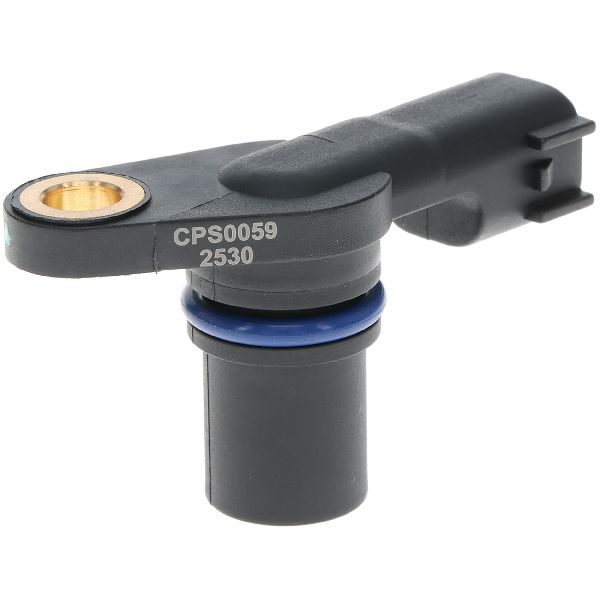
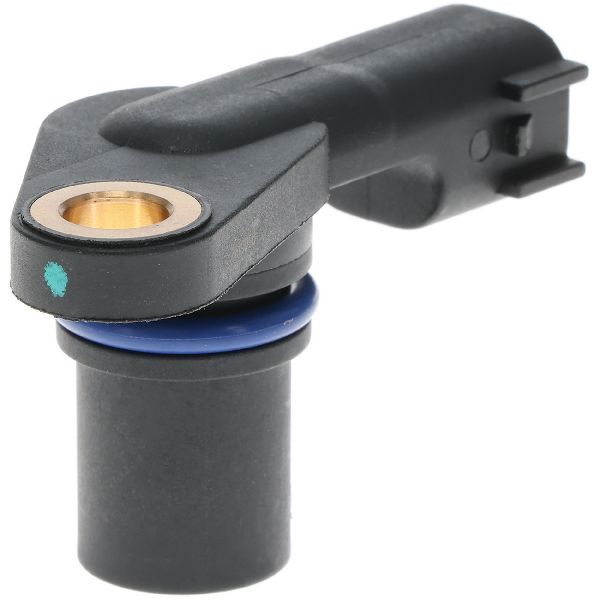
- Failed Camshaft Position Sensor (Bank 1) 🔴 High Probability → Shop Engine Camshaft Position Sensor The sensor is an electronic component that operates in a high-heat engine environment and can fail over time due to thermal stress and internal electronic degradation. It is the most common point of failure for this code.
How to confirm: After checking wiring, the most common diagnostic step is to replace the sensor, as testing its signal accurately requires 🎬 Watch: A mechanic's guide to diagnosing and fixing P0340 codes. an oscilloscope. Given the part's relatively low cost, replacement is often the most practical first step. A video guide shows the replacement process on an '05 Mazda 6.
Typical fix: Replace the Bank 1 camshaft position sensor. Bank 1 is the cylinder head located against the firewall, which is more difficult to access than Bank 2.
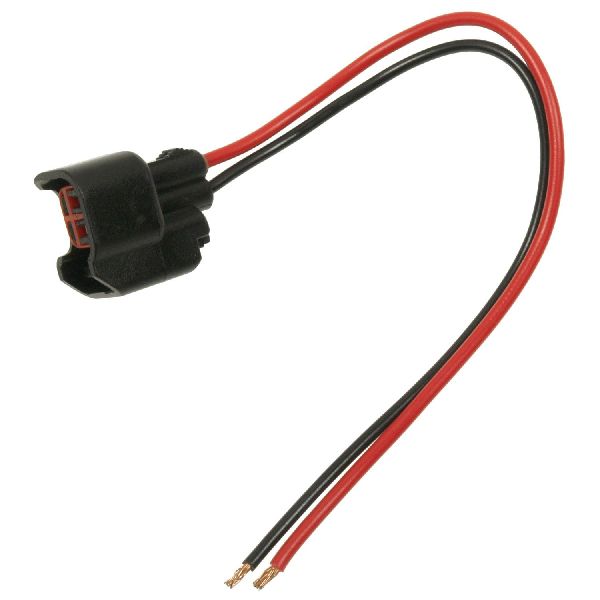
Est. part cost: $25-$75 - Damaged Wiring or Connector 🟡 Medium Probability The engine harness is exposed to heat, vibration, and oil, which can make wires brittle and cause connectors to become loose or corroded over time. Rodent damage to wiring has also been reported as a cause.
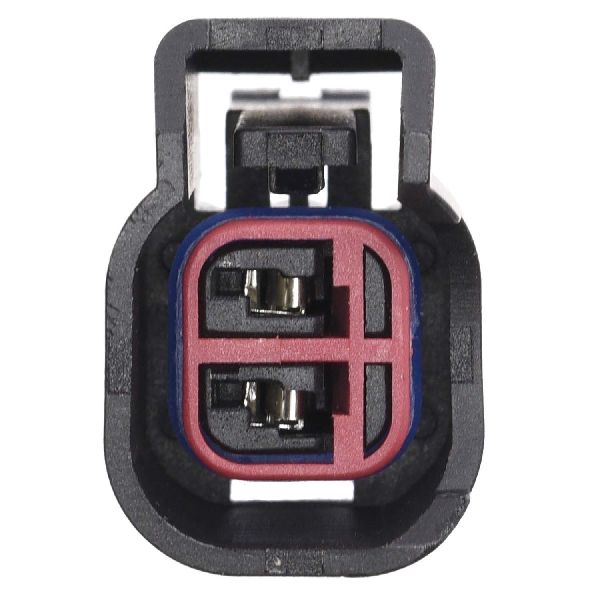
How to confirm: Visually inspect the wiring harness and connector for the Bank 1 camshaft sensor. Look for frayed wires, breaks, corrosion on the pins, or a loose connection. Use a multimeter to check for continuity between the sensor connector and the PCM terminals (CMP terminal A to PCM terminal 85, CMP terminal B to PCM terminal 86).
Typical fix: Repair the damaged section of wiring or replace the connector pigtail.
Est. part cost: $10-$30 - Failing Alternator ⚪ Low Probability A failing alternator can produce excessive AC ripple (electrical noise) on the DC electrical system, which can interfere with sensitive sensor signals like the camshaft position sensor. This has been confirmed by owners who fixed P0340 by replacing the alternator after a new sensor didn't work.
How to confirm: Use a multimeter set to AC volts to test the alternator's output. With the engine running, connect the leads to the battery terminals. There should be less than 0.5 volts AC. Some mechanics state that revving the engine and watching for a significant voltage drop (e.g., below 12V DC) can also indicate a faulty alternator that is causing the issue. The battery light may not always illuminate for this type of failure.
Typical fix: Replace the alternator.
Est. part cost: $150-$300
Rare But Worth Checking
- Stretched or Jumped Timing Chain: → Shop Engine Timing Chain While rare, if the engine has high mileage or has been poorly maintained, the timing chain can stretch or a tensioner can fail, causing the camshaft timing to be out of sync with the crankshaft. This can set a P0340 code because the sensor's readings are outside the expected range. This is a major mechanical issue often preceded by rattling noises and is a known issue after incorrect timing jobs.
- Faulty Powertrain Control Module (PCM): → Shop Engine Control Module (ECM) A bad PCM is very rare but possible. It should only be considered after all other possibilities, including sensors, wiring, and mechanical issues, have been exhaustively ruled out. Sometimes, simply disconnecting the battery and cleaning the ECM ground connection can resolve the issue, suggesting a poor connection rather than a failed module.
- Damaged Reluctor Wheel: The sensor reads teeth on a reluctor wheel on the camshaft. If this wheel is damaged, has missing teeth, or has slipped, it will cause an incorrect signal and trigger the P0340 code. This is an internal engine issue and is very uncommon.
Technical Service Bulletins (TSBs) & Recalls
- Bulletin #SA-022-19 — While issued for other Mazda models like the CX-5, this manufacturer bulletin notes that a P0340 code can be associated with customer complaints of lack of power, rough idle, and engine noise, reinforcing that these symptoms are consistent across the manufacturer's platforms when this DTC is stored.
Diagnosis Steps
- Read the trouble codes with an OBD-II scanner. Confirm P0340 is present and note any other codes like P0345, P0300, or P0335.
- Visually inspect the Bank 1 (rear) camshaft position sensor and its connector. The sensor is located on the rear valve cover, near the firewall. Look for obvious damage, corrosion, or loose connections.
- Inspect the wiring harness leading to the sensor for any signs of chafing, melting, or breaks. Trace it as far back as possible.
- If wiring looks good, test the alternator. With the engine running, use a multimeter on the battery terminals to check for AC voltage (ripple). It should be under 0.5V AC. Also, check that DC voltage is stable (13.8V-14.2V) when revving the engine.
- If the alternator tests good, the most common next step is to replace the Bank 1 camshaft position sensor. Ensure the o-ring from the old sensor is removed with it.
- Clear the codes and test drive the vehicle, trying to replicate the conditions that set the code (e.g., revving past 4000 RPM).
- If the code returns, perform advanced wiring checks. Use a multimeter to test for continuity and proper voltage at the sensor's pigtail according to the workshop manual.
- If the sensor, wiring, and alternator are confirmed good, the issue may be mechanical. Check the engine's mechanical timing. This is complex and may require a professional.
Parts You'll Likely Need
- Camshaft Position Sensor (Bank 1)
(OEM #1F1E-6B288-AA)— This is the most frequent failure point for code P0340. The sensor's electronics fail from age and heat cycles. This part number is a Ford part that is shared with the Mazda.
Trusted brands: Motorcraft, Hitachi, Delphi, Standard Motor Products, Carquest
OEM price range: $50-$90
Aftermarket price range: $25-$75
Related Codes That Often Appear With This One
- P0345 — P0345 is the same circuit malfunction code but for the Bank 2 (front) camshaft position sensor. Seeing both codes together often points to a common problem affecting both sensors, like a wiring harness issue, a systemic electrical problem (like a bad alternator), or a major timing issue.
- P0300 — P0300 (Random/Multiple Cylinder Misfire) can occur because the PCM, lacking a proper cam signal, cannot time the ignition spark and fuel injection correctly, leading to misfires.
- P0335 — P0335 is for the Crankshaft Position Sensor. The PCM compares cam and crank signals. A fault in one can sometimes lead the computer to flag the other, though it's less common. If both are present, suspect a major timing issue or a wiring problem common to both circuits.
Platform-Specific Known Issues
- A hallmark symptom on the Mazda 6 V6 is the tachometer dropping to zero or becoming erratic when revved past ~4000 RPM, often accompanied by the traction control light flashing. This strongly points to a P0340 fault.
- The Bank 1 sensor is on the rear cylinder head against the firewall, making access more difficult than the Bank 2 sensor.
- Some forum users have reported that unplugging a faulty rear O2 sensor temporarily resolved the P0340 code, suggesting a short in a shared harness or a strange electrical gremlin. This is not a fix but a diagnostic curiosity.
Mechanic-Grade Diagnostic Values
- Camshaft Position Sensor (3-wire Hall Effect) Power Supply Voltage — expected: Approximately 5V DC with key on, engine off.. Failure: No voltage or significantly lower voltage indicates a wiring or PCM issue.
- Camshaft Position Sensor Signal Wire Voltage (Backprobed) — expected: A fluctuating square wave between 0V and 5V when the engine is running, best viewed with an oscilloscope.. Failure: A flat line at 0V or 5V, or a noisy/erratic signal, indicates a failed sensor or reluctor wheel issue.
- Continuity between CMP Sensor Connector and PCM — expected: Near 0 ohms of resistance, indicating a good connection.. Failure: High resistance or an 'OL' (Open Loop) reading indicates a break in the wire.
Scan Tool Commands That Help
- Mazda IDS (or equivalent high-end scanner): Cam/Crank Relearn Procedure — After replacing a camshaft sensor, crankshaft sensor, or performing timing chain service, a relearn procedure may be required to synchronize the new sensor data with the PCM. While not always mandatory, it can prevent lingering codes or rough running if the PCM doesn't automatically adapt.
Wiring & Ground Locations
- PCM Terminals for Bank 1 CMP — At the Powertrain Control Module (PCM) connector.. For accurate diagnosis, you must test continuity from the sensor connector back to the correct pins on the PCM. For the Bank 1 CMP sensor, these are terminals 85 and 86.
- Engine/PCM Grounds — Several key grounds exist: one on the firewall to the PCM housing, another on the firewall that bolts to the lower intake manifold, and several near the passenger and driver side headlights.. A poor ground connection can introduce electrical noise or cause a voltage drop in the sensor circuit, leading to a false P0340 code. Cleaning these ground points is a critical diagnostic step if wiring and the sensor itself test good.
Real Owner Repair Stories
- YourMechanic Q&A (Mazda 6 with 106,000 miles, automatic transmission) — P0340 code, no start, no RPM reading on the tachometer while cranking.
❌ Tried (didn't work) Replaced timing chain, tensioner, guides, VVT gear, both camshafts, lifters, rollers, springs, and seals.
✅ What actually fixed it The problem persisted even after a major timing job. The final recommendation was to inspect and likely replace the electrical harness/connector to the sensor, as the code indicates a circuit malfunction, which was not addressed by the mechanical parts replacement. - 2CarPros Forum (2004 Mazda 6 3.0L) — Intermittent jumping/bucking, Check Engine Light and Traction Control light on, codes P0340 and P0345 present. Problem started after spark plugs were changed.
❌ Tried (didn't work) Replaced both camshaft position sensors (P0340 and P0345 returned)., Replaced a coil pack., Cleared a separate throttle body code which did not return.
✅ What actually fixed it The expert advice pointed to a wiring or connector issue as the most likely cause, especially since the problem started after other engine work (spark plug change) and seemed worse in damp weather. The recommendation was to inspect the sensor connectors for corrosion and tightness before suspecting a more serious timing chain issue.
OEM Part Supersession History
1F1E-6B288-AB→1F1E-6B288-BB— Part revision or manufacturer change.
Heads up: The part number 1F1E-6B288-AA provided in the Pass 2 data appears to be a valid Ford part number, while another source shows 1F1E-6B288-BB superseding 1F1E-6B288-AB. It is critical to verify the correct part for the specific vehicle VIN, as multiple revisions exist.AJ58-18-230→AJ58-18-230A— Part revision by Mazda.
Heads up: This is a Mazda-specific part number trail. AJ58-18-230A is listed for the front sensor (Bank 2), highlighting the importance of ensuring the correct part is ordered for Bank 1 (rear).
Diagnostic Flowchart
Real Owner Stories
Aggregated from forums and TSBs cited above. Mileages and costs reflect what owners reported in those sources.
2003 Mazda 6 6 cyl — 163400 miles
Symptoms: P0340 code trips when revving to 4,000 RPM, tachometer jumps around, traction control light comes on and flashes.
What fixed it: The forum thread did not conclude with a definitive fix from the original poster. Other users suggested checking timing, the crank position sensor, or a potential intake manifold issue causing a ticking sound.
Source hint: mazdas247.com thread '2003 mazda 6 6 cyl throwing code p0340 cam sensor A bank one'
2004 Mazda 6 i
Symptoms: Hard start with extended cranking, very low engine oil level (1 qt).
What fixed it: The post is a request for help from a professional technician and does not contain the final fix. The primary finding was a severe lack of oil.
Source hint: iATN P0340 Diagnostic Trouble Code Discussion for February 2007
Related OBD-II Codes
Frequently Asked Questions
Why does my tachometer drop to zero and the traction control light flash when I rev my Mazda 6 V6 past 4000 RPM?
Where is the Bank 1 camshaft position sensor located on the 3.0L V6 engine?
I replaced the camshaft position sensor on my Mazda 6, but the P0340 code came back. What else could it be?
How do I test if my alternator is causing the P0340 code?
Can a bad oxygen sensor cause a P0340 code on this car?
Are there other vehicles that share this exact P0340 issue with the Mazda 6?
Helpful Videos

We Have This Part in Stock


The information in this article is provided for general reference and educational purposes only. Vehicle specifications, procedures, and part compatibility can vary by production date, trim level, and region. Always consult your vehicle's factory service manual and verify part numbers before purchasing or performing repairs. Safety-critical components such as airbags, seat belts, and braking systems should be installed by a qualified professional.
- Mazda 6:
- 🧭 Diagnostic Flowchart
- 🎬 Helpful Videos
- 🛍️ Shop This Part
- What's Unique About the 2003-2008 Mazda 6
- Symptoms You May Notice
- Most Likely Causes
- Rare But Worth Checking
- Technical Service Bulletins (TSBs) & Recalls
- Diagnosis Steps
- Parts You'll Likely Need
- Related Codes That Often Appear With This One
- Platform-Specific Known Issues
- Mechanic-Grade Diagnostic Values
- Scan Tool Commands That Help
- Wiring & Ground Locations
- Real Owner Repair Stories
- OEM Part Supersession History
- Real Owner Stories
- 2003 Mazda 6 6 cyl — 163400 miles
- 2004 Mazda 6 i
- Related OBD-II Codes
- Frequently Asked Questions
- 🎟️ Get 5% Off