

P0340 on 2004-2008 Mazda 6 2.3L: Camshaft Sensor Causes and Fixes
On the 2004-2008 Mazda 6 2.3L, code P0340 most often means the camshaft position sensor has failed. However, it can also be an early warning for a stretched timing chain, a failing VVT actuator, or issues related to low engine oil. A new sensor is inexpensive (~$25-$75), but diagnosis is key to avoid replacing parts unnecessarily, as the root cause is often mechanical.
- P0340 on your Mazda 6 means there's a fault in the camshaft position sensor circuit.
- Before buying parts, check your engine oil level. Low oil is a common cause of this code on the 2.3L engine.
- The most likely part to fail is the camshaft position sensor itself, which is a relatively easy and inexpensive DIY replacement.
- If a new sensor and correct oil level don't fix the issue, the problem could be a more serious and expensive stretched timing chain, which may require a professional mechanic.
What's Unique About the 2004-2008 Mazda 6
The Mazda L3-VE 2.3L engine, part of the MZR family also used by Ford, is known for potential timing chain and VVT system issues. While a P0340 can simply be a failed sensor, it's often an early indicator of a more serious underlying problem like a stretched timing chain or a failing VVT actuator, especially on higher mileage examples. This happens because a loose chain or a malfunctioning VVT system can alter the camshaft's actual position relative to the crankshaft, causing the sensor to report a signal that the PCM flags as a fault. Running the engine low on oil or using the wrong viscosity can starve the VVT system of necessary oil pressure, accelerating wear on all timing components and triggering this code.
Symptoms You May Notice
- Check Engine Light is on
- Engine is hard to start or will not start at all
- Engine stalls intermittently, especially when warm or coming to a stop
- Rough idle, surging, or engine misfires
- Noticeable loss of power and poor acceleration
- Rattling or ticking noise from the engine on startup, indicating a potential VVT or timing chain issue
- Tachometer drops to zero or becomes erratic when revved past ~4000 RPM, often with the traction control light flashing
- Replacing the crankshaft position sensor (CKP) instead of the camshaft position sensor (CMP). While they are related, they have distinct codes (P0335 for the crank sensor).
- Immediately assuming the timing chain is bad without first testing the sensor, checking the oil level, and inspecting the OCV. The sensor and OCV are much cheaper and easier fixes.
- Replacing the camshaft sensor when the code was actually triggered by a timing chain that jumped a tooth or a faulty VVT actuator.
Most Likely Causes
- Failed Camshaft Position Sensor (CMP) 🔴 High Probability → Shop Engine Camshaft Position Sensor Sensors can fail over time due to heat cycles and internal electronic degradation. It's the most common and straightforward cause, and often the first part replaced.
How to confirm: Test the sensor's output signal using a multimeter or oscilloscope while the engine is cranking. A lack of signal or an erratic signal indicates failure. Swap with a known good sensor if available.
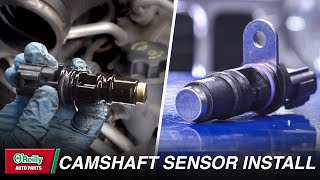
Typical fix: Replace the camshaft position sensor. 🎬 Watch this step-by-step guide to replacing the sensor on a Mazda 6. Using an OEM part is recommended.
Est. part cost: $25-$75 - Stretched Timing Chain or VVT Actuator Issue 🟡 Medium Probability → Shop Engine Timing Chain The L3-VE engine is known for timing chain stretch and VVT actuator failure, especially if oil change intervals are extended or oil levels are low. A startup rattle is a key symptom.
How to confirm: This is a more advanced diagnosis. It involves removing the valve cover to inspect for chain slack. A mechanic can also use a scope to compare camshaft and crankshaft sensor signals to see if they are out of sync. A loud rattle on cold starts is a strong indicator.
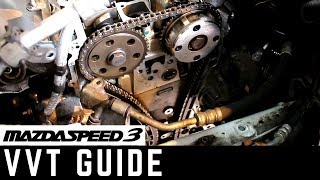
Typical fix: Replace the timing chain, guides, tensioner, and VVT actuator. This is a significant repair. 🎬 See what is involved in a full VVT and timing chain replacement.
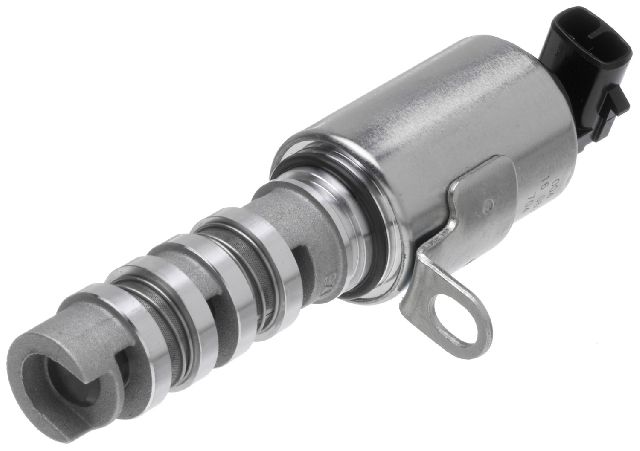
Est. part cost: $200-$500 for a kit - Faulty Oil Control Valve (OCV) / VVT Solenoid 🟡 Medium Probability The OCV controls the flow of oil to the VVT actuator. If it becomes clogged with sludge or fails electronically, it cannot properly adjust cam timing, which can trigger a P0340 code even if the chain and sensor are good.
How to confirm: Remove the OCV (usually a single bolt on the valve cover) and inspect its screen for sludge or debris. It can be tested for function by applying 12V to its terminals to see if the internal plunger moves.
Typical fix: Clean or replace the Oil Control Valve.
Est. part cost: $40-$100 - Low Engine Oil Level or Pressure 🟡 Medium Probability The VVT system is entirely dependent on oil pressure to function. If the oil is low or the oil is old and sludgy, the VVT actuator may not be able to adjust cam timing correctly, leading to a P0340 code.
How to confirm: Check the engine oil level and condition. If it is low, top it off, clear the codes, and see if the problem returns. If the oil is very dirty, an oil change is recommended.
Typical fix: Top up or change the engine oil and filter.
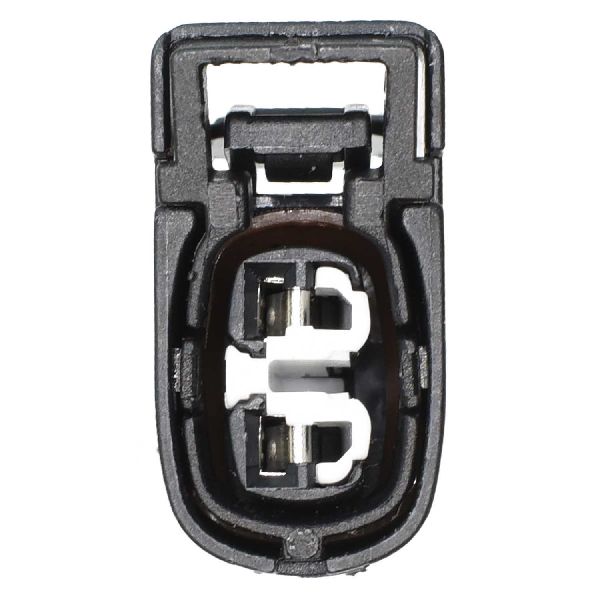
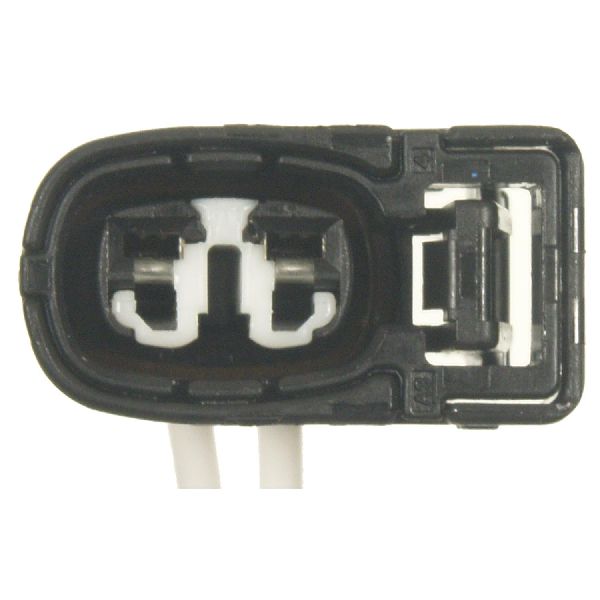
Est. part cost: $30-$70 - Damaged Wiring or Connector ⚪ Low Probability Engine heat and vibration can cause wiring to become brittle and crack over time. The connector pins can also corrode. The harness is located in a high-heat area near the valve cover.
How to confirm: Visually inspect the wiring harness and connector for the camshaft position sensor. Look for any signs of cracks, melting, or corrosion. Check for reference voltage, ground, and signal continuity at the connector with a multimeter.
Typical fix: Repair the damaged section of wiring or replace the connector pigtail.
Est. part cost: $10-$30
Rare But Worth Checking
- Failing Powertrain Control Module (PCM): → Shop Engine Control Module (ECM) This is extremely rare. The PCM should only be considered after all other possibilities (sensor, wiring, and mechanical timing) have been exhaustively ruled out.
- Damaged Camshaft Reluctor Wheel: → Shop Engine Camshaft The sensor reads teeth on a reluctor wheel on the camshaft. If this wheel is damaged or has slipped, it will cause an incorrect signal. This is very uncommon and typically only occurs with a major internal engine failure.
- Clogged Oil Control Valve (OCV) Filter Screen: Some of these engines have a small filter screen for the OCV in the cylinder head. If this screen becomes clogged with debris, it can starve the VVT system of oil, leading to timing codes. This is often overlooked.
Diagnosis Steps
- Read all stored trouble codes with an OBD-II scanner. Note any other codes that are present, especially P0011, P0012, or P0016.
- Check the engine oil level and condition. Top up if low and note if the oil is excessively dirty or smells of fuel.
- Listen for a distinct rattling noise from the engine during a cold start. A 1-2 second rattle strongly suggests 🎬 Listen to this video to identify the specific VVT startup rattle. a VVT/timing chain issue.
- Visually inspect the camshaft position sensor and its electrical connector for any obvious damage, looseness, or corrosion.
- Inspect the Oil Control Valve (OCV) solenoid. Check its connector and wiring. Consider removing it to inspect the screen for sludge or debris.
- Test the sensor and wiring. With a multimeter, check for 5V reference, ground, and a fluctuating signal voltage at the connector while cranking. An oscilloscope is the best tool to view the sensor's square wave output.
- If the sensor, wiring, and OCV test good, the next step is to suspect a mechanical timing issue. This involves a more in-depth inspection of the timing chain and VVT system, which may require removing the valve cover and professional assistance.
Parts You'll Likely Need
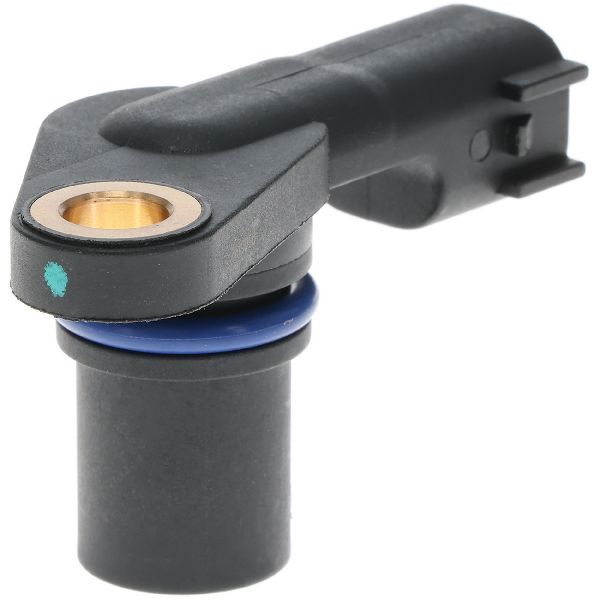
- Camshaft Position Sensor
(OEM #L3K9-18-230A)— This is the most frequent failure point for a P0340 circuit code and the easiest first step.
Trusted brands: Mazda (OEM), Denso, NGK, Hitachi
OEM price range: $85-$110
Aftermarket price range: $25-$75 - Oil Control Valve / VVT Solenoid
(OEM #L3K9-14-420A)— A common failure item that gets stuck or clogged, preventing proper VVT operation and triggering timing-related codes.
Trusted brands: Mazda (OEM), Dorman
OEM price range: $80-$100
Aftermarket price range: $40-$70 - Timing Chain Kit — If the code is caused by a stretched timing chain, a full kit including the chain, tensioner, guides, and VVT actuator is required for a complete repair.
Trusted brands: Cloyes, Melling
OEM price range: $400-$600
Aftermarket price range: $200-$400
Related Codes That Often Appear With This One
- P0335 — Crankshaft Position Sensor Circuit Malfunction. If both cam and crank sensors have circuit faults, it could point to a wiring harness issue common to both or a severe timing discrepancy.
- P0011/P0012 — Intake Camshaft Position Timing - Over-Advanced/Retarded. These codes often appear with P0340 when there is a mechanical timing issue, such as a stretched chain or faulty VVT actuator.
- P0016 — Crankshaft Position - Camshaft Position Correlation (Bank 1 Sensor A). This code directly indicates that the PCM sees a mismatch between the crank and cam sensors, pointing strongly to a mechanical timing problem like a stretched chain.
Technical Service Bulletins (TSBs) & Recalls
- source — Mazda issued a warranty extension for certain models (including those with the related L3T turbo engine) for repairs related to VVT noise on cold start and timing chain noise below 2,000 RPM. This TSB acknowledges the widespread issue of timing chain stretch and VVT actuator failure, which are primary mechanical causes for code P0340.
- source — While for a later model, this TSB for codes P0011/P0012 (cam timing over-advanced/retarded) directly attributes the cause to VVT actuator failure. These codes are frequently seen with P0340 and point to the same root mechanical issues.
- TSB Bulletin #SA-022-19 — Although issued for other Mazda models, this bulletin notes that a P0340 code may be accompanied by a lack of power, rough idle, and engine noise, reinforcing that this code is often tied to broader engine performance issues.
Platform-Specific Known Issues
- Replaced sensor, but code returned at 4000 RPM: A user on Mazda Forum reported that after major engine work (due to jumped timing), code P0340 would appear every time the engine was revved past 4000 RPM, causing the tachometer to fail. This symptom is a hallmark indicator on this platform that the PCM is detecting a cam/crank correlation issue under specific load conditions, often pointing to subtle mechanical timing errors or electrical interference rather than a simple sensor failure.
Mechanic-Grade Diagnostic Values
- Camshaft Position Sensor (CMP) Internal Resistance — expected: 500Ω - 1.5kΩ. Failure: An open circuit (OL) or resistance outside this range indicates a failed sensor.
- CMP Sensor Signal Voltage (backprobed at connector, engine running) — expected: A square wave fluctuating between approximately 0.5V and 4.5V.. Failure: A flat line at 0V or 5V, or a noisy, erratic waveform. An oscilloscope is required for this test.
- CMP Sensor Reference Voltage (key on, engine off) — expected: ~5V DC at the power supply pin.. Failure: No voltage or significantly low voltage points to a wiring or PCM issue.
- Alternator AC Ripple Voltage (at battery terminals, engine running) — expected: Less than 0.5V AC (ideally less than 0.1V AC).. Failure: Voltage exceeding 0.5V AC indicates failing alternator diodes are creating electrical noise that can interfere with the CMP sensor signal, falsely triggering P0340.
Scan Tool Commands That Help
- Mazda IDS (or equivalent professional scanner): Cam/Crank Relearn Procedure — After replacing the camshaft sensor, crankshaft sensor, or performing any timing chain service. This function helps the PCM synchronize the signals from the new components, which can prevent lingering codes or rough running.
Wiring & Ground Locations
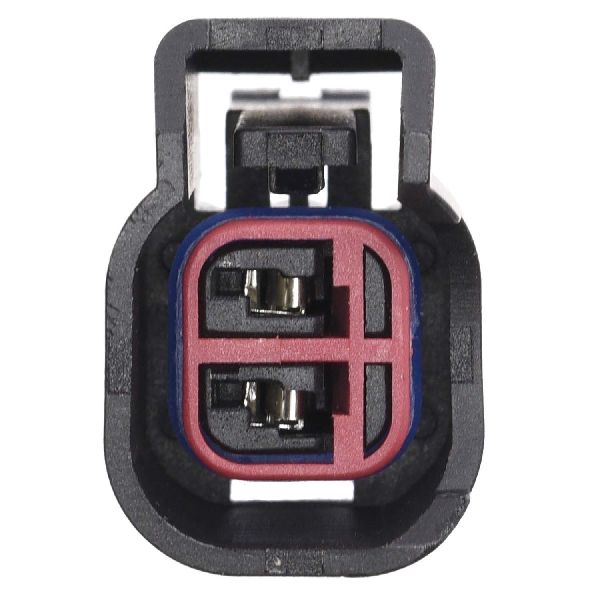
- CMP Sensor Connector to PCM Pins — The harness runs from the sensor on the valve cover to the Powertrain Control Module (PCM).. To perform a continuity test and rule out a broken wire, you must check the connection from the sensor plug back to the PCM. For the 2.3L engine, CMP sensor terminal A connects to PCM terminal 85, and CMP sensor terminal B connects to PCM terminal 86.
- Main Engine Grounds — Key ground points are typically located on the firewall, from the firewall to the intake manifold, and on the chassis near the headlights.. A poor or corroded ground connection can cause a voltage drop or introduce electrical noise into the sensor's circuit, leading to a false P0340 code. Cleaning these grounds is a crucial diagnostic step.
Real Owner Repair Stories
- Reddit user post (2003 Mazda 6 2.3L Manual) — Persistent P0340 code. Car ran okay on test drive but had the code.
❌ Tried (didn't work) Replacing the camshaft position sensor (the old one tested good)., Eyeballing the timing and re-assembling.
✅ What actually fixed it The previous owner had wedged a penny under the sensor to change its spacing, a hack to compensate for jumped timing. The ultimate fix was a complete timing chain kit replacement, noting that the cams and crank are not keyed, requiring special tools and procedures to set timing correctly. - YouTube video by a home mechanic (Mazda 2.3L (model year not specified, but same engine family)) — P0340, P0011, P0012. Engine failed after running very low on oil.
❌ Tried (didn't work) Initially suspecting the sensor itself.
✅ What actually fixed it Upon removing the valve cover, the mechanic discovered the main bolt on the VVT actuator (intake cam) was loose. This allowed the camshaft to slip out of time relative to the chain. The fix was to manually re-align the camshafts using the alignment slots at the back of the cams and re-torque the VVT actuator bolt.
"I Checked Everything" — The Actual Cause
- A common scenario where standard circuit tests (voltage, ground, continuity) all pass is when the root cause is a failing alternator. Bad diodes in the alternator can produce excessive AC voltage (ripple) on the vehicle's DC electrical system. This electrical noise interferes with the sensitive Hall-effect camshaft sensor's signal, causing the PCM to see a corrupted waveform and set a P0340 code. The fix is not the sensor, but replacing the alternator.
OEM Part Supersession History
L3K9-18-230A→No known supersession. This part number remains current.— N/A
Heads up: The part J5T23071A, primarily listed for Mitsubishi/Chrysler, has been reported by some vendors as a functional equivalent due to shared manufacturing during the period, but using the specified Mazda OEM part L3K9-18-230A is the safest option.
Diagnostic Flowchart
Other Known Issues on This Vehicle
Issues unrelated to this code that are worth knowing about as an owner of this generation:
- VVT Actuator Rattle / Failure 🔴 High — Very common, especially on engines over 70,000 miles. Often presents as a loud rattling or grinding noise for 1-2 seconds on a cold startup. (Ref: SSP 87 (Warranty Extension) / TSB 01-012/12.)
- High Oil Consumption 🟠 Medium — Frequently reported, especially in higher mileage engines. Can be caused by worn piston rings or failing PCV system. Leads to accelerated wear on timing components if not monitored.
- Thermostat Housing Leaks 🟠 Medium — The plastic thermostat housing is prone to cracking and developing coolant leaks over time, which can lead to overheating.
- Ticking Noise from Valve Lash Adjusters 🟡 Low — Commonly reported and often linked to infrequent oil changes or using incorrect oil viscosity.
- Rear Fender Rust 🟠 Medium — A well-known cosmetic and structural issue for this generation of Mazda 6, particularly in regions that use road salt.
Used vs. New Parts: Buying Guide for This Vehicle
When a used part is the smart pick: A used wiring harness pigtail is a good option if the original connector is damaged. A used alternator can be a cost-effective choice, but it MUST be bench-tested for proper voltage output and low AC ripple before installation. Avoid used electronic sensors and mechanical timing components.
Donor-vehicle mileage cap: roughly under 100000 miles for the part to have meaningful remaining life.
What to inspect on the donor part:
- For a wiring pigtail, ensure the plastic is not brittle and the wires are flexible with no insulation cracks.
- For an alternator, look for a clean unit with no signs of oil contamination and smooth bearing rotation when spun by hand.
- Check the donor vehicle's history for any signs of flood or fire damage.
OEM-only on this vehicle (don't cheap out):
- Timing Chain Kit (Chain, Guides, Tensioner, VVT Actuator): Due to the critical nature and known issues with this engine, using cheap aftermarket timing components is a significant risk. OEM or a highly reputable brand like Cloyes is strongly recommended.
Aftermarket brands forum-validated for this vehicle:
- Camshaft Position Sensor: Denso, NGK, Hitachi
- Timing Chain Kit: Cloyes, Melling
Brands owners have reported issues with on this vehicle:
- Unbranded, low-cost sensors from online marketplaces like eBay or Amazon are frequently reported to be dead-on-arrival or fail prematurely.
Real Owner Stories
Aggregated from forums and TSBs cited above. Mileages and costs reflect what owners reported in those sources.
2004-2008 Mazda 6 2.3L
Symptoms: After major engine work due to jumped timing, the P0340 code would appear every time the engine was revved past 4000 RPM, causing the tachometer to fail and the traction control light to flash.
What fixed it: The issue was identified as a cam/crank correlation error detected by the PCM under specific load conditions, often requiring precise mechanical timing correction.
Source hint: Mazda Forum (mazdaforum.com) and vehicle_specific_issues
2004-2008 Mazda 6 2.3L — ~75000 miles
Symptoms: Loud rattling or grinding noise for 1-2 seconds on a cold startup.
What fixed it: Replacement of the VVT actuator and timing chain components as per TSB 01-012/12 and SSP 87.
Source hint: TSB 01-012/12 / SSP 87 / known_issues
2004-2008 Mazda 6 2.3L
Symptoms: The ECU threw a P0340 code, but replacing the sensor did not fix the problem.
What fixed it: The timing had jumped on the 2.3L engine, requiring mechanical timing service rather than just a sensor swap.
Source hint: Reddit (r/MechanicAdvice)
2004-2008 Mazda 6 2.3L
Symptoms: Engine stalling intermittently when warm or coming to a stop, accompanied by a P0340 code.
What fixed it: Cleaning or replacing the Oil Control Valve (OCV) which was clogged with sludge, preventing proper VVT operation.
Source hint: common_causes
Related OBD-II Codes
Frequently Asked Questions
My 2.3L Mazda 6 has a loud rattle for a second or two when I start it cold; is this related to P0340?
Is there a warranty extension for the VVT and timing chain issues on my Mazda?
I replaced the Camshaft Position Sensor, but the P0340 code returns when I rev past 4000 RPM. Why?
Can low oil cause a P0340 code on the Mazda 6 2.3L?
Should I use an aftermarket or OEM sensor for the replacement?
What should I check on the Oil Control Valve (OCV) if I have this code?
Helpful Videos
We Have This Part in Stock


The information in this article is provided for general reference and educational purposes only. Vehicle specifications, procedures, and part compatibility can vary by production date, trim level, and region. Always consult your vehicle's factory service manual and verify part numbers before purchasing or performing repairs. Safety-critical components such as airbags, seat belts, and braking systems should be installed by a qualified professional.
- Mazda 6:
- 🧭 Diagnostic Flowchart
- 🎬 Helpful Videos
- 🛍️ Shop This Part
- What's Unique About the 2004-2008 Mazda 6
- Symptoms You May Notice
- Most Likely Causes
- Rare But Worth Checking
- Diagnosis Steps
- Parts You'll Likely Need
- Related Codes That Often Appear With This One
- Technical Service Bulletins (TSBs) & Recalls
- Platform-Specific Known Issues
- Mechanic-Grade Diagnostic Values
- Scan Tool Commands That Help
- Wiring & Ground Locations
- Real Owner Repair Stories
- "I Checked Everything" — The Actual Cause
- OEM Part Supersession History
- Other Known Issues on This Vehicle
- Used vs. New Parts: Buying Guide for This Vehicle
- Real Owner Stories
- 2004-2008 Mazda 6 2.3L
- 2004-2008 Mazda 6 2.3L — ~75000 miles
- 2004-2008 Mazda 6 2.3L
- 2004-2008 Mazda 6 2.3L
- Related OBD-II Codes
- Frequently Asked Questions
- 🎟️ Get 5% Off