

P0340 on 2013-2017 Mazda CX-5 2.5L: Camshaft Position Sensor Circuit Causes and Fixes
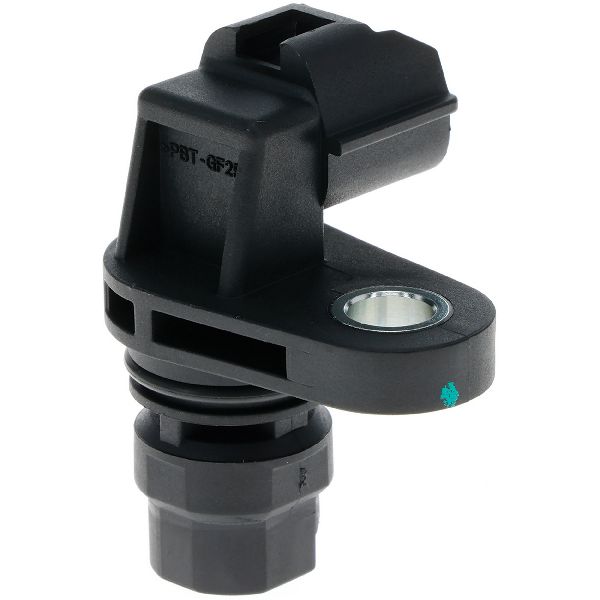
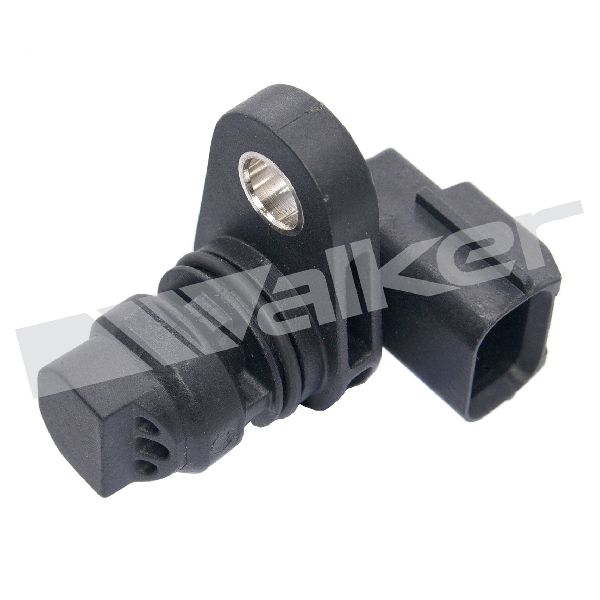
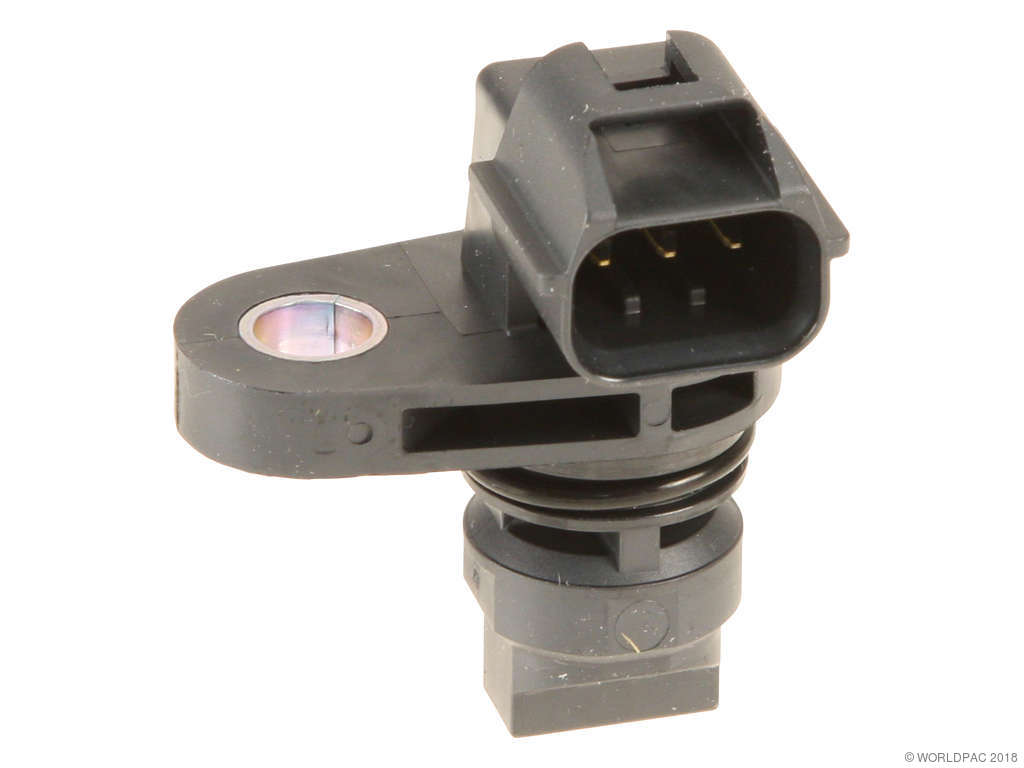
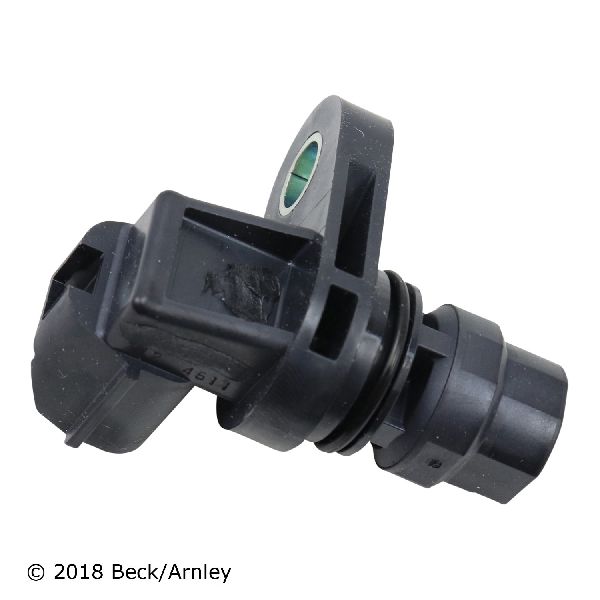
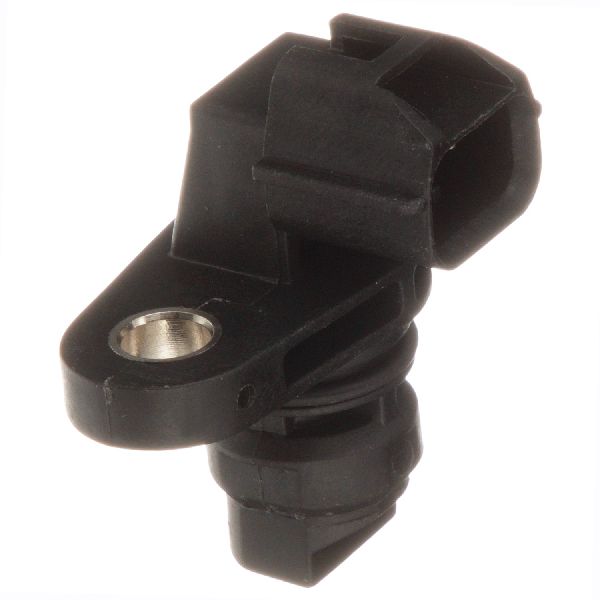
For the 2013-2017 Mazda CX-5 with the 2.5L Skyactiv-G engine, code P0340 most often indicates a faulty camshaft position sensor. This is a relatively simple and affordable DIY repair, with the part costing between $25 and $100. The OEM part number is typically PE01-18-230.
- P0340 on a 2013-2017 CX-5 almost always points to a problem with the camshaft position sensor 'A' circuit.
- The most likely fix is replacing the camshaft position sensor itself (OEM Part No. PE01-18-230), which is an easy and affordable DIY job that requires basic tools.
- Before replacing the sensor, always perform a quick visual inspection of the wiring and connector for any obvious damage or loose connections.
- Symptoms can range from just a Check Engine Light to a no-start condition or stalling.
What's Unique About the 2013-2017 Mazda CX-5
On the 2.5L Skyactiv-G engine, the P0340 code is a straightforward circuit malfunction code that usually points directly to the sensor or its wiring. Unlike some other engines where this code can be a 'scapegoat' for other issues like a failing alternator or complex timing problems, the Skyactiv-G design appears less prone to these secondary causes. However, it is noted that on Skyactiv engines, issues can arise if engine work (like replacing sprockets) is done without properly locking the engine components, which could lead to timing-related codes.
Symptoms You May Notice
- Check Engine Light is on.
- Difficulty starting the engine, or the engine cranks but won't start.
- Engine stalling or unstable idling.
- Reduced engine power and poor acceleration.
- Noticeable decrease in fuel economy.
- Engine misfires or runs rough.
- Replacing the Crankshaft Position Sensor (CKP) instead of the Camshaft Position Sensor (CMP). While related, they are different sensors with their own specific trouble codes (P0335 for the CKP).
- Assuming the sensor is bad without first inspecting the wiring and connector, which can be a free fix if a loose connection is found.
- Replacing other ignition components like spark plugs or ignition coils when the root cause is the cam sensor providing incorrect timing data to the PCM.
Most Likely Causes
- Failed Camshaft Position Sensor (CMP) 🔴 High Probability → Shop Engine Camshaft Position Sensor Sensors can fail over time due to heat cycles and internal electronic degradation. It is the most frequently reported failure part for this code across many platforms.
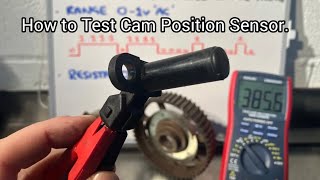
How to confirm: After checking wiring, the most common diagnostic step is to replace the sensor. You can also test the 3-wire sensor using a multimeter: check for a 5V reference signal, a good ground, and a fluctuating voltage on the signal wire as the engine is cranked. An oscilloscope is the best tool to verify a clean square wave pattern. 🎬 See how to test a camshaft sensor with a multimeter.
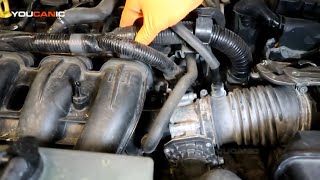
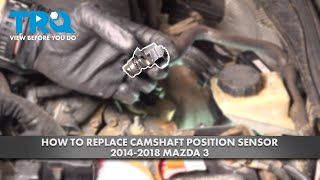
Typical fix: Replace the camshaft position sensor. The sensor is located on the top of the engine's valve cover, typically on the passenger side, and is held in by a single 10mm bolt. 🎬 Watch: Step-by-step camshaft sensor replacement for your CX-5.
Est. part cost: $25-$100 - Damaged Wiring or Loose Connector 🟡 Medium Probability Engine vibrations and heat can cause wiring to become brittle, frayed, or for the connector to become loose or corroded over time. The plastic locking tab on the connector can also become brittle and break.
How to confirm: Visually inspect the wiring harness leading to the camshaft position sensor for any signs of damage, such as chafing, melting, or rodent damage. Ensure the connector is securely plugged in and that the terminals are clean and free of corrosion. Wiggle the connector and wiring with the engine running to see if it induces a stall or stumble.
Typical fix: Repair the damaged section of wiring or clean/replace the connector pigtail.
Est. part cost: $5-$50
Rare But Worth Checking
- Stretched Timing Chain or Timing Issue: → Shop Engine Timing Chain While less common on this engine, a stretched timing chain can cause the camshaft and crankshaft signals to be out of sync, triggering a P0340 code. This is a more serious mechanical issue and would likely be accompanied by other timing-related codes (like P0015) and rattling noises from the front of the engine, especially on cold starts.
- Faulty Powertrain Control Module (PCM): → Shop Engine Control Module (ECM) This is extremely rare. The PCM should only be considered as the cause after all other possibilities, including the sensor, wiring, and mechanical timing, have been exhaustively ruled out.
- Damaged Reluctor Wheel: The reluctor wheel (or tone ring) on the camshaft itself can be damaged or, in rare cases on other engines, slip out of position, causing incorrect signals to be sent by the sensor even if the sensor is new. This would require more significant mechanical inspection to diagnose.
Diagnosis Steps
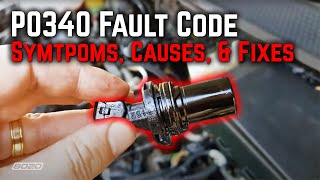
- Retrieve the stored fault codes using an OBD-II scanner to confirm P0340 is present. 🎬 Watch this guide on how to fix the P0340 code.
- Visually inspect the camshaft position sensor and its electrical connector. Look for any obvious damage, loose connections, or corrosion. The sensor is on the valve cover, easily accessible.
- Inspect the wiring harness leading to the sensor for any signs of damage, such as fraying, melting, or breaks.
- If a multimeter is available, check for 5V reference voltage and ground at the connector with the key on, engine off. Then, check for a changing voltage on the signal wire while cranking the engine.
- If the wiring appears okay, the most common and cost-effective next step is to replace the camshaft position sensor.
- Clear the trouble code with the scanner and test drive the vehicle to see if the code returns.
- If the code returns, perform more advanced diagnostics, such as using an oscilloscope to verify the square wave signal from the sensor.
- If the circuit is confirmed to be good and a new sensor did not fix the issue, investigate potential mechanical problems like the timing chain or reluctor wheel, though this is rare.
Parts You'll Likely Need
- Camshaft Position Sensor
(OEM #PE01-18-230)— This is the most common failure point for a P0340 code. The sensor's internal electronics fail over time.
Trusted brands: Mazda (OEM), Denso, NGK/NTK, Bosch, Standard Motor Products, Hitachi
OEM price range: $70-$120
Aftermarket price range: $25-$80
Related Codes That Often Appear With This One
- P0335 — This code is for the Crankshaft Position Sensor. If both the cam and crank sensors have circuit faults or their signals are out of sync, you might see both codes. The PCM uses both for cross-checking engine timing.
- P0015 — This code relates to 'Exhaust Camshaft Position Timing - Over-Retarded'. A faulty cam sensor can lead to incorrect timing data, which might trigger other timing-related codes like this one.
- P0341 — This code for 'Camshaft Position Sensor 'A' Circuit Range/Performance' can sometimes appear with P0340, indicating the signal is not just missing but erratic or out of expected parameters.
Platform-Specific Known Issues
- Owner Experience: Simple Sensor Swap: A user on a Mazda forum with a 2013 CX-5 reported a P0340 code along with a no-start condition. After confirming the battery was good, they replaced the camshaft position sensor as the first step. The repair took less than 15 minutes and immediately solved the no-start issue and cleared the code, highlighting that it's often a direct sensor failure.
- DIY Repair Story: Wiring Check Pays Off: On a YouTube comment thread, an owner of a 2014 Mazda6 (with the same 2.5L engine) described chasing a P0340 code. After a new sensor didn't fix it, they carefully inspected the wiring harness near the sensor and found a small section that had rubbed against a bracket, exposing the copper wire. Repairing the wire with electrical tape and securing it away from the bracket resolved the code permanently.
Technical Service Bulletins (TSBs) & Recalls
- TSB Bulletin #SA-022-19: A manufacturer service bulletin notes that if a customer complains of lack of power, rough idle, or engine noise with stored DTC P0340:00, specific diagnostic procedures should be performed. This bulletin highlights that the P0340 code may appear alongside other codes like P0304:00 or P3400:00.
Mechanic-Grade Diagnostic Values
- CMP Sensor 5V Supply Circuit Voltage — expected: Above 4.5 volts with ignition on, engine off.. Failure: Voltage below 4.5V indicates an open or high resistance in the supply circuit.
- CMP Sensor Ground Circuit Resistance — expected: Below 5.0 ohms between the sensor connector ground pin and chassis ground.. Failure: Resistance above 5.0 ohms indicates a poor ground connection.
- CMP Sensor Signal Circuit (Cranking) — expected: A fluctuating voltage or a square wave pattern on an oscilloscope as the engine is cranked.. Failure: No signal or a flat line indicates a faulty sensor or an open/short in the signal wire.
Scan Tool Commands That Help
- Mazda IDS / FORScan: CMP Signal PID Monitoring — Use this to view the live data stream from the camshaft position sensor while cranking or running the engine. A stable reading that changes with RPM indicates the sensor is communicating; dropouts or a fixed value suggest a fault.
- High-end OBD-II Scanners: Cam/Crank Relearn Procedure — While generally not required for a simple sensor replacement on this model, this function may be necessary if major timing components (chain, phasers) are replaced along with the sensor to ensure the PCM correctly synchronizes the signals.
Wiring & Ground Locations
- CMP Sensor Connector — On top of the valve cover, towards the passenger side of the engine. It is a 3-pin connector.. This is the primary connection point for the sensor. A loose connection, corrosion on the pins, or a broken locking tab can directly cause a P0340 circuit code.
- Engine Ground Strap — There are several key ground points on the Skyactiv engine, including one on the passenger side motor mount, grounds on the transmission housing, and a main ground from the driver's side fender area to the negative battery terminal.. A corroded or loose main engine ground can introduce electrical noise and voltage drops, potentially disrupting the sensitive 5V signals for sensors like the CMP, leading to intermittent and hard-to-diagnose codes.
Real Owner Repair Stories
- Mazdas247 Forum user 'ROBOTO' (2014 Mazda5 with 61,000 km (approx. 38,000 miles) - uses a similar engine and sensor.) — Car wouldn't start on a cold morning, then started but ran rough, stalled, and the Check Engine Light came on with code P0340.
❌ Tried (didn't work) Cleaning the sensor's electrical connector with spray., Replacing the battery (done as a precaution, but did not solve the stalling).
✅ What actually fixed it Replacing the camshaft position sensor. The user confirmed the fix was simple: disconnect the battery, unplug the connector, remove one bolt, swap the sensor, and reassemble. This immediately resolved the running issues and the code.
OEM Part Supersession History
PE01-18-230→PE01-18-230— No supersession found. This part number appears to be stable and is used across a wide range of Mazda models and years (2012-2025).
Model Year Variations Within This Range
- 2016.5: A mid-cycle refresh occurred for the 2016.5 model year, which included exterior styling updates, an electronic parking brake, and a new 'Sport' mode for the automatic transmission. However, the 2.5L Skyactiv-G engine and its core components, including the camshaft position sensor (PE01-18-230), remained unchanged, so the diagnosis for P0340 is identical across the 2013-2017 range.
Diagnostic Flowchart
Other Known Issues on This Vehicle
Issues unrelated to this code that are worth knowing about as an owner of this generation:
- Leaking Drive Belt Tensioner 🟠 Medium — Common after 60,000 miles. The hydraulic tensioner's internal seal fails, causing oil to leak and a rattling noise from the belt area. (Ref: TSB 01-008-23)
- Intake Valve Carbon Buildup 🟠 Medium — A long-term consequence of all direct-injection (GDI) engines. Can cause misfires and reduced performance, typically noticeable after 80,000-100,000 miles.
- Failing Power Liftgate Actuators/Switch 🟡 Low — Commonly reported issue where the power liftgate fails to open or close, acts erratically, or causes a parasitic battery drain. Often caused by a corroded rear switch or failing motor. (Ref: TSB 09-013/25 (for later models, but describes the same failure mode))
- Prematurely Cracked Windshields 🟡 Low — Widely reported by owners, windshields seem prone to stress cracks without any obvious impact, often starting from the top edge.
- Failing LED Daytime Running Lights (DRL) 🟡 Low — Affects 2016 models with the LED lighting package. A faulty gasket allows moisture into the headlamp assembly, corroding the DRL circuit board and causing it to flicker or fail. (Ref: Mazda issued a warranty extension for this issue.)
Used vs. New Parts: Buying Guide for This Vehicle
When a used part is the smart pick: For this specific repair, buying a used camshaft position sensor is generally not recommended. It is a relatively low-cost electronic component, and its failure is due to internal electronic degradation over time and heat cycles. A used sensor carries an unknown history and may fail soon after installation, negating the small cost savings.
Donor-vehicle mileage cap: roughly under 30000 miles for the part to have meaningful remaining life.
What to inspect on the donor part:
- Ensure the connector housing is not cracked or brittle.
- Check that the mounting tab is intact.
- Look for any signs of physical damage or melting on the sensor body.
- If possible, choose a part from a vehicle with the lowest possible mileage.
Aftermarket brands forum-validated for this vehicle:
- Denso
- NGK/NTK
- Bosch
- Hitachi
Brands owners have reported issues with on this vehicle:
- Ultra-low-cost, unbranded sensors from online marketplaces are frequently reported on forums to be dead-on-arrival or fail prematurely.
Real Owner Stories
Aggregated from forums and TSBs cited above. Mileages and costs reflect what owners reported in those sources.
2014 Mazda5 — 38000 miles
Symptoms: On a very cold morning, the engine had a tough time starting and then wouldn't start. After it eventually started, the Check Engine Light came on. The engine stalled, had rough running, and hesitated.
What fixed it: The sensor was replaced.
Source hint: Mazdas247 forum report
2013 Mazda CX-5 2.5L — ~85000 miles
Symptoms: P0340 code along with a no-start condition. The battery was confirmed to be good, but the engine would not fire.
What fixed it: Replaced the camshaft position sensor; the repair took less than 15 minutes.
Source hint: Mazda forum 'Owner Experience: Simple Sensor Swap'
2014 Mazda6 2.5L — ~110000 miles
Symptoms: Chasing a persistent P0340 code. A new sensor did not resolve the issue.
What fixed it: Repairing a small section of the wiring harness that had rubbed against a bracket and exposed the copper wire.
Source hint: YouTube comment thread 'DIY Repair Story: Wiring Check Pays Off'
Related OBD-II Codes
Frequently Asked Questions
Where is the camshaft position sensor located on my 2.5L Skyactiv-G engine?
Is there a TSB for the P0340 code on the 2013-2017 Mazda CX-5?
Can I test the CMP sensor myself before buying a new one?
My 2016 CX-5 has a P0340 and flickering headlights; are they related?
Could carbon buildup cause this camshaft code?
Helpful Videos
We Have This Part in Stock


The information in this article is provided for general reference and educational purposes only. Vehicle specifications, procedures, and part compatibility can vary by production date, trim level, and region. Always consult your vehicle's factory service manual and verify part numbers before purchasing or performing repairs. Safety-critical components such as airbags, seat belts, and braking systems should be installed by a qualified professional.
- Mazda CX-5:
- 🧭 Diagnostic Flowchart
- 🎬 Helpful Videos
- 🛍️ Shop This Part
- What's Unique About the 2013-2017 Mazda CX-5
- Symptoms You May Notice
- Most Likely Causes
- Rare But Worth Checking
- Diagnosis Steps
- Parts You'll Likely Need
- Related Codes That Often Appear With This One
- Platform-Specific Known Issues
- Technical Service Bulletins (TSBs) & Recalls
- Mechanic-Grade Diagnostic Values
- Scan Tool Commands That Help
- Wiring & Ground Locations
- Real Owner Repair Stories
- OEM Part Supersession History
- Model Year Variations Within This Range
- Other Known Issues on This Vehicle
- Used vs. New Parts: Buying Guide for This Vehicle
- Real Owner Stories
- 2014 Mazda5 — 38000 miles
- 2013 Mazda CX-5 2.5L — ~85000 miles
- 2014 Mazda6 2.5L — ~110000 miles
- Related OBD-II Codes
- Frequently Asked Questions
- 🎟️ Get 5% Off