

P0340 on 2000-2004 Subaru Outback: Camshaft Sensor Causes and Fixes
On a 2000-2004 Outback, P0340 is most often caused by a failed camshaft position sensor. This can cause a no-start or stalling. Replacement is simple and the part costs between $30 and $120. However, this code can also be a sign of a much more serious timing belt issue, which could lead to catastrophic engine failure.
- P0340 on a 2000-2004 Outback most likely means the camshaft position sensor has failed, which is a simple fix.
- Do not drive the vehicle. A stalling engine is a safety hazard, and this code could indicate a serious timing belt issue.
- If replacing the sensor doesn't fix the problem, you MUST inspect the timing belt alignment. A jumped tooth on this interference engine can lead to catastrophic failure.
- Check the wiring and connector to the sensor for damage before buying parts.
- In rare cases, a failing alternator can create electrical noise that triggers a false P0340 code.
What's Unique About the 2000-2004 Subaru Outback
For the EJ251/EJ252 engine in the second-generation Outback, the P0340 code carries extra weight. These are interference engines, meaning if the timing belt breaks or jumps time, the pistons will collide with the valves, causing catastrophic engine damage. While the most common cause for P0340 is a simple sensor failure, it can also be the first and only warning of a failing timing belt tensioner, a stretched belt, or a belt that has jumped a tooth. For this reason, any P0340 code on this vehicle must be taken seriously and investigated immediately before further driving.
Symptoms You May Notice
- Check Engine Light is on
- Engine is difficult to start or cranks for an extended period (5-15 seconds) before starting
- Engine cranks but won't start at all
- Engine stalls unexpectedly, often when coming to a stop or at idle
- Rough idling and engine hesitation or sputtering
- Noticeable loss of power during acceleration
- Replacing the crankshaft position sensor. While related, the crankshaft sensor is located at the front of the engine near the crank pulley and has its own set of codes (P0335, etc.).
- Assuming the timing is correct without a physical inspection. On this engine, verifying timing marks is a critical step if a new sensor doesn't fix the issue.
- Replacing the sensor repeatedly without checking for other causes like a bad alternator or wiring issues.
Most Likely Causes
- Failed Camshaft Position Sensor 🔴 High Probability → Shop Engine Camshaft Position Sensor The sensor is a very common failure item due to age, high mileage, and constant heat cycles on these vehicles. It is often the first part to be replaced when a P0340 code appears.
How to confirm: Test the sensor's resistance with a multimeter. It should be approximately 2,000 Ohms (2.0 kΩ) +/- 200 Ohms. An oscilloscope is the best tool to verify a clean square wave signal while cranking the engine.
Typical fix: Replace the camshaft position sensor. It is located on the top-rear of the driver's side (left) cylinder head and is held by a single 10mm bolt.
Est. part cost: $30-$120 - Damaged Wiring or Connector 🟡 Medium Probability The wiring harness can become brittle from heat and age, and the connector can get contaminated with oil or dirt, leading to a poor or intermittent connection. Rodents are also known to chew on this wiring.
How to confirm: Visually inspect the wiring harness from the sensor to the main loom for any signs of cracking, chafing, or damage. Wiggle the connector with the engine running to see if it causes a stall or stumble. Check for corrosion on the connector pins.
Typical fix: Repair the damaged section of wire or replace the pigtail connector.
Est. part cost: $10-$30 - Timing Belt Issue (Jumped Tooth, Stretched, or Failed Tensioner) ⚪ Low Probability → Shop Engine Timing Chain The EJ25 is an interference engine. A P0340 can be triggered if the timing belt has jumped a tooth, which misaligns the camshaft and crankshaft. This is an extremely serious condition that can precede total belt failure and engine destruction.
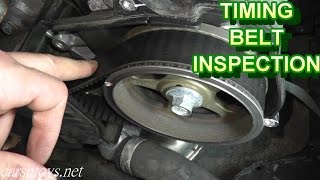
How to confirm: After ruling out the sensor and wiring, perform a physical inspection of the timing belt. Remove the outer timing covers and verify that all alignment marks on the camshaft sprockets and crankshaft sprocket line up perfectly according to the service manual.
Typical fix: If the timing is off, a full timing belt service is required, including a new belt, tensioner, and idler pulleys. If the belt broke, the cylinder heads must be removed to inspect for and replace bent valves.
Est. part cost: $150-$400 for a full kit - Failing Alternator ⚪ Low Probability A failing alternator with a bad internal diode can introduce excessive AC ripple (electrical noise) into the vehicle's electrical system. This noise can interfere with the sensitive signal from the camshaft position sensor, causing a false P0340 code.
How to confirm: Use a multimeter set to AC voltage to test across the battery terminals while the engine is running. A reading above 0.5V AC (500mV AC) suggests significant electrical noise from a bad alternator diode. An oscilloscope will show this noise as a 'hashy' pattern on the sensor's signal wave.
Typical fix: Replace the alternator.
Est. part cost: $150-$300
Rare But Worth Checking
- Damaged Reluctor Ring on Camshaft Sprocket: → Shop Engine Camshaft The sensor reads teeth on the back of the driver's side intake camshaft sprocket. If these teeth are damaged, bent, or covered in debris (like rubber from a failing belt or grime), the signal will be disrupted. This is usually found during a timing belt inspection.
- Failed Powertrain Control Module (PCM): → Shop Engine Control Module (ECM) This is extremely rare. The PCM should only be considered after all other possibilities, including the sensor, wiring, mechanical timing, and alternator, have been exhaustively checked and ruled out.
Diagnosis Steps
- Read the code with an OBD-II scanner and document any other codes present. Clear the codes and see if P0340 returns immediately.
- Visually inspect the camshaft position sensor connector and wiring for obvious damage, oil contamination, or loose connections. The sensor is on the driver's side cylinder head, near the firewall.
- If symptoms are intermittent, try wiggling the harness near the sensor with the engine running to see if it causes a stall.
- If the sensor and wiring look good, replace the camshaft position sensor. It is the most likely cause and a relatively inexpensive part. Use a genuine Subaru or reputable OEM brand like Denso for best results.
- If a new sensor does not resolve the code, check for AC ripple from the alternator. With the engine running, use a multimeter on its AC Volts setting across the battery terminals. A reading over 500mV AC indicates a bad alternator diode creating electrical noise.
- If the alternator is good, the next step is to check the mechanical timing. Remove the front timing covers and carefully rotate the engine to align the crankshaft pulley to its timing mark. Verify that the marks on both camshaft sprockets are also perfectly aligned per the service manual.
- While inspecting the timing belt, check the reluctor teeth on the back of the driver's side cam sprocket for damage or heavy debris.
- If all else fails, use an oscilloscope to check the signal pattern from the sensor at the ECM connector to rule out a wiring break between the sensor and the computer.
Parts You'll Likely Need
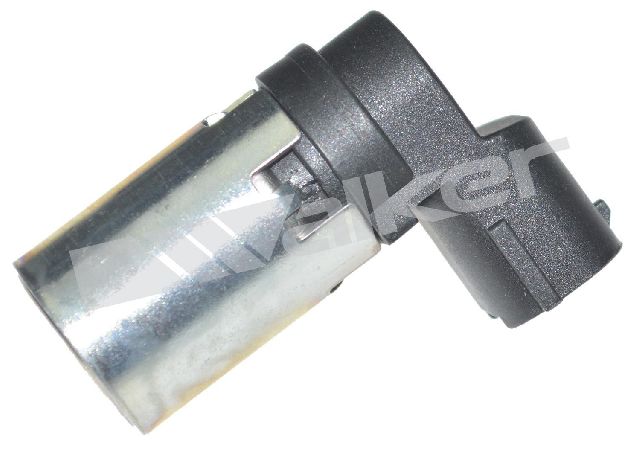
- Camshaft Position Sensor
(OEM #22053AA053)— This sensor is the most frequent point of failure for a P0340 code on this vehicle due to age and heat cycles. It is a Hall effect sensor that can degrade over time.
Trusted brands: Subaru (Genuine), Denso (OEM supplier), NGK/NTK, Beck/Arnley
OEM price range: $80-$120
Aftermarket price range: $30-$70
Related Codes That Often Appear With This One
- P0341 — This code indicates a 'Range/Performance' problem with the camshaft sensor circuit, rather than a complete malfunction. It often points to the same root causes, such as a failing sensor, alternator noise, or a timing issue that is just beginning.
- P0335 — If both the camshaft (P0340) and crankshaft (P0335) position sensor codes appear together, it strongly points to a major timing belt failure (broken or jumped multiple teeth) or a significant wiring harness issue common to both sensors.
Technical Service Bulletins (TSBs) & Recalls
- While no TSB is specific to P0340 on the EJ251, later TSBs for newer engines (like #11-130-13R for the FB engine) discuss issues with sensor air gaps requiring shims. This is not a documented issue for the 2000-2004 EJ251 but highlights Subaru's history with cam sensor circuit sensitivity.
- Manufacturer TSB Bulletin #11-130-13R and Bulletin #11-122-12 specifically link P0340 and P0341 to symptoms of difficulty starting and rough idle.
- Similar issues involving P0340 and misfire codes are documented across the Subaru lineup, including the Crosstrek (Bulletin #11-124-12R) and Forester (Bulletin #11-100-11R), indicating a brand-wide sensitivity to camshaft position circuit integrity.
Platform-Specific Known Issues
- The EJ251/EJ252 is an interference engine, making a P0340 code potentially the first sign of a critical timing belt problem that could destroy the engine.
- Some owners have reported that a failing alternator with a bad diode can create electrical noise that triggers a false P0340 code. This is a well-documented 'ghost' cause on Subaru forums.
- The sensor is located in a tight spot at the back of the driver's side cylinder head, but replacement does not require removing the valve cover.
Mechanic-Grade Diagnostic Values
- Camshaft Position Sensor Signal Voltage (at sensor connector) — expected: The sensor on this engine is a two-wire inductive type, which generates its own AC voltage. Expect a fluctuating AC voltage signal (typically 0.1V to 1.0V AC) when the engine is cranking.. Failure: No AC voltage or a flatline signal during cranking indicates a failed sensor.
- Camshaft Position Sensor Internal Resistance — expected: Approximately 2,000 Ohms (2.0 kΩ). Some sources suggest a wider range of 1-4 kΩ is acceptable.. Failure: A reading of infinity (Open Loop) or zero Ohms (short circuit) indicates a failed sensor.
- Alternator AC Ripple Voltage (at battery terminals) — expected: Below 100 mV AC with the engine running.. Failure: A reading consistently above 140-500 mV AC indicates failing alternator diodes are introducing electrical noise that can disrupt the cam sensor signal.
- Continuity Check from Sensor Connector to ECM — expected: Less than 1.0 Ohm of resistance on both the signal and ground wires between the sensor pigtail and the corresponding pins at the ECM connector.. Failure: High resistance or an open circuit (OL) indicates a break in the wiring harness.
Scan Tool Commands That Help
- Subaru Select Monitor (SSM): Current Data Display / Data Display — To view live data parameters like 'Camshaft Position Sig.' which should toggle ON/OFF or show a changing value as the engine runs. This confirms if the ECM is receiving and interpreting a signal, even if it's faulty.
Wiring & Ground Locations
- Main ECU Ground — On the top of the intake manifold. The ECU grounds directly to the manifold via the wiring harness.. A poor ground connection at the intake manifold is a known Subaru issue that can cause numerous 'ghost' electrical problems, including erratic sensor readings. If the manifold-to-engine or manifold-to-chassis ground is weak, the sensor's signal reference will be unstable, potentially triggering a P0340.
- Main Chassis Ground — The negative battery cable bolts directly to the chassis, typically on the strut tower or inner fender near the battery.. All grounds ultimately rely on this connection. Corrosion or looseness here can raise the ground potential for the entire vehicle, affecting sensitive sensor circuits.
- Alternator Ground — The alternator grounds through its mounting bracket to the engine block.. A poor ground at the alternator can exacerbate electrical noise (AC ripple) issues, which is a known cause of false P0340 codes on Subarus.
- Cam Sensor Connector Pins — On the 2-wire sensor for the EJ251, one wire is signal and the other is ground/shield. The white wire is typically the signal wire.. Knowing the signal wire is essential for correctly back-probing with a multimeter or oscilloscope to test for a valid waveform without piercing the insulation.
Real Owner Repair Stories
- Reddit user on r/MechanicAdvice (2001 Subaru Outback 2.5L) — P0340 code, rough idle, stalling.
❌ Tried (didn't work) Replaced camshaft position sensor (twice), Replaced crankshaft position sensor, Replaced spark plugs and wires, Replaced coil pack
✅ What actually fixed it The timing belt was off by one tooth on the driver's side cam sprocket. After a new timing belt job where the timing was set correctly, the code was resolved and the car ran perfectly. - Oz Mechanics on YouTube (via Go-Parts article) (Subaru with P0340 (specific model not stated, but common EJ issue)) — Persistent P0340 code that other mechanics could not fix.
❌ Tried (didn't work) Implied that the camshaft position sensor was replaced without success.
✅ What actually fixed it Diagnosed excessive AC ripple voltage from the alternator using an oscilloscope. Disconnecting the alternator's main plug cleaned up the cam sensor signal instantly. Replacing the alternator was the final fix. - Ultimate Subaru Message Board user (Subaru with a rebuilt engine) — P0340 code, engine idled smoothly but would stumble and cut power above 3500 RPM.
❌ Tried (didn't work) Checked timing belt alignment, Swapped sensor with a known good one, Inspected wiring harness for damage, Replaced timing belt tensioner
✅ What actually fixed it The user cleaned the main engine harness plugs with denatured alcohol. This simple cleaning of the connectors resolved the high-RPM stumbling and the code. - NHTSA ODI #11363231 — An owner reported that after installing new parts, the vehicle continued showing codes for cam and crank sensors, including P0340, despite all sensors testing as operational.
When the Usual Fixes Don't Work
- While the camshaft position sensor is the most common failure, many owners have replaced it multiple times only to find the true cause was something else. In a significant number of documented cases, a failing alternator producing excessive AC ripple voltage was the root cause. In another verified case, after replacing nearly every related component, the final fix was discovering the timing belt was off by a single tooth, which is just enough to set the code without causing immediate catastrophic failure.
OEM Part Supersession History
22053AA050, 22053AA051, 22053AA052→22053AA053— Standard part revision and consolidation by Subaru.
Heads up: While many aftermarket sensors are available, Subaru forums are filled with reports of them being dead-on-arrival or failing prematurely. It is strongly recommended to use a Genuine Subaru or OEM Denso sensor to avoid repeat repairs.
Diagnostic Flowchart
Other Known Issues on This Vehicle
Issues unrelated to this code that are worth knowing about as an owner of this generation:
- External Head Gasket Failure 🔴 High — Very common, typically between 80,000 and 150,000 miles. The EJ251 uses a single-layer coated gasket prone to leaking oil externally from the driver's side rear corner and coolant from the passenger side.
- Automatic Transmission Torque Bind 🟠 Medium — Common on higher-mileage vehicles, especially if tire sizes are mismatched or rotations are neglected. Caused by a failing transfer clutch duty solenoid in the transmission tail housing.
- Front Oxygen (O2) Sensor Failure 🟡 Low — The front air/fuel ratio sensor is a common failure item, leading to poor fuel economy and codes like P0171 (System Too Lean).
- Rear Wheel Arch Rust 🟠 Medium — Common in regions that use road salt. The seam sealer in the rear wheel wells fails, trapping moisture and causing significant rust-through on the quarter panels.
Used vs. New Parts: Buying Guide for This Vehicle
When a used part is the smart pick: For this repair, a used part is generally not recommended for the sensor itself due to its low cost new and high electronic failure rate. A used part makes sense for the pigtail connector if it needs to be replaced, or for the 10mm hold-down bolt if it is lost or damaged.
Donor-vehicle mileage cap: roughly under 80000 miles for the part to have meaningful remaining life.
What to inspect on the donor part:
- For a pigtail connector, inspect for any cracks in the plastic.
- Ensure the wiring attached to the pigtail is flexible and not brittle or frayed.
- Check that the connector's internal pins are clean and free of corrosion.
- Verify the locking tab is intact and functional.
OEM-only on this vehicle (don't cheap out):
- Camshaft Position Sensor
Aftermarket brands forum-validated for this vehicle:
- Denso (OEM Supplier)
- NGK/NTK
- Beck/Arnley
Brands owners have reported issues with on this vehicle:
- Unbranded, 'white-box' sensors from online marketplaces are frequently reported as failing quickly or not working at all.
Real Owner Stories
Aggregated from forums and TSBs cited above. Mileages and costs reflect what owners reported in those sources.
2011 Subaru Outback 2.5L
Symptoms: Engine had long crank times of 5-15 seconds and would stall unexpectedly at stop lights.
What fixed it: The community suggested checking the alternator for electrical noise after the dealer failed to fix it with sensors and timing components.
Source hint: Reddit r/subaru - '11 Outback 2.5 starting issues P0340 code dealer can't fix'
Subaru Outback 2.5L
Symptoms: Engine code P0340 present; replacing the sensor alone did not resolve the issue.
What fixed it: Checking for wiring issues or a bad alternator diode causing electrical interference.
Source hint: Reddit r/subaru - 'Mechanic can't figure it out, please advise. Engine co'
Related OBD-II Codes
Frequently Asked Questions
Does TSB #11-130-13R regarding sensor air gaps apply to my 2000-2004 Subaru Outback?
Where is the camshaft position sensor located on my EJ251 engine?
Can a bad alternator really cause a P0340 code on my Subaru?
Is P0340 dangerous to ignore on the 2000-2004 Outback?
What should the resistance be for a healthy camshaft position sensor on this model?
Why does my Outback crank for 5 to 15 seconds before starting with this code?
Helpful Videos
We Have This Part in Stock


The information in this article is provided for general reference and educational purposes only. Vehicle specifications, procedures, and part compatibility can vary by production date, trim level, and region. Always consult your vehicle's factory service manual and verify part numbers before purchasing or performing repairs. Safety-critical components such as airbags, seat belts, and braking systems should be installed by a qualified professional.
- Subaru Outback:
- 🧭 Diagnostic Flowchart
- 🎬 Helpful Videos
- 🛍️ Shop This Part
- What's Unique About the 2000-2004 Subaru Outback
- Symptoms You May Notice
- Most Likely Causes
- Rare But Worth Checking
- Diagnosis Steps
- Parts You'll Likely Need
- Related Codes That Often Appear With This One
- Technical Service Bulletins (TSBs) & Recalls
- Platform-Specific Known Issues
- Mechanic-Grade Diagnostic Values
- Scan Tool Commands That Help
- Wiring & Ground Locations
- Real Owner Repair Stories
- When the Usual Fixes Don't Work
- OEM Part Supersession History
- Other Known Issues on This Vehicle
- Used vs. New Parts: Buying Guide for This Vehicle
- Real Owner Stories
- 2011 Subaru Outback 2.5L
- Subaru Outback 2.5L
- Related OBD-II Codes
- Frequently Asked Questions
- 🎟️ Get 5% Off