

P0340 on 2010-2012 Subaru Outback 2.5L: Camshaft Sensor Causes and Fixes
On a 2010-2012 Outback, P0340 is most often a failed camshaft position sensor, causing no-start or stalling. A new OEM sensor costs around $90-$120. If a new sensor doesn't fix it, suspect a wiring issue (especially a loose main harness clip), a failing alternator, or a more serious timing belt problem.
- P0340 on your Outback will likely cause stalling or prevent the car from starting.
- The most probable cause is a failed camshaft position sensor, which is a DIY-friendly replacement.
- Before buying parts, carefully inspect the sensor's wiring and connector for any damage or looseness.
- If a new sensor and good wiring don't fix the code, you MUST have the timing belt and its alignment checked by a qualified mechanic to avoid catastrophic engine damage.
- Using an OEM or high-quality aftermarket sensor (like Denso or Hitachi) is strongly recommended over cheaper alternatives.
What's Unique About the 2010-2012 Subaru Outback
For the EJ253 engine in this Outback, the P0340 code is a common issue that walks a fine line between a simple sensor swap and a major mechanical problem. Because this is an interference engine with a timing belt, a P0340 code must be taken seriously. While the sensor or its wiring is the most likely culprit, the possibility that the code is triggered by a jumped or broken timing belt is a real and catastrophic risk that owners need to be aware of during diagnosis.
Symptoms You May Notice
- Engine will crank but will not start
- Extended cranking time (5-15 seconds) before the engine starts
- Engine stalls unexpectedly, often when coming to a stop
- Rough idle or sputtering
- Noticeable loss of engine power and acceleration
- Check Engine Light is on
- Other warning lights (like ABS, Traction Control, Cruise Control) may illuminate after a difficult start
- Sulfuric acid or "rotten egg" smell from the exhaust due to improper combustion timing
- Replacing the battery without checking the charging system first for excessive AC ripple.
- Replacing the crankshaft position sensor without diagnosing the P0340 code specifically.
- Assuming the timing is correct without physically inspecting the timing belt and marks after a sensor replacement fails to fix the issue.
- Confusing a stalling symptom caused by a faulty torque converter with a P0340-related stall.
Most Likely Causes
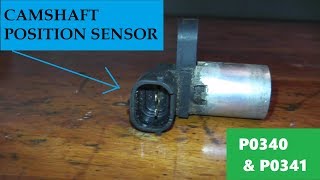
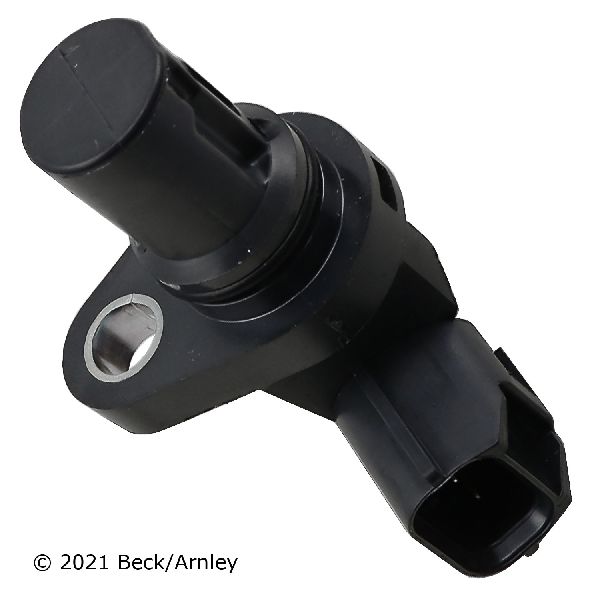
- Failed Camshaft Position Sensor 🔴 High Probability → Shop Engine Camshaft Position Sensor The sensor is located on the front of the engine and is exposed to constant heat cycles, leading to electronic failure over time and mileage. It is a very common failure point.
How to confirm: After confirming wiring is intact, replacing the sensor is the most direct diagnostic step. An oscilloscope can be used to verify a missing or erratic signal pattern from the sensor. Resistance should be between 1 and 4 kOhms.
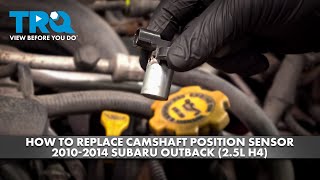
Typical fix: Replace the camshaft position sensor. It is held in by a single 10mm bolt and can be accessed from the driver's side wheel well or from above.
Est. part cost: $90-$130 for an OEM sensor, $30-$70 for an aftermarket sensor. Forum users strongly recommend using OEM or Denso parts to avoid premature failure. - Wiring Harness or Connector Issue 🟡 Medium Probability Engine vibration and heat can cause wires to become brittle or connectors to become loose. A frequently reported failure is not the sensor pigtail, but a large, main engine harness connector on the passenger side becoming loose from its clip.
How to confirm: Visually inspect the wiring harness from the sensor to the main engine loom for cracks or fraying. Critically, check the large harness connectors on the passenger side of the engine bay to ensure they are fully seated and clipped. Wiggle the harness while the engine is running (if possible) to see if it triggers a stall.
Typical fix: Repair the damaged section of wire or replace the connector pigtail. In a documented case, securing a loose main engine harness connector with a zip tie permanently solved the issue after a sensor replacement had failed. 🎬 See how a loose harness connector can cause intermittent P0340 issues.
Est. part cost: $5-$50 for connector pigtails or wiring repair supplies. - Skipped or Worn Timing Belt ⚪ Low Probability → Shop Engine Timing Chain The EJ253 is an interference engine with a timing belt that has a 105,000-mile service interval. A worn, improperly tensioned, or failing belt/tensioner can cause the camshaft timing to jump one or more teeth, creating a mismatch between the cam and crank sensors that triggers P0340. A completely broken belt will result in a no-start and no-compression condition.
How to confirm: Remove the timing belt covers and meticulously check the alignment marks on the camshaft sprockets and the crankshaft. Check the condition and tension of the belt and the hydraulic tensioner. A compression test showing zero compression on one or more cylinders after a P0340 event strongly suggests a broken belt and bent valves.
Typical fix: Replace the timing belt, tensioner, and all associated idler pulleys. If the belt has skipped or broken, a valve-to-piston collision has occurred, requiring cylinder head removal and valve replacement.
Est. part cost: $200-$400 for a complete timing belt kit.
Rare But Worth Checking
- Failing Alternator: A bad alternator can introduce excessive AC ripple (electrical noise) into the vehicle's electrical system, which can interfere with the sensitive camshaft position sensor signal. If you've replaced the sensor and checked the wiring, this is worth investigating. To test, set a multimeter to AC Volts and measure across the battery terminals with the engine running. A reading above 100mV (0.1V AC) suggests failing diodes and problematic electrical noise.
- Debris on Crankshaft Position Sensor: → Shop Engine Crankshaft Position Sensor One mechanic reported that after a head gasket job, a P0340 was caused by metallic and rubber debris from the old timing belt collecting on the magnetic tip of the crankshaft position sensor. The ECM uses both cam and crank signals for correlation, so a fault in one can sometimes be caused by the other. Cleaning the crank sensor tip is a simple check to perform during diagnosis.
Diagnosis Steps
- Read the code with an OBD-II scanner and confirm it is P0340. Note any other codes present, especially misfire or crankshaft codes.
- Perform a full visual inspection of the camshaft position sensor and its wiring harness. The sensor is located on the front of the driver's side (left-hand) cylinder head. Look for any obvious damage, loose connections, or oil contamination.
- Check all major engine wiring harness connections, paying close attention to the large clips on the passenger side, which have been known to come loose.
- If the engine starts, check the alternator's output. With the engine running, a multimeter across the battery terminals should read a stable 13.5-14.5 volts DC. Then, switch the multimeter to AC volts. A reading over 100mV (0.1V) indicates excessive AC ripple that could be causing the code.
- If wiring and alternator output seem okay, the most common fix is replacing the camshaft position sensor. It is held in by a single 10mm bolt.
- If a new sensor does not resolve the code, consider inspecting the crankshaft position sensor. Remove it and clean any metallic debris from its magnetic tip.
- Clear the code and test drive the vehicle. If the code does not return, the issue is likely resolved.
- If the code returns, a more in-depth electrical diagnosis is needed. Use a multimeter to check for 5V reference, ground, and a signal from the sensor at the connector.
- If all electrical tests pass, you must inspect the mechanical timing. Remove the timing covers and verify that the timing marks on the camshafts and crankshaft are perfectly aligned. Inspect the timing belt tensioner for failure. 🎬 Watch: How to properly inspect your Subaru timing belt and marks. This step is critical before proceeding further.
Parts You'll Likely Need
- Camshaft Position Sensor
(OEM #22056AA063)— This is the most frequent point of failure for the P0340 code for this vehicle due to age and heat exposure. Community consensus strongly favors using a Genuine Subaru or OEM-supplier (e.g., Denso) part over cheaper aftermarket alternatives to ensure reliability.
Trusted brands: Subaru (Genuine), Denso, NTK/NGK, Hitachi
OEM price range: $90-$130
Aftermarket price range: $30-$70
Related Codes That Often Appear With This One
- P0335 — This is the code for the Crankshaft Position Sensor. The ECM compares signals from both the cam and crank sensors. A problem with one can sometimes trigger a fault code for the other, especially in a no-start or stalling situation.
- P0300-P0304 — These are misfire codes. If the camshaft position is unknown, the ECM cannot time the ignition spark correctly, leading to random or specific cylinder misfires.
Technical Service Bulletins (TSBs) & Recalls
- TSB 16-90-13R: While not for code P0340, this bulletin is highly relevant as it addresses a design change for the torque converter to fix a shudder or stall when coming to a stop. This symptom can be identical to a P0340-related stall, making this TSB important for differential diagnosis.
- Bulletin #11-130-13R: This manufacturer bulletin addresses difficulty starting, rough idle, and cam position or misfire DTCs including P0340, P0341, and P0301-P0304, providing specific inspection and repair procedures for the intake system.
- Bulletin #11-122-12: A manufacturer service bulletin notes that P0340, P0341, and misfire codes P0301 through P0304 are associated with symptoms of difficulty starting and a rough idle.
- Bulletin #11-124-12R: In a cross-manufacturer reference for the Crosstrek, Subaru notes that P0340 and P0341 often appear alongside misfire codes P0301-P0304 during instances of difficulty starting or rough idling.
- Bulletin #11-100-11R: A manufacturer bulletin for the Forester platform similarly links P0340 and P0341 to starting difficulties and rough idle conditions.
Platform-Specific Known Issues
- Intermittent stalling when coming to a stop is a very common complaint associated with this code on the 2010-2012 Outback. However, this symptom is also characteristic of a failing torque converter, a separate common issue on these models (see TSB 16-90-13R).
- A failing sensor can cause a cascade of other warning lights (ABS, VDC, Cruise Control) to illuminate on the dashboard, especially after an extended crank/no-start event. This is normal behavior as other modules report communication loss with the ECM.
Mechanic-Grade Diagnostic Values
- Camshaft Position Sensor Resistance — expected: 1 to 4 kOhms (kilo-ohms). Failure: A reading outside of this range indicates a faulty sensor.
- Alternator AC Ripple Voltage — expected: Under 100mV AC (0.1V AC). Failure: A reading above 100mV AC suggests failing alternator diodes are creating electrical noise that can interfere with the cam sensor signal.
- Camshaft Position Sensor Bracket Bolt Torque — expected: 4.7 ft-lbs. Failure: N/A. This is an installation specification.
Scan Tool Commands That Help
- Subaru Select Monitor (SSM): Current Data Display / Data Display — To view the live 'Camshaft Position Sig.' parameter. It should toggle ON/OFF as the engine runs, confirming if the ECM is receiving a signal from the sensor. This is a good first step before checking wiring or the sensor itself.
Wiring & Ground Locations
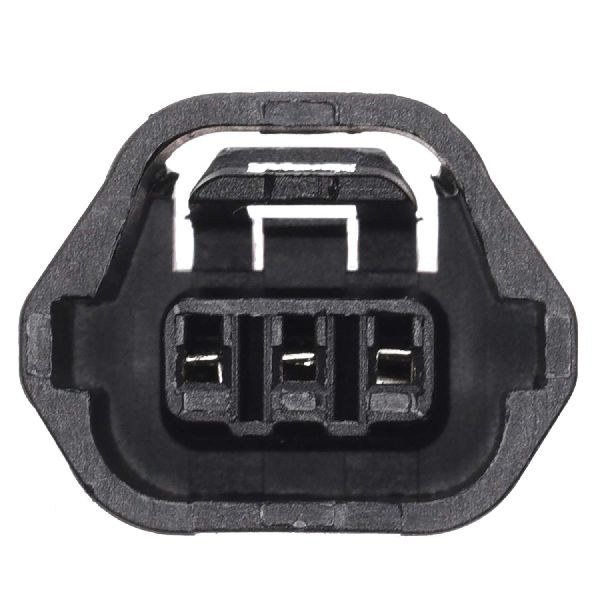
- Camshaft Position Sensor Connector — On the front of the driver's side (left-hand) cylinder head.. This is the primary connection point for the sensor. It's a 2-wire connector on the EJ253. Checking for power, ground, and signal here is a core diagnostic step.
- GV (Ground Point) — Right side of the engine compartment.. This is a main grounding point for various engine components. A loose or corroded connection here can introduce electrical noise or resistance into sensor circuits, potentially causing a P0340 code.
- J/C B483 (Junction Connector) — Located at the right front of the engine compartment.. This is a major harness junction. A loose connection here, as reported by forum users, can interrupt the cam sensor signal to the ECM and was the ultimate cause of a P0340 that was not fixed by a new sensor.
- ECM (Engine Control Module) — Located on the floor under the front passenger seat, or on the right side of the dash.. This is the destination for the camshaft sensor signal. Probing the pins at the ECM connector is the final step to confirm wiring continuity from the sensor.
Real Owner Repair Stories
- Reddit user on r/subaru (2012 Subaru Outback) — Stalling, P0340 code.
❌ Tried (didn't work) Replacing the camshaft position sensor
✅ What actually fixed it The main engine wiring harness clip on the passenger side had come loose. Securing the large connector with a zip tie permanently resolved the stalling and the P0340 code. - Reddit user on r/MechanicAdvice (2005 Subaru Outback 2.5i (EJ253)) — P0340 & P0341 after timing belt job, stalling, no-start.
❌ Tried (didn't work) Replacing the camshaft position sensor
✅ What actually fixed it Upon removing the timing cover, it was discovered that the new timing belt tensioner had failed, causing the belt to shred. The root cause was a faulty mechanical part (tensioner), not the sensor. - Ultimate Subaru Message Board user (Subaru with a rebuilt engine) — P0340, engine stumbled and cut power above 3500 RPM.
❌ Tried (didn't work) Checked timing belt alignment, Swapped sensor with a known good one, Inspected wiring harness for damage, Replaced timing belt tensioner
✅ What actually fixed it The user cleaned the main engine harness plugs with denatured alcohol, which resolved the high-RPM power cut issue.
Documented NHTSA Reports
- In NHTSA ODI #11363231, an owner reported that the vehicle showed codes for cam and crank sensors, including P0340, but replacing the sensors failed to resolve the issue even though all sensors tested as operational.
OEM Part Supersession History
22056AA060, 22056AA061, 22056AA062→22056AA063— Standard part evolution for improved reliability or manufacturing changes.
Heads up: The newer part number (22056AA063) is the correct and backward-compatible service part. Using older stock is not recommended.
Diagnostic Flowchart
Other Known Issues on This Vehicle
Issues unrelated to this code that are worth knowing about as an owner of this generation:
- CVT Torque Converter Shudder or Stall 🔴 High — Common issue for 2010-2012 models. Can cause stalling when coming to a stop, which may be confused with P0340 symptoms. (Ref: TSB 16-90-13R)
- Excessive Oil Consumption 🟠 Medium — Some EJ253 engines are known to consume oil, often attributed to PCV system issues or piston rings. Not as widespread as the later FB engine issue, but still notable.
- Premature Headlight Burnout 🟡 Low — Very common complaint where low-beam bulbs fail frequently and are difficult to access for replacement. (Ref: Subaru offered an extended warranty for the low-beam bulbs.)
- Takata Airbag Inflator Recall 🔴 High — Affects 2010-2012 models. This is a critical safety recall requiring replacement of the front passenger airbag inflator. (Ref: NHTSA Recalls)
Used vs. New Parts: Buying Guide for This Vehicle
When a used part is the smart pick: For this repair, using a used part is generally not recommended. The primary failure part is an electronic sensor with a finite lifespan, exposed to significant heat cycles. A used sensor from a junkyard carries a high risk of being near the end of its own life, offering minimal value.
Donor-vehicle mileage cap: roughly under 40000 miles for the part to have meaningful remaining life.
What to inspect on the donor part:
- If forced to use a used sensor, pull it from the lowest-mileage vehicle possible.
- Inspect the connector for any signs of corrosion, oil contamination, or brittle plastic.
- Avoid sensors from engines that show signs of overheating or severe oil leaks.
OEM-only on this vehicle (don't cheap out):
- Camshaft Position Sensor
Aftermarket brands forum-validated for this vehicle:
- Denso
- NTK/NGK
- Hitachi
Brands owners have reported issues with on this vehicle:
- Unbranded, 'white-box' sensors from online marketplaces are frequently cited in forums as failing quickly or being dead-on-arrival.
Real Owner Stories
Aggregated from forums and TSBs cited above. Mileages and costs reflect what owners reported in those sources.
2012 Subaru Outback 2.5L
Symptoms: The engine had a stalling issue that a new sensor did not fix.
What fixed it: Finding a loose main wiring harness clip on the passenger side and securing it with a zip tie.
Source hint: reddit.com/r/subaru - Thread: 'Mechanic can't figure it out, please advise. Engine code P0340...'
2011 Subaru Outback 2.5L
Symptoms: Extended cranking (5-15 seconds) to start, followed by multiple dashboard warning lights illuminating.
What fixed it: Replacing the camshaft position sensor (though the owner noted spending thousands before reaching a resolution).
Source hint: reddit r/subaru
Related OBD-II Codes
Frequently Asked Questions
My 2011 Outback stalls when I come to a stop; is this always caused by the P0340 code?
Should I use an aftermarket camshaft sensor to save money on my EJ253 engine?
Why did my ABS, Traction Control, and Cruise Control lights all turn on after a hard start?
Can a timing belt issue cause the P0340 code on my 2012 Outback?
Where is the camshaft position sensor located on the 2.5L EJ253?
I replaced the sensor but the P0340 code and stalling returned. What else should I check?
Helpful Videos
We Have This Part in Stock


The information in this article is provided for general reference and educational purposes only. Vehicle specifications, procedures, and part compatibility can vary by production date, trim level, and region. Always consult your vehicle's factory service manual and verify part numbers before purchasing or performing repairs. Safety-critical components such as airbags, seat belts, and braking systems should be installed by a qualified professional.
- Subaru Outback:
- 🧭 Diagnostic Flowchart
- 🎬 Helpful Videos
- 🛍️ Shop This Part
- What's Unique About the 2010-2012 Subaru Outback
- Symptoms You May Notice
- Most Likely Causes
- Rare But Worth Checking
- Diagnosis Steps
- Parts You'll Likely Need
- Related Codes That Often Appear With This One
- Technical Service Bulletins (TSBs) & Recalls
- Platform-Specific Known Issues
- Mechanic-Grade Diagnostic Values
- Scan Tool Commands That Help
- Wiring & Ground Locations
- Real Owner Repair Stories
- Documented NHTSA Reports
- OEM Part Supersession History
- Other Known Issues on This Vehicle
- Used vs. New Parts: Buying Guide for This Vehicle
- Real Owner Stories
- 2012 Subaru Outback 2.5L
- 2011 Subaru Outback 2.5L
- Related OBD-II Codes
- Frequently Asked Questions
- 🎟️ Get 5% Off