

P0340 on 1997-2000 Toyota 4Runner: Camshaft Sensor Causes & Fixes
P0340 on a 3rd Gen 4Runner usually points to a failed camshaft position sensor, which is a common and affordable DIY fix. Before replacing it, check your battery and its connections, as low voltage is a known cause for this code on Toyotas per a manufacturer TSB. If the battery is good, inspect the sensor's wiring and connector for damage. A new Denso sensor costs around $40-$70 and is highly recommended over cheaper aftermarket alternatives.
- Always check your battery and charging system first when you see a P0340 on a 1997-2000 4Runner. A weak battery is a known cause per a Toyota TSB.
- The most likely part to fail is the camshaft position sensor itself. It's a relatively inexpensive and accessible part for a DIYer.
- Use a high-quality Denso (OEM) or reputable aftermarket sensor for the replacement to ensure compatibility and longevity.
- Before replacing the sensor, always inspect the wiring and connector for damage, as brittle plastic and wires are common on vehicles of this age.
- This code can cause a no-start or stalling condition, so it should be addressed promptly to avoid being stranded.
What's Unique About the 1997-2000 Toyota 4RUNNER
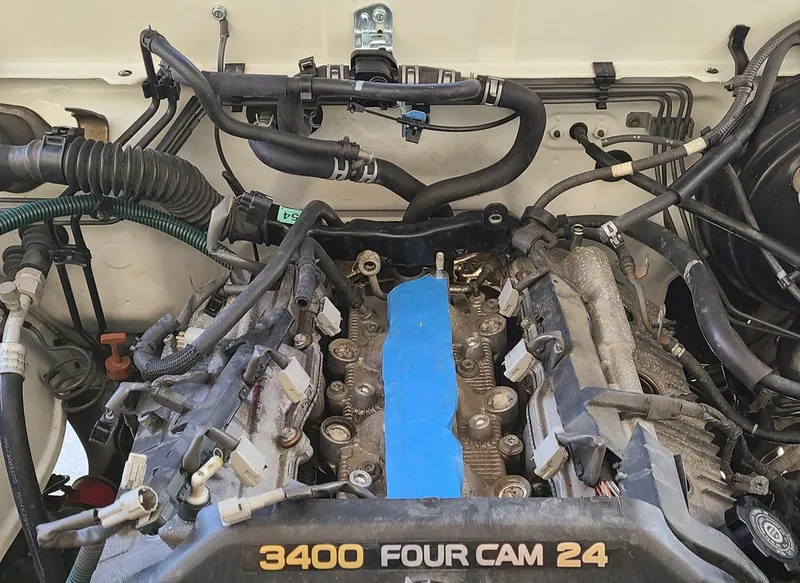
The 1997-2000 4Runner, part of the highly-regarded 3rd generation, is known for its durable 3RZ-FE and 5VZ-FE engines. While the camshaft position sensor can fail from age and heat like on any vehicle, these trucks have a specific vulnerability cited in a Toyota Technical Service Bulletin (TSB): low battery voltage can trigger a P0340 code even if the sensor is perfectly fine. This makes checking the battery and charging system a critical first step, potentially saving you from a needless repair. Additionally, on early 2.7L 3RZ-FE engines (approx. 1996-1997), the sensor is integrated into the distributor, making replacement a more involved job than on the 5VZ-FE.
Diagnostic Flowchart
Tap your situation to follow the diagnostic path that matches what you're seeing on this vehicle.
Symptoms You May Notice
- Check Engine Light is on
- Engine is hard to start or cranks but won't start
- Engine stalls or hesitates, sometimes unexpectedly
- Rough idle
- Lack of acceleration and reduced engine power
- Poor fuel economy
- Sputtering or backfiring from the intake
- Replacing the camshaft position sensor without first checking battery voltage. The TSB clearly indicates a weak battery can set this code.
- Replacing the Crankshaft Position Sensor (P0335) instead of the Camshaft Position Sensor (P0340). While they can appear together, they are distinct parts.
- Assuming the sensor is bad when the issue is a broken wire or corroded connector pin. Always inspect the circuit before buying parts.
Most Likely Causes
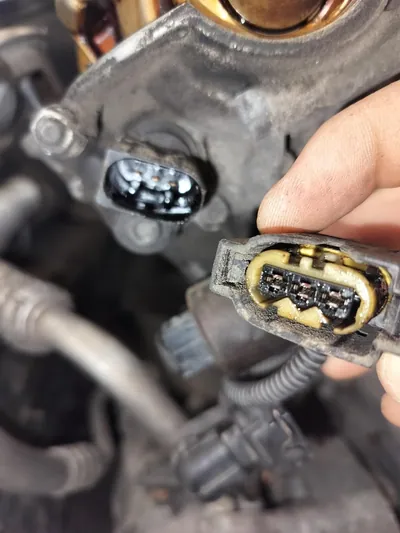
- Faulty Camshaft Position Sensor 🔴 High Probability → Shop Engine Camshaft Position Sensor The sensor is located in a high-heat area of the engine bay. Over 20+ years, the internal electronics can degrade and fail. Some owners report the issue only appears on cold starts, suggesting temperature-sensitive failure. It is highly recommended to use an OEM or Denso replacement, as cheap aftermarket sensors are known to fail prematurely.
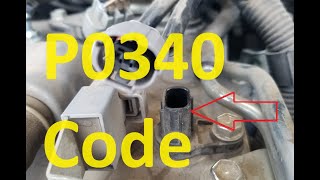
How to confirm: After confirming battery voltage is good, test the sensor's resistance with a multimeter. A factory service manual specifies a cold resistance between 835-1,400 ohms for the 5VZ-FE. 'Cold' is defined as -10 to 50°C (14 to 122°F). If the reading is outside this range, the sensor is bad. An oscilloscope is the definitive tool to check for a proper signal waveform. 🎬 Watch: A deep dive into P0340 causes and diagnostic fixes.
Typical fix: Replace the camshaft position sensor and the O-ring seal. Apply a small amount of clean engine oil to the new O-ring before installation to ensure a good seal.
Est. part cost: $40-$90 - Damaged Wiring or Connector 🟡 Medium Probability After 20+ years, the plastic sensor connector and wiring insulation become brittle from heat and can crack, get pinched, or break, causing a poor connection. Oil from valve cover leaks can also saturate the connector, and rodents are known to chew on the soy-based wiring harnesses.
How to confirm: Visually inspect the wiring harness for fraying, melting, or breaks. Check for oil inside the connector. Wiggle the connector and harness with the engine running to see if it causes a stall or stumble. Check for continuity between the sensor connector and the ECM pins. One owner on TacomaWorld had to have a 'wiring circuit overlay' performed by a dealer to fix a hidden break in the harness.
Typical fix: Repair the damaged section of wire or replace the connector pigtail. The connector is Toyota part 90980-10947. If the locking tab is broken, secure the connector with a zip tie.
Est. part cost: $15-$30 - Low Battery Voltage / Failing Charging System 🟡 Medium Probability → Shop Vehicle Battery A Toyota Technical Service Bulletin (T-TT-0010-10 Rev) specifically states that low battery voltage can cause a P0340 code due to inconsistent engine cranking speed, which the ECM misinterprets as a sensor fault. A weak starter drawing excessive current can also contribute to this voltage drop.
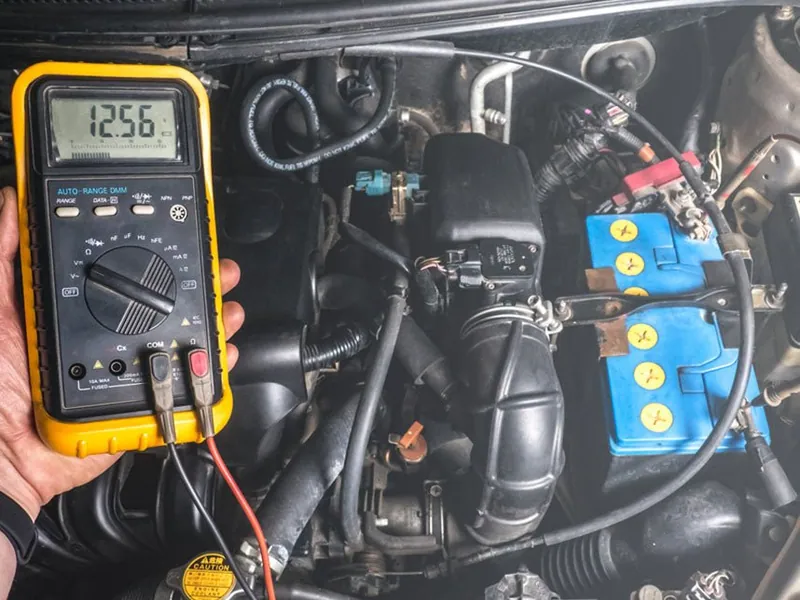
How to confirm: Use a multimeter to test the battery. A healthy battery should show ~12.6V with the engine off and 13.5-14.5V with the engine running. If voltage is low, the battery or alternator is suspect.
Typical fix: Charge or replace the weak battery. If the charging voltage is low, test and replace the alternator.
Est. part cost: $120-$300 - Skipped or Stretched Timing Belt/Chain ⚪ Low Probability → Shop Engine Timing Chain The 3.4L 5VZ-FE uses a timing belt that requires replacement every ~90,000 miles. If neglected, it can stretch or skip a tooth, throwing off the cam/crank correlation. The 2.7L 3RZ-FE has a durable timing chain that rarely fails but can stretch at very high mileage.
How to confirm: This is an advanced diagnosis. After ruling out the sensor, wiring, and battery, a mechanic must physically inspect the timing marks. A Tundra owner with the same engine fixed his P0340 by discovering the timing was off and replacing the timing belt.
Typical fix: Replace the timing belt, water pump, and tensioners (for 5VZ-FE) or timing chain and guides (for 3RZ-FE).
Est. part cost: $200-$500
Rare But Worth Checking
- Damaged Camshaft Reluctor Ring/Teeth: → Shop Engine Camshaft The sensor reads teeth on the camshaft pulley (reluctor ring). If these teeth are damaged, missing, or bent, the sensor cannot generate a correct signal. This usually only happens if the area was disturbed during a major repair, like a head gasket replacement.
- Faulty Engine Control Module (ECM): → Shop Engine Control Module (ECM) The ECM is rarely the cause of this code. This should only be considered after all other possibilities (sensor, wiring, timing) have been exhaustively ruled out.
Diagnosis Steps
- Read the code with an OBD-II scanner and check for any other codes present.
- Check battery voltage with the engine off (should be ~12.6V) and running (should be 13.5-14.5V). Address any battery or alternator issues first, as per TSB T-TT-0010-10 Rev.
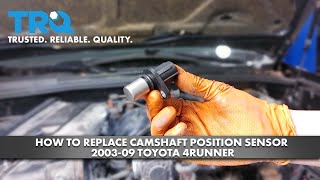
- Locate the camshaft position sensor. On the 3.4L 5VZ-FE, it is on the driver's side cylinder head, behind the upper timing cover, held by a single 10mm bolt. 🎬 See this walkthrough for replacing the sensor on a 4Runner. On the 2.7L 3RZ-FE, it is on the front of the cylinder head, but on some early models (pre-1998), it is located inside the distributor.
- Inspect the sensor's electrical connector and wiring for damage, corrosion, oil saturation, or looseness. With the engine idling (if possible), carefully wiggle the harness to see if it induces a stall, which would indicate a wiring fault.
- If wiring looks good, test the sensor's resistance with a multimeter. For the 5VZ-FE, it should be 835 – 1,400 ohms when cold (-10 to 50°C). If the resistance is out of spec, the sensor is bad.
- If the sensor tests good, check for continuity in the wiring harness between the sensor connector and the ECM. This requires a wiring diagram and long multimeter leads.
- Check engine ground points at the block, firewall, and fender for corrosion or looseness.
- If all other tests pass, the final step is to inspect the mechanical timing by removing the timing cover and checking the alignment marks on the timing belt/chain and pulleys.
Parts You'll Likely Need
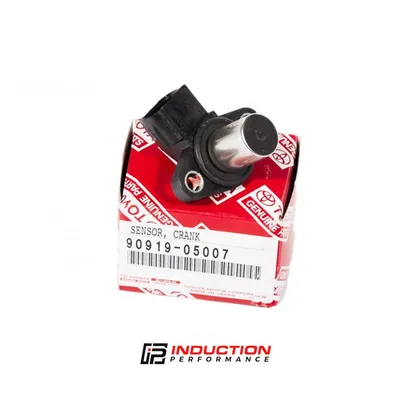
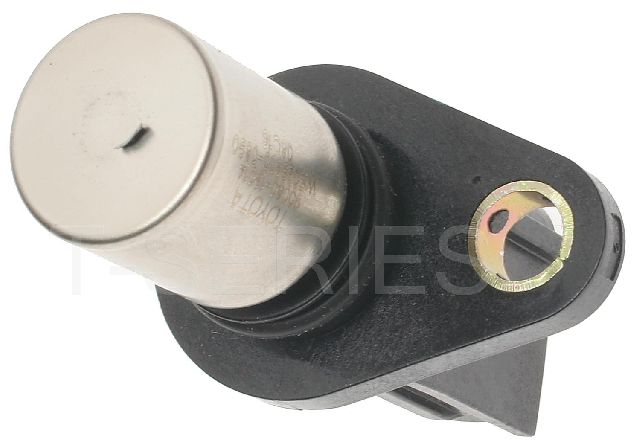
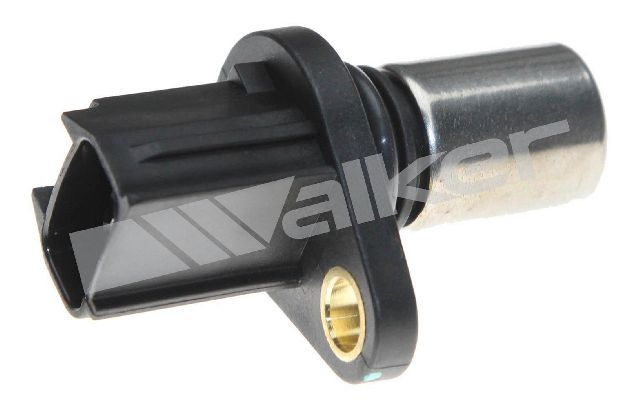
- Camshaft Position Sensor
(OEM #90919-05026)— This is the most frequent failure point for code P0340 after ruling out battery issues. The sensor's electronics fail over time due to heat and age. Owner consensus strongly favors OEM/Denso parts for reliability.
Trusted brands: Denso (OEM), Toyota (Genuine), NGK/NTK
OEM price range: $70-$90
Aftermarket price range: $40-$70
Related Codes That Often Appear With This One
- P0335 — Crankshaft Position Sensor Circuit Malfunction. The TSB T-TT-0010-10 Rev explicitly mentions that low battery voltage can cause both P0340 and P0335 to appear simultaneously. A weak starter can also cause both codes to appear due to erratic cranking speed.
- P0300, P0301-P0306 — Random or specific cylinder misfires. If the ECM doesn't have an accurate cam position, it cannot time the spark correctly, which can lead to misfires.
Technical Service Bulletins (TSBs) & Recalls
- T-TT-0010-10 Rev: Notes that low battery voltage can contribute to a MIL "ON" condition for P0340 due to inconsistent engine rotational speed during cranking.
Platform-Specific Known Issues
- Toyota Technical Service Bulletin T-TT-0010-10 Rev indicates that low battery voltage can be a direct cause of code P0340, making a battery health check a mandatory first step.
- On 2.7L 3RZ-FE engines around 1996-1997, the camshaft position sensor is part of the distributor assembly, which is a more complex and expensive replacement than the bolt-on sensor on the 3.4L 5VZ-FE.
Mechanic-Grade Diagnostic Values
- Camshaft Position Sensor (5VZ-FE) Resistance — expected: 835 - 1,400 Ohms (cold). Failure: Reading is outside of this range or shows an open circuit (infinite resistance).
- Camshaft Position Sensor (5VZ-FE) Signal Generation — expected: A pulsing AC voltage signal when a metal object is passed over the sensor tip. An oscilloscope should show a clean waveform synchronized with the crankshaft (NE) signal.. Failure: No voltage pulse is generated, or the oscilloscope waveform is noisy, flat, or misshapen.
- Wiring Harness Continuity (Sensor to ECM) — expected: Near 0 Ohms resistance between the sensor connector pins and their corresponding pins at the ECM.. Failure: High resistance or an open circuit (infinite resistance) indicates a break in the wire.
Scan Tool Commands That Help
- Toyota Techstream: Live Data Monitoring (Data List) — While there is no specific bidirectional 'active test' for the P0340 sensor itself, a technician would use Techstream to monitor 'Engine Speed' and 'Camshaft Revolution' live data while cranking or running the engine. A stable 'Engine Speed' reading but an absent or erratic 'Camshaft Revolution' reading strongly points to a fault in the camshaft sensor circuit.
Wiring & Ground Locations

- ECM Connector E5 (5VZ-FE) — Located behind the passenger side kick panel / glove box area.. This is the main ECM connector where the camshaft position sensor wiring terminates. Pin E5-11 (G2+) and Pin E5-20 (G-) are the specific terminals for the camshaft sensor signal. Checking for a signal here is the definitive test to see if the signal is reaching the computer.
- Engine Ground Straps — Key grounds are located from the battery negative to the fender wall, from the firewall to the cylinder head, and from the engine block to the chassis.. A corroded or loose engine ground can create electrical noise or voltage drops that interfere with the low-voltage signal from the camshaft position sensor, causing a false P0340 code even with a good sensor and harness.
- Camshaft Position Sensor Connector — On the 3.4L 5VZ-FE, it's a 2-pin connector for the sensor located on the driver's side cylinder head, behind the timing cover.. This is the primary point of failure for wiring issues. The plastic can become brittle and the pins can get corroded or contaminated with oil. Testing for resistance and signal occurs at this connector.
Real Owner Repair Stories
- Toyota 4Runner Forum user 'ECS5' (1997 Toyota 4Runner with 3.4L 5VZ-FE) — After a major head gasket and timing belt job, the engine would crank and sputter but not start. It sometimes backfired through the intake. It threw code P0340.
❌ Tried (didn't work) Visually re-checking the timing marks, which all lined up correctly., Replacing the camshaft position sensor with a known-good used part., Checking the reluctor tooth on the cam pulley, which was fine.
✅ What actually fixed it The user tested continuity from the sensor connector to the ECU and found it was good. The final resolution was not posted in the thread, but the diagnostic path correctly eliminated the sensor and mechanical timing, pointing towards a very elusive wiring issue or a rare ECU failure. The user suspected a damaged wiring harness from the re-installation process. - Reddit user 'ThisGarth' (1999 Toyota 4Runner with 2.7L 3RZ-FE (4-cylinder), 347,000 miles) — Rough idle and poor acceleration, which triggered code P0340.
❌ Tried (didn't work) Replacing the camshaft position sensor., Replacing the wiring harness pigtail for the sensor.
✅ What actually fixed it The user did not post a final fix. Another user suggested checking power and ground to the sensor and visually inspecting the cam gear itself for damage, which is the correct next step after the sensor and harness connector have been replaced without success.
OEM Part Supersession History
90919-05026→N/A— This part number remains current.
Heads up: This part number is listed for the 1997-2004 4Runner. Interestingly, Toyota catalogs sometimes label this same part number as a 'Crank Position Sensor' for other models, but for the 3rd Gen 4Runner, it is the correct Camshaft Position Sensor.
Model Year Variations Within This Range
- approx. 1996-1997: On early 2.7L 3RZ-FE engines, the camshaft position sensor is integrated into the distributor assembly. On later 3RZ-FE and all 3.4L 5VZ-FE engines in this range, it is a separate, bolt-on sensor located on the cylinder head. This significantly changes the replacement procedure and cost for those early 4-cylinder models.
Helpful Videos
We Have This Part in Stock


The information in this article is provided for general reference and educational purposes only. Vehicle specifications, procedures, and part compatibility can vary by production date, trim level, and region. Always consult your vehicle's factory service manual and verify part numbers before purchasing or performing repairs. Safety-critical components such as airbags, seat belts, and braking systems should be installed by a qualified professional.
- Toyota 4RUNNER:
- 🧭 Diagnostic Flowchart
- 🎬 Helpful Videos
- 🛍️ Shop This Part
- What's Unique About the 1997-2000 Toyota 4RUNNER
- Symptoms You May Notice
- Most Likely Causes
- Rare But Worth Checking
- Diagnosis Steps
- Parts You'll Likely Need
- Related Codes That Often Appear With This One
- Technical Service Bulletins (TSBs) & Recalls
- Platform-Specific Known Issues
- Mechanic-Grade Diagnostic Values
- Scan Tool Commands That Help
- Wiring & Ground Locations
- Real Owner Repair Stories
- OEM Part Supersession History
- Model Year Variations Within This Range
- 🎟️ Get 5% Off