

P0340 on 2012-2015 Toyota 4Runner: Camshaft Sensor Causes & Fixes
On a 2012-2015 4Runner, P0340 is most often caused by a failing camshaft position sensor or a weak battery. First, test your battery, as a Toyota TSB confirms low voltage during cranking can trigger this code. If the battery is good, replacing the Bank 1 (passenger side) sensor is the next step. Owners strongly advise using only an OEM Denso or Genuine Toyota sensor (Part No. 90919-T5005) to avoid persistent issues.
- Always test your battery and charging system first! A weak battery is a known cause of P0340 on this 4Runner, as confirmed by a Toyota TSB.
- P0340 points to a problem in the Bank 1 (passenger side) camshaft position sensor circuit.
- If the battery is healthy, the most likely fix is replacing the camshaft position sensor, which is an accessible and DIY-friendly job requiring only a 10mm socket.
- Use a high-quality OEM (Denso) or Genuine Toyota sensor (90919-T5005) for the best reliability. Owners widely report that aftermarket sensors often fail or don't work correctly.
- Do not ignore this code, as it can lead to stalling or a no-start condition, potentially leaving you stranded.
What's Unique About the 2012-2015 Toyota 4RUNNER
For this generation of Toyota 4Runner, a key factor to consider is a Technical Service Bulletin (TSB T-TT-0010-10 Rev) issued by Toyota. The TSB explicitly states that low battery voltage (below 11 volts) during cranking can cause inconsistent engine rotational speed, which in turn can trigger a P0340 code, often along with P0335 (Crankshaft Position Sensor). This makes testing the battery and charging system a crucial first step before assuming the sensor itself has failed, potentially saving you from a misdiagnosis. This is a well-documented issue across platforms with the 1GR-FE engine.
Diagnostic Flowchart
Tap your situation to follow the diagnostic path that matches what you're seeing on this vehicle.
Symptoms You May Notice
- Check Engine Light is on
- VSC/TRAC lights may also illuminate
- Engine is hard to start or has extended crank time (5-7 seconds)
- Engine cranks but won't start
- Engine stalls intermittently or runs rough
- Noticeable loss of engine power and acceleration
- Increased fuel consumption
- Replacing the camshaft position sensor when the actual problem is a weak battery, failing alternator, or faulty starter.
- Replacing the crankshaft position sensor (P0335) instead of the camshaft position sensor (P0340).
- Using a cheap, aftermarket camshaft sensor that is faulty out of the box or fails prematurely.
Most Likely Causes
- Low Battery Voltage or Weak Charging System 🔴 High Probability → Shop Vehicle Battery A Toyota Technical Service Bulletin (T-TT-0010-10 Rev) explicitly states that battery voltage below 11V during cranking can cause inconsistent engine rotational speed, leading to a P0340 code. This can be due to an old battery, a failing alternator, or even a faulty starter drawing excessive current.
How to confirm: Use a multimeter to test the battery. A healthy battery should read about 12.6 volts with the engine off and 13.5-14.5 volts with the engine running. Check the freeze-frame data with a scan tool to see what the battery voltage was when the code was set. Many auto parts stores will test your battery, starter, and alternator for free.
Typical fix: Recharge or replace the battery. If the charging voltage is low, the alternator may need to be replaced. If the starter is drawing too much amperage, it will need replacement.
Est. part cost: $150-$400 - Failed Camshaft Position Sensor 🔴 High Probability → Shop Engine Camshaft Position Sensor The sensor is an electronic component that operates in a high-heat environment and can fail over time due to heat cycles and vibration. It is a very common failure point after ruling out battery issues.
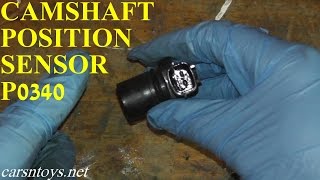
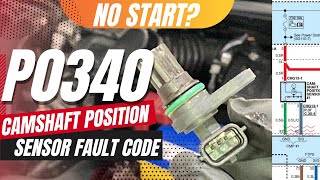
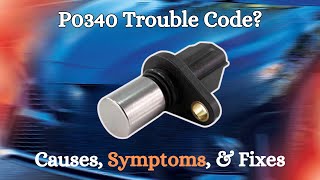
How to confirm: After confirming the battery and wiring are good, the most practical step is to replace the sensor. It can also be tested with an oscilloscope to observe its signal pattern, but this requires specialized equipment. 🎬 Watch: Detailed guide on testing and replacing the sensor
Typical fix: Replace the camshaft position sensor for Bank 1. On the 4.0L V6, Bank 1 is the passenger side of the engine. The sensor is held in by a single 10mm bolt.
Est. part cost: $40-$150 - Damaged Wiring or Loose Connector 🟡 Medium Probability The wiring harness can become brittle from engine heat, or the plastic connector's locking tab can break, leading to a poor connection. Rodent damage to the soy-based wiring insulation is also a known possibility.
How to confirm: Visually inspect the wiring harness leading to the camshaft position sensor for any signs of fraying, melting, rodent damage, or corrosion. Wiggle the connector to ensure it is securely attached and that the locking tab isn't broken.
Typical fix: Repair the damaged section of wiring or replace the connector pigtail. Use contact cleaner on a corroded connector.
Est. part cost: $15-$50
Rare But Worth Checking
- Stretched Timing Chain: → Shop Engine Timing Chain On higher-mileage engines (typically over 150k miles), a stretched timing chain can alter the physical correlation between the camshaft and crankshaft, which can trigger timing-related codes like P0340, often accompanied by P0016. This is a significant mechanical repair and is usually preceded by rattling noises from the front of the engine.
- Faulty Starter Motor: → Shop Starter Motor A failing starter can draw excessive amperage during cranking, causing a significant voltage drop that is sufficient to trigger P0340 and/or P0335, mimicking a weak battery. One owner on Tacoma World resolved their P0340 code only after replacing a starter that was causing slow/erratic cranking.
- Incorrect Sensor Air Gap / Misaligned Timing Cover: Extremely rare, but possible if major engine work was recently performed. A Reddit user chronicled a lengthy battle with P0340 that was ultimately traced by a Toyota dealer to a misaligned timing cover, which changed the air gap between the sensor and the reluctor wheel, disrupting the signal.
- Faulty Engine Control Module (ECM): → Shop Engine Control Module (ECM) This is the least likely cause. The ECM should only be considered after all other possibilities, including sensors, wiring, and mechanical timing, have been thoroughly ruled out by a professional.
Diagnosis Steps
- Check for any other stored trouble codes that could provide more context (e.g., P0335, P0345, P0016).
- Test the battery voltage with the engine off (~12.6V) and running (13.5-14.5V) to rule out a weak battery or alternator, as per TSB T-TT-0010-10 Rev. If possible, check freeze-frame data for voltage at the time the code was set.
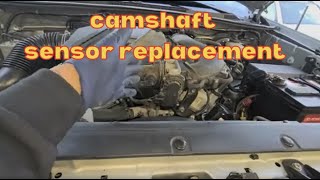
- Locate the Bank 1 camshaft position sensor. On the 4.0L V6, it is on the passenger side valve cover, towards the front of the engine, held by a single 10mm bolt. 🎬 Watch: Step-by-step sensor replacement for Toyota V6 engines
- Thoroughly inspect the sensor's electrical connector and wiring for any visible damage, looseness, corrosion, or oil contamination. Ensure the connector clicks securely into place.
- If the battery and wiring are good, the most common and cost-effective repair is to replace the camshaft position sensor.
- Pro-Tip from Owners: Strongly consider using only a Genuine Toyota or OEM Denso sensor. Forum users across multiple platforms report that aftermarket sensors are a frequent cause of persistent issues and repeat failures.
- After replacement, clear the code with a scan tool and perform a test drive, including several start/stop cycles, to ensure the code does not return.
Parts You'll Likely Need
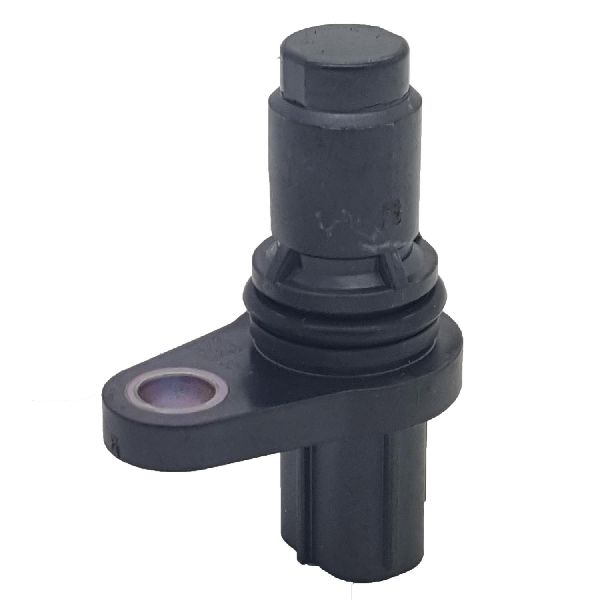
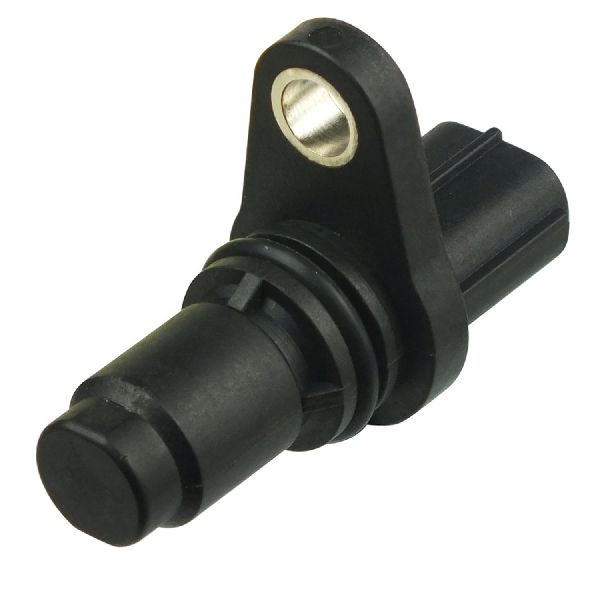
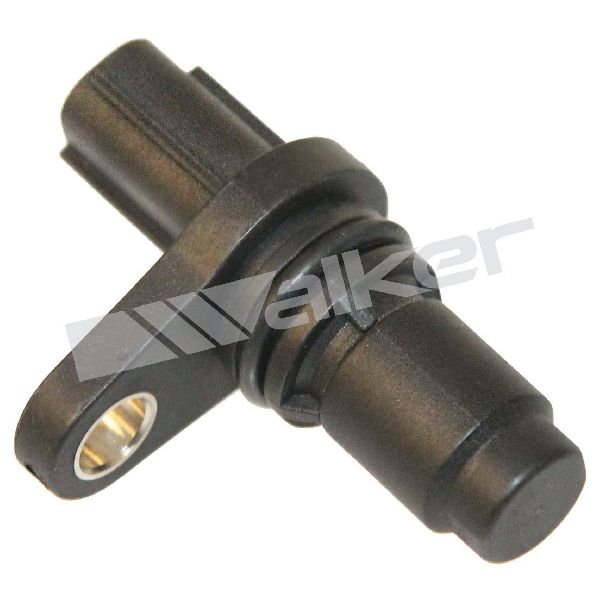
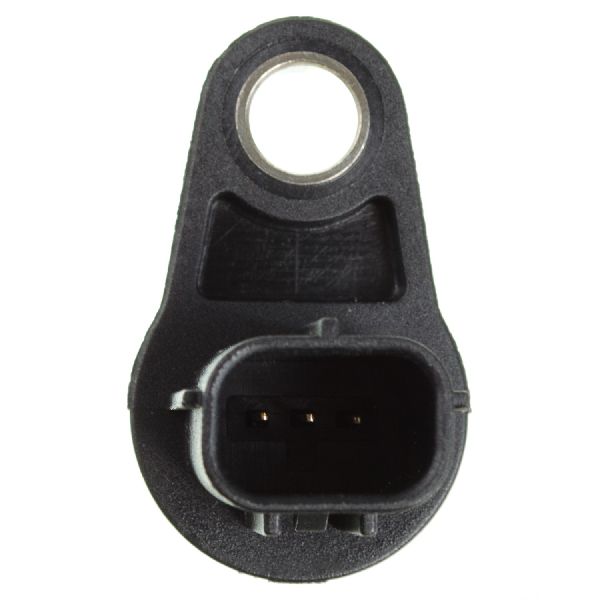
- Engine Camshaft Position Sensor
(OEM #90919-T5005)— This is the most common component to fail that directly causes a P0340 code, after ruling out battery issues. The 4.0L V6 uses the same sensor for both banks. This part number replaces previous numbers 90919-05060, 90919-C5001, and 90919-T5002.
Trusted brands: Denso (OEM), Genuine Toyota
OEM price range: $100-$150
Aftermarket price range: $30-$80
Related Codes That Often Appear With This One
- P0335 — This code is for the Crankshaft Position Sensor. The TSB T-TT-0010-10 Rev mentions that low battery voltage can cause both P0340 and P0335 to appear together due to inconsistent engine rotational speed during cranking.
- P0345 — This code is for the Camshaft Position Sensor 'B' Circuit (Bank 2, driver's side). If both sensors are failing around the same time due to age, or if there is a systemic issue like low voltage, you might see codes for both banks.
- P0016 — This code indicates a Crankshaft/Camshaft Correlation error. If P0340 appears with P0016, it more strongly suggests a mechanical timing issue, such as a stretched timing chain, rather than just a sensor circuit fault.
Technical Service Bulletins (TSBs) & Recalls
- T-TT-0010-10 Rev: Notes that low battery voltage (below 11V) can contribute to a MIL "ON" condition for P0340 and/or P0335 due to an inconsistent rotational speed of the engine's crankshaft during startup. Recommends checking freeze frame data for battery voltage when the DTC was set.
Platform-Specific Known Issues
- A Technical Service Bulletin (T-TT-0010-10 Rev) highlights that low battery voltage is a known cause for triggering code P0340 on this platform, making a battery check a critical first diagnostic step.
- Owners overwhelmingly report that using non-OEM (Denso) camshaft position sensors often leads to the code returning quickly or other performance issues. The cost savings of an aftermarket part are often negated by the need for a second repair.
Mechanic-Grade Diagnostic Values
- Camshaft Position Sensor Circuit Voltage at ECM — expected: Signal should fluctuate and not remain static.. Failure: Input voltage to the ECM remains 0.3 V or less, or 4.7 V or higher for more than 5 seconds.
Hidden / Shadow Codes Worth Checking
- Pending DTCs: Toyota's system may store a fault as a 'pending' code after one trip before illuminating the Check Engine Light on a subsequent trip. These codes are crucial for diagnosing intermittent issues. (see via A professional scan tool like Toyota Techstream is often required to reliably view pending codes.)
Scan Tool Commands That Help
- Toyota Techstream: Navigate to: Powertrain / Engine and ECT / Trouble Code / Pending. — Use this function to check for intermittent faults that have been detected by the ECM but have not yet met the criteria to become an active, MIL-triggering code.
Wiring & Ground Locations
- Engine Harness Grounds — There are critical ground points for the engine harness on the cylinder heads/valve covers. On the 1GR-FE and similar Toyota V6 engines, these are typically bolted directly to the heads.. A poor ground connection at the cylinder head can cause erratic sensor readings for components grounded through the harness, including the camshaft position sensors, leading to false codes.
- ECM Connectors — The Camshaft Position Sensor (VVT Sensor) for Bank 1 connects to the ECM at specific pins. The sensor connector is designated B15 or B27, and the ECM connector is B3 in service manuals.. Knowing the connector numbers is essential for performing targeted circuit integrity tests (resistance, voltage drop) between the sensor and the ECM without probing the wrong wires.
Real Owner Repair Stories
- YouTube channel 'aliMech' (Toyota Camry (2.5L, principle applies to 1GR-FE)) — Check Engine Light with code P0340.
❌ Tried (didn't work) The video proposes this as a first step before replacement.
✅ What actually fixed it The camshaft position sensor was physically coated in a film of oil sludge, likely from poor quality oil or extended oil change intervals. Removing the sensor, cleaning the tip thoroughly with brake cleaner, and reinstalling it was the fix. If the code returned, sensor replacement would be the next step.
"I Checked Everything" — The Actual Cause
- A P0340 code can be triggered even if all electrical tests pass. A common cause is a failing starter motor drawing excessive current during cranking, which causes a momentary voltage drop sufficient to set the code but won't be apparent when testing a healthy battery with the engine off or running. Another non-electrical cause is a camshaft position sensor tip that is physically coated in oil sludge, preventing it from reading the reluctor wheel correctly; this requires visual inspection to find.
When the Usual Fixes Don't Work
- While replacing the sensor or battery resolves most P0340 cases, if the code persists, the root cause may be mechanical or hydraulic, not electrical. A frequently missed cause is a clogged Oil Control Valve (OCV) filter (Part No. 15678-31010). This small screen, located inside an oil line banjo bolt, can become blocked with sludge, starving the VVT system of oil pressure. This can disrupt cam timing enough to trigger a sensor circuit code, even though the sensor and its wiring are perfectly fine. A technician who has already replaced the sensor and verified the battery would need to know to inspect this filter before moving on to more expensive repairs like replacing the OCV solenoid or timing components.
OEM Part Supersession History
90919-05060→90919-T5005— Part has been updated by the manufacturer.
Heads up: Some parts catalogs may confusingly list the original part number 90919-05060 as 'Crank Position Sensor, NO.2', which can lead to ordering the wrong component. Always verify the part by its primary function (Camshaft Position Sensor) for the 1GR-FE engine.
Model Year Variations Within This Range
- 2012-2015: No significant variations have been identified within this model year range for the 4.0L 1GR-FE engine or its related components that would materially affect the diagnosis or repair of a P0340 code. The 2014 model year facelift was primarily cosmetic.
Helpful Videos

We Have This Part in Stock


The information in this article is provided for general reference and educational purposes only. Vehicle specifications, procedures, and part compatibility can vary by production date, trim level, and region. Always consult your vehicle's factory service manual and verify part numbers before purchasing or performing repairs. Safety-critical components such as airbags, seat belts, and braking systems should be installed by a qualified professional.
- Toyota 4RUNNER:
- 🧭 Diagnostic Flowchart
- 🎬 Helpful Videos
- 🛍️ Shop This Part
- What's Unique About the 2012-2015 Toyota 4RUNNER
- Symptoms You May Notice
- Most Likely Causes
- Rare But Worth Checking
- Diagnosis Steps
- Parts You'll Likely Need
- Related Codes That Often Appear With This One
- Technical Service Bulletins (TSBs) & Recalls
- Platform-Specific Known Issues
- Mechanic-Grade Diagnostic Values
- Hidden / Shadow Codes Worth Checking
- Scan Tool Commands That Help
- Wiring & Ground Locations
- Real Owner Repair Stories
- "I Checked Everything" — The Actual Cause
- When the Usual Fixes Don't Work
- OEM Part Supersession History
- Model Year Variations Within This Range
- 🎟️ Get 5% Off