

P0340 on 2001-2007 Toyota Highlander 3.3L V6: Cam Sensor Causes and Fixes
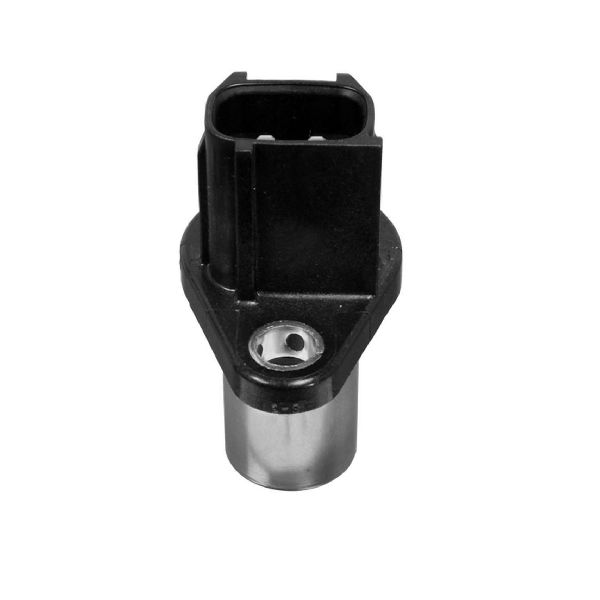
On a 2004-2007 Highlander with the 3.3L V6, code P0340 is most often a failed Bank 1 (rear) camshaft position sensor. However, it can also be a critical warning of a stretched or jumped timing belt. Always investigate immediately. A new sensor costs $40-$120.
- P0340 on a 2004-2007 Highlander V6 points to the rear camshaft sensor (Bank 1).
- Before replacing any parts, fully charge and test your battery. A weak battery is a known cause of this code per a Toyota TSB.
- This code can be a serious warning for a timing belt problem. If the engine won't start or if the belt is near/past its 90,000-mile service interval, investigate the timing belt immediately.
- The most common fix is replacing the Bank 1 sensor, but access is tight against the firewall.
- If you see P0340 and P0345 at the same time, stop driving and check the timing belt.
What's Unique About the 2001-2007 Toyota Highlander
For the first-generation Highlander with the 3.3L 3MZ-FE engine (2004-2007), the P0340 code carries a significant warning. This engine uses a timing belt, and a loss of signal from the cam sensor can be an early indicator that the belt has stretched, jumped a tooth, or failed entirely. Because this is an interference engine, a timing belt failure can lead to catastrophic internal engine damage as the pistons will strike the valves. Additionally, a known issue documented in a Toyota Technical Service Bulletin (TSB) is that low battery voltage during cranking can trigger this code, making a battery test a crucial first step.
Symptoms You May Notice
- Check Engine Light is on.
- Difficulty starting the engine, extended cranking, or a no-start condition.
- Engine stalling unexpectedly while idling or driving, which can be a major safety concern.
- Rough idle and poor engine performance.
- Noticeable loss of power and hesitation during acceleration.
- Reduced fuel economy.
- Replacing the crankshaft position sensor. While related, a bad crank sensor will typically set its own code (P0335).
- Replacing the VVT oil control valve (solenoid). While this is part of the VVT system, a failure here usually results in timing performance codes like P0011 or P0012, not a circuit code like P0340.
- Immediately replacing the cam sensor without checking battery voltage during cranking, which is a known issue per a Toyota TSB.
Most Likely Causes
- Failed Camshaft Position Sensor (Bank 1) 🔴 High Probability → Shop Engine Camshaft Position Sensor The sensor is exposed to high heat cycles at the back of the engine, which can lead to internal winding failure over time. It's the most common direct cause of the code when mechanical timing is correct. Aftermarket sensors, especially cheap ones, are known to fail quickly or be dead-on-arrival.
How to confirm: After verifying wiring and timing are okay, the easiest way to confirm is to swap the Bank 1 (rear) and Bank 2 (front) sensors. If the code changes to P0345 (Bank 2), the sensor is bad. The sensors can also be tested with a multimeter for resistance; specs are typically between 835 and 1,400 ohms when cold. A reading outside this range indicates a faulty sensor.
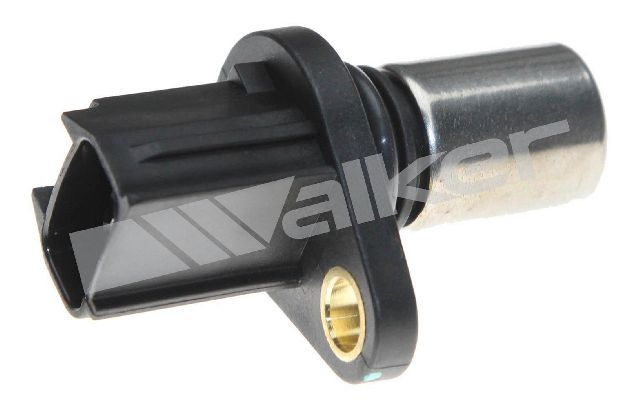
Typical fix: Replace the Bank 1 camshaft position sensor. The sensor is located on the rear cylinder head, closer to the firewall, and can be difficult to access. Using an OEM Denso sensor is highly recommended for longevity.
Est. part cost: $40-$120 - Stretched, Jumped, or Broken Timing Belt 🟡 Medium Probability → Shop Engine Timing Chain The 3MZ-FE is an interference engine with a timing belt that has a 90,000-mile replacement interval. If the belt is old, the tensioner fails, or the water pump seizes, it can jump time or snap. This de-synchronizes the cam and crank signals, triggering P0340 often before other symptoms appear.
How to confirm: A visual inspection of the timing belt and its alignment marks is required. This involves removing the upper timing covers. A user on YouTube reported getting a P0340 after a timing belt replacement because the timing was off by three teeth. If the engine will not start at all, a broken belt is a strong possibility.
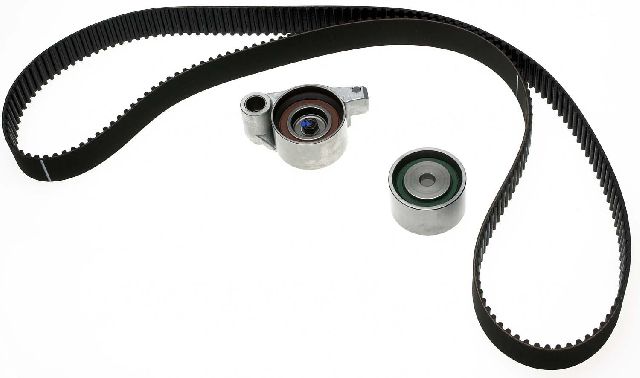
Typical fix: Replace the timing belt, tensioner, idler pulleys, and water pump as a complete kit. This is a labor-intensive job. Using a quality kit like Aisin (which is the OEM supplier) is critical.
Est. part cost: $200-$500 - Damaged Wiring or Connector ⚪ Low Probability The wiring harness, especially near the rear of the engine, is exposed to heat and can become brittle. Rodent damage is also a possibility. The connector itself can become contaminated with oil or lose its pin tension.
How to confirm: Visually inspect the wiring harness and connector for the Bank 1 cam sensor for any signs of melting, chafing, or breaks. Use a multimeter to check for continuity between the sensor connector and the ECM, and also check for shorts to ground.
Typical fix: Repair the damaged section of wire or replace the connector pigtail.
Est. part cost: $10-$50 - Low Battery Voltage ⚪ Low Probability → Shop Vehicle Battery A Toyota Technical Service Bulletin (T-TT-0010-10 Rev) specifically notes that low battery voltage (below 11V) during cranking can cause inconsistent engine speed, triggering P0340 and/or P0335. This is a very common misdiagnosis for this code.
How to confirm: Test the battery with a multimeter. A healthy battery should show ~12.6V with the engine off. Check the voltage during cranking; if it drops below 11V, the battery is suspect. Check freeze frame data with a scan tool to see the voltage when the code was set.
Typical fix: Charge or replace the weak battery. Clean battery terminals of any corrosion.
Est. part cost: $150-$250
Rare But Worth Checking
- Failed Engine Control Module (ECM): → Shop Engine Control Module (ECM) This is very rare. The ECM should only be considered after all other possibilities, including sensors, wiring, and mechanical timing, have been exhaustively ruled out.
- Damaged Camshaft Reluctor Wheel: → Shop Engine Camshaft The teeth on the camshaft that the sensor reads can be damaged during engine work, but this is highly unlikely unless the engine has been recently disassembled. A ClubLexus forum member suggested checking for hairline cracks on the tone ring.
Diagnosis Steps
- Read Freeze Frame Data: Check the stored data for any other codes and note the conditions (like battery voltage) when the P0340 code was set.
- Check the Battery: Test the battery voltage with the engine off (~12.6V) and while cranking. If it drops below 11V, address the weak battery or charging system issue first, as per the TSB.
- Inspect Wiring and Connector: Visually inspect the Bank 1 camshaft sensor's wiring and connector for obvious damage, melting, or corrosion. The sensor is on the rear cylinder head, near the top.
- Check for a No-Start Condition: If the engine cranks but does not start, immediately suspect a broken timing belt. Proceed to inspect the timing belt.
- Swap Sensors (if possible): If access permits, swap the Bank 1 (rear) and Bank 2 (front) camshaft position sensors. They are typically the same part. Clear the codes and run the engine. If the code returns as P0345 (Bank 2), the original Bank 1 sensor is faulty. This is a common and effective diagnostic step.
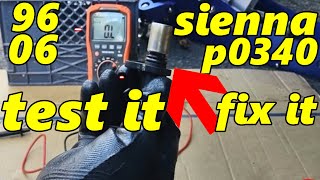
- Test the Sensor: If swapping is not feasible, remove the sensor and test its resistance with a multimeter. It should be between 835-1,400 ohms when cold. A video on a 2006 Sienna with a P0340 showed a sensor testing within spec but still being intermittently faulty.
- Inspect Mechanical Timing: If sensors and wiring are good, the next step is to inspect the timing belt alignment. This requires removing the engine covers and is a more involved process. Even being off by a few teeth can set this code.
- Check the ECM: Only after confirming all of the above are correct should a faulty ECM be considered.
Parts You'll Likely Need
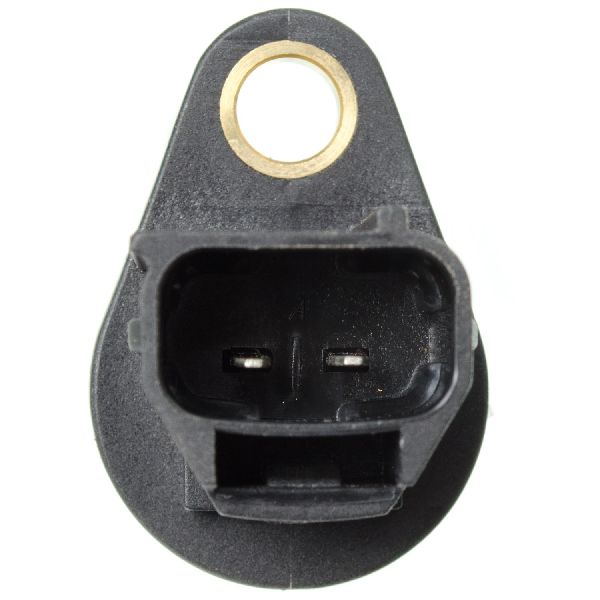
- Camshaft Position Sensor (Bank 1)
(OEM #90919-05043)— This is the most common part to fail, causing a direct signal loss to the ECM. Using the OEM Denso part is highly recommended.
Trusted brands: Denso (OEM), NGK, Delphi
OEM price range: $80-$120
Aftermarket price range: $40-$90 - Timing Belt Kit
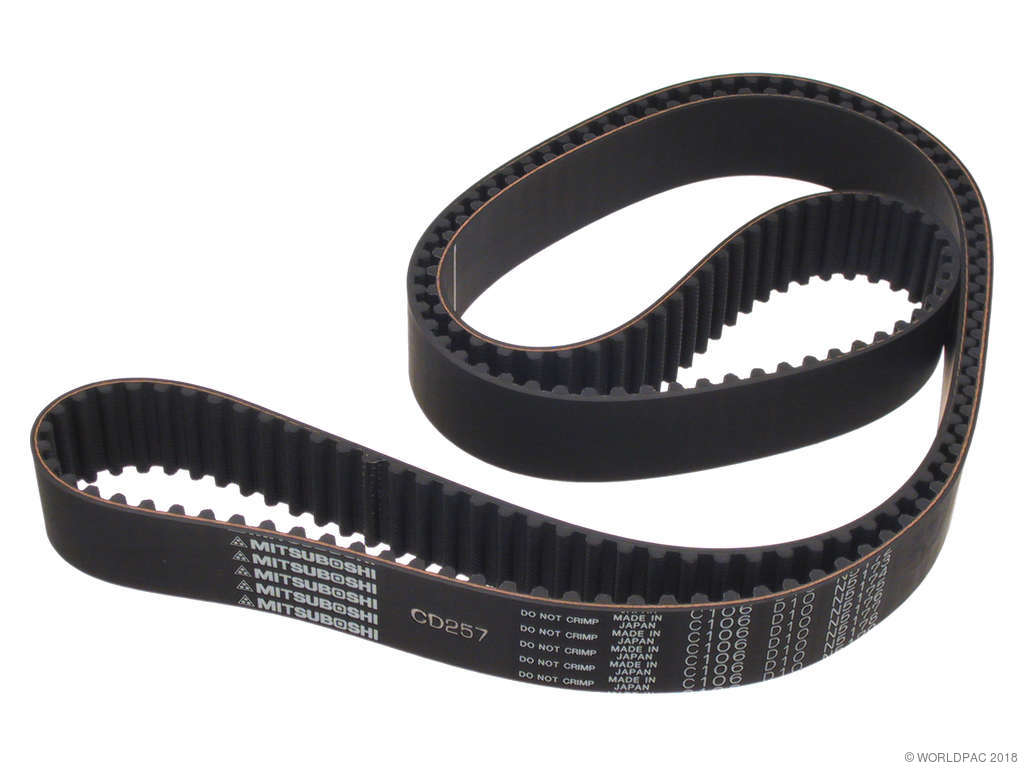
(OEM #TKT-021 (Aisin Kit for 2UZ-FE, similar kits exist for 3MZ-FE like TKT-025))— If the code is caused by a jumped or broken timing belt, a full kit including the belt, tensioner, idlers, and water pump is required. This is a critical maintenance item on the 3MZ-FE engine. Aisin is the OEM supplier for many of these components.
Trusted brands: Aisin, Mitsuboshi (belt), Koyo (bearings)
OEM price range: $250-$400
Aftermarket price range: $150-$250
Related Codes That Often Appear With This One
- P0345 — This is the code for the Bank 2 (front) camshaft sensor. Seeing P0340 and P0345 together strongly suggests a common problem like a broken timing belt, a major wiring issue, or a low battery voltage condition, as it's unlikely both sensors would fail simultaneously.
- P0335 — This is the code for the Crankshaft Position Sensor. A Toyota TSB mentions that low battery voltage can cause both P0335 and P0340 to appear together. Seeing both can also point to a serious timing belt issue where both cam and crank signals become erratic.
- P0300, P0301, P0303, P0305 — These are random or specific misfire codes for cylinders on Bank 1. An incorrect cam signal prevents proper spark and fuel timing, leading to misfires on the affected bank.
Technical Service Bulletins (TSBs) & Recalls
- T-TT-0010-10 Rev: This Toyota Technical Tip bulletin is crucial for this code. It informs technicians that low battery voltage (dropping below 11V during cranking) can cause inconsistent engine speed readings, falsely triggering DTCs P0335 and/or P0340. It advises checking freeze frame data for battery voltage at the time the fault was logged before replacing any parts.
Platform-Specific Known Issues
- The 3.3L 3MZ-FE is an interference engine, meaning a broken timing belt will cause the pistons to hit the valves, resulting in catastrophic and expensive engine damage.
- The Bank 1 camshaft position sensor is located on the rear cylinder head against the firewall, making access difficult.
- A Toyota TSB (T-TT-0010-10 Rev) confirms that low battery voltage during cranking is a known cause for P0340 on this platform.
Mechanic-Grade Diagnostic Values
- Camshaft Position (VVT) Sensor Resistance — expected: 835 to 1,400 Ω (cold), 1,060 to 1,645 Ω (hot). 'Cold' is approx. -10°C to 50°C, 'Hot' is approx. 50°C to 100°C.. Failure: A resistance reading outside of these ranges indicates a faulty sensor coil.
- Crankshaft Position Sensor Resistance — expected: 1,630 to 2,740 Ω (cold), 2,065 to 3,225 Ω (hot).. Failure: A reading outside this range indicates a faulty sensor. This is useful to test while diagnosing timing codes, though P0335 is the direct code for this sensor.
- Battery Voltage during Cranking (from Freeze Frame Data) — expected: Above 11.0V. Failure: Voltage dropping below 11.0V during cranking can trigger P0340 and/or P0335 per a TSB.
- Oscilloscope Waveform at ECM — expected: A clean square wave from the sensor that increases in frequency with engine RPM, checked between terminals VV1+ and NE-.. Failure: A missing, erratic, or noisy signal points to a fault in the sensor, wiring, or a damaged reluctor wheel.
Scan Tool Commands That Help
- Toyota Techstream: Active Test for VVT System — While not a direct test of the P0340 sensor circuit, commanding the VVT oil control solenoids and observing engine response can help differentiate between a simple sensor fault and a more complex mechanical timing or VVT system problem. A lack of change in engine idle when the test is run could point to a mechanical VVT issue rather than just the sensor.
- Toyota Techstream: Data List -> All -> Engine SPD — Use this to confirm if the ECM is receiving an engine speed signal from the crankshaft sensor while cranking. If this value is zero while the engine is turning over, it points to a fault in the crank sensor circuit, which is a critical related system for diagnosing cam/crank correlation codes.
Wiring & Ground Locations
- ECM Connector E9 (Bank 1 Sensor) — In the engine bay, typically near the battery or air filter housing.. This connector contains the pins for the camshaft position sensors. For the Bank 1 sensor (P0340), the signal wire is at pin E9-27 (VV1+). This is the terminal to test for a signal waveform with an oscilloscope or for continuity back to the sensor.
- Engine Ground Point — A key ground for the engine compartment harness is located near the firewall on the 3MZ-FE.. A poor ground connection can cause erratic sensor readings and trigger circuit codes like P0340. Verifying this ground is clean and tight is a crucial step in diagnosing electrical faults.
- VVT Sensor Connector V5 — On the rear cylinder head (Bank 1), connecting to the camshaft position sensor.. This is the primary connection point to inspect for damage, corrosion, or a loose fit. It's where you would perform resistance tests on the sensor itself.
Real Owner Repair Stories
- YouTube user JM Auto Repair (Toyota Sienna with 3.3L 3MZ-FE engine (same as Highlander)) — Code P0340 and random stalling while driving.
❌ Tried (didn't work) Initial diagnosis pointed to the camshaft position sensor.
✅ What actually fixed it The technician tested the sensor's resistance and found it was within spec. However, through further testing (not detailed), he determined the sensor was intermittently failing under heat/vibration. Replacing the Bank 1 camshaft position sensor resolved the stalling and the P0340 code. This highlights that a sensor can pass a static resistance test but still be faulty. - ClubLexus Forum User (Lexus with symptoms related to P0340 (engine shared with Highlander)) — P0340 code returned immediately after replacing the camshaft position sensor.
❌ Tried (didn't work) Replacing the Bank 1 camshaft position sensor.
✅ What actually fixed it The user had recently experienced an alternator failure. The discussion suggested that the voltage fluctuations from the failing alternator may have damaged the ECM's driver for that sensor circuit. While the final post was not a definitive fix, it strongly pointed towards checking the ECM as the next logical step after the sensor and wiring were confirmed good, a common pattern in forums.
OEM Part Supersession History
90919-05043→N/A— This part number appears to be stable for the specified application.
Heads up: While the part number itself is for a camshaft position sensor, some online catalogs incorrectly label it as a crankshaft position sensor for other vehicles (like the Yaris). It is critical to verify the application is for the 3MZ-FE Camshaft Position Sensor.
Model Year Variations Within This Range
- 2004-2007: The 3.3L 3MZ-FE V6 engine with its timing belt was introduced in 2004, replacing the previous 3.0L 1MZ-FE. Therefore, the specific risk of P0340 being caused by a timing belt failure applies only to the 2004-2007 V6 models within this generation.
Diagnostic Flowchart
Other Known Issues on This Vehicle
Issues unrelated to this code that are worth knowing about as an owner of this generation:
- Transmission Hesitation / Failure (U151E/F) 🔴 High — Moderately common, especially on earlier 2004-2005 models. Complaints often mention hesitation, rough shifting, or outright failure around 100k-150k miles. (Ref: Multiple TSBs exist for shift quality, but no widespread recall for failure.)
- Oil Sludge Buildup (1MZ-FE Engine) 🟠 Medium — Primarily affects the 2001-2003 Highlander V6 (1MZ-FE), not the 3MZ-FE. Caused by a combination of engine design and long oil change intervals. (Ref: Toyota had a warranty enhancement program for sludge damage on the 1MZ-FE.)
- Transfer Case Seal Leak (AWD Models) 🟡 Low — A known issue on 2004-2006 AWD models where a seal on the transfer case can leak, noted in TSB TC003-06. (Ref: TSB TC003-06)
- VVT-i Oil Line Rupture (2GR-FE Engine) 🔴 High — This is a major issue for the *next generation* Highlander (2008+) with the 2GR-FE engine, not the 2004-2007 3MZ-FE. The rubber section of the oil line can burst, causing rapid oil loss and catastrophic engine failure. It is often mistakenly associated with all Highlander V6s. (Ref: Warranty Enhancement Program (ZE7) was issued for affected 2GR-FE vehicles.)
Used vs. New Parts: Buying Guide for This Vehicle
When a used part is the smart pick: For this repair, sourcing used parts is generally not recommended for the primary failure components. However, a used wiring harness pigtail from a junkyard vehicle could be a cost-effective solution if only the connector is damaged and the wires are in good condition.
Donor-vehicle mileage cap: roughly under 120000 miles for the part to have meaningful remaining life.
What to inspect on the donor part:
- For a pigtail connector, check for flexible wiring (not brittle or cracked).
- Ensure the connector body is not cracked and the locking tab is intact.
- Look for clean metal pins with no signs of green or white corrosion.
- Avoid parts from vehicles with obvious signs of engine fire, flood damage, or heavy rodent infestation.
OEM-only on this vehicle (don't cheap out):
- Camshaft Position Sensor
- Timing Belt Kit (Tensioner, Idlers, Belt)
Aftermarket brands forum-validated for this vehicle:
- Denso (for the sensor, as they are the OEM)
- Aisin (for the timing belt kit, as they are the OEM supplier)
Brands owners have reported issues with on this vehicle:
- Unnamed, 'white box' or ultra-cheap online marketplace sensors are frequently reported as dead-on-arrival or failing within a few months. For a critical sensor like this, it is not worth the risk.
Real Owner Stories
Aggregated from forums and TSBs cited above. Mileages and costs reflect what owners reported in those sources.
2006 Toyota Sienna 3.3L 3MZ-FE
Symptoms: The engine was experiencing random stalling. Upon testing, the camshaft position sensor resistance was within the official specifications, but it was still failing intermittently.
What fixed it: Replacement of the camshaft position sensor (CMP).
Source hint: YouTube - 'Toyota sienna 3.3 code p0340 camshaft position sensor CMP fixed...'
2004-2007 Toyota Highlander 3.3L 3MZ-FE
Symptoms: P0340 code appeared immediately after a timing belt replacement was performed.
What fixed it: Re-aligning the timing belt; it was discovered the timing was off by three teeth.
Source hint: YouTube - 'overlooked one thing and fixed another during timing belt replacement causing p0340'
2006 Lexus RX330 3.3L 3MZ-FE
Symptoms: Crank but no-start condition. Owner performed complex diagnostics including checking waveforms and mechanical timing when a simple sensor swap didn't resolve the issue.
What fixed it: Diagnostic process involved checking waveforms and timing alignment.
Source hint: ClubLexus - '2006 rx330 3mz-fe crank not start'
Related OBD-II Codes
Frequently Asked Questions
I heard a low battery can cause a P0340 on my Highlander. Is there an official Toyota document about this?
Which camshaft sensor is Bank 1 on the 3.3L 3MZ-FE engine?
Can I use a cheap aftermarket sensor to fix this code?
Is there a way to test if the sensor is actually bad without buying a new one?
Could a recent timing belt job on my 3MZ-FE be the cause of this code?
What happens if the timing belt snaps on my 2001-2007 Highlander V6?
Helpful Videos
We Have This Part in Stock


The information in this article is provided for general reference and educational purposes only. Vehicle specifications, procedures, and part compatibility can vary by production date, trim level, and region. Always consult your vehicle's factory service manual and verify part numbers before purchasing or performing repairs. Safety-critical components such as airbags, seat belts, and braking systems should be installed by a qualified professional.
- Toyota Highlander:
- 🧭 Diagnostic Flowchart
- 🎬 Helpful Videos
- 🛍️ Shop This Part
- What's Unique About the 2001-2007 Toyota Highlander
- Symptoms You May Notice
- Most Likely Causes
- Rare But Worth Checking
- Diagnosis Steps
- Parts You'll Likely Need
- Related Codes That Often Appear With This One
- Technical Service Bulletins (TSBs) & Recalls
- Platform-Specific Known Issues
- Mechanic-Grade Diagnostic Values
- Scan Tool Commands That Help
- Wiring & Ground Locations
- Real Owner Repair Stories
- OEM Part Supersession History
- Model Year Variations Within This Range
- Other Known Issues on This Vehicle
- Used vs. New Parts: Buying Guide for This Vehicle
- Real Owner Stories
- 2006 Toyota Sienna 3.3L 3MZ-FE
- 2004-2007 Toyota Highlander 3.3L 3MZ-FE
- 2006 Lexus RX330 3.3L 3MZ-FE
- Related OBD-II Codes
- Frequently Asked Questions
- 🎟️ Get 5% Off