

P0340 on 2008-2015 Toyota Land Cruiser: Camshaft Sensor Causes and Fixes
On a 2008-2015 Land Cruiser, P0340 often points to a failing camshaft position sensor or simply a weak battery. A Toyota TSB confirms low voltage can trigger this code. Always load test the battery before replacing the sensor, which costs around $60-$150 for a quality Denso part.
- Always test the battery with a load tester first; it's a known, documented cause of P0340 on the 3UR-FE engine per Toyota TSB T-TT-0010-10 Rev.
- If the battery is good, inspect the wiring harness for heat or rodent damage before buying a new sensor.
- Use the 'sensor swap' method (swapping Bank 1 and Bank 2 sensors) as a free and effective way to confirm a failed sensor.
- Stick to OEM (Toyota) or the original supplier (Denso) for the replacement sensor to ensure reliability and correct performance.
What's Unique About the 2008-2015 Toyota LAND CRUISER
A unique characteristic of this Toyota platform and its relatives (Tundra, Sequoia, LX570) is its sensitivity to battery voltage. A Toyota Technical Service Bulletin (TSB T-TT-0010-10 Rev) confirms that low battery voltage (below 11 volts) during cranking can cause inconsistent engine rotational speed, which can trigger a P0340 code even if the camshaft sensor is perfectly fine. This makes testing the battery an essential first step, potentially saving the cost of an unnecessary sensor replacement.
Diagnostic Flowchart
Tap your situation to follow the diagnostic path that matches what you're seeing on this vehicle.
Symptoms You May Notice
- Check Engine Light is on
- Difficulty starting the engine, or extended crank time (5-7 seconds)
- Engine cranks but won't start
- Engine stalling or idling roughly, sometimes dropping to a very low RPM (around 200) at stops
- Noticeable loss of power and acceleration, especially when taking off from a stop
- Reduced fuel economy
- Potential issues with transmission shifting or hesitation
- Engine may run better once it has warmed up, with issues being more prominent on a cold start
- Replacing the camshaft position sensor when the root cause is a weak battery.
- Replacing the camshaft sensor when the wiring harness leading to it is damaged by rodents or heat.
- Assuming the sensor is bad without first inspecting the wiring harness and connector for damage.
- Replacing the Bank 1 sensor when the issue is a systemic problem like a stretched timing chain affecting overall engine timing.
Most Likely Causes
- Weak or Failing Battery 🔴 High Probability → Shop Vehicle Battery A manufacturer TSB (T-TT-0010-10 Rev) specifically links low battery voltage (below 11V) to this code on this platform due to inconsistent engine rotational speed during startup. This is a well-documented quirk for the 3UR-FE engine family.
How to confirm: Use a multimeter to check the battery voltage (should be ~12.6V with engine off). More importantly, have it professionally load-tested at an auto parts store. Check freeze-frame data on your OBD-II scanner to see what the battery voltage was when the code was set.
Typical fix: Recharge or replace the battery.
Est. part cost: $150-$350 - Failed Camshaft Position Sensor (Bank 1) 🔴 High Probability → Shop Engine Camshaft Position Sensor Sensors are exposed to high heat and vibration in the engine bay, leading to eventual electronic failure. Denso, the OEM supplier, notes their sensors are designed to be highly resistant to heat and oil, but they can still fail over time.
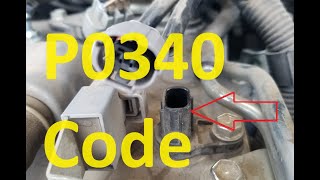
How to confirm: After confirming the battery is good, test the sensor's resistance with a multimeter or swap it with the identical sensor on Bank 2 (driver's side) and see if the code changes to P0345. A more definitive test is using an oscilloscope to check for a proper square wave signal. 🎬 Watch: Understanding P0340 causes and how to fix them
Typical fix: Replace the Bank 1 Camshaft Position Sensor 'A'. It is recommended to use an OEM or Denso part.
Est. part cost: $60-$150 - Wiring or Connector Issue 🟡 Medium Probability Engine heat can make wiring insulation brittle, and connectors can become contaminated with oil or dirt, disrupting the signal. Rodent damage is also a notable possibility, as some Toyota wiring harnesses use a soy-based coating that can attract pests.
How to confirm: Visually inspect the wiring harness from the sensor to the main loom for any signs of damage, fraying, melting, or corrosion. Check for rodent droppings or nesting material. Test for 5V reference, ground, and signal continuity with a multimeter.
Typical fix: Repair the damaged section of wiring or clean/replace the connector pigtail. For rodent damage, wrapping the repaired harness in Honda's capsaicin-infused tape (part # 4019-2317) or a stainless steel mesh sleeve is a common preventative measure.
Est. part cost: $15-$75
Rare But Worth Checking
- Stretched Timing Chain or Failed Tensioner: → Shop Engine Timing Chain While the 3UR-FE's timing chains are designed to last the life of the engine, stretching is not unheard of, especially at higher mileage (>150k miles). This causes the physical camshaft timing to be out of sync with the crankshaft, triggering a sensor code even if all electronics are working. This is often accompanied by a rattling noise from the front of the engine and may set correlation codes like P0016.
- Failed Crankshaft Position Sensor: → Shop Engine Crankshaft Position Sensor In some cases, a failing crankshaft position sensor can cause a correlation error that the ECU interprets as a camshaft sensor problem, triggering a P0340. The TSB T-TT-0010-10 Rev also notes that low battery voltage can trigger both P0340 and P0335 (crankshaft sensor code) simultaneously.
- Faulty Alternator: A failing alternator can produce inconsistent voltage or electrical noise (AC ripple), which can interfere with the sensitive sensor circuits and trigger a P0340 code. It can also lead to an undercharged battery, which is a known cause.
- Faulty Engine Control Module (ECM): → Shop Engine Control Module (ECM) This is extremely rare and should only be considered after all other possibilities, including sensors, wiring, and mechanical timing, have been thoroughly ruled out. One owner on a forum reported needing a PCM replacement after all other fixes failed.
Diagnosis Steps
- Read all stored fault codes with an OBD-II scanner. Check freeze-frame data for battery voltage at the time the code was set.
- CRITICAL: Test the battery. Check static voltage (~12.6V) and perform a load test. A voltage below 11V during cranking is a known cause for this code per TSB T-TT-0010-10 Rev.
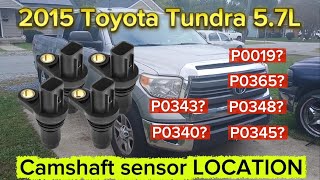
- If the battery is good, locate the Camshaft Position Sensor 'A' on Bank 1. On the 5.7L V8, Bank 1 is the passenger side. The sensor is 🎬 Watch: Locate the camshaft sensors on the 5.7L engine on the front of the cylinder head cover, held by a single 10mm bolt.
- Inspect the sensor's electrical connector and wiring harness. Look closely for signs of melting, chafing, corrosion, or rodent chew marks. Pay special attention to the harness routing near the serpentine belt.
- A common DIY diagnostic is to swap the Bank 1 sensor with the identical sensor from Bank 2 (driver's side). They are the same part number. Clear the codes, drive the vehicle, and see if the code returns as P0345 (for Bank 2). If it does, the sensor you moved is faulty.
- If the code remains P0340 after the swap, the problem is in the Bank 1 wiring circuit or a deeper mechanical issue.
- Using a multimeter, back-probe the connector (with the key on, engine off) to verify power (approx. 5V), ground, and signal.
- If wiring and sensors are confirmed good, the next step is to investigate potential mechanical timing issues (e.g., stretched timing chain), which is a more advanced diagnostic task often requiring removal of the timing cover for inspection.
Parts You'll Likely Need
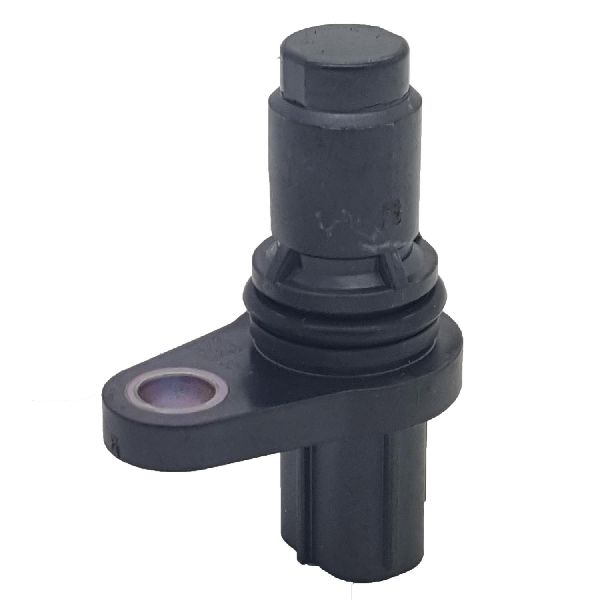
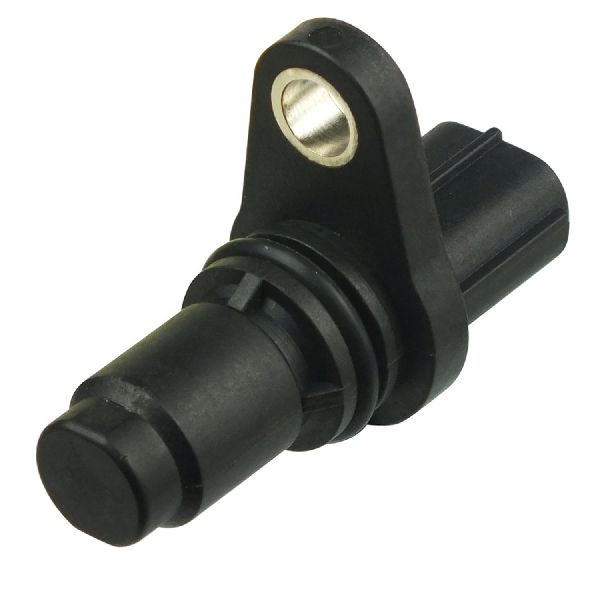
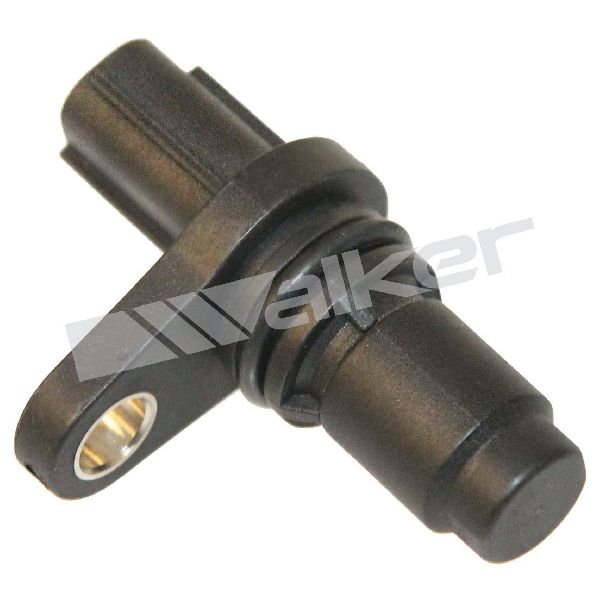
- Camshaft Position Sensor (Bank 1)
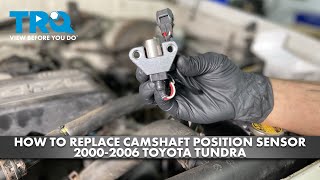
(OEM #90919-A5002)— This is the most common component to fail electronically, after ruling out battery and wiring issues. It is identical for Bank 1 and Bank 2. 🎬 See this quick fix for Toyota V8 camshaft sensor codes
Trusted brands: Denso (OEM Supplier), NTK, Standard Motor Products (SMP)
OEM price range: $100-$150
Aftermarket price range: $60-$110 - Automotive Battery — A weak battery is a documented cause of P0340 on this specific vehicle according to a Toyota TSB.
Trusted brands: Interstate, DieHard, Optima, X2Power
OEM price range: $250-$400
Aftermarket price range: $150-$350
Related Codes That Often Appear With This One
- P0335 — Crankshaft Position Sensor Circuit Malfunction. The TSB T-TT-0010-10 Rev states that low battery voltage can cause both P0340 and P0335 to appear. A fault in one sensor can also sometimes trigger a code for the other due to their interdependent relationship.
- P0345 — Camshaft Position Sensor 'A' Circuit (Bank 2). If this code appears with P0340, it may point to a systemic issue like a timing chain problem, a faulty alternator, or a widespread wiring issue affecting both banks.
- P0300-P0308 — Random or specific cylinder misfire codes. Incorrect camshaft timing data from a faulty sensor or circuit leads to improper spark and fuel delivery, causing misfires.
- P0016 — Crankshaft Position - Camshaft Position Correlation (Bank 1). This code is a strong indicator of a mechanical timing issue, such as a stretched timing chain, rather than just a sensor circuit fault.
Technical Service Bulletins (TSBs) & Recalls
- T-TT-0010-10 Rev: States that low battery voltage (below 11 volts) can contribute to a MIL "ON" condition for P0335 (Crankshaft Position Sensor Circuit) and/or P0340 (Camshaft Position Sensor Circuit).
Platform-Specific Known Issues
- As per TSB T-TT-0010-10 Rev, low battery voltage is a primary suspect for triggering P0340 and should be the first item checked during diagnosis. Check freeze frame data for voltage below 11V when the code was set.
- The soy-based wiring harness insulation used on some Toyotas of this era can attract rodents, making wiring damage a more likely cause than on other vehicles. Look for signs of chewing near the sensor connectors.
Mechanic-Grade Diagnostic Values
- Camshaft Sensor Power Supply Voltage — expected: ~5V DC. Failure: Significantly lower than 5V, or 0V, indicates a wiring issue or problem with the ECM's 5V reference circuit. Check for a blown fuse.
- Camshaft Sensor Ground Circuit Check — expected: ~12.6V DC (or battery voltage). Failure: A reading of 0V indicates a bad ground connection in the harness.
- Camshaft Sensor Signal (Oscilloscope) — expected: A clean square wave pattern that switches between approximately 0V and 5V as the engine is cranked or running.. Failure: A flat line, a noisy/erratic signal, or a wave that does not switch cleanly indicates a faulty sensor or reluctor wheel issue.
Scan Tool Commands That Help
- Toyota Techstream: Data List Monitoring — Use to monitor the 'Camshaft Position Sensor Signal' and 'Engine Speed' live data PIDs. Watch for the signal to drop out or become erratic during cranking or running, which confirms a signal interruption.
- Toyota Techstream: Active Test: Control the VVT System (Bank 1) — This test commands the VVT oil control valve (solenoid) to operate. A change in engine idle should be observed. If there is no change, it could indicate a stuck VVT phaser or a clogged/faulty oil control valve, which are mechanical issues that can sometimes lead to the ECU flagging a P0340 code.
Wiring & Ground Locations
- Engine Harness Ground — Check for ground straps/wires bolted to the rear of the cylinder heads. On similar Toyota V8 engines, these are designated 'EC' (right head) and 'ED' (left head).. A poor engine ground can introduce electrical noise and voltage drops, affecting the reference voltage and signal quality for sensitive components like the camshaft position sensor.
- Main Engine Ground — The primary ground cable running from the negative battery terminal to the engine block, often near an engine mount.. Corrosion or looseness at this primary point can cause a wide range of electrical issues, including the low voltage condition cited in the TSB for this code.
Real Owner Repair Stories
- Toyota Tundra Forum user (Toyota Tundra with 5.7L V8 (3UR-FE)) — P0340 code appeared.
❌ Tried (didn't work) Initial diagnosis pointed towards a bad sensor.
✅ What actually fixed it A thorough visual inspection revealed the camshaft position sensor's wiring harness had been rubbing against the serpentine belt and was severely damaged. Repairing the chewed-up wires resolved the code. - NICO Club forum user (on an Infiniti, but illustrates a critical concept for all modern cars) (2006 Infiniti M35) — P0340 code, intermittent stalling, followed by a completely dead battery (4.35V).
❌ Tried (didn't work) Replacing the original camshaft sensor with a new aftermarket (Duralast) part.
✅ What actually fixed it The new aftermarket sensor was faulty and created a parasitic draw that drained the battery overnight. Re-installing the original OEM sensor immediately stopped the severe drain and allowed the battery to charge. The final fix was to use a quality OEM sensor.
When the Usual Fixes Don't Work
- While the most common causes are a faulty sensor or a weak battery, a significant number of cases are resolved by addressing the wiring harness. In one documented instance on a Tundra with the same 3UR-FE engine, the P0340 code was caused by the sensor's wiring harness making contact with and being damaged by the serpentine belt. This highlights the critical need for a thorough physical inspection of the harness and its routing, as simply replacing the sensor or battery would not have fixed the issue.
OEM Part Supersession History
90919-05036→90919-A5002— Standard part evolution and consolidation.
Helpful Videos
We Have This Part in Stock


The information in this article is provided for general reference and educational purposes only. Vehicle specifications, procedures, and part compatibility can vary by production date, trim level, and region. Always consult your vehicle's factory service manual and verify part numbers before purchasing or performing repairs. Safety-critical components such as airbags, seat belts, and braking systems should be installed by a qualified professional.
- Toyota LAND CRUISER:
- 🧭 Diagnostic Flowchart
- 🎬 Helpful Videos
- 🛍️ Shop This Part
- What's Unique About the 2008-2015 Toyota LAND CRUISER
- Symptoms You May Notice
- Most Likely Causes
- Rare But Worth Checking
- Diagnosis Steps
- Parts You'll Likely Need
- Related Codes That Often Appear With This One
- Technical Service Bulletins (TSBs) & Recalls
- Platform-Specific Known Issues
- Mechanic-Grade Diagnostic Values
- Scan Tool Commands That Help
- Wiring & Ground Locations
- Real Owner Repair Stories
- When the Usual Fixes Don't Work
- OEM Part Supersession History
- 🎟️ Get 5% Off