

P0340 on 2012-2015 Toyota Prius C: Camshaft Sensor or Weak Battery?
On a 2012-2015 Toyota Prius C, code P0340 is most often caused by a weak 12V auxiliary battery, not the camshaft sensor itself. Before buying parts, fully test the 12V battery. A low voltage condition during startup causes the engine to crank at an inconsistent speed, which the ECM misinterprets as a sensor fault. A replacement battery costs around $200-$250, while a sensor is about $60-$120.
- For a P0340 code on a 2012-2015 Prius C, always test the 12V auxiliary battery first before replacing any parts. Check freeze frame data for voltage below 11V.
- A weak 12V battery can cause the ECM to misread engine speed during startup, falsely triggering a camshaft sensor code.
- If the battery is healthy, the next step is to inspect and test the camshaft position sensor (part #90919-05024) and its wiring.
- The presence of code P0335 alongside P0340 further strengthens the diagnosis of a weak 12V battery.
What's Unique About the 2012-2015 Toyota PRIUS C
The Toyota Prius C, like other Prius models, is uniquely sensitive to the health of its 12V auxiliary battery. A weak 12V battery can cause the engine to crank at an inconsistent speed during startup. The ECM can misinterpret this inconsistent speed as a faulty signal from the camshaft or crankshaft sensors, triggering a P0340 code even when the sensor itself is perfectly fine. This specific failure pattern is well-documented by Toyota in Technical Service Bulletin T-TT-0010-10 Rev, which explicitly states that battery voltage below 11V during startup can cause P0340 and/or P0335. Many owners on forums like PriusChat have confirmed that replacing a weak 12V battery resolved the code after they had needlessly replaced the sensor.
Diagnostic Flowchart
Tap your situation to follow the diagnostic path that matches what you're seeing on this vehicle.
Symptoms You May Notice
- Check Engine Light is on
- Difficulty starting the engine, or a no-start condition
- Engine stalling or hesitating, sometimes while driving
- Rough idle
- Reduced fuel economy
- Loss of power during acceleration
- Replacing the camshaft position sensor without first thoroughly testing the 12V auxiliary battery. On a Prius C, the battery is a more frequent cause of P0340 than the sensor itself, a fact corroborated by Toyota's own service bulletin and numerous owner experiences.
Most Likely Causes
- Weak or Failing 12V Auxiliary Battery 🔴 High Probability → Shop Vehicle Battery As documented in Toyota TSB T-TT-0010-10 Rev, low battery voltage (below 11V) causes inconsistent engine rotational speed during startup, which the ECM misinterprets as a sensor fault. The complex electronics of the hybrid system are highly sensitive to voltage drops during the startup sequence.
How to confirm: Use a multimeter to test the 12V battery located in the rear of the vehicle. A healthy, fully charged battery should read above 12.4 volts with the car off. A reading below 12.0V indicates a discharged or failing battery. Critically, check the OBD-II freeze frame data to see the battery voltage at the exact moment the code was set; the TSB specifically mentions looking for voltage below 11V. A load test is the most definitive way to confirm battery health.
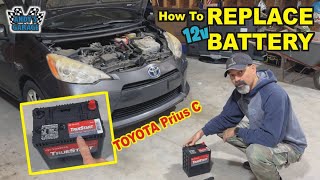
Typical fix: Charge or replace the 12V auxiliary battery. 🎬 Watch: How to replace the 12V battery on a Prius C
Est. part cost: $200-$250 - Failed Camshaft Position Sensor 🟡 Medium Probability → Shop Engine Camshaft Position Sensor Like any electronic component exposed to engine heat and vibration, the sensor can fail over time. However, on this platform, it is a less frequent cause than the 12V battery.
How to confirm: If the 12V battery is confirmed to be healthy, test the sensor. It is located on the cylinder head. Disconnect the sensor and measure the resistance between its terminals. For the 1NZ-FXE engine, it should be between 1,630-2,740 Ω when cold and 2,065-3,225 Ω when hot. An oscilloscope can also be used to check for a proper square wave signal while the engine is cranking.
Typical fix: Replace the camshaft position sensor and its O-ring.
Est. part cost: $40-$120 - Wiring or Connector Issue ⚪ Low Probability
How to confirm: Visually inspect the wiring harness and connector leading to the camshaft position sensor for any signs of damage, corrosion, oil contamination, or looseness. Use a multimeter to check for 4.5V to 5.0V reference voltage at the connector with the key on (IG), and check for continuity and for shorts to ground in the circuit between the sensor and the ECM.
Typical fix: Repair the damaged wiring or clean/replace the connector.
Est. part cost: $5-$50
Rare But Worth Checking
- Stretched Timing Chain: → Shop Engine Timing Chain If the timing chain has stretched or jumped a tooth, the correlation between the camshaft and crankshaft signals will be incorrect, which can trigger a P0340 code. This is usually accompanied by other symptoms like engine rattling noises and is more likely on higher mileage vehicles.
- Faulty Engine Control Module (ECM): → Shop Engine Control Module (ECM) This is extremely rare. The ECM should only be considered as the cause after all other possibilities, including the battery, sensor, wiring, and timing components, have been thoroughly ruled out. A forum user on PriusChat with a 2013 model replaced the ECM for a P0340 and P0A0F with no success, pointing to how rare this is as a root cause.
Diagnosis Steps
- Read the trouble codes with an OBD-II scanner and check for any other stored codes, especially P0335, P0A0F, or any low voltage codes.
- Using the scanner, check the freeze frame data to see what the battery voltage was at the moment the P0340 code was triggered. A reading below 11V strongly suggests the 12V battery is the culprit.
- CRITICAL STEP: Thoroughly test the 12V auxiliary battery. Use a multimeter to check its resting voltage (should be >12.4V). Perform a load test to confirm its health, as a battery can show good voltage but fail under load.
- If the battery is weak, charge or replace it. Clear the codes and drive the vehicle to see if P0340 returns.
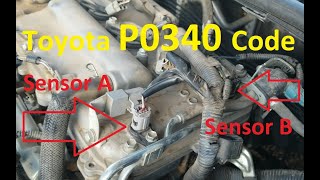
- If the battery is healthy, locate the camshaft position sensor on the 1NZ-FXE engine. It is on the cylinder head, held by a single 10mm bolt. 🎬 See this walkthrough for replacing the camshaft position sensor
- Inspect the sensor's electrical connector and wiring for any visible damage, corrosion, or loose connections. Clean any oil or dirt from the connector.
- Test the sensor's resistance. If it is out of the specified range (1,630-2,740 Ω cold), the sensor is faulty.
- If the sensor and wiring test good, the issue may be mechanical, such as a timing chain problem. This is less common and may require professional diagnosis, possibly with an oscilloscope to check cam/crank signal correlation.
Parts You'll Likely Need
- 12V Auxiliary Battery
(OEM #28800-21171 (superseded by 00544-21171-325))— This is the most common cause of P0340 on a Prius C due to the hybrid system's sensitivity to low voltage during startup.
Trusted brands: Toyota TrueStart (S46B24R), Optima YellowTop, Interstate (Costco)
OEM price range: $200-$280
Aftermarket price range: $195-$250 - Camshaft Position Sensor
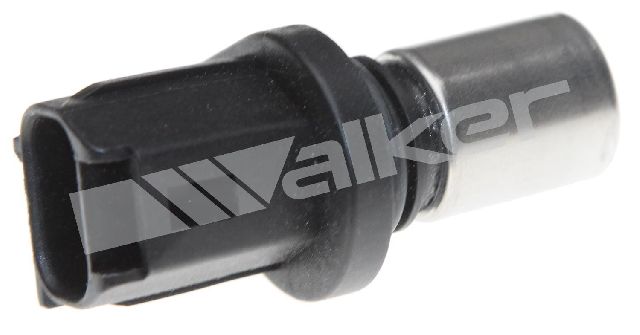
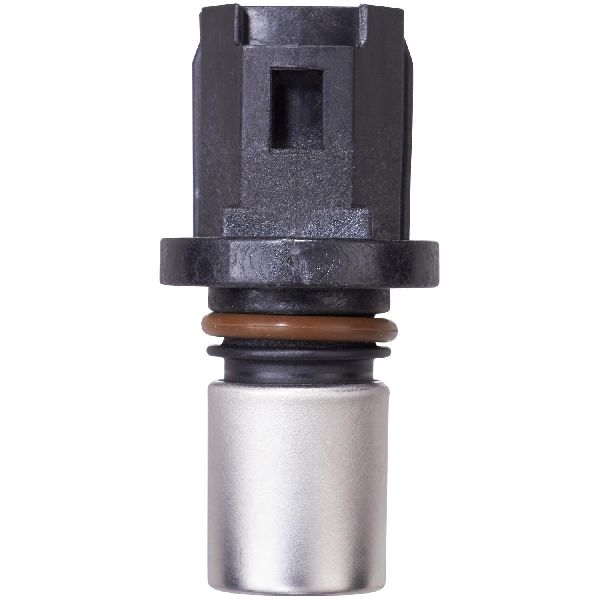
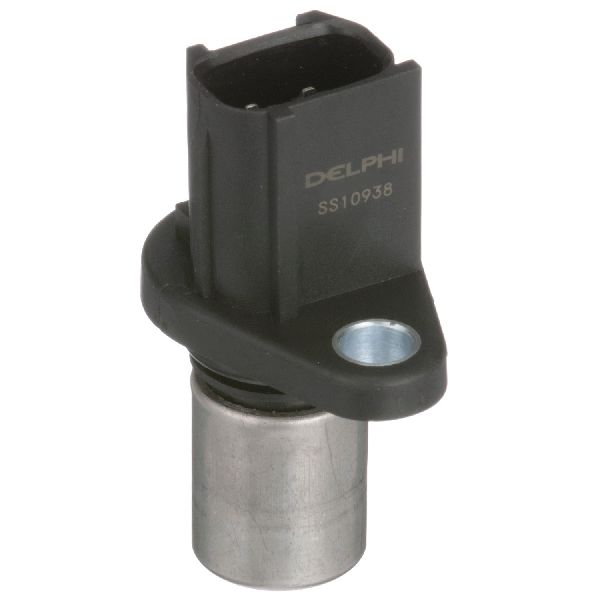
(OEM #90919-05024)— If the 12V battery is healthy, the sensor itself is the next most likely component to have failed.
Trusted brands: Denso (OEM manufacturer), NGK, Standard Motor Products (SMP), Hitachi
OEM price range: $90-$120
Aftermarket price range: $40-$80
Related Codes That Often Appear With This One
- P0335 — The same low 12V battery voltage that can trigger P0340 can also cause inconsistent crankshaft speed readings, triggering the crankshaft position sensor code. Toyota TSB T-TT-0010-10 Rev explicitly mentions that these two codes can appear together due to low voltage.
- P0A0F — This 'Engine Failed to Start' code can be stored when the underlying issue causing P0340 (whether a bad battery or sensor) prevents the gasoline engine from starting correctly. A PriusChat user with a 2013 Prius C reported this exact combination (P0340 and P0A0F) after the engine stalled while driving.
- C2318 — A low voltage error code, such as C2318 (Low Voltage at Transmission Module), can be stored alongside P0340, further pointing to a failing 12V battery as the root cause.
Technical Service Bulletins (TSBs) & Recalls
- T-TT-0010-10 Rev: Notes that low battery voltage (below 11V) can contribute to a MIL "ON" condition for P0335 (Crankshaft Position Sensor Circuit) and/or P0340 (Camshaft Position Sensor Circuit) due to inconsistent rotational speed of the engine's crankshaft. It advises checking freeze frame data for battery voltage when the code was set.
Platform-Specific Known Issues
- The primary vehicle-specific issue is the high probability that a P0340 code is caused by a weak 12V auxiliary battery, not the sensor itself. This is due to the hybrid system's startup sequence and is documented by Toyota in TSB T-TT-0010-10 Rev.
- Owners on PriusChat forums frequently advise new members with P0340 to check the 12V battery before spending money on a sensor, sharing stories of how a new battery fixed the issue instantly.
Mechanic-Grade Diagnostic Values
- Camshaft Position Sensor Resistance (Cold) — expected: 1,630 to 2,740 Ω. Failure: A reading outside this range indicates a faulty sensor.
- Camshaft Position Sensor Resistance (Hot) — expected: 2,065 to 3,225 Ω. Failure: A reading outside this range indicates a faulty sensor. 'Hot' is defined as 50°C to 100°C (122°F to 212°F).
- Camshaft Position Sensor Connector Voltage (Key On) — expected: 4.5 to 5.0 V. Failure: No voltage or low voltage indicates a problem with the wiring or the ECM's power supply to the sensor.
- VVT Oil Control Valve Resistance — expected: 6.9 to 7.9 Ω at 20°C (68°F). Failure: A reading outside this range indicates a faulty oil control valve, which can affect cam timing and potentially trigger related codes.
Scan Tool Commands That Help
- Toyota Techstream: Active Test: Control the VVT System (Bank 1) — After confirming the sensor and wiring are good, this test can be used to command the VVT system. The engine speed should change (e.g., rough idle or stall) when the oil control valve is activated. If there's no change, it points to a mechanical issue with the VVT actuator or a clogged oil control valve.
- Toyota Techstream: Utility: All Readiness — After a repair, this function can be used to check if the monitor for DTCs like P0340 has completed its self-check and whether the system is now judged as 'NORMAL'.
Wiring & Ground Locations
- Camshaft Position Sensor Connector (D18) — On the cylinder head, passenger side of the engine, held by a single 10mm bolt.. This is the direct connection point for the sensor. Damage, corrosion, or wires pulling out of this connector are common failure points.
- Connector Pinout (at sensor) — On the 3-pin sensor connector. A user with a 2012 model reports wire colors as Red, White, and Black. Pin 3 (VC) should have 4.5-5.0V with key on, Pin 2 (VVI-) is ground, and Pin 1 (VVI+) is the signal wire.. Knowing the correct pinout is essential for testing for power, ground, and signal at the sensor to isolate the fault between the sensor, wiring, or ECM.
- Ground Point 'EC' — Located at the rear of the 1NZ-FXE engine.. This is a primary engine ground point. While not exclusive to the camshaft sensor, a loose or corroded main engine ground can introduce electrical noise and cause signal issues for multiple sensors, including the cam and crank sensors.
Real Owner Repair Stories
- PriusChat user 'ZX Nutt' (2012 Prius V, 171k miles) — After a head gasket replacement, the car would start, run rough for 5 seconds, then shut down, throwing code P0340.
❌ Tried (didn't work) Clearing the code, visually inspecting the sensor and wiring, charging the 12V battery overnight.
✅ What actually fixed it The issue was suspected to be a timing mistake made during the head gasket reassembly. Another user pointed out that if the timing chain tensioner is not released correctly (by rotating the crank clockwise after install), the chain can jump a tooth, causing a cam/crank correlation error that manifests as P0340. - PriusChat user 'Mark Dovbysh' (2013 Prius, 66k miles) — Engine stalled while driving, then would only start for a few seconds at low RPM before shutting off. Displayed 'Check Hybrid System' with codes P0340 and P0A0F-525.
❌ Tried (didn't work) Replacing the camshaft sensor with an aftermarket part, then replacing it with a genuine Toyota sensor. Also replaced the ECM.
✅ What actually fixed it The thread ends without a final resolution from the original poster, but the diagnostic path after the failed sensor and ECM swaps was to investigate a mechanical timing issue (jumped tooth). This story is valuable as a counter-example showing that even on a low-mileage car, the cause can be deeper than the common electrical faults.
When the Usual Fixes Don't Work
- While a weak 12V battery is the most common cause, it is not the only cause. In a documented case on a 2013 Prius with only 66k miles, the owner experienced a stall while driving with P0340 and P0A0F. After replacing the sensor (both aftermarket and OEM) and even the ECM with no success, the next diagnostic step was to check for a jumped timing chain, highlighting that mechanical failure can occur even on lower-mileage examples.
OEM Part Supersession History
19300-BZ020→90919-05024— Standard part update/revision.
Helpful Videos

We Have This Part in Stock



The information in this article is provided for general reference and educational purposes only. Vehicle specifications, procedures, and part compatibility can vary by production date, trim level, and region. Always consult your vehicle's factory service manual and verify part numbers before purchasing or performing repairs. Safety-critical components such as airbags, seat belts, and braking systems should be installed by a qualified professional.
- Toyota PRIUS C:
- 🧭 Diagnostic Flowchart
- 🎬 Helpful Videos
- 🛍️ Shop This Part
- What's Unique About the 2012-2015 Toyota PRIUS C
- Symptoms You May Notice
- Most Likely Causes
- Rare But Worth Checking
- Diagnosis Steps
- Parts You'll Likely Need
- Related Codes That Often Appear With This One
- Technical Service Bulletins (TSBs) & Recalls
- Platform-Specific Known Issues
- Mechanic-Grade Diagnostic Values
- Scan Tool Commands That Help
- Wiring & Ground Locations
- Real Owner Repair Stories
- When the Usual Fixes Don't Work
- OEM Part Supersession History
- 🎟️ Get 5% Off