

P0340 on 2012-2014 Toyota RAV4 EV: A Guide to the Real Problem
A P0340 code on a RAV4 EV is misleading. The vehicle has no camshaft. The actual issue is almost always a fault with the electric motor's position/speed sensor, a known problem that was subject to a safety recall. This is often caused by an internal coolant leak within the Tesla-made drive unit and can cause a sudden, dangerous loss of power.
- P0340 on a RAV4 EV is a 'ghost code'; the vehicle has no camshaft sensor.
- The real problem is a failure in the electric motor's position/speed sensor circuit, a known issue.
- The most common cause is an internal coolant leak within the Tesla drive unit that contaminates the sensor.
- This is a critical safety issue that can cause a total loss of power while driving.
- Check if NHTSA recall 15V-143 has been performed on your vehicle.
- This is not a DIY repair. Out-of-warranty failure can be extremely expensive, often requiring a full drive unit replacement for over $8,000.
What's Unique About the 2012-2014 Toyota RAV4 EV
The 2012-2014 RAV4 EV uses a powertrain designed and supplied by Tesla. This unique setup has its own specific diagnostics. A known issue, covered by NHTSA recall 15V-143, involves the traction motor's speed/position sensor. A common failure sequence is an internal rotor coolant seal failing inside the drive unit, allowing coolant to leak onto and contaminate the speed sensor. This contamination shorts the sensor, causing the vehicle to unexpectedly shift into neutral.
Diagnostic Flowchart
Tap your situation to follow the diagnostic path that matches what you're seeing on this vehicle.
Symptoms You May Notice
- Sudden and complete loss of drive power as the vehicle shifts into 'Neutral'.
- "Check EV System" warning message illuminated on the instrument panel.
- Malfunction Indicator Lamp (Check Engine Light) is on.
- Inability to shift back into 'Drive' after the event occurs.
- Vehicle may lurch or shutter during acceleration prior to complete failure.
- Replacing a non-existent Camshaft Position Sensor.
- Assuming the issue is with the 12V battery, although a weak 12V battery can cause other unrelated electrical issues.
Most Likely Causes
- Motor Position/Speed Sensor Failure due to Coolant Contamination 🔴 High Probability This is a documented weak point in the Tesla-supplied Large Drive Unit (LDU). An internal rotor coolant seal is prone to failure, allowing coolant to seep into the dry section of the housing and contaminate the sensor. This is a widely discussed issue on forums for the RAV4 EV and its platform mates.
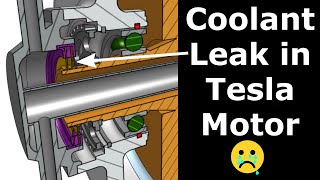
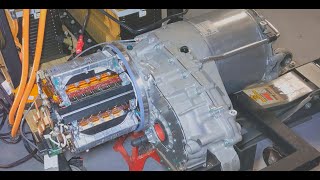
How to confirm: Diagnosis requires a Toyota-specific scan tool (Techstream with TESLA software) to read proprietary error codes (e.g., DI_w020). A physical inspection is the definitive confirmation: remove the sensor from the passenger side of the drive unit and check its tip for blue coolant, 🎬 Watch: How to perform a DIY motor coolant leak check or white or brown crusty residue (corrosion).
Typical fix: The official fix per recall 15V-143 involves a software update to make the system less sensitive to erratic signals. However, if the sensor is already contaminated, the drive unit itself often requires replacement. Out of warranty, this is a very expensive repair. 🎬 Watch: A detailed guide to rebuilding the Tesla drive unit Some independent shops may offer sensor replacement or a 'coolant delete' modification to prevent future leaks.
Est. part cost: $300-$400 for the sensor itself (if sourced independently), but dealer repair typically involves replacing the entire traction motor assembly at a cost of $5,900+. - Software Issue in the Drive Inverter ECU 🟡 Medium Probability A Toyota safety recall (15V-143) explicitly states that a software issue can prevent the ECU from properly interpreting the motor's rotational position from the sensor's signal, even if the sensor is healthy.
How to confirm: A Toyota dealership must check the vehicle's service history against recall 15V-143 and verify the current software version. The recall aimed to relax the signal parameters to prevent unnecessary shutdowns.
Typical fix: The dealership will apply a software update to the drive inverter ECU as part of the recall.
Est. part cost: $0 if covered under the recall. - Wiring or Connector Issue to the Motor Position Sensor ⚪ Low Probability While less common than sensor failure, any vehicle can experience wiring faults due to vibration, moisture, or damage. The harness to the drive unit is a potential point of failure.
How to confirm: A visual inspection of the harness leading to the traction motor for damage, and a continuity/voltage check at the connector with a multimeter.
Typical fix: Repairing the damaged section of the wiring harness or cleaning/replacing the connector.
Est. part cost: $10-$50
Rare But Worth Checking
- Inverter Control PCB Failure:
Diagnosis Steps
- STOP DRIVING IMMEDIATELY. The vehicle is unsafe to operate.
- Check for Recalls: Contact a Toyota dealer or use the NHTSA website to check if recall 15V-143 ('Propulsion System May Shift to Neutral') has been performed on your vehicle.
- Scan with a Capable Tool: Use a professional scan tool like Toyota Techstream with the specific Tesla diagnostic software (TPD). A generic OBD-II reader will likely provide the misleading P0340 code.
- Confirm the Real Code: Look for proprietary codes related to the drive inverter (DI) or motor position/speed sensor, such as DI_w020, DI_f020, or DI_w009.
- Proactive Physical Inspection: For out-of-warranty vehicles, consider a physical inspection. Safely access the vehicle's underside and locate the motor speed sensor on the passenger side of the large drive unit. Unplug it, remove the single 10mm bolt, and inspect the sensor's tip for any signs of blue coolant or corrosion.
- Schedule Professional Service: Take the vehicle to a Toyota dealer certified to service the RAV4 EV or a reputable independent EV repair shop. They are equipped to diagnose the high-voltage system and perform the necessary repairs, which may range from a software update to a full traction motor replacement.
Parts You'll Likely Need
- Electric Vehicle Traction Motor Assembly
(OEM #G9020-0R010, G9020-0R011)— This entire unit is the typical field-replaceable part specified by Toyota when the internal motor position sensor fails, especially due to coolant contamination. The sensor itself is not commonly sold as a separate part by Toyota. Note that online parts catalogs sometimes mislabel this assembly as a 'Water Pump'.
Trusted brands: Tesla (OEM supplier)
OEM price range: $5900 - $6000
Aftermarket price range: Not Available (Used/rebuilt units may be found)
Related Codes That Often Appear With This One
- DI_w020 / DI_f020 — These are the proprietary, undocumented Toyota/Tesla codes that directly indicate a fault with the motor speed sensor. A generic scanner may misinterpret these as P0340.
- DI_w009 — This is another proprietary Toyota/Tesla code that points to an encoder (motor position sensor) error.
- DI_f108 — This proprietary code for 'Drive not possible because of other system problem' often appears in the fault log sequentially after the DI_f020/DI_w020 codes are set.
- P312f / C1259 — These are secondary Toyota codes ('EV System Malfunction' and 'Regenerative Malfunction') that can be triggered as a consequence of the primary motor sensor failure.
Technical Service Bulletins (TSBs) & Recalls
- T-TT-0010-10 Rev: This TSB, which links P0340 to low battery voltage, applies to GASOLINE RAV4 models and is NOT relevant to the RAV4 EV.
- T-TT-0426-16: This Tech Tip addresses communication problems between the diagnostic software (Techstream) and the RAV4 EV's Gateway ECU, highlighting the unique diagnostic challenges of this model.
- T-TT-0228-13: This Tech Tip provides the specific procedure for removing and installing the high-voltage service plug, a critical safety step before working on any high-voltage components like the inverter or drive unit.
Platform-Specific Known Issues
- NHTSA Recall 15V-143: A recall was issued because a software issue in the drive inverter ECU could lead to an inability to read the motor's position, causing a speed sensor error code and forcing the vehicle into neutral.
- Drive Unit Coolant Leak: The Tesla-sourced Large Drive Unit (LDU) is prone to an internal rotor coolant seal failure. This leak allows coolant to contaminate the motor position/speed sensor, causing it to fail and trigger the 'shift to neutral' event. This is the most common underlying physical cause of the problem.
- Warranty Replacement Unit Revisions: When drive units are replaced by Toyota under warranty, they often do not receive the latest, most reliable revision from Tesla. This means a vehicle that has already had its drive unit replaced may still be susceptible to the same bearing and seal failures as the original unit.
Mechanic-Grade Diagnostic Values
- Voltage between Encoder Signal Ground (ENCG) and Chassis Ground — expected: 0.210V to 0.238V in Park with READY light on. Jumps to 0.338V - 0.348V when shifted into Drive.. Failure: A voltage reading significantly higher than the baseline (e.g., double) can indicate a fault on the inverter board. A reading of ~0.2V has been established as a baseline from known-good vehicles.
- Resistance between Encoder Signal Ground (ENCG) and Chassis Ground on Inverter Board — expected: Should not be a static ~40Ω.. Failure: A reading of approximately 40Ω between ENCG (D14 connector, pin 17) and Inverter Ground (GND, pin 11) points to failed resistors (R105/R106) on the inverter control board.
Hidden / Shadow Codes Worth Checking
- DI_f108: Drive not possible because of other system problem. (see via This code is logged in the Drive Inverter (DI) module and is visible with Toyota Techstream software equipped with the Tesla diagnostics package (TPD). It typically appears after DI_f020/DI_w020.)
Scan Tool Commands That Help
- Toyota Techstream with Tesla Powertrain Diagnostics (TPD): Clearing Contactor Faults — When diagnosing a complex no-start or 'Check EV System' issue, it's critical to use the older, 'cracked' version of the TPD software (v1.1.42), as the newer official subscription versions may lack the ability to clear certain deep-level faults, such as those related to the high-voltage contactors.
Wiring & Ground Locations
- D14 Connector — The main multi-pin connector on the Drive Inverter control board.. This connector is the interface for the motor position sensor signals. Advanced diagnostics for an inverter board fault involve testing between Pin 17 (ENCG - Encoder Signal Ground) and Pin 11 (GND - Inverter Ground) at this connector.
- Motor Position Sensor Connector — On the passenger side of the Tesla Large Drive Unit (LDU), accessible through the wheel well.. This is the primary connection point to check for physical damage or coolant contamination after removing the sensor for inspection.
Real Owner Repair Stories
- myrav4ev.com forum user 'ogmm' (2012-2014 Toyota RAV4 EV) — Recurrent DI_w020 / DI_f020 speed sensor errors, vehicle would stop driving after a random amount of time (3-30 minutes).
❌ Tried (didn't work) Replacing the motor position sensor (encoder) with three different new units., Verifying wiring continuity from the sensor to the inverter connector., Updating the gateway firmware., Resoldering the main D14 connector on the inverter board.
✅ What actually fixed it The user identified two faulty soldered resistors, R105 and R106, on the main board of the drive inverter. When probing them, the voltage would fluctuate wildly. Replacing these two 40-ohm resistors resolved the issue permanently. - myrav4ev.com forum user 'Konduit EV' (Specialty Repair Shop) (Multiple 2012-2014 Toyota RAV4 EVs) — Diagnosing a vehicle with DI_f020, DI_w020, and DI_f108 codes after a speed sensor swap did not fix the issue.
❌ Tried (didn't work) Swapping the speed sensor.
✅ What actually fixed it The shop confirmed the problem was on the inverter motherboard. To create a reliable diagnostic test, they measured the voltage on three known-good RAV4 EVs between the Encoder Signal Ground (ENCG) pin and chassis ground, establishing a baseline of 0.210V-0.238V in Park and 0.338V-0.348V in Drive. The faulty car had a voltage reading more than double the baseline, confirming the inverter board fault without disassembly.
"I Checked Everything" — The Actual Cause
- In the context of this electronic fault, the equivalent of a 'clean smoke test' is when the motor position sensor and its wiring harness both test good for continuity, yet the fault persists. The actual cause, in this case, can be faulty signal processing on the inverter control board due to cracked solder joints on resistors R105/R106. This is missed by standard diagnostics because it requires component-level inspection of the inverter's internal circuit board, which is not a typical procedure.
When the Usual Fixes Don't Work
- While the most common physical cause of a P0340-related failure is a coolant-contaminated motor position sensor, multiple documented cases show that replacing the sensor does not fix the problem. In these instances, the root cause was traced to the inverter control board itself, specifically to micro-fractures in the solder for resistors R105 and R106 that process the sensor's signal. This means that even with a perfectly healthy sensor and wiring, the fault can persist. The successful repair in these cases was a component-level fix on the circuit board, a procedure far beyond the scope of a simple parts replacement.
OEM Part Supersession History
Tesla 1002722-00→Tesla 1014350-00-A (Rev C)— Revision of the motor position/resolver sensor used in the Tesla Large Drive Unit.
Heads up: While Toyota does not sell this part separately, it can be sourced from the aftermarket. Owners have reported using newer revisions successfully, but the ultimate fix is often not the sensor itself.G9020-0R010→G9020-0R011— Part number update for the complete traction motor assembly.
Heads up: These part numbers refer to the entire drive unit assembly. Critically, many online Toyota parts catalogs incorrectly list G9020-0R010 as an 'Engine Water Pump', which can cause significant confusion.
Model Year Variations Within This Range
- 2012-2014: There are no significant functional differences between the model years regarding the Tesla-supplied powertrain and its common failure modes. A car from any of these years is susceptible to the motor position sensor failure.
Helpful Videos

The information in this article is provided for general reference and educational purposes only. Vehicle specifications, procedures, and part compatibility can vary by production date, trim level, and region. Always consult your vehicle's factory service manual and verify part numbers before purchasing or performing repairs. Safety-critical components such as airbags, seat belts, and braking systems should be installed by a qualified professional.
- Toyota RAV4 EV:
- 🧭 Diagnostic Flowchart
- 🎬 Helpful Videos
- What's Unique About the 2012-2014 Toyota RAV4 EV
- Symptoms You May Notice
- Most Likely Causes
- Rare But Worth Checking
- Diagnosis Steps
- Parts You'll Likely Need
- Related Codes That Often Appear With This One
- Technical Service Bulletins (TSBs) & Recalls
- Platform-Specific Known Issues
- Mechanic-Grade Diagnostic Values
- Hidden / Shadow Codes Worth Checking
- Scan Tool Commands That Help
- Wiring & Ground Locations
- Real Owner Repair Stories
- "I Checked Everything" — The Actual Cause
- When the Usual Fixes Don't Work
- OEM Part Supersession History
- Model Year Variations Within This Range
- 🎟️ Get 5% Off